

Reviewed · WALKING TOURS
Private Walk Women in Ancient Greece
Women in Athens stories, not side notes. This private walk reframes the city through women in Ancient Greece, with myth and everyday life woven together at landmarks you can actually see. I love that it is private, so you can ask questions as you go, not just listen and move on.
A second big plus: you get a clear sequence of stops, from Monastiraki through the Agora area and up toward Philopappos Hill for an Acropolis view. One drawback to consider is that it is a walking route with outside viewpoints only, so it is not ideal if you have mobility issues or prefer lots of indoor time.
In This Review
- Key highlights to look for
- A women-first Athens walk that changes how you see the Acropolis area
- From Monastiraki meeting square to Hadrian’s Library: education for girls and women
- The church stop and the marriage theme: EROS, Athens, and Sparta
- Gate of Athena Archegetis: myth tied to married life
- Dioskouron and the Agora outside view: women’s festival and public space
- Areopagos and Pnyx: trials, democracy, and a woman shaping politics
- Philopappos Hill finish: view on the Acropolis and the Hill of the Muses
- Price and value: what $90.22 really buys you here
- Pace, timing, and what to do before you start walking
- Who this private women-in-Ancient-Greece walk is for
- Should you book this private walk?
- FAQ
- What is the duration of the Private Walk Women in Ancient Greece?
- Where does the tour start?
- Where does the tour end?
- Is this tour private?
- Is transportation included?
- What language is the tour offered in?
- Are there admission tickets included?
- Is a mobile ticket used?
- Is the tour accessible for people with mobility issues?
- What should you do if weather is bad?
- FAQ
- Can I get a refund if I cancel?
- Are service animals allowed?
- Is the tour suitable for children?
Key highlights to look for

- A women-first lens across education, marriage, love (including EROS), and public life in Athens and Sparta
- Private pacing that lets you ask questions at each stop instead of following a script
- No archaeological site entry so you spend time looking, not waiting in lines or buying tickets
- Dioskouron, a festival with stories centered on women
- Areopago and Pnyx with discussions of trials, democracy, and how women shaped the conversation
A women-first Athens walk that changes how you see the Acropolis area
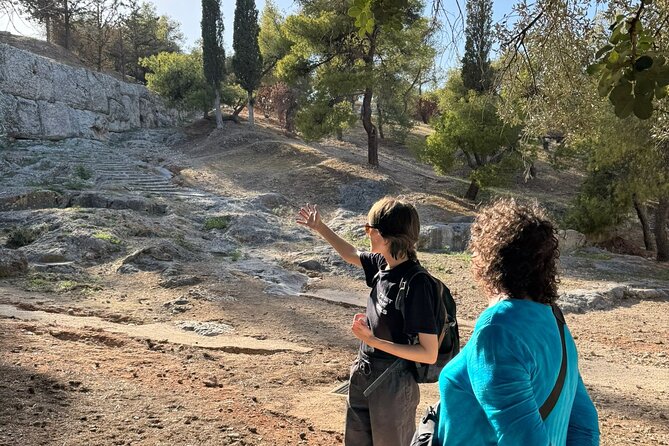
Athens has a way of making you think history is mostly about men, big buildings, and big speeches. This tour pushes back, using actual landmarks to tell stories where women are the focus, not an afterthought. The goal is not to replace everything you know. It is to add missing context, so the city starts to make more sense.
You also get a classic walking-tour rhythm, but with a twist. Instead of bouncing between unrelated facts, the guide ties together themes like education, marriage, love, festivals, and public life. You finish with more questions, in a good way, because you leave with ideas you can spot in the streets and views you already planned to see.
And since it is private, the “I have to translate this for 30 people” problem disappears. You can ask for clarification when something sounds confusing, or you can steer the conversation if a topic grabs you.
More of Plaka and Monastiraki on foot:
- Acropolis and Parthenon Guided Walking Tour
★ 5.0 · 4,755 reviews - Greek Food Walking Tour in Athens
★ 5.0 · 4,740 reviews - Athens: Guided Greek Food Walking Tour with Tastings
★ 4.9 · 2,859 reviews - Acropolis monuments & Parthenon Walking Tour with Optional Acropolis Museum
★ 5.0 · 2,678 reviews
From Monastiraki meeting square to Hadrian’s Library: education for girls and women
Your tour kicks off in Monastiraki, right by the square that has been a meeting point for ages. This is a smart start because it gets you oriented fast. You are in the center of the tourist map, but you are also close to the kind of layers Athens is known for, markets, neighborhoods, and monuments all close together.
From there, you head to Hadrian’s Library, where the theme shifts to education. You are not just hearing generic “women had no rights” messaging. You learn about the education of girls and women in Ancient Athens, which changes the tone right away. It is one of those stops where a guide can connect myth, daily life, and social expectations, and you get a fuller picture than you would from a quick pass at a monument.
Practical note: this is a short stop, about 10 minutes, so it works best if you stay present. If you want photos, grab them quickly, then let the guide finish the story. Otherwise you will miss the links being made.
The church stop and the marriage theme: EROS, Athens, and Sparta
Next comes the Holy Church of the All-Great Taxiarchs and the Virgin Mary Gregorousa. Even if you usually skip churches on sightseeing days, this is one of those times it can be worth slowing down. The reason is that the guide uses the setting as a bridge into Ancient Athens and Ancient Sparta, with a focus on the meaning of marriage.
This stop also leans into EROS, the passionate kind of love. That is a key detail because it signals the tour will not only talk about roles and restrictions. It also looks at emotion and relationships as part of the cultural story. In Athens, mythology and social life are constantly crossing wires, and this tour treats those connections as part of real history, not just fantasy.
The possible downside here is also simple: 15 minutes is not long. If you like deep, slow conversations, you may want to ask a question early. Use the private format to get your biggest curiosity answered while you have time.
Gate of Athena Archegetis: myth tied to married life
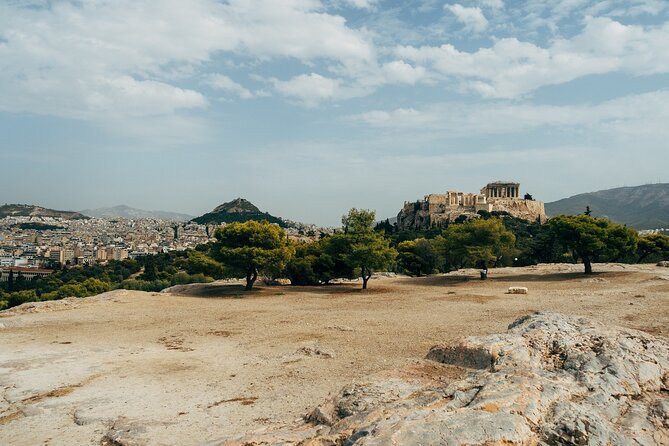
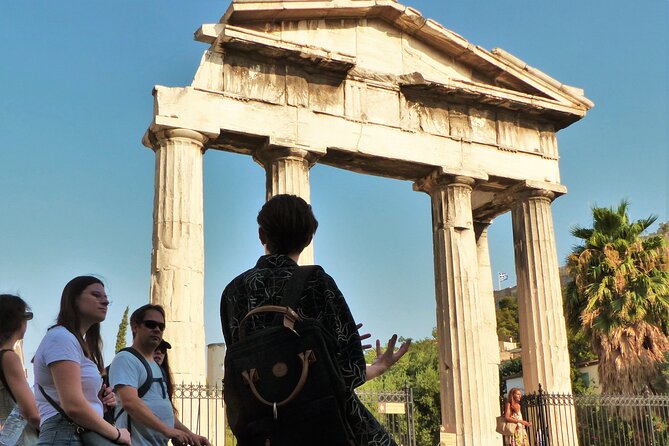
At the Gate of Athena Archegetis, the theme returns to married life and moves into mythology. Athena is a natural anchor in Athens because she is everywhere, and the tour uses that familiarity to point you toward a more specific question: what marriage meant for women in ancient times, in Athens and Sparta, and how that shows up through stories tied to Athena.
I like this approach because it turns a “cool monument” into something you can mentally map. You start noticing that the city’s myths are not floating in the sky. They are part of the cultural language people used to explain life, duties, and power.
This is another 15-minute stop, so again, think of it as a story window. You want to be able to watch the guide’s connections land, not just stand there with your camera.
Dioskouron and the Agora outside view: women’s festival and public space
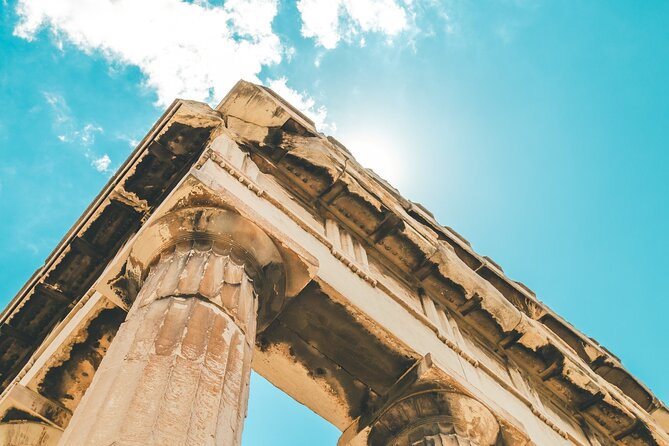
Then you hit Dioskouron, a mysterious ancient festival dedicated exclusively to women. That description alone is enough to make you pay attention. Most general tours give you the headline version of Greek religion. This one focuses on a women-only angle, which means you get different questions, like what participation looked like, and what kind of community a festival could create.
Right after that, you move toward the Ancient Agora of Athens. Here, the emphasis is on women in public space, plus the lived reality of female slaves or courtesans in the city. You do not enter the archaeological site, and that matters. The value is not in climbing ruins. The value is in learning how to interpret the space from the outside.
For many people, this outside perspective is a win. You spend less time stuck in ticket lines or navigating uneven ground, and more time learning how the marketplace functioned as the center of public life. If your goal is to understand how people moved and where women could be seen, this makes sense.
One more practical note: the Agora area is active and open. Wear shoes you trust, and keep water handy. This tour is short, but it is still Athens walking.
A handful more Athens outings to compare
- Best of Athens Half Day Private Tour★ 5.0 · 3,714 reviews
- Athens Full Day Private Tour★ 5.0 · 2,903 reviews
- Athens Airport Private Arrival Transfer with Meet & Greet★ 4.5 · 1,495 reviews
- Athens Airport to Athens Hotels Private Arrival Transfer★ 5.0 · 947 reviews
Areopagos and Pnyx: trials, democracy, and a woman shaping politics
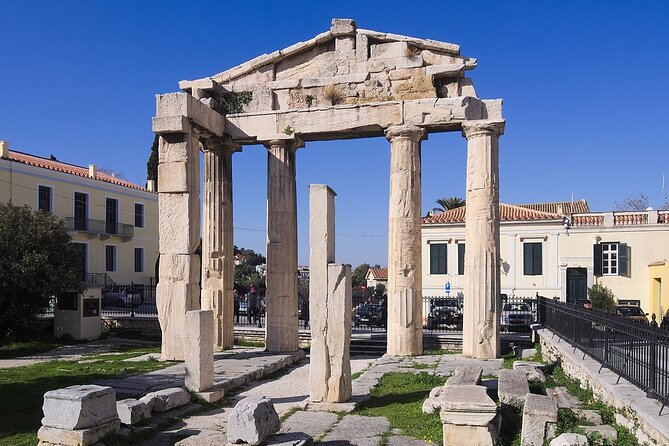
At Areopago (Areopagus), the story takes a darker turn. You learn about the place where the worst sinners were trialled in ancient times. Then the tour introduces inspiring stories of a woman who risked a death sentence to change women’s rights.
That combination is powerful because it pairs setting with stakes. It is easy to talk about women’s rights as a concept. It is harder to face it as something people risked everything for. The guide’s job here is to connect that theme to what the site represents.
Next comes Pnyx, where democracy all began. Here, you get the tension: only men citizens used to vote. Against that, the tour focuses on how a woman influenced the politics of Athens during its Golden Age.
Even if you already know the broad democracy story, this tour’s angle changes how you feel about the word democracy. It becomes not just a political system, but a question about who gets heard, who gets to vote, and who still shapes events through influence even without direct citizenship voting rights.
This stop is about 15 minutes, with a lot of theme packed in. If anything about trials, politics, or women’s agency hooks you, ask your guide to explain how the story fits the wider Athens picture. Private tours are best when you treat them like a two-way conversation.
Philopappos Hill finish: view on the Acropolis and the Hill of the Muses
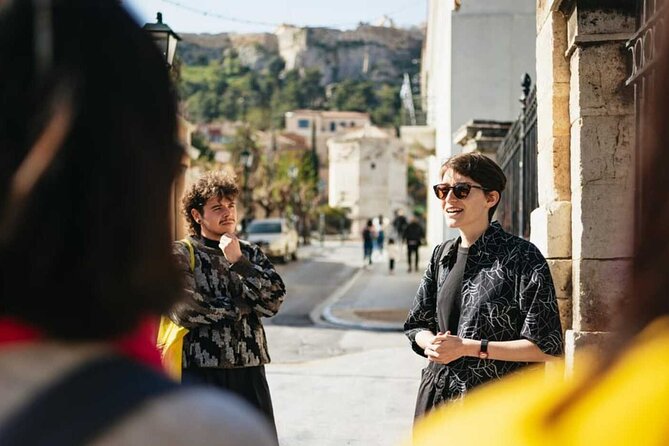
You wrap up at Philopappos Hill, a 10-minute finish that doubles as a payoff. The tour frames this hill as the Hill of the Muses, giving endless inspiration to Athenians until now. Then you get the view on the Acropolis, which is why this ending works so well.
Ending with a viewpoint is more than a nice photo moment. It gives your brain a chance to connect the day. You see the city’s layout and realize how all these stories are tied to real geography. It is easier to remember lessons when you can attach them to a skyline.
You also end at a spot that is close to the center by foot and easy to reach by metro if needed. That helps if you want to keep sightseeing after the tour without turning it into a transportation puzzle.
Price and value: what $90.22 really buys you here
At $90.22 per person for about 2 hours, you are paying for a guided, private walking experience with story-focused stops. You are not paying for private transportation, and that is actually important. It means the cost is centered on guide time and access to interpretation, not on moving you around in a vehicle.
The tour includes all fees and taxes, and the stops are described as free of admission tickets. You also do not enter the archaeological site, so you avoid the time and friction that sometimes come with ruin visits. For me, that is part of the value logic: the money goes toward making you understand what you are seeing, not toward paying for entrances.
If you want a standard “see the landmarks” tour, this may feel more focused than you expect. If you want the kind of Athens storytelling that makes you look twice at familiar places, this price can feel fair.
One more plus: there are group discounts, and the tour uses a mobile ticket. Those details matter if you are planning with friends or prefer less paper to manage.
Pace, timing, and what to do before you start walking
This is an approximately 2-hour private walk with multiple short stops, so the pace is steady. That is good news if you like walking tours that keep moving and do not drag. It is also good that most stops are around 10 to 15 minutes, which keeps the storytelling punchy.
Here is what I suggest you do so the tour lands best:
- Wear comfortable shoes you can walk on for a couple hours on uneven streets.
- Bring water, even if the route is short.
- If you have a specific question about women’s roles, education, marriage, festivals, or politics, save it. Ask it when the guide hits the relevant stop.
Because it requires good weather, plan to keep your day flexible. If rain shows up, you may be offered another date or a refund.
Language is English, and the tour is adapted for participants over 10 years old. If you are traveling with kids in that age range, the focus on stories and place-based themes can work well because it is not just a lecture.
Also, if mobility is a concern, note the tour is not recommended for travelers with mobility issues. It is walking-heavy, and you are visiting mostly outside viewpoints.
Who this private women-in-Ancient-Greece walk is for
This works best if you want more than a generic Greece overview.
You should strongly consider booking if:
- You like myth and want it connected to real places, not treated as separate trivia.
- You care about women’s history, including education, marriage, festivals, and public life.
- You prefer private guides who can answer your questions directly.
- You want a short, 2-hour format that still covers a lot of thematic ground.
It may not be the best fit if you hate walking, need step-free routes, or want entry tickets and long time inside major archaeological sites.
Should you book this private walk?
If your ideal Athens day includes stories, thoughtful context, and a route that ends with a view, I say book it. The price feels tied to interpretation rather than transport, and the private format is the difference between listening and actually understanding.
The main reason not to book is simple: it is not for mobility limitations, and you are outside for the stops. If that is manageable for you, this is a smart way to spend a morning or afternoon in central Athens while learning the women-first version of the city.
FAQ
What is the duration of the Private Walk Women in Ancient Greece?
It lasts about 2 hours.
Where does the tour start?
The meeting point is Pl. Monastirakiou 2, Athina 105 55, Greece.
Where does the tour end?
It ends at Philopappos Hill, Φυλής 215, Athina 117 41, Greece, near a top viewpoint on the Acropolis.
Is this tour private?
Yes. It is a private tour, so only your group participates.
Is transportation included?
No private transportation is included.
What language is the tour offered in?
The tour is offered in English.
Are there admission tickets included?
All fees and taxes are included. The stops are described as admission ticket free, and you see archeological sites from outside without entering.
Is a mobile ticket used?
Yes, the tour includes a mobile ticket.
Is the tour accessible for people with mobility issues?
It is not recommended for travelers with mobility issues.
What should you do if weather is bad?
The experience requires good weather. If it is canceled due to poor weather, you will be offered a different date or a full refund.
FAQ
Can I get a refund if I cancel?
Free cancellation is available, and you can cancel up to 24 hours in advance for a full refund.
Are service animals allowed?
Service animals are allowed.
Is the tour suitable for children?
The tour is adapted for participants over 10 years old.
Latest from under the Acropolis






Walking Tours, compared.
Acropolis and Parthenon Guided Walking Tour
Read our review →

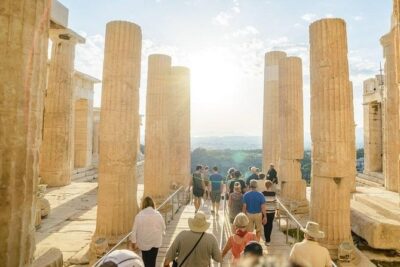
Acropolis monuments & Parthenon Walking Tour with Optional Acropolis Museum
Read our review →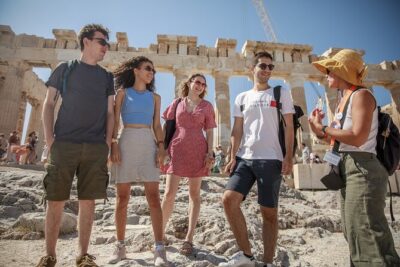
Athens Acropolis and Parthenon Walking Tour
Read our review →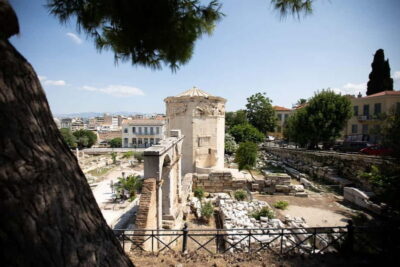
Acropolis, Parthenon & Athens Old City Heritage Walking Tour
Read our review →
Athens Authentic Greek Food Walking Tour (Small Group)
Read our review →
Browse the lists this tour appears in