
Reviewed · FOOD TOURS
Eating Athens: Our Big, Fat, Greek Food Tour
Athens at dinner time feels easier, less frantic, and more you. This big Greek food walk is built for that moment, with plenty of tastings and a local guide who explains what you are eating and why it matters. The route also mixes historic Monastiraki with the colorful side of Psiri, so you see more than just menus.
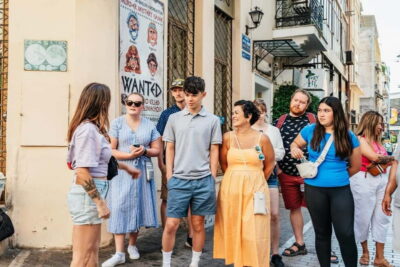
I like how the tour doesn’t treat food like a checklist. You get hands-on moments, like learning the Greek coffee ritual and making your own gyros, plus stops that feel like places locals actually drift into. Guides such as Sophia, Christina, Blossom, and Zoi are often singled out for turning bites into clear stories, which makes the whole evening feel practical, not performative.
One thing to consider: this is a walking tour with multiple stops and lots of food. If you have a very sensitive stomach, strict dietary needs, or you want a light snack experience, you may prefer a smaller, shorter tasting instead.
In This Review
- Key highlights that make this tour worth your time
- Athens food done the practical way, not the tourist way
- Where you meet, how the evening flows, and what the walking feels like
- Stop 1 in Ifestou 20: a 1990s style coffee demo and rose petal spoon sweet
- The mural square and Athens graffiti in an old district
- Bougatsadiko Psirri: handmade pies baked on the spot
- Psiri pedestrian streets and how fasting shaped food
- Stop 3 at Έντεκα: making gyros, plus tzatziki and beer
- The 24-hour shop near Central Market: dried fruits and ancient-root snacks
- Zarkadian Delicatessen: Greek cheeses, cured meats, wine, and spirits
- LUKUMAΔΕΣ donuts: crispy outside, soft inside, and a sweet ending
- Price and portion math: what $101.58 buys you in Athens
- Who this Athens food tour suits best
- Should you book Eating Athens, Our Big Fat Greek Food Tour?
- FAQ
- What is the duration of the tour?
- Where does the tour start and end?
- What costs are included in the price?
- Are tips for the guide included?
- Is hotel pickup included?
- How big is the group?
- Can you accommodate dietary requirements?
- Are children allowed on the tour?
- Is the tour offered in English?
- Is it refundable if plans change?
Key highlights that make this tour worth your time
- Greek coffee with fortune telling at a small neighborhood spot off the main tourist route
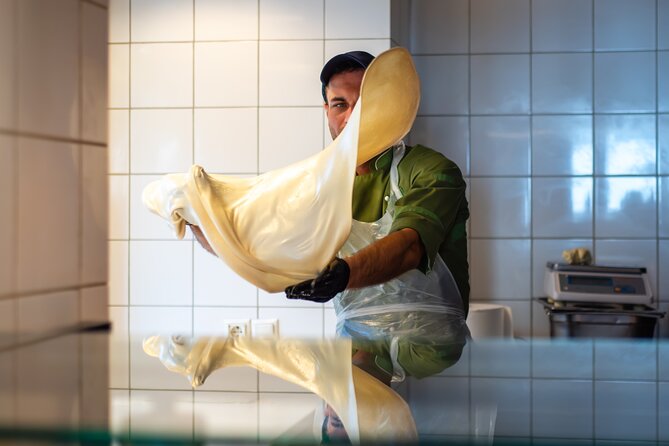
- Handmade pies baked on the spot at a bakery that still makes things from scratch
- DIY gyros workshop served warm in pita, with tzatziki and a Greek beer
- Market and delicatessen tastings featuring Greek cheeses, cured meats, wine, and traditional spirits
- Authentic Greek donuts finished with honey and cinnamon or chocolate
- Small group size (max 12) so you can ask questions and keep a relaxed pace
Athens food done the practical way, not the tourist way
This tour is a great first-night plan if you want to get your bearings while you eat. You start in Monastiraki, then drift into Psirri, two neighborhoods that are close on a map but feel different under your feet. That difference matters because Athens food really is neighborhood food, shaped by tradition, church calendars, and what ingredients are easy to get.
The timing also helps. The tour is built for evening temperatures, which can make a three-and-a-half-hour walk feel manageable instead of sweaty. And with a maximum group size of 12, you are not stuck behind a parade line of people. You can actually hear your guide and stay engaged.
Most of the value is in the volume and variety. You are not doing tiny “one bite per stop” sampling. The tour is designed so you leave comfortably full, and the food hits different categories: coffee and sweets, pies, savory gyros, cured meats, and finished-off-with-dessert donuts.
More souvlaki counters and mezze stops in a row:
- Greek Food Walking Tour in Athens
★ 5.0 · 4,740 reviews - Athens: Street Food Tasting Tour
★ 4.9 · 3,343 reviews - Athens: Guided Greek Food Walking Tour with Tastings
★ 4.9 · 2,859 reviews - Small Group Greek Traditional Food Tour in Athens 20+ Tastings
★ 5.0 · 1,759 reviews
Where you meet, how the evening flows, and what the walking feels like
You begin near Platia Monastirakiou (Monastiraki Square) and end at LUKUMAΔΕΣ on Eolou 21 and Aghias Irinis Street. That end point is useful because it keeps dessert near where you already are, instead of turning the tour into a long commute back into the center.
Expect a steady walking rhythm, with short breaks for each tasting and a little context on the area you are standing in. The route leans into real Athenian streets, including a pedestrian stretch that connects everyday shops with historic churches, plus a small square marked by a big mural where you learn how graffiti culture has a place in Athens’ older districts.
If you like to plan your evenings around food, this tour gives you both. By the end, you will have a short list of places to return to without guessing. If you hate guessing, that alone is worth something.
Stop 1 in Ifestou 20: a 1990s style coffee demo and rose petal spoon sweet
The first tasting sets the tone. You head to Ifestou 20, tucked inside a small gallery that includes the city’s oldest record store. It already feels like a story, not a retail stop, and it has that lived-in vibe some cafes had back in the 1990s.
Here’s what you do: you get a Greek coffee demonstration. You do not just sip and move on. You learn how the coffee ritual works, including how to read your fortune from the cup. Then you taste a delicate spoon sweet made with rose petals, the kind of flavor that tastes floral but still reads as Greek tradition, not perfume.
Why this works: coffee and spoon sweets are easy to dismiss as touristy, unless someone explains the culture around them. Starting here gives you a baseline for what Greek sweets and coffee rituals feel like in real life, not just on a menu photo.
The mural square and Athens graffiti in an old district
Between food stops, you get a cultural pause that actually helps your walking. You visit a small neighborhood square marked by a striking mural, in one of Athens’ older districts. The point is not the paint for the sake of it. You learn how this area ties to older crafts and trades, from furniture and leather goods to metalwork, and how street art now fits into that ongoing urban identity.
This part is a good reminder that Athens cuisine did not grow in isolation. When you understand how people worked, traded, and gathered in a neighborhood, it becomes easier to appreciate why certain foods show up where they do. Also, it breaks up the evening so you are not constantly “in tasting mode.”
Bougatsadiko Psirri: handmade pies baked on the spot
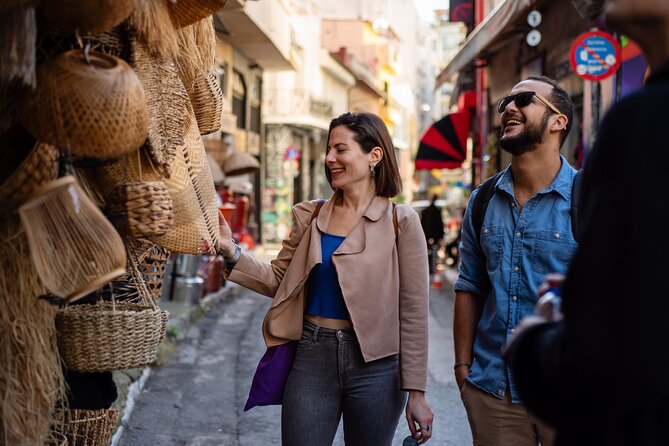
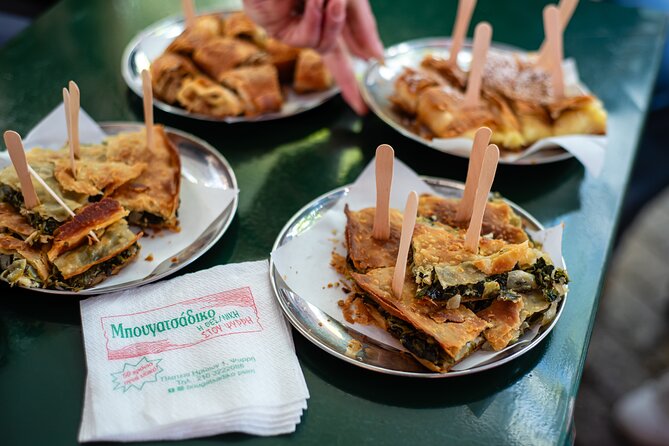
Next comes one of the most practical Athens tastes you can chase afterward: pies made from scratch. At Bougatsadiko Psirri, you stop at a bakery that still makes its handmade pies on site, baked there while you watch.
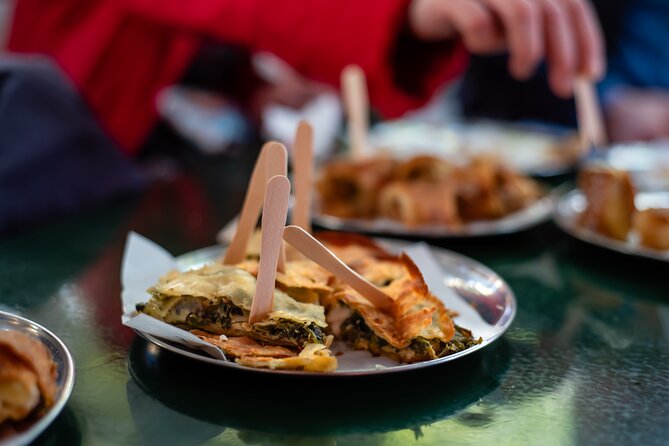
You taste sweet and savory options built on crispy phyllo and bougatsa-style dough. Fillings can include spinach, cheese, meat, and custard, so the stop covers multiple flavor directions without feeling repetitive. You get that crisp pastry texture, plus creamy or savory interiors, which helps you understand why bougatsa and similar Greek pie dishes are such go-to comfort food.
A small downside for some people: if you already know you want spinach or cheese specifically, you might wish you could order exactly those. But the upside is the education. You taste a range and quickly learn what kind of filling hits your taste buds.
More Athenian tavernas, ouzeri and counters:
- Athens: Food Market Visit and Cooking Class with Wine★ 4.9 · 1,087 reviews
- Athens Authentic Greek Food Walking Tour (Small Group)★ 5.0 · 809 reviews
- Athens Greek Food Tour Small-Group Experience★ 5.0 · 802 reviews
- Athens Evening Food Tour★ 5.0 · 766 reviews
Psiri pedestrian streets and how fasting shaped food
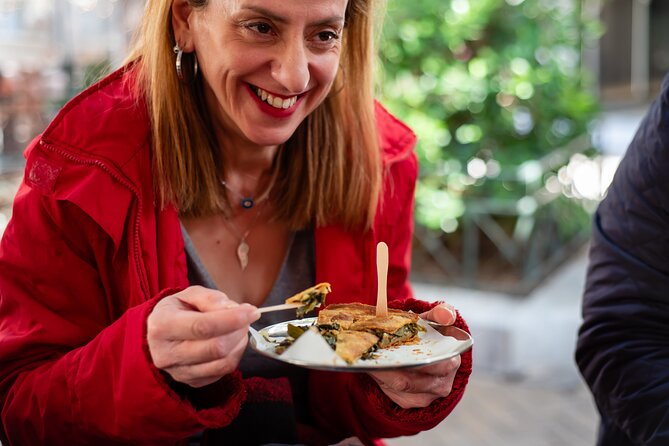
From the bakery you move into a pedestrian stretch lined with cafés, fabric shops, and historic churches. This is where your guide connects food to daily life, especially through Orthodox traditions and fasting. You hear how periods of fasting influenced what gets eaten, including “lenten” foods built around olive oil and ingredients that make sense when certain foods are reduced.
This context is helpful for two reasons. First, it explains why Greek cuisine has both heavy and lighter rhythms depending on the calendar. Second, it gives you language to recognize dishes when you see them on menus later. Instead of ordering randomly, you start to understand what you are choosing.
Stop 3 at Έντεκα: making gyros, plus tzatziki and beer
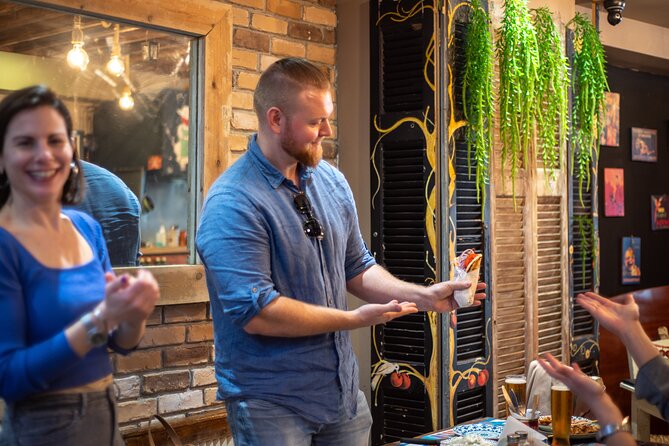
Now you get the hands-on highlight: at Έντεκα, you make your own gyros with pork or chicken and wrap it in warm pita bread. It is not a cooking class where you lose time and end up tired. It is a focused workshop where you build the wrap, learn a little about the dish, then eat while it is warm.
You also get a medley of flavors, including tzatziki, so it is not just meat and bread. Then it comes with a Greek beer, which is a smart move for pacing. The beer helps round out the savory part of the meal and keeps you comfortable through the rest of the walk.
This stop is one of the most praised elements for a reason. It turns “Greek food” from an idea into a skill you can use later. You will know what should taste balanced in a gyro, which makes it easier to judge the gyros you try on your own after this tour.
The 24-hour shop near Central Market: dried fruits and ancient-root snacks
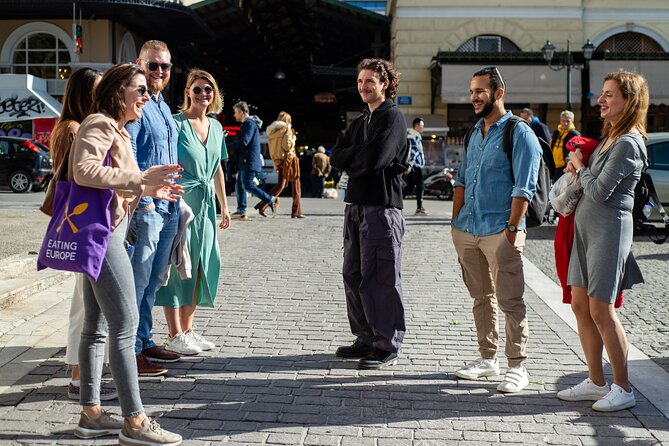
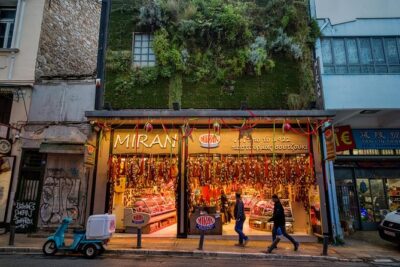
Next you visit a shop tied to Athens’ Central Market area. It is a 24-hour shop that opened in 1886, selling dried nuts, figs, raisins, and other local products. This is the kind of stop that feels small but sticks with you because the ingredients are shelf-stable and easy to bring home.
Why it matters: Greek markets are often about what lasts and what travels. Dried fruit and nuts are part snack, part pantry staples, and part culture. After this, you are more likely to buy local products that are practical, not just decorative.
If you are hoping for a bigger tasting here, you might find it more “browse and sample” than “full course.” But it adds texture to the evening, shifting from hot food and drinks to something you can actually picture buying later.
Zarkadian Delicatessen: Greek cheeses, cured meats, wine, and spirits
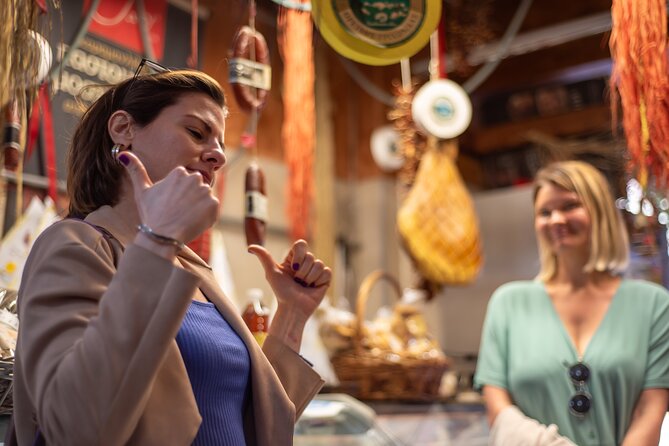
By the time you reach Zarkadian Delicatessen, you are ready for richer flavors. This is a family-owned market where you get a charcuterie-style tasting: three types of Greek cheese plus cured meats. Your tasting is paired with white and red wine, and you also try traditional Greek spirits.
This is a valuable stop because it teaches you how Greek drinking and snacking work together. In Athens, food culture often means ordering a spread and taking your time, not rushing through a single dish. This tasting gives you a taste of that tempo.
A practical note: since wine and spirits are included here, plan to slow down a touch after this stop. It is a strong flavor segment. If you are sensitive to alcohol, mention it to your guide beforehand, and know this portion includes pairings.
LUKUMAΔΕΣ donuts: crispy outside, soft inside, and a sweet ending
You finish at LUKUMAΔΕΣ and it is a fitting close. This stop focuses on authentic Greek donuts that are crispy outside and soft inside, made at one of the few places in Athens doing it the traditional way.
You can expect toppings or pairings like honey and cinnamon or chocolate. The place feels friendly and welcoming, and the donut itself acts like the evening reset button. You go from savory and salty back to sweet warmth, which makes the walk feel complete rather than abruptly over.
This is also why the tour’s pacing works. By the time you reach dessert, you have earned it, and you are not arriving too full to enjoy it.
Price and portion math: what $101.58 buys you in Athens
At $101.58 per person for about 3 hours 30 minutes, this tour is not a budget snack. But it can still be good value because you are getting multiple categories of food plus drinks, not just one tasting.
Here’s the practical breakdown of what you are paying for:
- Several included stops across different neighborhoods, so you are buying time, guidance, and access to places you might miss
- Hands-on gyros making plus guided coffee ritual
- A mix of hot savory items (pies, gyros), cold and rich flavors (cheese and cured meats), and dessert
- Alcohol pairings included at specific points, including wine and Greek spirits, plus Greek beer with the gyros segment
- A small group size that keeps the experience from feeling rushed
In other words, you are buying structure. If you want to DIY Athens food solo, you can, but you would likely lose time finding the right spots and second-guessing what is worth your money. This tour reduces that friction and gives you a longer eating sequence than many shorter options.
If you are on a tight schedule, go only if you truly want a full food evening. If you are okay with a bigger meal-like tour, it is the kind of price that makes sense.
Who this Athens food tour suits best
This is a strong fit if you:
- Want a first-night Athens plan that mixes food and neighborhood context
- Like guided tastings where you learn something you can use later
- Enjoy variety, including savory, sweets, coffee rituals, and a drinks pairing component
- Prefer a small group (up to 12) over big crowds
It may be less ideal if you:
- Want a light snack and photos only
- Have severe or life-threatening food allergies, since the experience is noted as not suitable for those cases
- Need very strict accommodations and cannot eat most shared tastings
Also, if you are traveling as a family: children under 4 can join for free, but food is not included for them. For ages 4 and up, tickets with food are available.
Should you book Eating Athens, Our Big Fat Greek Food Tour?
If your main goal is to eat really well while getting an Athens street-level feel, I think this tour is an easy yes. It is built for people who want more than one bite, more than one flavor, and more than one neighborhood. The coffee stop, the handmade pies, and the gyros workshop are the kind of anchors that turn an evening into a highlight.
I would only hesitate if you hate walking, want minimal alcohol pairings, or you want a minimalist meal. Otherwise, this is one of those tours that helps you start your trip with confidence, then gives you good leads for the rest of your Athens days.
FAQ
What is the duration of the tour?
The tour runs for about 3 hours 30 minutes.
Where does the tour start and end?
It starts at Platia Monastirakiou, Athina 105 55, Greece, and ends at LUKUMAΔΕΣ, Eolou 21, & Aghias Irinis Str, Athina 105 51, Greece.
What costs are included in the price?
The price includes Greek coffee demonstration with fortune telling, making gyros, sweet and savory pies, Greek donuts, and tastings at the listed stops. Beer is included with the gyros portion, and wine and traditional spirits are included at the deli stop.
Are tips for the guide included?
No. Gratuities or tips for the guide are not included.
Is hotel pickup included?
No. Hotel pick-up and drop-off are not included.
How big is the group?
The tour has a maximum of 12 travelers.
Can you accommodate dietary requirements?
You can email or add a note at booking for help with vegetarian, gluten-free, or other dietary needs. The tour is not suitable for guests with severe or life-threatening food allergies, and the provider cannot take responsibility for food allergies or intolerances.
Are children allowed on the tour?
Children under 4 can join for free, but food is not included. Paid tickets with food included are available for ages 4 and up.
Is the tour offered in English?
Yes, it is offered in English.
Is it refundable if plans change?
Yes, there is free cancellation. You can cancel up to 24 hours in advance for a full refund.
Latest from under the Acropolis






Food Tours, compared.

Small Group Greek Traditional Food Tour in Athens 20+ Tastings
Read our review →
Food Market Visit and Cooking Class with Wine
Read our review →
Athens Authentic Greek Food Walking Tour (Small Group)
Read our review →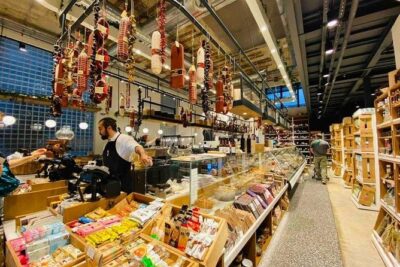
Athens Greek Food Tour Small-Group Experience
Read our review →
Browse the lists this tour appears in