
Reviewed · WALKING TOURS
Athens: Walking Tour with a Tour Leader
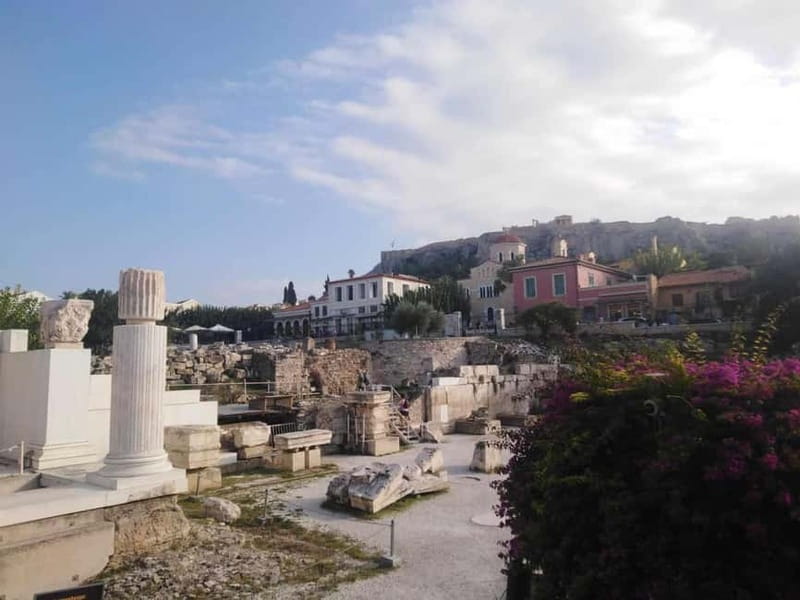
One good map won’t do Athens justice. This 3-hour walk pairs you with a live guide, so you understand what you are seeing as you go, with a small group size capped at 10. I like the tight route and the focus on central sights, plus the way the guide brings the city to life for daily living, not just monuments.
Two big things I like: you hit Monastiraki, the Ancient Greek Agora, and Plaka all in one outing, and you also get major landmarks like the Temple of Zeus and the Parliament on the same route. One thing to consider is that it is a proper walking tour, and it is not suitable for wheelchair users or people with mobility impairments, so comfortable shoes are not optional.
In This Review
- Key highlights you should care about
- Getting oriented fast: meeting at Monastiraki square
- Monastiraki: real Athens around the edges of the big sights
- Ancient Greek Agora: understanding the space, not just the ruins
- Roman Agora: when Athens changes its style of power
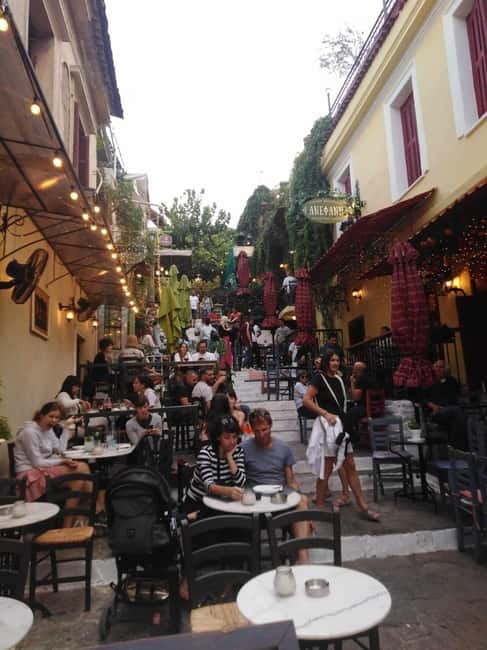
- Plaka: turning history into neighborhood walking
- Temple of Zeus: size, scale, and what to look for
- University and the Parliament: civic Athens, not just ancient Athens
- How Vera’s leadership changes the value of a walking tour
- It’s only 3 hours, so here is how to get the most out of it
- Price and value: why $29 can make sense
- Who this tour fits best
- Practical tips so your walk stays easy
- Should you book this Athens walking tour with Vera?
- FAQ
- How long is the Athens walking tour?
- Where is the meeting point?
- How much does it cost?
- What stops and landmarks are included?
- What language is the tour guide?
- Are meals included?
- What should I bring?
- Is this tour suitable for wheelchair users or mobility impairments?
Key highlights you should care about
- Small group (up to 10) keeps questions easy and the pace human
- Vera-led storytelling that connects sites to how Athenians live today
- A focused loop through Monastiraki, Ancient Agora, Roman Agora, and Plaka
- You also see major civic landmarks like the Parliament and nearby University buildings
- A route that covers Athens with an orientation toward the Piraeus side, so you get a wider city feel
- English and Spanish support, with Spanish described as very strong
Getting oriented fast: meeting at Monastiraki square
The meet-up is right in front of the Metro Station at Monastiraki square. That is a big deal for two reasons. First, you can arrive without hunting for a specific street corner. Second, it helps you settle in right away, so the first part of the tour starts with context instead of confusion.
This is also one of those walks where the guide’s pacing matters. In 3 hours, you cannot linger at every stone. But with a small group and a real live leader, you get short, clear explanations that make the next stop click.
Bring comfortable shoes, plus water and a hat if the sun is out. Athens weather changes quickly, and this walk is outdoors the whole time.
More of Plaka and Monastiraki on foot:
- Acropolis and Parthenon Guided Walking Tour
★ 5.0 · 4,755 reviews - Greek Food Walking Tour in Athens
★ 5.0 · 4,740 reviews - Athens: Guided Greek Food Walking Tour with Tastings
★ 4.9 · 2,859 reviews - Acropolis monuments & Parthenon Walking Tour with Optional Acropolis Museum
★ 5.0 · 2,678 reviews
Monastiraki: real Athens around the edges of the big sights
Monastiraki is often where people start looking, but it is also where you learn how Athens actually moves. You are not just passing through a postcard area. You are walking through a neighborhood that feels like it belongs to daily life, not just tourism.
The guide’s job here is to give you a mental map. You get vocabulary for what you are seeing and why it matters, so the place becomes readable. That includes how this area connects older layers of the city with modern habits, like what people watch for, how they move, and what they treat as normal.
One practical benefit: if you decide later where to eat or stroll on your own, Monastiraki gives you a baseline. You will be able to tell the difference between a convenient tourist stop and a place that feels more lived-in.
Ancient Greek Agora: understanding the space, not just the ruins
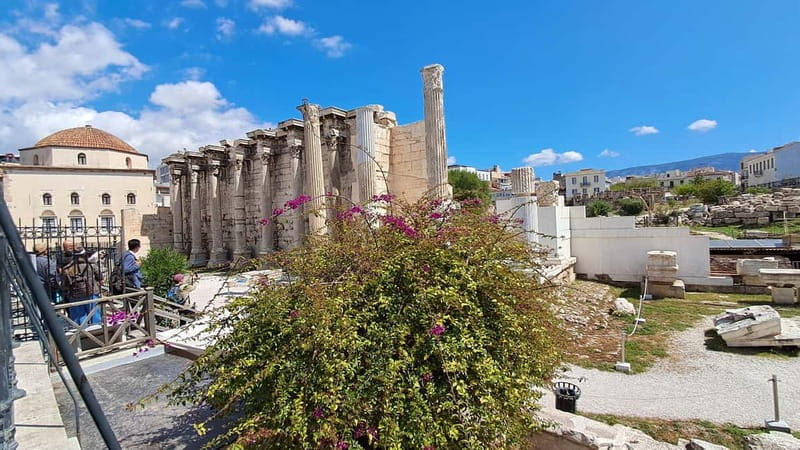
Then you shift into Ancient Greek Agora territory, where stone and layout do most of the talking. The advantage of doing this with a guide is simple. You spend less time guessing what you are looking at and more time noticing the patterns that shaped public life.
A good Agora experience is not only about dates. It is about how people used space for decisions, meetings, and everyday conversation. You will hear vivid descriptions that connect the site to the idea that the Agora was a working part of the city, not an outdoor museum set.
Watch for how the guide frames what is left. Even when you see fragments, you can still get a sense of what once stood there and how people moved through the area. That makes your photos more than souvenirs. They become proof you understood what you were seeing.
Roman Agora: when Athens changes its style of power
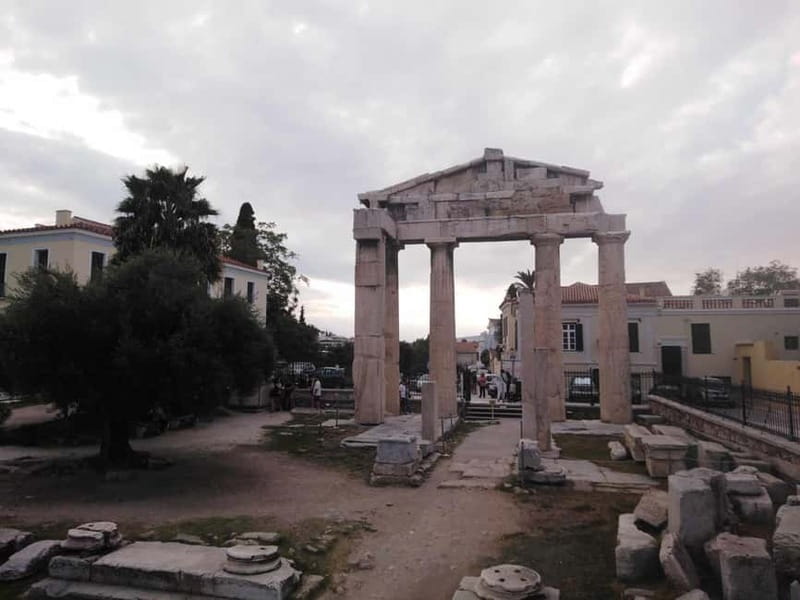
Right after the Ancient Agora, you visit the Roman Agora. This sequence is smart, because it lets you notice contrast without needing a history degree.
Roman influence shows up in different ways, and the guide uses the walk to explain how power and culture can shift over time. You are basically training your eyes to recognize what is familiar and what is different. That makes the Roman Agora feel less random and more like a chapter in the same story.
If you like architecture and city planning, this stop pays off. Even if the details are not perfectly intact, the guide’s narrative helps you read the space as an urban system. Think of it as learning how the neighborhood was used, not just how it was built.
Plaka: turning history into neighborhood walking
Plaka is where your tour starts to feel like Athens as a living city. Yes, you are in a historic area, but you also get that daily-life rhythm. This is the part where you can relax a bit, look up, and let the guide connect the big ideas to what you see at street level.
The value here is that the guide keeps it practical. You learn not only what is important, but also how Athenians think about the place, and how visitors can interpret it without getting lost in jargon.
Plaka can be busy at peak times, so the small-group size matters. With up to 10 participants, you can move as a unit, hear what the guide is explaining, and still have enough space to stop when something catches your eye.
If you want a souvenir photo that looks intentional, Plaka is where you can slow down and frame the scene with understanding behind it.
Same hours, spent a different way in Athens:
- Athens: Acropolis & up to 5 Archaeological Sites Combo Pass★ 4.2 · 13,904 reviews
- Athens: Acropolis, Parthenon & Acropolis Museum Guided Tour★ 4.8 · 9,316 reviews
- The Acropolis, Parthenon & Acropolis Museum Guided Tour★ 4.7 · 8,493 reviews
- Athens: Cape Sounion & Poseidon Temple Sunset Half-Day Trip★ 4.8 · 8,241 reviews
Temple of Zeus: size, scale, and what to look for
Next comes the Temple of Zeus, and the guide uses this stop to teach scale. Big ruins can be misleading if you only see them as broken columns. With an explanation, you start to grasp why the site was so dominant and why it still anchors the area visually.
This is also where the tour gives you “where am I in Athens” context. When you know the landmark, you understand the surrounding streets differently. You can picture how people would have oriented themselves and how the city’s focal points shaped movement.
If you are a first-time visitor, this stop is especially useful. It gives you a reference point for your later self-guided exploring.
University and the Parliament: civic Athens, not just ancient Athens
The tour continues with stops that pull you out of strictly classical territory and into modern civic Athens. You will see the University and the Parliament, which helps you understand that Athens did not stop when the ancient world ended. It kept building, governing, teaching, and revising its identity.
These sites add a different kind of meaning. Instead of asking, What did this structure look like once?, you start asking, How does the city function today? The guide’s explanations connect public space to the idea of shared life, politics, and national identity.
I like this mix because it prevents the “ancient-only” trap. If you only chase temples, you can leave Athens feeling like you visited a theme park of history. Here, you finish with a more complete sense of the city as an active capital.
How Vera’s leadership changes the value of a walking tour
The experience provider is VERA D. And in past bookings, Vera is singled out for being energetic and giving genuinely useful guidance. That matters because the best walking tours are not just lectures while you stroll. They are coaching for your eyes.
Also, the language setup is practical. The guide is a Greek native speaker who speaks English fluently and Spanish very well. If you speak Spanish, you get more than translation. You get explanations delivered with confidence, which makes the experience smoother and less awkward.
In a small group, that delivery style matters. You can ask a question and hear a direct answer. You can also adjust your pace if you need a quick break for photos or shade.
The vibe from this setup is that you leave not just with pictures, but with a story thread. You know how the stops relate, instead of collecting isolated landmarks.
It’s only 3 hours, so here is how to get the most out of it
Three hours sounds short, and it is. That is the point. You get a dense Athens sampler that is ideal when you have limited time or when you want to get your bearings before planning the rest of your trip.
To maximize value, show up ready to move. Wear comfortable shoes, bring water, and plan for heat and sun. Even if you think you are “fine walking,” the combination of stone surfaces, uneven sidewalks, and standing to look can add up.
If you are prone to slowing down, keep an eye on the group pace. The tour is designed around a loop through key areas like Monastiraki, the Agoras, Plaka, and then major landmarks like Temple of Zeus, University, and Parliament. You will enjoy it more when you treat it like a guided walk, not a museum stop-and-start.
Price and value: why $29 can make sense
At $29 per person for a 3-hour live guided walk, the value comes from three things.
First, you are paying for interpretation. Athens ruins and historic streets can feel like random scenery if you go alone. A guide turns them into a coherent route.
Second, you are getting coverage of multiple “must-sees” in one morning or afternoon. Monastiraki, Ancient Greek Agora, Roman Agora, Plaka, plus big civic stops like Parliament, all in one outing, reduces the planning effort.
Third, the small group size capped at 10 improves the experience. You are not stuck in a crowd that makes questions impossible. That alone is often worth it for first-time visitors.
If your budget is tight, this is one of those activities that can prevent wasted time. It helps you pick where to spend longer later, and where to skip.
Who this tour fits best
This tour is a great match if you want a guided introduction to central Athens. It is also a solid choice if you prefer walking with someone who can explain what you see as you go, and point you toward how to experience Athens beyond the main monuments.
You will likely enjoy it most if:
- You are visiting for the first time and want a quick city orientation
- You like history, but you want it explained in plain language
- You want a neighborhood feel, not only isolated ruins
- You appreciate a small group and a live guide
It is not a fit if you have mobility limitations or you use a wheelchair, since it is described as not suitable for that.
Practical tips so your walk stays easy
A few simple things will make the tour more comfortable.
- Wear comfortable walking shoes. This is the biggest one.
- Bring a water bottle. The tour advises hydration, and you will feel it.
- Consider sunscreen and a hat, especially in warm weather.
- Photography is allowed, so you can plan for quick stops rather than feeling rushed.
- Weather can vary, so bring a light layer if conditions are changeable.
Also, arrive a few minutes early at Monastiraki square. When you are on time, you start with the group, and you lose less momentum.
Should you book this Athens walking tour with Vera?
If you want an easy way to get oriented in central Athens, I think this is a strong booking choice. For $29 and 3 hours, you cover key areas that are hard to stitch together into a coherent plan on your own, including Monastiraki, both Agoras, Plaka, Temple of Zeus, the University, and the Parliament.
Book it if you like walking, prefer small groups, and want a guide who can explain what you are seeing in real terms, not just facts. Skip it if mobility is an issue or if you are hoping for a hands-off, slow-paced stroll.
FAQ
How long is the Athens walking tour?
The tour lasts 3 hours.
Where is the meeting point?
You meet in front of the Metro Station at Monastiraki square.
How much does it cost?
It costs $29 per person.
What stops and landmarks are included?
The tour includes Monastiraki, the Ancient Greek Agora, the Roman Agora, Plaka, the Temple of Zeus, the University, and the Parliament.
What language is the tour guide?
The tour is offered with live guidance in English and Spanish.
Are meals included?
Meals and drinks are not included.
What should I bring?
Bring comfortable shoes, a hat, and water. Sunscreen is recommended for sun protection.
Is this tour suitable for wheelchair users or mobility impairments?
No, it is not suitable for people with mobility impairments and wheelchair users.
Latest from under the Acropolis


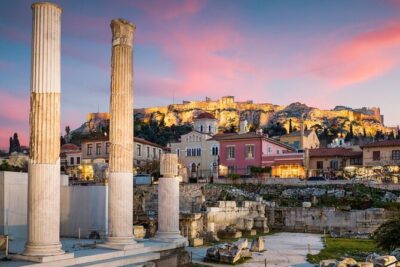

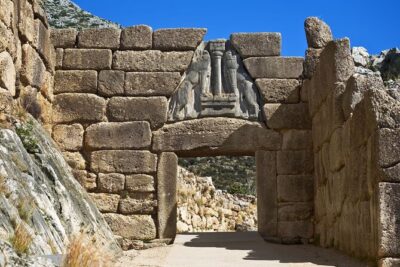

Walking Tours, compared.
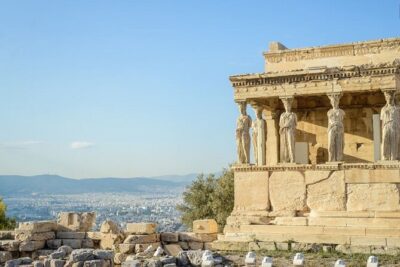
Acropolis and Parthenon Guided Walking Tour
Read our review →

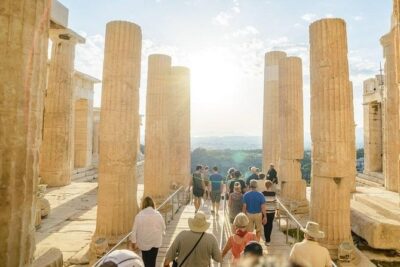
Acropolis monuments & Parthenon Walking Tour with Optional Acropolis Museum
Read our review →
Athens Acropolis and Parthenon Walking Tour
Read our review →
Acropolis, Parthenon & Athens Old City Heritage Walking Tour
Read our review →
Athens Authentic Greek Food Walking Tour (Small Group)
Read our review →
Browse the lists this tour appears in