
Reviewed · WALKING TOURS
Athens: Philosophy and Democracy Walking Tour
Athens is more than ruins. This 3.5-hour walk connects the big ideas behind philosophy and democracy to the exact places where they took shape. I especially like the way the guide uses stories to turn confusing dates into human choices, arguments, and values you can actually talk about.
Two more things I love: you get a smart route that focuses on Athens beyond just the Acropolis, and the pacing keeps you moving while still making time for context at each stop. One consideration: site admissions are not included, so you may need to budget a little extra if you plan to enter every stop.
In This Review
- Key moments you should look forward to
- Athens goes from ideas to real streets
- Beginning at Kerameikos, where Athenian history starts to sharpen
- Monastiraki flea market energy, then Plaka for the old-street mood
- Hadrian’s Library and the Roman Agora: Athens layers, not single-era Athens
- The Ancient Agora to Pnyx Hill, where politics and reasoning met
- Philopappos Hill views and the Acropolis pass-by that ties it together
- How long it really feels, and why small groups help
- Price value: why $49 can be a smart buy for first-time Athens
- Who should book this philosophy and democracy walk
- Should you book this Athens philosophy and democracy walking tour?
- FAQ
- Where is the meeting point for the Athens tour?
- How long is the walking tour?
- Is the tour admission price included for the sites?
- What should I bring and wear?
- Does the tour run in bad weather?
- Is the tour suitable for children and older adults?
Key moments you should look forward to
- Kerameikos starting point, tied to major Athenian history and Pericles
- Monastiraki and Plaka for street atmosphere and market-time texture
- Tower of the Winds, an octagonal marble clock and wind indicator
- Ancient Agora to Pnyx Hill, politics and public life in walkable sequence
- Hadrian’s Library and Roman Agora, plus a break with city views from Philopappos Hill
- A small group size (max 15) that makes questions feel normal
Athens goes from ideas to real streets
What makes this tour different is the focus. Instead of treating Athens like a museum you pass through, it treats the city like a classroom with streets for chalkboards. You’re not just looking at stone. You’re learning why Greeks argued in public, why they valued reason, and how civic life shaped what people thought counted as good thinking.
The route is also practical. You start on the west side of the historic core and work your way through neighborhoods and major landmarks in a logical flow. That matters because Athens can feel like a maze if you do it alone. With a guide, you get the connections in the right order, so the city stops feeling random and starts feeling like a timeline.
And yes, the topic is philosophy and democracy, but the goal is not a lecture you forget by dinner. You’ll get ideas you can use: how citizens debated, how different political systems rose and fell, and how people tried to explain the world using rational thought, science, and ethics.
More of Plaka and Monastiraki on foot:
- Acropolis and Parthenon Guided Walking Tour
★ 5.0 · 4,755 reviews - Greek Food Walking Tour in Athens
★ 5.0 · 4,740 reviews - Athens: Guided Greek Food Walking Tour with Tastings
★ 4.9 · 2,859 reviews - Acropolis monuments & Parthenon Walking Tour with Optional Acropolis Museum
★ 5.0 · 2,678 reviews
Beginning at Kerameikos, where Athenian history starts to sharpen
Your tour begins at the Statue of Theseus, across from the train station, then you head to Kerameikos Archaeological Site to kick things off. This is a powerful start because Kerameikos is tied to where important Athenians were buried for centuries. That alone gives you a sense of continuity, like the city kept memory alive even as power changed hands.
More importantly, Kerameikos is connected to Pericles and the kinds of civic speeches that shaped Athens’ identity. Even if you’ve heard the names before, placing them in the real landscape helps. You start to see how Athens created public culture, not just monuments.
If you like when history feels grounded, this opening works. You’re standing in a space where the city’s long-term values are visible, not hidden behind a ticket booth.
Monastiraki flea market energy, then Plaka for the old-street mood
Next you move toward Monastiraki, the area famous for antique stores and the flea market feel. This is not there just for shopping. It’s a chance to compare how people used marketplaces for daily exchange in any era, then watch how the old neighborhood atmosphere still pulls you in.
Then comes Plaka, the area with small houses and narrow streets near the historic center. Plaka can be touristy in a few spots, but it’s also where you get the texture of Athens when you slow down. Walking through it on a tour like this helps you reset your brain between heavy concepts. Market noise, side streets, and small visual breaks keep the tour human.
Practical tip: wear shoes you trust. The ground can be uneven, and you’ll want stable footing when the route tightens near old lanes.
Hadrian’s Library and the Roman Agora: Athens layers, not single-era Athens
From there you shift into the Roman-era layer with Hadrian’s Library and the Roman Agora. These stops matter because they show that Athens did not stop being influential after the classical period. The city kept receiving attention, new uses, and new buildings, even as empires changed.
Hadrian’s Library is also one of those places where you get to pause. Even without going deep into details that require museum-style time, the building creates a sense of scale and purpose. It’s education tied to architecture, which pairs nicely with the tour’s theme.
A short hop away is the Tower of the Winds, an octagonal marble tower in the Roman Agora. Here you get one of the tour’s most fun science moments: it served as a wind indicator and also as a clock. You’ll hear how it relates to an early meteorological station, used to help forecast weather. It’s a great reminder that “science” in ancient Greece was often practical, tied to how people lived outside.
If you like when history includes how people measured the world, this is a highlight.
The Ancient Agora to Pnyx Hill, where politics and reasoning met
Now you reach the Ancient Agora of Athens, the large ruin area that once functioned as a hub for political, commercial, administrative, and social activity. This is where the tour’s theme becomes physical. In the Agora, it’s easier to understand why democracy needed public space. Citizens had to gather, speak, trade, and watch decisions happen in front of them.
As the walk continues, you move toward Pnyx Hill, the historic setting linked to democracy. This is one of those locations where the conversation shifts from what Athens built to how Athens practiced self-government. The ground and the sightlines are part of the story, so you get more than a view. You get a sense of how public speaking and debate worked as an everyday civic tool.
You’ll also hear about the philosophical side as you pass related points in the civic landscape. The tour often frames philosophical ideas as responses to real life questions: what makes a good decision, how should a society organize power, and how does “wisdom” differ from opinion.
I also like that the tour doesn’t treat philosophy like floating abstractions. Instead, you see it as something people used to argue about justice, governance, and the ethics of daily life.
Same hours, spent a different way in Athens:
- Athens: Acropolis & up to 5 Archaeological Sites Combo Pass★ 4.2 · 13,904 reviews
- Athens: Acropolis, Parthenon & Acropolis Museum Guided Tour★ 4.8 · 9,316 reviews
- The Acropolis, Parthenon & Acropolis Museum Guided Tour★ 4.7 · 8,493 reviews
- Athens: Cape Sounion & Poseidon Temple Sunset Half-Day Trip★ 4.8 · 8,241 reviews
Philopappos Hill views and the Acropolis pass-by that ties it together
After Pnyx, you come to Philopappos Hill, where you’ll be able to enjoy views from the hilltop area near the Philopappos Monument. This part is a reward break. The walking makes you earn the panorama, and the city spread helps your brain connect the hills to the political geography you just learned.
From here, you’ll also pass by the Acropolis, Athens’ ancient citadel on the rocky outcrop above the city. Even if this is not the focus in the way an Acropolis-only tour is, it works as a capstone. You’ve spent the morning learning how civic life and thinking formed. Then you glance up at the iconic heights and see that Athens’ big ideas and big buildings belonged to the same world.
If you want a route that gives you context for the Acropolis without spending your whole day on it, this ending is a strong match.
How long it really feels, and why small groups help
The tour runs about 3.5 hours, and it’s designed as an easy walk with a few steps at the end. You should bring comfortable shoes, plain and simple, because the payoff is only as good as your footing.
Group size is limited to max 15, and that matters more than you’d think. In a smaller group, it’s easier to ask questions and get answers tied to the exact location you’re standing in. The best parts are when the guide connects the subject matter to what you can see in front of you, instead of pulling you into generic commentary.
One more note from the experience data: the tour is rain or shine, so expect wet streets sometimes. It’s worth planning for weather because you’ll still be walking the full route.
Price value: why $49 can be a smart buy for first-time Athens
At $49 per person, this tour is priced like a “get your bearings fast” experience that gives you more than a sightseeing checklist. The real value is the theme and the pacing. You are not paying just for access to places. You’re paying for a guided narrative that connects philosophy and democracy to the city’s civic spaces.
Two cost-related realities to keep in mind:
- Admissions are not included for the sites along the route.
- Some landmarks you see might be viewable from outside, but if you plan to enter any specific locations, you may need extra spending.
Still, even with possible added site costs, the structure tends to work well early in your trip. You walk away with a framework, so later when you visit buildings on your own, they make more sense.
This is also one reason the tour feels good as a starter day. You’re getting a big idea map of Athens, not just photos.
Who should book this philosophy and democracy walk
This tour is a good fit if you:
- want Athens meaningfully explained, not just recorded in pictures
- enjoy history framed through ideas, especially how civic life formed
- like guided walks that move along a logical route with frequent context
It’s also a decent option for families with older kids. Children up to 14 join for free, and the tour is designed to be approachable for a range of ages, though it may feel like a lot for younger kids. If your child is into stories and ideas, it can land well.
There’s also a clear limitation: it is not suitable for people over 70. The tour is described as easy, but the age guidance matters, so respect that before booking.
Should you book this Athens philosophy and democracy walking tour?
If you’re the type who reads the world as connections, you should book it. The route is built for comprehension, and the theme is the kind that makes Athens feel alive in your head, not just in front of you. At $49, it’s also a strong value when you consider how much ground it covers in one guided morning or afternoon.
Skip it only if you want a pure Acropolis-focused day with lots of time inside major museums, or if the idea-based format will overwhelm you. Otherwise, this is a smart first step into Athens, especially if you want to understand how democracy and philosophy grew from the public life of the city.
FAQ
Where is the meeting point for the Athens tour?
Meet in front of the statue of Theseus, opposite the train station across the road.
How long is the walking tour?
The tour lasts 3.5 hours.
Is the tour admission price included for the sites?
No. Admissions to sites are not included, including entry for Athens sites along the route.
What should I bring and wear?
Wear comfortable shoes, since you’ll be walking on uneven streets and paths.
Does the tour run in bad weather?
Yes, it runs rain or shine.
Is the tour suitable for children and older adults?
Children up to 14 years old join for free. The tour is not suitable for people over 70.
Latest from under the Acropolis


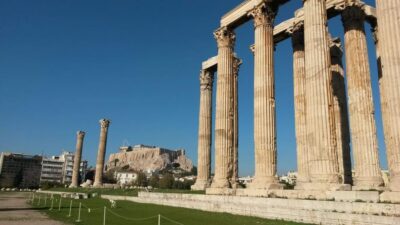




Walking Tours, compared.
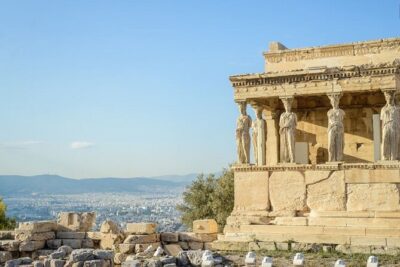
Acropolis and Parthenon Guided Walking Tour
Read our review →

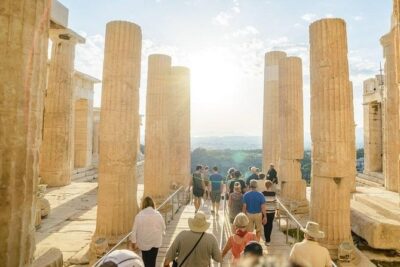
Acropolis monuments & Parthenon Walking Tour with Optional Acropolis Museum
Read our review →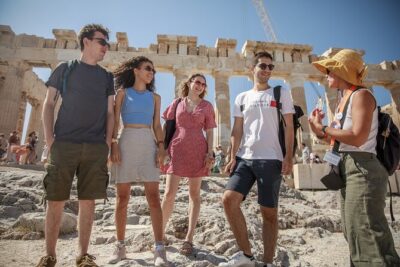
Athens Acropolis and Parthenon Walking Tour
Read our review →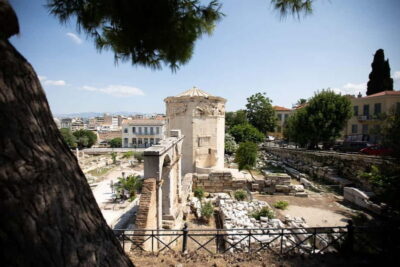
Acropolis, Parthenon & Athens Old City Heritage Walking Tour
Read our review →
Athens Authentic Greek Food Walking Tour (Small Group)
Read our review →
Browse the lists this tour appears in