
Reviewed · MYTHS & LEGENDS TOURS
Athens Highlights: Myths & Philosophers Private Walking Tour
Athens is a city where ideas feel physical, not dusty. This 4-hour private walking tour uses major landmarks to explain Greek philosophy and mythology in a way that sticks. I like that it keeps the conversation moving site to site, and I like that you get a Greek coffee stop built into the rhythm, so the learning never turns into a lecture. The one thing to consider is simple: it is still a 4-hour walk, so plan for steady time on your feet.
You meet outside Panepistimio Metro Station, then head through a classic Athens route that mixes grand architecture with the places where thinkers argued about how to live. Along the way, you connect names like Socrates, Plato, and Aristotle to real neighborhoods and real monuments, not just textbook definitions.
If you want a museum-only day with lots of sitting, this is not it. Also, it is not suitable for people with mobility impairments, since the route is walking-based.
In This Review
- Key highlights worth your time
- What the myths-and-philosophy concept actually feels like
- Panepistimio to Hansen’s Trilogy: architecture as a first lesson
- Parliament Square to the National Gardens: Epicurus in the space where ideas lived
- Ermou Street, Monastiraki, and Plaka: temples and the Agora conversation
- Tower of Winds and Anafiotika: myths about Aiolos and the Cynic attitude
- Areopagus Hill ending: mythic views over the Acropolis
- Comfort, pacing, and who this private tour fits
- Price and value: what $100 per person buys
- Should you book this Athens myths and philosophers tour?
- FAQ
- Where is the meeting point for the tour?
- How long is the tour?
- Is the tour private?
- What language is the guide speaking?
- What is included in the price?
- Are entrance fees included?
- Do I need comfortable shoes?
- What should I bring for the day?
- Is the tour suitable for people with mobility impairments?
- Can I get a refund if plans change?
Key highlights worth your time
- Real philosophical schools in real places, from Epicurus and the Garden to the Stoics at the Poikile Stoa
- Myth gets used as context, with Apollo and Athena, plus winds and the Tower of Winds
- Landmarks with storytelling power, like the Parliament area and 11th-century Kapnikarea
- Coffee and conversation timing, with a traditional refreshment included
- Tailored talk with the guide, with guides able to steer the discussion toward your interests
What the myths-and-philosophy concept actually feels like
The best part of this tour is the structure. Instead of starting with a list of philosophers, it starts with Athens itself, then uses each stop as a springboard for the ideas.
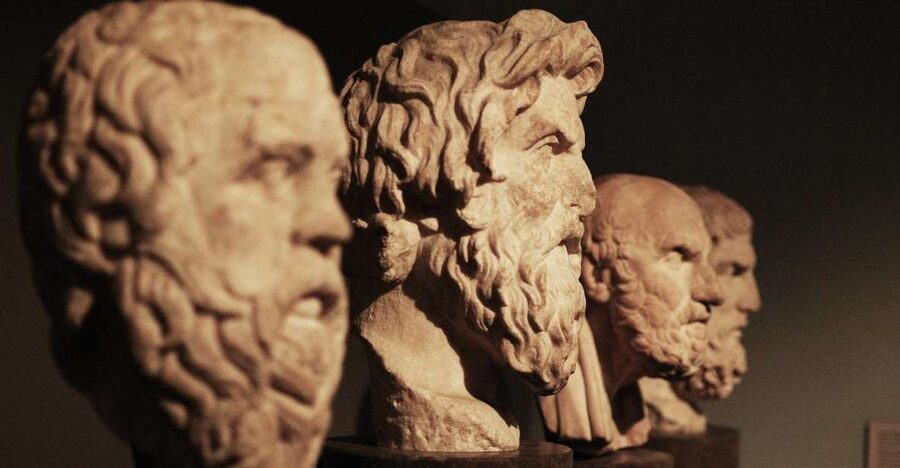
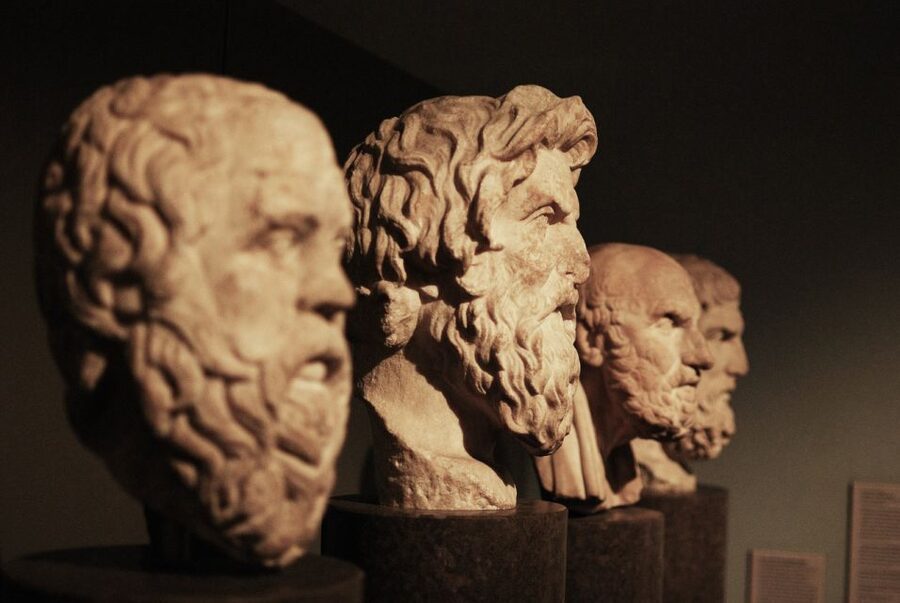
You’ll hear about the Greek gods Apollo and Athena, and how they do not just live in stories. They mirror values and character traits people debated in real life. The tour then slides from myth into philosophy: Socrates and Plato early on, then later schools like Epicurus and the Garden, Aristotle and the Lyceum, Stoicism in the Agora area, and the Cynic influence near Anafiotika and Plaka.
This works because the city is already organized like a set of talking points. Walking lets you compare scale and purpose: a grand civic building, a church that has survived centuries, a garden space where a school’s life mattered, and an overlook where stories feel closer to your line of sight. The result is a day where philosophy becomes a way to interpret what you see, not just what you read.
Other retellings of the old stories on foot:
- Athens: Mythology of Delphi, Museum and Arachova Guided Tour
★ 4.7 · 5,102 reviews - Athens & Acropolis Highlights: Greek Mythology Small-Group Tour
★ 5.0 · 2,370 reviews - Athens: Acropolis and Mythology Highlights Small Group Tour
★ 4.8 · 2,275 reviews - Athens: Mythology Tour for Families
★ 4.8 · 173 reviews
Panepistimio to Hansen’s Trilogy: architecture as a first lesson
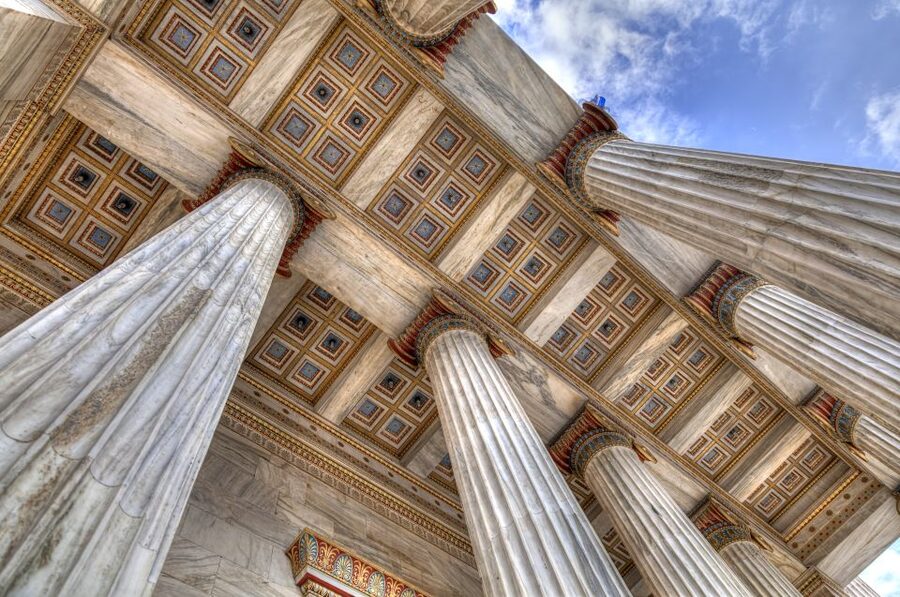
You start outside Panepistimio Metro Station, with an easy, central meeting that makes Athens feel navigable from minute one. From there, the route begins with the Trilogy of Athens, linked to architect Theofilus Hansen. This is one of those “wow, look at that” starts, because you get to see how 19th-century design tried to shape a modern Athens image.
As the group moves along, you also notice the statues from famous 19th-century sculptors. Those works give your guide something practical to use: how art, public space, and power connect. From there, the talk naturally pivots toward Socrates and Plato, because early philosophy in Athens matters most when you understand the public environment where debate happened.
A small but smart detail here is how myth and philosophy are woven in early. The tour doesn’t keep gods and ideas in separate boxes. Instead, you’ll talk about Apollo and Athena together, emphasizing how they are different but still share common ground. That pairing helps you remember that the Greeks did not treat myth like childish fantasy. They used it as cultural shorthand.
What you’ll likely enjoy most: this first stretch sets a tone where every building and statue becomes a prompt for conversation.
Parliament Square to the National Gardens: Epicurus in the space where ideas lived
After the initial architectural sweep, you head toward the Hellenic Parliament area and nearby public spaces. This part is where you start seeing how Athens has layers, not eras. You get a sense of how the city keeps reshaping itself, while still pointing back to its older intellectual identity.
Then comes the National Garden. This stop is key because it reframes Epicurus. The tour focuses on his living philosophical school, known as the Garden. That wording matters. You are not just learning doctrine. You’re getting a sense of daily life around philosophy, the kind of routine where teaching is part of how people spend their day.
You’ll connect Epicurus to the idea that philosophy is practical, not only theoretical. Even if you do not agree with a school’s conclusions, you can recognize the pattern: some thinkers aimed for calm, some aimed for ethical clarity, some aimed for disciplined reasoning. Epicurus becomes easier to understand when you imagine the environment that supported his approach.
From there, you move into street-level Athens. Ermou Street is part of that shift, a commercial artery named for Hermes, the god and merchant. It is a clever way to show how Greek mythology and everyday life overlap. You get to watch a modern shopping street while your guide ties it to the ancient theme of commerce, exchange, and travel.
Practical tip: this is a good moment to ask your guide what they think is most relevant today. The tour works best when you treat it like a conversation.
Ermou Street, Monastiraki, and Plaka: temples and the Agora conversation
Next you’ll walk along Ermou Street and into the Monastiraki area, then toward Plaka. This is where the pace feels like a real Athens day: shops, pedestrian streets, and the sense of moving through neighborhoods rather than museum rooms.
One stop that anchors this stretch is Kapnikarea, an 11th-century temple. It matters because it shows continuity. Even after classical Greece, Athens kept building, worshiping, and reinterpreting. When your guide ties this kind of landmark to Aristotle and the Lyceum, it becomes a study in how ideas survived long enough to keep getting re-framed.
You’ll also have a pitstop for a Greek coffee in the Thissio area. This is included, with one traditional refreshment per person, and it’s timed for maximum payoff. You can use the break to steer the discussion toward Pre-Socratic philosophers, because coffee slows everything down in a good way. It stops the walk from feeling like you are collecting facts and lets you ask follow-up questions.
After coffee, the tour shifts toward the Ancient Agora area. This is where you learn where Stoic philosophy was born, tied to the Poikile Stoa. The Stoics are often explained like they were all about tough-minded indifference. Here, the setting helps you understand the opposite too: their ideas were meant to be argued in public, lived in daily choices, and refined through reasoning and conversation.
What makes this section strong: you keep bouncing between built Athens and big concepts, so the Agora doesn’t feel like a distant classroom.
Tower of Winds and Anafiotika: myths about Aiolos and the Cynic attitude
As the route continues, Plaka gives way to the steps and viewpoints around Anafiotika, near the foot of the Acropolis. This is a fun change of scenery because the area feels like it has its own mood, and your guide can connect that mood to the ideas being discussed.
The tour also brings in the Cynic philosophers in this area, which fits nicely when you are walking places that feel a bit informal and stair-heavy. Cynicism, in the philosophical sense, isn’t just being grumpy. It’s a challenge to social performance. You can feel why that lands well in old streets where people linger and observe each other.
Then comes the Tower of Winds. This stop is built for visual learning. You learn about Aiolos, keeper of the winds, and how the tower fits into a mythic explanation of the natural world. It’s a reminder that early Greek thought used story to interpret reality, and only later did it separate into categories that look cleaner to us today.
This is also a turning point where your guide can connect Apollo and Athena again. You go from Athena’s strategic, civic side, to Apollo’s order, harmony, and cultural influence. Even if those associations are debated, the goal here is practical: you start noticing patterns. You see how Greeks grouped meaning across art, myth, and daily life.
If you’re a visual learner: this is where the tour feels like it clicks.
More of Plaka and Monastiraki on foot:
- Acropolis and Parthenon Guided Walking Tour★ 5.0 · 4,755 reviews
- Greek Food Walking Tour in Athens★ 5.0 · 4,740 reviews
- Athens: Guided Greek Food Walking Tour with Tastings★ 4.9 · 2,859 reviews
- Acropolis monuments & Parthenon Walking Tour with Optional Acropolis Museum★ 5.0 · 2,678 reviews
Areopagus Hill ending: mythic views over the Acropolis
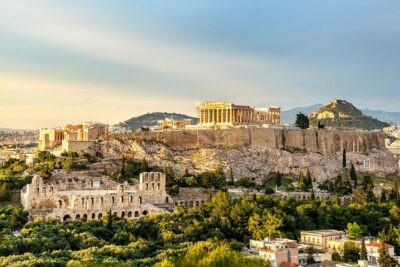
The tour ends on Areopagus Hill. This is a smart finale because it rewards your walking effort with an elevated view of the Acropolis. It also gives your guide space to land the big story: the Olympian gods and how myths function as explanations for how humans live with uncertainty.
Areopagus has that “high ground” feel that makes the closing conversation easier to remember. It’s not just another photo stop. The discussion is tied to the idea that philosophy in Athens was not separate from civic life, religion, or public storytelling. From here, you can see why walking routes like this work so well: your brain keeps the connections because the view holds them.
Optional bonus that you might get: some guides include a terrace moment with a drink and view. If that happens on your date, it’s a great way to end the day slowly and wrap up questions.
Comfort, pacing, and who this private tour fits
This is a private group format, which usually means your guide can steer the pace and discussion toward what you care about. In the past, guides like Bianca and John have been praised for tuning the tour to the group’s interests, including teaching-style explanations for students preparing material and more personal conversation for people just trying to make sense of Athens.
But it’s still a walking tour, about 4 hours total. Expect comfortable shoes to be non-negotiable. The tour is also not suitable for people with mobility impairments.
Bring sunglasses and sunscreen. Athens sun is real, even when the streets look shaded. If you’re sensitive to heat, plan to carry water on your own, even though your included refreshment is just one drink per person.
This tour is a great match if:
- You want Athens to make sense fast, with a guided route through the core neighborhoods
- You like ideas, but you also like seeing where those ideas show up in stone and street corners
- You want conversation, not a script
It’s less ideal if:
- You dislike walking, stairs, or uneven ground
- You only want museum tickets and indoor exhibits
Price and value: what $100 per person buys
At $100 per person for a 4-hour private walking experience, you’re paying for three things: time, guidance, and a route that ties together multiple parts of central Athens.
You get an expert guide plus one Greek coffee or other traditional refreshment per person, and all taxes and fees are included. Entrance fees are not included, so if you want to add museum stops or specific site tickets on top, you’ll need to plan for that separately.
For me, the value comes from how the tour prevents common Athens problems:
- You don’t waste time trying to connect myths to exact places
- You don’t collect random facts about philosophers
- You get a coherent storyline that runs through public space
If you’re the type who reads a plaque and then wonders what you’re supposed to do next, this style helps. It gives you a way to look again at landmarks you’d otherwise treat like backdrops.
Also, since it’s private, you can ask questions as you walk. That changes the math. Even one or two good follow-ups can make the hour feel like a mini seminar.
Should you book this Athens myths and philosophers tour?
Book it if you want Athens to feel like a living argument, not a scrolling feed of photos. This tour is strongest when you like thinking, when you can handle a steady walk, and when you’re curious about how Greek myths and philosophical schools connect to everyday life.
Don’t book it if you need step-free travel or lots of sitting. And if you hate conversation, this may feel like too much talk, because the whole point is interaction.
My practical suggestion: if you only have half a day, and you want the Acropolis area and surrounding neighborhoods with meaning attached, this private walk is a smart way to spend your time. It’s one of the few Athens experiences where you can end with a view, then explain to yourself why that view matters to the stories you just heard.
FAQ
Where is the meeting point for the tour?
You meet outside Panepistimio Metro Station. The exact meeting point may vary depending on the starting location option you book.
How long is the tour?
The tour lasts 4 hours.
Is the tour private?
Yes. It is a private group.
What language is the guide speaking?
The live tour guide speaks English.
What is included in the price?
The tour includes an expert tour guide, 1 Greek coffee or other traditional refreshment per person, and all taxes and fees.
Are entrance fees included?
No. Entrance fees to points of interest are not included.
Do I need comfortable shoes?
Yes. Comfortable shoes are recommended, since it is a walking tour.
What should I bring for the day?
Bring comfortable shoes, sunglasses, and sunscreen.
Is the tour suitable for people with mobility impairments?
No. It is not suitable for people with mobility impairments.
Can I get a refund if plans change?
You can cancel up to 24 hours in advance for a full refund.
Latest from under the Acropolis




Myths & Legends Tours, compared.
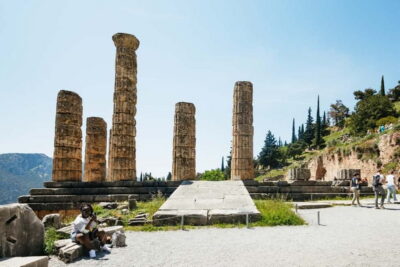
Mythology of Delphi, Museum and Arachova Guided Tour
Read our review →
Athens & Acropolis Highlights: Greek Mythology Small-Group Tour
Read our review →
Acropolis and Mythology Highlights Small Group Tour
Read our review →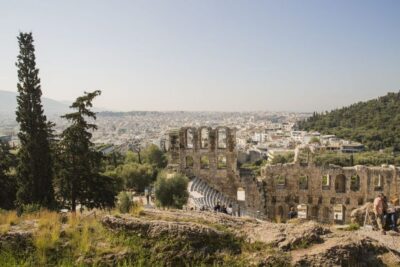
The History of Athens: Greek Mythology Private Tour
Read our review →
Athens Highlights: Myths & Philosophers Walking Tour
Read our review →

Greek Mythology Treasure Hunt for Kids – Athens Private Tour
Read our review →Browse the lists this tour appears in