
Reviewed · WALKING TOURS
Athens Ghost Walk: Mystical Ruins & Ancient Legends
Athens turns spooky after dark. I really like the lantern-led storytelling that makes real ruins feel like scenes, and I also like that this is a small group tour where you can actually ask questions. One thing to consider: you are walking, and site entry is not included, so you should be ready to pay for any entrances if you want to go inside.
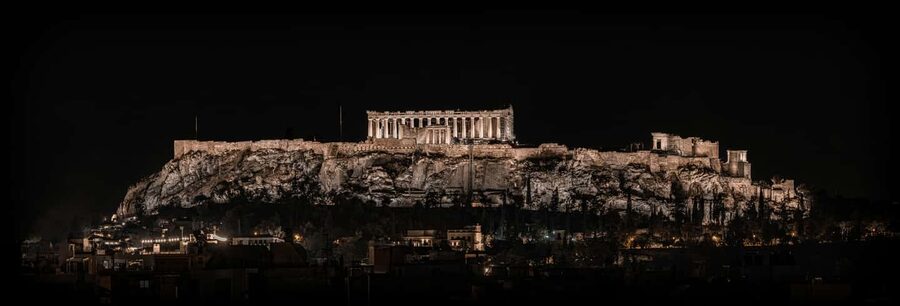
You’ll move through the ancient layers of Athens, from Classical to Roman to medieval, with a guide who ties myths to the places you’re standing on. Expect Kerameikos Cemetery, the Ancient Agora, Hadrian’s Library, the Roman Agora/Forum area, the winding lanes of Plaka, and then a dramatic end at the Odeon of Herodes Atticus.
In This Review
- Key points before you go
- Why this Athens Ghost Walk feels different at night
- The start at Pompeion Propylon, where the mood clicks in
- Kerameikos Cemetery: ancient tombs and modern imagination
- Ancient Agora and the Socrates vibe
- Hadrian’s Library: echoes, scholars, and Roman atmosphere
- Roman Agora and Forum: stories with street-level energy
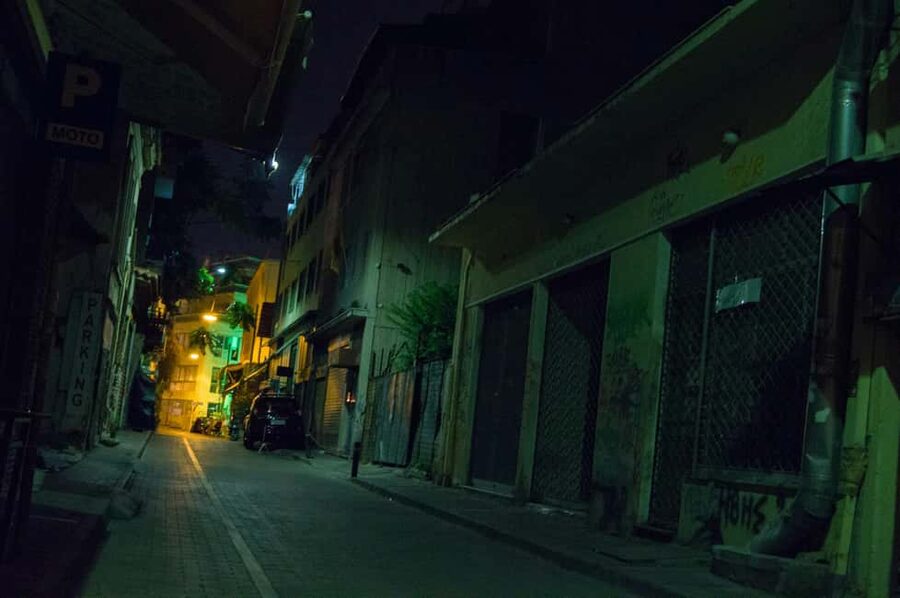
- Plaka’s shadowed alleys: medieval ghosts and Byzantine spirits
- Circling the Acropolis base: myths and fading dusk
- Odeon of Herodes Atticus: the finale and the card reading moment
- Price and value: what $36 really covers
- Who will enjoy this most
- Tips to get the most out of the evening
- Should you book Athens Ghost Walk: Mystical Ruins & Ancient Legends?
Key points before you go
- Lanterns + suspense stops: the walk is staged for atmosphere, with pauses that let the stories land.
- Small group limit of 10: this is set up for more back-and-forth with the guide.
- Ancient sites in one loop: you cover the Agora and Hadrian’s Library, plus Plaka and the Acropolis base area.
- Specialized card reading: the tour finishes with a guide-led reading in the theatre setting near the Acropolis.
- Multiple languages: the guide can run in English, Arabic, French, or Spanish.
- No site entries included: you get the guide and the walking, not ticketed access to buildings.
Why this Athens Ghost Walk feels different at night
This tour is not just a fun walk with scary sound effects. The whole point is linking Athens after dark to the stories people told about the past, and then grounding those stories in specific places you can see. That mix makes it easier to remember what you’re looking at, because your brain is getting both a mental picture and a location.
I especially like the whispered pace. Instead of sprinting from stop to stop, you get suspenseful pauses and small moments of quiet that make the ruins feel closer. It also helps that the tour is small enough that the guide can respond to your questions instead of talking at a crowd.
The second thing I like is that it does real Athens sightseeing while it’s doing the spooky part. You end up orbiting major landmarks, not wandering randomly through dark streets. And that means the value is not just the ghost stories, it’s the actual city context you get along the route.
More of Plaka and Monastiraki on foot:
- Acropolis and Parthenon Guided Walking Tour
★ 5.0 · 4,755 reviews - Greek Food Walking Tour in Athens
★ 5.0 · 4,740 reviews - Athens: Guided Greek Food Walking Tour with Tastings
★ 4.9 · 2,859 reviews - Acropolis monuments & Parthenon Walking Tour with Optional Acropolis Museum
★ 5.0 · 2,678 reviews
The start at Pompeion Propylon, where the mood clicks in

You meet at Pompeion Propylon. Even before you get to the first big discussion, there’s a sense of stepping into an old framework. Starting at a recognizable ancient node helps the tour feel intentional, not improvised, because you’re beginning in a place that already signals history.
Practically, arriving a little early helps. The meeting point description mentions a map at the archaeological site, with a big stone and stairs. If you give yourself time to locate that spot, the first minutes stay smooth and you spend more time listening.
Kerameikos Cemetery: ancient tombs and modern imagination
The walk begins in the Kerameikos Cemetery area, where the tour leans hardest into the theme of spirits and lingering presence. This is the right kind of opening scene because cemeteries are naturally about memory, and Athens has plenty of material to connect ancient burial culture to legend.
You’ll wander among tombs and mausoleums while the guide frames how Athenians may have thought about life, death, and what remains after someone is gone. The goal is not to convince you of anything supernatural. It’s to show you how myths, fear, and respect can live side by side.
A smart consideration here is comfort with walking. This is a ghost walk, but it’s still a real archaeological setting. You’ll want steady shoes and the willingness to walk at night while listening closely.
Ancient Agora and the Socrates vibe
Next up is the Ancient Agora of Athens. This is where the tour’s storytelling technique pays off, because the Agora was once the bustling heart of debate and ideas. When you hear the echoes of philosophy in the middle of the ruins, it’s easier to understand why ancient Athenians linked public life with moral questions.
You’ll imagine the presence of figures tied to that tradition, including the kind of intellectual atmosphere people associate with Socrates. Even if you know the names already, you’ll likely remember the places better because you’re pairing the ruins with a narrative thread.
Also, this is one of the stops where your guide’s delivery matters. In multiple guide-led accounts, Beyla is highlighted as an engaging storyteller who responds to questions. That kind of back-and-forth can turn an otherwise quick sightseeing moment into something you actually carry home.
Hadrian’s Library: echoes, scholars, and Roman atmosphere
Then you head to Hadrian’s Library. The tour treats the space like a time capsule for scholars and conversations that once filled the area. Even if you cannot access every interior space, you still get a sense of how intellectual life would have felt around these ruins.
You’ll hear about the corridors of learning and how Roman Athens may have held both public knowledge and private tension. The ghost aspect works here because libraries and lecture spaces already carry a natural hush. The guide can use that to make the story feel timed to the architecture.
If you like blending myth with place-based facts, this is a strong stop. The tone shifts from cemetery and philosophy into something more atmospheric and slightly conspiratorial, which keeps the walk from becoming repetitive.
Same hours, spent a different way in Athens:
- Athens: Acropolis & up to 5 Archaeological Sites Combo Pass★ 4.2 · 13,904 reviews
- Athens: Acropolis, Parthenon & Acropolis Museum Guided Tour★ 4.8 · 9,316 reviews
- The Acropolis, Parthenon & Acropolis Museum Guided Tour★ 4.7 · 8,493 reviews
- Athens: Cape Sounion & Poseidon Temple Sunset Half-Day Trip★ 4.8 · 8,241 reviews
Roman Agora and Forum: stories with street-level energy
The itinerary includes the Roman Forum of Athens (and the tour narrative references the Roman Agora area). This is where the tour’s urban energy shows up. You’re meant to think like a merchant, a scholar, or a person moving through crowds.
The ghost stories here are tied to movement, rumor, and secrecy. You’ll hear about ancient conspiracies and how echoes of everyday life can turn into legend over centuries. It’s a fun way to connect what you’ve learned at the Agora with a later layer of Athens, where Roman influence shaped how people gathered and negotiated power.
This is also a good moment to ask questions. With a small group capped at 10, you are more likely to get a direct answer instead of a general response. If you care about the difference between Greek and Roman phases, this part is the time to bring it up.
Plaka’s shadowed alleys: medieval ghosts and Byzantine spirits
After the big ancient anchors, the tour shifts into Plaka, where the mood changes from monumental ruins to lived-in streets. The tour frames Plaka’s shadowed alleys as a corridor between eras, with references to medieval ghosts, Byzantine spirits, and urban legends.
That matters because Athens is not a museum city. It’s a city you walk through, eat in, and get lost in. By taking the ghost theme into Plaka’s lanes, the tour helps you understand how legends stick around when people build new life on top of older stories.
If you’re the kind of traveler who gets restless at long historical lectures, this stop usually helps. The atmosphere becomes story-first, and you can still connect it back to what you just learned at the Agora and Hadrian’s Library.
Circling the Acropolis base: myths and fading dusk
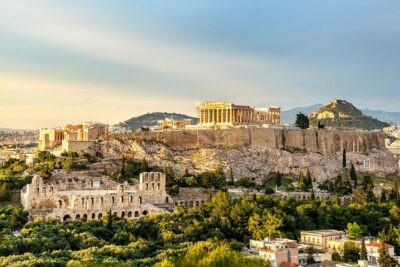
The tour includes a moment around the base of the Acropolis area, where the guide connects myths, rituals, and philosophical whispers to the fading light of dusk. This is the part that makes the whole evening feel like one arc, not a sequence of unrelated landmarks.
The Acropolis area is already dramatic in daylight. At night, with the guide’s suspenseful pacing, the lines between myth and history feel thinner. Even if you’re skeptical, you’ll probably enjoy how the guide turns geography into story.
If you’re sensitive to crowds and low light, keep your expectations realistic. This is a walking tour after dark in a historic core. You’ll want to stay aware, not just absorbed in the tale.
Odeon of Herodes Atticus: the finale and the card reading moment
The tour finishes at the Odeon of Herodes Atticus, an ancient theatre space where echoes of music and tragedy are part of the setting. It’s a fitting end point because theatre is already storytelling, and Athens has no shortage of performance energy, even when you are standing among ruins.
This is also where the specialized card reading happens. The value here is not the supernatural promise. It’s that the reading is integrated into the story atmosphere of the theatre, so you’re not leaving the tour and switching to something unrelated. You end in a place designed for narrative, reflection, and emotion.
One of the most praised moments from recent experiences is how impressive and memorable the card reading is when done in the theatre setting near the Acropolis. If you want your evening to end with a personal, memorable flourish, this is the payoff.
Price and value: what $36 really covers
At $36 per person, this tour sits in a reasonable range for a guided evening walk that covers multiple major sites plus a guided card reading. What you get is the guide-led route, the atmosphere, and the reading. What you do not get is entry to any sites.
That matters for your budget planning. If you want to go inside any specific locations during the tour, you’ll need to handle entry on your own, and the total cost will depend on what you choose to add. Still, even without entries, the route is built around seeing key archaeological areas and hearing how they connect.
Where the price feels especially fair is the small group size. Limited to 10 participants, the guide has room to keep the tour conversational. That turns the evening from a lecture into a guided story walk.
Who will enjoy this most
You’ll probably love this tour if you enjoy:
- Athens at night and want a planned route instead of wandering randomly
- ghost stories that connect to real places, not just generic fear themes
- a small group setting where your questions matter
- an ending ritual like card reading in a meaningful location
You might want to think twice if you strongly prefer daytime sightseeing only, or if you dislike walking in dim light. Also, if you hate surprise pacing changes, a story tour is always a bit more flexible by nature. The guide sets the rhythm.
Tips to get the most out of the evening
- Wear shoes you trust on uneven stone. This is a walking tour with archaeological terrain.
- Keep your phone brightness low for photos near ruins, but don’t let it block your attention for the stories.
- If you care about the Greek to Roman shift, ask about it at stops like Hadrian’s Library and the Roman Forum area.
- If you want the card reading to feel personal, be ready to pay attention at the end, since that’s when the guide focuses the moment.
Should you book Athens Ghost Walk: Mystical Ruins & Ancient Legends?
If you’re excited by the idea of lantern-led stories tied to Kerameikos, the Agora, Hadrian’s Library, Plaka, and the Acropolis area, then booking makes sense. The combination of multiple eras, a small group format, and an included card reading gives you more than a typical after-dark walk.
I’d book this if you want a night with both atmosphere and context, and you like your history with a little shadow. Skip it only if you dislike walking at night or you need entry tickets to be fully handled for you.
Latest from under the Acropolis





Walking Tours, compared.
Acropolis and Parthenon Guided Walking Tour
Read our review →

Acropolis monuments & Parthenon Walking Tour with Optional Acropolis Museum
Read our review →
Athens Acropolis and Parthenon Walking Tour
Read our review →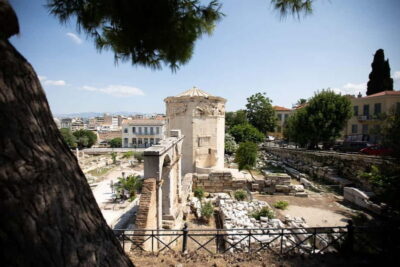
Acropolis, Parthenon & Athens Old City Heritage Walking Tour
Read our review →
Athens Authentic Greek Food Walking Tour (Small Group)
Read our review →
Browse the lists this tour appears in