
Reviewed · DELPHI ORACLE DAY TRIPS
Athens, Delphi, Olympia, Epidaurus, Mycenae, Corinth Tour
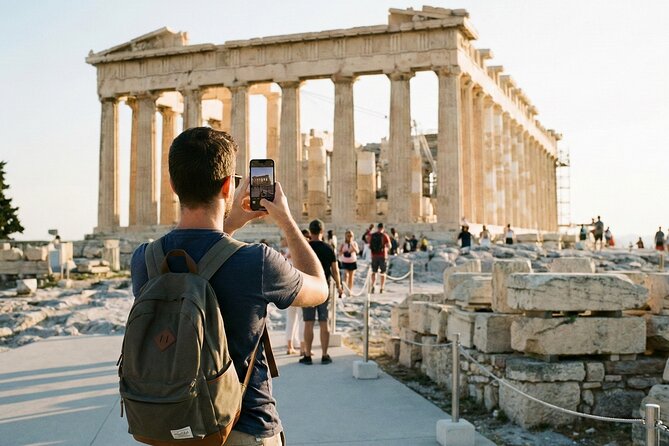
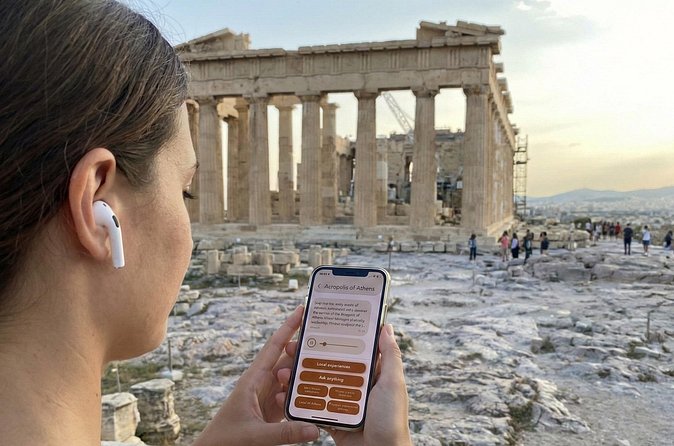
Ancient Greece feels different when you hear it explained as you walk. This 7-day Athens to Delphi to Olympia to Mycenae to Corinth journey uses the Herodot AI audio guide so you get on-the-spot context at landmarks like the Parthenon, Delphi’s oracle area, and Olympia’s sacred grove.
I especially liked how the narration targets what you are actually seeing. You get practical architecture clues like the Doric refinements at the Parthenon, plus myth-and-history links like how the Acropolis hill shifted from Mycenaean palace to Athena sanctuary.
One possible drawback: the schedule is extremely full and includes stairs and hikes. If you want slow museum time and long breaks, you might feel rushed, especially on days packed with multiple sites.
In This Review
- Key things to love about this tour
- How Herodot AI keeps you oriented at huge ancient sites
- Day 1 in Athens: Parthenon math, the Agora, and the Olympic marble stadium
- The Agora and democracy stops: where philosophy meets voting
- Kallimarmaro and the Athens Olympic revival, plus the Roman super-zoom
- Big museums: myth, frescoes, and the Antikythera mechanism
- The Acropolis slopes and viewpoints: theater, prisons, and sunset framing
- Athens beyond the center: coast myths, Eleusis mysteries, Marathon, and Aegina
- Day 2: Corinth Canal to Epidaurus, then Nafplio forts by sea
- Epidaurus Abaton: healing through dreams, snakes, and votive stories
- Nafplio: Palamidi steps, Kolokotronis, and the fortress view
- Day 3: Mycenae, Tiryns, and the Argolid walls that feel heavier than text
- Tiryns galleries and Cyclopean mass you can walk through
- Hera, hydra myth, and engineered bridge durability
- Day 3 ends with Argos layers: theater, council halls, and Roman baths
- Day 4: Olympia sacred grove, Hermes, and the museum of inventions
- Olympia gives you athletic scale and engineering context
- Quick regional stops: Patras castle and Nafpaktos harbor strategy
- Day 5 in Delphi: the Oracle area, Apollo hymns, and the theater backdrop
- Delphi theater and stadium: seeing a view designed for performance
- The Charioteer and the gymnasion: sculpture details and athlete training
- Delphi villages, Pan cave, and Middle Byzantine monastery mosaics
- Day 6 Meteora: suspended rocks, step-heavy monasteries, and deep time in caves
- For Your Eyes Only pillar, a no-stairs monastery, and a Neanderthal cave
- Day 7 Thermopylae: the Hot Gates bottleneck and the Sacred Band memorial
- A 3D battle view and the Lion of Thebes
- Price and logistics: what $12.09 per person buys you
- Should you book this Athens, Delphi, Olympia, Epidaurus, Mycenae, Corinth tour?
- FAQ
- How long is the Athens, Delphi, Olympia, Epidaurus, Mycenae, Corinth Tour?
- Where does the tour start and end?
- Is the tour offered in English?
- Do I need a mobile ticket?
- How many people can join at most?
- Is free cancellation available?
Key things to love about this tour
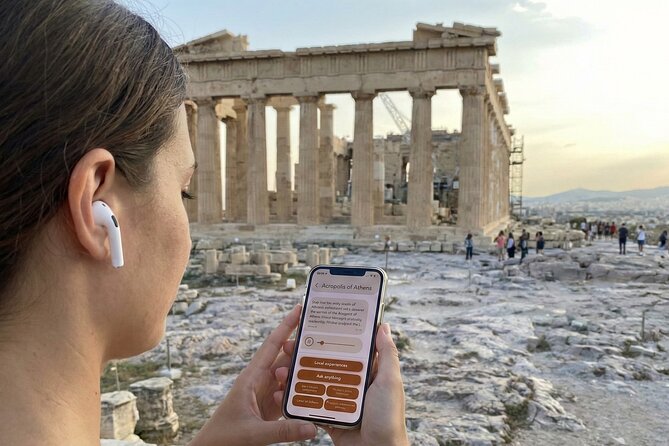
- Herodot AI explains what you’re looking at, not just what’s written on signs
- Architecture details turn into stories, like entasis and curvature on the Parthenon
- You get direct democracy in human terms via the Agora, Socrates, and ostraka voting shards
- Delphi becomes more than ruins, with oracle setup, the Apollo hymn inscriptions, and the Charioteer
- You mix ancient Greece with science and engineering, from the Antikythera mechanism to Archimedes replicas
- Major variety across regions, from Athens viewpoints to Meteora rock monasteries to Thermopylae
How Herodot AI keeps you oriented at huge ancient sites
This tour is built around audio guidance that walks you through what you see as you move from stop to stop. Instead of feeling lost in a maze of stones, you get steady narration that links each place to a time period and a purpose.
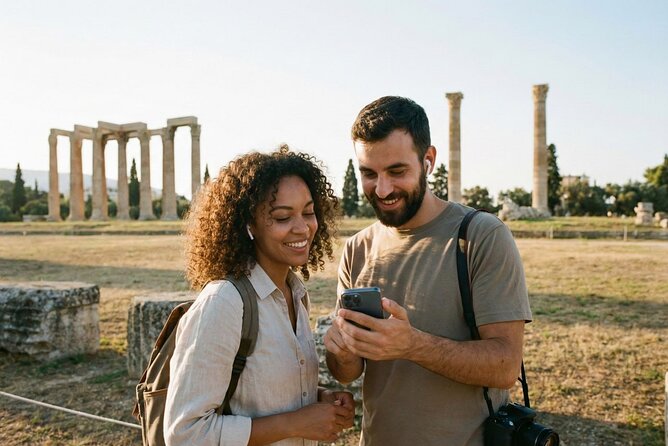
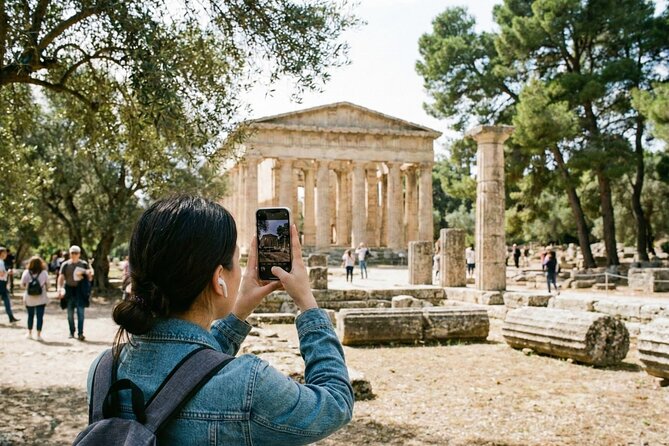
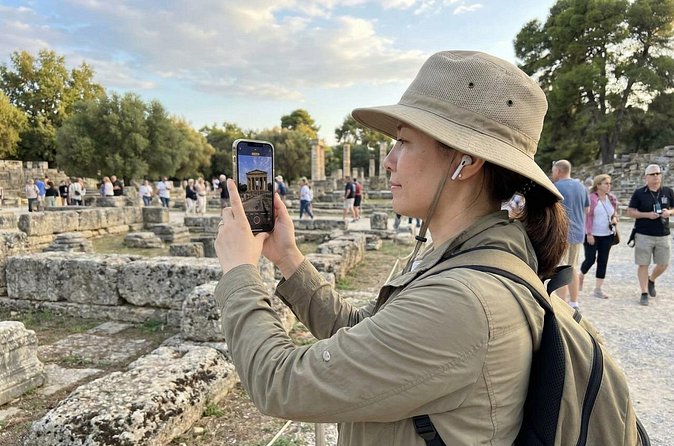
There’s also a very practical advantage: the experience is mobile-ticket based and offered in English, which makes it easier to start, pause for photos, and get your bearings fast. With a maximum of two travelers, the flow can feel less crowded, more like a private route through the classics.
A quick reality check, though. AI guidance is great for context, but you still need good shoes and a willingness to climb. On days like Meteora and Delphi, the physical rhythm matters as much as the facts.
More long days out to Olympia:
- 4-Day Classical Greece Tour: Epidaurus, Mycenae, Olympia, Delphi, Meteora
★ 4.5 · 732 reviews - 3-Day Classical Greece Tour: Epidaurus, Mycenae, Nafplion, Olympia, Delphi
★ 4.5 · 342 reviews - 4-Day Tour of Mycenae, Epidaurus, Olympia, Delphi & Meteora
★ 4.8 · 168 reviews - Ancient Olympia full day private tour from Athens
★ 5.0 · 83 reviews
Day 1 in Athens: Parthenon math, the Agora, and the Olympic marble stadium
Your first big arc is the Acropolis area and the surrounding ancient core. You start on the hill’s story itself, moving through the layered meanings of Propylaea, the later Periclean Golden Age, and the scars of Persian destruction. That sequence matters because it teaches you to read the Acropolis as a changing power center, not just a single monument.
Then comes the Parthenon, where the narration gets delightfully specific. You focus on architectural “imperfections” like entasis and curvature, meant to make the temple look perfect to the human eye. You also zoom in on surviving metopes to connect stone figures to myth, including the Centauromachy.
Next is the Erechtheion complex, the one that makes myths feel physical. You look for the marks on the rock connected to Poseidons trident, plus the spot associated with the sacred olive tree and the legendary contest for Athenians patronage. Even if you have seen photos before, it changes when you know what to hunt for in the stone.
From the Acropolis, the route moves into museums and reconstructed spaces in a way that makes the city feel coherent. At the Acropolis museum, the glass floors let you see an ancient neighborhood below, and the guide helps you “place” missing Parthenon marbles back into a continuous narrative of the Panathenaic procession. It is a smart way to understand how the story of Athens culture got cut apart and then reassembled.
The Agora and democracy stops: where philosophy meets voting
After temple scale, you go down to civic scale. You walk through key areas tied to ancient democracy, including the Bouleuterion and the space where Socrates questioned citizens. You then shift into the Agora Museum and learn how everyday civic life worked, not just what scholars wrote.
One of the most striking parts is the use of ostraka, pottery shards used for voting banishments. It is easy to talk about democracy as an idea, but those voting tools make it feel practical, even harsh. You come away understanding that Athenian democracy had rules, risks, and consequences.
Kallimarmaro and the Athens Olympic revival, plus the Roman super-zoom
Athens also gives you a surprising sports dimension. You visit the Kallimarmaro, the marble stadium tied to the Panathenaic Games and the 1896 Olympic revival. Jogging the track and noticing the geometry of the hairpin turn is a rare chance to feel how crowd energy and design overlap.
Later you stand among the colossal columns of what was once the largest temple in Greece. The 638-year construction saga is the story here, from early tyrant involvement to later imperial completion. Focusing on a fallen column helps you judge scale quickly, because your brain can estimate the size of those stone drums by eye.
Big museums: myth, frescoes, and the Antikythera mechanism
Athens is a museum city, and this route uses that strength. You move through major collections with emphasis on standout puzzles, like the Mask of Agamemnon, the frescoes connected to Thera, and especially the Antikythera Mechanism.
That last one is a major payoff if you like science inside the ancient world. The guide explains gears and how this analog device could predict astronomical positions. It is one of the clearest ways to see Hellenistic-age sophistication without needing technical training.
More trips to the theatre at Epidaurus:
- From Athens: Small-Group Mycenae, Epidaurus & Nafplio Trip★ 4.8 · 2,805 reviews
- From Athens: Mycenae, Epidaurus & Nafplio Full-Day Tour★ 4.5 · 2,530 reviews
- Mycenae, Epidaurus and Nafplio Tour from Athens★ 4.6 · 2,201 reviews
- Mycenae, Epidaurus, Nafplio Full Day Private Tour from Athens★ 5.0 · 270 reviews
The Acropolis slopes and viewpoints: theater, prisons, and sunset framing
The itinerary also leans into views and dramatic settings. You walk past the stone theater built by Herodes Atticus, then learn how its cedar roof worked in the original design. The Athens Festival legacy ties the ancient theater to modern cultural life, so it does not feel frozen in time.
You also climb to the hill areas tied to trials and famous sermons, including the spot where St. Paul delivered the Unknown God message. And you get classic “stand here, look there” moments around the Philopappos monument, the Prison of Socrates briefing stops, and the best sunset framing of the Parthenon.
For practical planning, this is the kind of day where you should treat breaks as strategic. Short pauses for water and quick photos work better than slow wandering, because the route stacks a lot of meaningful stops.
Athens beyond the center: coast myths, Eleusis mysteries, Marathon, and Aegina
A big chunk of Day 1 extends outward in a smart “myths to geography” way. You drive to the tip of Attica for the King Aegeus story and the sunset through Doric columns, and you search for Lord Byron’s carved name on a marble pillar. It is one of those moments where landscape and literature lock together, even if you are not a poetry person.
You also visit Eleusinian Mysteries sites, with the Telesterion and the Ploutonion cave entrance. The narration focuses on the myth of Demeter and Persephone and the idea of secret initiation rituals. Because you physically stand in those places, the topic feels less like trivia and more like a lived belief system.
Marathon appears with the tumulus covering the Athenian warriors and the nearby starting point that connects the ancient victory run to the modern marathon concept. You end up seeing sport as memory, not just entertainment.
And if you have energy left, the Aegina ferry stop adds another layer: you see the hilltop temple on the island in the Sacred Triangle context with Parthenon and Sounion. You come away understanding why island Athens neighbors mattered, not just how Athens dominated.
Day 2: Corinth Canal to Epidaurus, then Nafplio forts by sea
Day 2 starts with a spectacular engineering moment at the Corinth Canal. You stand on a footbridge looking down 80 meters into blue water, then get the long timeline of how the idea developed. You even visualize ancient ships being dragged across the land before the cut existed.
Corinth ruins follow, with a focus on “two layers at once”: the Roman Forum overlaying Greek structures. You stand on the Bema connected with St. Paul’s trial, and you visit the Fountain of Peirene. That pairing helps you see how the same streets and platforms carried different audiences across centuries.
You also hike a monolithic rock with triple defensive lines, then reach the summit for the Temple of Aphrodite area tied to the famous story of sacred prostitution. That stop is more about how religion and politics overlap in ancient cities than about sensational headlines.
Epidaurus Abaton: healing through dreams, snakes, and votive stories
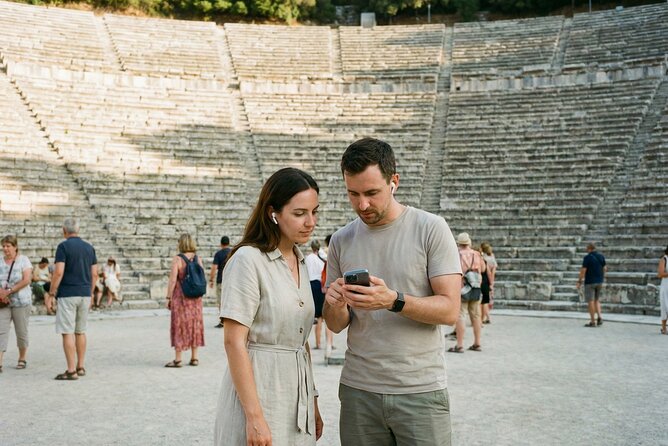
The tour’s Epidaurus component is the kind that changes how you think about ancient health. You walk through the first holistic hospital setup, including the Abaton where patients slept to be visited by the god in dreams. The narration explains the snakes used for healing and the votive offerings tied to recorded miracle cures.
If you want a break from marble temples and battle myths, this is a great pivot. It turns the focus from triumph to survival and shows religion working as part of daily care.
Nafplio: Palamidi steps, Kolokotronis, and the fortress view
Then the route shifts to Nafplio, with its Venetian fortress and Palamidi. You count steps the local way and learn about Theodoros Kolokotronis and his prison cell. It is a grim stop, but the vantage points make the history feel real, especially when you picture ships approaching the gulf.
You also take a small boat to the island fort, Bourtzi, tied to harbor defense and later to retired executioners shunned by locals. Exploring it from sea level changes how you judge distance and defense strategy.
The day ends in more gentle history, with Nafplio’s older center, the Trianon building with its mixed religious and civic uses, and smaller memorial details like the bullet mark encased in glass from Kapodistrias assassination.
Day 3: Mycenae, Tiryns, and the Argolid walls that feel heavier than text
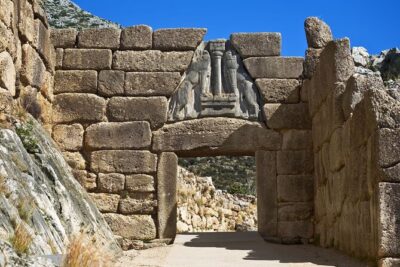
Day 3 is the Mycenaean powerhouse day, and it starts with the Lion Gate. You see the oldest monumental sculpture in Europe and learn about Cyclopean masonry. Then you move into the citadel, see Grave Circle A, and connect it to Schliemann’s discovery of gold masks and the Palace of Agamemnon remains.
From there, the route goes into the tholos tomb experience. You enter the tholos known for the massive lintel stone, including the famous 120-ton weight. Inside, you test the echo, which is honestly one of the fastest ways to understand how these spaces were designed to affect sound and atmosphere.
The on-site museum gives daily-life context through artifacts and finds like the Fresco of the Mycenaian Lady, clay figures from the Cult Center, and Linear B tablets context from the citadel. You leave with a stronger sense of what life looked like, not just who ruled.
Tiryns galleries and Cyclopean mass you can walk through
Tiryns adds a different kind of awe. You focus on galleries, long vaulted tunnels built into wall thickness, and you feel the mass of stone by walking inside it. Pausanias comparison to the pyramids makes more sense when your body is in the geometry of the walls.
Hera, hydra myth, and engineered bridge durability
The itinerary then reaches Heraion sanctuary terraces, described as the religious center for the entire Argolid. You stand where Agamemnon was chosen to lead Greeks toward Troy and you take in views over the plain. That location-based framing is what helps myth feel tied to real geography.
A hike to Midea adds a third fortress chapter. You explore the Megaron complex and Cyclopean walls with a more raw archaeological feel and fewer crowds. You also visit a Mycenaean cemetery linked with the Dendra Panoply bronze armor story, connecting archaeology to specific objects.
Then comes a mix of myth and material evidence near Argos, including the Hercules Hydra story and the House of Tiles palace protected under a modern roof. You also walk across a 3,300-year-old bridge that still carries local traffic, showing corbel arch construction durability before true arches became common.
Day 3 ends with Argos layers: theater, council halls, and Roman baths
You finish with Argos viewpoints and monumental settings. You see polygonal walls incorporated into medieval fortifications, plus Byzantine and Frankish towers. The theater carved into Larissa hill, with massive capacity and the Charon’s Steps concept, is the kind of stop where you can picture performance as a community event.
You end with the marketplace area, including a Bouleuterion council hall cut into rock and Roman baths, plus the story of Homeric epic connections and rivalry dynamics.
This day is a good reminder that Mycenaean archaeology is not just art. It is infrastructure, fortification logic, and how people moved and governed.
Day 4: Olympia sacred grove, Hermes, and the museum of inventions
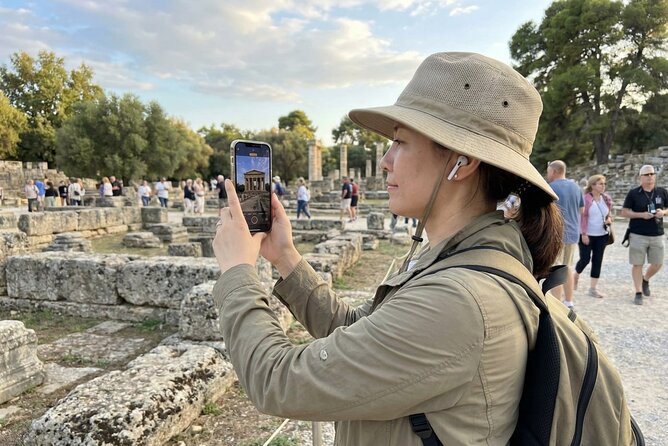
Day 4 is where athletics, religion, and power signals merge. You enter the sanctuary of Zeus in the Altis, not as isolated ruins but as a sacred grove tied to pilgrimage and truce. You hear about the tents that filled fields during games, so the scene is bigger than the temple remains.
The narration points out the memorial tholos begun by Philip II and finished by Alexander the Great, emphasizing political meaning through divine precinct placement. You then stand before the Hermes of Praxiteles and hear the focus on the Praxitelean curve and Parian marble polish, plus the Nike of Paeonios winged victory connection.
Olympia gives you athletic scale and engineering context
You walk the foundations of the guest house for distinguished visitors and officials, then contrast it with the tents and conditions for common spectators. That contrast is one of the easiest ways to understand how elite power coexisted with mass attendance.
Then you hit the museum in Olympia, where replicas of Archimedes inventions appear, including a screw pump and crane, plus the Antikythera mechanism. This is a great break from outdoor ruins because the engineering tools are easier to grasp at eye level.
Quick regional stops: Patras castle and Nafpaktos harbor strategy
The rest of Day 4 includes a brief Patras castle stop and the view toward islands like Zakynthos and Kefalonia when skies allow. Then you reach Nafpaktos, with its horseshoe harbor and Venetian battlements and the five-level defensive castle layout.
From Nafpaktos heights you can see strategic lines tied to controlling the Corinthian Gulf. It is a helpful reminder that Greece history is often about chokepoints, not just battles.
And on the way to Delphi, you stop in a seaside town described as a 19th-century shipbuilding hub. Captains’ mansions and a maritime museum with ship figureheads help you connect ancient seafaring pride to modern local identity.
Day 5 in Delphi: the Oracle area, Apollo hymns, and the theater backdrop
Delphi is built to feel theatrical, and this route leans into that. You ramp up to Doric columns and focus on the Adyton, the sunken area where the Pythia sat on her tripod and inhaled vapors to deliver prophecies. You are invited to imagine kings waiting for riddles to decide empires.
Then you examine the most complete building on the site, built with spoils from the Battle of Marathon. You also focus on musical inscriptions on the southern wall, the Hymns to Apollo, described as among the earliest surviving notations of ancient music. That is a rare chance to connect ancient religion to sound technology and written notation.
Delphi theater and stadium: seeing a view designed for performance
You climb above the temple area to the theater and simply sit and look down. The guide frames the view with the Pleistos valley gorge and Gulf of Corinth in the distance, making it clear why Delphi is considered one of the most spectacular theatrical backdrops in the ancient world.
Then you hike to the final steep path for the summit and the best-preserved stadium in Greece. Running the track here helps you feel how Pythian Games differ from the Olympics, including musical competitions alongside athletics.
You also stop at the roadside spring where all pilgrims and the Pythia herself had to wash. The rock-cut channels and offering niche connect preparation rituals to physical behavior, not just belief.
The Charioteer and the gymnasion: sculpture details and athlete training
You visit the Tholos at Marmaria with its three standing columns and learn the Pronaia concept, Athena standing before the temple of Apollo. Then you stand eye-to-eye with the Charioteer of Delphi, with attention to rare bronze survival details like glass eyes and copper eyelashes.
You finish Delphi’s physical training side by looking at Gymnasion ruins, with xystos for winter training and paradromis for summer, plus a rare pool for cooling after wrestling. Even if you do not care about sports science, it helps you see how athletes lived and trained.
Delphi villages, Pan cave, and Middle Byzantine monastery mosaics
You also get a break from major ruins with a mountain village stop near Delphi. The route mentions shops, formaela cheese, hand-woven carpets, and a hike up 264 steps to the Church of Agios Georgios for valley views.
You visit Tyrias bell tower, originally a minaret and later used as a cheese refrigerator, now a town clock. It’s one of those objects where layered use tells you a lot about local life.
Finally, you drive up Mt. Parnassus to a large cave dedicated to Pan and the Nymphs, plus stalactites believed by ancient pilgrims to be divine sculptures. You then reach a UNESCO monastery described as a finest Middle Byzantine example, with 11th-century gold mosaics in the Katholikon and emotional frescoes in the crypt of St. Luke the Hermit.
A quieter alternative village with a waterfall and a hike option provides a clean end to the Delphi chapter before you head for Meteora.
Day 6 Meteora: suspended rocks, step-heavy monasteries, and deep time in caves
Meteora starts with geology. You drive the loop road among towering sandstone pillars and learn the rocks formed from a prehistoric river delta, then exposed by tectonic shifts. The name means suspended in the air, and the view confirms it quickly.
The monastery stops here are built for people who can handle stairs. You climb to the largest and oldest monastery, see the ossuary filled with skulls of former monks, and visit the original kitchen blackened by centuries of smoke. It is not a “pretty postcard” day, it is a day about how faith shaped daily routine under harsh conditions.
The second-largest monastery adds engineering flair, with the famous hanging net tower. The narration includes how monks were hoisted via winch, and the rope was only replaced when it broke. You also see a massive wooden barrel used to store water or wine for besieged monks.
For Your Eyes Only pillar, a no-stairs monastery, and a Neanderthal cave
You hike to an isolated pillar used as the filming location for James Bond, described as requiring the most steps for a more peaceful hermit-style feel. Then you visit the monastery accessible without stairs, via a small bridge, with a balcony and a dizzying vertical view down toward Kalambaka.
Inside, you see bullet holes on icons from WWII and the Civil War, which grounds the monastery story in 20th-century reality.
A cave stop outside Kalambaka brings deep time. The route describes it as containing the oldest man-made structure in the world, a stone wall from 21,000 BC, and footprints of Neanderthal children. It is also framed as the only site in Greece with a continuous habitation record from the Middle Paleolithic to the Neolithic.
You end with a modern museum in Kalambaka featuring taxidermy collections and a Mushroom Museum section tied to truffle hunting culture, with a possible truffle hunt if it’s booked.
Day 7 Thermopylae: the Hot Gates bottleneck and the Sacred Band memorial
Thermopylae is short in stops, but heavy in meaning. You stand near the monument and look toward the sea, and the guide explains how the ground you see today was underwater in antiquity. You use an overlay idea to understand that the Hot Gates was a narrow 15-meter track between vertical cliffs and the sea.
That bottleneck framing is key to understanding why the battle mattered. You also identify the Middle Gate where Spartans rebuilt the Phocian Wall to force a frontal assault.
A 3D battle view and the Lion of Thebes
Next you visit the museum building with a 3D movie showing the battle and explaining the tactical brilliance of phalanx formation. The narration focuses on betrayal by Ephialtes leading Persians through a mountain path to flank the Greeks.
Then you detour to see a 5.5-meter seated lion statue marking the mass grave of the Sacred Band of Thebes, wiped out by Philip II of Macedon in 338 BC. That moment ties a local battle to the end of independent city-state politics and the rise of Macedonian empire control.
If you only do one “stand and imagine” site on the trip, this is the one. It makes geography the star of the story.
Price and logistics: what $12.09 per person buys you
At $12.09 per person for a roughly week-long route, the value comes from the guided storytelling layer built into the experience. You are not paying for a traditional human guide in the data provided, you are paying for Herodot AI narration tied to major landmarks across multiple regions.
The max of two travelers helps keep the experience from feeling crowded. You also have a mobile ticket and English narration, plus the info that it is near public transportation and that service animals are allowed.
The real tradeoff is pacing. This tour covers big distances in concept because it stacks a lot of important stops. Plan for active days, bring layers, and be ready for stairs and hikes, especially at Meteora and Delphi.
Should you book this Athens, Delphi, Olympia, Epidaurus, Mycenae, Corinth tour?
Book it if you want Greece with constant context. The biggest strength here is that Herodot AI tells you what you are seeing, which is why the single review score is a perfect five out of five and why the reviewer specifically liked having the AI explain everything as they moved through sites.
Skip it or rethink timing if your ideal trip is slow and flexible. With Delphi and Meteora featuring steep paths and step-heavy climbs, you will want solid mobility and a mindset for a fast-moving route.
If you like architecture details, myth tied to geography, and science connections like the Antikythera mechanism, you are in the right place.
FAQ
How long is the Athens, Delphi, Olympia, Epidaurus, Mycenae, Corinth Tour?
The tour duration is listed as 7 days, approximately.
Where does the tour start and end?
The start is Athens, Greece, and the activity ends back at the meeting point.
Is the tour offered in English?
Yes, the experience is offered in English.
Do I need a mobile ticket?
Yes, it includes a mobile ticket.
How many people can join at most?
The tour/activity has a maximum of 2 travelers.
Is free cancellation available?
Yes, there is free cancellation. You must cancel up to 24 hours in advance for a full refund, and changes within 24 hours are not accepted.
Visiting Ancient Corinth
- From Athens: Ancient Corinth Day Trip with Canal & VR Guide
★ 4.6 · 1,073 reviews - Biblical Tour Letters ToThe Corinthians St Paul’s Footsteps 6Hour
★ 5.0 · 1,065 reviews - Private Biblical Tour Ancient Corinth & Isthmus Canal from Athens
★ 5.0 · 762 reviews - Athens: Ancient Corinth & Nafplio Full Day Trip with Swim
★ 4.8 · 531 reviews
The Citadel at Mycenae
- Mycenae and Nafplion Day Trip from Athens with Official guide
★ 4.5 · 501 reviews - Argolis: Full-Day Tour in Mycenae & Nafplio
★ 4.2 · 350 reviews - Athens: Corinth Canal, Mycenae & Nafplio Premium Guided Tour
★ 4.7 · 322 reviews - Athens: Corinth Canal, Mycenae and Nafplio Day Tour
★ 4.3 · 252 reviews
Latest from under the Acropolis

Delphi Oracle Day Trips, compared.
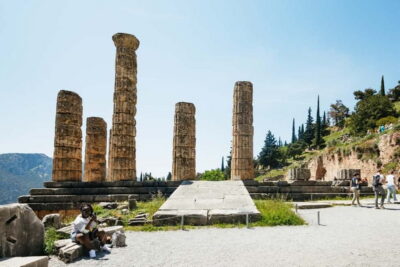
Mythology of Delphi, Museum and Arachova Guided Tour
Read our review →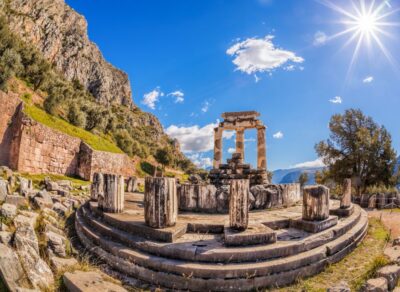
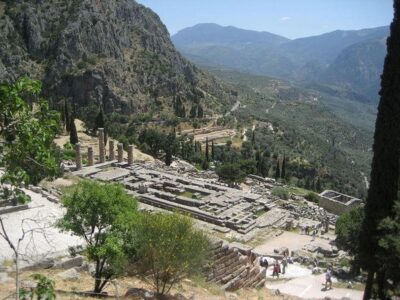
Small-Group Delphi, Museum & Arachova Day Trip
Read our review →
Delphi English Day Trip from Athens with Official Guide
Read our review →
Delphi Oracle & Museum Tour with a Licensed Guide
Read our review →
Historical Delphi One Day Tour with Arachova Stop & Expert Guide
Read our review →
Premium Delphi Day Trip with an Expert Guide, Museum & Lunch
Read our review →
Browse the lists this tour appears in