
Reviewed · ANCIENT OLYMPIA DAY TRIPS
Ancient Olympia full day private tour from Athens
Olympia feels far, until the drive starts.
This private day trip turns a long Athens outing into a smooth, door-to-door plan, with private transfers and onboard Wi-Fi so you lose less time and worry less. The tradeoff is simple: it is a full day, and the road time is real.
Once you get to Olympia, you are free to explore at your own speed. I like the balance here, ruins plus museum time, with stops like the stadium and Temple of Hera that connect what you see to what the games once meant.
In This Review
- Key Points to Know Before You Go
- The Long Day From Athens, Made Practical
- Value, Price, and the Real Costs You Should Plan For
- Corinth Canal: Short Stop, Big Visual Impact
- Arrival at Olympia: Sacred Ground and the Olympic Truce
- Temples, Stadium, and the Meaning Behind What You See
- Temple of Zeus, the classic Doric model
- Stadium at Olympia, where athletes competed
- Temple of Hera, and the flame connection
- Nymphaeum, palaestra, and the everyday systems
- Philippeion and the Human Element Inside the Altis
- Museum Time Without Rush: What to Prioritize
- Archaeological Museum of Olympia: icons and bronzes
- Museum of the Olympic Games: the timeline in plain form
- Lunch, Comfort, and Staying Sane in 12 Hours
- The Driver Factor: Private, But Not a Licensed Guide
- Who This Tour Fits Best
- Should You Book This Ancient Olympia Private Tour?
- FAQ
- What is included in the tour price?
- What entrance fees should I budget for?
- Do I get a licensed tour guide inside the sites?
- How long does the full experience take?
- Is pickup available from hotels, apartments, and airports?
- Can I cancel for a full refund?
Key Points to Know Before You Go
- Door-to-door pickup and drop-off saves you from taxis, timing stress, and parking hassles.
- Onboard Wi-Fi helps you handle maps, tickets, and messaging without roaming chaos.
- You explore independently at Ancient Olympia, so you can linger where you care and skip where you do not.
- Corinth Canal is a satisfying bonus stop, with big views from above and ships moving below.
- The drive is long but often paced well by strong, safety-first guides like Panos, George, Nick, and Greg in reviews.
- Entrance fees are not included, so budget extra for the Ancient Olympia site and major museums.
The Long Day From Athens, Made Practical
A trip to Olympia from Athens sounds like a lot of hours. Then you realize this tour is built around one goal: make that long haul feel manageable.
You get private transport from your exact pickup spot, with your driver waiting in the hotel lobby, at your apartment entrance, or at the airport arrival hall holding a sign with your name. That matters more than it sounds. When you are traveling as a group, and you want the day to start clean and end the same way, private logistics are a big quality upgrade.
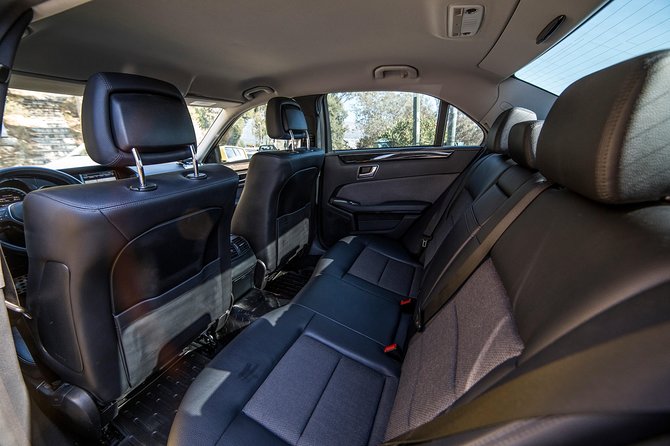
Inside the car, there is air-conditioning, bottled water, and Wi-Fi on board. Wi-Fi is not a luxury here. It is useful for checking museum hours, getting tickets ready, and keeping everyone coordinated during a long day.
The one downside to keep in mind is time. The overall tour runs about 12 hours, and the drive to Ancient Olympia is roughly 3.5 hours each way. If you hate road time, this is not the day trip for you. If you want a no-fuss path to a major UNESCO site, it works well.
More long days out to Olympia:
- 4-Day Classical Greece Tour: Epidaurus, Mycenae, Olympia, Delphi, Meteora
★ 4.5 · 732 reviews - 3-Day Classical Greece Tour: Epidaurus, Mycenae, Nafplion, Olympia, Delphi
★ 4.5 · 342 reviews - 4-Day Tour of Mycenae, Epidaurus, Olympia, Delphi & Meteora
★ 4.8 · 168 reviews - 4-Day Greece Highlights Tour: Epidaurus, Mycenae, Olympia, Delphi and Meteora
★ 5.0 · 79 reviews
Value, Price, and the Real Costs You Should Plan For
This private tour is priced at $342.73 per person. That is not cheap, and it is fair to ask what you are paying for.
You are paying for the big stuff that costs you time and energy on your own: door-to-door transfers, a dedicated vehicle, and a day plan that strings together a major stop at Olympia plus a bonus at the Corinth Canal. You also get included lunch, with a Greek traditional food option, plus Wi-Fi and water.
What is not included is important. You will pay entrance fees on top, roughly €20 per person for Ancient Olympia and for the Olympia Archaeological Museum and the Museum of the History of the Olympic Games. So your real budget is the tour price plus site admissions.
Here is how I think about it for you. If you would otherwise rent a car, deal with parking, and lose hours to traffic and logistics, private transport can feel like paying to buy back your day. Multiple reviews point out that the big payoff is skipping traffic headaches and getting to Olympia in a way that feels calm.
If you want the kind of day where you also get a licensed historian walking you through each site, this format may feel more limited. The drivers are well-informed and can explain what you see from the car and during stops, but they do not enter the archaeological sites with you.
Corinth Canal: Short Stop, Big Visual Impact
Before Olympia, you stop at the Corinth Canal, one of those places where geography tells a story.
The canal connects the Gulf of Corinth in the Ionian Sea with the Saronic Gulf in the Aegean Sea. It cuts through the Isthmus of Corinth, effectively separating the Peloponnese from the Greek mainland. It is 6.4 kilometers long, and at its base it is only 21.4 meters wide, which keeps many modern ships from passing through.
You are there for about 20 minutes. The viewing point from above is the key. You can watch vessels make their way through the channel while you take in the steep limestone walls. It is a quick moment, but it breaks up the drive in a satisfying way.
If rain shows up, you may get thoughtful extras. One review mentioned a guide providing ponchos when weather looked iffy, which is exactly the kind of small kindness that makes a long trip feel easier.
Arrival at Olympia: Sacred Ground and the Olympic Truce
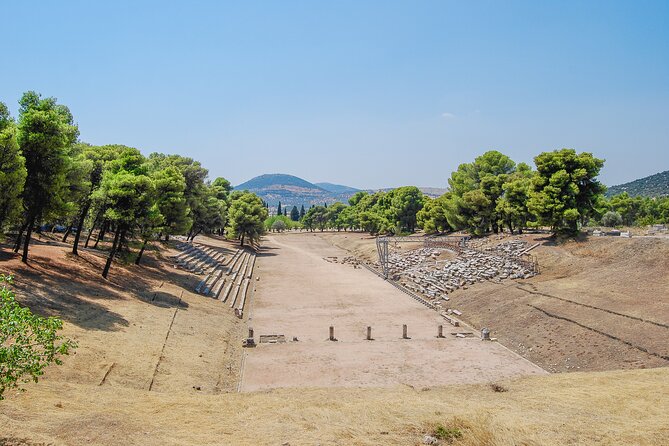
When you reach Olympia, you are stepping into a site tied to far more than sports.
Olympia was a sacred place that drew worshipers from across the ancient Greek world, with religious celebrations starting as early as the 8th century BC. Over time, these games became connected with the Sacred Olympic Truce, a tradition honored across the Greek world after an agreement between Spartan leaders and the King of Elis.
By the 5th century BC, Olympia was also a meeting point for ideas, not only athletics. People came here to exchange knowledge, and influential thinkers showed up alongside athletes.
You get about an hour for Olympia, and then you start moving into the wider archaeological area. I like the structure because it gives you time to get your bearings before you hit the densest portion of the ruins.
A practical note: this tour is designed for independent exploring once you are on site. You will have information boards, and you can ask your driver questions when you are at the stops, but you are still the one walking and choosing your route.
Temples, Stadium, and the Meaning Behind What You See
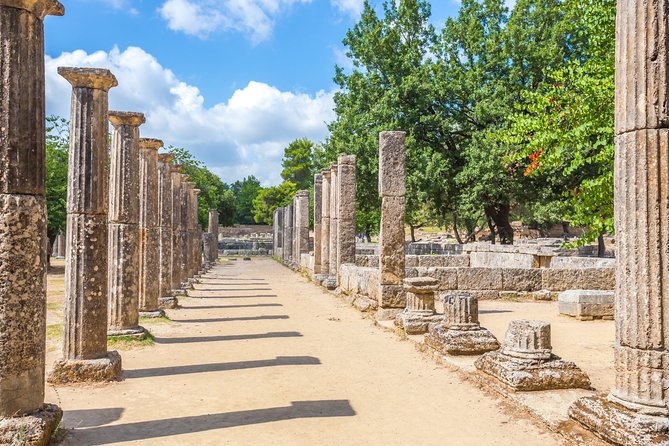
The heart of your day is time at the archaeological site, plus key landmarks spread across the grounds. You spend about 1 hour 30 minutes at the main archaeological area, then you get shorter visits at the standout structures.
A handful more Athens outings to compare
- Best of Athens Half Day Private Tour★ 5.0 · 3,714 reviews
- Athens Full Day Private Tour★ 5.0 · 2,903 reviews
- Athens Airport Private Arrival Transfer with Meet & Greet★ 4.5 · 1,495 reviews
- Athens Airport to Athens Hotels Private Arrival Transfer★ 5.0 · 947 reviews
Temple of Zeus, the classic Doric model
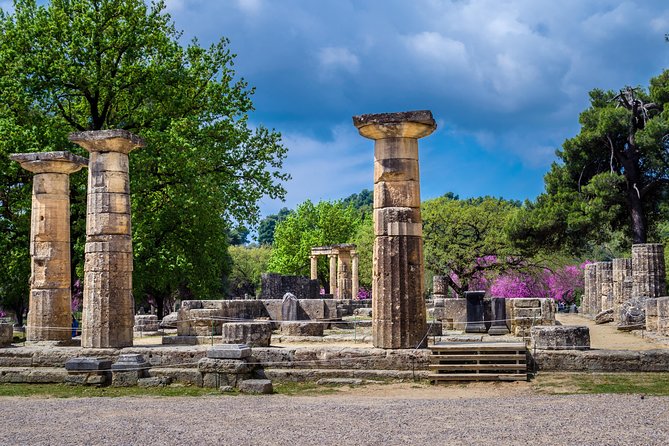
You spend around 10 minutes at the Temple of Zeus. This is the temple dedicated to Zeus, built in the second quarter of the 5th century BC. The most impressive part, even in ruins, is how it matches the idea of a fully developed classical Greek temple in the Doric order.
Even if you are not a architecture nerd, it helps to notice the rhythm and proportions. It makes the later structures at the site easier to place in your mind.
Stadium at Olympia, where athletes competed
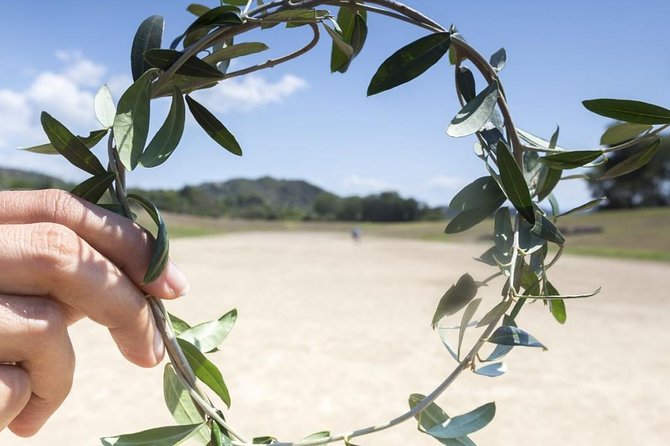
Another quick stop, about 10 minutes, brings you to the stadium. The stadium sat to the east of the sanctuary of Zeus and hosted many of the sporting events in the ancient Olympic Games.
If you like visualizing motion, this is a good one to pause for. You can stand where runners once took their places and get a feel for the scale of competition.
Temple of Hera, and the flame connection
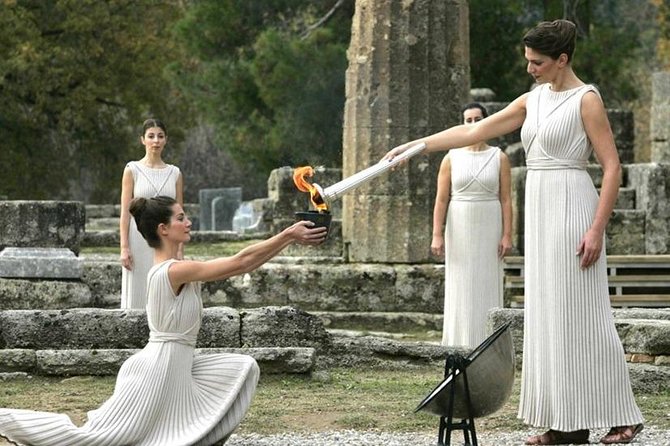
At the Temple of Hera, about 10 minutes, you are at one of the most venerable temples in Greece and the oldest at Olympia, built around 590 BC. This is also the place tied to the Olympic flame tradition.
The temple sits at an altar oriented east-west, where the Olympic flame is lit and carried to the world. In fact, the torch is lit from the ruins to this day.
That is one of my favorite “link the past to now” moments on the whole trip. It makes a ruin feel active.
Nymphaeum, palaestra, and the everyday systems
Two other short stops are easy to skip if you only care about temples.
At the Nymphaeum, you are looking at a mid-2nd century water-distribution structure. It was built to serve the masses who attended the games in July and August, feeding water through stages into open and closed channels around the site.
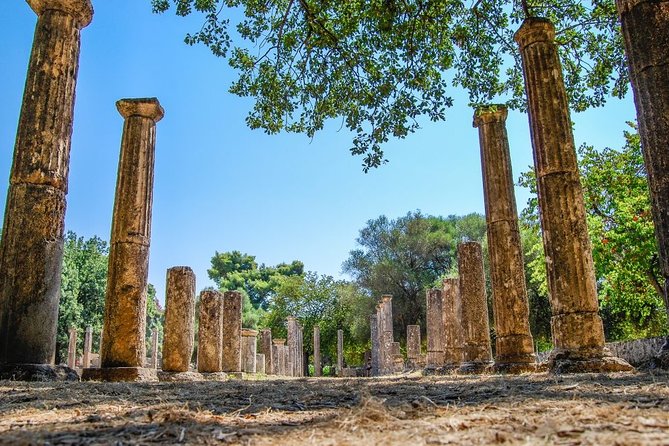
Then comes the palaestra, around 10 minutes, the training ground where wrestling and other combat sports were taught. The site covered wrestling, boxing, and pancration training, a mix that could be intense and tightly regulated.
If you are the type who likes how ancient life actually worked, these stops add a lot. They remind you that the Olympics were not just one big competition. It was an entire functional event with infrastructure.
Philippeion and the Human Element Inside the Altis
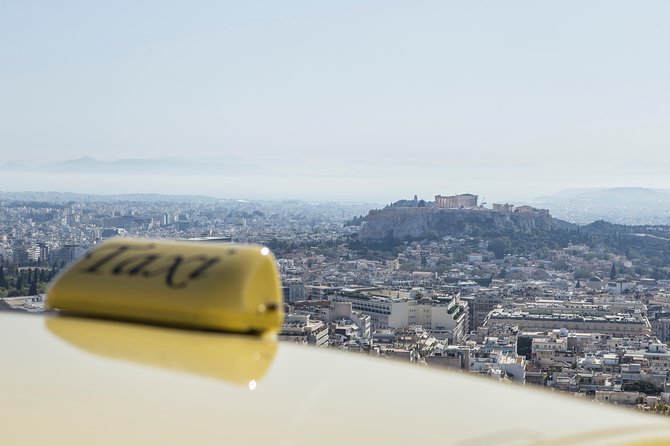
The Philippeion is a standout because it is one of the few structures at Olympia dedicated to a human, not a god.
You have about 20 minutes here. The Philippeion is an Ionic circular memorial built of limestone and marble, a tholos, and it honored Philip’s family, including Philip himself, Alexander the Great, Olympias, Amyntas III, and Eurydice I. It was made by the Athenian sculptor Leochares after Philip’s victory at Chaeronea.
The architecture is the hook: 18 columns around the outside and nine engaged columns inside. If you take a moment to look up and around, you can feel why it mattered.
This stop is also a good reminder that Olympia changed over time. Even a sacred sanctuary became a place where political messages and public prestige were displayed.
Museum Time Without Rush: What to Prioritize
Once you step inside the museums, you shift from imagining the games in your head to seeing artifacts that bring them into focus. This tour gives you independent time at the Olympia museums, including time at the Archaeological Museum and the Museum of the Olympic Games.
Archaeological Museum of Olympia: icons and bronzes
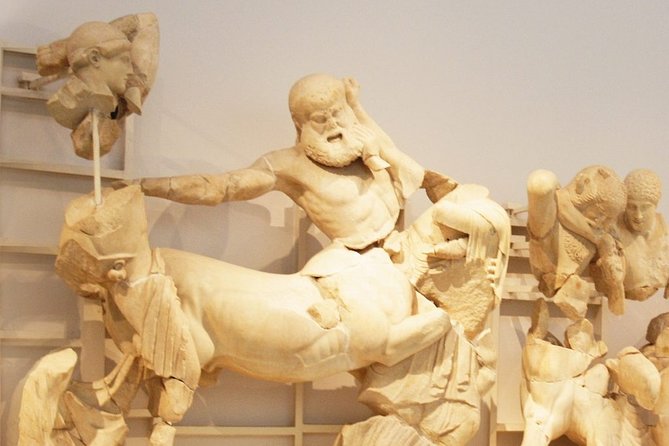
You get about 1 hour 30 minutes at the Archaeological Museum of Olympia. This is one of Greece’s principal museums and a major deal historically because the original building opened in 1882, the first museum in Greece outside Athens.
What I would prioritize, given your limited time:
- Hermes and the Infant Dionysus, attributed to Praxiteles
- objects related to the Temple of Zeus
- the Nike of Paionios
- notable bronze pieces, including bronze collections considered among the most important in the world
If you like art, this museum is a strong use of your time. It also helps you understand what you just saw outdoors, because you can connect sculpture and craft to the religious and athletic settings.
One practical tip from how this tour tends to play out: check the museum access and layout once you arrive, because you are doing independent exploring and you will want to know what is open on your day.
Museum of the Olympic Games: the timeline in plain form
The Museum of the Olympic Games is shorter, about 45 minutes. It focuses on the games as athletic competitions among city-state representatives, held in honor of Zeus.
You also see how the games became part of timekeeping. Every four years formed an Olympiad unit used in historical chronologies. The museum also covers the later period, when the games continued under Roman rule, with last recorded celebration in AD 393 under Theodosius I. Archaeological evidence suggests some games continued after that.
This is the museum for you if you want context fast. It makes the site feel bigger than one day of running.
Lunch, Comfort, and Staying Sane in 12 Hours
Your day includes lunch, with a Greek traditional food option. In reviews, the food ends up being a real highlight, with mentions of a family-owned taverna and even a lunch spot named Ambrosia.
Do not overthink lunch. The value is that it is included, and you are not stuck hunting for something between the main ruins and your next museum stop.
Comfort matters on a long day. The Wi-Fi helps, the bottled water helps, and air-conditioning helps. On top of that, some guides are praised for being early and managing the long day smoothly. One review specifically praised a guide, Panos, for getting everyone early to avoid traffic, which can make the drive feel shorter even when it is not.
The Driver Factor: Private, But Not a Licensed Guide
One thing I want you to understand clearly is what the driver role is here.
Your driver is described as a professional with deep historical commentary, fluent English, and great storytelling from the road and at stops. But your driver is not a licensed tour guide who enters the archaeological sites with you.
This is where the experience can feel different depending on what you want. If you are happy with self-guided exploring using information boards, the driver adds a lot of color while you are traveling between points. If you want someone walking you through each structure with expert commentary on details, you may feel something is missing.
That is why I recommend this simple decision rule:
- If you enjoy reading your way through ruins, bring comfortable shoes and go self-guided.
- If you want a true guided deep explanation at the site, consider booking a licensed tour guide add-on when available.
The reviews reflect this tension. Some people love the independence because it feels relaxed. Others wanted more in-site interpretation.
Either way, you can still get strong driver support. Reviews mention names like Nick, Greg, Nikos, George, Antony, and Notis, with praise for safe driving, friendly service, and making the long day feel easier.
Who This Tour Fits Best
This private trip is a good match if you fall into one of these groups.
You will likely love it if:
- you want private transfers and hate the stress of renting a car
- you are traveling with family or friends who want a schedule that feels flexible
- you care about Olympic history and want to see both the outdoor sanctuary and the museums
- you prefer comfort for a long drive and you want onboard Wi-Fi
It is less ideal if:
- you only want a short outing and do not want a 12-hour day
- you expect a full licensed guide inside every ruin and museum gallery
- you want to skip most walking time and see everything in a “drive-by” style
Should You Book This Ancient Olympia Private Tour?
Book it if you want Olympia made doable, with private door-to-door transport, a Corinth Canal stop that breaks up the drive, and museum time that actually helps you understand what you saw outside.
Do not book it if you mainly want a quick hit and do not want to budget for a long day, plus entrance fees on top. Also skip it if you are the type who needs a licensed guide in the ruins to enjoy the experience.
If you do book, I would plan your expectations like this: use the driver for context on the road and at stops, then use the museums for the deeper details. Bring good walking shoes, because the archaeological grounds reward slow looking. And if you care deeply about history, seriously consider adding a licensed guide option so your questions get answered right where the ruins are.
FAQ
What is included in the tour price?
The tour includes hotel or airport pickup and drop-off, private transportation in an air-conditioned vehicle, Wi-Fi on board, bottled water, and lunch (with an option for Greek traditional food).
What entrance fees should I budget for?
Entrance fees for Ancient Olympia and the Olympia Archaeological Museum and the Museum of the History of the Olympic Games are not included. The provided information states these can be purchased on-site for about €20.00 per person.
Do I get a licensed tour guide inside the sites?
No. The drivers are not official licensed tour guides and do not enter the archaeological sites with you. They are knowledgeable and provide commentary in fluent English, but the exploring inside sites is independent.
How long does the full experience take?
The duration is approximately 12 hours.
Is pickup available from hotels, apartments, and airports?
Yes. Pickup is offered from your hotel lobby, apartment entrance, or airport arrival hall with a sign showing your name. The driver will return you to the same place or a point you prefer.
Can I cancel for a full refund?
Yes. Free cancellation is available up to 24 hours in advance for a full refund.
Latest from under the Acropolis


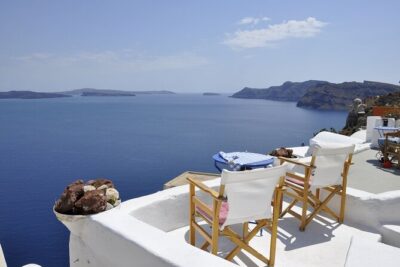

Ancient Olympia Day Trips, compared.
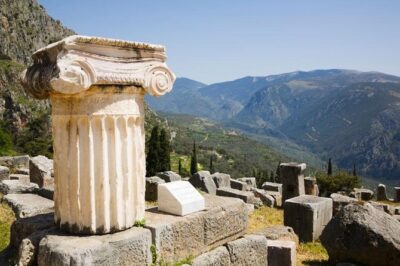
4-Day Classical Greece Tour: Epidaurus, Mycenae, Olympia, Delphi, Meteora
Read our review →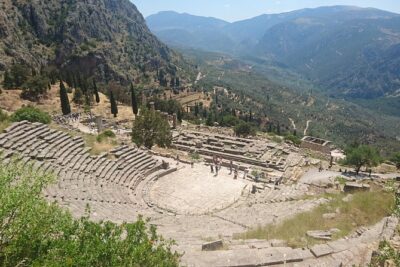
3-Day Classical Greece Tour: Epidaurus, Mycenae, Nafplion, Olympia, Delphi
Read our review →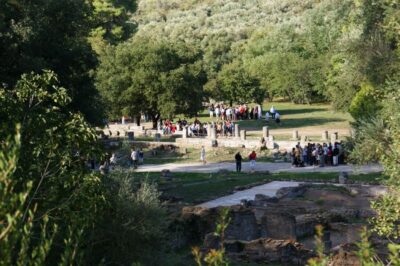
4-Day Tour of Mycenae, Epidaurus, Olympia, Delphi & Meteora
Read our review →
4-Day Greece Highlights Tour: Epidaurus, Mycenae, Olympia, Delphi and Meteora
Read our review →
Day tour to Ancient Olympia,Ancient Sparta Mycenae Including Meal
Read our review →
Ancient Olympia full day private tour from Athens
Read our review →
Olympia – Private Half Day Tour with Mini Bus
Read our review →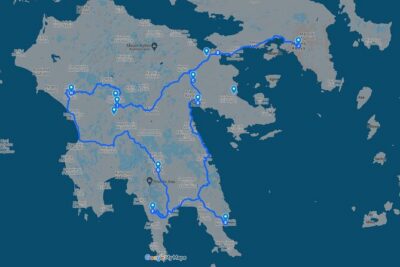
5-Day Best of Peloponnese Private Tour: Nafplio/Olympia/Mycenae/Epidaurus/more
Read our review →Browse the lists this tour appears in