
Reviewed · ANCIENT CORINTH TOURS
Biblical Tour Letters ToThe Corinthians St Paul’s Footsteps 6Hour
Paul’s footsteps make this Athens day feel real.
This tour strings together Areopagus Hill and Corinth’s Paul connections with a private, air-conditioned ride plus onboard WiFi and bottled water. I love the small group size and the chance to ask questions while still getting solid time inside the sites. One thing to consider, budget for extra entrance fees like Ancient Corinth, since they are not included.
I also like how the pacing is designed for people who are short on time, especially cruise passengers. You get hotel, Airbnb, or port pickup, then a smooth out-and-back plan so you are not wrestling with transit on your own. The one potential snag is that your driver cannot go inside archaeological sites with you unless you arrange a licensed guide.
In This Review
- Key highlights you will actually care about
- A half-day Athens to Corinth trip that turns Bible reading into place
- Price and what you really get for $170.50 per person
- Pickup, timing, and how a 6-hour day stays humane
- What the driver can and cannot do inside archaeological sites
- Areopagus Hill and the speech that put Athens on Paul’s map
- Daphni Monastery: Byzantine sacred art away from the crowds
- Corinth Canal: the 19th-century cut through a 2,000-year problem
- Isthmia area: sports, Poseidon, and Palaimon’s harbor-world
- Temple of Poseidon and the rhythm of rebuilding
- Stadium and the games Paul’s world knew
- Theater, mosaics, and sea-cult imagery
- Ancient Corinth and the Bema: where faith met Roman authority
- Kechries (Cenchreae) and the Paul vow connection
- St Paul in Corinth Church: a faith-focused close
- Entrance fees, optional licensed guides, and how to plan your budget
- Which guides make this tour feel special, not just informative
- Should you book the Footsteps of Paul tour?
- FAQ
- How long is the tour?
- Where does pickup happen?
- Is this tour private or shared?
- What language is the tour in?
- Are entrance fees included?
- Can the driver guide you inside archaeological sites?
- Is food included in the tour price?
Key highlights you will actually care about
- Private, air-conditioned vehicle with WiFi and bottled water, so the long ride does not feel like a chore
- Areopagus Hill and the Unknown God connection, paired with real Roman-era context at Corinth
- Daphni Monastery as a Byzantine stop that breaks up the day with a different kind of sacred history
- Isthmia and Corinth Canal area so you understand the geography Paul worked around
- Small group, flexible pickup that makes it easier to fit into a busy Athens schedule
- St Paul of Corinth Church as a final faith-focused stop that keeps the storyline moving
A half-day Athens to Corinth trip that turns Bible reading into place
This is the kind of tour that helps you stop thinking of Paul as a name in a book. The day is built around locations that connect the Acts story to the world of Corinth and the surrounding Isthmus. You move in comfort, with frequent short stops so you are not spending the whole day in a van.
The value for me is the mix of transportation plus interpretation. Instead of just hopping from ruin to ruin, the route is staged like a narrative: speech, roads, waterway, games, courtroom, then the churches. If you want a day that feels efficient without feeling rushed, this format fits.
More trails following Paul through Greece:
- Private Biblical Tour Ancient Corinth & Isthmus Canal from Athens
★ 5.0 · 762 reviews - Private Tour of Apostle Paul’s Footsteps in Ancient Corinth
★ 5.0 · 275 reviews - Paul”s Footsteps Ancient Corinth Biblical Tour
★ 5.0 · 184 reviews - Private Luxury Biblical Tour: Apostle Paul in Athens & Corinth
★ 5.0 · 162 reviews
Price and what you really get for $170.50 per person
At $170.50 per person, you are paying mainly for three things: a private transfer, time-saving routing, and guided commentary during the drive. That matters because Corinth is not a quick hop from central Athens, and your time is limited on a half-day plan.
Some admissions are included in the itinerary, like entry for Areopagus Hill and Daphni Monastery, plus the free entry stops listed along the way. Other key tickets are separate. You should plan on extra fees for Ancient Corinth and the Archaeological Site of Isthmia, since those are marked not included.
So the real “cost picture” is simple: the base price covers the driver and transport experience, and you top it up with the specific site tickets that are not included.
Pickup, timing, and how a 6-hour day stays humane
This is built as an out-and-back day tour, with pickup from your Athens hotel, Airbnb, or the cruise ship. After the tour ends, you return to the same meeting point or your preferred drop-off location.
The tour is listed at about 6 hours 15 minutes. In practice, that is long enough to see multiple major stops, but short enough that the schedule needs to be tight. That is why the private vehicle matters. You do not lose time negotiating public transit, finding cabs, or waiting around.
One practical tip that shows up in how guides run the day: clear communication. In multiple good experiences, guides like Chris, Yiannis, and Panos are praised for arriving on time, keeping you updated, and explaining the plan early. If you want a stress-free cruise day, that communication style makes a huge difference.
What the driver can and cannot do inside archaeological sites
Your day is guided by an English-speaking driver with extensive knowledge of ancient Greek history and, most importantly, Paul’s life and mission. You will get explanations as you travel between stops, and the driver helps connect what you see to the Bible story.
There is one rule to know. In Greece, only officially licensed tour guides can accompany guests inside archaeological sites. Your driver, even if they are excellent, cannot act as a licensed in-site guide. That said, you can arrange a professional licensed guide for inside sites if you request it in advance, subject to availability and an additional cost.
If you are the kind of person who loves reading every plaque and wants a true walkthrough inside Ancient Corinth, this optional licensed guide is worth asking about.
Areopagus Hill and the speech that put Athens on Paul’s map
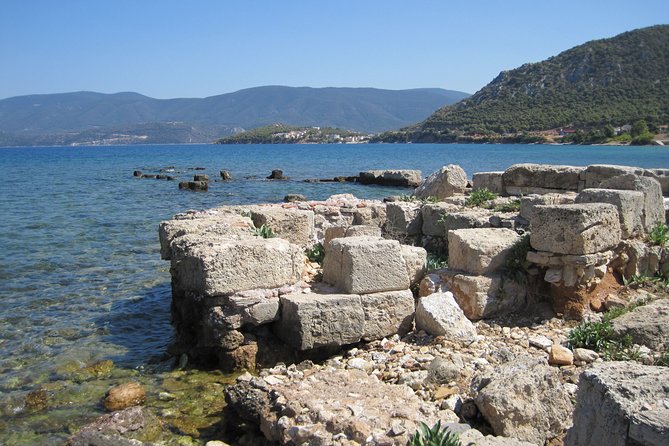
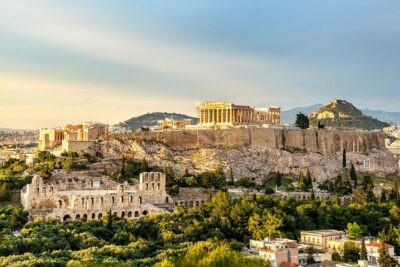
The first stop is Areopagus Hill, the Holy Rock of the Acropolis area. This is where the Apostle Paul gave one of his most dramatic speeches to Athenians about the Unknown God, and it sets the tone for the entire tour.
Why this stop is so good: it is not just a religious connection. It is a reminder that Paul is speaking in a Greek intellectual and civic setting. So you are not only looking at Christian landmarks, you are meeting the world Paul addressed.
Time here is short, about 15 minutes, with admission included. The goal is orientation and context, not a long museum-style visit. If you want more time on the hill itself, you may need to be ready to move quickly when the day schedule turns to Corinth.
Other visits to ancient Corinth:
- From Athens: Ancient Corinth Day Trip with Canal & VR Guide★ 4.6 · 1,073 reviews
- Athens: Ancient Corinth & Nafplio Full Day Trip with Swim★ 4.8 · 531 reviews
- Athens: Corinth Canal, Mycenae & Nafplio Premium Guided Tour★ 4.7 · 322 reviews
- Athens: Corinth Canal, Mycenae and Nafplio Day Tour★ 4.3 · 252 reviews
Daphni Monastery: Byzantine sacred art away from the crowds
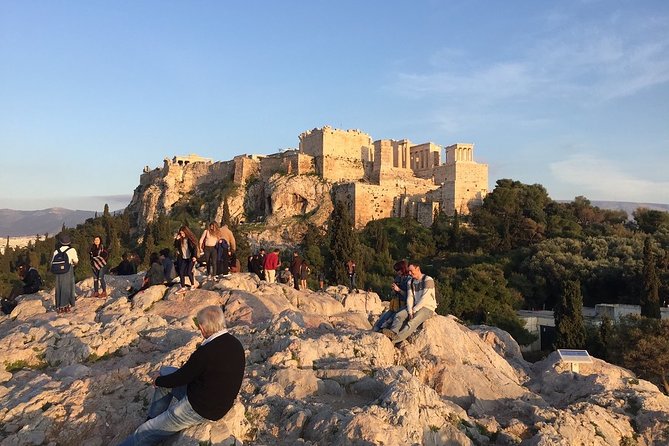
Next you visit the Monastery of Daphni, built on the slope of Mount Aigaleo. It is described as a major Byzantine monument, built on a site that likely held an ancient temple of Apollo. Over time it connects different religious eras, including Cistercian monks and later Orthodox control.
This stop is about contrast. After Paul-linked sites, you get a chapter of Byzantine history with restored mosaics that keep the artistic and spiritual legacy visible. You also get a change of pace, because monasteries feel different from ruins and courtyards.
It is also only about 20 minutes, with admission included. That means you will likely get a focused visit, enough to absorb the big story, then move on before the day gets long.
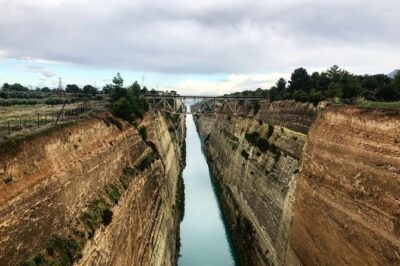
Corinth Canal: the 19th-century cut through a 2,000-year problem
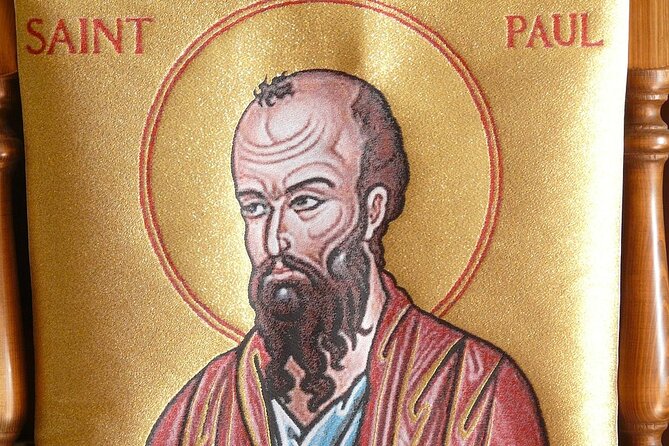
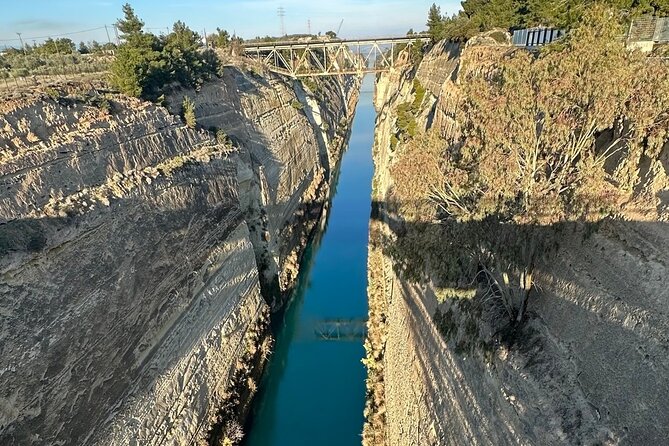
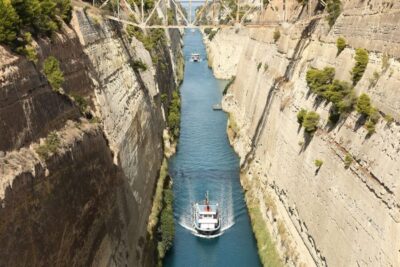
Then comes a scenic and story-heavy break at Corinth Canal. The canal slices through the narrow isthmus between the Gulf of Corinth and the Saronic Gulf. In practical terms, it separates Greece’s mainland from the Peloponnese, so the peninsula stops acting like a barrier.
Even if you do not spend much time walking, the explanation is the point. Before the canal, ships had to sail a long route around the Peloponnese, adding about 185 nautical miles. The tour also mentions the long-running dream of a shortcut, including the idea credited to Periander and the older solution of the diolkos, a stone road used to transfer ships over land.
This stop feels valuable because it helps you understand the geography Paul worked around, even if the canal itself is much later. You leave with a better sense of how travel and trade shaped the region.
Isthmia area: sports, Poseidon, and Palaimon’s harbor-world
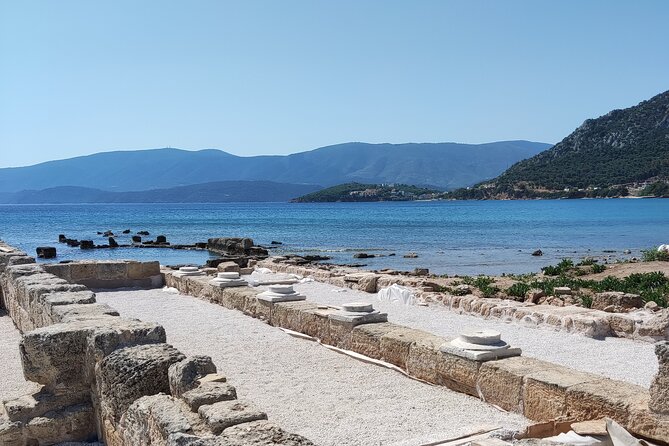
The itinerary includes multiple Isthmia-linked moments. First, there is an Isthmia stop marked with admission ticket free, about one hour. Then later, there is an Archaeological Site of Isthmia stop that lists specific monuments like the Temple of Poseidon, the stadium, and the Sanctuary of Palaimon, with admission ticket not included.
That split matters for your planning. If you want to see everything, bring cash or card for the additional site fee that is not included.
Temple of Poseidon and the rhythm of rebuilding
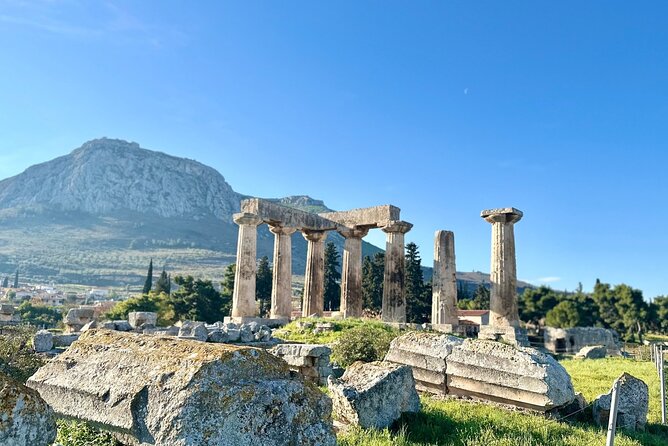
The Temple of Poseidon is described with a long construction and rebuilding timeline, including fires that destroyed earlier phases and later Doric rebuilding. After Roman times, the site faced more damage, followed by reconstruction and beautification at the end of the first century AD.
What you will get from this: a sense that these sacred places were not static. They changed, recovered, and kept functioning through different political eras.
Stadium and the games Paul’s world knew
The stadium is tied to the Isthmians, second in importance after Olympia according to the tour narrative. The tour also emphasizes Paul’s presence in this broader games region, connecting to the idea of him working at the Isthmian games as a tent maker.
Even if you are not chasing sports history, it helps you grasp the audience of Paul’s messages. The games drew people from across the Greek world, and that audience is part of how Christianity spread.
Theater, mosaics, and sea-cult imagery
The description includes a theater built around 400 BC for musical competitions, with later mosaics and sea-themed figures tied to cult traditions. If mosaics interest you, this is one of the chances to see Roman-era artistic work connected to local religious culture.
Ancient Corinth and the Bema: where faith met Roman authority
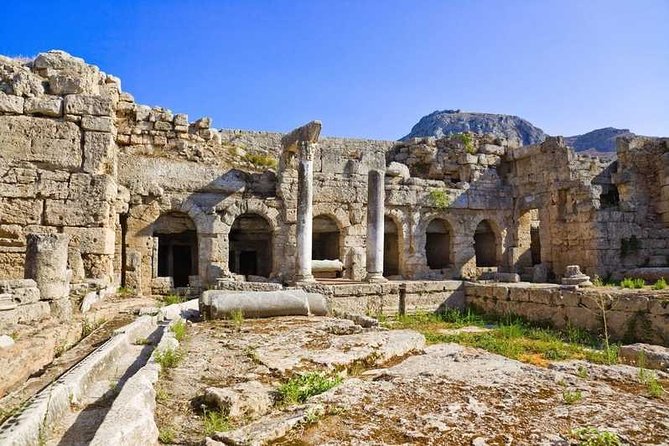
Ancient Corinth is the big centerpiece of the day, and it is also where the extra ticket comes in. The itinerary lists an admission ticket not included for the Ancient Corinth (Archaia Korinthos) archaeological site.
This site is where the story of Paul’s letters has physical context. Corinth was a major city-state on the Isthmus of Corinth, roughly halfway between Athens and Sparta. For Christians, Corinth is central because of First and Second Corinthians and because Acts places Paul there during his missionary journeys.
One of the tour’s most interesting connections is the Bema. The itinerary notes that Paul was brought for judgment before the proconsul Gallio, also known as Gallio. Gallio refused to judge what he considered a religious dispute among Jews. Tradition links this to the Bema, an elevated platform in the Roman Forum, and the Bema later became a Christian church during Byzantine times.
That is the kind of detail that turns the book of Acts from abstract narrative into a place-based storyline. You are not only learning where Paul went, you are seeing how Roman civic life intersected with early Christian witness.
Kechries (Cenchreae) and the Paul vow connection
After Corinth’s core ruins, you stop at Kechries, a village linked to the ancient port town Kenchreai or Cenchreae. The itinerary makes the biblical connection clear: Acts 18:18 says Paul stopped there, had his hair cut, and completed a vow.
It also mentions Paul referencing Phoebe in his letter to the Romans in connection with the local assembly. The stop is short, about 30 minutes, with admission ticket free.
This is a good stop for readers who like the smaller, specific details. Corinth gets the big time, but Kechries shows the edges of Paul’s journey, the practical travel points where community life happened.
St Paul in Corinth Church: a faith-focused close
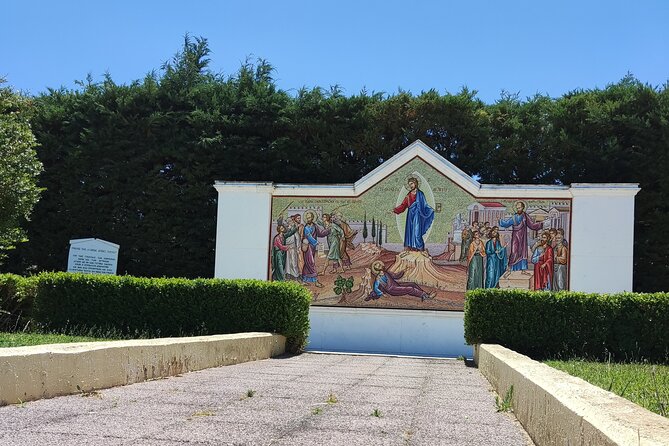
The day ends with a visit to Apostolou Pavlou (St Paul) Church in Corinth. The itinerary describes this church as known from Acts and from the two letters to the Corinthians, connecting it to Paul’s time in the city.
Time here is about 20 minutes, with admission ticket free. This final stop works well because it shifts your attention from ruins and courts to living community memory. Even if you are mostly a history person, it gives your day an ending point that feels coherent.
Entrance fees, optional licensed guides, and how to plan your budget
Here is what the pricing data tells you to expect:
- Ancient Corinth entrance fee is not included (listed as €15 per person).
- Archaeological Site of Isthmia entrance fee is not included (listed as €5 per person).
- Some other stops are listed as having admission ticket included or free.
If you want the most complete inside-the-sites experience, ask whether you want a licensed guide arranged for archaeological interiors. Your driver can provide explanations, but they cannot accompany you inside those sites without licensing. The optional guide is listed as €160 per booking if available.
Finally, meals are not included. Lunch stops are scheduled, but meal costs are on you. If you are picky about food, you may want to budget extra time at the lunch stop so you are not hungry during the later monuments.
Which guides make this tour feel special, not just informative
Across the best experiences, the consistent theme is personality plus focus. Guides like Chris and Ares are praised as a strong pair who made the day move quickly through humor and history. Yiannis is repeatedly described as polite, friendly, and highly attentive, while Panos is praised for turning the tour into something that feels alive.
A common detail that helps your day: the driver uses the ride time to explain what is coming next, not just as background noise. The result is that when you arrive at Areopagus Hill or Corinth’s forum area, you understand why that spot matters before you step out of the van.
If you care about connecting Scripture to place, this driver-led approach is what makes the tour work.
Should you book the Footsteps of Paul tour?
Book it if you want a relaxed, structured Corinth day without the stress of logistics. The combination of hotel or port pickup, air-conditioned private transport, and Paul-centered storytelling is exactly what you want on a limited schedule. It also suits you if you value a small group setting, where you are more likely to get answers to your questions.
Skip it or consider another format if you only want the cheapest option and you dislike paying extra entrances. Also consider budgeting for the optional licensed guide if you want a full inside walkthrough at archaeological sites.
If you are a cruise passenger, this is especially well matched. You get an itinerary built for timely return, and the route is designed to hit the major spiritual and archaeological beats in one go.
If you want your Bible to feel like it happened in real places, this is one of the clearer ways to make that connection without spending your whole day figuring out transportation.
FAQ
How long is the tour?
The tour duration is listed at about 6 hours 15 minutes.
Where does pickup happen?
Pickup is offered from your Athens hotel, Airbnb residence, or the cruise ship. After the tour ends, you are returned back to the meeting point or your preferred drop-off.
Is this tour private or shared?
It is a private tour/activity, meaning only your group participates. The vehicle is a small group tour with 2 to 6 passengers maximum.
What language is the tour in?
The tour is offered in English.
Are entrance fees included?
Some admissions are included (like Areopagus Hill and Daphni Monastery as listed), while key sites such as Ancient Corinth have an entrance fee not included. The Archaeological Site of Isthmia also lists an entrance fee not included.
Can the driver guide you inside archaeological sites?
Your English-speaking driver provides commentary, but for interiors only officially licensed tour guides are permitted inside archaeological sites. A licensed guide can be arranged on request for an additional cost.
Is food included in the tour price?
Meal costs are not included, though lunch stops are scheduled.
Latest from under the Acropolis




Ancient Corinth Tours, compared.
Ancient Corinth Day Trip with Canal & VR Guide
Read our review →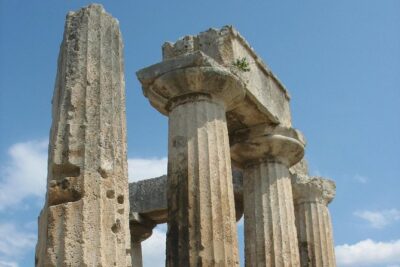
Private Biblical Tour Ancient Corinth & Isthmus Canal from Athens
Read our review →
Corinth Canal, Mycenae & Nafplio Premium Guided Tour
Read our review →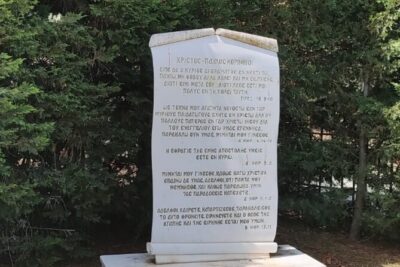
Private Tour of Apostle Paul’s Footsteps in Ancient Corinth
Read our review →
Corinth Half-Day Trip from Athens with Entrance Tickets
Read our review →
Ancient Corinth Tour with Official Guide & Tickets
Read our review →Browse the lists this tour appears in