

Reviewed · DELPHI ORACLE DAY TRIPS
4 Days Classical Private Tour/ Corinth,Mycenae,Nafplio,Sparta,Olympia,Delphi
Early mornings, big stories, and clear logistics.
This private tour is built for comfort and efficiency, with pickup and drop-off to your Athens accommodation and onboard Wi-Fi for the long drives. You still get real, walkable ruins time, like Ancient Corinth and Mycenae, plus plenty of photo stops and short museum breaks that keep the day from feeling like nonstop driving.
I especially like the pacing across two different worlds: Mycenaean fortresses and oracle culture, then hilltop towns and medieval walls. The route also hits four UNESCO World Heritage Sites in four days, including Delphi and Mystras, plus the major sites at Olympia and Mycenae. That is a lot of famous ground covered, but it is done with an overnight in key places, so you are not just commuting through.
The main drawback to plan for is cost creep from site tickets and optional add-ons. Many museums and archaeological sites have separate admission charges, and the driver is not a licensed archaeologist guide for walks, so if you want that extra layer, you will pay for it.
In This Review
- Key points before you go
- Door-to-door classical touring across Peloponnese and beyond
- Day 1: Corinth Canal, Ancient Corinth, and Mycenae, then Nafplio’s Palamidi views
- Day 2: Sparta’s monuments, the ruins of Mystras, and views from Taygetus area
- Day 3: Olympia’s sanctuaries, the Olympic Games museum, and the Gulf towns before Delphi
- Day 4: Delphi’s oracle monuments, the Tholos of Athena Pronaia, and a stop in Thebes
- Price and what your money is really buying
- A real-life pacing note: private comfort, but expect full days
- Who this tour fits best, and who should think twice
- Should you book this 4-day classical private tour?
- FAQ
- What is the meeting time and where do they pick me up?
- Does this private tour include Wi-Fi?
- Is accommodation included?
- Are entrance fees included for archaeological sites and museums?
- Can I hire an archaeological guide on top of the driver?
- Are there any days when museums are closed?
Key points before you go
- Door-to-door pickup and drop-off from Athens or Piraeus keeps you from wrestling buses and taxis.
- Onboard Wi-Fi helps on those longer Peloponnese drives, especially if you are traveling with kids.
- Four UNESCO World Heritage Sites in a tight loop, including Delphi and Mystras.
- Real walking highlights, from Corinth Canal photo time to the hill climb at Palamidi.
- Olympia and Delphi get museum context, not just quick ruin shots.
- The guide matters, and the Nikolaos review story fits this tour style: calm, knowledgeable, and focused on avoiding crowds.
Door-to-door classical touring across Peloponnese and beyond

What makes this tour feel good is the structure. You start around 8:00 am, meet your team, and then you are carried through a region that usually takes multiple separate trips to do properly. With private transport, you can keep your own rhythm, and you do not lose time transferring between buses.
You also get practical comfort. The vehicles are air-conditioned and described as very clean, and the private setup means you are not stuck waiting on strangers who are always “just finishing up.” The onboard Wi-Fi is a small thing until you hit a long drive, then it becomes surprisingly useful for messages, maps, or just resetting your energy.
One important reality check: this is not a guided-archaeologist tour by default. Your driver is an experienced tour driver/leader for the 4 days, but the information says the driver is not a licensed tour guide to accompany you inside archaeological walks. If you want someone who can walk the sites and go deep on artifacts and layers, you need to hire an archaeological guide separately.
More long days out to Olympia:
- 4-Day Classical Greece Tour: Epidaurus, Mycenae, Olympia, Delphi, Meteora
★ 4.5 · 732 reviews - 3-Day Classical Greece Tour: Epidaurus, Mycenae, Nafplion, Olympia, Delphi
★ 4.5 · 342 reviews - 4-Day Tour of Mycenae, Epidaurus, Olympia, Delphi & Meteora
★ 4.8 · 168 reviews - Ancient Olympia full day private tour from Athens
★ 5.0 · 83 reviews
Day 1: Corinth Canal, Ancient Corinth, and Mycenae, then Nafplio’s Palamidi views
Day 1 starts with a quick win: Corinth Canal. It is one of those man-made wonders that is easy to photograph but also fun to physically do something with. You get time to walk across on a pedestrian bridge and admire the canal from about 80 meters up. It is short, but it sets the tone, big scale, clear geography, and immediate payoff.
Next is Ancient Corinth, a major ancient city with multiple layers. You can walk through ruins while the story of Corinth moves from its Greek prominence to Roman rebuilding, then later religious references tied to Saint Paul. The ticket detail here matters for planning: the combined ticket for summer is 15€ and 8€ in winter, so if you are trying to budget tightly, this is one of the first costs to look for.
From there, you go to the Temple of Apollo on Temple Hill. The ruins and the rocky hilltop setting explain why ancient cities loved high ground. You see one of the earlier Doric temples in the Peloponnese, and it is also a reminder that Corinth’s power was tied to growth and prosperity.
The Archaeological Museum of Corinth is the kind of stop that often gets skipped on fast tours, but it is worth the time. You will see finds spanning from prehistoric through Hellenistic, plus Roman and Byzantine materials. The museum is also described as covering excavations from Corinth’s Asklepieion area, which helps you connect the dots between city life and sacred spaces.
Then the day turns to Mycenaean drama with the Citadel and Treasury of Atreus, also called the Tomb of Agamemnon. Even if you keep an open mind about what the tomb’s name really means, the structure is genuinely impressive: a Bronze Age tholos tomb, famous in part because it was still visible when Heinrich Schliemann was searching in the area. Ticket pricing is again specific: 10€ in winter and 20€ in summer for the combined tomb and site.
After the tomb, you get Mycenae itself, including the citadel with defensive walls and signature landmarks like the Lions Gate. This is one of those ruins where walking around helps you understand why the myth stuck. The massive building style, the strategic position over the Argolid Plain, and the feeling of power make it easy to see why stories grew up around these stones.
If you still want more context, the Archaeological Museum of Ancient Mycenae adds it. It is right next to the citadel and shows objects from the excavation area, giving you a calmer, indoor companion after the outdoor walking.
Finally, you head to Nafplio and use it as your overnight base. The highlight stop here is Palamidi Castle, the Venetian fortification with major views over the Argolic Gulf and Nafplio itself. You will hear the step-count story. The fortress climb is often described as 913 steps from town, and locals say there are 999. Either way, it is a real workout. I like this kind of stop because it turns a ruin day into a living-town evening.
Nafplio as an overnight makes sense. You are not just grabbing dinner and leaving. You get enough time to settle in and enjoy a waterfront town that has served as a capital during different eras of Greece, including the First Hellenic Republic and the Kingdom of Greece.
Accommodation note: the tour can arrange hotel options with breakfast at additional cost, and the driver’s room is complimentary. If you choose your own hotel, you need to reserve an extra room for your driver.
Day 2: Sparta’s monuments, the ruins of Mystras, and views from Taygetus area
Day 2 starts with Nafplio’s Archaeological Museum, housed in a symmetrical Venetian stone building at Syntagma Square. The museum is not huge, but it is described as well-preserved and includes standout finds, including the Bronze Suit Armor of Dendra. That piece alone is the kind of artifact that makes the whole region feel less like a postcard and more like a lived-in place.
Then you move up to Akronafplia Fortress, Nafplio’s oldest castle area. It is a mix of Bronze Age remnants and later expansions by Romans, Franks, Venetians, and Turks. The real value for you here is the view time. You get a backdrop for the bay, the city, and Arvanitia beach, plus old walls that help you understand how Nafplio defended itself when everything was closer and riskier.
From there, you spend time in Sparta, with multiple layers of stops. The first is the Archaeological Museum of Sparta, described as the oldest provincial archaeological museum in Greece. It is in a neoclassical building and is included as a short museum visit, but this time slot helps you connect the Sparta myth with actual objects from the area.
Next is the Acropolis and Ancient Theater. This is where Sparta’s power vibe comes through, but without pretending there are still grand temples standing tall. The site is described as having fewer splendid structures than some other ancient cities, so what you get is more of the ground-plan feel, plus the sense of a military city whose influence spread through rivalry and war.
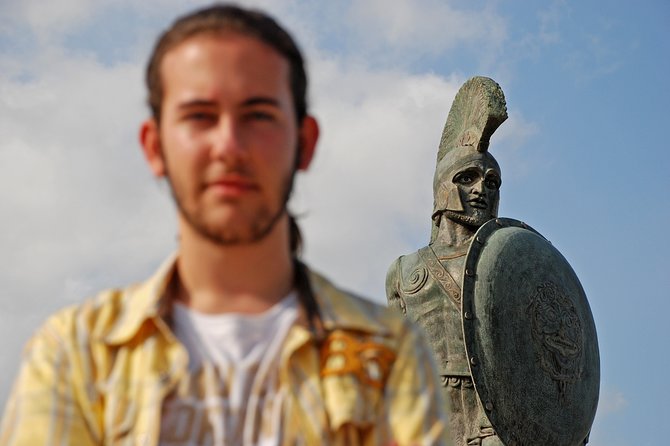
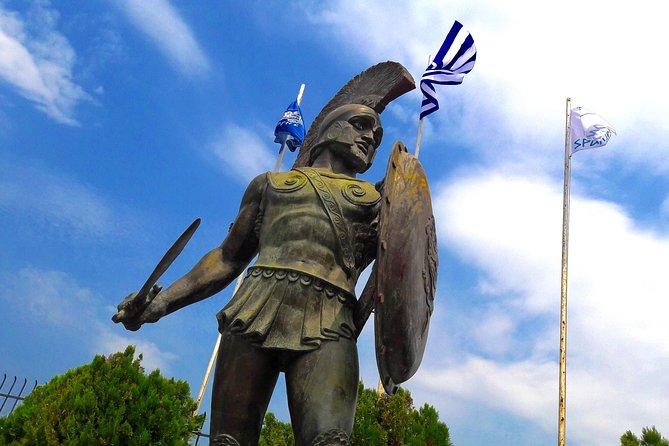
Then you get a quick, iconic photo stop: the Leonidas Monument. The statue sits in front of a stadium, and the wording connects it to Thermopylae. The 5th century B.C. edifice beneath it is described as likely the tomb of Leonidas, though the use is noted as not fully verified. Either way, it is short and meaningful.
After Sparta, the tour goes to one of the biggest emotional stops on the whole route: Mystras, described as the wonder of the Morea and a UNESCO World Heritage Site. You spend about 2 hours at the archaeological site. Mystras is an amphitheatre of ruins built around a fortress established in 1249 and later used and re-used by different powers, including Byzantines, Turks, and Venetians. By the time you walk through it, you get that special medieval ruin feeling, where walls and buildings still look like they were meant to be inhabited, not just displayed.
The day also references Mount Taygetus as the towering natural defense edge between Laconia and Messinia, with notes about historic punishment practices tied to Ceadas and later shelter during invasions. You might not want to dwell on the darker bits, but it is useful to know why people built where they did, and why Sparta’s story includes the mountains as much as the politics.
You will also spend the night around the Mystras area or nearby, which helps you take this day at human speed instead of pretending you can see ruins all day and then also keep going.
Day 3: Olympia’s sanctuaries, the Olympic Games museum, and the Gulf towns before Delphi
Day 3 is the sports and sanctuaries day, and it is one of the best parts of the trip because you get both the outdoor site and museum context.
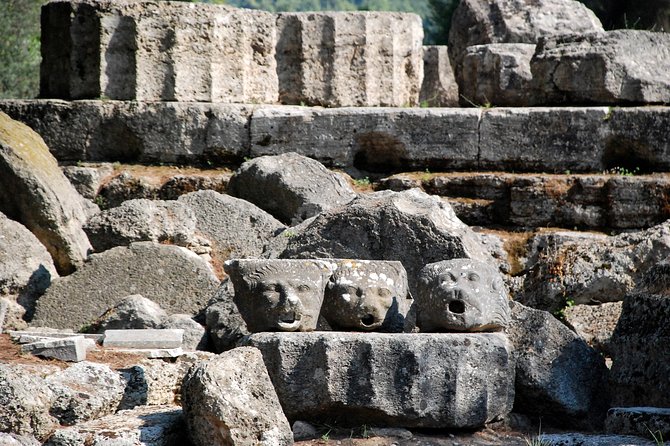
You start at the Archaeological Site of Olympia. Olympia is described as a major ancient sanctuary in Elis, set in a calm valley at the confluence of two rivers. The Olympic Games story is the headline, with dates and meaning tied to four-year cycles starting in 776 BCE. You walk through ruins ranging from Bronze Age through Byzantine eras, including the stadium area.
If you only saw the ruins, you might miss why Olympia mattered. That is why the Olympia Museum is included after. You get important statues and artifacts, including references to the Hermes of Praxiteles, the Nike of Paionios, and helmets dedicated to Zeus, including ones tied to Marathon. Even if you do not memorize the names, you will feel the difference between scattered remains and preserved objects with strong provenance.
You then get a smaller, focused extra: the Museum of the Olympic Games, which explains events like foot racing, wrestling, boxing, and chariot racing. It also covers how women were treated at the Games, plus how the story connects with Hercules or Pelops. It is a good bridge stop, especially if you have kids or you want something lighter than stone steps.
After Olympia, you shift toward modern Greece with a technical and scenic stop: the Rio-Antirion Bridge. The key detail is how you see it. The plan calls for a ferry crossing from Rio to Antirrio for about 20 minutes, with views of the bridge. This is a nice change of pace because it feels like a break between ancient sites, not another lecture stop.
Next is Nafpaktos, a coastal town with a long layered name history, including Lepanto under Venetian control. It is also tied to the Battle of Lepanto in 1571, and the tour gives you a sense of how strategic the Gulf position was through Crusades and Ottoman-Venetian wars. You get about an hour, which is enough for a calm walk and some sea-breeze reset.
You then go to Galaxidi, a smaller port on a natural double harbor. This stop is shorter, but it is one of those places where the value is just slowing down, looking at boats, and eating if you have time.
Finally, you drive via Mount Parnassus above Delphi. The tour notes mythology tied to Dionysus and Apollo, including the Muses, and it also positions Parnassus as sacred ground in ancient belief. You overnight on the slopes in a traditional village, which is a smart way to spread out the day instead of forcing a long final-day push.
Day 4: Delphi’s oracle monuments, the Tholos of Athena Pronaia, and a stop in Thebes

Day 4 is Delphi plus a few practical add-ons before returning to Athens.
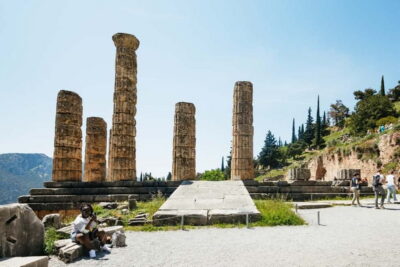
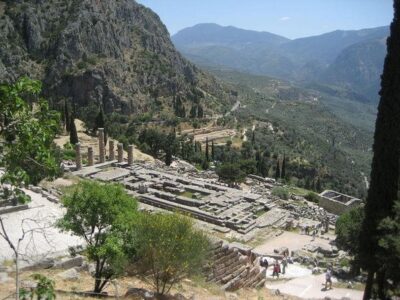
You start at the Temple of Apollo in Delphi, the core oracle sanctuary area. The tour frames Delphi as the seat of Pythia, consulted for major decisions throughout the ancient world, and it mentions the omphalos as the marked center of the world. The UNESCO angle is also spelled out for Delphi, and the mix of monuments built by important city-states is the reason Delphi matters beyond any single myth.
Ticket pricing is listed, with summer at 20€ and reduced winter at 10€, so this is another place where you can budget using the exact numbers provided. You get about 1.5 hours on site, which is enough to walk, spot key structures, and not rush everything like you are late for a train.
Then comes the Delphi Archaeological Museum, described as one of Greece’s most important. It focuses on the sanctuary’s history, including architectural sculpture, statues, and donated objects. Even with no special background, you will likely appreciate how the museum ties art to political and religious activity at Delphi.
After Delphi, you visit the Tholos of Athena Pronaia. This is a circular building created between 380 and 360 BC, with 20 Doric columns on the exterior. It is included as a shorter stop, around 30 minutes, but it gives you a different architectural shape than the typical temple ruins. The interior column order is noted as Corinthian, which helps you spot stylistic details if you are paying attention.
The tour also includes time at Livadia, where the story centers on the oracle of Trophonius and mentions consultations even into later times, including Plutarch era, plus Pausanias consulting the oracle. You get about 30 minutes, so treat this as atmosphere and story, not as your main museum block.
Finally, you stop at the Archaeological Museum of Thebes, described as one of the important museums of Greece with rare or unique items. Admission pricing is given for general and reduced by season, but the key value is coverage from Paleolithic through Post Byzantine periods, so you get a broad time range in a controlled time window.
Then you head back to Athens in the evening. It is a long wrap-up day, but the stop selection is built around finishing strong, not burning daylight on random roadside views.
More visits to the citadel at Mycenae:
- From Athens: Small-Group Mycenae, Epidaurus & Nafplio Trip★ 4.8 · 2,805 reviews
- From Athens: Mycenae, Epidaurus & Nafplio Full-Day Tour★ 4.5 · 2,530 reviews
- Mycenae, Epidaurus and Nafplio Tour from Athens★ 4.6 · 2,201 reviews
- Mycenae and Nafplion Day Trip from Athens with Official guide★ 4.5 · 501 reviews
Price and what your money is really buying
At $1,376.08 per person, this is not a budget tour. What you are paying for is private transportation across multiple regions, door-to-door pickup and drop-off, and built-in multi-night logistics. The inclusions also mention air-conditioned vehicles, high cleanliness, fuel, toll roads, ferry tickets, and parking fees. Those are the hidden line items that can make self-planning much more expensive once you add up time and transport costs.
On top of that, you get the practical bonus that the tour can include onboard Wi-Fi and uses mobile tickets. Group discounts may also apply depending on vehicle choice and group size.
Where costs can rise is admissions and optional guiding. The tour explicitly lists separate admission pricing for winter and summer, and it emphasizes you will visit multiple sites and museums, so expect a stack of tickets, not one. For example, Ancient Corinth has a combined ticket with 15€ in summer and 8€ in winter. The Treasury of Atreus combined ticket is 10€ winter or 20€ summer. Many other sites and museums are described as free, but not all are.
There is also a choice point for how deep you want to go. If you want an archaeological guide for walks, there is an additional 180€ per booking. That is expensive, but it can be worth it if you want real interpretation instead of doing the reading yourself.
A real-life pacing note: private comfort, but expect full days
This route works because it is not trying to squeeze every site into one day. You overnight in Nafplio and Olympia, then you stay near Mount Parnassus, which spreads out the driving load. Even so, your days include a mix of short photo stops, museum blocks, and archaeological walks.
The Palamidi Castle climb is a good example of the kind of physical time you should plan for. It is listed as roughly 913 steps, and people talk about 999 steps. You do not want to do that part with heavy fatigue or poor shoes.
Also, pay attention to closure days. Museums and some sites are closed on Tuesdays, plus major holiday dates. Your exact start day can matter. If you have strong must-sees on a museum basis, you will want to align your travel dates with what is open.
Who this tour fits best, and who should think twice

This is a great match if you want a classic Greek highlights sweep without the stress of planning trains, buses, and transfers. It is also a solid fit for couples and small groups who like structure and hate wasting time.
It is especially appealing if you like the idea of driving through multiple historic eras, from Doric temple ruins to Mycenaean tomb scale to medieval Mystras, then ending at Delphi’s oracle complex.
You might want to think twice if your trip dates are tight around closure days, because museums and some sites do not operate every day. Also, if you dislike long road time, this route is still a lot of sitting, even with Wi-Fi and a private vehicle.
Finally, if you are a hardcore archaeology person who expects guided interpretation at every walk, you will likely want to budget for those optional archaeologist guides.
Should you book this 4-day classical private tour?
I would book this if you want a private, efficient route that covers the major classical hits, including Delphi, Olympia, Mycenae, and Mystras, while keeping logistics under control. The door-to-door pickup, air-conditioned vehicle comfort, and onboard Wi-Fi make it feel more like a planned journey than a sightseeing scramble.
I would hesitate only if your priorities are highly museum-specific on particular days, or if you know you will want a licensed archaeologist for every site, because the extra guiding and admissions can add up. If you like ruins you can walk through and then museums that give the objects context, this itinerary hits that sweet spot.
If you want my simple rule: choose this tour when you value smooth logistics and high-impact highlights, then bring good shoes and a realistic attitude toward ticket costs.
FAQ
What is the meeting time and where do they pick me up?
The tour starts at 8:00 am, and pickup is offered from your hotel or apartment in Athens, Piraeus, or the airport. You can request another pickup location.
Does this private tour include Wi-Fi?
Yes. The tour description includes onboard Wi-Fi, which helps during longer drives.
Is accommodation included?
Accommodation is not included in the main price. The tour can arrange hotel options for you at an additional cost per double room per night, and you will pay more for weekend holidays. A driver room is complimentary.
Are entrance fees included for archaeological sites and museums?
No. The tour lists admission fees separately, with 10€ in winter and 20€ in summer, and you visit multiple sites and museums.
Can I hire an archaeological guide on top of the driver?
Yes. The driver is not described as a licensed archaeologist guide for walks. If you want an archaeologist guide, it can be hired additionally for an extra 180€ per booking.
Are there any days when museums are closed?
Museums are closed on every Tuesday (museums only), plus several holidays like 25th and 26th of December, 1st of January, 25th of March, Easter Day, and 1st of May, according to the provided info.
Visiting Ancient Corinth
- From Athens: Ancient Corinth Day Trip with Canal & VR Guide
★ 4.6 · 1,073 reviews - Biblical Tour Letters ToThe Corinthians St Paul’s Footsteps 6Hour
★ 5.0 · 1,065 reviews - Private Biblical Tour Ancient Corinth & Isthmus Canal from Athens
★ 5.0 · 762 reviews - Private Tour of Apostle Paul’s Footsteps in Ancient Corinth
★ 5.0 · 275 reviews
Nafplio and Its Fort
- Athens: Ancient Corinth & Nafplio Full Day Trip with Swim
★ 4.8 · 531 reviews - Argolis: Full-Day Tour in Mycenae & Nafplio
★ 4.2 · 350 reviews - Athens: Corinth Canal, Mycenae & Nafplio Premium Guided Tour
★ 4.7 · 322 reviews - Mycenae, Epidaurus, Nafplio Full Day Private Tour from Athens
★ 5.0 · 270 reviews
Latest from under the Acropolis




Delphi Oracle Day Trips, compared.
Mythology of Delphi, Museum and Arachova Guided Tour
Read our review →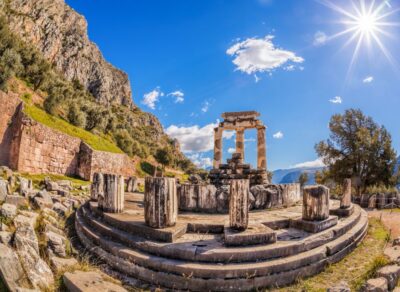
Small-Group Delphi, Museum & Arachova Day Trip
Read our review →
Delphi English Day Trip from Athens with Official Guide
Read our review →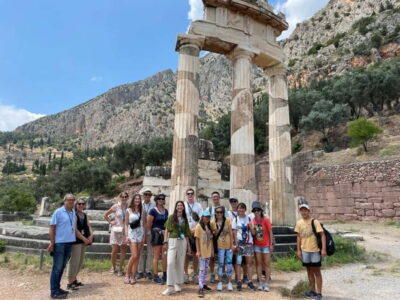
Delphi Oracle & Museum Tour with a Licensed Guide
Read our review →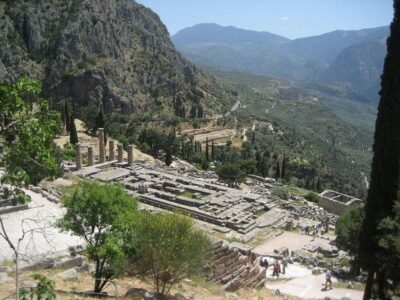
Historical Delphi One Day Tour with Arachova Stop & Expert Guide
Read our review →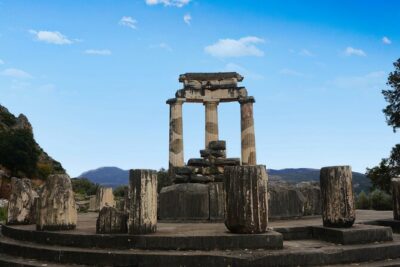
Premium Delphi Day Trip with an Expert Guide, Museum & Lunch
Read our review →
Browse the lists this tour appears in