
Reviewed · ANCIENT CORINTH TOURS
The Apostle Paul’s Missionary Journey in Athens and Corinth
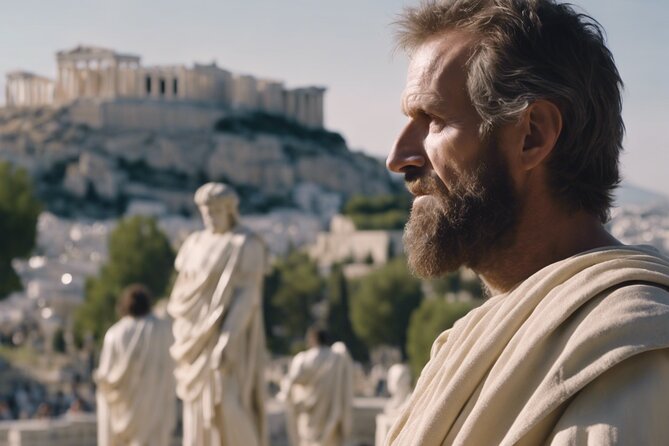
Paul’s message lands differently when you walk the streets. This Athens to Corinth day trip mixes biblical scenes with classical Greek landmarks in a way that makes the places feel connected. You are also not stuck figuring out transport, with door-to-door pickup that keeps the day moving.
What I love is the real-world comfort of the setup. Hotel or port pickup plus air-conditioned driving means you start early, but you do not feel wrecked by the logistics. I also like the hands-on context your guide adds at each site, including why Paul would have stood where he stood and talked with the people around him.
One drawback to plan for: entrance fees are not included for the main archaeology stops like the Ancient Agora and Ancient Corinth. On top of that, there is walking on uneven ground and the day can run long, so comfortable shoes matter.
In This Review
- Key highlights you should know before you go
- Walking the Apostle Paul route between Athens and Corinth
- Price, time, and where the real value comes from
- Door-to-door pickup, WiFi, and a long day you can manage
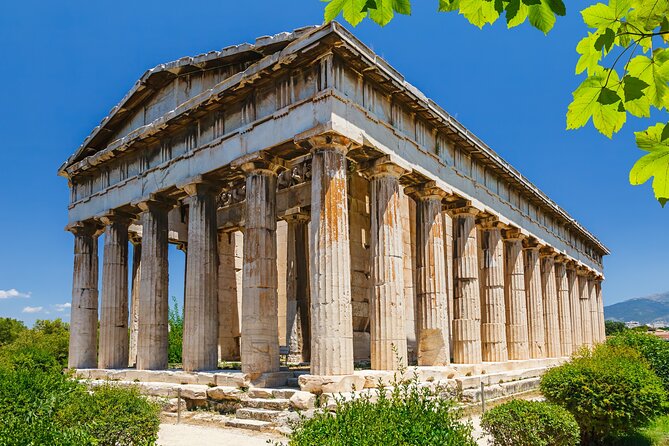
- Ancient Agora of Athens: where public life met Paul’s conversations
- Areopagus and the Church of Saint Dionysius the Areopagite
- Corinth Canal and Kenchreai: the geography behind Paul’s movement
- Ancient Corinth: the Bema, the Agora, and the Temple of Apollo
- Museum of Ancient Corinth and Acrocorinth viewpoints
- Who this Athens and Corinth Paul tour fits best
- Should you book this Apostle Paul in Athens and Corinth tour?
Key highlights you should know before you go
- Door-to-door pickup from Athens hotels or the port, so you start the day without stress
- Private format for 1 to 4 people, using a sedan when you are a small group
- WiFi on board plus bottled water, handy during the long drive and hot weather
- Areopagus to Kenchreai to Corinth, a full chain of Paul-related locations tied to real places
- Acrocorinth viewpoints give you the best sense of why this region mattered in ancient times
- English driver with in-depth historical background, with free time at several stops for your own photos and pacing
Walking the Apostle Paul route between Athens and Corinth
This is a one-day, cross-regional trip focused on the story of Paul in Greece, but it is not just lecturing from a bus. You spend real time at sites where ideas, religions, and politics all overlapped, which is exactly what Paul would have navigated.
In Athens, the route is built around places tied to public life and debate. You start at the Ancient Agora, then move to the Areopagus, and later visit a church connected to Saint Dionysius the Areopagite. In Corinth, you shift from ports and commerce to a city with layers of power, law, and religion, ending with the fortified heights of Acrocorinth.
The goal is to help you see the Christian story in the same frame as Greek civic life, Roman-era trade, and the mix of gods and ideas people lived with every day. That is the value here: you are not only viewing ruins, you are building a mental map.
More trails following Paul through Greece:
- Biblical Tour Letters ToThe Corinthians St Paul’s Footsteps 6Hour
★ 5.0 · 1,065 reviews - Private Biblical Tour Ancient Corinth & Isthmus Canal from Athens
★ 5.0 · 762 reviews - Private Tour of Apostle Paul’s Footsteps in Ancient Corinth
★ 5.0 · 275 reviews - Paul”s Footsteps Ancient Corinth Biblical Tour
★ 5.0 · 184 reviews
Price, time, and where the real value comes from
At $200.25 per person for an 8 to 9 hour day, the price is not cheap, but it is easy to justify if you care about efficiency and context. You are paying for transport between Athens and Corinth, plus English-language explanations throughout the day.
A key point for value: several stops do not charge admission (Areopagus, the Saint Dionysius church, Corinth Canal, Kenchreai, the museum of Ancient Corinth, and Acrocorinth are listed as free). But two of the biggest archaeology pieces are explicitly not included: the Ancient Agora of Athens and Ancient Corinth. So your final cost will depend on entry fees you pay on the day.
If you are the type who hates wasting time getting lost, the door-to-door pickup and private group format can make this feel like a fair deal. If you are traveling solo on a tight budget and already plan to rent transport, you might feel the price more.
Door-to-door pickup, WiFi, and a long day you can manage
This is set up for a smooth start. You can be picked up from your Athens hotel or from the port, and the driver waits outside for hotel pickups or at the arrival area holding a signboard with your name for port pickups. Airport pickup is optional and costs extra.
Once you are in the vehicle, the basics are handled: air-conditioning for the ride, bottled water, and WiFi on board so you can check directions, search opening times, or just keep everyone sane during travel time. For small groups of 1 to 4, a sedan is used, which often means an easier, quieter ride than a larger van.
Practical advice: wear comfortable shoes with good grip. You will be walking on uneven surfaces at archaeological sites, and the day can be hot. Bring a hat and sunscreen. If you are sensitive to heat, plan to slow down at the midday stops and drink the water even when you are not thirsty.
Ancient Agora of Athens: where public life met Paul’s conversations
Your morning begins at the Ancient Agora, the center of ancient Athens for politics, commerce, social life, and religion. This is where people came to argue, trade, and form opinions. That matters because Paul did not preach in a vacuum. He entered a public world where ideas were debated face to face.
You get about one hour here, which is enough time to see the space as more than a backdrop. Even if you only pause at key points, you start to understand how a visitor could go from walking through everyday civic life to speaking with philosophers and thinkers.
One caution: admission tickets are not included for this stop. That means you should budget time and money for entry. Also, expect walking and standing on ancient ground. This stop is a great start if you like context first, then payoff later in the day.
Areopagus and the Church of Saint Dionysius the Areopagite
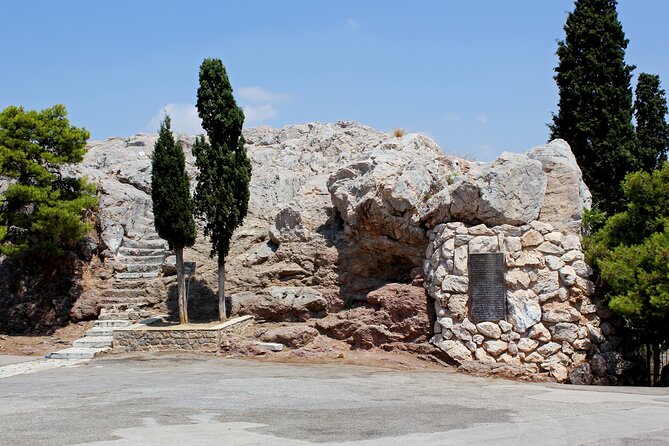
Next comes the Areopagus, a marble hill northwest of the Acropolis used for judicial and political meetings in ancient Athens. In Paul’s era it was also a known place for intellectual debate and discussion, which makes it a natural setting for his message.
You have around 30 minutes here, and admission is free. Use that time for two things: get your bearings on the hill and imagine the conversation in that setting. The Areopagus is not just scenery, it is a reminder that ancient Athens treated public reasoning like a civic sport.
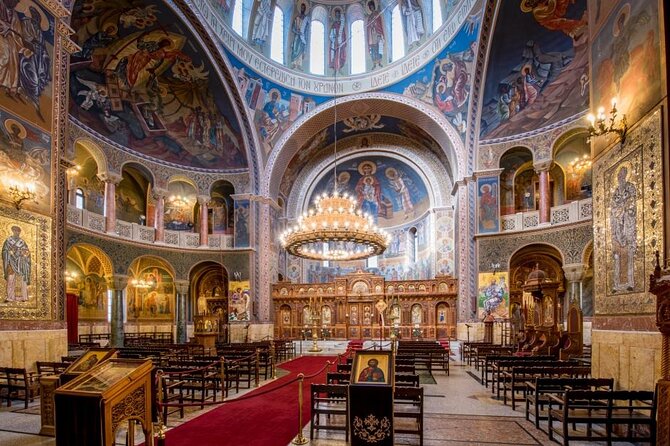
After that, you visit the Church of Saint Dionysius the Areopagite in Kolonaki. It is dedicated to Athens’ patron saint, and the tradition links Dionysius to conversion through Paul, later becoming the first bishop of Athens. This stop is shorter, about 20 minutes, and it is free.
What I like about adding this church visit is the continuity. You move from civic debate settings to a place that remembers the Christian story through a local figure. Even if you are not religious, it gives you a clearer sense of how Athens kept telling this story over time.
Other visits to ancient Corinth:
- From Athens: Ancient Corinth Day Trip with Canal & VR Guide★ 4.6 · 1,073 reviews
- Athens: Ancient Corinth & Nafplio Full Day Trip with Swim★ 4.8 · 531 reviews
- Athens: Corinth Canal, Mycenae & Nafplio Premium Guided Tour★ 4.7 · 322 reviews
- Athens: Corinth Canal, Mycenae and Nafplio Day Tour★ 4.3 · 252 reviews
Corinth Canal and Kenchreai: the geography behind Paul’s movement
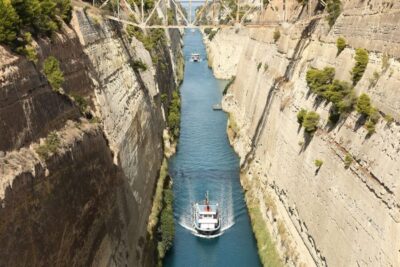
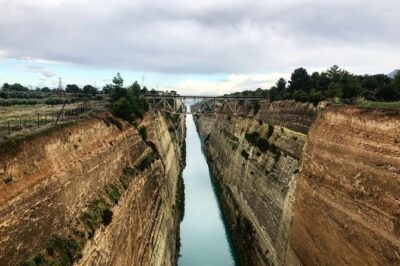
Corinth Canal is your mid-day break from the ancient-city pace. It is a modern engineering marvel slicing through the Isthmus of Corinth, connecting the Gulf of Corinth with the Saronic Gulf. Though it is long after Paul, it helps you grasp why the region mattered strategically. The peninsula becomes its own world of movement, trade, and travel.
You only have about 20 minutes here, and it is free. Treat it as a quick reset. Stand back for photos, then get back on the road. This is less about Paul in a direct biblical sense and more about understanding the geography the early Christians would have used.
Then you head to the Ancient Port of Kenchreai, also known as Kechrees. This is Corinth’s eastern port and a major trade and travel hub during Roman times. Some ruins sit under or beneath later layers, but you can still see the types of features that mattered for movement: storerooms, breakwaters, sanctuaries, and an early Christian basilica from the 4th century A.D.
This is also a key Paul-related location. You are visiting the place where Paul arrived in 51 A.D. to begin his mission in Corinth. You get about 20 minutes, and it is free.
My practical tip: ports are easy to overlook if you only focus on big temples. But Kenchreai gives you the human side of mission work, arrivals, departures, and the everyday rhythm of merchants and travelers.
Ancient Corinth: the Bema, the Agora, and the Temple of Apollo
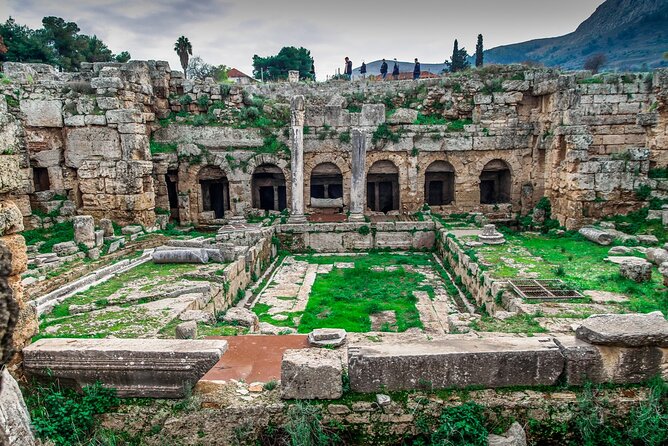
Now you reach the big archaeology stretch: Ancient Corinth. This site holds special meaning for Christian visitors because of what happened there in Paul’s time.
A major point is the Bema, a raised platform in the city center. Paul is believed to have addressed the community there and stood trial before the Roman proconsul. Even if you do not know every detail, being on that ground helps you feel the scale of a public message.
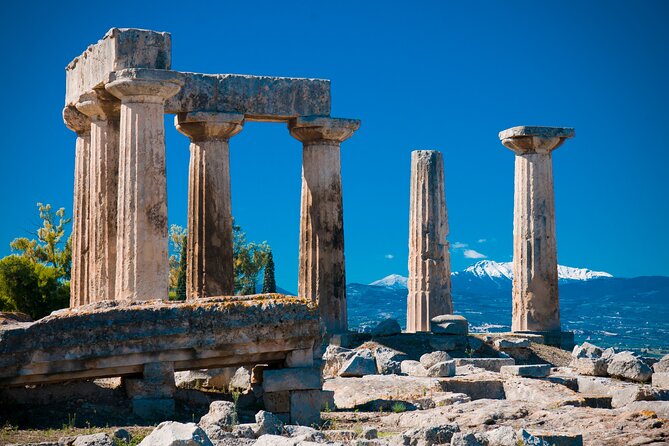
Nearby is the Agora, the marketplace that gives you the pulse of daily life for the Corinthians Paul wrote to. And you also see the Temple of Apollo, a reminder that religious life in this part of Greece was layered and not one-note.
You have about one hour here, and admission tickets are not included. That means you will pay entry fees on the day for this stop. Plan for more walking, too, because archaeological sites require slow, careful steps.
If you want the best experience, do not rush. Pick a couple of anchor spots, then let the rest fill in around them. This is where the day starts to feel like a story with locations, not random stops.
Museum of Ancient Corinth and Acrocorinth viewpoints
After the archaeology, you get a breather with the Museum of Ancient Corinth. It was established in 1932 to safeguard artifacts from the area, and it is listed as free. You have about 45 minutes.
The museum is a strong match for this itinerary because it helps translate ruins into everyday life: you can connect what you saw outside to objects and patterns that show how people lived, worshiped, and created art. The exhibits include finds from the Sanctuary of Asklepios as well.
Then you finish with Acrocorinth. This hilltop acropolis guarded the region through centuries and served as both a military stronghold and a religious center. It is also linked to the Temple of Aphrodite, said to have housed up to 1,000 priestesses.
You only have about 30 minutes, but you should make it count. Acrocorinth’s payoff is the view and the sense of control. When you look out over the surrounding area, the earlier geography choices start making more sense: why people could move through here, why cities could dominate, and why messages traveled.
Who this Athens and Corinth Paul tour fits best
This works best if you want a one-day plan that covers a lot of meaningful ground without you dealing with transport. It is also a good fit if you enjoy connecting biblical references to real physical locations, including the public debate setting of Athens and the mix of commerce and religion in Corinth.
It is also ideal for small groups. With a private format for 1 to 4 people and a sedan vehicle, you generally get more flexibility and a more personal pace. The experience is led by a professional English-speaking tour driver with in-depth knowledge of history, and the tone comes through in the way the day flows stop to stop.
The main reason to think twice is physical pace. There is walking on uneven pavement at archaeological sites, and it can be hot. If you have mobility limits, you might find this harder than a simpler city tour. Comfortable shoes and heat protection are non-negotiable.
Should you book this Apostle Paul in Athens and Corinth tour?
Book it if you want a single day that links Paul to the geography that shaped his message. The door-to-door pickup, WiFi, and bottled water make the long day easier, and the stop choices help you see both Greek civic life and Corinth’s public spaces.
Skip or rethink it if you are only interested in a couple of highlights and do not want to pay extra entrance fees at the main archaeology sites. Also, if uneven ground and heat are big issues for you, you may prefer a slower plan with fewer sites.
If you do book, pack for summer walking, budget for entrance fees for Ancient Agora and Ancient Corinth, and treat Acrocorinth as your mental reset at the end. That view is where the day clicks.
Latest from under the Acropolis




Ancient Corinth Tours, compared.
Ancient Corinth Day Trip with Canal & VR Guide
Read our review →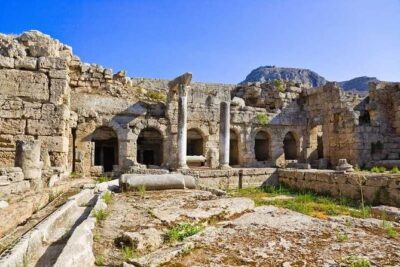
Biblical Tour Letters ToThe Corinthians St Paul’s Footsteps 6Hour
Read our review →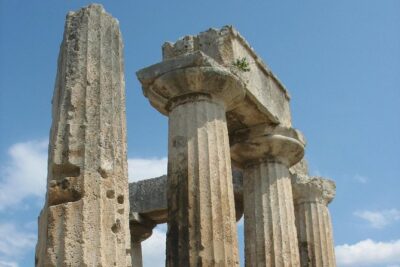
Private Biblical Tour Ancient Corinth & Isthmus Canal from Athens
Read our review →
Corinth Canal, Mycenae & Nafplio Premium Guided Tour
Read our review →
Private Tour of Apostle Paul’s Footsteps in Ancient Corinth
Read our review →
Corinth Half-Day Trip from Athens with Entrance Tickets
Read our review →Browse the lists this tour appears in