
Reviewed · WORKSHOPS
Still Life Painting Workshop in Athens
Paint your own Greek still life in Athens. This still life painting workshop with artist Stathis Petropoulos turns art time into a practical way to see Athens beyond ruins, with hands-on guidance in drawing and color using acrylics. I especially like that you learn color mixing and brushwork while working from a real object arrangement, and I love that you paint on small lightweight wood panels and leave with your finished piece to remind you of the day.
One thing to consider is that this is a studio-focused experience, so it is not a walking tour with a pile of stops and viewpoints. If you want a quick sightseeing loop, you might find 3 hours is better spent with paint than with an outdoor route.
In This Review
- Key highlights from this Athens still life workshop
- From Amerikis to Kolonaki: the start feels easy
- Drawing first, then color: how the workshop teaches you to see
- Acrylic color mixing that you can use anywhere
- Brushwork and composition: the small moves that make it look real
- Painting on small Hellenistic-style wood panels
- The still life setup: Greek culture through objects
- What you take home (and how to handle it)
- English instruction and a group size that helps
- Price in perspective: what $108.89 covers
- Who this workshop is best for
- Should you book this Athens still life painting workshop?
- FAQ
- Where is the meeting point for the workshop?
- What time does the workshop start?
- How long is the experience?
- What language is the workshop offered in?
- How many people are in each group?
- What ticket type do I receive?
- Do I get a confirmation after booking?
- Where does the workshop end?
- Can I bring a service animal?
- Can beginners join?
Key highlights from this Athens still life workshop
- Kolonaki studio setting, central and “trendy,” with a calmer pace than the main tourist areas
- A guided drawing-to-color process that helps beginners and advanced artists both get traction
- Acrylic techniques you can reuse, including color mixing, brushwork, and composition
- Small lightweight wood panels inspired by how Ancient Greek artists painted in Hellenistic times
- A compact group size of 6, which usually makes it easier to get hands-on help
- Greek-culture themed still life setups, including one described as a stone owl on a column
From Amerikis to Kolonaki: the start feels easy
You begin at Amerikis 9, Athina 106 72, Greece at 10:30 am, and the activity ends back at the same meeting point. That matters because Athens can be a bit of a logistics puzzle, especially if you bounce between museums and neighborhoods. Having a clear start and finish keeps your day simple, and it is a relief to know you are not locked into a long route.
From there, the class takes place in Stathis Petropoulos’ studio in Kolonaki, a central neighborhood known for art, shops, and a more local feel than the densest tourist zones. This is one of those good Athens tradeoffs: you spend time in a real creative space instead of stacking another few photo stops.
A small group, max 6 travelers, also shapes the vibe. You are not swallowed by a crowd. Even in a short 3-hour session, that size tends to mean more direct coaching and more time to ask what you are seeing.
More Athenian benches to work at for a morning:
- Athens: Classic Cooking Class with Market Visit and Wine
★ 5.0 · 1,101 reviews - Athens: Food Market Visit and Cooking Class with Wine
★ 4.9 · 1,087 reviews - Greek Cooking Class in Athens Including Rooftop Dinner with Acropolis View
★ 5.0 · 826 reviews - Greek Small-Group Athens Cooking Class & Dinner
★ 5.0 · 574 reviews
Drawing first, then color: how the workshop teaches you to see
The workshop is built around two steps: drawing and color. In practice, that means you are not just handed paint and told to have fun. You get a guided sequence, which is a big deal if you have ever stared at a blank page and thought, I have no idea where to start.
The drawing portion is where you learn how to capture the shapes you are looking at, not just the “final picture” you think you are supposed to make. Then the color steps bring in the problem you will feel immediately: mixing the right tones, especially when you are painting something with subtle shading.
From the review example, the still life included a stone owl perched on a column, with a direct, almost intimidating gaze. That kind of subject is great for learning, because it forces you to notice surface texture and value. Mixing a good gray is rarely as simple as grabbing gray paint. It is about testing, adjusting, and comparing what you mix to what you actually see.
Acrylic color mixing that you can use anywhere
Acrylics are a practical choice for a short workshop because they handle well and let you build quickly. You will work with acrylic paint on your panel, and the class focuses on real technique, not just artistic inspiration.
The most useful skill here is color mixing. You learn how to make color decisions rather than copying what’s on the palette. You also learn to think in terms of tone and contrast, which helps whether your subject is a white object, a dark surface, or something gray and stone-like.
You’ll also get guidance on:
- How brushwork changes the look of edges and textures
- How composition helps the object sit convincingly on the panel
Even if you end up doing different subjects later, these ideas travel. The next time you paint or draw, you will already know how to approach the problem in layers.
Brushwork and composition: the small moves that make it look real
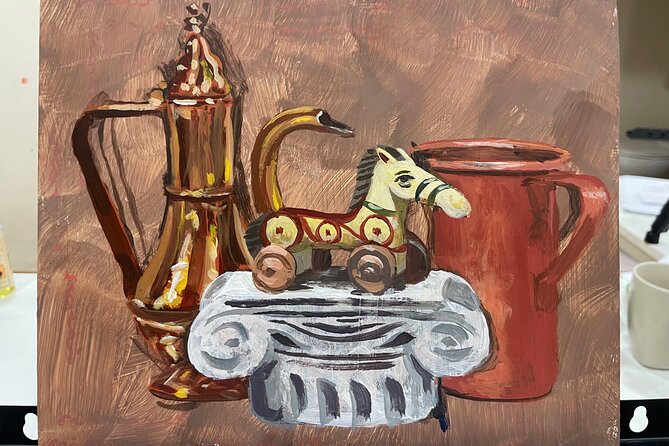
Once color starts to take shape, the workshop shifts to how you apply it. This is where brushwork matters. In a still life, small differences in how you paint shadows and highlights can turn a flat object into something that feels dimensional.
The class also teaches composition, which is not just about making the object “fit.” It is about balancing the placement, the visual weight, and the rhythm of lines and shapes. On a small panel, composition becomes especially important. There is less room for mistakes, so you learn to be intentional.
Think of it like learning a good camera angle. You might not move the objects, but you can make your painting look composed by choosing what you emphasize, what you soften, and what you keep crisp.
Painting on small Hellenistic-style wood panels
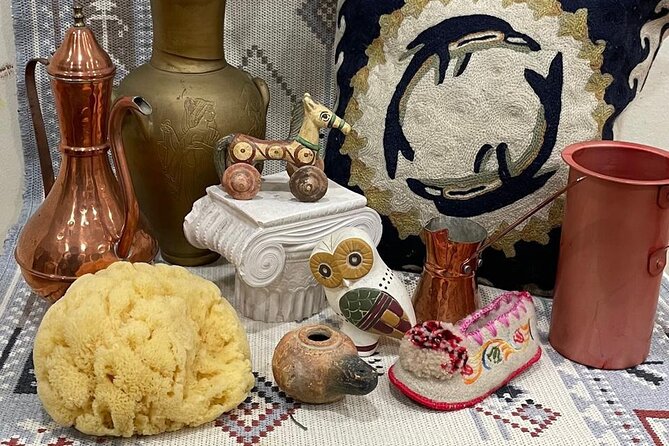
One detail I really like is the support material: you paint on small, lightweight wood panels inspired by how Ancient Greek artists painted in Hellenistic times. That sounds like a fun trivia line, but in a practical sense it changes the whole experience.
Small panels:
- Keep the session manageable in a 3-hour window
- Encourage faster decisions about proportions and color
- Help you finish a complete work, not just a sketch
And because it is wood, you get a different feel than canvas. You might notice how the surface interacts with acrylic and how your brush marks read across the panel. If you like craft details, this part will feel satisfying right away.
Same hours, spent a different way in Athens:
- Athens: Acropolis & up to 5 Archaeological Sites Combo Pass★ 4.2 · 13,904 reviews
- Athens: Acropolis, Parthenon & Acropolis Museum Guided Tour★ 4.8 · 9,316 reviews
- The Acropolis, Parthenon & Acropolis Museum Guided Tour★ 4.7 · 8,493 reviews
- Athens: Cape Sounion & Poseidon Temple Sunset Half-Day Trip★ 4.8 · 8,241 reviews
The still life setup: Greek culture through objects
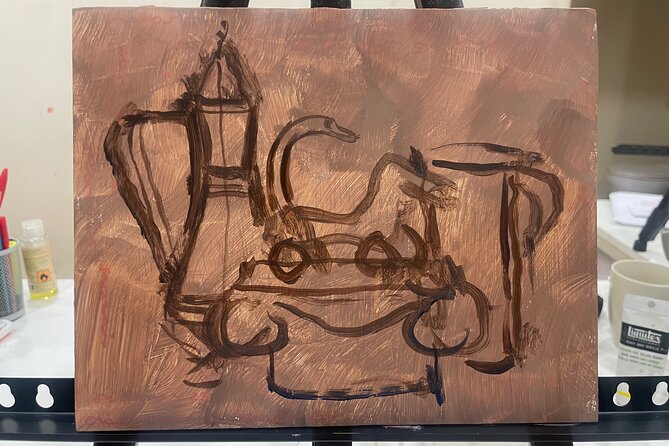
This workshop is for art lovers who want to do more than look at objects in a museum. It is not just about painting. It is about studying everyday things and cultural symbols in a way that makes you slow down.
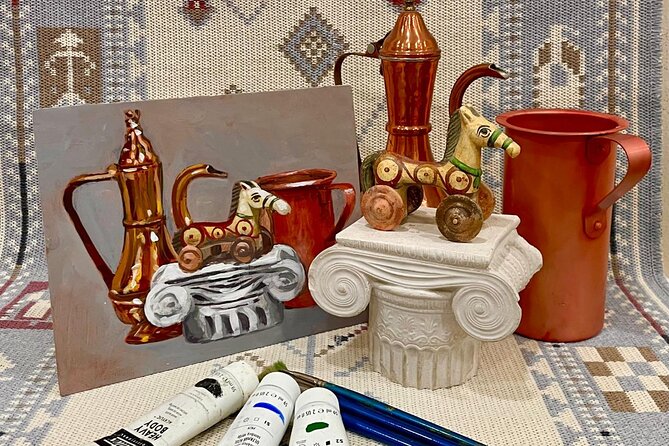
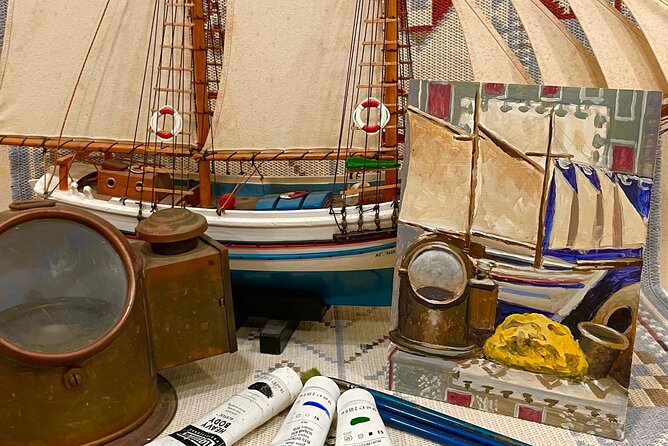
The instructor guides you through arrangements of beautiful objects that represent Greek culture. In other words, you are painting items that connect to Athens and Greece, not a generic “still life set” detached from place.
The owl example from the review gives you a taste of the mood. A stone owl on a column can feel both classical and slightly surreal, like you are painting a quiet guardian staring back. That is exactly the kind of setup that teaches you patience. It will not let your attention slide over details.
What you take home (and how to handle it)
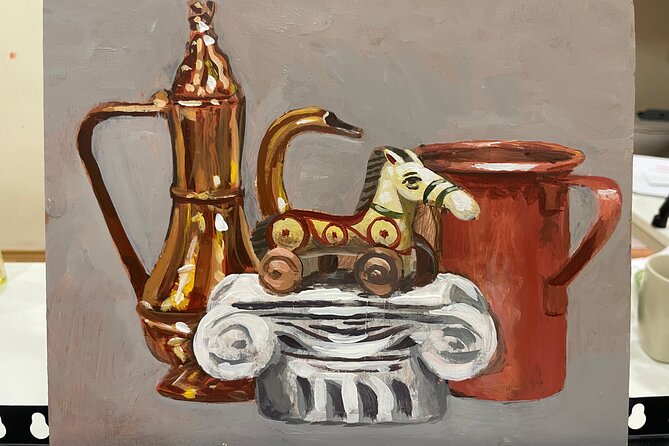
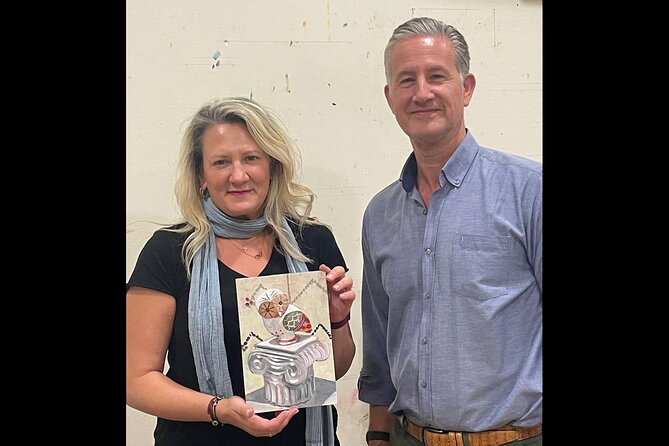
You will be able to take your painting home as a reminder of your time in Athens. That is more than a souvenir. It is a physical artifact you made by learning technique, mixing color, and working through a real subject.
Because the workshop ends back at the meeting point, you can plan your day around collecting your finished panel without needing to coordinate extra logistics late in the afternoon.
Practical tip: plan to transport your panel flat and protected. Even if it is small, acrylic paint and wood panel surfaces deserve careful handling until you are in your room.
English instruction and a group size that helps
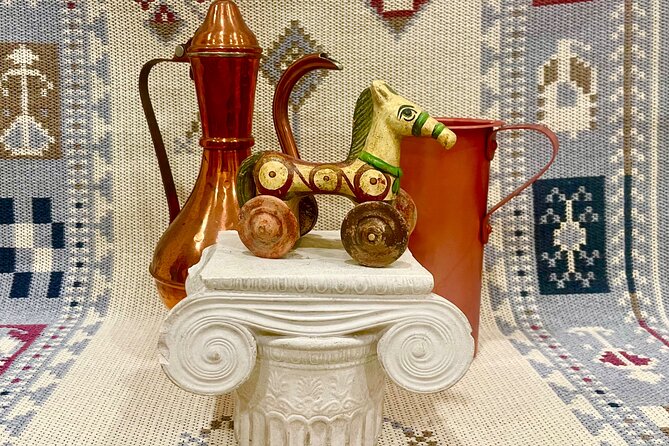
The workshop is offered in English, and the group is capped at 6. Both matter for learning.
Smaller groups make it easier to get feedback on what you are doing. If you are a beginner, that means you can ask why your color looks off. If you are more experienced, it means you can refine decisions rather than repeat basic steps.
Also, since the class includes both drawing and color steps, you benefit from understanding instructions clearly. English delivery helps you stay focused on the technique instead of translating in your head.
Price in perspective: what $108.89 covers
The price is $108.89 per person for about 3 hours. For Athens, this is not a “budget activity,” but it also is not just pay-to-watch. You are getting:
- Guided instruction in drawing and acrylic color steps
- Technique focus on color mixing, brushwork, and composition
- Painting on small lightweight wood panels
- A finished take-home work
In value terms, you are paying for professional guidance and hands-on practice in a short time window. If you enjoy learning creative skills, this price can feel fair because you are not only buying an experience, you are buying improvement.
If you are on a very tight schedule, decide based on your priorities. One art class can be a better use of time than another museum ticket if you want something interactive and personal.
Who this workshop is best for
This still life workshop is a good match if you fall into any of these categories:
- You want a break from ruins and crowds and prefer a calmer, focused activity
- You like structured art lessons, not just casual painting
- You want to practice color mixing and composition in a real still life context
- You are traveling with someone who enjoys art and wants a shared project
It is also described as welcoming across skill levels, from beginner to advanced. Even if you think you are not an artist, the drawing-and-color structure is built to help you get started and keep moving.
If you dislike close observation, or if you only want sweeping outdoor views, you may find the still life format too quiet. That is not a flaw. It is just a different kind of Athens experience.
Should you book this Athens still life painting workshop?
I think it is worth booking if you want something hands-on that still feels tied to Athens. The combination of Kolonaki studio instruction, guided acrylic steps, and the unusual detail of Hellenistic-style wood panels makes it a memorable way to engage with Greek culture through art, not just through photos.
You should skip it only if your day plan needs more outdoor sightseeing than studio time. Otherwise, book it when you have enough energy to focus for 3 hours. This is the kind of class where attention pays off, and where your take-home painting becomes a real anchor for the trip.
FAQ
Where is the meeting point for the workshop?
The workshop meets at Amerikis 9, Athina 106 72, Greece.
What time does the workshop start?
The start time is 10:30 am.
How long is the experience?
It lasts about 3 hours.
What language is the workshop offered in?
The workshop is offered in English.
How many people are in each group?
The maximum group size is 6 travelers.
What ticket type do I receive?
You receive a mobile ticket.
Do I get a confirmation after booking?
Yes. Confirmation is received at the time of booking.
Where does the workshop end?
The activity ends back at the meeting point.
Can I bring a service animal?
Yes. Service animals are allowed.
Can beginners join?
Yes. Most travelers can participate, and the workshop is described as welcoming from beginner to advanced.
Latest from under the Acropolis



Workshops, compared.

Classic Cooking Class with Market Visit and Wine
Read our review →
Food Market Visit and Cooking Class with Wine
Read our review →
Greek Cooking Class in Athens Including Rooftop Dinner with Acropolis View
Read our review →
Greek Small-Group Athens Cooking Class & Dinner
Read our review →
Greek Cuisine Cooking Class and 3-Course Dinner
Read our review →
Traditional Greek cooking class and lunch or dinner with an Acropolis view
Read our review →
Athens Airport Private Transfer by Mercedes-Benz E Class Wagon to City Center
Read our review →Browse the lists this tour appears in