
Reviewed · ANCIENT CORINTH TOURS
Private Luxury Biblical Tour: Apostle Paul in Athens & Corinth
Walk Paul’s trail through two ancient cities, with private luxury pickup and an English-speaking driver tracing St. Paul’s story from Athens to Corinth.
I love the way you stay comfortable on the move, with an air-conditioned car and bottled water between stops. I also like that pickup and drop-off are set up for both hotels and the port, so you do not waste precious time figuring logistics.
One consideration, entrance fees are extra (and a licensed guide inside every site is not included), so budget a bit more if you want maximum detail at each ruin.
In This Review
- Key things you’ll appreciate on this Apostle Paul route
- Private luxury comfort in Athens heat, hotel pickup to Corinth day
- Ancient Agora of Athens, where philosophy met religion
- Areopagus Hill and the Unknown God moment
- St. Dionysius the Areopagite Church, faith taking root
- The Corinth crossing, Isthmus views and the Roman canal
- Kenchreai port, Paul’s arrival setting in Roman Corinth
- Ancient Corinth highlights: Apollo Temple, Glauke Fountain, and the Bema
- Museum time and Acrocorinth views, the day’s best payoff combo
- Apostolos Pavlos Church, a modern stop with a long memory
- Price and value: what you’re paying for, and what to budget next
- Who this tour fits best, and who might want a different plan
- Booking advice, plus what to pack for a smoother day
- Should you book this Apostle Paul in Athens and Corinth tour?
Key things you’ll appreciate on this Apostle Paul route
- Hotel or port pickup that actually works with the driver waiting outside your place or meeting you with a name sign at the arrival area
- Air-conditioned private transport in a sedan for 1 to 4 people, or a mini van for 5 to 7, plus WiFi on board
- English-speaking driver-guide support so you get context while you travel between Athens and Corinth
- A clear biblical story arc from the Unknown God moment to Paul’s courtroom moment in Corinth
- Time on the ground where it counts at the Ancient Agora, Areopagus, Kenchreai, the Bema area, and Acrocorinth
- A realistic add-on plan for the main entrance fees (listed as €36 per person) and optional deep dives via a licensed guide
Private luxury comfort in Athens heat, hotel pickup to Corinth day
This is the kind of day trip that starts the moment you’re ready to go. You get pickup from your Athens hotel or from the port, then you’re chauffeured in an air-conditioned car. That matters in Greece, because the route is long and the walking segments can stack up fast.
The vehicle setup is also practical: groups of 1 to 4 travel in a luxurious sedan, while groups of 5 to 7 use a comfortable mini van. Either way, you’re not wrestling with buses or timing connections. WiFi and bottled water are part of the package too, which is a small thing that makes the day feel smoother.
One more detail I like: the day is designed so you’re not constantly hunting for where to stand next. The driver handles the in-between travel, and you get your focus back for the sites that connect to St. Paul’s message and ministry.
More trails following Paul through Greece:
- Biblical Tour Letters ToThe Corinthians St Paul’s Footsteps 6Hour
★ 5.0 · 1,065 reviews - Private Biblical Tour Ancient Corinth & Isthmus Canal from Athens
★ 5.0 · 762 reviews - Private Tour of Apostle Paul’s Footsteps in Ancient Corinth
★ 5.0 · 275 reviews - Paul”s Footsteps Ancient Corinth Biblical Tour
★ 5.0 · 184 reviews
Ancient Agora of Athens, where philosophy met religion
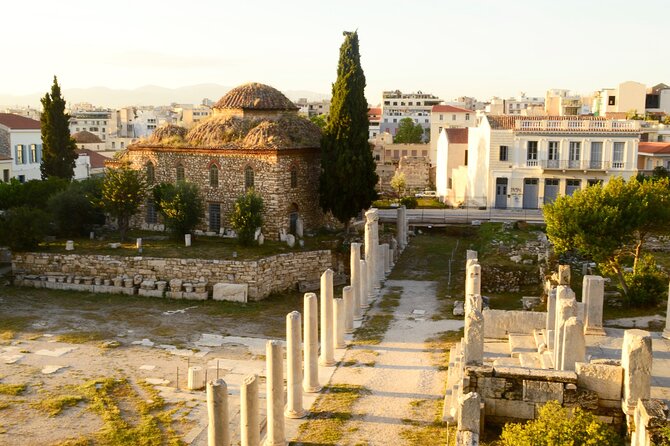
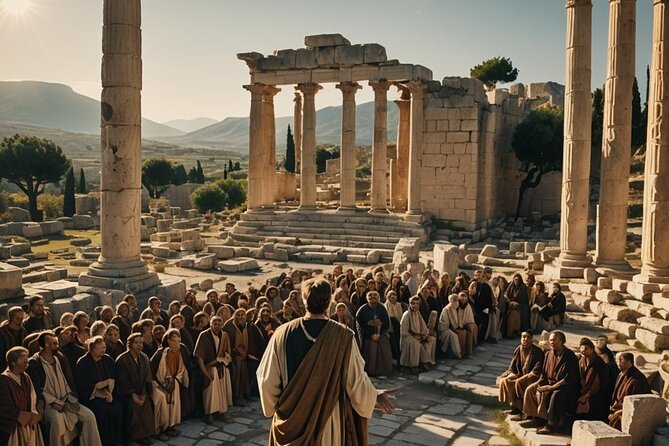
Your Athens start puts you right into the political and cultural bloodstream of the city. The Ancient Agora is where public debate happened, where people argued about ethics, gods, and civic life. This is also where Apostle Paul is traditionally linked to speaking to Athenians about faith in a world full of competing ideas.
You’ll have about 40 minutes at this stop, which is a good length for seeing the main remains without rushing. In practice, this timing helps because you’re not trying to memorize every column and wall fragment. Instead, you can get the feel of a real public square, the kind of place where a persuasive speech would have mattered.
A practical tip: bring water and wear shoes you’re happy to walk in. Agora walking surfaces can be uneven, and you’ll likely be transitioning from shaded areas to open sun.
Areopagus Hill and the Unknown God moment
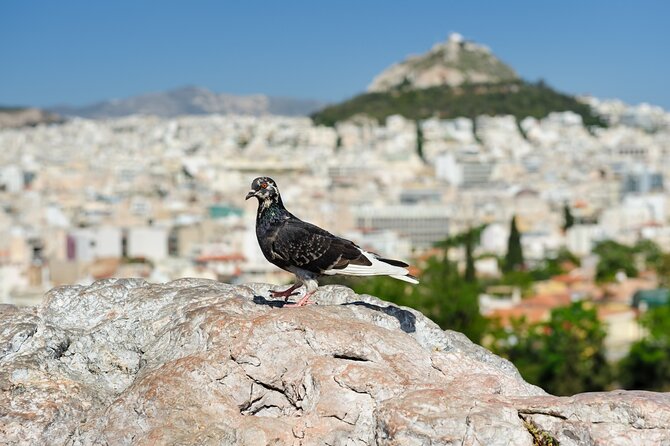
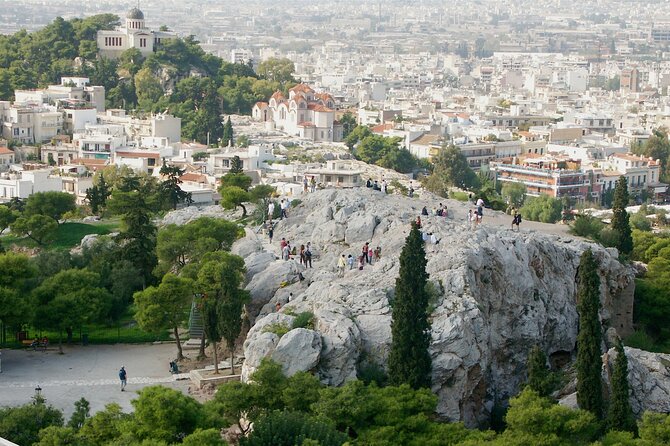
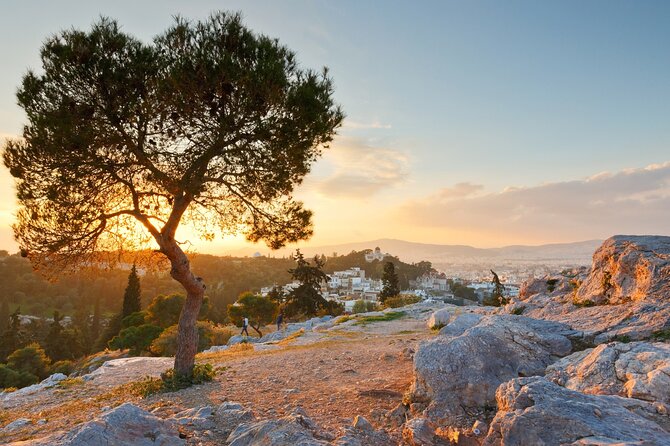
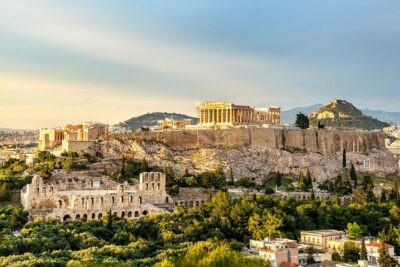
Next comes the rock of Areopagus Hill, one of the most famous viewpoints in Athens. This is where Paul’s address tied directly into the Athenians’ own religious thinking, often described as a message about the Unknown God. Even if you’ve read the story before, standing above the city gives it scale.
You’ll have about 30 minutes here. That’s enough time to take in the panoramic views toward the Acropolis and to connect the biblical account to the physical layout of ancient Athens. It also gives you room to pause and just look, because the setting does part of the explaining.
The main value of this stop is not checking a box. It’s understanding why that speech resonated in a place built for public persuasion. Up on the hill, you can almost picture why an audience would care about a new way of thinking, especially when older beliefs were already deeply rooted.
St. Dionysius the Areopagite Church, faith taking root
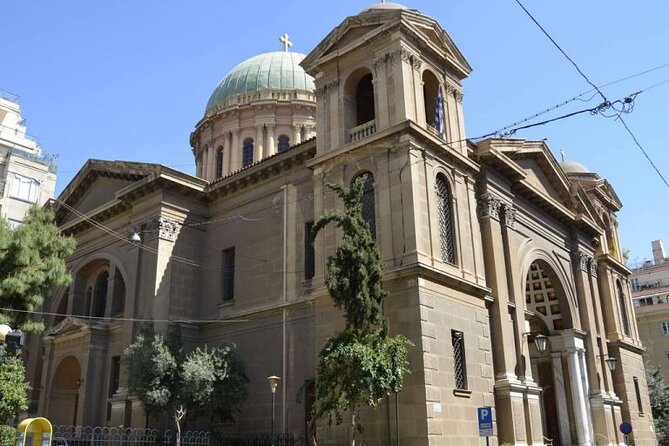
After the big speech viewpoint, you shift into a quieter, more personal chapter of the story. The Church of St. Dionysius the Areopagite is associated with one of the earliest Athenian converts of St. Paul. Dionysius is traditionally connected with being among those affected by the teaching related to the Unknown God.
You’ll have about 20 minutes at the church. This is not a long stop, but it’s a meaningful one because it moves you from the public square and speech to the idea of conversion and new community.
If you like places where faith history and architecture overlap, this is the calm, reflective moment of Athens. Even on a long day, you’ll feel the difference when you step inside.
The Corinth crossing, Isthmus views and the Roman canal
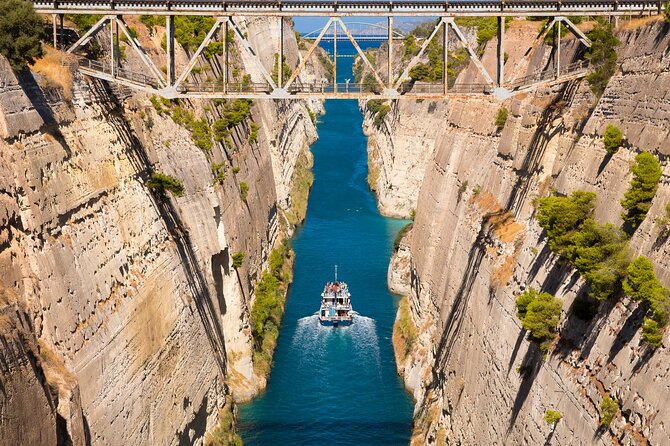
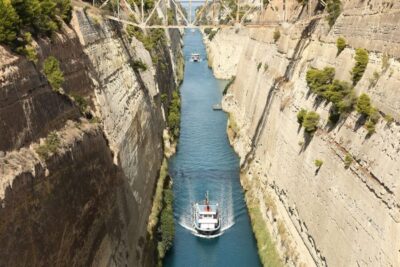
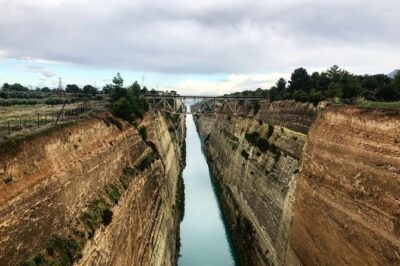
Then you leave Athens and head toward Corinth, stopping at the Isthmus of Corinth. It’s a narrow land bridge that has funneled trade for centuries, and today you get the visual of the Corinth Canal, a 19th-century engineering shortcut carved through the rock.
You’ll have about 20 minutes here. That’s perfect for a stop-and-look moment. The big payoff is perspective: you can see how geography shaped travel and commerce, which helps make sense of why early Christian networks spread along well-used routes.
This is one of those stops where you do not need a long lecture. You just need time to take in the view and connect it to the idea of movement, arrival, and mission.
Other visits to ancient Corinth:
- From Athens: Ancient Corinth Day Trip with Canal & VR Guide★ 4.6 · 1,073 reviews
- Athens: Ancient Corinth & Nafplio Full Day Trip with Swim★ 4.8 · 531 reviews
- Athens: Corinth Canal, Mycenae & Nafplio Premium Guided Tour★ 4.7 · 322 reviews
- Athens: Corinth Canal, Mycenae and Nafplio Day Tour★ 4.3 · 252 reviews
Kenchreai port, Paul’s arrival setting in Roman Corinth
Next is the ancient Port of Kenchreai, an eastern commercial hub in the Roman era. This is where St. Paul is linked with arriving around 53 AD.
You’ll have about 20 minutes here, and the goal is to get that “arrival feeling.” Ports were busy, mixed, and practical places. They were where languages, cultures, and goods overlapped. For a mission story, that’s exactly the kind of setting where new ideas would travel quickly.
If you’re the type who likes connecting dates to places, Kenchreai helps. The stop acts like a geographic anchor: Paul arriving is not just a line in a text, it’s a motion through real infrastructure.
Ancient Corinth highlights: Apollo Temple, Glauke Fountain, and the Bema
Ancient Corinth is the main workday zone, so it’s where you’ll spend the most time. You’ll visit key highlights including areas connected with the Temple of Apollo and the Roman Forum Bema setting where Paul’s message was contested.
Here’s what makes this portion click when you’re following St. Paul’s story:
First, the Temple of Apollo gives you the dominant religious backdrop of the city. Paul would have been walking in a world where pagan worship was public, established, and tied to civic identity.
Second, the Glauke Fountain brings in mythology that was part of how people explained their world. You’ll hear the legend that connects Glauke, daughter of King Creon, with refuge after being poisoned by Medea. Even if you treat myths as stories instead of literal history, they show you what audiences might have already been thinking about.
Then comes the Bema of Apostle Paul, a raised platform in the Roman Forum area used for public addresses and legal rulings during Roman times. Tradition links Paul being brought before Gallio, the Roman proconsul, around 51 AD, connected with events recorded in Acts 18:12 to 17. Modern mosaics at the site help bring that moment into focus, so the story has a visual point of contact.
Time note: the main Corinth archaeological portion stretches with multiple sub-stops, including about an hour at the main sites where ticketed entry may apply, plus shorter segments tied to the Bema area. It’s long enough to see what matters, but still paced so you can cool down between viewpoints.
One more practical thought: because a licensed guide to accompany you inside archaeological sites is not included, your driver’s explanations carry the day. That can still be excellent, but if you want heavy Bible plus archaeology interpretation at every single stop, you may want to arrange an official licensed guide for part of the route.
Museum time and Acrocorinth views, the day’s best payoff combo
After the main ruins, you head to the Archaeological Museum of Corinth for about an hour. This is a smart break, because museums turn scattered stones into readable artifacts. You’ll see items spanning prehistoric to Roman times, plus pieces connected with places like the Sanctuary of Asklepios.
This museum stop matters for your understanding. When you see statues, pottery, and everyday objects in a cared-for setting, Corinth stops being only “ruins you walked through.” It becomes a lived-in city with continuity.
Then you move to Acrocorinth, the fortified acropolis above Corinth. You’ll have about 1 hour 10 minutes here, and the payoff is views plus layers of time. You can explore ruins from classical Greece alongside fortifications from Byzantine, Frankish, and Ottoman periods.
After your walk up top, the tour includes time for lunch at a nearby traditional taverna. Meal costs are not included, but you do get that one planned stop where you can sit down, order something local, and let the day reset.
If you’re heat-sensitive, Acrocorinth is where pacing matters most. Start slow, take breaks, and hydrate. The views are worth it, but you will earn them with a bit of effort.
Apostolos Pavlos Church, a modern stop with a long memory
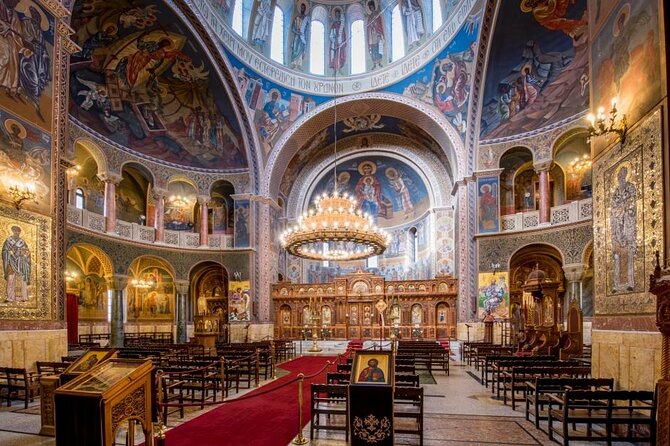
Your day concludes at the Apostolos Pavlos Church, a three-aisled basilica built in 1936 on a site associated with an earlier church founded in connection with St. Paul.
You’ll have about 20 minutes here. It’s not about huge crowds or spectacle. It’s about ending your route with a place designed to honor Paul’s influence in Corinth and the spread of Christianity.
This final stop also helps emotionally. After ruins, ports, platforms, and fortresses, you get a focused religious space that ties the day together.
Price and value: what you’re paying for, and what to budget next
The tour price is $250.90 per person for an 8 to 9 hour private experience. For Athens and Corinth, that price can make sense if you value comfort, time efficiency, and English guidance during transit.
What you’re getting for that cost:
- Private transportation in an air-conditioned vehicle
- Hotel or port pickup and drop-off
- Bottled water and WiFi on board
- An expert English-speaking driver-guide with historical context
- Group-size vehicle comfort (sedan for 1 to 4, mini van for 5 to 7)
What you’ll likely pay extra for:
- Entrance fees for archaeological sites and museums, listed at €36 per person
- Lunch cost in Ancient Corinth areas, with meal not included
- A licensed guide to accompany you into archaeological sites is not included, though this can be arranged for an additional cost
So, the big value question is this: do you want a driving-based narrative with practical pacing, or do you want a licensed guide at every stop? If you’re happy with a strong driver-guide who explains as you go, this is a very efficient way to cover a lot of ground. If you’re the kind of person who wants minute biblical and archaeological analysis inside each area, plan for the optional licensed guide add-on.
Also, it helps to book earlier. This experience is often booked about 60 days in advance, so don’t wait until the last week if you’re traveling during high season.
Who this tour fits best, and who might want a different plan
This is a great fit if:
- You want private comfort and real pickup convenience between Athens and Corinth
- You prefer to spend time at the sites rather than navigating transport schedules
- You want an English-speaking driver to explain the story chain from Athens to Corinth
- You like biblical history tied to actual place names, viewpoints, and architecture
This might feel less ideal if:
- You expect an official licensed guide walking you inside every single archaeological area with deep site-specific interpretation
- You want a shorter day, because this is an all-day route and the heat plus walking time adds up
- You dislike museums, because the Corinth museum stop is part of the pacing
One more thing: the day includes multiple stops with short durations in between. That’s usually a good trade, but if you crave long lingering at ruins, you might wish you had more time at fewer places.
Booking advice, plus what to pack for a smoother day
For a day this long, small prep pays off:
- Wear comfortable footwear designed for uneven ground
- Bring a hat and sunscreen, Greece can be hot and sunny
- If you’re sensitive to heat, plan to sip water often, the bottled water helps
- If you want extra depth at specific stops, ask in advance about arranging a licensed guide for the sections that matter most to you
Should you book this Apostle Paul in Athens and Corinth tour?
If you want a well-paced, private, air-conditioned day that traces St. Paul’s story through Athens and Corinth without you doing the logistics math, I think this is an easy yes. The route covers the big set pieces connected to Unknown God, Paul’s early influence, Paul’s Corinth courtroom setting, and the geography of arrival at Kenchreai, then finishes with Acrocorinth views and a meaningful church stop.
Book it especially if you like learning through movement, viewpoints, and place names, not just reading. Consider adding a licensed guide if you want maximum, site-by-site biblical and archaeological interpretation inside the ruins.
Latest from under the Acropolis




Ancient Corinth Tours, compared.
Ancient Corinth Day Trip with Canal & VR Guide
Read our review →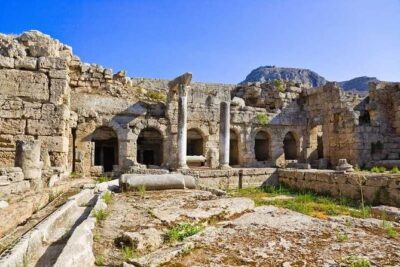
Biblical Tour Letters ToThe Corinthians St Paul’s Footsteps 6Hour
Read our review →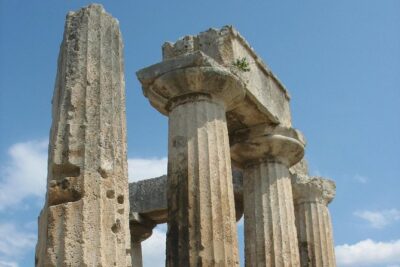
Private Biblical Tour Ancient Corinth & Isthmus Canal from Athens
Read our review →
Corinth Canal, Mycenae & Nafplio Premium Guided Tour
Read our review →
Private Tour of Apostle Paul’s Footsteps in Ancient Corinth
Read our review →
Corinth Half-Day Trip from Athens with Entrance Tickets
Read our review →Browse the lists this tour appears in