
Reviewed · ANCIENT CORINTH TOURS
Private Biblical Apostle Paul steps in Ancient Corinth.
Paul’s trail in Corinth feels close to the text. What I like most is how the day spotlights the Bema, the platform tied to Paul’s defense before Roman officials, and then keeps the momentum with a friendly, on-point guide. In particular, Ilias comes up again and again for being personable and for giving clear context at each stop, without rushing you. The one thing to plan around is that ticket fees are not included, so you’ll want to budget for admissions on top of the tour price.
This is a true private setup, priced at $417.57 per group (up to 4), with pickup offered and a mobile ticket. The ride is in an air-conditioned vehicle with WiFi onboard, and you get water and access to a toilet, which matters when you are crisscrossing archaeological sites for about 6 hours.
You also get a clean mix of faith and geography, from the ancient city streets of Corinth to the port of Kenchreai and the hilltop fortress of Acrocorinth. Kenchreai and Acrocorinth stops are free, and the Corinth Canal stop is free too, which helps the day feel easier on your wallet even before you sort out museum and site admissions.
In This Review
- Key highlights you should care about
- Ancient Corinth and the Bema: where Paul’s story meets stone
- Kenchreai: the eastern port tied to Paul’s early Christians
- Acrocorinth: the fortress above Corinth, and why the view matters
- Corinth Canal: a narrow cut you will want to see in person
- Why the private format feels worth it for up to 4 people
- What you actually get, and what you need to bring
- Who this tour fits best (and who might want another option)
- Should you book this Apostle Paul footsteps private tour?
- FAQ
- How long is the tour?
- How big is the group?
- Is pickup included?
- Are admission tickets included in the price?
- What stops are included?
- Is lunch included?
- Can I cancel and get a full refund?
Key highlights you should care about
- Ancient Corinth and the Bema focus tied to Paul’s defense and early Christian life
- Personal guide time with Ilias, praised for clear explanations and keeping you comfortable
- Kenchreai port connection to Paul’s early Christians and baptism traditions
- Acrocorinth fortress views plus a free entry stop on the Upper Corinth rock
- Corinth Canal viewpoint with the narrow, sea-level cut between Ionian and Aegean waters
- Private group up to 4 with pickup, WiFi, water, and a restroom on board
Ancient Corinth and the Bema: where Paul’s story meets stone
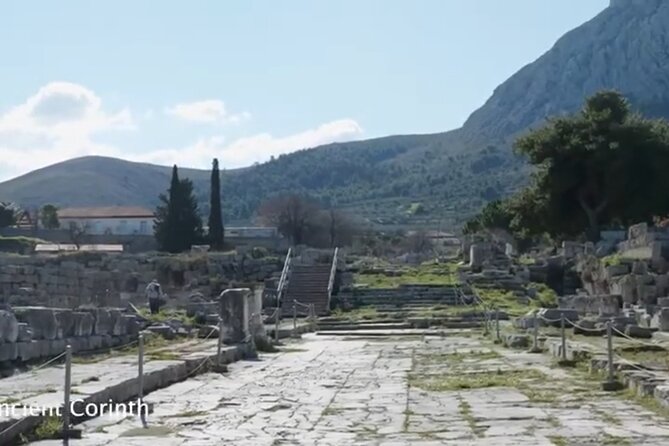
Ancient Corinth is one of those places where the setting matters almost as much as the names. You are moving through an area that connects Greek city life, Roman administration, and the early Christian movement that formed in the first century AD. If you care about the letters to the Corinthians, this is where those words start to feel anchored instead of abstract.
The main “Paul’s footsteps” moment centers on the Bema, the platform where Paul defended his faith before Roman officials. Even if you are not an expert in Christian history, you’ll likely appreciate the way this stop turns the story into a scene you can picture. It is not just a monument, it is a reminder that beliefs were tested in public, in front of real power.
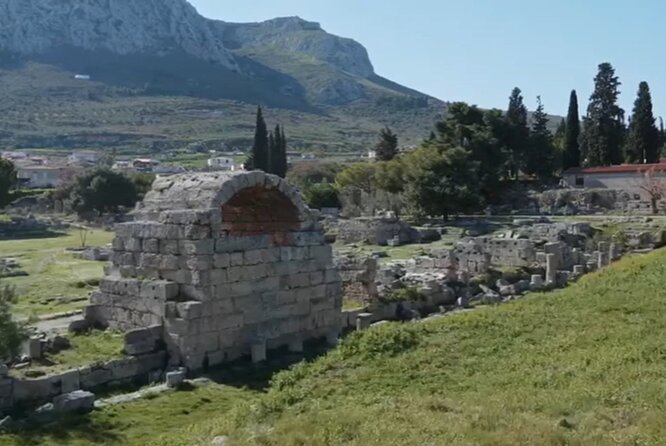
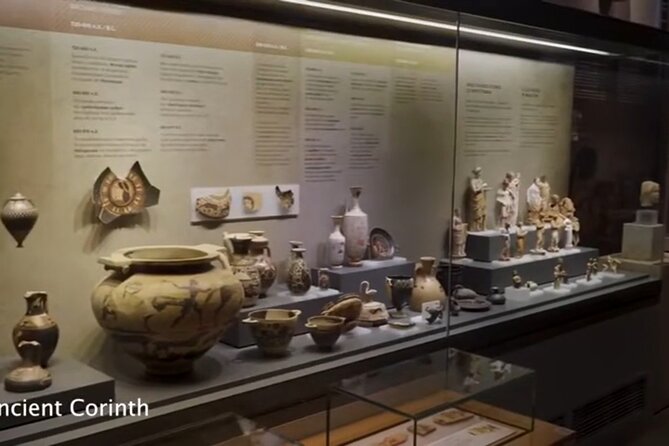
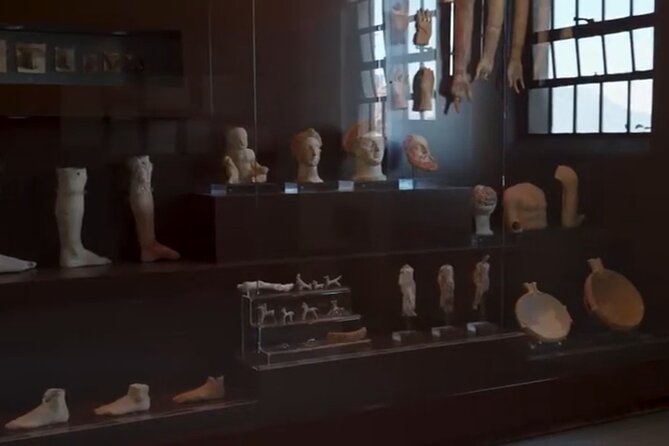
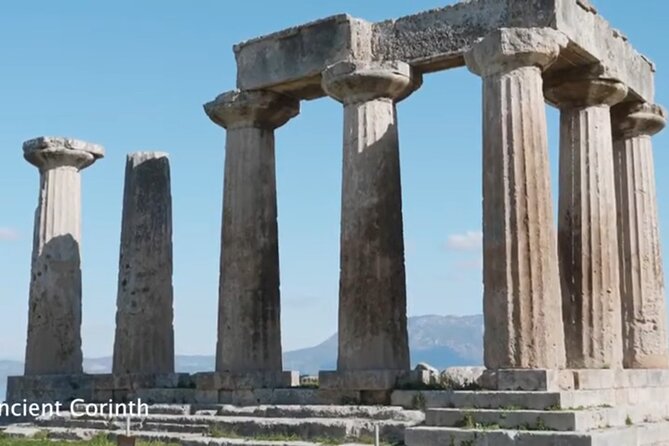
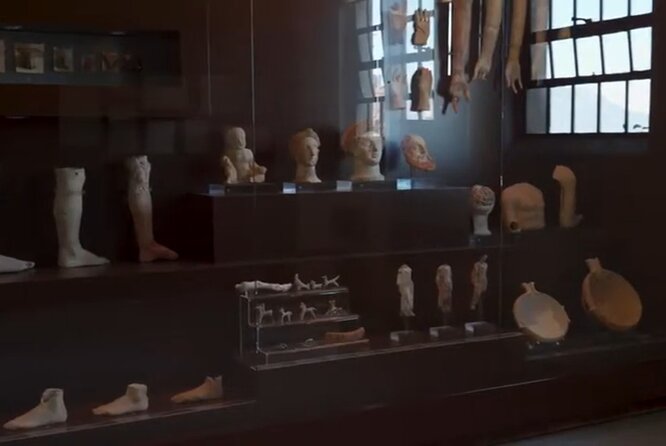
Around that Paul-focused core, Ancient Corinth also gives you the broader city picture. You can look for the Temple of Apollo, the Roman Agora, and time in the Archaeological Museum if you want to connect ruins with objects and explanations. The site is built from layers, with systematic excavations beginning in 1896 by the American School of Classical Studies at Athens, and later work by the Greek Ministry of Culture revealing additional details. That helps explain why Corinth can feel both familiar to students of the ancient world and surprising even for first-timers.
Practical tip: this is the longest stop of the day, around 3 hours. I recommend you treat this as your “deep” segment. If you enjoy reading interpretive signs and taking photos slowly, you’ll use that time well. If you are more “see it, move on,” you still want enough minutes here to absorb the flow from city spaces to Paul’s courtroom setting.
More trails following Paul through Greece:
- Biblical Tour Letters ToThe Corinthians St Paul’s Footsteps 6Hour
★ 5.0 · 1,065 reviews - Private Biblical Tour Ancient Corinth & Isthmus Canal from Athens
★ 5.0 · 762 reviews - Private Tour of Apostle Paul’s Footsteps in Ancient Corinth
★ 5.0 · 275 reviews - Paul”s Footsteps Ancient Corinth Biblical Tour
★ 5.0 · 184 reviews
Kenchreai: the eastern port tied to Paul’s early Christians
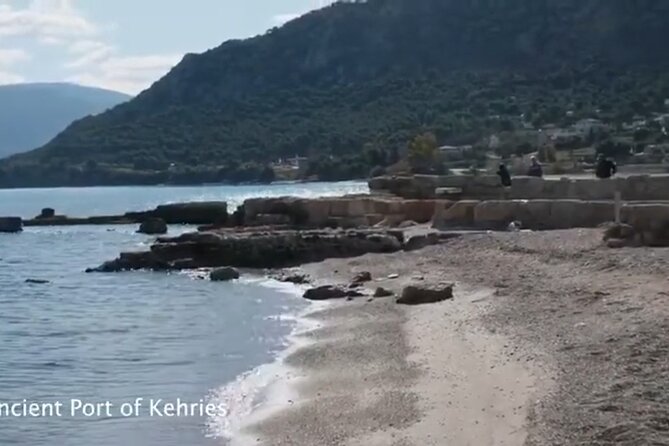
Kenchreai is a shorter stop, about 30 minutes, but it changes your angle on Corinth. Instead of focusing only on the inland city life, you get the maritime side: this was one of the two ports serving Corinth. In ancient times, Kenchreai handled eastern trade routes through the Saronic Gulf, while Lechaion managed the west-facing routes toward Italy and beyond.
For faith-focused visitors, the key connection is that Kenchreai is described as the place where Apostle Paul baptized the first Christians. Even if you have only a basic familiarity with Paul’s journey, this port setting can help you picture how Christianity spread through networks, travel, and communication routes that moved with ships and overland roads.
Also, ports are about more than boats. They are crossroads. Kenchreai sat at a natural junction where ships from the east met inland traffic moving north and south between central Greece and the Peloponnese. In other words, it is the kind of location where stories, goods, and people mixed in a way that makes the early spread of ideas feel less mysterious.
Practical tip: since the stop is free and brief, keep your expectations simple. You are not trying to “solve” Kenchreai in 30 minutes. You’re getting a meaningful shift in perspective.
Acrocorinth: the fortress above Corinth, and why the view matters
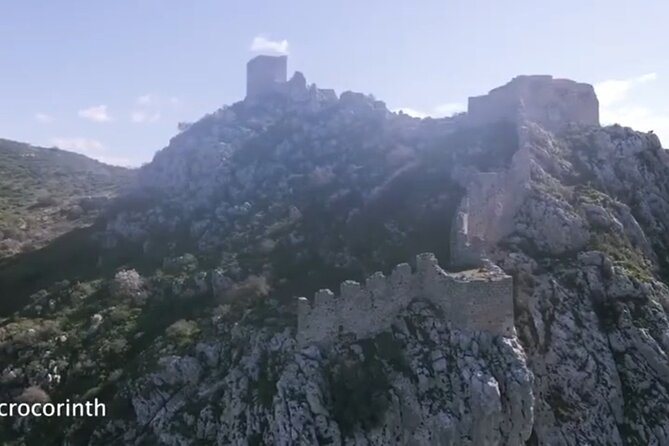
Acrocorinth is the kind of site you can see from many points around Corinth, and it earns its reputation. This is the “upper” high ground overlooking the ancient city of Corinth, described as a monolithic rock and called the acropolis of Ancient Corinth. It is also, crucially, strategic geography.
The fortress was repeatedly used as a last line of defense in southern Greece because it controlled approaches to the Peloponnese via the Isthmus of Corinth. A secured water supply helped it survive as a stronghold even when other defenses failed. Standing near the fortress area, you understand why rulers and armies cared so much about this specific rise.
For most people, the big reason to love Acrocorinth is the view. In a single glance, you get a sense of the terrain that explains ancient movement, trade, and military decisions. And because the Acrocorinth stop is listed as free and short, about 30 minutes, it works well even if your legs are already feeling the day.
From the reviews, this is exactly where the guide style shows. Ilias is specifically praised for explaining Acrocorinth and the Corinth Canal in ways that make the geography click fast. That matters because without context, fortress ruins can feel like scenic leftovers. With context, they become a living “why.”
Practical tip: wear shoes that work on uneven ground. Even on a short stop, ruins can mean unpredictable footing.
Corinth Canal: a narrow cut you will want to see in person
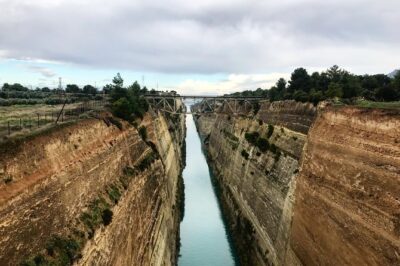
The Corinth Canal is the one stop that is easy to misunderstand from photos. In images, it can look like a dramatic water channel. On the ground, it becomes a story about engineering limits and what people decided was possible.
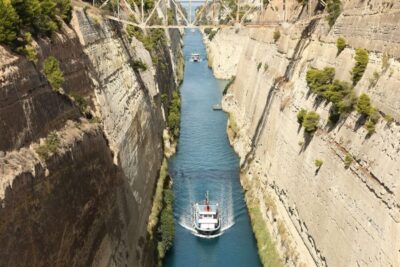
This canal connects the Gulf of Corinth in the Ionian Sea with the Saronic Gulf in the Aegean Sea. It cuts through the narrow Isthmus of Corinth, separating the Peloponnese from mainland Greece like an island. It was dug through at sea level, with no locks, and it is listed as about 6.4 kilometers long and 24.6 meters wide at sea level. Those dimensions matter because they explain why many modern ships cannot pass and why the canal has more tourist pull than heavy commercial use today.
The canal’s “idea history” is given as reaching back to around 700 BC, which you can treat as a reminder that people have wanted to connect sea routes for centuries. Still, what you are seeing is the canal as a physical reality and a checkpoint between two bodies of water.
This stop is about 1 hour and also free. It is a good time to slow down, take a few photos, and just watch the scene. It can feel like a palate cleanser after longer archaeological time, especially if you are juggling both faith and history interests in the same day.
Why the private format feels worth it for up to 4 people
When the group is private, the day stops feeling like a checklist and starts feeling like a guided conversation with a plan. That is part of why the tour keeps coming back with high marks, especially for Ilias. The feedback emphasizes that he is personable, gives excellent information, and gives groups plenty of time at each site.
That time flexibility matters on archaeological tours. If you are rushing, you miss the point. If you have a guide who manages timing well, you can see the key areas and still feel like you had time to look closely.
Also, this is built for small groups: up to 4 people. At $417.57 per group, the value becomes much clearer if you travel with family or friends and share the cost. If you are traveling solo or as a couple, it may feel more expensive than a public bus tour, but you are paying for the pacing and the comfort: air-conditioning, WiFi onboard, water, and restroom access.
One more point: the route is described as about an hour from Athens, and that gives you time for the ride itself to feel like part of the day, not dead time. If you like countryside views and want a calmer alternative to a full-day museum marathon, this works.
Other visits to ancient Corinth:
- From Athens: Ancient Corinth Day Trip with Canal & VR Guide★ 4.6 · 1,073 reviews
- Athens: Ancient Corinth & Nafplio Full Day Trip with Swim★ 4.8 · 531 reviews
- Athens: Corinth Canal, Mycenae & Nafplio Premium Guided Tour★ 4.7 · 322 reviews
- Athens: Corinth Canal, Mycenae and Nafplio Day Tour★ 4.3 · 252 reviews
What you actually get, and what you need to bring
The included items are solid for a day trip: private transportation, an air-conditioned vehicle, WiFi onboard, water, and a toilet. Pickup is offered, and you’ll use a mobile ticket.
What is not included is also important: lunch and ticket fees. Since ticket fees are separate, you’ll want to check what you plan to enter during the Ancient Corinth stop. Some parts of the day are free, like Kenchreai, Acrocorinth, and the Corinth Canal, but the main archaeological areas and museum time may require admissions.
Practical approach for your budget:
- Decide early if you want museum time at Ancient Corinth.
- Bring snacks or plan a simple lunch plan on your own since lunch is not provided.
- Keep a little cash or card flexibility for admissions once you’re on site, since the tour price does not bundle them.
If you are a Christian and a Paul admirer, this tour style is made for you because it connects places you likely learned about in text to real physical locations. If you are more strictly a secular ancient-history traveler, you’ll still find value in the Roman Agora areas, the Temple of Apollo context, and the broader Corinth setting.
Who this tour fits best (and who might want another option)
I’d steer you toward this tour if you want a tight, meaningful day focused on Apostle Paul’s footsteps without dealing with the stress of public transport. It also fits well if you value a friendly guide and a day that balances interpretation with time to look around.
It is especially good if:
- You are interested in early Christianity and the specific Paul connections to Corinth
- You want to see multiple Corinth-area highlights in one shot
- You prefer a private group pace rather than rushing in crowds
It might not be the best fit if:
- You want a purely secular archaeology-only day with long museum time, since the day is clearly guided by the Paul theme
- You want everything included for one fixed price, since ticket fees and lunch are not included
Should you book this Apostle Paul footsteps private tour?
Book it if you want a focused, faith-and-history day around Corinth with a private guide experience. The value is strongest for groups of up to 4, and the reviews highlight that Ilias handles timing well and explains the sites in a way that makes Corinth feel understandable, not just impressive.
Skip or compare if you hate paying separate admissions on the spot, or if you need a lunch included in the price. Otherwise, this is a thoughtful way to connect the Bema and the early Christian story with the port geography of Kenchreai, the strategic high ground of Acrocorinth, and the engineering reality of the Corinth Canal.
FAQ
How long is the tour?
The tour duration is about 6 hours.
How big is the group?
It is a private tour, with your group only, and the price is listed per group up to 4 people.
Is pickup included?
Yes, pickup is offered.
Are admission tickets included in the price?
No. Tickets fees are not included, and admission tickets are listed as not included for the main Ancient Corinth stop.
What stops are included?
You visit Ancient Corinth (Archaia Korinthos), Ancient Port of Kenchreai, Acrocorinth, and the Corinth Canal.
Is lunch included?
No. Lunch is not included.
Can I cancel and get a full refund?
Yes, free cancellation is available. You can cancel up to 24 hours in advance for a full refund.
Latest from under the Acropolis



Ancient Corinth Tours, compared.
Ancient Corinth Day Trip with Canal & VR Guide
Read our review →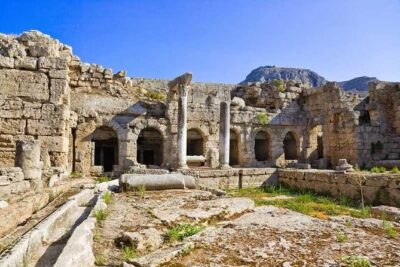
Biblical Tour Letters ToThe Corinthians St Paul’s Footsteps 6Hour
Read our review →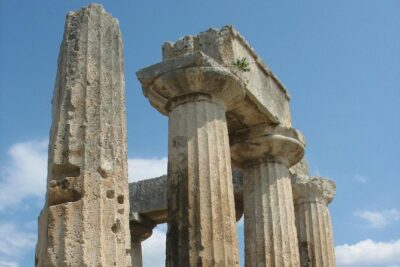
Private Biblical Tour Ancient Corinth & Isthmus Canal from Athens
Read our review →
Corinth Canal, Mycenae & Nafplio Premium Guided Tour
Read our review →
Private Tour of Apostle Paul’s Footsteps in Ancient Corinth
Read our review →
Corinth Half-Day Trip from Athens with Entrance Tickets
Read our review →Browse the lists this tour appears in