
Reviewed · ANCIENT CORINTH TOURS
Private Biblical Ancient Corinth Tour from Athens
Corinth feels close to the Bible story when you visit in one smooth day. You get private pickup from your Athens or port address and the chance to tie engineering, geography, and the early Christian world together at stops like the Acrocorinth fortress and Kenchreai port. One thing to think about is the pace and walking, especially the steep, rocky path up to the acropolis, which may be tiring if you are not feeling steady on uneven ground.
I like that this tour is structured but not rushed, with short viewpoint breaks and longer time where it counts, like the museum and your lunch break near the village. If you want a personal day out instead of being packed into a big group, this format usually fits well, and the driver can answer questions in fluent English while you keep moving. My one main caution: the paid site entry is not included for the museum and archaeological areas, so budget for that if you plan to go inside everything.
In This Review
- Key highlights you should care about
- A private Athens-to-Corinth day that stays flexible
- Corinth Canal and the Diolkos: two ways geography shaped travel
- Kenchreai, Paul, and the port-side details you can connect to scripture
- Acrocorinth: the fortress climb with the best lines of sight
- Corinth Archaeological Museum: the context stop that saves you at the ruins
- Ancient Corinth plus a village lunch: where the day relaxes
- Price, timing, and what this includes for your money
- Practical tips so the day feels smooth, not rushed
- Should you book this private biblical Corinth tour from Athens?
- FAQ
- How long is the Private Biblical Ancient Corinth Tour from Athens?
- Is pickup included?
- Is this tour private or group-based?
- What is included in the tour price?
- What is not included?
- What language is the tour offered in?
- Do I need tickets in advance?
- Is the tour appropriate for most travelers?
- Does the tour depend on weather?
- Can I cancel for free?
Key highlights you should care about
- Corinth Canal viewpoints: see how ships navigate the narrow cut through the Isthmus
- Diolkos history: understand how ancient people moved boats overland to avoid the risky route around the Peloponnese
- Kenchreai and early Christianity: connect the port of Paul’s world to Acts and Romans mentions like Phoebe
- Acrocorinth views: climb to the fortress above Corinth with commanding lines of sight over the isthmus
- Museum context: use the Corinth museum to make sense of what you see later at the ancient site
A private Athens-to-Corinth day that stays flexible
This tour runs about 8 hours, and it starts with a pickup that matches where you are staying. Your driver meets you at your hotel lobby, apartment entrance, or the port disembarkation area if you are coming from Piraeus. Then you get an air-conditioned ride with onboard WiFi and bottled water, which sounds small until you realize how much nicer it is on a full day.
Because it is private, you set the tone. You can ask questions as you go, and your driver can provide commentary in fluent English, even if they are not the one walking you through the archaeological sites. I like that the plan includes both big “wow” stops and smaller context points, so the day feels like a story instead of a checklist.
If you are traveling with someone who wants a slower pace, or you simply prefer not to worry about where your group is, this private format is the real value. The main consideration is that it is still a long day in the car, plus walking at multiple stops.
More trails following Paul through Greece:
- Biblical Tour Letters ToThe Corinthians St Paul’s Footsteps 6Hour
★ 5.0 · 1,065 reviews - Private Biblical Tour Ancient Corinth & Isthmus Canal from Athens
★ 5.0 · 762 reviews - Private Tour of Apostle Paul’s Footsteps in Ancient Corinth
★ 5.0 · 275 reviews - Paul”s Footsteps Ancient Corinth Biblical Tour
★ 5.0 · 184 reviews
Corinth Canal and the Diolkos: two ways geography shaped travel
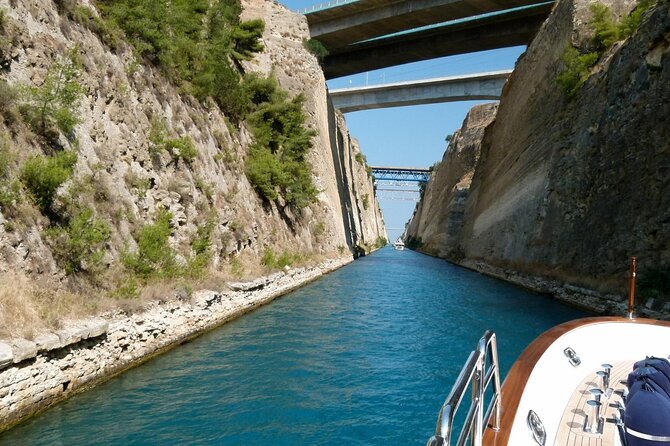
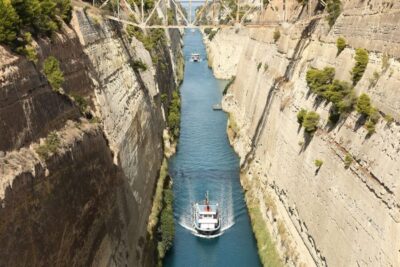
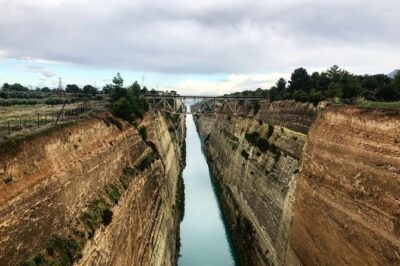
The day’s engineering stop is the Corinth Canal, with time to see it from above and spot ships threading through the cut. The canal connects the Gulf of Corinth on the Ionian Sea to the Saronic Gulf on the Aegean side, slicing through the narrow Isthmus of Corinth. It is only about 6.4 km long and around 21.4 m wide at its base, which is why it is not just a scenic feature, it is a practical limitation that shaped modern shipping.
What you will appreciate is the viewpoint logic. You get a half hour at the canal, enough time to take in the limestone walls and watch the vessels below you. Even if you care more about the Bible than about infrastructure, the canal helps you understand why Corinth mattered so much as a crossroads.
Next comes the Diolkos, a paved ancient trackway that allowed boats to be moved overland across the Isthmus. This is one of those stops that turns “Corinth was important” into an actual mechanism. The idea was to avoid the long and dangerous trip around the Peloponnese, and it worked as a sort of ancient combination of railway and overland transport. In times of war, it also sped up naval movement.
This pairing, canal plus Diolkos, gives you a clean mental comparison. Modern shipping uses the canal, while ancient shipping solved the same geography problem with an overland transfer system.
Kenchreai, Paul, and the port-side details you can connect to scripture
Kenchreai is the port on the eastern side of the Isthmus, and it helps you picture where letters and travelers could travel. Historically, Corinth had two ports: Kenchreai for eastern trade via the Saronic Gulf, and Lechaion for routes west toward Italy and beyond. Kenchreai sits at a crossroads for ships arriving from the east and for land traffic moving north and south between central Greece and the Peloponnese.
Then the “biblical” part becomes specific. Early Christianity arrived here, and Acts 18:18 mentions Paul visiting Kenchreai during his second missionary journey, where he cut his hair to fulfill a vow. Romans 16:1 also connects the region to the local assembly through Phoebe.
You do not need to be a scholar to enjoy this stop. It gives your day an anchor, because you are not just looking at ruins in the abstract. You are standing where a key chapter in the early Christian story likely intersected with real travel routes and real port life.
Time at Kenchreai is short, about 30 minutes, so my advice is to treat it like a focused scene. Take a moment to understand the geography, then ask your driver to connect it to how routes worked in Paul’s time.
Acrocorinth: the fortress climb with the best lines of sight
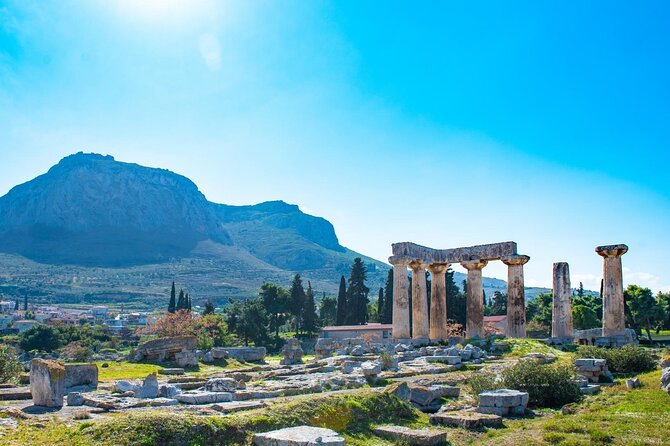
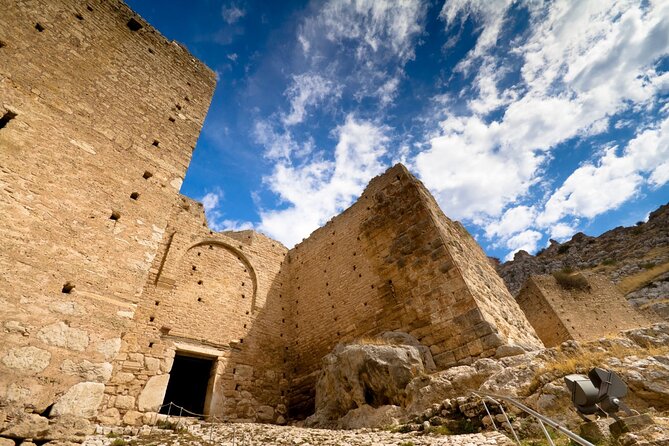
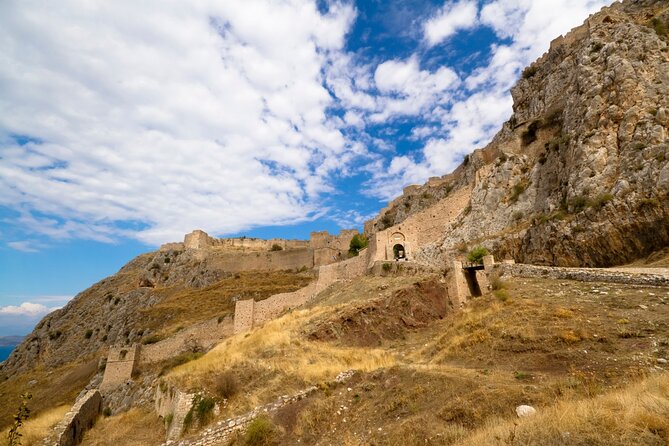
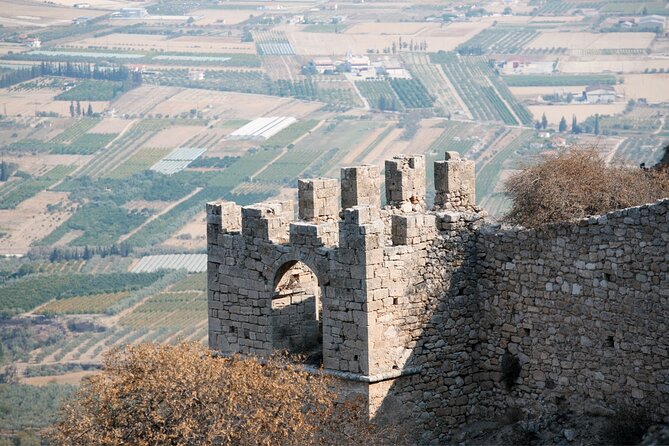
Acrocorinth, or Upper Corinth, rises as a monolithic rock above the ancient city. This is the acropolis, the high defensive position, and it controlled the Isthmus of Corinth with a fortress that had a secure water supply. That matters because it explains why Acrocorinth was repeatedly used as a last line of defense.
You get about an hour at Acrocorinth, and this is the stop where you will feel the physical reality of the day. The path is steep and rocky, and it can feel slippery depending on conditions. If you want the views, plan for the climb. If you do not, you still can enjoy the perspective lower down, but you may choose to conserve energy.
Here is what makes it worth it: when you reach higher viewpoints, the isthmus makes sense. You can see how someone in a fortress could watch movement and control access. It is also where the day clicks emotionally if you are thinking about why ancient cities fought for positions like this.
In my view, this is where your footwear choice matters most. Wear sturdy shoes with grip and consider bringing something to keep your legs comfortable if you are prone to getting sore.
Corinth Archaeological Museum: the context stop that saves you at the ruins
The Museum of Ancient Corinth is built to hold the objects found in excavations, and it helps you read what you see later at Ancient Corinth. The museum building dates to 1932, with work linked to the American School of Classical Studies and a donation from Ada Small Moore. Architect Stuart Thompson designed it, following the architectural model of the Chicago school, and the west wing was added later.
One practical reason the museum earns time on a half day itinerary is that it gives you a framework. Without it, you can still enjoy the sites, but you might miss the “why” behind what you notice. With it, even basic details start to feel connected.
You have about an hour here, and the museum is designed around two atriums, which give the building a distinctive feel. Entry to the archaeological site and museum is listed as not included, with a €15.00 per person admission cost. I consider that a reasonable add-on because it is the place that turns scattered stones into something legible.
If you like asking questions, this is a smart stop to do it. Even if your driver stays outside the museum, you can still use the museum time to make your day make sense.
Other visits to ancient Corinth:
- From Athens: Ancient Corinth Day Trip with Canal & VR Guide★ 4.6 · 1,073 reviews
- Athens: Ancient Corinth & Nafplio Full Day Trip with Swim★ 4.8 · 531 reviews
- Athens: Corinth Canal, Mycenae & Nafplio Premium Guided Tour★ 4.7 · 322 reviews
- Athens: Corinth Canal, Mycenae and Nafplio Day Tour★ 4.3 · 252 reviews
Ancient Corinth plus a village lunch: where the day relaxes
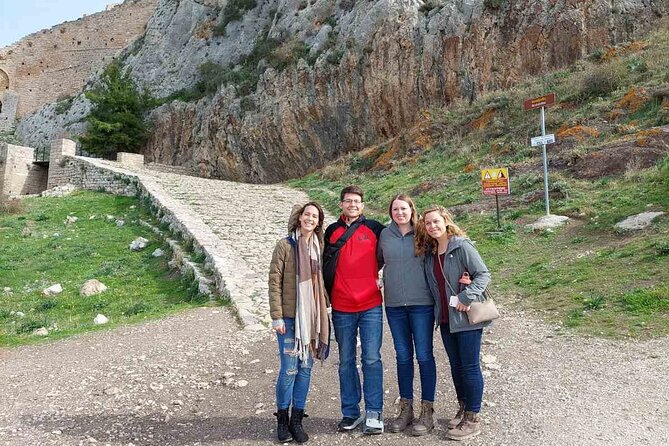
After the museum, the schedule includes time in Corinth village, plus a lunch break in a local taverna. You get about 2 hours for this, and it is intentionally generous compared to some other day trips. This is a good window to reset, browse village shops for handmade souvenirs, and then refuel with an authentic Greek lunch.
Your lunch location is not described in detail, but the format is clear: it is a local taverna experience. I like that the tour gives you room to choose pacing, not just sit and go through the motions.
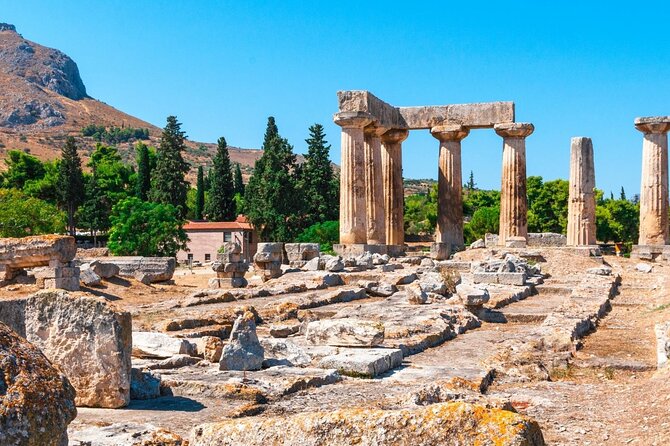
When you head to Ancient Corinth (Archaia Korinthos), you get about an hour at the ruins. Ancient Corinth was a major city-state on the Isthmus of Corinth, roughly halfway between Athens and Sparta. It is connected to Paul’s New Testament letters, with First and Second Corinthians, and it is also referenced in Acts. The text tradition around Corinth is also reflected by Pausanias, who wrote about Corinth in his Description of Greece.
A helpful mental image: the modern city of Corinth sits about 5 km northeast of the ancient ruins. That distance is a reminder that you are not just walking old streets, you are moving between layers of settlement and time.
Also, Ancient Corinth was not a small site. Its population reached around 90,000 in 400 BC, which tells you why the ruins can feel spread out. Your hour is enough for highlights, but it is also just enough to appreciate the scale without trying to “finish” everything.
Price, timing, and what this includes for your money
At $204.81 per person for an approximately 8 hour private tour, the price is mostly paying for logistics and comfort. You get private transportation, pickup and return to the same address, onboard WiFi, bottled water, and an air-conditioned vehicle. You also get the private nature of the experience, which usually matters more when a day is long and you want to move at your own speed.
You should also plan for extra costs. Entry and admission for the archaeological site and museum is listed as €15.00 per person, and a licensed tour guide is not included. That is the key difference between “private transportation with a knowledgeable driver” and “everything guided inside every site.” Still, this tour includes enough structure and commentary time to make the day feel guided.
Another detail I like is that pickup is flexible, whether you start from Athens proper, a hotel, an apartment, or Piraeus port. If you are in a tight itinerary, those pickup options can save you from extra transfers.
Booking in advance helps too. This one is typically booked about 66 days in advance on average, so if your dates are firm, you will want to lock it in early.
Practical tips so the day feels smooth, not rushed
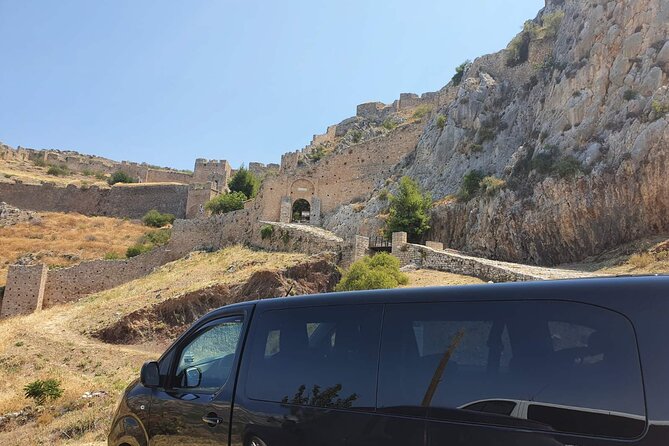
First, treat Acrocorinth like the physical event of the day. Wear grippy shoes, and decide early how far you plan to climb. The hour there is valuable, but the climb can be demanding, especially on uneven ground.
Second, bring water habits into your plan. Bottled water is included, but you will still want to sip regularly, especially if the day is warm.
Third, use your driver’s language skills. Drivers for this experience are not official tour guides inside the sites, but they can answer questions in fluent English while you are driving or at stops. If your focus is biblical context, ask how the geography connects to Acts and Romans. If your focus is ruins and engineering, ask what features were designed to solve specific problems like ship movement across the isthmus.
Fourth, plan for a long day. The itinerary moves from Athens to the canal and Diolkos, then to Kenchreai, Acrocorinth, the museum, and Ancient Corinth before heading back. Lunch is included as free time, but the best approach is to expect it will come after you have already seen multiple major stops.
Finally, if you care about the museum, do not treat it like a quick photo stop. Your time is limited, so give yourself a chance to slow down and read a few things carefully.
Should you book this private biblical Corinth tour from Athens?
Yes, if you want a single-day way to connect biblical locations with the real geography that shaped early travel. The combination of Corinth Canal, Diolkos, Kenchreai, Acrocorinth, the museum, and Ancient Corinth is a strong arc. It helps you understand why Corinth was a crossroads, not just a name from a Bible reading.
Book it if you like private pacing and you value comfort after a day of driving. The air-conditioned vehicle, WiFi, bottled water, and pickup convenience make the schedule easier to handle, especially if this is your first trip to Athens and you want one organized day without extra planning.
Skip it or adjust expectations if you know you will struggle with steep walking. Acrocorinth is a highlight, but it is also physically demanding. Also, check what you want from guided interpretation. A licensed tour guide is not included, so you will rely on your driver’s commentary and the museum signage and exhibits for most of the “inside the sites” learning.
If you want, tell me your travel dates and who is in your group, and I can help you judge whether the Acrocorinth climb fits your comfort level, and how to budget for the museum and site admission.
FAQ
How long is the Private Biblical Ancient Corinth Tour from Athens?
It runs for about 8 hours.
Is pickup included?
Yes. Your driver picks you up from your chosen Athens location or from Piraeus Port and returns you to the same place.
Is this tour private or group-based?
This is a private tour, so only your group participates.
What is included in the tour price?
Included features are air-conditioned vehicle, WiFi on board, private transportation, and bottled water.
What is not included?
Entry and admission to the Archaeological Site and Museum is not included (listed as €15.00 per person), and a licensed tour guide is also not included.
What language is the tour offered in?
The tour is offered in English.
Do I need tickets in advance?
You receive a mobile ticket.
Is the tour appropriate for most travelers?
The tour states that most travelers can participate.
Does the tour depend on weather?
Yes. The tour requires good weather, and if it is canceled due to poor weather you will be offered another date or a full refund.
Can I cancel for free?
Yes, free cancellation is available. You can cancel up to 24 hours in advance for a full refund.
Latest from under the Acropolis




Ancient Corinth Tours, compared.
Ancient Corinth Day Trip with Canal & VR Guide
Read our review →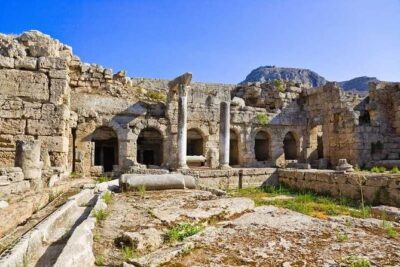
Biblical Tour Letters ToThe Corinthians St Paul’s Footsteps 6Hour
Read our review →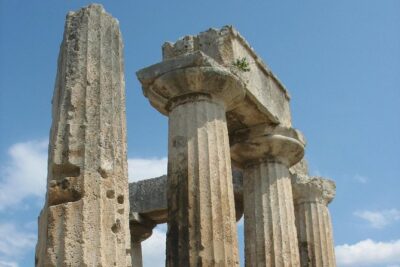
Private Biblical Tour Ancient Corinth & Isthmus Canal from Athens
Read our review →
Corinth Canal, Mycenae & Nafplio Premium Guided Tour
Read our review →
Private Tour of Apostle Paul’s Footsteps in Ancient Corinth
Read our review →
Corinth Half-Day Trip from Athens with Entrance Tickets
Read our review →Browse the lists this tour appears in