Reviewed · TOURS
Philosophy and Democracy tour of Athens
Democracy walks at street level in Athens. I love how this tour stays philosophy-focused while you move site to site, so big ideas turn into real places and real debates. I also like the small group setup, with room to ask questions and get answers that actually fit what you are seeing.
One thing to consider: you will walk and you will stand. Wear comfortable shoes, plan for sun and some uneven ground, and keep water handy so the lesson does not get interrupted by your legs.
In This Review
- Key takeaways before you go
- A philosophy and democracy Athens tour that turns ideas into places
- Panos and the teaching style that keeps you thinking
- Timing, pace, and what you should plan for
- Meeting point and ending area: start where you can orient fast
- Kerameikos: Pericles, pottery, and the politics of memory
- Flea market stroll and Plaka atmosphere: Athens as a living city
- Hadrian’s Library: a Roman reminder that Athens kept evolving
- Roman Agora and the Tower of the Winds: clocks, weather, and civic tech
- Ancient Agora: the heart of debate where Athens did the talking
- Prison of Socrates: a small stop with a big emotional hit
- Pnyx Hill: the cradle of democracy with views you cannot fake
- Food and drink ideas nearby, plus how to keep the day easy
- Price and value: what you pay for, and what you may still need
- Who this tour is best for
- Should you book this Philosophy and Democracy tour of Athens?
- FAQ
- How long is the Philosophy and Democracy tour of Athens?
- Is the tour offered in English?
- How many people are in the group?
- Where do I meet the tour and where does it end?
- Do I need to buy tickets for the sites?
- Is it a walking tour?
- Do I get a mobile ticket?
- What is the cancellation policy?
Key takeaways before you go
- Small group size (max 15) means the guide can slow down for questions and keep attention on the core ideas.
- Pnyx Hill is treated as the true decision-making center, not just another scenic viewpoint.
- Kerameikos connects democracy talk to Athens’ cemetery and the city’s early political self-image.
- Roman layers are built in, with stops like Hadrian’s Library, Roman Agora, and the Tower of the Winds.
- A loud, clear guide can make earphones unnecessary, which keeps the experience more natural on the street.
A philosophy and democracy Athens tour that turns ideas into places
If you feel like Athens is mostly ruins and postcards, this tour has a different goal. It uses the city itself as a classroom, where each stop explains how ancient Athenians argued, voted, doubted, and tried to live with shared rules. You end up with a clearer map in your head, not just a list of monuments.
What makes it work is the way the guide builds connections. You will not only hear about democracy as a concept, you will also see where civic discussion happened and how philosophy grew inside that same public world. That is why people come away saying they now understand why Athens still matters to Western politics and thought.
And yes, the tour covers famous spots too, but it also spends time where most visitors hurry past. That combination is a big part of the value: you leave with both the headline sites and the supporting cast that explains how the system actually functioned.
Before you book, here is what else runs from Athens:
- Athens: Acropolis & up to 5 Archaeological Sites Combo Pass
★ 4.2 · 13,904 reviews - Athens: Acropolis, Parthenon & Acropolis Museum Guided Tour
★ 4.8 · 9,316 reviews - The Acropolis, Parthenon & Acropolis Museum Guided Tour
★ 4.7 · 8,493 reviews - Athens: Cape Sounion & Poseidon Temple Sunset Half-Day Trip
★ 4.8 · 8,241 reviews
Panos and the teaching style that keeps you thinking
The guide behind this tour, Panos, is repeatedly praised for making complicated ideas feel plain and human. People highlight that he pitches the material well, stays entertaining, and keeps the energy light even when the topic turns serious. That matters because philosophy can get heavy fast if it stays abstract.
A recurring theme in the feedback is how Panos connects individuals and events to the street corners where they would have mattered. You hear about major thinkers and statesmen by name, then you get the context for why each one mattered to civic life. The guide also handles questions, and many people note they could ask along the way without the tour feeling rushed.
One practical bonus: multiple groups mention that Panos speaks loudly and clearly enough that earphones were not necessary. So if you dislike extra gear, this is a nice fit.
Timing, pace, and what you should plan for
The tour runs about 3 hours 30 minutes. It is typically booked about 36 days in advance, so you should try to grab your slot early if your dates are tight. The format is a walking route with short stops, including an easy-paced walk through the flea market area.
It is not nonstop marching, but it is also not a sit-everywhere tour. You should expect frequent stops for explanation and photo pauses, plus some time standing to enjoy views. Plan for comfort over fashion: supportive shoes beat sandals, and a hat plus sunscreen can help a lot on bright days.
If you get the rhythm right, this pace feels efficient. One of the most common compliments is that the learning feels well paced, meaning you are not overwhelmed by facts at every step. Instead, you get a steady flow that helps everything stick.
Meeting point and ending area: start where you can orient fast
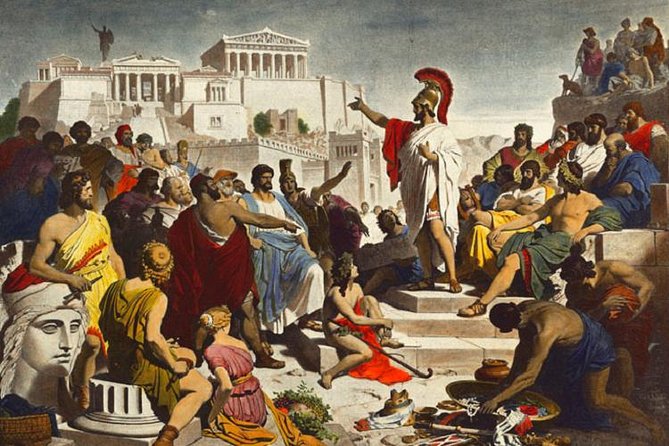
You meet at the Statue of Theseus in Athens (address given as Athens 105 55, Greece). The walk ends at Theorias 21, Athina 105 58, Greece.
That matters because you start with a landmark in an area that helps you orient to the wider historic center. By the time you finish, you are in a neighborhood where you can keep exploring on your own, especially around Plaka and the surrounding streets.
Also, the tour uses a mobile ticket, and it is offered in English. Service animals are allowed, and it is near public transportation, so getting there and leaving usually feels manageable.
Kerameikos: Pericles, pottery, and the politics of memory
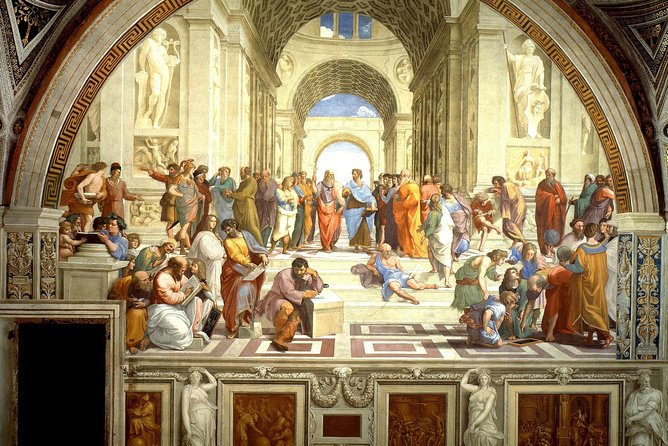
Kerameikos is where the tour earns its keep. This site is less crowded than the headline names, but it is deeply important. Kerameikos means ceramic, because the area was known for pottery workshops. At the same time, it functioned as the cemetery of Athens for many centuries, so it carries both craft and civic identity.
The tour connects that past to one specific moment: Pericles delivered his famous Epitaph speech there, honoring the first casualties of the Peloponnesian War and praising the virtues of democracy and the Athenians’ way of life. That link is powerful because it shows democracy not just as an idea, but as something a society used to explain sacrifice and values.
Duration here is short, about 15 minutes, and an admission ticket is not included. If you want to slow down for photos or extra reading, this is a spot where you might wish you had more time.
Same hours, spent a different way in Athens:
- Acropolis: Premium Acropolis and Parthenon Guided Tour★ 4.8 · 5,208 reviews
- Athens: Mythology of Delphi, Museum and Arachova Guided Tour★ 4.7 · 5,102 reviews
- All Day Cruise -3 Islands to Agistri,Moni, Aegina with lunch and drinks included★ 5.0 · 4,958 reviews
- Athens, Piraeus, and Coastline: Blue Hop-On Hop-Off Bus★ 3.9 · 4,849 reviews
Flea market stroll and Plaka atmosphere: Athens as a living city
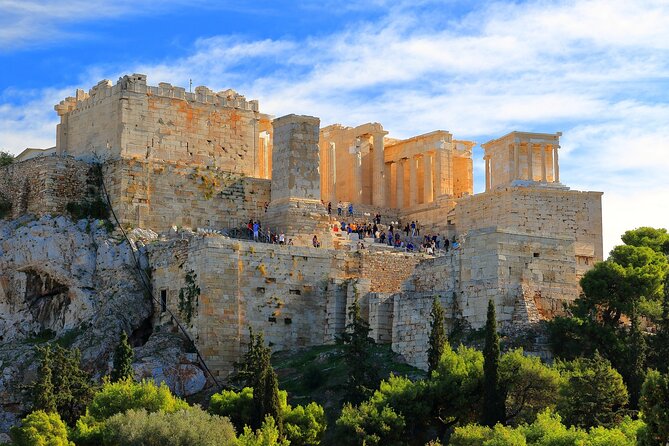
Between the big monuments, the tour gives you a change of pace with an easy walk through Athens’ flea market area. It is only about 15 minutes and it is free, so think of it as a sensory reset. You get street-level Athens, not just museum Athens.
Then you get time in Plaka, a scenic neighborhood with small houses and narrow streets. This is more than a scenic detour. It helps you remember that ancient Athens sits inside a living city. Your brain keeps the route coherent because you see how the past fits into daily life.
If you love photography, the narrow lanes and compact buildings can be great for casual shots. If you hate crowds, go a little slow here, stay patient, and keep your pace steady.
Hadrian’s Library: a Roman reminder that Athens kept evolving

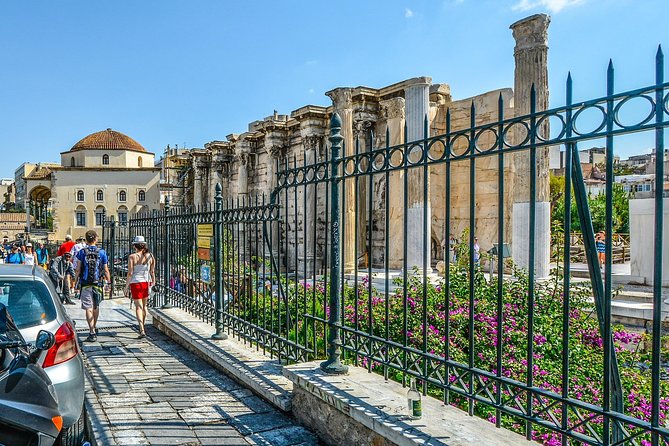
Hadrian’s Library is placed on the north side of the Acropolis, and it is a strong stop because it shows the Roman layer of Athens without losing the ancient focus. It was created by Roman Emperor Hadrian in AD 132.
You will spend about 15 minutes here, and admission is not included. Even with the time limit, the payoff is in the explanation. The guide uses this stop to show how rulers continued, repurposed, or framed Athens. That is part of understanding why ancient Athens stayed influential. It was not locked in time. It was reused, discussed, and reinterpreted.
A drawback to keep in mind: since tickets are not included at some stops, you may need to budget for entry fees as you go. If you want a smooth day, I suggest checking which stops are paid before you set out.
Roman Agora and the Tower of the Winds: clocks, weather, and civic tech
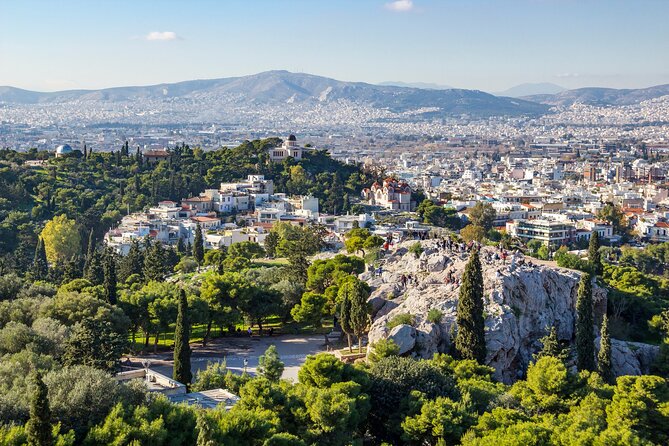
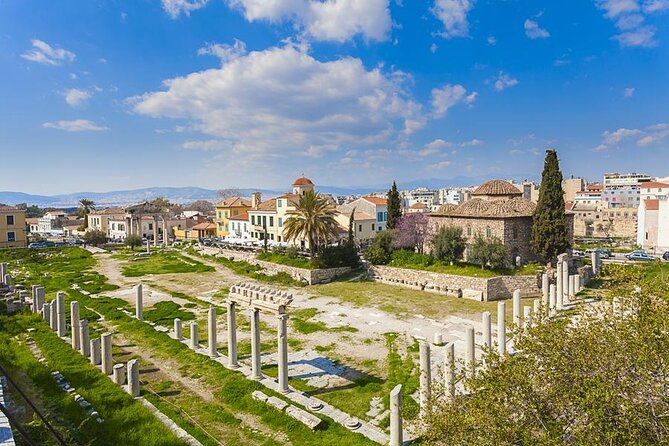
The Roman Agora sits north of the Acropolis and east of the Ancient Agora. You get around 15 minutes at this stop, again with admission not included. This is where the tour helps you see the city’s civic layout across eras.
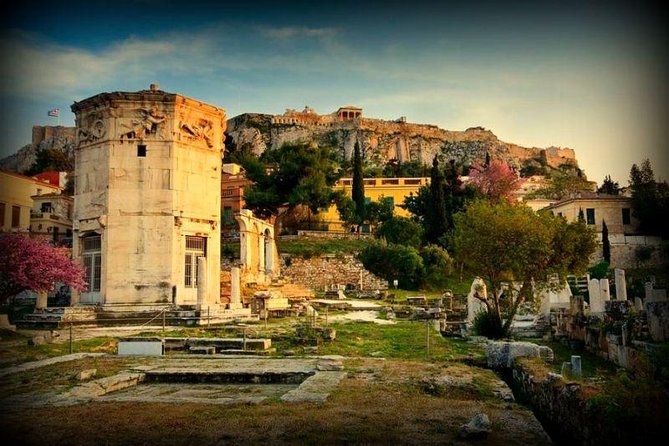
Then comes one of the most fun segments: the Tower of the Winds. You will only have about 5 minutes, but you get a lot of story packed into that short time.
The tower is octagonal and was made by astronomer Andronicus of Kyrristos in the 1st century BC. It served as a wind indicator and also a clock. In the tour framing, it is Athens’ version of a Big Ben. When the sky was clear, it used solar time. In cloudy conditions, it included a hydraulic mechanism that produced a sound every hour, giving the city a kind of audible timekeeping. The tour also points out that it is considered the first meteo station, combining astronomy, weather observation, and practical city life.
Because it is a quick stop, you may want to take photos fast and listen first. The explanation is the real value here.
Ancient Agora: the heart of debate where Athens did the talking
The Ancient Agora is where the tour really flips from ruins to ideas. It is described as the heart of Athens, and it is hard to argue after you hear how many famous minds linked their public life to the same space.
You will spend about 20 minutes here, with admission not included. The guide frames this as the place where philosophers like Socrates and Plato and lawgivers like Solon, plus statesmen like Themistocles and Pericles, moved through the same public environment. You also hear names tied to drama and political imagination, including Sophocles and Aristophanes, and historians like Thucydides.
That lineup is not random. The point is that philosophy and politics were not separate tracks. People discussed ethics, citizenship, law, and the meaning of good government in the same zones.
The drawback is that you will likely move fairly quickly through a large area. If you want more time to walk around and absorb, consider adding your own extra stop after the tour ends.
Prison of Socrates: a small stop with a big emotional hit
This is one of those “blink and miss it” moments that the tour makes meaningful. At the Prison of Socrates, you pay tribute to a major philosopher. It is about 10 minutes and admission is free.
Even if you already know the myth-level details of Socrates’ fate, the tour approach helps you connect it back to civic life and public debate. You start thinking about what happens when ideas challenge power, and how societies decide whether to tolerate disagreement.
Because the time is short, keep your expectations simple. This is not a museum visit. It is a focused, symbolic stop that adds weight to everything you heard at the Ancient Agora.
Pnyx Hill: the cradle of democracy with views you cannot fake
Pnyx Hill gets about 30 minutes and free entry, and it feels like the tour’s final argument. Pnyx is often described as the cradle of democracy because it was a place where citizens took decisions for their future.
The best part is how the tour makes you stand in the right mental position. You hear how public decision-making worked in the early democratic model, and you also get the physical sense of space. The views over Athens and toward the Acropolis help you understand scale. You are not just learning a slogan. You are looking at the city that needed rules, debate, and collective action.
If you love viewpoints, this is one of the places where pictures actually help your memory later. If you get tired standing, take breaks during the explanation and let the guide’s pacing do the work.
Food and drink ideas nearby, plus how to keep the day easy
The tour route naturally ends in the older center where you can find plenty of places to eat. One review notes a mid-tour break for refreshments around a kiosk with WC facilities, which is a practical reminder: plan to grab water and a simple snack so you do not run on empty.
When you are deciding where to eat after the tour, I suggest you look for places close to where your walk ends, not far away. The day already gives you enough walking, and your best meal will be the one you can get without adding stress.
Tip I follow for this area: if you want a calmer dinner, eat slightly earlier than the peak rush. After a long philosophical morning, you will want food that does not feel like a sprint.
Price and value: what you pay for, and what you may still need
The price is $50.81 per person. For Athens, that sits in the category of paid guided walking tours, and the value comes from how tightly it ties sites together under one theme.
You get:
- a route that mixes less obvious stops (like Kerameikos) with major civic landmarks (like the Agora and Pnyx)
- a small group cap of 15
- a guide who is praised for clear, engaging delivery and humor
- multiple educational moments built around democracy and philosophy
What is not included is the admission fee at several stops, including Kerameikos, Hadrian’s Library, Roman Agora, Tower of the Winds, and Ancient Agora. Some stops are free, like the flea market, Prison of Socrates, and Pnyx. So your real total depends on how many paid entries you choose to add.
Still, even if you have to pay some tickets separately, you are paying for the thinking. This tour gives you context that would take you much longer to piece together alone, and you get Q and A along the way.
Who this tour is best for
This is a smart pick if:
- you want Athens history tied to real ideas, not just dates
- you enjoy conversations about politics, ethics, and how societies run
- you like walking tours but prefer they feel purposeful
It also works for families, including older kids. Feedback notes the material landed well with teens and even younger visitors, mainly because the guide keeps it clear, paced, and story-driven.
If you only want the absolute biggest monuments and nothing else, you might prefer a more classic Acropolis-heavy route. But if you want the city’s civic brain, this route is aimed right at it.
Should you book this Philosophy and Democracy tour of Athens?
If you like understanding how a place thinks, not just how it looks, book it. The combination of Kerameikos, the Ancient Agora, and Pnyx gives you a rare chain of civic logic, and the guide, Panos, is repeatedly credited for making that logic feel clear and memorable.
I would skip it only if you dislike walking, or if you want zero ticket planning. With a guided route that includes several paid sites, some entry fees may be on your plate. If you are comfortable budgeting for that and you want your Athens day to connect ideas to stones, this tour is one of the best bets in the city.
FAQ
How long is the Philosophy and Democracy tour of Athens?
It runs for about 3 hours 30 minutes (approx.).
Is the tour offered in English?
Yes, the tour is offered in English.
How many people are in the group?
The tour has a maximum of 15 travelers.
Where do I meet the tour and where does it end?
You start at the Statue of Theseus in Athens (Athens 105 55, Greece) and end at Theorias 21 (Athina 105 58, Greece).
Do I need to buy tickets for the sites?
Some stops are free, but several have admission tickets not included, including Kerameikos Archaeological Site, Hadrian’s Library, Roman Agora, Tower of the Winds, and Ancient Agora of Athens. Pnyx and the Prison of Socrates are listed as free.
Is it a walking tour?
Yes. It includes walking between stops, including an easy-paced walk through the flea market area, and you should be prepared for some walking.
Do I get a mobile ticket?
Yes, the tour includes a mobile ticket.
What is the cancellation policy?
Free cancellation is available up to 24 hours in advance for a full refund. If you cancel less than 24 hours before the start time, the amount paid is not refunded.
Latest from under the Acropolis






Tours, compared.
Acropolis, Parthenon & Acropolis Museum Guided Tour
Read our review →
The Acropolis, Parthenon & Acropolis Museum Guided Tour
Read our review →
Acropolis: Premium Acropolis and Parthenon Guided Tour
Read our review →
Mythology of Delphi, Museum and Arachova Guided Tour
Read our review →
Acropolis and Parthenon Guided Walking Tour
Read our review →