Reviewed · TOURS
Philosophical Tour in Athens
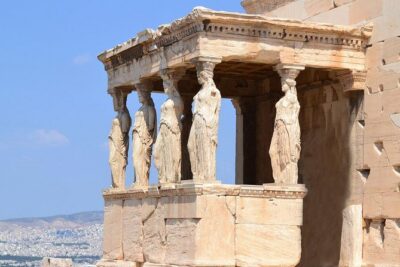
Athens gets personal on this philosophy walk. I love how Lampros turns famous corners like the Theatre of Dionysus and the Prison of Socrates into living questions about judgment, tragedy, and the mind, with Jung and even modern AI on the table. I also like the way the route uses Socrates-style thinking plus multimedia so ideas land, not just get recited. One catch: you stand and walk a lot, so wear shoes for uneven stone and plan for sun and wind.
This is a private up-to-six group, so you get real back-and-forth instead of a one-way lecture. Lampros adds quick breaks, including shady spots, and keeps people engaged with short video presentations tied to the sites. If your group likes discussion, this format is hard to beat.
At $90.11 per person for about 2.5 hours in English, the value comes from the main sights being free for the stops you hit, plus the fact you are not managing a self-guided scavenger hunt. You get a mobile ticket, and the walk starts and ends in the Acropolis area, which makes it easy to plug into your day.
In This Review
- Key highlights worth getting excited about
- How this 2.5-hour philosophy walk works, and why it feels different
- Theatre of Dionysus and Herod Atticus Odeon: tragedy’s job, not just its story
- The Prison of Socrates stop and the Allegory of the Cave lesson
- Agios Dimitrios Loumbardiaris to Philopappos: democracy, happiness, and the view payoff
- Pnyx assembly hill: Aristotles eudaimonia and Socrates’ secret corner
- Keramikos cemetery and Epicurean happiness in real air
- Stoicism birthplace spots, the Roman Agora, and the city’s daily ethics
- Meteorological station, the Mnisikleous stairs lunch moment, and philosophers in the air
- Lysikratous Square to Anafiotika: Apollonian and Dionysian mood shifts to a Cycladic feel
- Is $90.11 worth it for a private up-to-six philosophy walk?
- Tips so you enjoy the walk, not just the sites
- Should you book this philosophical tour in Athens?
- FAQ
- What time does the tour start, and how long is it?
- Is this tour private?
- Is the tour offered in English?
- Are admission tickets included?
- What is the meeting point?
- What if the weather is bad?
- Can I cancel for a full refund?
Key highlights worth getting excited about
- Theatre of Dionysus to the Prison of Socrates, with psychology and modern thinking woven in
- Lampros by name, running interactive talks and keeping the energy up with visuals
- Big viewpoints built into the route, including Philopappos and the Pnyx assembly area
- A lunch-friendly moment at the philosophers’ discussion area near the Mnisikleous stair
- Epicurean and Stoic stops, taught where the ideas were meant to be practiced
- Anafiotika’s Cycladic feel, a mood shift from “ancient Athens” to something island-like
How this 2.5-hour philosophy walk works, and why it feels different
This tour is short on purpose. In about 2 hours 30 minutes, you get enough stops to connect ideas to specific places, without turning the day into a long slog across Athens.
Because it is private for up to six people, you can ask questions as you go. I like that the guide does not treat it like a museum script, and the multimedia helps you follow themes even if you slept through philosophy class once upon a time.
The route is also built for attention. You are moving through real public spaces, then pausing outside key landmarks for the explanation, often with a seat nearby. On hot days, the guide is actively choosing calmer spots to keep the group comfortable.
And yes, you will notice the pacing. The best part is that “thinking” is not left for later. You connect a concept, look at the setting, then talk about how it might apply now, even in topics like the future of reasoning and AI.
Before you book, here is what else runs from Athens:
- Athens: Acropolis & up to 5 Archaeological Sites Combo Pass
★ 4.2 · 13,904 reviews - Athens: Acropolis, Parthenon & Acropolis Museum Guided Tour
★ 4.8 · 9,316 reviews - The Acropolis, Parthenon & Acropolis Museum Guided Tour
★ 4.7 · 8,493 reviews - Athens: Cape Sounion & Poseidon Temple Sunset Half-Day Trip
★ 4.8 · 8,241 reviews
Theatre of Dionysus and Herod Atticus Odeon: tragedy’s job, not just its story
You start outside the Theatre of Dionysus Eleuthereus, often described as the birthplace of tragedy. The framing here is practical and slightly surprising: there was an obligation to see tragic plays, treated like a kind of cure for easy judgment.
Then the tour brings in psychology angles, including Carl Jung’s ideas about how tragedy can help us become our best selves. You might also hear how Buddhism and evolution psychology get used to explain why stories affect how we think and feel. The goal is not academic name-dropping, it is learning how ancient drama trained attention and emotional insight.
From there you move to Herod Atticus Odeon, the famed open-air venue. The emphasis shifts from story to identity, with discussion of persona, animus, and anima tied to how we present ourselves and how we relate to inner life. If you have ever wondered why theater feels like both performance and therapy, this stop pulls that thread.
What I like about these first two stops is the contrast. You go from the raw roots of public tragedy to a landmark that still communicates scale and presence. Even outside, you can feel why Athens used performance and public culture to shape minds.
Practical note: these are exterior moments, so do not expect long indoor time. Bring water early, because you will want it once the sun climbs.
The Prison of Socrates stop and the Allegory of the Cave lesson
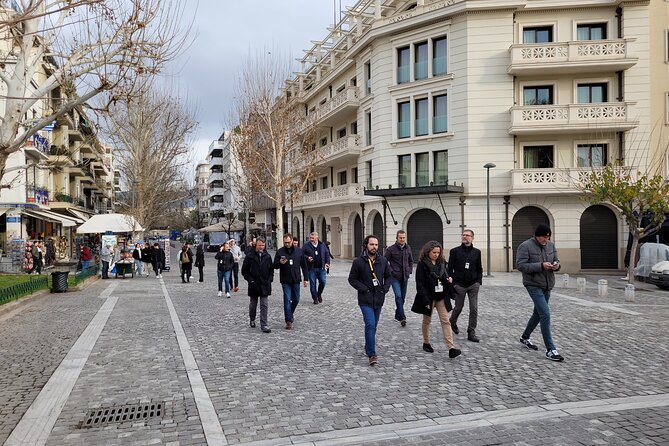
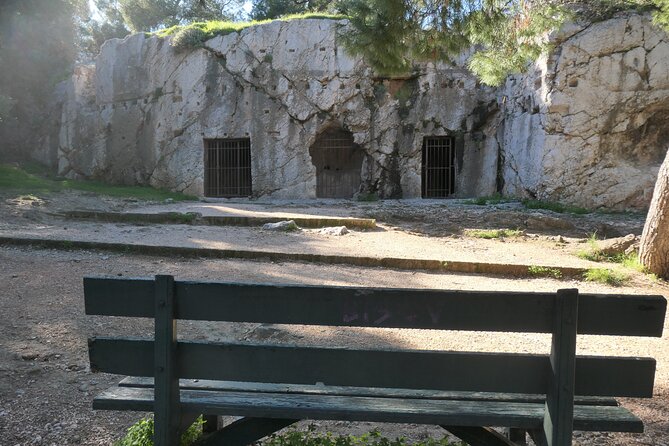
At the Prison of Socrates, the anchor is the Allegory of the Cave and Plato’s philosophy. This is where the tour turns from “what Greeks thought” to “how humans think.”
You are likely to hear the core idea in plain language: people can live inside their own assumptions, mistaking shadows for reality. From there, the guide usually pushes you to apply the thinking to modern life, like how media, algorithms, and narratives can shape what feels true.
This stop also works as a mental reset. After a couple of theatrical and identity-focused landmarks, the cave concept gives you a structure for the rest of the walk. It also sets up later stops about happiness and ethics, because once you question perception, your next question becomes what you choose to value.
Downside to consider: if you are expecting mostly physical site details, this part is more about ideas than archaeology. But if you like conversations, it is one of the best moments to lean in.
Agios Dimitrios Loumbardiaris to Philopappos: democracy, happiness, and the view payoff
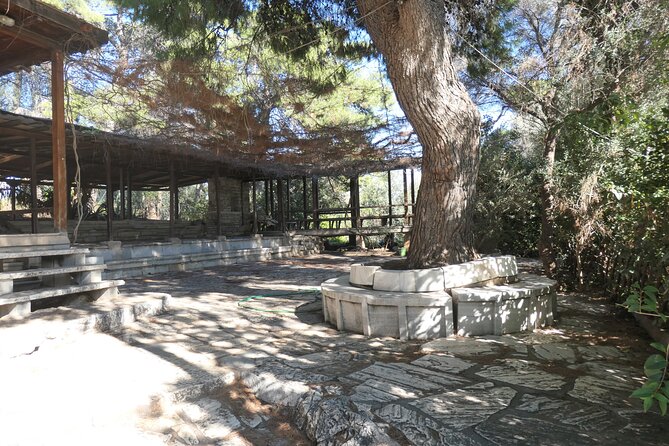
Next comes the Eglise d’Agios Dimitrios Loumbardiaris, framed here as a place tied to the birth of democracy. The tour uses the site to connect civic life to philosophy, because Athens did not separate public debate from how people should live.
Then you head to Philopappos Monument, where the tour leans hard into energy and perspective. The guide calls it one of the most energetic points in Athens, and the views are the payoff, including a chance to see the Parthenon and Acropolis from a higher angle.
This stop also connects to a “recipe of happiness” approach from Plato and Socrates. I like that the guide does not treat happiness as a vague feeling. Instead, it is tied to how you reason, what you practice, and what kind of person you try to become.
The practical value here is huge. You get your best “memory picture” moments early enough that you will actually remember the concepts later. When you can look across the city while thinking about citizenship, self-control, and happiness, the ideas stop feeling abstract.
Tip: if you want photos, this is the time. You will not have the same view at every stop, so plan for it.
Pnyx assembly hill: Aristotles eudaimonia and Socrates’ secret corner
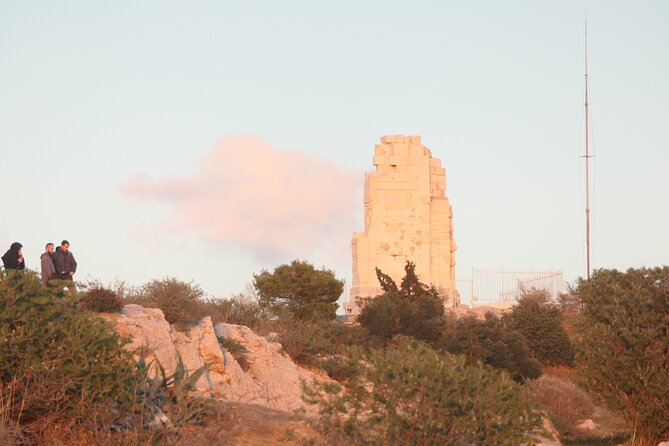
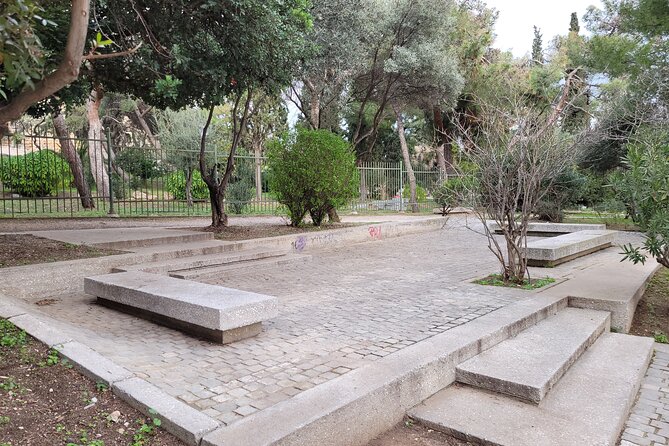
The Pnyx is the assembly area of Athenian citizens, and the tour makes the space feel political, not just scenic. You get the best view of Athens in the route, and the guide ties that geography to what it meant to gather, deliberate, and decide.
Aristotle’s perspective of eudaimonia gets discussed here, with eudaimonia described as blissful well-being rather than simple pleasure. This stop also includes a theme about the secret place of Socrates, which adds a more human, story-like layer to the civic setting.
What I appreciate is the balance. You are not only hearing philosophy as a list of schools. You are hearing it as a question: what kind of life do these practices lead to, and how would it change your day-to-day choices?
If the weather is clear, the Pnyx is also where your brain catches up. After stops about tragedy and perception, you get a wider landscape of ideas. And yes, you receive admission for this stop.
Consideration: there is some walking between points, and this is a viewpoint. If you are sensitive to stairs or uneven ground, pace yourself and ask the guide to slow down so you can keep enjoying it.
Same hours, spent a different way in Athens:
- Acropolis: Premium Acropolis and Parthenon Guided Tour★ 4.8 · 5,208 reviews
- Athens: Mythology of Delphi, Museum and Arachova Guided Tour★ 4.7 · 5,102 reviews
- All Day Cruise -3 Islands to Agistri,Moni, Aegina with lunch and drinks included★ 5.0 · 4,958 reviews
- Athens, Piraeus, and Coastline: Blue Hop-On Hop-Off Bus★ 3.9 · 4,849 reviews
Keramikos cemetery and Epicurean happiness in real air
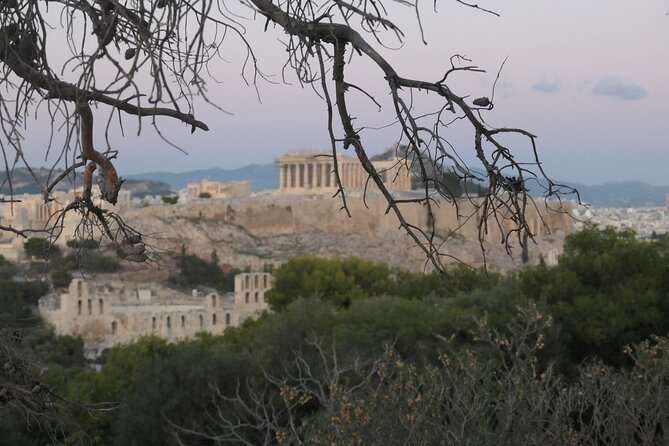
Keramikos Archaeological Site is the stop for the ancient cemetery of Athens, and the mood shifts. This is not a “fun facts” detour, it is a philosophical move. The tour uses the cemetery setting to talk about how happiness might relate to life’s limits, memory, and emotional balance.
You will hear an Epicurean recipe of happiness tied to Epicurus and what is sometimes called Epicurus’ garden. Epicurean thinking, in this tour, comes across as practical calm, not sugarcoated optimism.
What I like here is that the tour respects the atmosphere. Cemeteries can feel heavy, but the guide keeps the conversation grounded in how people tried to live well. It is a reminder that ancient philosophy often handled grief, uncertainty, and fear, not just debates in a classroom.
This is also a good moment for anyone who wants a quieter mental pause. You will likely get a slower pace of conversation here, compared with viewpoint stops.
Stoicism birthplace spots, the Roman Agora, and the city’s daily ethics
After Keramikos, the tour includes a place tied to where Stoicism was born. It also nods to philosophy and theater being intertwined with public life, and how democracy was first executed. The point is to show that these ideas were not floating in theory. They were taught and performed where people gathered.
You then move along a stop described as the most beautiful street in Athens. It is not just for photos, it is used as a way to get you to slow down and look. That matters on a philosophy tour, because observation is part of the practice.
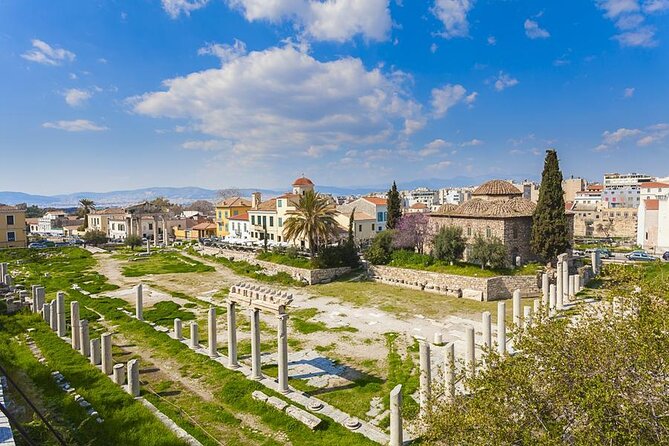
The Roman Agora follows, where Stoicism is framed as being taught as a philosophy of life. This is where the tour’s tone feels most “usable.” Instead of chasing quotes, you work on how to handle stress, judgment, and uncertainty using Stoic-style thinking.
One of my favorite parts of this section is the mix of setting and message. The Agora feels like where everyday people intersected, so the ideas about character and ethics feel less like an academic exercise.
Meteorological station, the Mnisikleous stairs lunch moment, and philosophers in the air
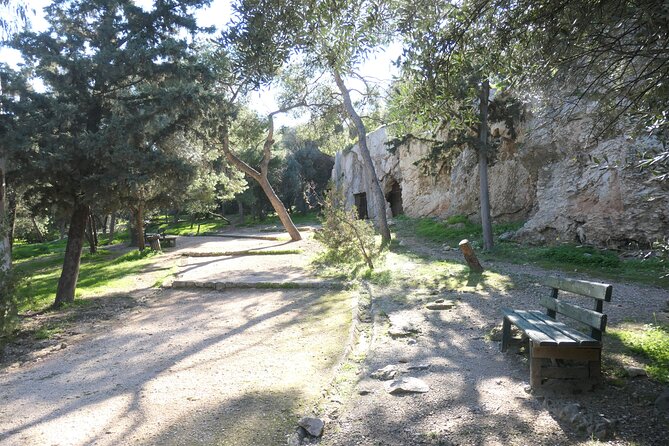
The itinerary then includes the first meteorological station in the world. Yes, it is a physics-adjacent detour, and that is exactly why it works. Philosophy in Athens lived next to practical curiosity about how the world behaved.
Next comes the discussion point of the philosophers. You are set up to experience the atmosphere of the Mnisikleous stair, and this is also described as a best place for lunch.
This is where the tour becomes extra real. It is easy to treat philosophy as a topic. Sitting in a spot tied to discussion, eating something simple, then talking again, makes it feel like a lived habit.
If you plan to bring food, this is the moment to do it. If you plan to buy, this is the moment you will want to be ready. Either way, you benefit from a pause that does not feel like wasted time.
If you hate carrying things, you can also treat it as a snack stop and then continue. The tour overall is paced so you are not falling behind, but you will enjoy this break most if you plan ahead.
Lysikratous Square to Anafiotika: Apollonian and Dionysian mood shifts to a Cycladic feel
Lysikratous Square is framed through Nitze’s Apollonian and Dionysian side of Athens. The tour uses that idea to explain how Athens can feel structured and rational on one hand, and emotional and instinctive on the other. It is a fun mental lens, especially when you are comparing viewpoints, streets, and the way different sites “pull” your attention.
Then comes Anafiotika, described as a second energetic point in Athens with a feel like a Cycladic island. This is one of those moments that makes you exhale after the heavier philosophy stops.
What I like is the contrast. After cemetery and ethics, you walk into a quieter neighborhood-like vibe that feels like it could be off the Aegean, even while you are still in the city core. It helps your brain reset, and it also gives you time to look at detail without being forced into constant explanation.
Anafiotika is where you can reflect on everything you just heard and decide what you actually care about. That is the real goal of this tour, and it tends to happen naturally here.
Is $90.11 worth it for a private up-to-six philosophy walk?
Let’s talk value. At $90.11 per person for about 2.5 hours, what makes it feel fair is the mix of a private guide, interactive discussion, and the “most stops are free” sight approach.
Even if you could visit these places on your own, the hard part in Athens is connecting the dots in a way that feels personal. Here, Lampros ties sites to themes like tragedy and judgment, the Allegory of the Cave, democracy, eudaimonia, Epicurean happiness, and Stoic ethics, plus psychology angles and multimedia support.
The other value piece is the human one. The guide, Lampros, is repeatedly praised for being friendly, interactive, and good at adjusting to different interest levels in the group. If you are traveling with someone who knows philosophy and someone who does not, this kind of guide matters.
You also get the kind of guidance that saves you time later. In particular, Lampros offers local tips after the tour, including rooftop bar ideas, an open-air cinema tip, and even a restaurant suggestion linked to a favorite meatball stop.
And because it is a private setup for up to six, you are paying for focused attention, not just walking past monuments and hoping you catch the meaning.
Tips so you enjoy the walk, not just the sites
Here is how to get the most out of this kind of philosophy tour.
First, bring comfortable walking shoes and water. The route includes viewpoints, stairs, and uneven ground, and you will want your body to cooperate so your mind can relax.
Second, ask questions early. The tour is interactive, and Lampros seems to use your questions to steer the discussion. If you have a specific interest, like happiness ethics or how tragedy changes the self, say it within the first hour.
Third, pay attention to the multimedia moments. The short videos are not filler. They help you translate big concepts into plain language so you can keep up.
Fourth, plan your lunch. The Mnisikleous stairs stop is described as a best lunch spot, so treat it like part of the experience, not an afterthought.
Finally, take photos at the viewpoints, not constantly. Philopappos and the Pnyx are where your photos will carry the most context, because you can tie your image to what you learned.
Should you book this philosophical tour in Athens?
I think you should book if you want Athens to feel like an idea you can practice, not just a list of monuments. This tour fits people who enjoy conversation, who like history when it connects to daily life, and who are curious about how ancient thinkers still influence modern psychology and even AI-themed questions.
You might skip it if you want a quiet, self-paced sightseeing day with minimal talking. This is not that. It is a guided thinking walk, and if you prefer silence and pace over discussion, you could find it tiring.
If you go, try to do it earlier in your trip. Getting the “how Athens thinks” context fast makes the rest of your sightseeing feel smarter.
FAQ
What time does the tour start, and how long is it?
The start time is 11:00 am, and the tour lasts about 2 hours 30 minutes.
Is this tour private?
Yes. It is a private tour/activity where only your group participates, with a group size of up to six people.
Is the tour offered in English?
Yes, it is offered in English.
Are admission tickets included?
Most stops list admission ticket free, and one stop notes admission ticket included. The Pnyx stop specifically indicates admission included.
What is the meeting point?
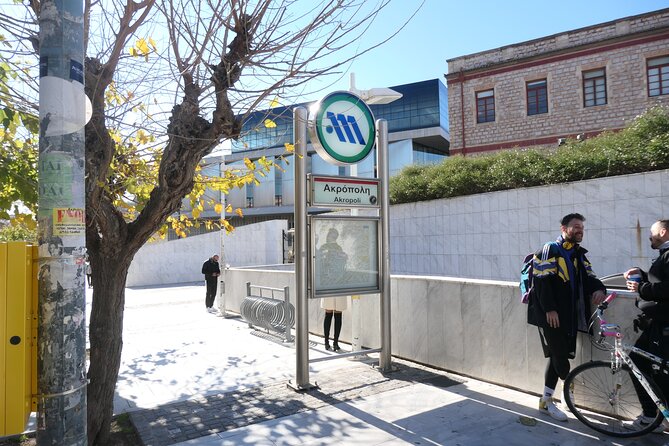
The tour starts near Acropoli, Athens 117 42, Greece, and it ends back at the meeting point.
What if the weather is bad?
This experience requires good weather. If it is canceled due to poor weather, you will be offered a different date or a full refund.
Can I cancel for a full refund?
Yes. You can cancel up to 24 hours in advance for a full refund. If you cancel less than 24 hours before the start time, the amount you paid will not be refunded.
Latest from under the Acropolis






Tours, compared.
Acropolis, Parthenon & Acropolis Museum Guided Tour
Read our review →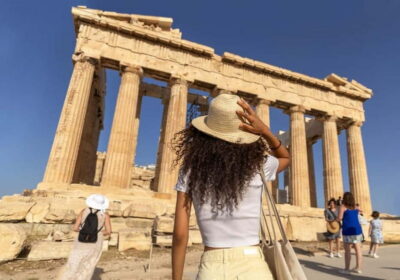
The Acropolis, Parthenon & Acropolis Museum Guided Tour
Read our review →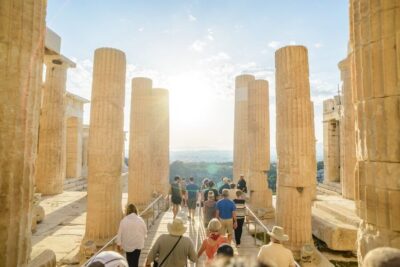
Acropolis: Premium Acropolis and Parthenon Guided Tour
Read our review →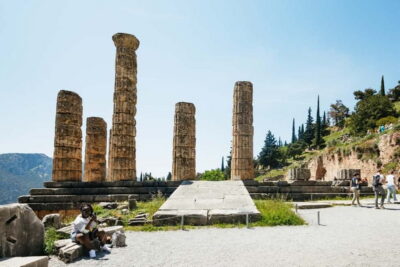
Mythology of Delphi, Museum and Arachova Guided Tour
Read our review →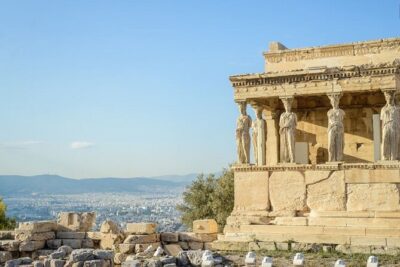
Acropolis and Parthenon Guided Walking Tour
Read our review →