
Reviewed · MYTHS & LEGENDS TOURS
Percy & Medusa: Family Mythology Treasure Hunt & Tour
My favorite Athens moment was a story hunt. This Percy & Medusa treasure hunt turns big sights into an interactive mission with location-based riddles and myth connections your group can solve on the spot. I like that it is hands-on, not just standing and listening, and I also like the included Lukumades stop with honey and cinnamon. One thing to consider: it is about 2 hours with frequent short stops, and it assumes a moderate physical fitness level as you move through central Athens.
Guides like Konstas and Maria keep the myth fun without losing the real context, and they work well with mixed ages in the group. If you want your Athens day to feel like a game that still teaches something, this tour is a strong fit.
In This Review
- Key things to know before you book
- Turning Athens landmarks into a family mythology quest
- How the Narratologies app and facilitator work together
- The start and finish, and why the route is easy to connect later
- Temple of Olympian Zeus and the Acropolis Museum, story-first
- Dionysiou Areopagitou, the Theatre of Dionysus, and the Odeon trio
- Areopagos viewpoints and the Ancient Agora from above
- Plaka, the Tower of the Winds, and finishing at Lysicrates
- Lukumades and the real value of what’s included
- Who should book this tour, and who might want a different plan
- Practical tips so the game feels fun, not frustrating
- Should you book Percy and Medusa in Athens?
- FAQ
- How long is the Percy & Medusa treasure hunt?
- What language is the tour offered in?
- Is there an admission ticket cost for the stops?
- What is the Narratologies app used for?
- Who runs the experience during the tour?
- What food is included?
- Are drinks besides water included?
- Where do you meet and where does the tour end?
- How many people are in the group?
- What is the cancellation window?
Key things to know before you book
- Narratologies app drives the game with navigation, location-based stories, riddles, and a collection of gems.
- The facilitator starts the mission with a magic code, then you follow clues as you walk.
- You hit major landmarks you might skip by accident, including the Theatre of Dionysus and the Tower of the Winds.
- The snack is part of the plan with Lukumades (Greek donuts) plus water, so you do not scramble for food mid-walk.
- Small groups, big attention with a maximum of 15 travelers, which matters for kids and for questions.
Turning Athens landmarks into a family mythology quest

Athens can feel like a blur if you only do the classic photo stops. This tour slows things down in a clever way. Instead of rushing from one monument to the next, you work through short scenes and puzzles tied to what you are seeing right now.
The Percy & Medusa theme gives your brain an easy hook. Greek mythology can be dense when it is delivered as facts only. Here, you get story-driven prompts, riddle-solving, and direction to your next stop. That makes it easier for kids to stay engaged, and it keeps adults from checking out when the group needs a break.
I also appreciate the mix of sites. You get museum time, city-street time, and classic ancient Athens time. It does not read like a checklist. It feels more like a guided walk with a mission: answer the clue, spot the details, move on.
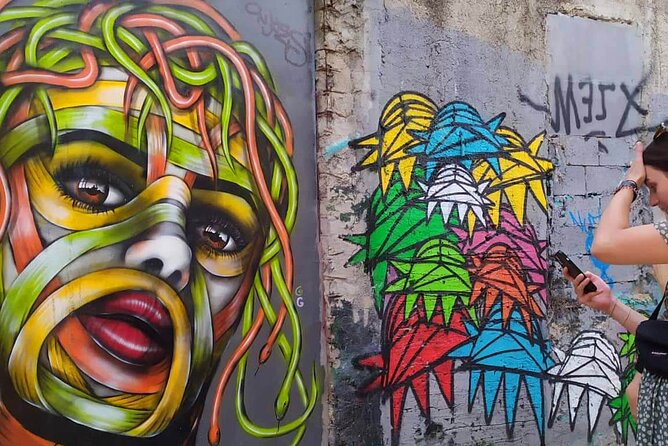
The best part is that the tour design helps you actually notice things. You might pass by a beautiful pedestrian street or a surviving ancient theater on your own. On this hunt, you have a reason to look closer, read what is around you, and connect it to the next scene.
Other retellings of the old stories on foot:
- Athens: Mythology of Delphi, Museum and Arachova Guided Tour
★ 4.7 · 5,102 reviews - Athens & Acropolis Highlights: Greek Mythology Small-Group Tour
★ 5.0 · 2,370 reviews - Athens: Acropolis and Mythology Highlights Small Group Tour
★ 4.8 · 2,275 reviews - Athens: Mythology Tour for Families
★ 4.8 · 173 reviews
How the Narratologies app and facilitator work together
This is not a “phone tour” where you never see a guide. You get a facilitator plus the Narratologies app as your game engine.
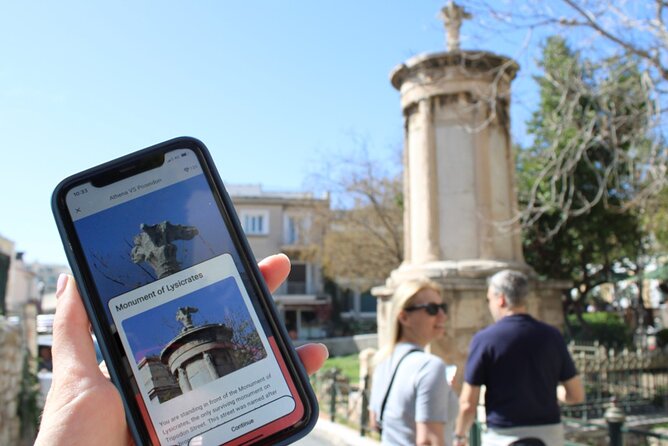
After booking, you receive an email with information for the meeting point and a link to download the Narratologies app. You are advised to download it in advance, which is smart. It helps you get your bearings and reduces stress when you are standing in a busy area.
On tour, the facilitator has the magic code that gives you access to the game. From there, the app handles the location-based storytelling and the riddles. That is a big practical win: you are not guessing where to go next, and you are not constantly checking your phone without purpose.
You also get a mobile ticket. That matters because it keeps entry simple and helps keep the flow tight during quick stops.
One extra feature I like: the app includes a collection of gems tied to the clues. It gives kids (and adults who secretly like game mechanics) a clear sense of progress instead of feeling like you are just walking until the end.
The start and finish, and why the route is easy to connect later
You start at the Arch of Hadrian on Leof. Vasilisis Amalias 50. The end point is the Choragic Monument of Lysicrates on Epimenidou 3 in Plaka, a stone’s throw away from the Acropolis Metro Station.
That end location is practical. Plaka is a good base area, and being near the metro makes it easier to plan the rest of your day. If your family wants to keep exploring right after, you are not stuck far from transit.
The tour is also described as near public transportation. For Athens, that is a real quality-of-life detail. Many family-friendly activities fail when the “last mile” turns into a long taxi debate. This one gives you a sensible start and end.
And because the group size maxes at 15 travelers, the movement feels manageable at quick stops. You are not getting a huge crowd tangled around you while you try to solve riddles.
Temple of Olympian Zeus and the Acropolis Museum, story-first
The first stop is the Temple of Olympian Zeus, where you get the opening story framed as a meeting place for the gods. The point is not to memorize a timeline. The point is to set the tone and give you the first mission.
You pause, read the story in the Narratologies app, solve a riddle, and then you move toward the next landmark. Admission is marked as free for this stop, so you can focus on the experience without worrying about a separate ticket cost for that part of the walk.
Next you reach the Acropolis Museum. Even if you have seen photos of it, the museum hits differently when you are in the flow of the hunt. You get another quick story moment, plus another riddle and direction to the next stop.
A quick note on pace: these early sections are short, which is ideal for families. But if you love lingering in museums, you might find yourself wanting more time for browsing. This is designed as a mission tour, not a slow museum day.
Dionysiou Areopagitou, the Theatre of Dionysus, and the Odeon trio
After the museum, the route shifts to Dionysiou Areopagitou, one of Athens’ most beautiful pedestrian streets. Instead of treating it like a corridor to get somewhere else, the tour uses it as an atmosphere stop. You read stories about the monuments and houses around you and solve more challenging riddles.
Here is the subtle value: it gets you out of the “everything is ancient steps away from the Parthenon” mindset. Athens is also lived-in, layered, and street-level beautiful.
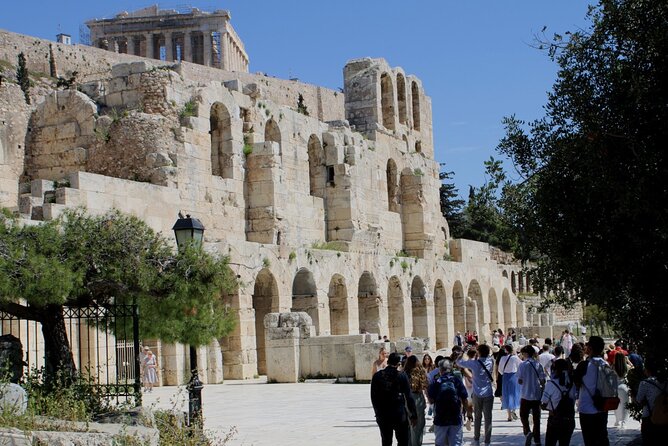
Then you head toward the Theatre of Dionysus, a surviving ancient theater at the foot of Acropolis hill. You learn more about it and keep going with another mission prompt. If you have ever watched videos of ancient Greek theater but never connected it to real space, this kind of stop helps your brain build the map.
Right after that, you visit Herod Atticus Odeon, described as a Roman odeon of great importance. You get another story and riddle moment here too, with a prompt to think about the cradle of civilization concept while you are standing in the location.
The tour also includes an important realism check: these are quick stops. That is not a bad thing. It is a design choice that keeps kids engaged and prevents the whole group from turning into tired volunteers in the shade line.
Same hours, spent a different way in Athens:
- Athens: Acropolis & up to 5 Archaeological Sites Combo Pass★ 4.2 · 13,904 reviews
- Athens: Acropolis, Parthenon & Acropolis Museum Guided Tour★ 4.8 · 9,316 reviews
- The Acropolis, Parthenon & Acropolis Museum Guided Tour★ 4.7 · 8,493 reviews
- Athens: Cape Sounion & Poseidon Temple Sunset Half-Day Trip★ 4.8 · 8,241 reviews
Areopagos viewpoints and the Ancient Agora from above
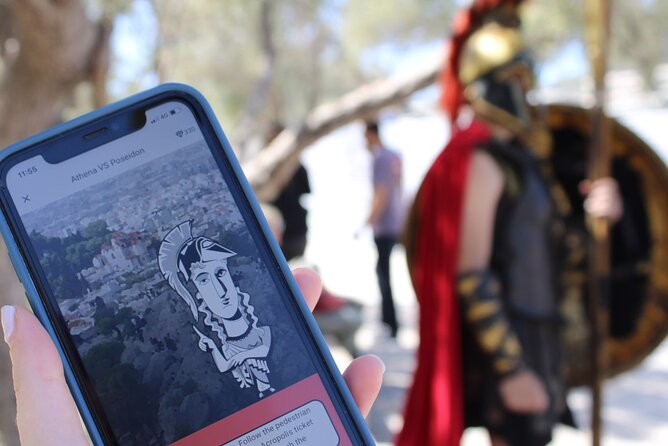
You then reach Areopago, a small hill with fantastic views to both Athens and the Parthenon. The hunt angle matters here. With a view like this, it is easy to just take photos. The riddle prompt makes you look longer and notice sight lines.
From there you continue to the Ancient Agora of Athens. You get more story time and a riddle, with the tour framed as the vibrant center of ancient Athens from above. You keep moving, but you are not just seeing ruins. You are getting narrative context and a reason to interpret what you see.
One benefit of a treasure hunt style tour is that it turns adults into better observers too. When you have a question to solve, you stop treating the scenery like wallpaper. You start picking out shapes, placements, and details.
Plaka, the Tower of the Winds, and finishing at Lysicrates
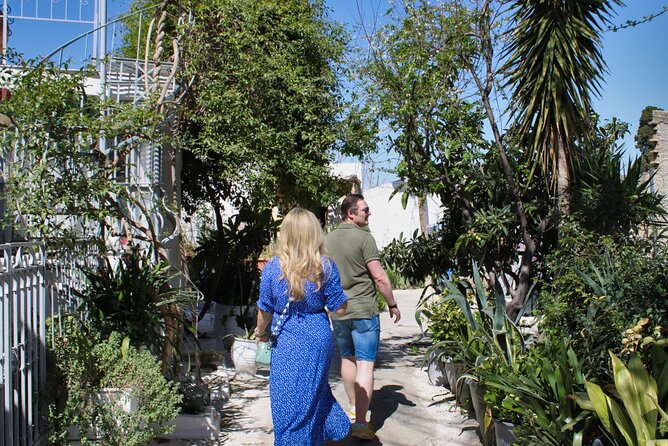
The tour continues into Plaka, described as the oldest district of Athens. This is a great fit for a family game. Older streets tend to feel more confusing on a map, but riddles give you structure. You read multiple stories and solve many riddles, each one bringing you closer to completing the mission.
You also visit the Tower of the Winds, known as the first recorded weather station of humankind. That fact is memorable, but what makes the stop work is that you get a chance to crack the riddle about it. It turns a small structure into a story moment with real-world curiosity.
Finally, the treasure hunt ends at the Choragic Monument of Lysicrates, where you meet the facilitator for a coronation ceremony. That closing ritual is a nice touch. It gives families a moment of closure instead of ending abruptly as you walk away.
Lukumades and the real value of what’s included
At least once during the walk, you will stop for LUKUMAΔΕΣ, serving Lukumades. The tour says this food stop is included, along with honey and cinnamon, and water.
This matters more than it sounds. Athens sightseeing can turn into snack math: one stop, then a hungry scramble, then expensive pastries, then everyone is tired. Here, the planning does you a favor. If you keep an eye on your water intake, the snack stop can keep energy stable during the final legs.
The price is $75.06 per person for about 2 hours, and it is not just “a guide walking you to monuments.” You also get:
- The Narratologies app with stories, riddles, and navigation support
- A facilitator to start and guide the game
- Admission tickets free for listed stops
- Discount vouchers from local souvenir shops and museum giftshops
For many people, the value is in reducing decision fatigue. You do not have to piece together a route, figure out what is worth your time, or manage the flow for kids. Instead, the experience already has a built-in sequence, and your phone gives you direction.
That said, drinks besides water are not included. If you tend to drink more, plan for it. Bring a small extra bottle if that is your style, but the tour itself gives water at the food stop.
Who should book this tour, and who might want a different plan
I think this tour is best for families and for anyone who learns better by doing. If your group includes kids, the structure helps. If your group includes adults who worry that “family tours” mean watered-down history, the guides like Konstas and Maria help bridge that gap by connecting mythology and the Athens setting in ways that still feel relevant.
It is also a strong choice if you want to get off the usual grid. You visit enough iconic places to feel like you covered the essentials, but you also catch the street-level charm and the less obvious stops that make Athens memorable.
On the other hand, if you want a slow, contemplative day where you sit and read for a long time, this might feel fast. It is designed around multiple short moments, so you will not linger as long as you might on your own.
Also keep in mind the moderate fitness level requirement. The route includes views from Areopago and multiple central stops, so wear shoes you trust.
Practical tips so the game feels fun, not frustrating
Here are a few real-world tips that fit this specific style of tour:
- Download Narratologies before you arrive. The tour recommends it, and it saves time.
- Bring your phone battery comfort. You will rely on the app for navigation and story prompts during the walk.
- Use good footwear. You are moving between ancient sites and scenic streets, and some areas can be uneven.
- Plan for short attention cycles. The tour works because stops are short. If your group needs frequent pauses, keep that in mind so you do not get overwhelmed.
- Eat the Lukumades stop as part of your energy plan. With honey and cinnamon, it can be sweet. If that is not your thing, you might still treat it as a quick fuel moment, then pick your main meal after the tour.
- Ask questions at the human moments. The facilitator is there, and that is your chance to connect mythology, Percy-style storytelling, and real Athens history.
Should you book Percy and Medusa in Athens?
If you are traveling with kids, or if you simply want Athens to feel like a living puzzle, I would book it. The best reasons are practical: the Narratologies app gives you a structured mission, the facilitator keeps it moving, and the route covers big landmarks plus street-level beauty that is easy to miss on a self-guided day.
The main reason to skip is preference. If your ideal Athens day is quiet museum time or long, unhurried wandering, this format may feel too game-like and too short at each stop.
But if you want an Athens highlight that feels active, fun, and surprisingly educational, this one is a strong pick. Finish near Plaka, get your coronation moment at the end, then keep exploring with a clearer mental map of what you just saw.
FAQ
How long is the Percy & Medusa treasure hunt?
It runs for about 2 hours.
What language is the tour offered in?
The tour is offered in English.
Is there an admission ticket cost for the stops?
Admission tickets are listed as free for the included stops.
What is the Narratologies app used for?
The app provides navigation, location-based stories, riddles, and a collection of gems. You also receive a link to download it after booking.
Who runs the experience during the tour?
There is 1 facilitator who starts the game with a magic code and leads the group while the app guides the story and riddles.
What food is included?
The tour includes Lukumades with honey and cinnamon, plus water.
Are drinks besides water included?
No. Drinks besides water are not included.
Where do you meet and where does the tour end?
You start at the Arch of Hadrian, Leof. Vasilisis Amalias 50, and the tour ends at the Choragic Monument of Lysicrates, Epimenidou 3, near Acropolis Metro Station.
How many people are in the group?
The maximum group size is 15 travelers.
What is the cancellation window?
You can cancel for a full refund up to 24 hours in advance of the experience start time.
Latest from under the Acropolis





Myths & Legends Tours, compared.
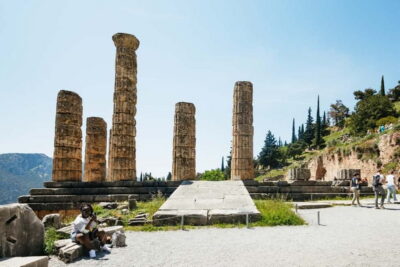
Mythology of Delphi, Museum and Arachova Guided Tour
Read our review →
Athens & Acropolis Highlights: Greek Mythology Small-Group Tour
Read our review →
Acropolis and Mythology Highlights Small Group Tour
Read our review →
The History of Athens: Greek Mythology Private Tour
Read our review →
Athens Highlights: Myths & Philosophers Walking Tour
Read our review →

Greek Mythology Treasure Hunt for Kids – Athens Private Tour
Read our review →Browse the lists this tour appears in