
Reviewed · MYTHS & LEGENDS TOURS
Mythology, Philosophy and Democracy Tour
Athenian ideas, mapped street by street. In just about three hours, you trace how old myths, public debate, and political thinking connect across Athens, with big payoffs like standing where Pericles spoke and finishing with Pnyx views.
I like two things most. First, the tour places democracy where it actually happened, at the Kerameikos area tied to Pericles’ funeral address. Second, the route saves the good sight lines for the end, with viewpoints at Pnyx and Philopappos Hill that make the whole walk feel worth it.
One possible drawback: it is a good-weather walking experience, so if the day is hot or rough underfoot, the pace can feel like more than a half-day. Go in with comfy shoes and a water plan.
In This Review
- Key Points Worth Marking on Your Map
- Why This Mythology, Philosophy, and Democracy Walk Feels Different
- Price and What You Actually Get for $50.69
- Meeting at Theseus, Ending at Philopappos Hill
- Kerameikos: Where Ceramics, Cemeteries, and Democracy Meet
- Ancient Agora: The Classroom Where Debates Had an Address
- Monastiraki Square and the Roman Agora: Athens in Everyday Layers
- Tower of the Winds: The Big Idea of Timekeeping, in Stone
- Hadrian’s Library: Power, Learning, and a Size You Can Feel
- Plaka Streets and the Human Scale of Athens
- Pnyx: The First Parliament and the Best Argument for Sunset
- Philopappos Hill: The Acropolis View That Closes the Thought
- What the Guide Brings: Wit, Critical Thinking, and Real Connections
- How to Plan This Tour in Your Athens Day
- Who Should Book, and Who Might Skip
- Should You Book This Tour?
- FAQ
- How long is the Mythology, Philosophy and Democracy Tour?
- What does it cost per person?
- What language is the tour offered in?
- How large is the group?
- Where do I meet, and where does the tour end?
- Are there admission tickets for the stops?
- Is the tour suitable for most people, and are service animals allowed?
- What happens if the weather is poor or I cancel?
Key Points Worth Marking on Your Map
- Kerameikos to Pnyx in one story: the route links politics, debate, and civic identity in a way that feels chronological.
- Pericles’ funeral speech setting: you spend time in a cemetery site where Athenian ideals were publicly praised.
- A debate-focused Ancient Agora: the walk frames philosophers, politicians, and playwrights as part of the same public conversation.
- Science and timing at the Tower of the Winds: wind and timekeeping show up in one striking octagonal building.
- Small group energy: capped at 12 people, which helps questions and conversation stay real.
- View-first endings: Pnyx and Philopappos Hill are designed for strong perspectives on the Acropolis.
Why This Mythology, Philosophy, and Democracy Walk Feels Different
Athens can be overwhelming if you only chase ruins. This experience does something smarter: it treats the city like a thinking machine, where each stop explains a step in how humans moved from stories and authority toward argument, observation, and civic process.
You get a tight timeline in a short amount of time. You start in places tied to burial and memory, then move to the Agora where discussion shaped public life, and finish at hilltop viewpoints where you can almost feel the scale of decisions made below.
The guide style matters here. The tour leans into wit, clear connections, and question-leaning explanations, so the walk stays lively even when the topic turns philosophical. If you like hearing ideas put into plain language, you will probably enjoy this format a lot.
Other retellings of the old stories on foot:
- Athens: Mythology of Delphi, Museum and Arachova Guided Tour
★ 4.7 · 5,102 reviews - Athens & Acropolis Highlights: Greek Mythology Small-Group Tour
★ 5.0 · 2,370 reviews - Athens: Acropolis and Mythology Highlights Small Group Tour
★ 4.8 · 2,275 reviews - Athens: Mythology Tour for Families
★ 4.8 · 173 reviews
Price and What You Actually Get for $50.69
At $50.69 per person for about 3 hours, this is priced like a quality walking tour, not a budget rush job. The value comes from three practical factors: the small group size (max 12), the English-speaking guide, and the fact that the tour’s listed stops show admission as free at each point.
It also helps that there are group discounts and a mobile ticket, which usually simplifies the day. One more quiet advantage: this tour is booked fairly far ahead on average, around 37 days, which is a hint that popular slots can fill up.
In plain terms, you are paying for interpretation, pacing, and a guide who connects mythology, politics, and thinking. If you enjoy that kind of street-level storytelling, the cost starts to feel reasonable fast.
Meeting at Theseus, Ending at Philopappos Hill
You meet at the Statue of Theseus in Athens and you finish at Philopappos Hill. The end point is great because it is elevated and meant for views, so you do not just walk in a circle and call it a day.
The tour notes also say it is near public transportation, which helps if you do not want to spend your whole day fighting transit. Since you end on a hill, plan the rest of your evening with that in mind, especially if you are traveling with anyone who prefers flatter ground.
Also, the experience allows service animals, and it says most people can participate. That said, it is still a walking tour, so comfortable shoes matter.
Kerameikos: Where Ceramics, Cemeteries, and Democracy Meet
Kerameikos is not the most famous name on visitor lists, and that is exactly why it works. The name comes from ceramics, because the area had many ceramic workshops, but it later became a major cemetery of Athens for centuries.
What makes Kerameikos feel like more than a historic stop is the political tie-in. This is where the tour connects to Pericles and his famous funeral speech praising Athenian virtues of democracy, delivered for the first casualties of the Peloponnesian War. Even if you do not know the text, the setting gives the topic a human weight. This was not abstract theory. It was public memory tied to civic values.
Time here is about 25 minutes, with admission listed as free for the visit. That is a good length for absorbing what the site is and then letting the guide connect it to bigger themes.
A practical consideration: it is a cemetery area, so be ready for uneven ground in places and take your time if you are taking photos.
Ancient Agora: The Classroom Where Debates Had an Address

After Kerameikos, the tour moves you to the Ancient Agora, described as the heart of Athens. This is where public life happened, and the guide uses it as a reason to talk about philosophers and politicians together instead of treating them as separate worlds.
You will hear names tied to logic, leadership, and culture: Socrates and Plato, lawmakers like Solon and Themistocles, plus figures such as Pericles and Thucydides. The tour also brings in artists and playwrights like Sophocles and Aristophanes, which matters because it shows how ideas traveled through speeches, theater, and civic storytelling.
The stop is about 10 minutes, with admission listed as free. That sounds short, but it is enough for orientation, then for the guide to frame how the Agora functioned as a discussion hub.
Why this stop is valuable: democracy is not just voting. It is the culture around speech, persuasion, disagreement, and public reasoning. The Agora gives you a physical sense of where that culture lived.
Same hours, spent a different way in Athens:
- Athens: Acropolis & up to 5 Archaeological Sites Combo Pass★ 4.2 · 13,904 reviews
- Athens: Acropolis, Parthenon & Acropolis Museum Guided Tour★ 4.8 · 9,316 reviews
- The Acropolis, Parthenon & Acropolis Museum Guided Tour★ 4.7 · 8,493 reviews
- Athens: Cape Sounion & Poseidon Temple Sunset Half-Day Trip★ 4.8 · 8,241 reviews
Monastiraki Square and the Roman Agora: Athens in Everyday Layers

From the Agora, the route eases into Monastiraki Square for a slower pace walk through the flea market area, with antique and tourist shops. This part is less about big ideas and more about letting Athens be Athens, so you can shift gears without losing the thread of the day.
The stop is around 10 minutes and is described as an easy pace. That makes it useful if you are walking faster than you usually do, because it gives your legs a break.
Next comes the Roman Agora, positioned to the north of the Acropolis and east of the Ancient Agora. The tour uses this to show how different eras claimed space near the civic center. It is a reminder that Athens kept getting repurposed, layered on, and reinterpreted.
Time here is about 10 minutes, and admission is listed as free. Expect more orientation and interpretation than a museum-style stop.
Tower of the Winds: The Big Idea of Timekeeping, in Stone
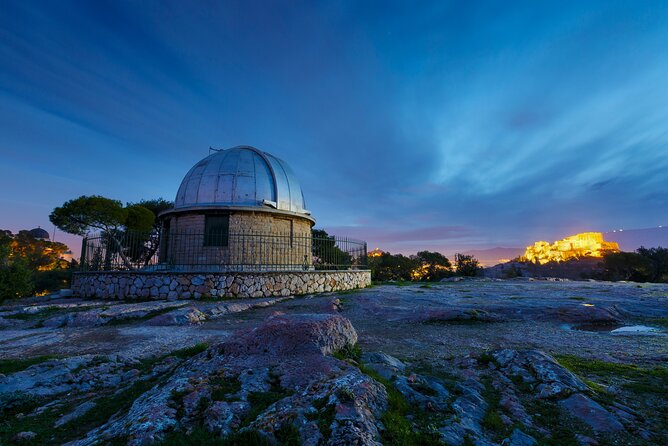
This is one of the stops that can steal the show. The Tower of the Winds is an octagonal building linked to Andronicus of Kyrristos in the 1st century BC.
The tour highlights two functions that feel surprisingly modern. It served as a wind indicator and also as a clock. The clock was solar, and on cloudy days it could use a hydraulic mechanism that produced a sound each hour, effectively making it both timekeeping and a kind of early meteorological station.
That detail matters because it is a bridge from belief systems into observation and measurement. You are literally seeing how people tracked the natural world, not just explained it with myth.
The stop is around 10 minutes with admission listed as free. Since it is a smaller sight, do not rush it. Take a few minutes to look at the idea, then let the guide connect it to the larger theme of how thinking changes.
Hadrian’s Library: Power, Learning, and a Size You Can Feel

Hadrian’s Library is on the north side of the Acropolis area and was created by Emperor Hadrian in AD 132. The tour frames it as the second largest library in the world at the time it was built.
This stop gives you a different angle on “philosophy.” Not just individual thinkers, but the institutions and rulers who supported learning, reading, and public culture. Even if you never read a single Roman-era page, you can grasp the message: ideas take buildings, money, and political backing.
Time is about 10 minutes and admission is listed as free. You will likely spend that time absorbing scale and purpose more than studying lots of tiny details.
Plaka Streets and the Human Scale of Athens
Plaka is the scenic neighborhood segment that shows Athens beyond monuments. Expect small houses and narrow streets, a more intimate scale where you can reset from heavy history.
This stop is about 10 minutes and is listed as admission free. It is long enough to give you a feel for the neighborhood and short enough to keep momentum for the viewpoints ahead.
I like this kind of break because it helps your brain digest what you just learned. You go from civic structures and ancient tech into a street-level sense of how people actually live around the monuments.
Pnyx: The First Parliament and the Best Argument for Sunset
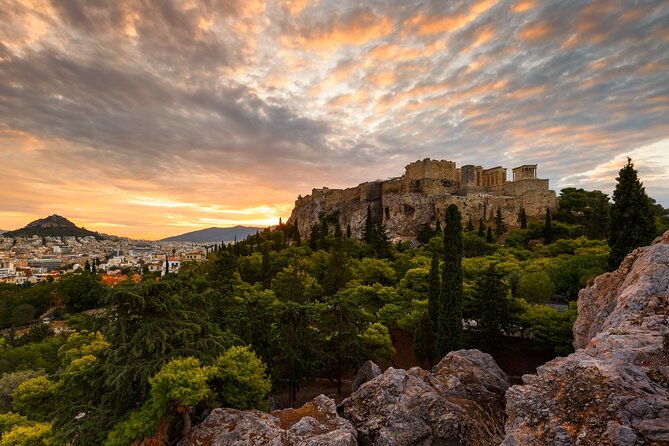
Pnyx Hill is a star stop in the tour’s theme. The tour calls it the first parliament of the world, and it is also tied to strong views over Athens.
You will likely feel why this place works as “democracy in the real world.” This is where public decisions happened in a physical space built for speech and visibility. The idea is not just voting, it is gathering, hearing, and responding.
The stop is around 25 minutes, with admission listed as free. The tour also recommends it as a great spot for sunset views, so timing matters. If your walk lines up with late afternoon or evening, plan to stay long enough for the light to change.
Practical tip: bring a hat or sunglasses for this stretch. The hillside can be bright, and you want to be able to enjoy the view instead of squinting through it.
Philopappos Hill: The Acropolis View That Closes the Thought
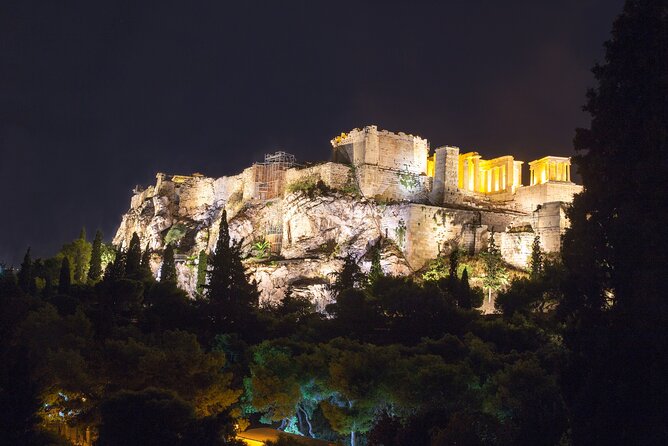
The tour ends at Philopappos Hill, also called the Hill of the Muses in the tour description. The big promise is views of the Acropolis and Athens at night.
This is where the theme lands emotionally. After learning how myths, philosophy, and political ideals formed in specific places, you see the whole system from above. The city becomes a classroom and a stage at the same time.
Time at Philopappos Hill is listed as about 45 minutes. That is enough to slow down, take photos, and reflect on what you learned without feeling rushed.
If you tend to enjoy thinking moments at the end of a tour, this is a smart finish. The guide style also helps here, including moments that act like a short wrap-up on Ancient Greek philosophy and what it means beyond textbooks.
What the Guide Brings: Wit, Critical Thinking, and Real Connections
If there is one reason this tour earns near-perfect marks, it is how the guide teaches. The tone is not dry. Expect humor, fast clarity, and thoughtful connections between ancient problems and modern life.
You might notice the guide pushes you to think critically, not just memorize dates. That is a practical difference. When a guide explains why arguments mattered back then, you leave with a better sense of what democracy and philosophy were actually trying to solve.
Many people also mention the guide’s conversation style, including discussion about Greek mythology, philosophy, and history as you walk. That is a big value add, especially if you like asking questions instead of passively watching sights.
There can also be comfort moments on hot days, such as pauses for water and something sweet. Those breaks are not the main event, but they help you stay present when weather is doing its thing.
How to Plan This Tour in Your Athens Day
This is a tour I recommend early in your Athens trip, especially if you want the Acropolis and surrounding ruins to make more sense later. Learning the “why” behind the main civic spaces gives you better bearings before you wander on your own.
It also pairs well with an evening plan that starts nearby. Since you end at Philopappos Hill, you are positioned to stay out, enjoy the cooler air if it is available, and keep exploring in the general area.
What to bring:
- Comfortable walking shoes
- Sun protection if you are going in warmer months
- Water, since it is a walking route
Also, the tour is offered in English and uses a mobile ticket. That means you should be set as long as you can access your ticket on your phone.
Who Should Book, and Who Might Skip
This tour is ideal if you want Athens to connect to big ideas. If you care about democracy as a culture of debate, and you like the way philosophy grew out of public life, you will probably enjoy the storyline.
It is also a great fit for students and adults who like learning that feels relevant. The tour does not treat ancient thought like a museum piece. It frames it as a set of tools people used to handle conflict, speech, and shared rules.
If you want a “see every major ruin at top speed” style day, you might feel the tour is too idea-focused. The route leans toward interpretation, viewpoints, and theme, not checklist coverage.
Should You Book This Tour?
Book it if you want a guide-led walk that turns Athens into a lesson on how mythology, philosophy, and democracy connect in real spaces. For the price, the small group size, and the fact that the listed stops are admission free, it offers strong value.
Skip it if you are uncomfortable with a walking-based, good-weather outing, or if you only want classic monument photos and nothing more. In that case, you could still enjoy Athens, but you might want a different format.
If you are on the fence, my advice is simple. Choose this when you want Athens with meaning, and choose a slower sightseeing day when you want to just wander. This tour does the thinking part very well.
FAQ
How long is the Mythology, Philosophy and Democracy Tour?
The tour lasts about 3 hours.
What does it cost per person?
The price listed is $50.69 per person.
What language is the tour offered in?
It is offered in English.
How large is the group?
The tour has a maximum of 12 people.
Where do I meet, and where does the tour end?
You start at the Statue of Theseus in Athens and end at Philopappos Hill.
Are there admission tickets for the stops?
The tour information lists admission as free for the stops included.
Is the tour suitable for most people, and are service animals allowed?
The tour says most people can participate and that service animals are allowed.
What happens if the weather is poor or I cancel?
The experience requires good weather. If it is canceled due to poor weather, you will be offered a different date or a full refund. It also has free cancellation up to 24 hours in advance for a full refund.
Latest from under the Acropolis




Myths & Legends Tours, compared.
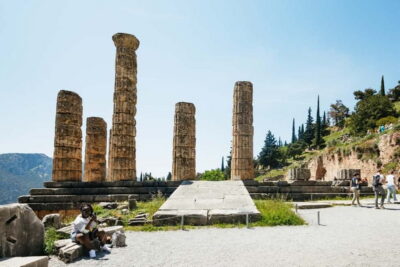
Mythology of Delphi, Museum and Arachova Guided Tour
Read our review →
Athens & Acropolis Highlights: Greek Mythology Small-Group Tour
Read our review →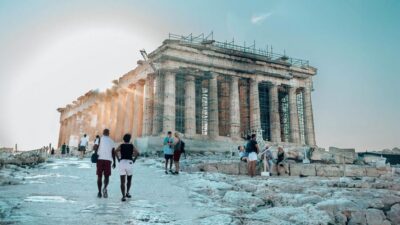
Acropolis and Mythology Highlights Small Group Tour
Read our review →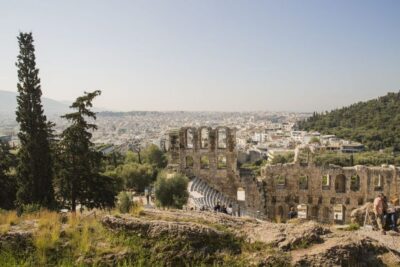
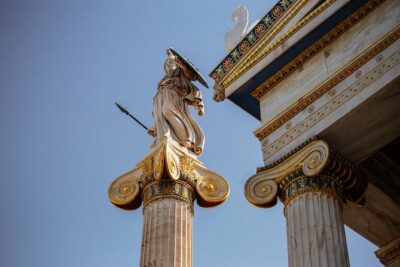
The History of Athens: Greek Mythology Private Tour
Read our review →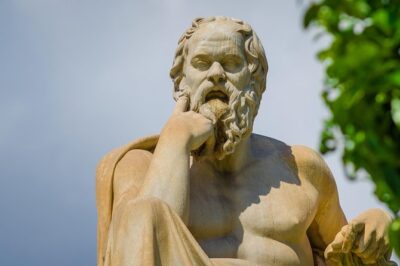
Athens Highlights: Myths & Philosophers Walking Tour
Read our review →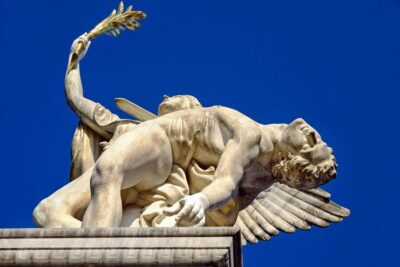

Greek Mythology Treasure Hunt for Kids – Athens Private Tour
Read our review →Browse the lists this tour appears in