
Reviewed · ANCIENT CORINTH TOURS
Kalavryta CogTrain Anci.Corinth Private Tour from Athens/Nafplio
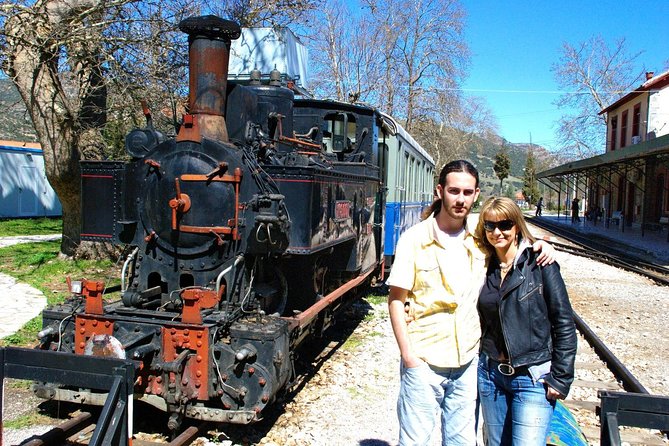
One train ride turns the Peloponnese into a movie. This private 10-hour tour links Athens or Nafplio pickup with the famous Diakopto to Kalavryta cog railway through the Vouraikos Gorge, plus Corinth Canal, Ancient Corinth, and major monasteries.
I love two things right away: the chance to ride the rack-and-cog train for about 1 hour and 8 minutes, and the way the day feels shaped around your group, not a fixed bus route. When guides like Christos, Maria, or Phillip are on the schedule, you get clear explanations, friendly pacing, and practical info you can actually use later.
One consideration: the core train fee (10 EUR one way) and key museum tickets are not included, and the cog train seating can feel tight and a bit noisy. Also, Kalavryta’s WWII memorial stops carry real emotional weight, so go in with your head and heart ready.
In This Review
- Key highlights worth your attention
- What You Really Pay, and What You Get Back
- Morning Timing From Athens or Nafplio (and How to Avoid Rushing)
- Corinth Canal: The Fast Stop That Still Feels Important
- The Cog Train Through Vouraikos Gorge: Why This Day Exists
- Kalavryta Town Time: Traditional Mountain Life and WWII Memory
- Agia Lavra Monastery: 1821 Origins in a Real Mountain Setting
- Mega Spilaeon Monastery in Its Cliff Cave
- Ancient Corinth: Paul’s City, Plus Real Ruins
- Return Ride: Why Going Back by Car Can Still Be Part of the Story
- Who This Tour Fits Best (and Who Might Want a Different Day)
- Booking Smart: Questions to Ask Before You Go
- Should You Book This Private Kalavryta and Ancient Corinth Day Trip?
- FAQ
- How long is the Kalavryta CogTrain Anci.Corinth private tour?
- Do I get pickup from Athens or Nafplio?
- What is the starting time recommendation for the tour?
- Is the cog train fee included?
- Are museum or monastery admissions included?
- How much is Ancient Corinth admission?
- Is this tour private or shared?
- What vehicle options are available?
- What is the cancellation policy?
Key highlights worth your attention
- Diakopto to Kalavryta rack railway: 22 km through streams, bridges, tunnels, cliffs, and forests, switching to cog traction on steep sections
- Kalavryta WWII memorial time: museum and town viewing with Operation Kalavryta context
- Agia Lavra Monastery: tied to the 1821 War of Independence, built in 961 AD
- Mega Spilaeon Monastery: a cave monastery with a strong tradition behind its icon of the Theotokos and major 1943 tragedy
- Private car control: door-to-door pickup, air-conditioned transport, and flexible stops for photos and breaks
- Ancient Corinth stop: Paul-linked city ruins paired with a modern-feeling route that avoids day-trip stress
What You Really Pay, and What You Get Back
This private tour costs $271.08 per person for a roughly 10-hour day. You are paying for two things most DIY travelers underestimate: (1) an English-speaking driver who handles route decisions and timing, and (2) private door-to-door transport that keeps the day moving between very different places.
Included is the air-conditioned vehicle plus the driver’s time, fuels, tolls, and parking. You also get pick up and drop off from Athens center hotels up to 7 km, or another location by prior agreement. Your driver brings along helpful materials like books, a map, and an audio documentary with historical details as you travel.
Then there are the extras you should plan for. The cog train fee is 10 EUR per person one way. Kalavryta’s Holocaust municipal museum has a 5 EUR charge. Ancient Corinth has a seasonal admission fee that changes by dates (you’ll want the driver to confirm the exact day rate). Once you add those, this stops being a budget day trip. But if you value comfort, clear guidance, and avoiding transport headaches, it can still feel like good value.
More days out to Nafplio and its fort:
- From Athens: Small-Group Mycenae, Epidaurus & Nafplio Trip
★ 4.8 · 2,805 reviews - From Athens: Mycenae, Epidaurus & Nafplio Full-Day Tour
★ 4.5 · 2,530 reviews - Mycenae, Epidaurus and Nafplio Tour from Athens
★ 4.6 · 2,201 reviews - Athens: Ancient Corinth & Nafplio Full Day Trip with Swim
★ 4.8 · 531 reviews
Morning Timing From Athens or Nafplio (and How to Avoid Rushing)
If you’re starting in Athens, the recommended start is around 7:30 am or earlier in summer. That early timing matters because you’re stacking a canal viewpoint, a scenic train ride, and multiple monasteries and archaeological time stops in one day. Late starts turn the schedule into a sprint, especially around Kalavryta.
Your pickup is offered from/to your hotel or apartment in Athens center up to 7 km. If you’re farther out, there’s an extra charge of 15 EUR per way per vehicle for longer pickup or drop off locations beyond that limit, including Piraeus areas. Airport and Lavrio port are also listed but under prior agreement.
The tour runs about 10 hours total. In practice, the day is long enough that comfort matters: you’ll be in the car for extended stretches, then off to sites where you’ll want a slow pace and photos.
Corinth Canal: The Fast Stop That Still Feels Important
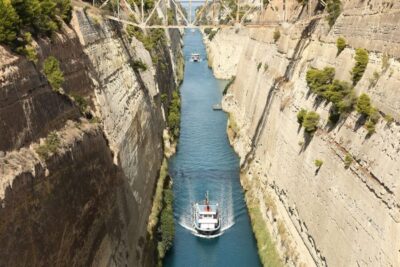
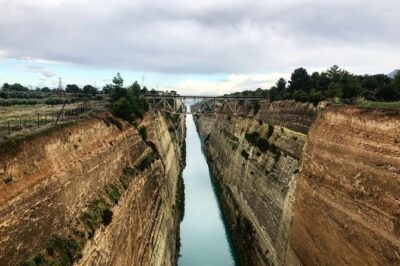
You’ll first reach the Corinth Canal, a striking man-made cut connecting the Aegean and Ionian seas. It’s not a long stop, about 15 minutes, but it’s a perfect “reset” before the rest of the day gets mountainous and emotionally heavier.
Here’s what makes it worth your attention. The canal was dug between 1881 and 1893, and the scale is part of the story: thousands of workers, a deep engineering project, and a visual that’s hard to fake in a photo. You’ll have time for pictures, you can walk across the pedestrian bridge, and you’ll look down from around 80 meters.
This is also a good moment to prepare for the day. Use the restroom if you need one, grab a quick drink of water, and take a few photos you can later compare with what you’ll see in the gorge on the train.
The Cog Train Through Vouraikos Gorge: Why This Day Exists
The heart of this experience is the historic rack railway from Diakopto to Kalavryta. You transfer to Diakopto, and you buy the train tickets there. The fee is 10 EUR per person one way. On weekends or holidays, the information you’re given is to purchase online in advance.
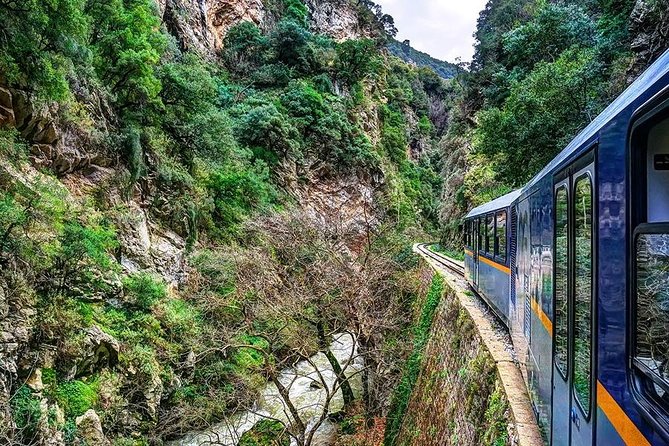
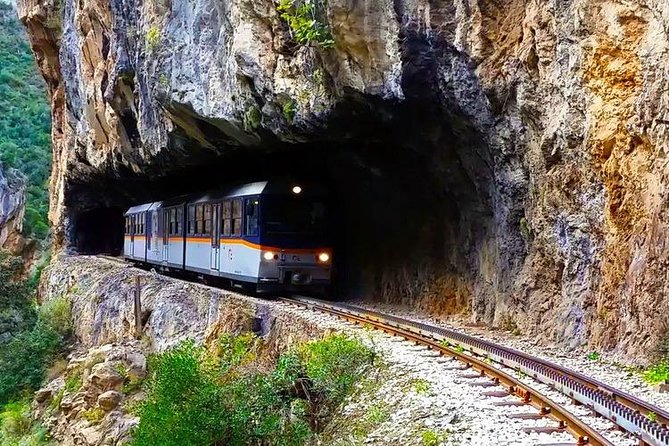
The ride is about 1 hour and 8 minutes across 22 km. And yes, it’s famous for a reason: the track threads the Vouraikos Gorge, passing streams, climbing through a narrow mountain corridor, and hitting the full “wow” set of views like bridges, tunnels, waterfalls, and cliffs. On steep grades, the system switches from regular rail to cog traction, which is part of the charm and part of why it feels like a real mountain railway, not just a scenic train ride.
Two practical notes from what you should expect on the ground:
- Seat comfort can be tight for adults, so if you’re tall or easily annoyed by narrow spacing, mentally plan for that.
- The car can get noisy, including from kids, so don’t plan on quiet contemplation. Plan on watching the views and letting the motion do the work.
Also, this is the part of the day where you should build in flexibility. One account described a situation where the train did not run due to a service interruption, and the operator had to adjust the plan with additional car time and alternate stops. If you want the train no matter what, ask your driver in advance what the backup looks like if service is disrupted.
Kalavryta Town Time: Traditional Mountain Life and WWII Memory
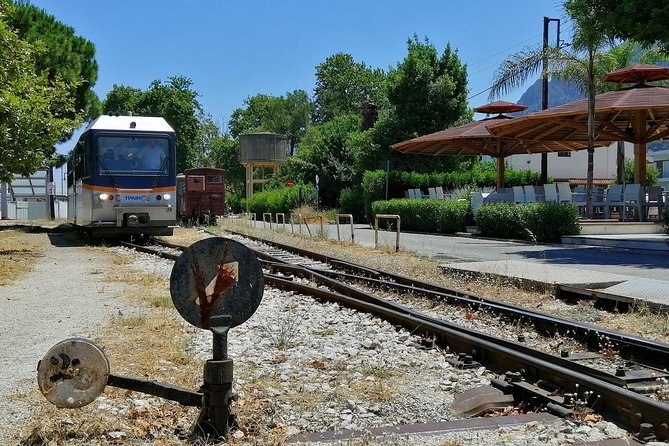
Kalavryta is where the day shifts gears. It’s a traditional mountain village, and you’ll get about an hour for museum and town time. This is when you should slow down. You’re not just seeing buildings, you’re stepping into a place shaped by geography and history.
Then you have the option to add more museum time with the Municipal Museum of the Kalavryta Holocaust. That museum admission is 5 EUR per person and takes about 30 minutes. It’s worth it if WWII history is part of what you came for, because the context is specific and heavy.
What the day is teaching you, in plain terms, is the consequence of the conflict around Kalavryta in early December 1943. The German 117th Jäger Division launched Operation Kalavryta to encircle Greek Resistance fighters in the mountainous area. The story includes the earlier execution of 78 German soldiers taken prisoner by partisans, and then the harsh retaliation ordered by General Karl von Le Suire on 10 December 1943, including the killing of the male population of Kalavryta. This stop is not meant to be rushed.
Practical tip: if this topic is tough for you, plan to take breaks. Step outside, breathe, and don’t let the schedule force you.
Other visits to ancient Corinth:
- From Athens: Ancient Corinth Day Trip with Canal & VR Guide★ 4.6 · 1,073 reviews
- Biblical Tour Letters ToThe Corinthians St Paul’s Footsteps 6Hour★ 5.0 · 1,065 reviews
- Private Biblical Tour Ancient Corinth & Isthmus Canal from Athens★ 5.0 · 762 reviews
- Athens: Corinth Canal, Mycenae & Nafplio Premium Guided Tour★ 4.7 · 322 reviews
Agia Lavra Monastery: 1821 Origins in a Real Mountain Setting
Next comes Agia Lavra Monastery, near Kalavryta on Mount Chelmos. The tour lists it as a key, quick visit of about 20 minutes, and admission is included.
Agia Lavra matters because it’s linked with the symbolic birthplace of modern Greece. The monastery dates to 961 AD, and it’s associated with the War of Independence through a famous moment: the call for Eleftheria or Thanatos, translated as freedom or death, was first heard on 25 March 1821 here, helping launch the revolution against the Ottoman Empire.
There’s also the older layer: the monastery was built in that era and it was burnt to the ground in 1585 by the Turks. So you get a mix of meaning and history in a short time.
What to do in a short visit like this: look up and around. Monasteries feel more powerful when you understand where they sit in the mountains, not when you just glance at buildings.
Mega Spilaeon Monastery in Its Cliff Cave
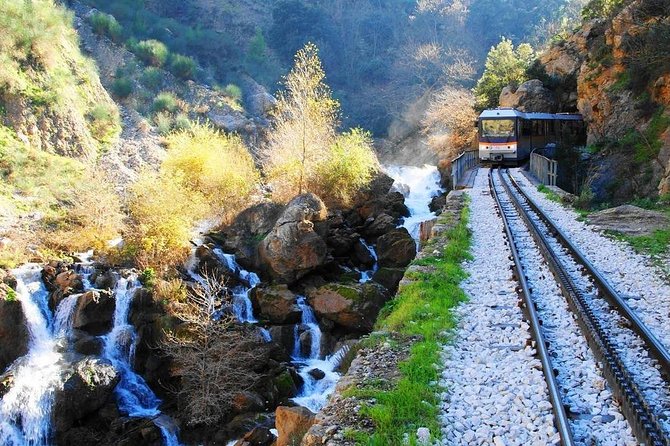
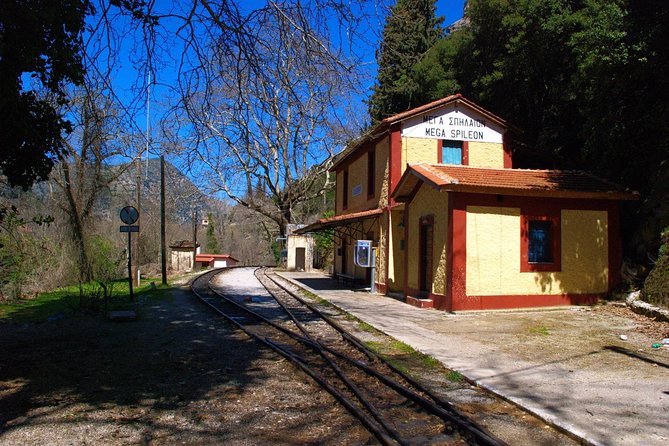
Mega Spilaeon is one of those places that makes you stop asking how old things are and start asking why humans built in such dramatic spots. The monastery sits in a large cave in a sheer cliff where the western slopes of Mount Chelmos drop toward the Vouraikos river gorge.
The tradition goes back further than Christianity. Pausanias is mentioned in the story as noting refuge for the daughters of Proetus in antiquity. Later, Christian hermits occupied the cave in the first Christian centuries.
Then comes the icon legend. The monastery is reputedly founded in 362 by the brothers Symeon and Theodore from Thessaloniki, who are said to have discovered in the cave the icon of the Theotokos painted by Luke the Evangelist, with help from a local shepherdess named Euphrosyne, honored as a saint for her role.
And then you get the WWII chapter tied to the massacre context. On 8 December 1943, the German 117th Jäger Division destroyed the monastery and executed 22 monks and visitors as part of reprisals that culminated a few days later with the Massacre of Kalavryta.
Admission is included here, and the stop is listed at about 45 minutes. Take your time. Caves and cliffs make sound behave differently than normal churches, and it helps to actually stand in the space for a bit, not just move through quickly.
Ancient Corinth: Paul’s City, Plus Real Ruins
By the time you reach Ancient Corinth, you’ll probably feel like the day has been swinging between engineering wonders, mountain rail, monasteries, and then back into ancient streets. That’s the charm of doing it in one organized loop.
Ancient Corinth (Archaia Korinthos) is described as one of the largest cities of Ancient Greece. The site is meaningful for Christians because Corinth appears in the New Testament through Saint Paul’s letters and also through the Acts of the Apostles describing his travels.
Admission for Ancient Corinth is not included. You’ll pay a seasonal ticket, with the dates listed as:
- Summer, from 1 April to 30 October: 15 EUR
- Winter, from 1 November to 31 March: 8 EUR
Time at the site is about 1 hour. That’s enough to get the big shape of the ruins and read the key plaques, but not enough to do it like you’re writing a thesis. Wear shoes with grip. Corinth is a “walk and look” site.
Return Ride: Why Going Back by Car Can Still Be Part of the Story
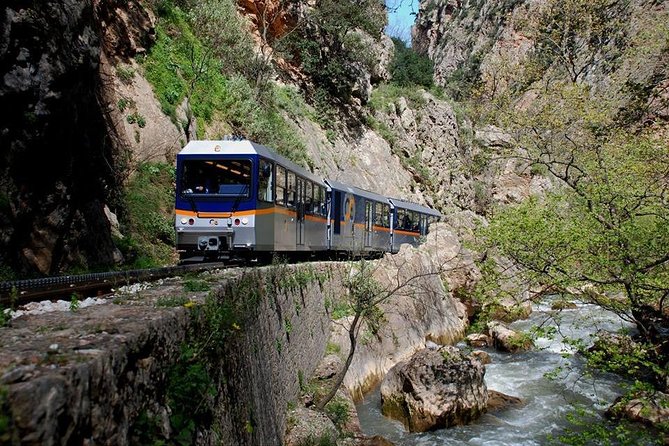
After Kalavryta, you return to Athens or Nafplio by car. This is more than just transit. The information you’re given highlights that you get another view of the mountain on the way back, and it also gives room to fit in Mega Spilaeon when the train segment runs on schedule.
Even if you’re tired, the return drive often feels like a bookend to the gorge experience: you keep seeing where the railway climbs, how the terrain funnels roads, and why these settlements clustered where they did.
If you do have to switch from the train to a car transfer due to interruption, the day can feel longer and the pacing changes. That’s not always avoidable, so I recommend planning with flexibility rather than treating every minute as guaranteed.
Who This Tour Fits Best (and Who Might Want a Different Day)
This private day trip is best for you if:
- You want a single day that covers Corinth Canal, a major scenic rail ride, and top monasteries, without the logistics headache of stitching it together yourself.
- You care about both ancient sites and more recent WWII-era memory tied to Kalavryta.
- You like the comfort of an air-conditioned private vehicle and an English driver who can adjust timing for photos and breaks.
It might not be your best match if:
- You’re allergic to extra ticket costs once you arrive. Several charges are explicitly not included.
- You need a calm, spacious ride on the cog train. Seating can be tight, and the carriage can be noisy.
Family tip: kids up to 11 can be free in the vehicle options listed, which can make the day more affordable for families than you’d expect. Seat sizes on the train are still something to think about.
Booking Smart: Questions to Ask Before You Go
Before you commit, I’d ask your driver or the operator three practical questions:
- What exact time window are you expecting for the cog train, and what is the backup plan if service is interrupted? (This matters most for the train day segment.)
- Are you planning to include the Holocaust municipal museum, and do you want to prioritize it over town time?
- Which season ticket rate will apply for Ancient Corinth on your travel dates?
Also, pack for a full day. Even with car comfort, you’ll be outside at canal viewpoints and monasteries, plus walking around ruins. Bring water and a light layer for mountain air.
And one small value detail: your driver provides books, maps, and an audio documentary. If you like context while you travel, that “extra narration” helps make the stops feel connected instead of random.
Should You Book This Private Kalavryta and Ancient Corinth Day Trip?
I think you should book it if you want a one-day Peloponnese hit that feels like more than the usual route. The private transport and English guidance are the real glue, and the Diakopto to Kalavryta cog train ride gives you the kind of mountain scenery you cannot easily recreate at your own pace.
You should hesitate if you’re very price sensitive, very focused on minimizing museum fees, or you strongly prefer roomy, quiet transit. The day is also emotionally serious around Kalavryta, so factor that into your expectations.
If you go in knowing what costs extra and accepting that the train is the centerpiece, this tour can be a standout day, not just a long one.
FAQ
How long is the Kalavryta CogTrain Anci.Corinth private tour?
The duration is listed as approximately 10 hours.
Do I get pickup from Athens or Nafplio?
Pickup and drop off are offered from/to your hotel or apartment in Athens center, up to 7 km. The tour is also available from/to Nafplio, with pickup timing arranged with the operator.
What is the starting time recommendation for the tour?
The recommendation is to start at 07:30 am or earlier in summer.
Is the cog train fee included?
No. The Diakopto to Kalavryta train fee is listed as 10 EUR per person one way, and you pay for it. For weekends or holidays, you are advised to purchase tickets online in advance.
Are museum or monastery admissions included?
Some are included and some are not. Agia Lavra Monastery and Mega Spilaeon Monastery have admission listed as included. The Municipal Museum of the Kalavryta Holocaust and Ancient Corinth admission are listed as not included.
How much is Ancient Corinth admission?
Ancient Corinth site and museum admission is listed as 15 EUR for summer dates (1 April to 30 October) and 8 EUR for winter dates (1 November to 31 March).
Is this tour private or shared?
This is a private tour, meaning only your group participates.
What vehicle options are available?
Options include a sedan (up to 3 adults or family of 4 with kids up to 11 free), a minivan (1 to 7 persons with 2 kids up to 11 free), and a minibus (1 to 14 persons with 2 kids up to 11 free). Price varies by group size and vehicle type.
What is the cancellation policy?
Free cancellation is offered up to 24 hours in advance for a full refund. If you cancel less than 24 hours before the experience’s start time, the amount paid is not refunded.
Latest from under the Acropolis




Ancient Corinth Tours, compared.
Ancient Corinth Day Trip with Canal & VR Guide
Read our review →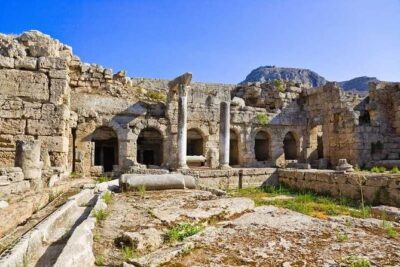
Biblical Tour Letters ToThe Corinthians St Paul’s Footsteps 6Hour
Read our review →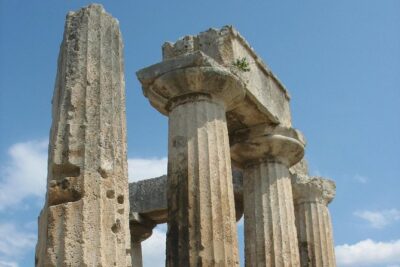
Private Biblical Tour Ancient Corinth & Isthmus Canal from Athens
Read our review →
Corinth Canal, Mycenae & Nafplio Premium Guided Tour
Read our review →
Private Tour of Apostle Paul’s Footsteps in Ancient Corinth
Read our review →
Corinth Half-Day Trip from Athens with Entrance Tickets
Read our review →Browse the lists this tour appears in