Reviewed · TOURS
Jewish tour and Athens sightseeing in 6 hours
Athens gets serious when you add Jewish history to the mix. In 6 hours, you get a private flow that starts with pickup, includes two synagogues in the Thission area, and then moves into the big classic sites around the Acropolis and central Athens. I like that the focus is not just dates, it is place, community, and why these buildings matter today. I also like the pace, the driver keeps you moving in an organized way so you do not lose your whole day to traffic or crowds. One possible drawback to plan for, though, is that synagogue and museum hours can affect what you can see in the exact time slot.
I especially value the combination of Jewish sites with the Acropolis and Syntagma Square classics. I have seen the same pattern show up in feedback on this tour, drivers like John and George were praised for being prompt, patient, and good at explaining what you are looking at without rushing you. The only thing I would watch closely is timing, because one disappointing experience came from arriving when the synagogue was closed, which meant more outside viewing than inside time.
In This Review
- Key highlights that make this tour work
- Jewish Athens plus the Acropolis in one 6-hour block
- Pickup, your English-speaking driver, and what “private” means here
- Thission synagogues: Etz Hayyim and Beth Shalom, side by side
- Jewish Museum of Greece: Hebrew books and WWII memory in one stop
- The Acropolis sweep: Propylaea, Nike, Parthenon, Erechtheion
- Syntagma Square classics, Parliament history, and neoclassical institutions
- Plaka stroll, National Garden breathing room, and Lycabettus views
- Price and logistics: when $421.44 per group makes sense
- Who should book this Jewish Athens tour, and who might want a different plan
- Should you book this 6-hour Jewish Athens tour?
- FAQ
- How long is the tour?
- How many people are in a group?
- Where does pickup happen?
- Is the tour in English?
- Are entrance fees included?
- Can the driver accompany you inside sites?
- What should I wear for religious or marble sites?
Key highlights that make this tour work
- A real Jewish-history thread runs through both synagogues and the Jewish Museum of Greece, not just a quick photo stop.
- Thission synagogue area is walkable in spirit, with the older Romaniote synagogue and the newer Sephardic one facing each other on the same street.
- Acropolis time is structured, with short stops at Propylaea, Temple of Athena Nike, Parthenon, and the Erechtheion.
- Central Athens classics fit in, including Parliament, the Tomb of the Unknown Soldier, and major neoclassical institutions.
- You finish with scenic payoff, from Kallimármaro stadium to Lycabettus Hill views.
- Driver-led guidance, not inside escort, keeps the pace efficient, with optional licensed guide support for inside interpretation.
Jewish Athens plus the Acropolis in one 6-hour block
This is a tight, well-packed half-day that tries to do two things well: show you the Jewish imprint on Athens, and then give you the big “first-time in Athens” landmarks. If you have a limited schedule, that combination can be a smart way to get context fast.
The route is built around movement. The tour description notes that you head directly to the Acropolis to avoid traffic and crowd buildup. That matters, because the Acropolis is one of those places where timing changes everything. You will also notice the itinerary uses short, targeted visits at major points, so you see the highlights without trying to read every stone like a textbook.
For the Jewish part, the tour does not rely only on one stop. It covers two synagogue settings plus the Jewish Museum of Greece, which gives you a fuller picture of community life and memory.
Before you book, here is what else runs from Athens:
- Athens: Acropolis & up to 5 Archaeological Sites Combo Pass
★ 4.2 · 13,904 reviews - Athens: Acropolis, Parthenon & Acropolis Museum Guided Tour
★ 4.8 · 9,316 reviews - The Acropolis, Parthenon & Acropolis Museum Guided Tour
★ 4.7 · 8,493 reviews - Athens: Cape Sounion & Poseidon Temple Sunset Half-Day Trip
★ 4.8 · 8,241 reviews
Pickup, your English-speaking driver, and what “private” means here
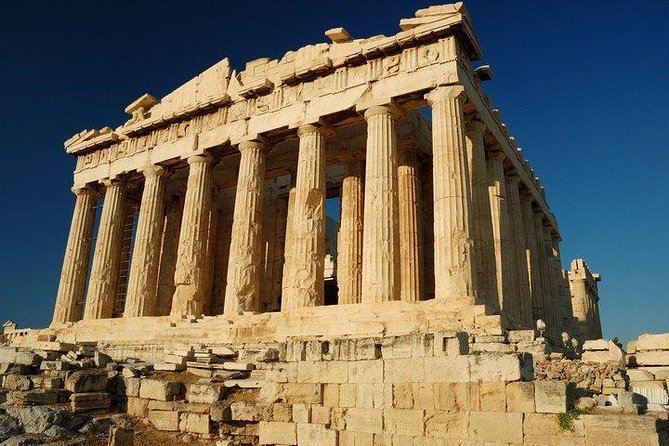
You are picked up from your Athens hotel or from Piraeus Port (depending on where you start). Then you ride in an air-conditioned vehicle sized for your group, and you get drop-off back at the same point. That round-trip convenience is a real value in Athens, where hop-on hop-off can mean walking and delays you did not plan on.
The driver is the key. This is not a driver who just transfers you. You get a professional English-speaking driver with good knowledge of history and culture of Greece, guiding you until you enter archaeological sites and museums. Tour drivers are not licensed to escort you inside those sites and museums. If you want a state-licensed guide inside, the provider says you can arrange that for an additional cost, based on availability.
From the feedback I saw, the best experiences came from drivers who stayed calm and explained in a way that helped you connect the dots. Names like Peter Carabellas and George came up in positive notes for promptness and patience. One review also praised that the guide did not rush people and even adjusted to group needs, which is exactly what you want on a 6-hour schedule.
One practical consideration: one review mentioned a vehicle feeling too small for four adults. This tour is listed as up to three people per group, so if you are traveling with more, double-check the group size and vehicle assignment so you do not feel squeezed for hours.
Thission synagogues: Etz Hayyim and Beth Shalom, side by side
The synagogue part is the heart of the Jewish Athens story, and you visit the Thission area where the two functioning synagogues sit on the same street facing each other.
First is the older Romaniote synagogue, Etz Hayyim (at 8, Melidoni Street, often associated with the name Ioannina Synagogue among older community members). It was built in 1904 and is smaller. The tour notes it is used today only during the High Holidays. The ground floor includes community offices in rooms originally intended for a Jewish school.
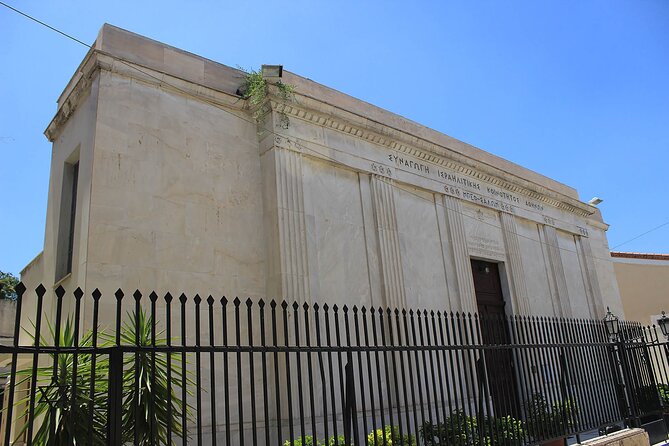
Across the street is the newer, larger Beth Shalom Sephardic Synagogue (at 5). It was built in 1935, made of white Pentelic marble, and features an austere Greek Revival style. Renovated in 1975, it is the one fully used today. The contrast in architecture alone helps you understand how different waves of Jewish life shaped Athens, both in size and in how the building speaks to the neighborhood.
Here is the key practical point: synagogue visiting depends on opening times. One review had a disappointing outcome when the synagogues were closed at the time the group arrived, which meant more outside viewing and less inside time. So if synagogue access is your top priority, plan to prioritize the earliest possible timing in the day and be ready to adapt if schedules shift.
Also, if a synagogue is open when you arrive, you may see the community in action. One feedback note mentioned the group even caught a Bar Mitzvah during their visit, which shows that these are living places, not just monuments.
Jewish Museum of Greece: Hebrew books and WWII memory in one stop
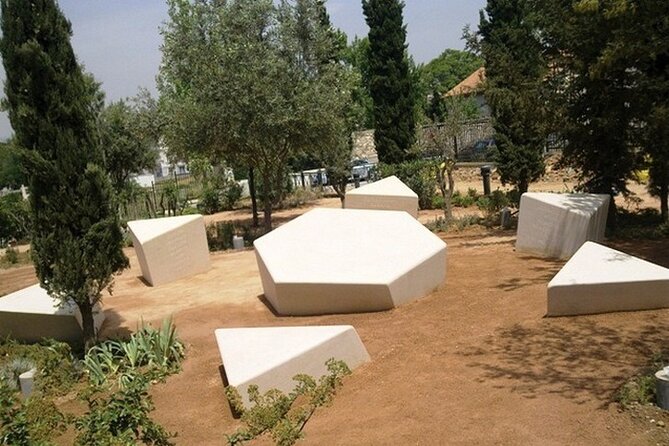
After the synagogues, the tour shifts to the Jewish Museum of Greece, where time slows down. You get 1 hour 30 minutes, and that longer window is a big deal because museums reward you when you can actually read.
The museum’s origin story is tied to the community. The idea was conceived in the 1970s, and it first opened in 1977, initially housed in a small room next to the synagogue. The tour highlights that many objects came from World War II salvaging, including artifacts, documents, and manuscripts from the 19th and 20th centuries.
One of the most specific pieces of history mentioned is the jewelry of the Jews of Thrace that was seized by Bulgarians in 1943. The tour data says it was returned to the Greek government after the Bulgarian king abdicated and after the establishment of the communist regime. That kind of detail is exactly why a museum visit adds weight beyond the street-level story.
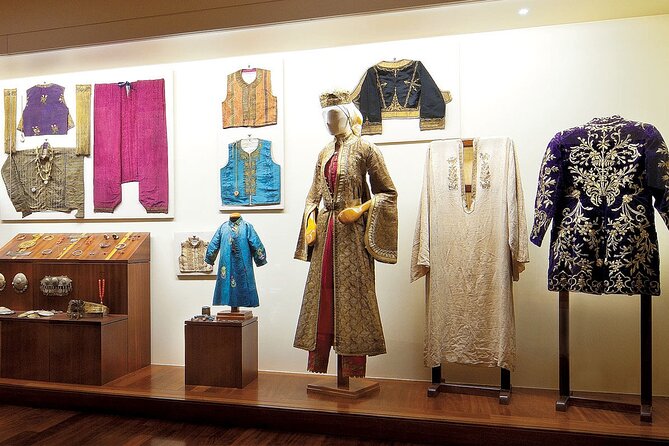
Inside, you will also find the kinds of things that help you feel the texture of Jewish life in Athens and beyond: rare books and publications, textiles, jewelry, and domestic and religious artifacts. The tour summary also calls out a collection of Hebrew books, which is a great stop for anyone who wants a hands-on sense of continuity.
Admission fees are not included, so you should expect to pay separately. If you want the smoothest entry, the tour provider suggests pre-purchasing admission, noting there can be availability issues.
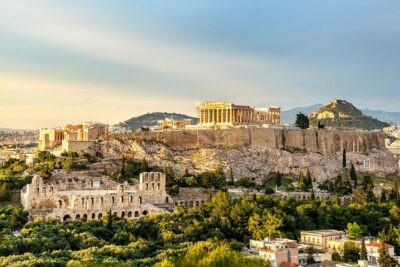
The Acropolis sweep: Propylaea, Nike, Parthenon, Erechtheion
After the Jewish stops, you go into the classic Athens zone. The Acropolis portion is built like a guided highlights tour, with short timed visits at major monuments.
You start with Propylaea, the monumental entrance building. The tour text notes the older gate structures existed, then the later Propylaea in the Periclean building program was erected in 437 to 432 BC under architect Mnesikles. The modern building is described as a pie-shaped framing of the entrance, carved from Pentelic marble.
Next is the Temple of Athena Nike. Even though the listed stop time is short, this temple is one of those “small but important” places because it sits right in the action around the entrance. The tour text ties it into the larger Propylaea description, reminding you that these monuments were designed as a unified sacred precinct.
Then you hit the star, the Parthenon. The tour description is clear about what you are looking at: built between 447 and 438 BC as part of the Periclean building project, dedicated to Athena Parthenos, and described as the finest expression of Athenian democracy at its peak. Architects named include Iktinos and Kallikrates, with sculptor Pheidias supervising the program and conceiving the sculptural decoration and the chryselephantine statue.
Time is tight, so do not expect a slow, museum-style explanation of every sculptural panel. But the advantage of a guided driver on a schedule is that you at least leave with a clear mental map: where you are in the overall complex and what each monument represents.
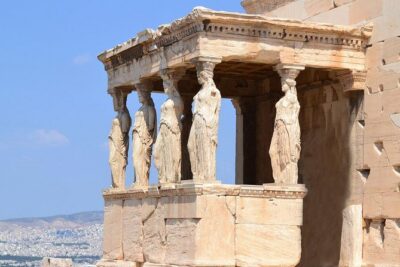
Finally, you visit the Erechtheion on the north side. This temple dates to 421 to 406 BC and is tied to a different mythical layer of Athens, including worship connected to Erechtheus and references tied to Athena and Poseidon’s dispute for the city. The tour also highlights the Karyatides porch, with the famous female statues that replaced columns. Even in a quick stop, seeing those figures helps you understand why this building is so remembered.
One note from feedback that could matter: one group said an Acropolis elevator issue affected their plan, and the alternative stop, the Acropolis Museum, was excellent. That does not mean it will happen to you, but it is a good reminder that access problems can pop up. When that kind of disruption happens, having a driver who can adapt is a plus.
Same hours, spent a different way in Athens:
- Acropolis: Premium Acropolis and Parthenon Guided Tour★ 4.8 · 5,208 reviews
- Athens: Mythology of Delphi, Museum and Arachova Guided Tour★ 4.7 · 5,102 reviews
- All Day Cruise -3 Islands to Agistri,Moni, Aegina with lunch and drinks included★ 5.0 · 4,958 reviews
- Athens, Piraeus, and Coastline: Blue Hop-On Hop-Off Bus★ 3.9 · 4,849 reviews
Syntagma Square classics, Parliament history, and neoclassical institutions
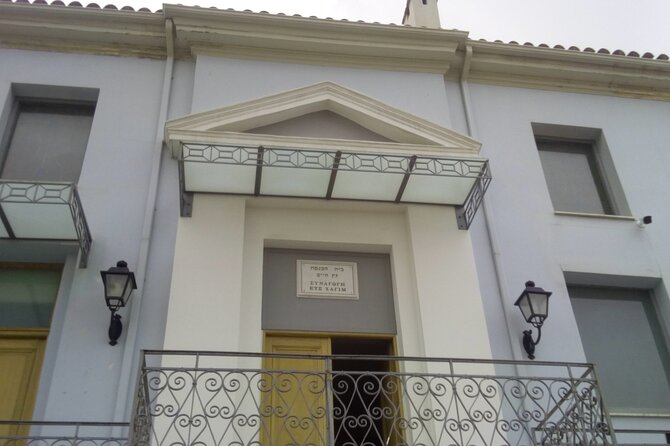
From the Acropolis area, the tour transitions into central Athens, with stops around the seat of modern government and the big public squares.
You visit the Hellenic Parliament, and the tour description gives you the “before it was Parliament” backstory. It notes the building was originally a palace for Kings Otto and George I, then became the Parliament and Senate building about a hundred years after its construction, and still houses the Hellenic Parliament today. The founding stone date given is 1836, and the building sits on Boubounistra Hill.
Right after that, you get the Monument to the Unknown Soldier in Syntagma Square, front of the Old Royal Palace. The tour says it is a war memorial sculpted between 1930 and 1932 by sculptor Fokion Rok, and it is guarded by the Evzones of the Presidential Guard.
There is also a stop for the Change of Guards. Even if you have seen this in other cities, Athens does it with real theatrical intensity, and here it functions like a time marker in the middle of your day.
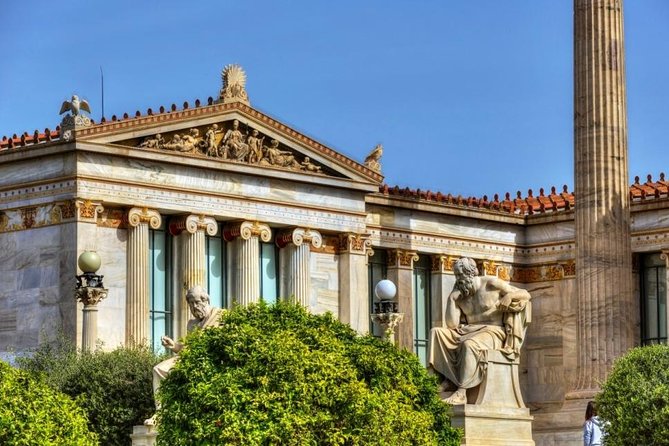
Then you move through the “education and culture” trio and beyond. The tour includes a short stop at the Academy of Athens (founded in 1926 as an Academy of Sciences, Humanities, and Fine Arts) and then the National and Kapodistrian University of Athens, inaugurated in 1837 and noted as the oldest higher education institution in the Modern Greek state, and the first university in the Balkans and Eastern Mediterranean area.
You also pass by the National Library of Greece, part of the neoclassical trilogy with the Academy and University. The tour text says it was built between 1887 and 1902, based on Danish architect Theophile Hansen, with Ernest Ziller as supervising architect. If you care about architecture, these quick stops are worth it because the buildings are more than backdrops, they are part of how modern Greece visually anchored itself.
Finally, you get a stop tied to the Old Parliament building area, where the National Historical Museum is housed and the tour description explains the building’s role in Greece’s modern political history.
All of this can feel like a lot, and it is. The value is that you get a coherent sense of what Athens looked like in the transition from ancient capital to modern state capital.
Plaka stroll, National Garden breathing room, and Lycabettus views
Not all Athens sightseeing needs to be stone-and-marble. After the central monuments, the tour includes a stop in Plaka, described as a hillside neighborhood with a village feel. It is known for narrow cobblestone streets, tiny shops, sidewalk cafes, and tavernas that stay open late. You are also near Anafiotika, with whitewashed homes that give an island-like vibe.
Then you get a pause in the National Garden of Athens, behind Parliament and Syntagma Square. This is not just a token green patch. The tour description says it covers over 160,000 square meters, with over 500 types of plants and trees from around the world. It was ordered by Queen Amalia in 1839 as Royal Gardens, opened to the public in 1923, and renamed the National Garden. The garden’s designer, Friedrich Schmidt, traveled globally searching for plant material, and the tour data says the Hellenic Navy helped with the assignment.
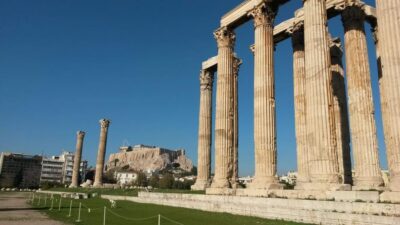
After that, you see the Kallimármaro stadium. This is the Panathenaea stadium, famous because it is built in marble, specifically Pentelic marble. The tour notes the marble changes color with daylight, starting cooler in the morning and shifting toward a bone-gold look later. That same marble is said to be used for major Acropolis monuments and the Temple of Zeus.
The final scenic payoff is Lycabettus (Mount Lycabettus). The tour data gives the altitude at 277 meters, and it stresses you get panoramic views of Athens and the coastline. Access is described as possible on foot, by funicular railway, or by car. The tour also mentions a small chapel of Saint George at the top. After the visit, you are dropped off at the same place you were picked up.
This ending makes sense on a 6-hour schedule. You go from ancient stone to modern institutions, then to neighborhoods and views. It helps you remember the day as more than a list.
Price and logistics: when $421.44 per group makes sense
The price listed is $421.44 per group, up to 3 people. That is not cheap on a per-person basis if you travel alone. But if you split the cost across up to three people, you are paying for a private vehicle, hotel pickup, and a driver who provides guided context through much of the day.
Where the value shows up is time. You get a structured itinerary with short stops that still carry meaning, and you avoid the coordination mess that can happen when you try to self-navigate all of this in one day.
Also, this is a Jewish-focused experience, so it is not just another generic Athens highlights tour. The inclusion of two synagogues and the Jewish Museum of Greece is the part that justifies the price for many people. The museum time is long enough to matter.
Two logistics items can affect your cost and pacing:
- Entrance fees to archaeological sites and the museum are not included.
- The driver is not licensed to escort you inside. If you want someone licensed to explain inside sites and museums, that is an add-on based on availability.
One more cost-related tip: the provider suggests you pre-purchase admission tickets because availability might be limited. They also say they can buy tickets for you in advance for a small service fee. For a day this packed, pre-planning entry helps keep your schedule from collapsing into lines.
Who should book this Jewish Athens tour, and who might want a different plan
This is a great fit if you want:
- A guided Jewish Athens story that does not treat the synagogues and museum as an add-on.
- A fast, organized sweep of the Acropolis and central Athens landmarks without renting a car or juggling transit.
- A day that includes both big famous monuments and quieter, human-scale stops like Plaka and the National Garden.
It might be less ideal if:
- Your top priority is guaranteed inside access to synagogues at a specific time. The tour depends on hours, and scheduling shifts can reduce inside viewing.
- You dislike tight timing. This is not a “sit and linger” day. You will get a lot, but you get it by keeping stops efficient.
- You are traveling with more than the group size listed. One feedback note mentioned vehicle tightness for four adults, so plan vehicle fit carefully.
If you want maximum depth at each site, you might consider adding a state-licensed guide for inside explanations. The provider says this can be arranged for an extra cost.
Should you book this 6-hour Jewish Athens tour?
If you have one half-day and you want Jewish history plus Athens classics, I think this booking is a solid choice. The Jewish Museum stop, with its WWII artifacts and Hebrew books, gives real substance, and the synagogue pairing around Thission helps you see the community story in geographic form. Add the Acropolis highlights and Syntagma Square set pieces, and you end up with a memorable day that feels like Athens rather than just a checklist.
If you do book it, do two things to protect your experience: arrive on time for pickup, and pre-plan admission tickets for the sites that charge. Timing and openings are the biggest swing factors in a schedule this full.
FAQ
How long is the tour?
The duration is about 6 hours.
How many people are in a group?
The price is per group for up to 3 people.
Where does pickup happen?
Pickup is available from your Athens hotel or from Piraeus Port. Airport transfers are available on request for an extra cost.
Is the tour in English?
Yes, it is offered in English.
Are entrance fees included?
No. Entrance fees for archaeological sites and the museum are not included.
Can the driver accompany you inside sites?
The driver guides you until you enter sites and museums, but tour drivers are not licensed to escort you inside. A state-licensed tour guide can be arranged for an extra cost, subject to availability.
What should I wear for religious or marble sites?
The dress guidance is shoulders and knee must be covered for religious and marble sites.
Latest from under the Acropolis





Tours, compared.
Acropolis, Parthenon & Acropolis Museum Guided Tour
Read our review →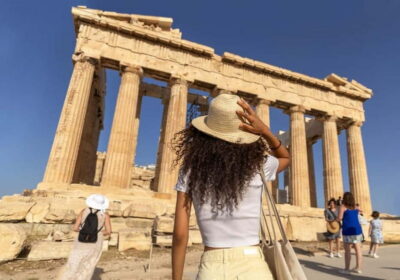
The Acropolis, Parthenon & Acropolis Museum Guided Tour
Read our review →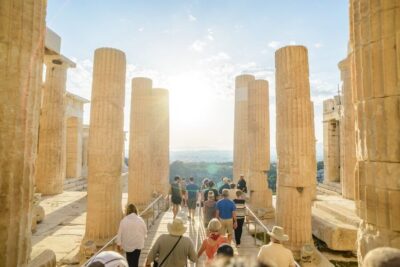
Acropolis: Premium Acropolis and Parthenon Guided Tour
Read our review →
Mythology of Delphi, Museum and Arachova Guided Tour
Read our review →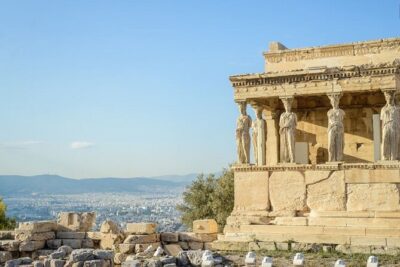
Acropolis and Parthenon Guided Walking Tour
Read our review →