
Reviewed · ANCIENT CORINTH TOURS
Full Day Biblical Ancient Corinth Canal Mycenae Epidauvro Nafplio
Corinth to Nafplio in one story-packed day. I love the private door-to-door pickup and the calm, no-rush way the driver keeps the history straight. I also love the 999-step climb at Palamidi, which turns the final hours into a huge payoff. One consideration is that this is a long day, and several key stops are ticketed, so you will want comfortable shoes and a little extra budget for admissions.
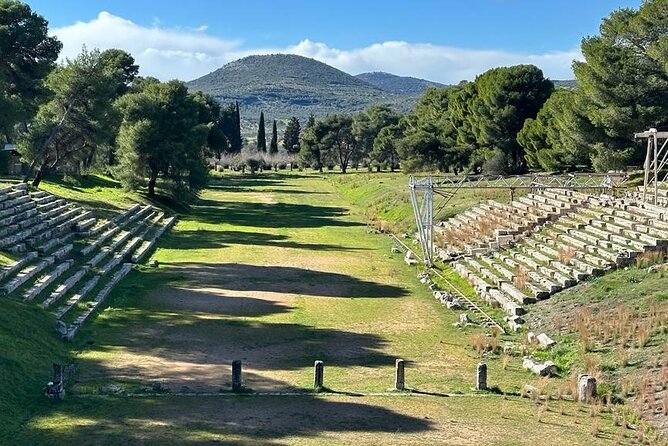
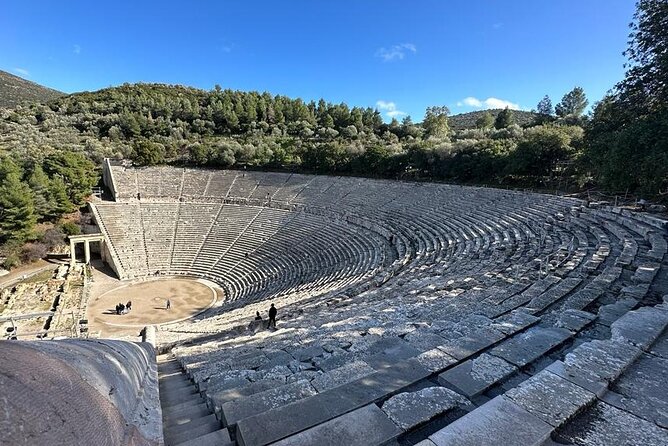
If you like sites where the New Testament meets Bronze Age stone walls, this route hits the sweet spot. You will bounce between viewpoints, excavations, and museums, with breaks built in for walking and photo stops. Do note that the detailed stop list provided here does not show a separate Epidavros stop, even though it appears in the tour name.
In This Review
- Key things I’d zero in on before you go
- A 9 to 10 Hour Route That Makes Ancient Greece Feel Close
- Corinth Canal and the 2000-Year Dream of Cutting the Peloponnese
- Kenchreai and the Bible Stop at Cenchreae (Acts 18:18)
- Ancient Corinth’s Bema: Gallio’s Refusal and the Power of a Platform
- Museums, Apollo, and Acrocorinth: How to Read the Site Without Getting Lost
- Mycenae’s Lion Gate and the Tomb That Feels Like Architecture
- Nafplio’s Palamidi: The 999 Steps and the Best Reward for Your Legs
- Nafplio Old Town, Sea-Side Lunch, and the City That Used to Be Capital
- Bourtzi, Syntagma Square, Acronauplia, and the Bavarian Lion
- Price and Logistics: What You Get for 277.09 Per Person
- Should You Book This Corinth, Mycenae, and Nafplio Day Trip?
- FAQ
- How long is the full day tour?
- Does the tour include hotel or port pickup in Athens?
- Is the tour private?
- Are attraction entrance fees included?
- What vehicle do we travel in?
- Can I cancel for a full refund?
Key things I’d zero in on before you go
- Corinth Canal’s giant idea: a dream that goes back about 2,000 years, tied to the Greek isthmus problem.
- Biblical Kenchreai: the Paul stop at Cenchreae, with Acts 18:18, and the mention of Phoebe.
- Ancient Corinth’s Bema: the elevated speaking platform connected with Paul’s trial scene and later transformation in Byzantine times.
- Mycenae’s star sights: Cyclopean walls, the Lion Gate, and the Treasury of Atreus tomb.
- Palamidi views in walking form: a fortress climb with local talk of 999 steps, plus big Argolic Gulf panoramas.
- Driver-led history, car comfort: WiFi, A/C, bottled water, and hands-on explanations from the people driving you.
A 9 to 10 Hour Route That Makes Ancient Greece Feel Close
This is a full-day circuit, roughly 9 to 10 hours, built around the Peloponnese’s most story-heavy highlights. You start with Corinth’s dramatic geography, then move into Mycenae’s Bronze Age power, and finish in Nafplio’s old-town charm and fortresses.
Because it is a private tour, you can usually pace the day around your energy level, not just the slowest person in the group. Cars are modern and first-class, with WiFi, A/C, and bottled water, which matters when you are riding between sites in the heat.
It is also a long day of walking and stairs, even though every stop has a clear purpose. If you know you get tired fast, you will still have options, like spending more time at the view points that make the day worth it.
More trails following Paul through Greece:
- Biblical Tour Letters ToThe Corinthians St Paul’s Footsteps 6Hour
★ 5.0 · 1,065 reviews - Private Biblical Tour Ancient Corinth & Isthmus Canal from Athens
★ 5.0 · 762 reviews - Private Tour of Apostle Paul’s Footsteps in Ancient Corinth
★ 5.0 · 275 reviews - Paul”s Footsteps Ancient Corinth Biblical Tour
★ 5.0 · 184 reviews
Corinth Canal and the 2000-Year Dream of Cutting the Peloponnese
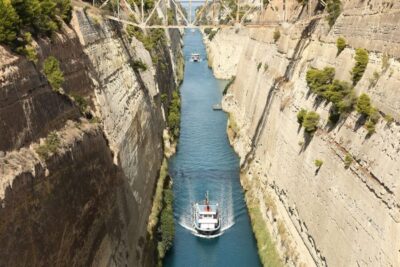
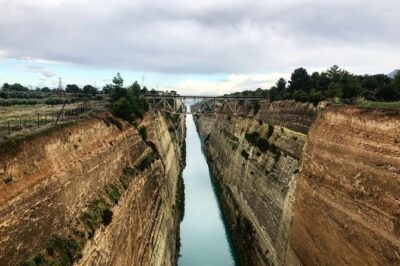
The day starts at the Corinth Canal, a waterway that slices across the narrow isthmus, linking the Gulf of Corinth and the Saronic Gulf. It is one of those places where the idea feels almost too logical, which is exactly why people kept imagining it for centuries.
What I like about starting here is that it explains the big geography problem Greeks faced long before ships could shortcut the way you can today. Before the canal, ships traveling between the Aegean and Adriatic regions had to sail the long route around the Peloponnese, adding about 185 nautical miles.
You also get a strong “how they tried to solve it” thread. The information points to Periander around 602 BC, who is tied to the idea of the canal, and to the diolkos, a stone road that let ships be moved over wheeled platforms. That story makes the canal feel less like a random industrial landmark and more like the final chapter of an old struggle.
Practical note: the canal stop is short, about 15 minutes, so treat it like a fast orientation and photo break. Bring your camera out early, since later you will want the energy for stairs and longer walks.
Kenchreai and the Bible Stop at Cenchreae (Acts 18:18)
Next you head to the Corinthia region area of Kenchreai, named for the ancient port town of Kenchreai, also spelled Cenchreae. This is where the day shifts from geography to scripture and local tradition.
You get the biblical angle tied to Acts 18:18, which says Apostle Paul stopped at Cenchreae on his second missionary journey. The details here include Paul having his hair cut to fulfill a vow, and the local connection to Priscilla and Aquila later in the story.
I like stops like this because they make the Bible feel anchored to real places, not just reading-room words. Even if you are not a deep scripture reader, the fact that Paul’s travel route touches an actual port gives the day a personal, human feel.
This stop is also listed as about 15 minutes, with admission ticket free. That makes it a low-effort way to add meaning before you move into ticketed archaeological areas.
Ancient Corinth’s Bema: Gallio’s Refusal and the Power of a Platform
Ancient Corinth is where the day gets serious, and you will start at the heart of the Paul-linked tradition. The stop description connects Paul’s time in Corinth to the trial scene before the proconsul Lucius Junius Gallio Annaeanus, often called Gallio.
The key detail is Gallio’s refusal to judge what he saw as a religious dispute among Jews. Tradition places the site of Paul’s trial at the Bema, an elevated rostrum centered in the Roman forum area where officials addressed the public.
What makes this more than a “fun fact” is the afterlife of the space. The Bema was transformed into a Christian church during Byzantine times, meaning this one structure carried layers of meaning across eras.
The downside: Ancient Corinth involves walking through exposed archaeological areas. The stop length listed is about 45 minutes, so you will want your shoes on and your expectations ready for quick context rather than a slow museum pace.
Admission for this section is not included, so plan on buying tickets on the day if you want to go inside the main archaeological zones.
Museums, Apollo, and Acrocorinth: How to Read the Site Without Getting Lost
You will then bounce between a few Corinth highlights that each do a job.
First, there is the Archaeological Museum of Ancient Corinth, described as built between 1931 and 1932 to display excavations from the site. The museum sits within the archaeological site area, and the description notes key nearby elements like Hadgimoustafa spring, the Lechaion Road, basilica, the Fountain of Peirene, stoa, agora, and Odien.
This is helpful if you want help turning scattered ruins into a coherent “what am I looking at?” picture. Museums are best when you use them as a translator for the outdoor stones, not as a separate day plan. The museum stop listed is short, about 30 minutes, so I would treat it as a setup for what you will see next.
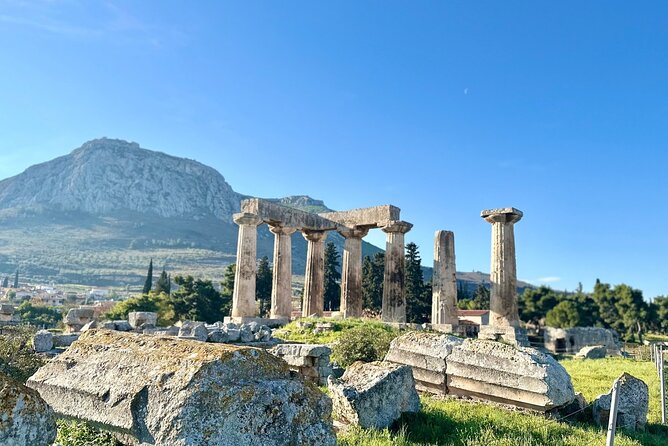
Then you move toward the Temple of Apollo, described as dating to around 550 BC, with monolithic columns described as rare for the ancient world. It is listed as about 10 minutes, and tickets are not included, so this is more “spot, understand, move on” than a long sit-down.
Finally, you climb to Acrocorinth, the upper acropolis area that overlooks the ancient city. The fortress is built on a monolithic rock, repeatedly used as a last defense because it controlled access to the Peloponnese peninsula.
If you only have time to absorb one “why Corinth matters” idea from this stretch, it’s the strategic control of land routes and water routes. Acrocorinth helps you see why so many powers fought for this view.
More visits to the citadel at Mycenae:
- From Athens: Small-Group Mycenae, Epidaurus & Nafplio Trip★ 4.8 · 2,805 reviews
- From Athens: Mycenae, Epidaurus & Nafplio Full-Day Tour★ 4.5 · 2,530 reviews
- Mycenae, Epidaurus and Nafplio Tour from Athens★ 4.6 · 2,201 reviews
- 4-Day Classical Greece Tour: Epidaurus, Mycenae, Olympia, Delphi, Meteora★ 4.5 · 732 reviews
Mycenae’s Lion Gate and the Tomb That Feels Like Architecture
Mycenae is the big emotional turn of the day. The fortified citadel is tied to the mythical King Agamemnon, and the site is described as impressive and well preserved, with standout features like Cyclopean walls and the Lion’s Gate.
You will spend about an hour here, and admission for the main monuments is listed as free for Mycenae overall. That said, individual structures like the Lion Gate are listed as not included, so expect a mix and be ready with tickets if you want everything inside.
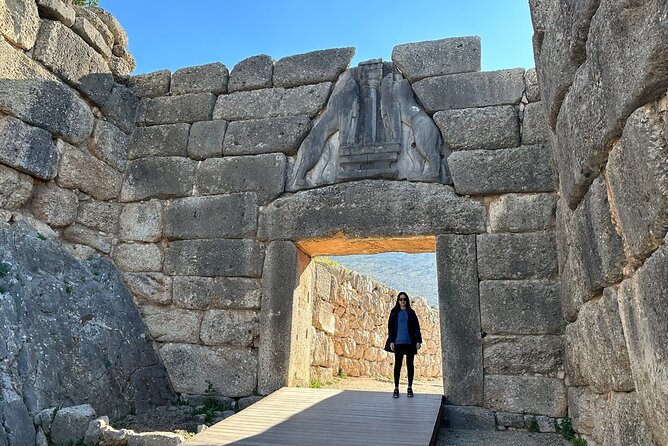
The Lion Gate is one of the most famous entrances in Bronze Age Greece. The description emphasizes the two heraldic lionesses (or lions, depending on how the relief is interpreted), and it also points out that this relief is the sole surviving monumental piece of Mycenaean sculpture.
What I find especially useful is the idea that this gate is not just decorative. It is named as the main entrance of the citadel, erected around the 13th century BC, about 1250 BC, and it gives you a visual language for power.
You also visit the Archaeological Museum of Ancient Mycenae area, described as covering the fortified acropolis plus funerary and habitation sites, with visible monuments dating mostly to the peak flowering between about 1350 and 1200 BC.
Then comes the Treasury of Atreus, also called the Tomb of Agamemnon. This is a tholos, or beehive tomb, built around 1250 BC. The description includes huge technical detail, like a stone lintel weighing about 120 tons and the tomb dimensions.
That scale is what makes the place feel like architecture, not just a grave. You can stand there and sense how much planning it took to build something that could survive for centuries.
Practical note: Mycenae is outdoors and structured for short, concentrated viewing. If you want to slow down for photos, do it after you get your bearings near the major entrances.
Nafplio’s Palamidi: The 999 Steps and the Best Reward for Your Legs
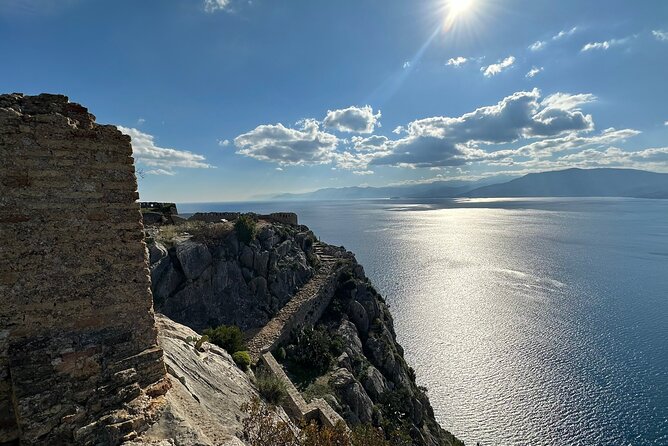
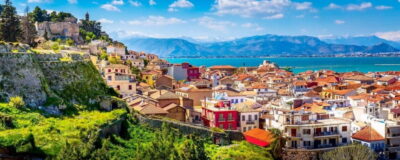
After Mycenae, you roll into Nafplio, a city that is all about old-town walking and fortress views. The Palamidi Castle stop is where the day gets cinematic.
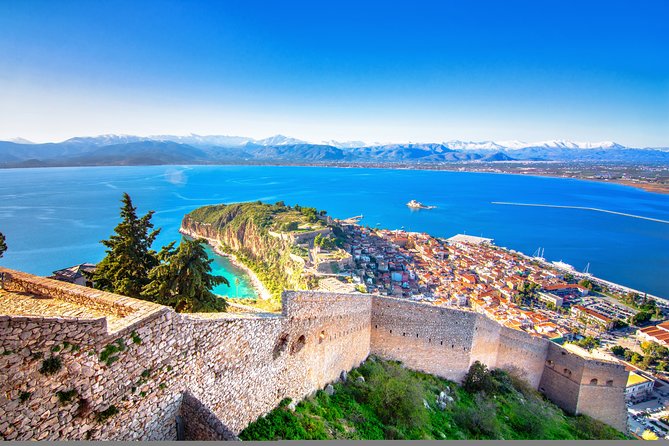
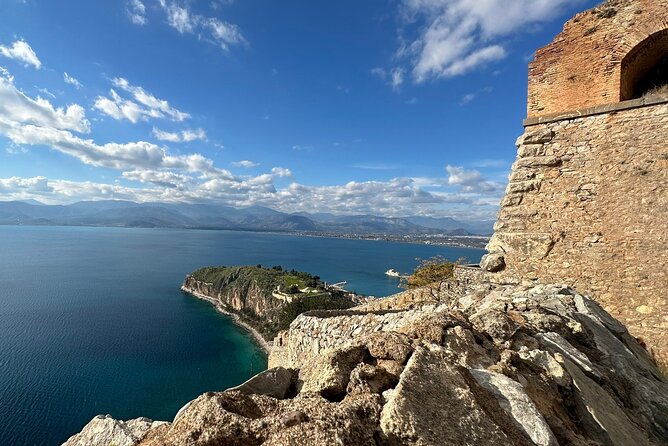
Palamidi is described as one of Greece’s best-preserved castles, built by the Venetians during their second occupation, from 1686 to 1715. It sits on a 216-meter high hill east of Acronauplia, and the description calls out views over the Argolic Gulf, Nafplio, and the surrounding country.
Then there is the famous stair count. You will hear about 913 steps on the winding stair from town to fortress, and locals say there are over 1,000 steps, or 999 steps to the top. Either way, you should treat this climb as a real workout.
Here is the simple logic I use: if you are okay with stairs for the first 20 to 30 minutes, you will probably love the payoff. From up there, the whole city layout makes more sense, and photos come easier.
The stop length is listed at about 30 minutes. That usually means you get enough time to walk up, take in the views, and not feel rushed on the way down.
Nafplio Old Town, Sea-Side Lunch, and the City That Used to Be Capital
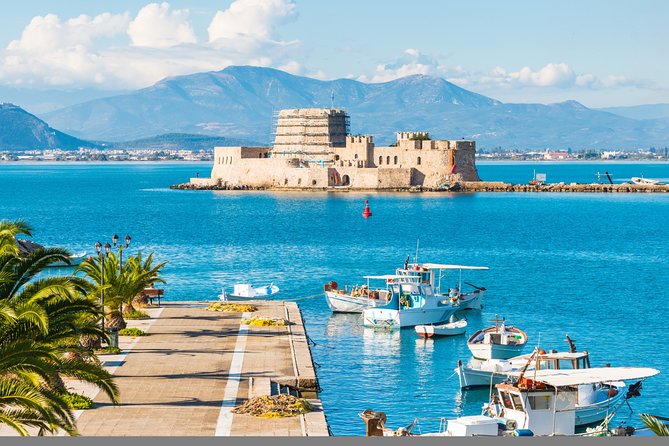
Nafplio old town is where the day softens. The description talks about cobbled streets, flowered balconies, and steps that pop you into different neighborhoods quickly.
You also stop near Syntagma Square, described as the center point of the old town and a place where the city’s energy feels open and easy to orient yourself. The vibe here is classic Peloponnese, more relaxed than Athens, and the architecture tells a story through layers: Venetian, neoclassical, and oriental elements.
Lunch is scheduled at a traditional tavern by the sea, and the meal cost is not included. If you care about a specific dietary requirement, this is the time to bring it up early, because you do not want to negotiate while hungry and standing in a restaurant doorway.
One smart move: save your major shopping or souvenir browsing for after you see the fortresses. Once you have the views, you are more likely to appreciate what you are buying, not just grab something quickly to fill the time.
Bourtzi, Syntagma Square, Acronauplia, and the Bavarian Lion
Bourtzi is the postcard moment most people want, and it comes next. The description says it is a small Venetian-built fortress from 1473, called Castello dello Soglio, and later called Bourtzi by the Ottomans, meaning fortress.
It sits on a small islet of Agioi Theodoroi and has been used as a prison and later as a luxury hotel. Today, it is described as the perfect setting for Nafplio sunsets, and you can reach it by boat in less than 10 minutes.
Even if you do not time the sunset, you will still get the “this is why Nafplio looks so good in photos” effect. It is also a nice change of pace from stone ruins to waterfront views.
You then return toward Syntagma Square again for the Parliament and local historical notes. The description includes a story about Kapodistrias era governance and how the Parliament of the newly formed Greek state was built, with the Municipal Gallery of Nafplio on the ground floor today.
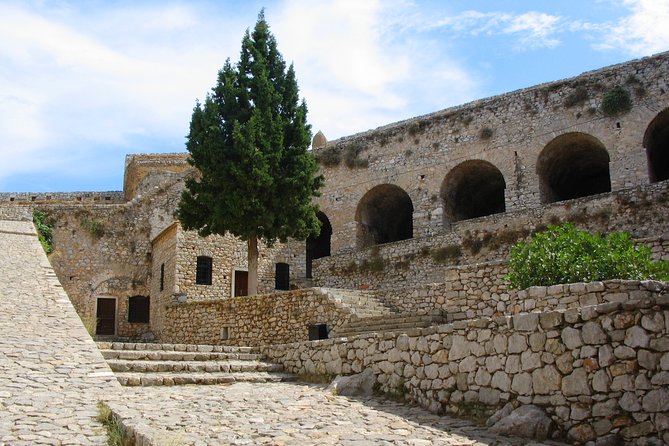
After that, the stop at Acronauplia Fortress is about origins. It is described as the oldest part of Nafplio, transformed into part of the fortifications when Venetians and Franks arrived. It also notes that part of it was used as a prison, and later a hotel complex was built because of the view.
Finally, you end with the Lion of the Bavarians. The description is very specific: the lion is carved into rock above Michael Iatrou Street, with a small park beneath. It was made by German sculptor Christian Ziegel, commissioned by King Louis, father of Otto.
The story includes the Bavarian soldiers who died in Nafplio in 1833 from a typhoid epidemic. The local nickname story also says locals blamed bitter foods instead, so you get a mix of official history and street-level humor.
These last stops matter because they tie the day’s themes together. You started with geography that controlled trade and travel, then moved into empires that controlled territory. Nafplio adds the final layer, showing how later governments shaped the same dramatic coastline with fortifications and monuments.
Price and Logistics: What You Get for 277.09 Per Person
At $277.09 per person for a 9 to 10 hour private day, the value is mostly in time and transportation. You are not doing this as a DIY hop between sites, and you are paying for someone to manage the driving, the routing, and the timing.
You also get real comfort. The car includes WiFi, A/C, and bottled water, which makes the long road segments feel less draining. Pickup and drop-off are also included from your Athens hotel, Airbnb, or the port, so you are not trying to coordinate taxis at the start and end of a long day.
The tour is private, and there is customization possible. Small groups of 1 to 3 typically travel in a luxurious sedan, while groups of 4 to 7 use comfortable mini vans. That small-group setup usually means you can ask for slight adjustments in priorities, like spending more time at Mycenae’s most important monuments and trimming the less time-sensitive viewpoint stops.
What you should budget for separately is admissions and meals. Entrance fees are not included for attractions, and lunch in Nafplio is scheduled but not included. Also, the tour data says a licensed guide is not included to accompany you into archaeological sites. Your driver will explain history, but if you want an additional level of official site guiding, that would be extra.
One more practical consideration: some places get crowded at peak hours. If the sites are busy, the best strategy is to prioritize the few moments that matter most to you, then use the remaining time for viewpoint photos.
Finally, because one entry in the provided information disputes whether the ride is truly private in all cases, I suggest confirming your exact vehicle arrangement for your specific date and group size. It is a small step that can prevent a frustrating surprise.
Should You Book This Corinth, Mycenae, and Nafplio Day Trip?
Book it if you want one day that connects three different worlds. Corinth gives you the biblical and Roman-era anchor, Mycenae gives you the Bronze Age power and architecture, and Nafplio gives you the reward view and the relaxed waterfront finish.
It is especially a good fit for couples or small groups who prefer a private driver and clean pacing. If you are the type who hates rushing through ruins and prefers real context, a driver like Gianny, Chris, Yiannes, Costas, Ioannis, Michael, or Dimitrios is the kind of experience you are hoping for, based on the strengths that show up in the provided feedback.
Skip it if you are trying to do a very slow, museum-heavy day. This route is efficient, and even though the stops include time windows, you will be walking and shifting gear often.
If you book, do this prep: wear shoes that handle uneven stone, bring a light layer for sun and breeze, and set a personal priority list before you go. Pick your must-sees in Ancient Corinth, your must-sees in Mycenae, and your must-see photo angle in Palamidi. That turns the full day into a win, even when crowds show up.
FAQ
How long is the full day tour?
It runs about 9 to 10 hours, depending on the day.
Does the tour include hotel or port pickup in Athens?
Yes, pickup is offered from Athens hotels, Airbnb residences, or the port, and the driver returns you to the same place or to a point you prefer.
Is the tour private?
Yes. It is described as a private tour, with only your group participating.
Are attraction entrance fees included?
No. Entrance fees for attractions are not included, and a meal in Nafplio is also not included.
What vehicle do we travel in?
Transportation is in modern, first-class private vehicles with WiFi, A/C, and bottled water. Groups of 1 to 3 typically ride in a sedan, and groups of 4 to 7 in a mini van.
Can I cancel for a full refund?
Yes. You can cancel up to 24 hours in advance of the experience for a full refund.
Visiting Ancient Corinth
- From Athens: Ancient Corinth Day Trip with Canal & VR Guide
★ 4.6 · 1,073 reviews - Athens: Corinth Canal, Mycenae & Nafplio Premium Guided Tour
★ 4.7 · 322 reviews - Athens: Corinth Canal, Mycenae and Nafplio Day Tour
★ 4.3 · 252 reviews - Corinth Half-Day Trip from Athens with Entrance Tickets
★ 4.5 · 242 reviews
Nafplio and Its Fort
- Athens: Ancient Corinth & Nafplio Full Day Trip with Swim
★ 4.8 · 531 reviews - Mycenae and Nafplion Day Trip from Athens with Official guide
★ 4.5 · 501 reviews - Argolis: Full-Day Tour in Mycenae & Nafplio
★ 4.2 · 350 reviews - 3-Day Classical Greece Tour: Epidaurus, Mycenae, Nafplion, Olympia, Delphi
★ 4.5 · 342 reviews
Latest from under the Acropolis




Ancient Corinth Tours, compared.
Ancient Corinth Day Trip with Canal & VR Guide
Read our review →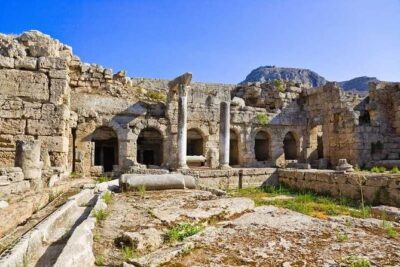
Biblical Tour Letters ToThe Corinthians St Paul’s Footsteps 6Hour
Read our review →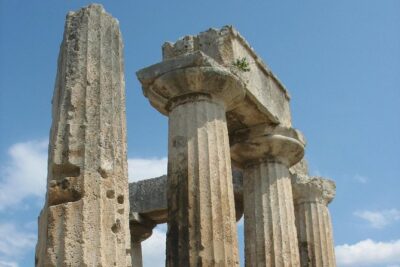
Private Biblical Tour Ancient Corinth & Isthmus Canal from Athens
Read our review →
Corinth Canal, Mycenae & Nafplio Premium Guided Tour
Read our review →
Private Tour of Apostle Paul’s Footsteps in Ancient Corinth
Read our review →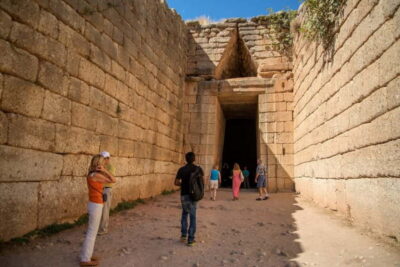
Corinth Half-Day Trip from Athens with Entrance Tickets
Read our review →Browse the lists this tour appears in