
Reviewed · COOKING CLASSES
“Fetaverse” Private Cooking Class in Koukaki Athens
Feta gets a full sensory makeover. In a small Koukaki studio, you’ll start with a playful feta vs white cheese challenge, then cook your way into the story of Greece’s most famous salty cheese.
You’ll come away loving the hands-on pace and the sense that the food has meaning, not just flavor. The menu hits real classics too, from tyrokafteri to spinach pies and the lunch finale.
What I like most is the way the class uses food as a teaching tool. You’re not just listening, you’re tasting and cooking while you learn why feta is a PDO product and how it connects to land, climate, and Greek tradition.
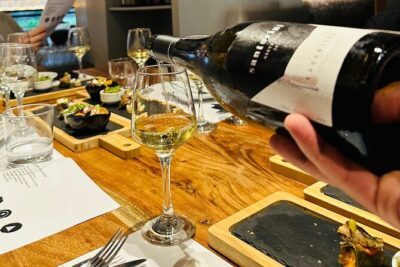
My other favorite part is the full shared meal, where you can choose between homemade moussaka or giant beans in tomato sauce, plus local wine or beer.
One consideration: this is a feta-centered experience, so if you dislike feta or spicy flavors, you may want to think twice. Also, the class runs about 3 hours, so plan to eat earlier or keep the rest of your day flexible.
In This Review
- Key Things That Make Fetaverse Worth It
- Where Fetaverse Starts in Koukaki
- The Warm Welcome and the Icebreaker That Actually Works
- The Feta vs White Cheese Challenge (Your Senses Put on Trial)
- Learning Feta’s Story While You Cook It
- Hands-On Cooking: Tyrokafteri, Spinach Pies, and Greek Salad
- Tyrokafteri, a spicy feta spread with peppers
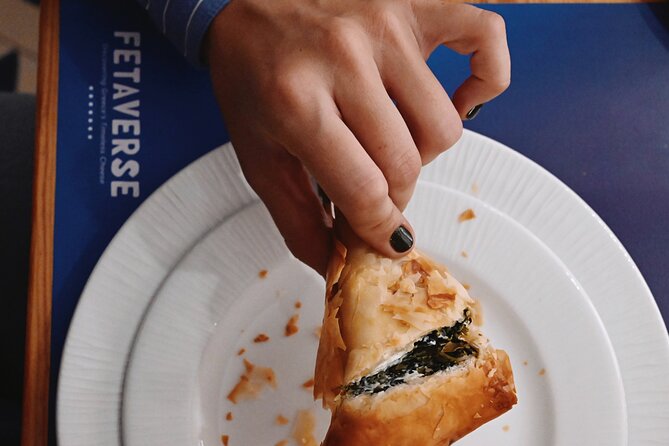
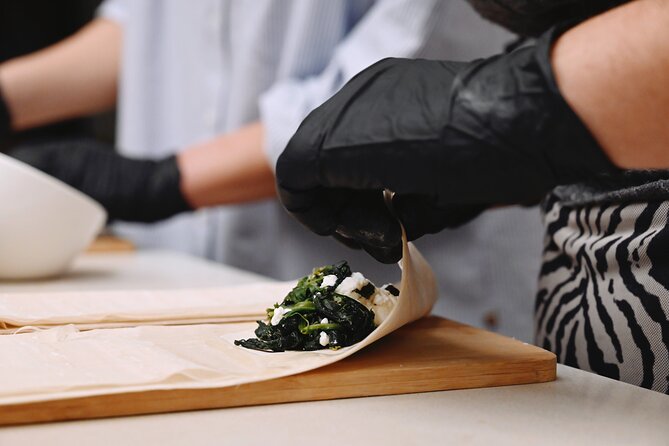
- Mini spinach pies
- Greek salad with seasonal ingredients
- Set the Table and Feast: Moussaka or Gigantes, Plus Wine and Halva
- Starters
- Main course choice
- Drinks and dessert
- What You’re Really Getting for the Price in Athens
- Who Should Book Fetaverse (And Who Might Skip It)
- Practical Tips So You Get More From the Class
- Should You Book Fetaverse in Koukaki?
- FAQ
- How long is the Fetaverse cooking class?
- What time does it start?
- Where is the meeting point?
- What is the price per person?
- Is the class offered in English?
- How big is the group?
- What dishes do we cook or prepare?
- What are the main meal options?
- Is there dessert and something to drink?
- Are service animals allowed?
Key Things That Make Fetaverse Worth It
- Feta blind test first: You’ll taste and compare cheeses without being told which is which.
- PDO and Greek history, but in food form: You’ll learn the story of feta while you’re actively cooking.
- Hands-on cooking with clear outcomes: Tyrokafteri, mini spinach pies, and Greek salad are all part of the work.
- A real lunch table, not just snacks: Bread with olive oil, a full main, and homemade Greek halva.
- Small group size: Capped at 15 travelers, so you’re not lost in a crowd.
- You get choices at the main course: Moussaka or vegetarian-style gigantes (giant beans in tomato sauce).
Where Fetaverse Starts in Koukaki
Fetaverse takes place in Koukaki, a handy Athens neighborhood for food lovers. The meeting point is Veikou 93, Athina 117 41, Greece, and it’s listed as near public transportation, so you should be able to reach it without a car plan.
The class runs at 12:00 pm and lasts about 3 hours. That timing is great if you want an experience that still leaves you time to wander Athens afterward, especially since you’ll get a full meal included.
It’s designed as an intimate, small-group format with a maximum of 15 travelers. In practice, that matters because you can actually talk with the group and get real help while cooking, not just watch from the sidelines.
More Athenian benches to work at for a morning:
- Athens: Classic Cooking Class with Market Visit and Wine
★ 5.0 · 1,101 reviews - Athens: Food Market Visit and Cooking Class with Wine
★ 4.9 · 1,087 reviews - Greek Cooking Class in Athens Including Rooftop Dinner with Acropolis View
★ 5.0 · 826 reviews - Greek Small-Group Athens Cooking Class & Dinner
★ 5.0 · 574 reviews
The Warm Welcome and the Icebreaker That Actually Works
Right at the start, you’ll get a warm welcome plus a fun icebreaker. The theme is personal, based on your connection with food, which makes the session feel friendly instead of classroom-like.
Then comes the kind of game that gets everyone paying attention. You’ll do a playful getting-to-know-you segment that also sets up what you’re about to learn: how taste and texture can be more reliable than guesses.
This is a smart opener for two reasons. First, it gets you comfortable in the space quickly. Second, it puts your senses online so later tasting and cooking feel more intentional.
The Feta vs White Cheese Challenge (Your Senses Put on Trial)
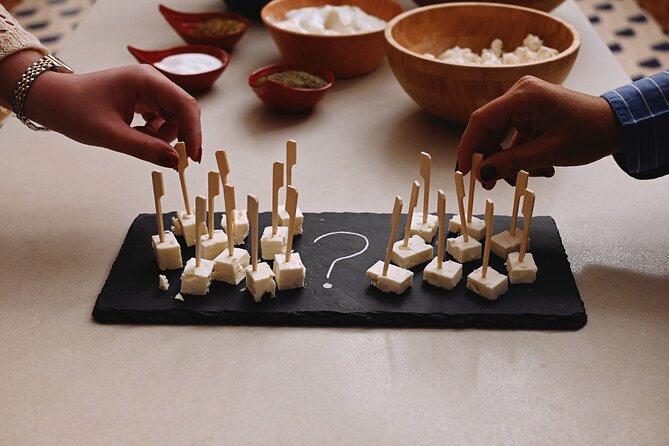
One of the highlights is the feta vs white cheese challenge. You’ll taste and compare, trying to spot real feta without being told.
It’s not just trivia. The “mystery” format makes you notice differences you might normally skip, like saltiness, tang, creaminess, and how peppers or yogurt change the flavor experience.
If you’ve ever bought feta in a supermarket and wondered why some tastes sharp and others taste mild, this is the fastest way to start understanding it. You’re training your palate in a low-pressure way, with instant feedback built into the tasting flow.
And yes, it’s fun. If you like food experiments that feel like games, this part will likely be your warm-up moment.
Learning Feta’s Story While You Cook It
After the tasting challenge, the class shifts into story mode, but it stays practical because you’re cooking at the same time. You’ll hear why feta is a PDO (Protected Designation of Origin) product, and you’ll connect that legal label to real-world things like climate, land, and tradition.
You also get the wider cultural arc. The material links feta to Greek history, from references like Homer’s Odyssey to modern-day food culture. That helps feta feel less like a generic ingredient and more like a food with roots and rules.
You’ll also hear traditional music and watch short video stories from Greek producers. Even if you only catch parts of the cultural details, the combination of sound, visuals, and hands-on cooking makes the learning stick.
This is the kind of context that improves how you eat later. Instead of just tasting, you start understanding what you’re tasting and why it matters.
Hands-On Cooking: Tyrokafteri, Spinach Pies, and Greek Salad
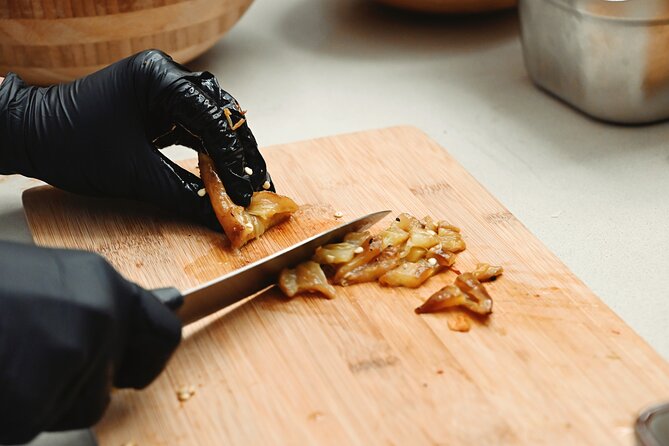
Now you roll up your sleeves. The cooking portion is structured around three core results, so you leave with a meal you helped build.
Other Athenian kitchens with an apron waiting:
- Athens: Greek Cooking Class & Dinner on a Rooftop★ 5.0 · 383 reviews
- Athens: Greek Cuisine Cooking Class and 3-Course Dinner★ 4.8 · 270 reviews
- Traditional Greek cooking class and lunch or dinner with an Acropolis view★ 5.0 · 250 reviews
- Athens Greek Cooking Class Pita Gyros from Scratch with a Local★ 5.0 · 175 reviews
Tyrokafteri, a spicy feta spread with peppers
You’ll prepare tyrokafteri, a spicy feta spread made with feta cheese, yogurt, and roasted red and green peppers. This is the flavor anchor of the whole lunch.
Why I think this part is valuable: spreads are easy to replicate at home. Once you understand the ratio of tangy feta to creamy yogurt and smoky peppers, you can adjust heat level the next time you shop for ingredients.
Mini spinach pies
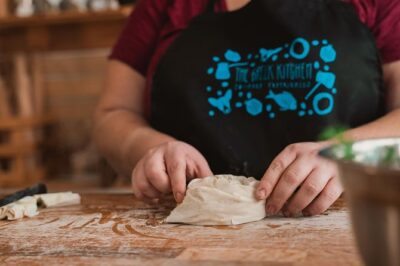
You’ll also make mini spinach pies. Spinach pie is comfort food in Greek form, and making it by hand turns a familiar dish into something more personal.
If you’ve only ever had spinach pie as a packaged item, you’ll probably notice how dough, filling, and baking change the final experience. The class format gives you that moment of clarity.
Greek salad with seasonal ingredients
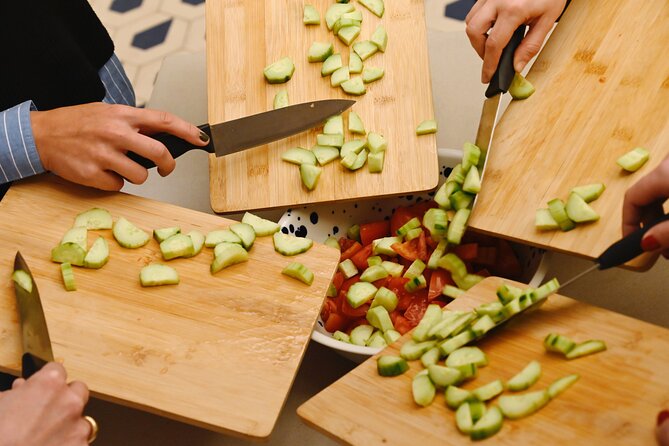
For balance, you’ll make Greek salad using the best seasonal ingredients you’re working with in that moment. Salad might sound simple compared to pie, but the quality is the point, and the class keeps the focus on freshness.
This component matters because it rounds out the meal. It also gives you a contrast to the richer flavors of feta spread and moussaka.
Set the Table and Feast: Moussaka or Gigantes, Plus Wine and Halva
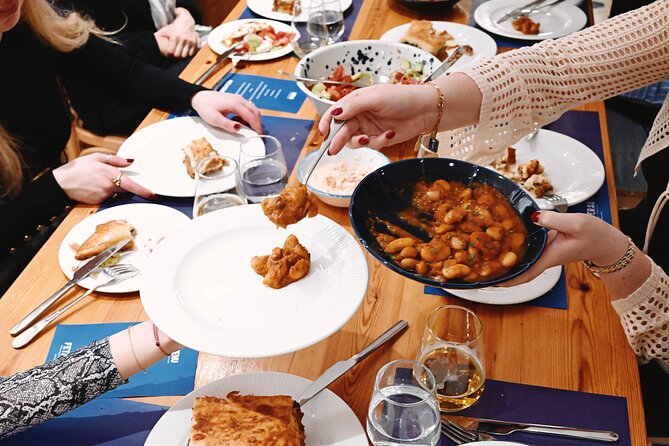
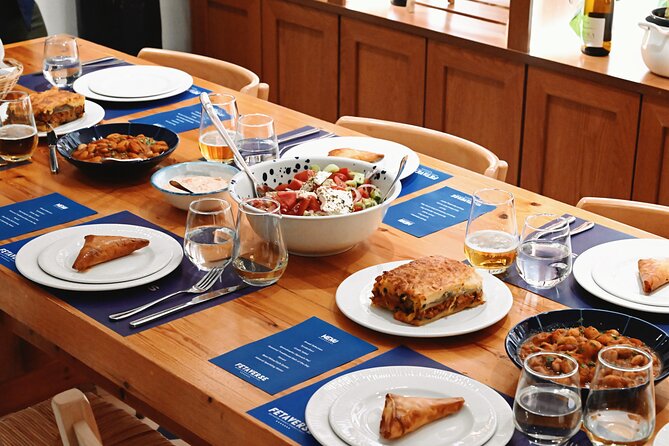
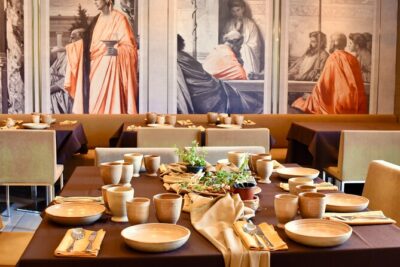
After cooking, you’ll set the table and enjoy a full Greek dinner style meal, served in a shared, warm setting. The plan is built for conversation, not just eating quickly, and it’s one reason this class feels special beyond the recipes.
Starters
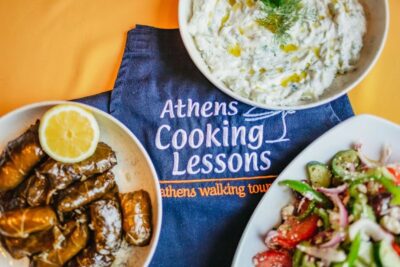
Your starter lineup includes bread selection with olive oil, then tyrokafteri, followed by the spinach pie.
Bread with olive oil seems basic, but it’s a perfect palate opener. And in a feta-focused class, it helps you taste the spreads and baked items without confusing your palate.
Main course choice
For the main, you can choose between:
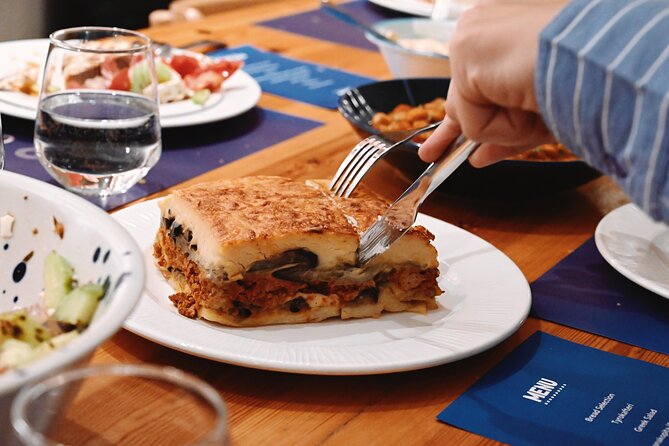
- Greek moussaka, with eggplant, potatoes, spiced ground meat, and creamy béchamel
- Gigantes, giant beans in tomato sauce, as the vegetarian option
I like that this choice is real and not an afterthought. Moussaka gives you the classic layered Greek comfort, while gigantes offers a hearty, tomato herb flavor that still feels like a main, not a side.
Drinks and dessert
You’ll enjoy local wine or beer during the meal. Then dessert is Greek halva, a homemade semolina cake served with ice cream.
Halva is a sweet finish that makes the lunch feel complete. If you care about desserts beyond supermarket sweets, this one gives you something more traditional to remember.
What You’re Really Getting for the Price in Athens
The price is $96.74 per person, and the class runs about 3 hours. For that money, you’re paying for three things that add up quickly if you try to recreate them yourself: guided tasting, hands-on cooking with instruction, and a full meal with drink options and dessert.
This is not just a cooking demo. You participate in making multiple dishes, and you get the learning portion tied to what’s on your plate.
You’re also paying for a small-group ceiling of 15 travelers. That size matters. Larger groups often mean less individual help, and here you’re more likely to stay involved from the first icebreaker through the last bites of dessert.
If you’re comparing value, ask yourself what you’d otherwise pay for in Athens: a meal plus a class plus tasting. This format packages all of it into one block of time.
Who Should Book Fetaverse (And Who Might Skip It)
This fits best if you want a food experience that’s part cooking lesson, part cultural story, and part shared table. You’ll probably enjoy it most if you:
- love feta and want to understand what makes it taste different
- like hands-on cooking more than watching
- enjoy learning through food facts, not lectures
- want a small-group social meal in Athens
It may be less ideal if you dislike feta or if spicy flavors are a problem. Tyrokafteri is part of the starter menu, so heat level is part of the experience by design.
Also, if you already know exactly what to cook and you only want recipes, this might feel heavier on story and tasting than you need. But for most food travelers, the balance lands in a satisfying place.
Practical Tips So You Get More From the Class
A few simple moves will make the day smoother:
- Come hungry, not starving. The meal is built into the experience, but tasting and cooking take time.
- Wear comfortable clothes. You’ll be standing and working while dishes come together.
- Ask questions during the tasting parts. That’s when the PDO story and cheese comparisons will feel most relevant.
- If you’re choosing between moussaka and gigantes, think about what you want after you taste the starters. Gigantes can be a great choice if you want something tomato-forward and vegetarian.
Even with the short list of dishes, the class teaches a way of thinking about ingredients. That’s what you’ll remember when you’re shopping for cheese later.
Should You Book Fetaverse in Koukaki?
If you want feta in a way that’s more interesting than ordering it on a plate, I’d book this. The blind tasting, the PDO story tied to what you cook, and the full lunch with choices at the main course are a strong combo for the price.
Book it especially if you like food experiences that feel personal and social, with enough structure to guide you and enough flexibility to keep it fun. If you’re sensitive to feta-centric meals or spicy spreads, that’s the one caution flag, otherwise this is a very practical way to spend a 12:00 pm slot in Athens and leave with both new tastes and new context.
FAQ
How long is the Fetaverse cooking class?
It runs for about 3 hours.
What time does it start?
The start time is 12:00 pm.
Where is the meeting point?
The meeting point is Veikou 93, Athina 117 41, Greece, and the activity ends back at the same meeting point.
What is the price per person?
The price is $96.74 per person.
Is the class offered in English?
Yes, it’s offered in English.
How big is the group?
It has a maximum of 15 travelers.
What dishes do we cook or prepare?
You’ll prepare tyrokafteri (spicy feta spread with peppers), mini spinach pies, and Greek salad with seasonal ingredients.
What are the main meal options?
You can choose between homemade moussaka or giant beans in tomato sauce (a vegetarian option).
Is there dessert and something to drink?
Yes, dessert is Greek halva with ice cream, and the meal includes local wine and beer.
Are service animals allowed?
Yes, service animals are allowed.
Latest from under the Acropolis



Cooking Classes, compared.
Classic Cooking Class with Market Visit and Wine
Read our review →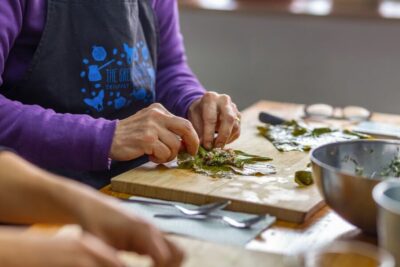
Food Market Visit and Cooking Class with Wine
Read our review →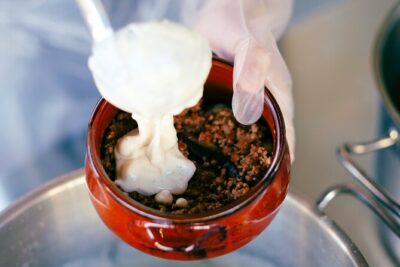
Greek Cooking Class in Athens Including Rooftop Dinner with Acropolis View
Read our review →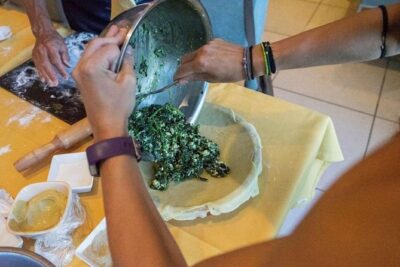
Greek Small-Group Athens Cooking Class & Dinner
Read our review →
Greek Cuisine Cooking Class and 3-Course Dinner
Read our review →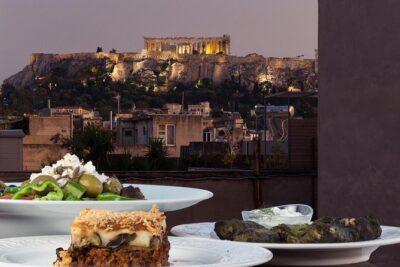
Traditional Greek cooking class and lunch or dinner with an Acropolis view
Read our review →
Athens Greek Cooking Class Pita Gyros from Scratch with a Local
Read our review →Browse the lists this tour appears in