
Reviewed · WINE TOURS
Explore Natural, Organic and Biodynamic Wines of Greece
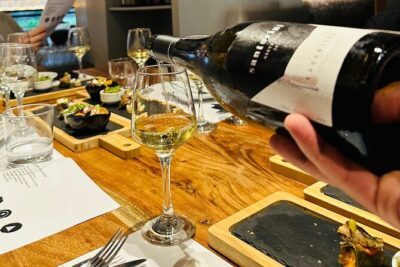
Ancient grapes in a tiny Athens tasting room. This one-hour wine stop focuses on organic, biodynamic, natural and orange wines from Greece, made from ancient indigenous grape varieties, with a host who can explain what you are actually tasting and why. Two things I really like are the chance to try six different wines back to back, and the clear, hands-on talk about producing methods, from amphora to aging in the bottle.
One thing to consider: it is a small space, so if you expect a big, walk-around tasting room, you might feel a little tight in here. The good news is the group limit is small too, max 12 people, so the conversation stays practical and not rushed.
In This Review
- Key Highlights You Will Notice Fast
- Greek Natural Wine: Why Athens Still Matters
- Entering Themistokleous: What the Hour Actually Looks Like
- Six Greek Wines, One Guided Palate Reset
- What you should watch for in each pour
- How Amphora, Stainless, Cement, and Oak Shape Flavor
- Ancient Indigenous Grapes: What Makes Them Different
- Orange, Natural, and Biodynamic Styles, Explained Without Snobbery
- Nibbles That Actually Belong With the Wine
- Limited Bottles, Take Home Value, and Why It Matters
- Logistics That Affect Your Comfort Level
- Who This Athens Wine Hour Fits Best
- A Practical Tip: How to Ask Better Questions
- Should You Book This Natural Wine Tasting in Athens?
- FAQ
- How long is the wine tasting in Athens?
- How many wines will I try?
- What is included in the price?
- Are any food items included?
- Where do I meet for the experience?
- Will I receive a mobile ticket?
- What is the group size limit?
- Are tips included?
- What is the cancellation policy?
- Will I get confirmation after booking?
Key Highlights You Will Notice Fast
- Six pours in one hour, with the right small bites to keep your palate engaged
- Ancient indigenous grapes, the focus here instead of imported grape labels
- Winemaking methods you can taste, amphora, stainless steel, cement, and sometimes a bit of oak
- Orange wine and natural styles, explained in plain language so it makes sense
- Limited bottlings in some cases, sometimes as low as 200 bottles
- A host who really knows the local scene, including how these wines fit Greece
Greek Natural Wine: Why Athens Still Matters
Greece is one of the best places in Europe to understand natural wine because the raw material is unusual. Instead of chasing a single world-famous grape, this tasting leans into indigenous ancient varieties that have adapted to Greek heat, wind, and long growing seasons. That matters because the flavor differences are not subtle. They are structural, often showing up as texture, bitterness, tannin grip, and a wild-but-controlled aroma range.
At this tasting, you are not just sampling. You are being guided through what organic and biodynamic farming can change, and how that connects to the final glass. It is a smart way to learn, because you can connect a winemaking choice to a sensory result while you still have the wine in front of you.
Other Greek wine poured near Athens:
- Athens: Classic Cooking Class with Market Visit and Wine
★ 5.0 · 1,101 reviews - Athens: Food Market Visit and Cooking Class with Wine
★ 4.9 · 1,087 reviews - Best rated Acropolis Wine Tasting
★ 5.0 · 568 reviews - PREMIUM Semi-Private Athens Afternoon Food Tour & Wine Tasting
★ 5.0 · 363 reviews
Entering Themistokleous: What the Hour Actually Looks Like
This experience takes place at Themistokleous 23-25 in Athens, and it runs about 1 hour. You will get a mobile ticket, and you will start and end back at the same spot, so you do not spend your time triangulating transportation or getting lost with a wine buzz.
Inside, plan for a cozy setting. One of the best bits of advice I can give is to go with the expectation of a compact tasting bar. This is not the type of place where you linger for hours while strangers drift past you. It is a focused hour that works well if you are staying central, want a concentrated taste education, and you like your wine talk detailed but not stiff.
Six Greek Wines, One Guided Palate Reset
You will try six wines that fall under the umbrella of organic, biodynamic, natural, and orange. That mix is the whole point. Each category can overlap, but the key is what it means in practice: farming choices, fermentation behavior, skin contact, and aging decisions all influence what you smell and taste.
Expect that the tasting is paired with the right nibbles. The idea is not to cover the wine. It is to clear your palate and give you enough flavor contrast that the next pour registers. If you usually find wine tastings blur together, this format helps you keep them separate.
What you should watch for in each pour
Orange wine can change texture and aroma because it typically involves skin contact. Natural wines can feel more expressive, sometimes with a rustic edge. Biodynamic wines often aim for living, site-driven balance. Even when the styles overlap, each glass should give you at least one clear takeaway you can describe afterward.
How Amphora, Stainless, Cement, and Oak Shape Flavor
One of the most valuable parts of this experience is the production explanation, in plain language. You will hear how grapes are vinified using different vessels, including amphorae (clay jars), stainless steel tanks, and plain cement. You might also encounter small influence from oak barrels in some bottles, plus long bottle aging before release.
Why does this matter? Because the vessel affects oxygen exposure, temperature stability, and the way the wine matures. Amphorae, for example, are often used to support a gentle, textured evolution. Stainless steel can keep flavors crisp and precise. Cement can help with a particular balance of fruit and structure. And when oak appears, even a light touch can add aroma lift, spice nuance, or subtle tannin smoothing.
If you taste with that context in mind, the hour becomes more than “nice wine.” It becomes pattern recognition. You start thinking like a winemaker without needing to be one.
Same hours, spent a different way in Athens:
- Athens: Acropolis & up to 5 Archaeological Sites Combo Pass★ 4.2 · 13,904 reviews
- Athens: Acropolis, Parthenon & Acropolis Museum Guided Tour★ 4.8 · 9,316 reviews
- The Acropolis, Parthenon & Acropolis Museum Guided Tour★ 4.7 · 8,493 reviews
- Athens: Cape Sounion & Poseidon Temple Sunset Half-Day Trip★ 4.8 · 8,241 reviews
Ancient Indigenous Grapes: What Makes Them Different
The tasting leans hard on the idea that Greece can produce high-standard wine because of its unique conditions and its reliable indigenous grape varieties. You will hear that Greece has many indigenous ancient varieties, with a figure of 340+, and that the modern science and knowledge of today is being used alongside older traditions.
For you, the practical takeaway is this: indigenous varieties can taste different even when the “style” sounds familiar. The same words you might use for “dry” or “tannin” can show up in a different way. You might notice bitterness that feels elegant instead of harsh, or tannin that feels dusty rather than drying.
And since these are not mainstream grapes with a global marketing playbook, limited production is more common. That means you get more of a “this exists because the land makes it possible” feeling, not just “this label sells everywhere.”
Orange, Natural, and Biodynamic Styles, Explained Without Snobbery
Orange wine can sound intimidating if you only associate it with weird colors and weird flavors. Here, the focus is on what production choices create those characteristics. Skin contact, fermentation handling, and aging all influence whether your glass leans more towards tea-like bitterness, orchard fruit aromatics, or a deeper, more savory profile.
Natural and biodynamic wines are often talked about in slogans, but this tasting keeps it practical. You learn the producing methods, how organic and biodynamic approaches influence the grapes, and why that translates into the finished bottle. The aim is that you can taste a concept and then confirm it in your glass.
The best part is how the host connects dots. In a small tasting space, you have the chance to ask questions and get answers that relate to the exact wine you just tasted. That is how you stop guessing and start understanding.
Nibbles That Actually Belong With the Wine
You are not going in wine-only. You will get small bites, including extra virgin olive oil and concentrated grape must, plus other small “ancient-style” nibbles. This pairing approach makes sense in Greece because it supports the wine instead of fighting it.
Olive oil brings a smooth, fatty base that can soften rough edges in tannic or textured wines. Grape must adds sweetness and grape concentration, which can help you hear acidity and fruit ripeness more clearly. The combination of savory fat and concentrated grape flavor gives you a reference point for each pour.
If you love wine pairings, this is a simple reminder that you do not need complicated menus to taste like you planned it. You just need the right flavors on your palate.
Limited Bottles, Take Home Value, and Why It Matters
This is also a “buy if you love it” experience. Some wines have limited bottling numbers, as low as 200 bottles, and you may be able to find them exclusively in the store to buy or ship. That matters for value because you are not only paying for a tasting. You are getting access to bottles that may be hard to track down later.
When you are deciding if a tasting is worth it, think beyond the price per person. Ask yourself: Will I leave with bottles I actually want, or will I just remember a few flavors? Here, the limited availability angle gives you a stronger chance to buy something unique you cannot easily replicate at home.
At $33.71 per person, in a one-hour format, this can feel like good value if you care about natural wine education and you want the option of taking the experience further.
Logistics That Affect Your Comfort Level
This is where your planning pays off. The experience is near public transportation, and it allows service animals. The group size is capped at 12 travelers, which supports the more conversational style of the host.
Time also matters. At about 1 hour, you should arrive with enough energy to focus. If you are rushing from a long day of walking, you might feel like you need to gulp water and breathe fast. Doable, but you will enjoy it more if you pace your day.
Also, bring curiosity. Even if you are new to natural or orange wines, the host is there to explain producing methods and answer questions. That reduces the intimidation factor and makes the tasting a learning experience instead of a test.
Who This Athens Wine Hour Fits Best
This tour is a strong match if you are in Athens and want a focused wine introduction that stays rooted in place. It is ideal for:
- People interested in natural and orange wines but who want the “what to look for” explained clearly
- Travelers who like education that connects production choices to your glass
- Anyone who prefers a small group with room for questions
- Wine lovers who want to taste indigenous Greek varieties rather than the usual international list
It may be less ideal if you want a long, leisurely tasting with lots of space to mill around, or if you need a very formal setting. The small bar setup is part of the charm, but it is also the main limitation.
A Practical Tip: How to Ask Better Questions
If you want to get the most out of the hour, ask about what you actually taste. Instead of general questions like what makes it natural, try questions like:
- How does skin contact show up in aroma and texture here?
- What changes when the wine is aged in amphora versus cement?
- Is there oak influence in this bottle, and what effect should I expect?
This is the kind of conversation where a host with local expertise can guide you fast. And you will remember it longer because you linked the explanation to the exact sip in your glass.
Should You Book This Natural Wine Tasting in Athens?
Book it if you want a compact, high-signal wine experience built around Greek organic, biodynamic, natural and orange wines and the role of ancient indigenous grapes. The combination of six pours, production-focused explanations, and Greece-appropriate nibbles makes it feel like a real education, not just a sampling session.
Skip it only if you strongly prefer large-scale tastings, lots of breathing room, or a longer format where you can wander and compare without time pressure. If that small setting is fine with you, this is a smart use of one hour in Athens, and it can even lead to a few bottles worth seeking out later.
FAQ
How long is the wine tasting in Athens?
It lasts about 1 hour.
How many wines will I try?
You will try six Organic, Biodynamic, Natural, or Orange wines.
What is included in the price?
Alcoholic beverages are included.
Are any food items included?
Yes. You will have the right nibbles alongside the wine, including items like extra virgin olive oil and concentrated grape must.
Where do I meet for the experience?
The meeting point is Themistokleous 23-25, Athina 106 77, Greece. The tour ends back at the same location.
Will I receive a mobile ticket?
Yes, the tour features a mobile ticket.
What is the group size limit?
The maximum group size is 12 travelers.
Are tips included?
No. Tips are not included.
What is the cancellation policy?
You can cancel for a full refund up to 24 hours before the experience starts. If you cancel less than 24 hours in advance, the amount paid is not refunded.
Will I get confirmation after booking?
Yes. Confirmation will be received at the time of booking.
Latest from under the Acropolis




Wine Tours, compared.
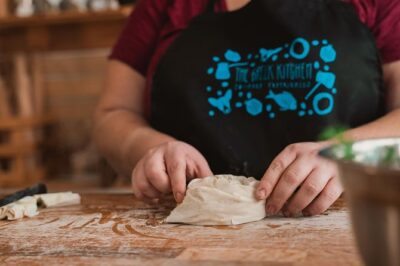
Classic Cooking Class with Market Visit and Wine
Read our review →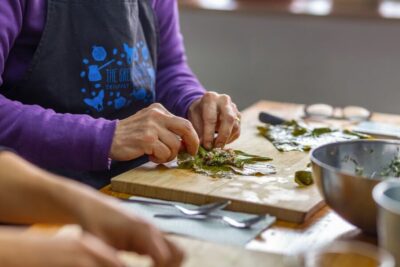
Food Market Visit and Cooking Class with Wine
Read our review →

PREMIUM Semi-Private Athens Afternoon Food Tour & Wine Tasting
Read our review →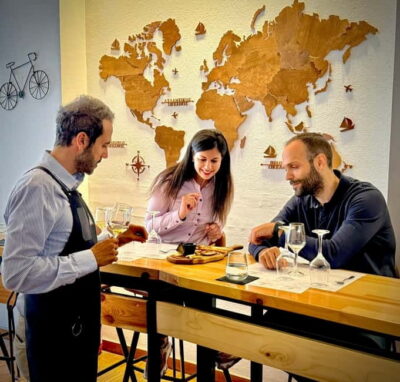


Wine Tasting with a Sommelier under the Acropolis
Read our review →
Premium Food and Wine Tasting Tour in the evening
Read our review →Browse the lists this tour appears in