Reviewed · TOURS
Byzantine and Ottoman Athens Tour
Byzantine Athens is hiding in plain sight. This small-group tour threads the city’s Byzantine and Ottoman eras together while you walk through Plaka, with a guide who explains the architecture and the human stories behind it. I especially like how the route mixes churches and monuments with the kind of street-level details most visitors miss.
I also like the tight group size (up to 15), which makes it easier to ask questions and actually hear the explanations at each stop. One thing to consider: this is a walking tour with moderate physical effort, and it is not recommended if you do not usually walk or if you have hearing problems.
In This Review
- Key reasons you’ll probably like it
- Why Plaka is the perfect backdrop for Byzantine and Ottoman Athens
- Walking route reality check: timing, pace, and who it suits
- Starting at the Arch of Hadrian, then into the mosque story layer
- Metropolitan Cathedral of Athens (stop 1)
- Mansion Benizelou (stop 2)
- Eye clinic of Athens (stop 3)
- Ekklisia Agios Nikolaos Ragkava (stop 4)
- The church crawl: Pantanassa, Kapnikarea, and Saint Irene
- Church of St. Mary Pantanassa (stop 5)
- Church of Kapnikarea (stop 6)
- Holy Church Of Saint Irene (stop 7)
- Agion Anargiron and the Revolution link, plus the baths and lost neighborhood talk
- Agion Anargiron & Plateia Agion Avargiron (stop 8)
- The story of a lost neighborhood, its culture (mid-route talk)
- The importance of baths in art and history (mid-route talk)
- Agias Ekaterinis (stop 9)
- Temple of Olympian Zeus, Tripodon, and the city’s final Byzantine echoes
- Temple of Olympian Zeus (stop 10)
- Little Metropolis (stop 11)
- Tripodon (stop 12)
- St. Marina Church (stop 13)
- Melina Mercuri Museum and Cultural Centre (stop 14)
- Kolokotroni Statue (stop 15)
- Statue of Constantine XI Palaiologos (stop 16)
- Price and value: what $102.43 buys you in Athens
- Tips to make the route feel comfortable (not just historic)
- Should you book this Byzantine and Ottoman Athens Tour?
- FAQ
- How long is the Byzantine and Ottoman Athens Tour?
- Where does the tour start?
- How much does the tour cost?
- What is included in the tour price?
- Is admission included for the sites you visit?
- What group size should I expect?
- What if I need to cancel?
Key reasons you’ll probably like it
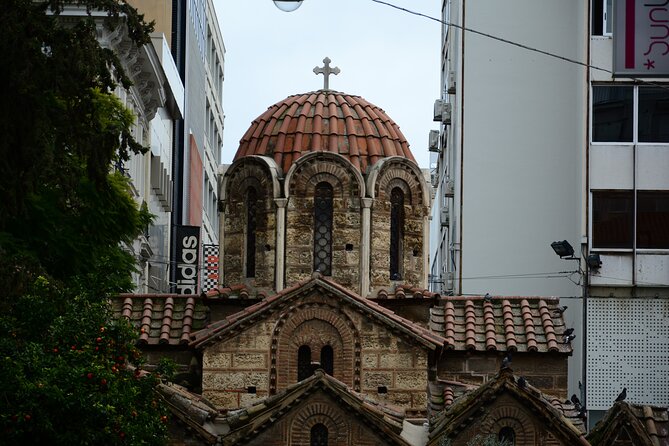
- Small group, up to 15 people, so the pace stays personal
- A story-first route through Byzantine and Ottoman Athens, not just photos
- Many stops with free admission, with only a small optional ticket cost
- Church interiors and artwork are part of the experience, not side notes
- Plaka focus, including quieter corners and lesser-seen angles
Why Plaka is the perfect backdrop for Byzantine and Ottoman Athens
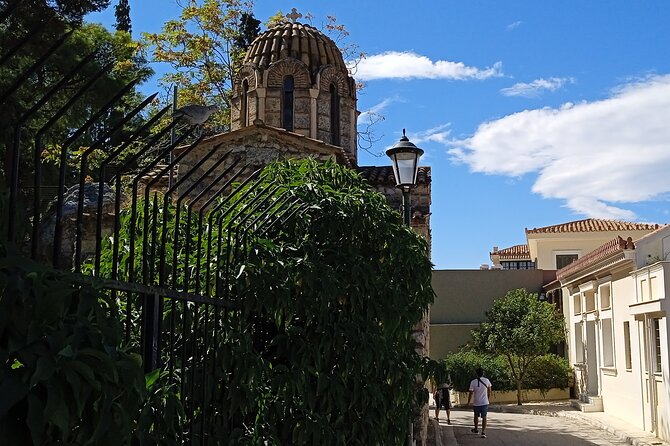
Plaka can feel like a postcard, but this tour treats it like a layered timeline. You are moving through a neighborhood where Byzantine religious life, Ottoman-era changes, and later Greek history all leave clues in masonry, icons, wall paintings, and the way buildings were repurposed.
What makes this especially useful is the tour’s approach: you are not hunting landmarks on your own and guessing what you are looking at. Instead, you get a guide-led narrative that ties details together. The result is that you start seeing patterns, like how church design signals faith and community, and how political events shaped what people built and preserved.
And yes, you will spend most of your time outdoors and on foot, so it helps to dress for weather and keep your energy for the day’s walking.
Before you book, here is what else runs from Athens:
- Athens: Acropolis & up to 5 Archaeological Sites Combo Pass
★ 4.2 · 13,904 reviews - Athens: Acropolis, Parthenon & Acropolis Museum Guided Tour
★ 4.8 · 9,316 reviews - The Acropolis, Parthenon & Acropolis Museum Guided Tour
★ 4.7 · 8,493 reviews - Athens: Cape Sounion & Poseidon Temple Sunset Half-Day Trip
★ 4.8 · 8,241 reviews
Walking route reality check: timing, pace, and who it suits
This experience runs about 3 to 4 hours, and it stays anchored around the Plaka area. Expect frequent stops for short talks. The tour is best if you have at least a moderate walking routine, because the “many stops, short visits” format still adds up.
Small-group size matters here. With a maximum of 15 travelers, you are less likely to get shuffled into the back or cut off when the guide is explaining wall paintings, frescoes, icons, or architectural features. The guide also works in-person as the driver, so you are not doing a complicated meet-and-transfer dance.
Two caution flags based on the tour details: it is not recommended for people who do not usually walk, and it is also not recommended for travelers with hearing problems. If either applies, consider a different format in Athens, maybe one with less back-and-forth.
Starting at the Arch of Hadrian, then into the mosque story layer
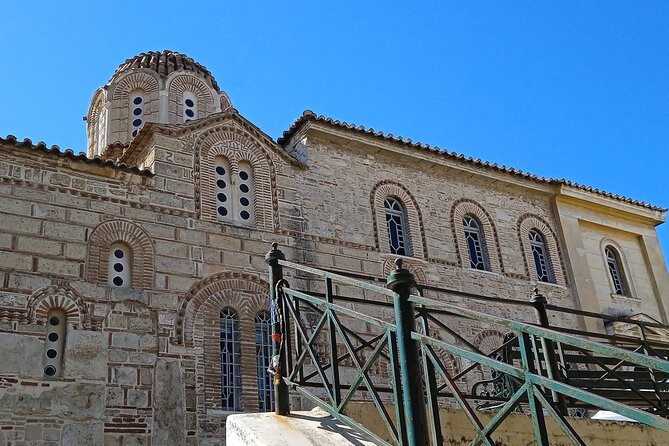
You begin at the Arch of Hadrian, near Leof. Vasilisis Amalias 50 (Athens 105 58). The tour ends back at the same meeting point, which helps you keep your bearings without needing to plan a separate return.
From there, the first theme is the story of the mosque. Even when the physical building details are not the full focus, the guide uses this opening to set the Ottoman-era context for what you will see later, especially how religious spaces and cultural shifts can leave long fingerprints on the city.
Metropolitan Cathedral of Athens (stop 1)
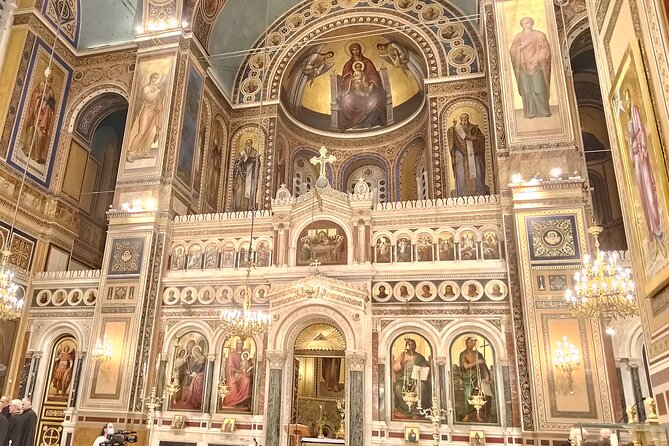
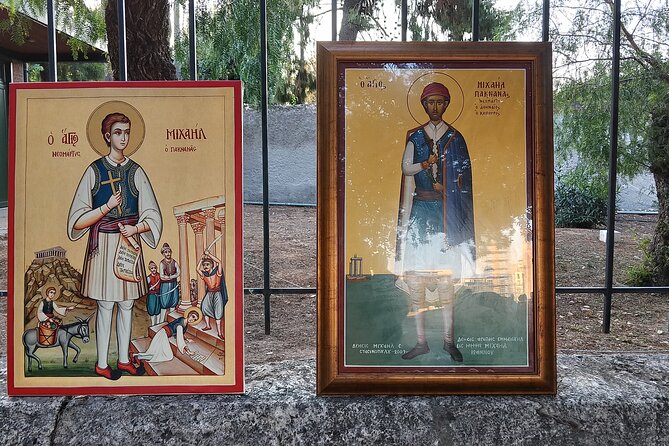
Next up is the Metropolitan Cathedral of Athens. You will talk about the architecture and the church story, including the life and deeds of two martyrs. There is also time to visit the heirloom the tour references.
Admission is optional here. The cathedral lists an admission fee of 3 Euros per person, and the tour notes this as an optional add-on. If you are on a strict budget, you can still enjoy the guided exterior and context, but you may want to factor in the 3 Euros if the interior items are important to you.
Mansion Benizelou (stop 2)
Then you head to Mansion Benizelou, where you focus on the building’s architecture and how each part works. The tour also notes that alms are welcomed, which is a nice reminder that some of these places are still part of living traditions, not just exhibits.
If you like domestic architecture and the practical side of old-city building design, this stop can be a standout. The visit stays short, so it rewards curiosity rather than deep, slow museum time.
Same hours, spent a different way in Athens:
- Acropolis: Premium Acropolis and Parthenon Guided Tour★ 4.8 · 5,208 reviews
- Athens: Mythology of Delphi, Museum and Arachova Guided Tour★ 4.7 · 5,102 reviews
- All Day Cruise -3 Islands to Agistri,Moni, Aegina with lunch and drinks included★ 5.0 · 4,958 reviews
- Athens, Piraeus, and Coastline: Blue Hop-On Hop-Off Bus★ 3.9 · 4,849 reviews
Eye clinic of Athens (stop 3)
At the Eye clinic of Athens, the emphasis is on its story and architecture. Admission is listed as free.
This is the kind of stop that makes the tour feel more “Athens” and less like a checklist. You see how historic buildings and community needs can share the same physical space and shape.
Ekklisia Agios Nikolaos Ragkava (stop 4)
You finish this opening segment at Ekklisia Agios Nikolaos Ragkava, a Byzantine-style church with attention on the interior. The guide covers secret stories about famous Byzantine personalities, the role of women in Byzantium, and an iconic item inside.
This is one of those “take a breath and look up” stops. The artwork and iconography are the point, and the tour is designed to tell you what you are actually seeing, so you do not have to guess.
The church crawl: Pantanassa, Kapnikarea, and Saint Irene
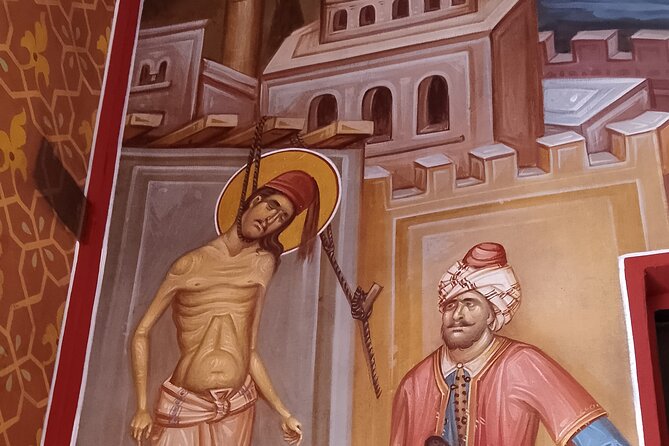
After the Ottoman-and-Byzantine context starts settling in, the tour shifts into a sequence of churches where architectural style and painted interiors do the talking.
Church of St. Mary Pantanassa (stop 5)
At Church of St. Mary Pantanassa, you focus on the story and architecture, plus a special link to a personality discussed during the tour.
The short visit works best if you lean in. The guide’s narrative seems to be the glue here, tying what you see to the person or theme they mention.
Church of Kapnikarea (stop 6)
Next is Church of Kapnikarea, and this is a major art-focused moment. You will hear the story, the architecture, and then a specific look at wall paintings and frescoes.
This stop is ideal if you are the type who likes to understand the symbolism behind decoration. If you prefer “just show me the highlights,” do a quick scan for dominant figures, then let the guide explain what you are looking at.
Holy Church Of Saint Irene (stop 7)
Then comes Holy Church Of Saint Irene, with medieval architecture and special wall paintings inside. The tour also explains the church’s role in the Greek Revolution.
This is where faith history and national history overlap in a way that is hard to get from guidebook captions. Even in a short stop, the guide gives enough context to connect the art and the politics, not treat them as separate topics.
Agion Anargiron and the Revolution link, plus the baths and lost neighborhood talk
As the route continues, you get another look at how churches and squares played roles during major historical change.
Agion Anargiron & Plateia Agion Avargiron (stop 8)
At Agion Anargiron & Plateia Agion Avargiron, you focus on the church’s role in the Greek Revolution. The guide also talks about the cell of a famous writer and the Greek-Ottoman culture in this area.
If you like history that feels human, the writer reference can be a powerful hook. It also helps you see how one place can hold layers: religious life, political events, and literature or personal stories.
The story of a lost neighborhood, its culture (mid-route talk)
Right after that, the tour pauses for the story of a lost neighborhood and its culture. This is not tied to one specific named building on your notes, but it matters because it gives you the “why” behind what you are seeing on the street.
It is also where the tour feels like less of a museum sprint and more of a guided walk through what Athens used to be.
The importance of baths in art and history (mid-route talk)
You also get a specific theme stop on the importance of baths in art and history. Again, this seems like a guided interpretation of the area and its cultural symbolism rather than a ticketed attraction.
If you enjoy thematic context, this kind of interlude can be the glue that makes the route memorable. If you prefer only building interiors, you might find these talks more conceptual than tangible.
Agias Ekaterinis (stop 9)
Then the tour returns to a specific church: Agias Ekaterinis. The guide covers Byzantine architecture, special icons, and wall paintings, along with how the church ties into Orthodox tradition.
This stop is a good follow-up to the fresco-heavy Kapnikarea and Saint Irene moments. It gives you another angle on how Byzantine-style religious art supports community identity.
Temple of Olympian Zeus, Tripodon, and the city’s final Byzantine echoes
Next, the route uses a broader Athens frame. You start hearing about monuments and street history, then end with strong Byzantine and historical finales.
Temple of Olympian Zeus (stop 10)
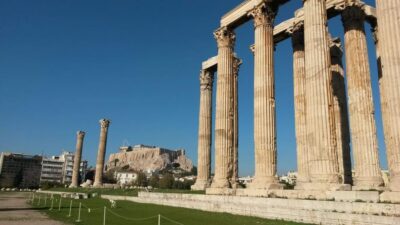
You will see the Temple of Olympian Zeus and discuss it as a place of torture. The tour notes there is no entrance unless asked.
This is a “context from the outside” stop. If you want photos, you will get them. If you want an interior museum experience, plan on that not happening here unless you explicitly ask on the spot.
Little Metropolis (stop 11)
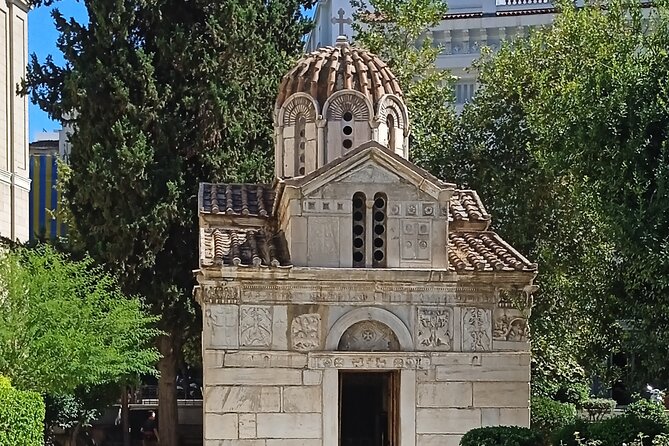
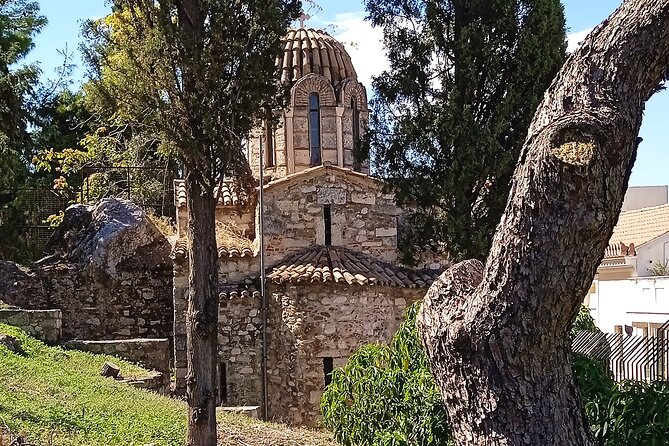
At Little Metropolis, you focus on masonry and the church’s important story in Byzantine times. Admission is listed as free.
This can feel like the kind of church stop that rewards close attention. The phrase “masonry” suggests the guide will point out construction details that you might otherwise overlook.
Tripodon (stop 12)
Then you reach Tripodon, described as the most ancient street in Europe and a place with its own attractions.
This is where the tour shifts from individual buildings to the movement of people through a street. It is useful for understanding Athens as a lived city, not a set of separate sights.
St. Marina Church (stop 13)
Next is St. Marina Church, where the focus is on a secret baptistery. Admission is listed as free, and the stop is longer here at about 20 minutes.
If you like mysteries and architectural surprises, this should be one of the more satisfying stops. The extra time suggests you should expect more than a quick explanation.
Melina Mercuri Museum and Cultural Centre (stop 14)
At Melina Mercuri Museum and Cultural Centre, you visit the museum of Karagiozis. Admission is listed as free on the tour info.
This provides a change of pace from strictly church-based history. It also adds a layer of Greek cultural life connected to performance and tradition, at least as the tour frames it through that museum stop.
Kolokotroni Statue (stop 15)
Then the tour heads to the Kolokotroni Statue, where you hear the life story of a hero and how the statue was made.
This is a helpful reality check for history in Athens. Monuments are not just stone. They are messaging, built to keep names and meanings visible over time.
Statue of Constantine XI Palaiologos (stop 16)
To wrap, you reach the Statue of Constantine XI Palaiologos, focusing on the life story of the last Emperor of the Byzantine Empire.
If you like the arc of a story, this ending works well. After all the churches, icons, and Ottoman-era context, the tour finishes by anchoring the Byzantine thread to one of its last major figures.
Price and value: what $102.43 buys you in Athens
At $102.43 per person, you are paying primarily for expert guided interpretation plus the logistics of a small-group walk through a dense area of sites. The tour is about 3 to 4 hours, and the stop count is high, with many entries listed as free.
Here’s the practical value angle:
- Several key stops list admission free, including the Eye clinic, Kapnikarea, Saint Irene, Agion Anargiron square area, and most of the other churches on the route.
- The Metropolitan Cathedral has an optional admission listed at 3 Euros.
- You are not just seeing buildings. The tour includes small talk and personal stories from the lives of Byzantine Emperors and other personality links connected to stops.
What is not included is snacks. So if you are tempted to book lunch afterward, plan for an earlier break or bring a light snack. The tour info does not say food is provided.
One more practical caution: there is no mention here of an air-conditioned vehicle as part of the tour, and the experience is primarily an on-foot route in Plaka. If you are the type who expects a car to handle most movement, read the format carefully and set expectations for walking. A guide can have a “driver also” role, but you should still anticipate that you will be out and moving on foot between stops.
Tips to make the route feel comfortable (not just historic)
This is where you can make your day better fast:
- Wear shoes you can walk in for a few hours. You are doing many short stops, and that still means real distance.
- Bring a small water bottle and consider a light snack before you start. Snacks are not included.
- If you care about optional entry, decide ahead of time whether you want the Metropolitan Cathedral 3 Euro admission.
- Plan to check weather. The tour requires good weather, and it can be canceled if conditions are poor.
Should you book this Byzantine and Ottoman Athens Tour?
Book it if you want Athens beyond the usual ancient-only focus. This tour is built for people who enjoy church interiors, icons, wall paintings, and the way history shows up in architecture. It also suits you if you like small-group attention and short, story-driven stops that help you connect the dots across centuries.
Skip it if you do not usually walk, or if hearing the guide’s explanations is essential for your experience. Also, if you are expecting a mostly vehicle-based sightseeing day with guaranteed comfort features, confirm the tour format beforehand, because this is designed around walking through Plaka.
If you like the idea of ending with Constantine XI Palaiologos after a full sweep of churches, streets, and monuments, this tour is a strong match. You will leave with a clearer sense of how Athens kept changing, while still reusing the same stones for new meanings.
FAQ
How long is the Byzantine and Ottoman Athens Tour?
It runs about 3 to 4 hours.
Where does the tour start?
It starts at the Arch of Hadrian, Leof. Vasilisis Amalias 50, Athens 105 58, Greece, and ends back at the same meeting point.
How much does the tour cost?
The price is $102.43 per person.
What is included in the tour price?
You get a small-group experience with an in-person guide and small talk plus personal stories from the lives of Byzantine Emperors.
Is admission included for the sites you visit?
Many listed stops are admission free. The Metropolitan Cathedral of Athens has an optional admission fee of 3 Euros per person, and the tour info notes it as optional. Snacks are not included.
What group size should I expect?
The tour has a maximum of 15 travelers.
What if I need to cancel?
You can cancel for free up to 24 hours in advance for a full refund. The tour also requires good weather, and if it is canceled due to poor weather you are offered a different date or a full refund.
Latest from under the Acropolis





Tours, compared.
Acropolis, Parthenon & Acropolis Museum Guided Tour
Read our review →
The Acropolis, Parthenon & Acropolis Museum Guided Tour
Read our review →
Acropolis: Premium Acropolis and Parthenon Guided Tour
Read our review →
Mythology of Delphi, Museum and Arachova Guided Tour
Read our review →
Acropolis and Parthenon Guided Walking Tour
Read our review →