
Reviewed · ANCIENT CORINTH TOURS
Biblical Tour Letters to The Corinthians – St Paul’s Footsteps
Paul’s world is close enough to picture. This private day trip links Athens to Corinth and the coast, following the places tied to St. Paul’s preaching and letters to communities in the region. You get a private ride, pick your pace, and can even request a more guided experience if you want deeper Bible context.
I especially like two things about this tour. First, the route is built around big “Paul moments,” from Mars Hill (Areopagus) to the ports and Roman-era settings that show up again and again in the story of early Christianity. Second, the day stays practical: you’re chauffeured in an air-conditioned vehicle with bottled water and WiFi, and you can ask questions as you go, even though the driver does not enter the sites with you.
One possible drawback is simple: it’s a packed 8-hour itinerary. If you want long, slow pauses in museums and ruins, you may feel the schedule tightening after a few stops, so plan for a day that runs like a well-run checklist.
In This Review
- Key highlights you’ll care about
- Why this St Paul footsteps route works from Athens
- Price and what you get for up to 4 people
- Comfort and the driver setup (what to expect)
- Stop by stop: where Paul’s world comes into focus
- 1) Areopagus Hill, also called Mars Hill
- 2) Corinth Canal: the modern cut with ancient logic
- 3) The Diolkos: an ancient ship-transport system
- 4) Isthmia: the games, Poseidon, and Paul’s setting
- 5) Archaeological Museum of Isthmia: objects that explain the vibe
- 6) Ancient Corinth: the city where Paul preached and wrote
- 7) Second Isthmia stop: Poseidon temple, stadium, and sailor-focused worship
- 8) Isthmia theater: entertainment side-by-side with faith
- 9) Isthmia as a political meeting place
- 10) Temple of Apollo in Corinth: the idol-heavy skyline
- 11) Kechries (Cenchreae): a port scene tied to Acts 18
- 12) Apostolou Pavlou: a church tribute to Paul in Corinth
- 13) Lunch stop at a seaside taverna
- 14) Akrokorinthos: the fortress viewpoint over Corinth
- Pacing and how to keep it from feeling rushed
- Is this the right fit for you?
- Should you book this St Paul footsteps tour?
- FAQ
- What is the duration of the tour?
- How many people are in a group?
- Do you pick up from my location in Athens?
- Is the tour in English?
- Are tickets and entrances included?
- Is lunch included?
- Do I need a licensed tour guide?
- Is this tour only for my party?
- Can I cancel and get a refund?
Key highlights you’ll care about
- Private, customizable route across Corinth and the Isthmus area, so you can adjust based on what you’ve already seen.
- Areopagus Hill (Mars Hill) connects directly to Paul’s famous sermon theme of the Unknown God.
- Canal and Diolkos ship-transport sites help you “feel” how goods and people moved in Paul’s era.
- Isthmia and the games zone brings in the athletic imagery that shows up in Paul’s letters.
- Ancient Corinth stops include the Bema area associated with Paul’s hearing before Gallio.
- Good hands-on logistics: WiFi, bottled water, A/C, and pickup from your place.
Why this St Paul footsteps route works from Athens
This is one of those tours that makes the distance between Athens and Corinth feel shorter than it is. You’re not just looking at ruins, you’re moving through a geography that matches how Paul traveled, sailed, worked, and preached. The pacing is built around “story geography,” so the day feels like a map you can read, not a blur of stops.
Because it’s private, you’re not trapped in a one-size-fits-all group schedule. You can also choose between different vehicle types, depending on what you want for comfort and space. That matters on a day that includes multiple archaeological sites and a drive that will eat up part of the clock.
More trails following Paul through Greece:
- Biblical Tour Letters ToThe Corinthians St Paul’s Footsteps 6Hour
★ 5.0 · 1,065 reviews - Private Biblical Tour Ancient Corinth & Isthmus Canal from Athens
★ 5.0 · 762 reviews - Private Tour of Apostle Paul’s Footsteps in Ancient Corinth
★ 5.0 · 275 reviews - Paul”s Footsteps Ancient Corinth Biblical Tour
★ 5.0 · 184 reviews
Price and what you get for up to 4 people
The price is $386.18 per group (up to 4) for about 8 hours. That structure can be good value if you’re traveling as a small family or a couple plus friends, since the cost is split by group size rather than per person.
You’re also paying for the “time-saver” side of the trip: private transportation, pickup from your place, and a driver who provides fluent English commentary while you’re in transit. Keep in mind that two major sites have entrance fees not included, including Ancient Corinth and the Archaeological Museum of Corinth, listed as €15.00 per person.
Comfort and the driver setup (what to expect)
This tour is run with professional drivers who know history, but they are not licensed tour guides and they will not enter the sites with you. The upside is that you get ongoing narration during the drive, plus Q&A as you’re moving between locations. The downside is that your actual on-site explanations will depend on how you choose to handle the interpretation once you arrive.
In practice, the experience can vary depending on the human factor. Past groups highlighted drivers like Kostas and Michael for making Corinth feel alive, and also praised local guide Mr Pantelis for his knowledge. If you prefer a very guided, on-your-feet interpretation at every stop, consider arranging a licensed guide when possible, since it’s offered on request.
Stop by stop: where Paul’s world comes into focus
1) Areopagus Hill, also called Mars Hill
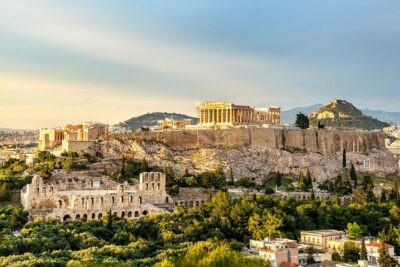
You start with one of the most recognizable Paul connections in Athens: Areopagus Hill. This is the setting traditionally linked to Paul speaking to the council of Athenians and introducing the idea of the Unknown God. Even if you’ve read Acts before, being up here gives you a sense of the stakes of that conversation, between ideas of the old world and the new message Paul brought.
The visit is short, about 20 minutes, and admission is free for this stop. Use that time to notice how exposed the viewpoint is and how a speaker would have “commanded” attention.
Other visits to ancient Corinth:
- From Athens: Ancient Corinth Day Trip with Canal & VR Guide★ 4.6 · 1,073 reviews
- Athens: Ancient Corinth & Nafplio Full Day Trip with Swim★ 4.8 · 531 reviews
- Athens: Corinth Canal, Mycenae & Nafplio Premium Guided Tour★ 4.7 · 322 reviews
- Athens: Corinth Canal, Mycenae and Nafplio Day Tour★ 4.3 · 252 reviews
2) Corinth Canal: the modern cut with ancient logic
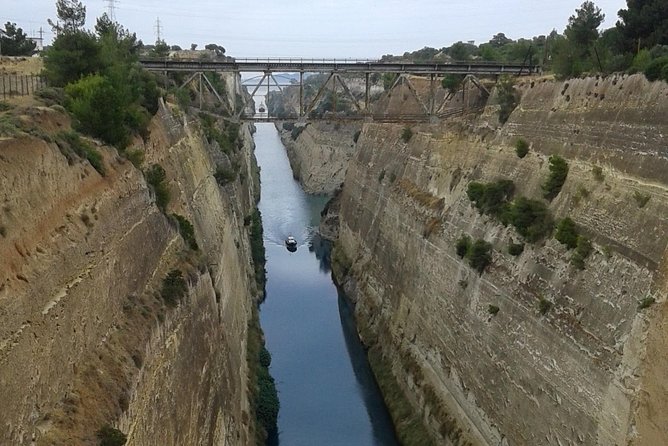
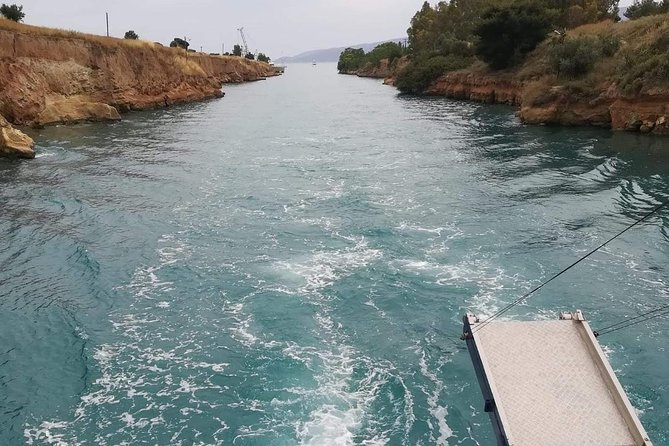
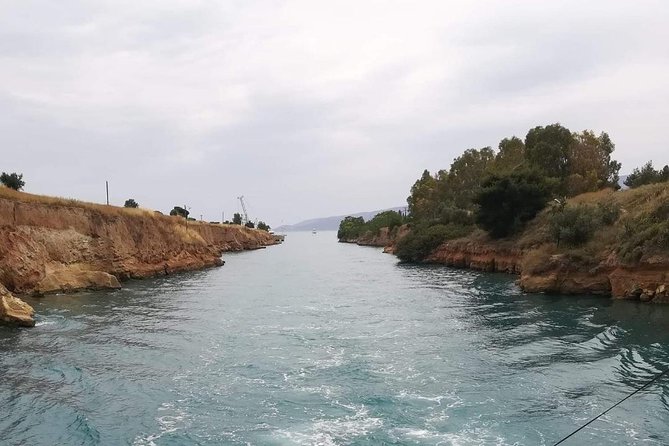
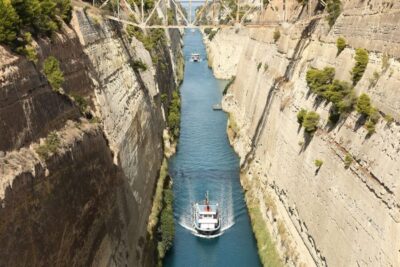
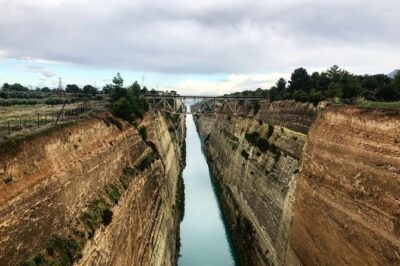
Next comes the Corinth Canal, a dramatic 19th-century engineering project connecting the Gulf of Corinth with the Saronic Gulf. It’s free to visit, about 30 minutes, and the tour frames it in the long timeline: the idea was discussed centuries before the canal was completed, including an ancient vision credited to Periander.
For me, this stop matters because it helps you imagine the everyday economic pressure in Paul’s world. If ships had to go the long way around the Peloponnese in antiquity, then a shorter route would change trade patterns and how quickly people and news traveled. That’s a useful backdrop for understanding how fast ideas could spread too.
3) The Diolkos: an ancient ship-transport system
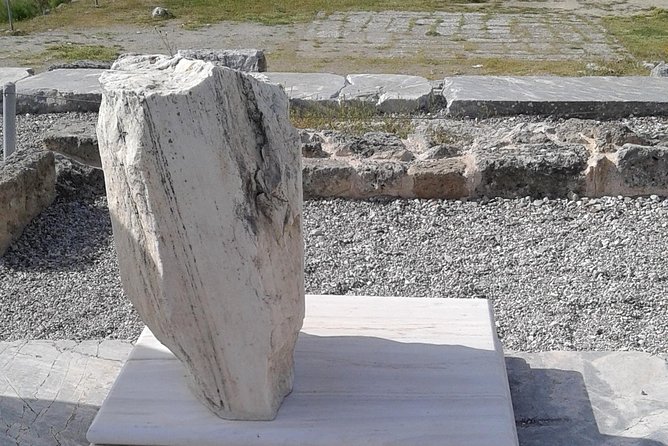
Right around the canal region you’ll visit the Diolkos, an engineering system dating back to antiquity that moved ships across the Isthmus. The tour gives you a tangible sense of how motion happened in this corridor: not just ships sailing, but hauling, organizing, and turning the geography into a shortcut.
This stop is only about 20 minutes, and it’s the kind of place where imagination fills the gaps. Stand where ships would have been routed, and think about the merchants, sailors, and busy logistics that would have surrounded travel in Paul’s time.
4) Isthmia: the games, Poseidon, and Paul’s setting
Then you land in Isthmia, near the corridor that mattered for worship and athletic competition. The big theme here is the Isthmian Games, the second most important games in the ancient Greek world after the Olympics, held in honor of Poseidon. The tour also connects Isthmia to an early glimpse of Christian presence: Paul is believed to have worked as a tentmaker while people gathered for the games.
You’ll spend about 1 hour at this first Isthmia stop. Admission is listed as free here. This is also a good place to watch for how the tour links public events to Paul’s outreach. The point is not only that Paul visited the area, but that he operated in the same kind of public crowd space where people from different backgrounds converged.
5) Archaeological Museum of Isthmia: objects that explain the vibe
After the outdoor sites, you get the Museum of Isthmia for about 30 minutes. Here you’ll see artifacts tied to the sanctuary of Poseidon and the games, including items connected to Kenchreai, the port linked with Paul’s departures.
This stop helps you switch from big scenes to small details. That matters because the New Testament world was not only made of famous sermons, it was also made of ports, offerings, and everyday commerce. The museum’s admission is not included, so if you know you’ll want time inside, budget for that in advance.
6) Ancient Corinth: the city where Paul preached and wrote
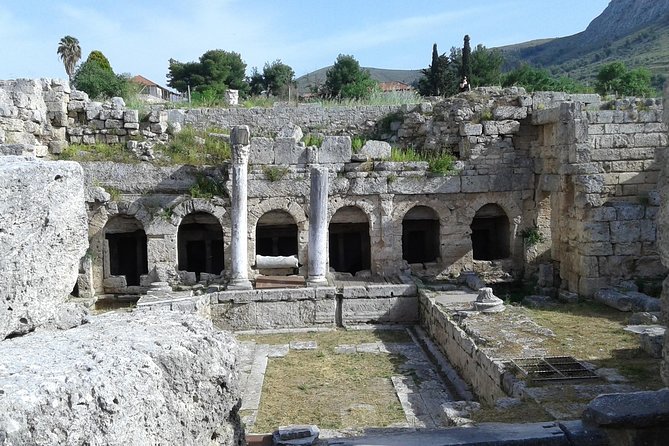
Now for the core payoff: Ancient Corinth (Archaia Korinthos). This is where the tour’s focus clicks. Corinth was a major commercial hub on the isthmus, and Paul lived and preached there for more than a year and a half, according to Acts. The tour connects that to Paul’s First and Second Corinthians, which addressed real challenges facing a young community.
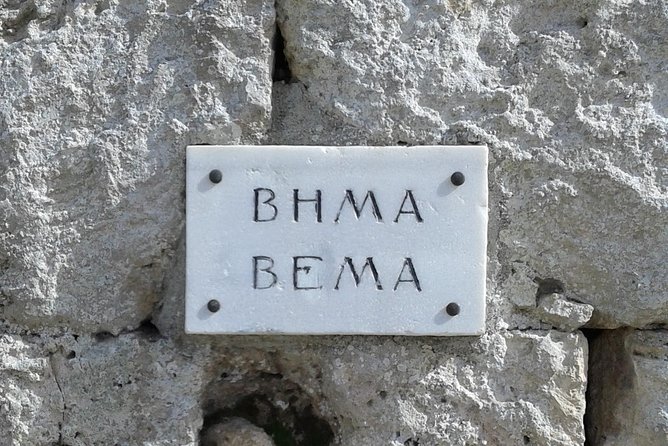
You’ll visit key Roman-era elements like the Bema area, connected to the episode where Paul stood before Roman proconsul Gallio. The visit is about 1 hour, and admission is not included for the site.
One practical tip: if you’re a museum-and-ruins person, you’ll want to keep your eye on walking routes here. The site can feel broad, so if you want photos plus time to read, move efficiently, then slow down for the Bema connection zone.
7) Second Isthmia stop: Poseidon temple, stadium, and sailor-focused worship
Later you revisit the Archaeological Site of Isthmia area for about 40 minutes. This section zooms in on the Temple of Poseidon, rebuilt multiple times, plus the ancient stadium where the Isthmian Games happened. The tour also points out the Sanctuary of Palaimon, dedicated to a protector of sailors.
This is where Paul’s “athletic imagery” connection becomes more than a Bible trivia fact. When you’re standing near a stadium setting, it’s easier to see why athletic language would resonate in letters written to communities living in the same Greek world.
8) Isthmia theater: entertainment side-by-side with faith
The itinerary also includes the ancient theater of Isthmia, built for musical events tied to the games. You’ll see Roman mosaics that depict sea creatures and Dionysian myths. This stop is short but useful because it captures the cultural backdrop: entertainment, festivals, and religious themes all mixed in public life.
The contrast in this tour is clear. You’re looking at the kind of crowd space where Paul preached a message centered on Christ. Even without turning it into a debate, it helps you understand what “competing ideas” looked like on the ground.
9) Isthmia as a political meeting place
The tour further emphasizes that Isthmia was not only about athletics and worship. Its strategic location made it a place where important political and military decisions were made in ancient Greece. The tour frames how leaders, philosophers, and delegates would gather here, and how Paul’s message offered a spiritual form of unity.
This might feel like a lot in one day, but it’s actually helpful. Athens was a center of ideas. Corinth was a center of commerce. Isthmia was a crossroads. Together, they show how Paul’s message met the world where people actually lived and gathered.
10) Temple of Apollo in Corinth: the idol-heavy skyline
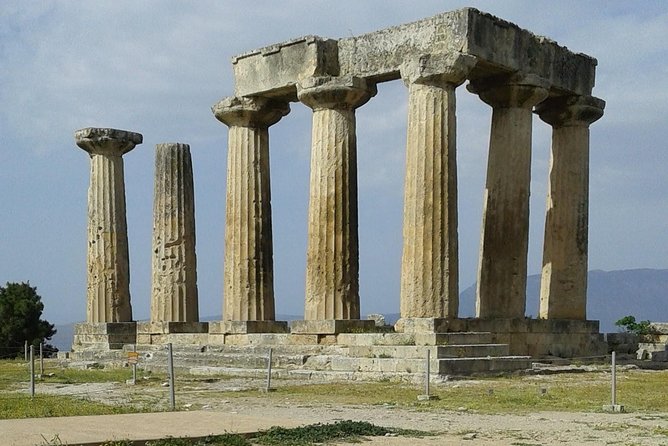
Back in Corinth proper, you visit the Temple of Apollo for about 30 minutes. The tour notes it as one of the oldest and most significant temples in Greece, built around 560 BC, with Doric architecture and monolithic limestone columns still standing.
This is a powerful visual reminder of the world Paul preached into, where Apollo was a major religious center tied to music, prophecy, and light. In a city surrounded by temples, Paul’s message of one God and Jesus Christ crucified would have landed with real intensity.
11) Kechries (Cenchreae): a port scene tied to Acts 18
Then the tour goes to Kechries, the site of ancient Cenchreae, Corinth’s eastern port. You’ll walk in the footsteps of Paul during his second missionary journey, when Acts 18:18 mentions him being there before departing for Syria.
One specific moment the tour highlights is Paul cutting his hair after fulfilling a vow. It also connects Cenchreae to early Christian life, including Paul commending Phoebe, described as a respected church servant in that port community.
This stop is about 30 minutes and is listed as free. It’s also one of the calmer breaks in the day. If you’ve been rushing mentally through ancient locations, this is a good place to slow your thoughts and let the sea-and-journey theme settle.
12) Apostolou Pavlou: a church tribute to Paul in Corinth
Next you visit Apostolou Pavlou, the church honoring the Apostle Paul who spent about 18 months in Corinth around 51 to 52 AD. This stop is about 20 minutes and is free.
It’s not the same as standing in a ruin, but it gives you a modern “anchor point” for reflection. If your faith is part of why you picked this tour, this is a good moment to step out of the archaeology and remember that early Christian communities were lived realities, not just ancient words.
13) Lunch stop at a seaside taverna
The itinerary includes a relaxing lunch at a traditional seaside Greek taverna for about 1 hour. Lunch itself is listed as not included, so this is a planned opportunity for you to choose what you want to eat and how you want to pace the afternoon.
If you want to avoid being trapped by tourist menus, use the lunch hour to ask for local favorites and pick something you can eat without rushing, since you still have two more major experiences after this.
14) Akrokorinthos: the fortress viewpoint over Corinth
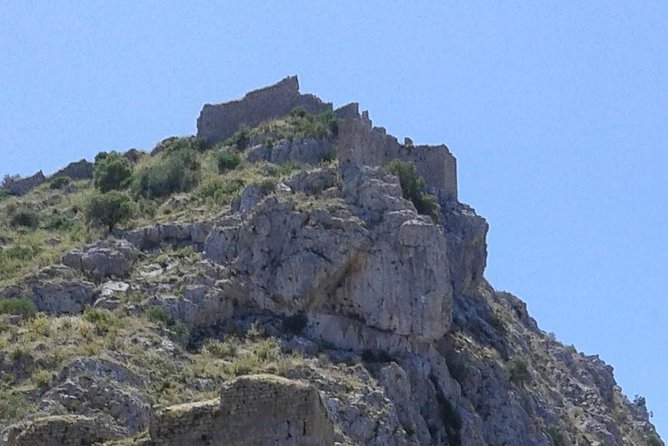
Finally, you go up to Akrokorinthos, the fortress above Ancient Corinth. The tour notes you follow what’s believed to be a path traveled by St. Paul and that from the walls you can look down over the city. The main payoff here is panoramic views and the emotional feel of elevation and distance.
This stop is about 40 minutes and is free. If you like photos, this is typically where the “final set” happens. If you don’t, still go slow, take in the scale, and connect it back to Paul’s mission among a city that sat on a strategic corridor.
Pacing and how to keep it from feeling rushed
This tour is designed as an 8-hour day with many stops, so you should treat it like a full mission, not a leisurely stroll. One reason people rate it highly is that drivers often help keep things flowing and offer flexibility, such as swapping out planned time if you’ve already seen a highlight like Mars Hill.
If you want a slower experience, tell your driver early how you like your timing. The private format is the main reason this tour works for different styles.
Is this the right fit for you?
You’ll love this tour most if:
- You want Christian history rooted in places, not only in reading.
- You like pairing Bible stories with the geography of travel, ports, and public crowds.
- You’re okay with an active day where the vehicle ride helps link sites together.
You might think twice if:
- You hate tight schedules and prefer long museum time with zero rushing.
- You only want one or two major stops and would rather do the rest independently.
Should you book this St Paul footsteps tour?
If you can group up to share the cost, this is a smart way to see a lot of Corinth in one day without the stress of driving and navigation. The itinerary connects Athens to Corinth in a way that feels like a single story line, especially at Mars Hill, Ancient Corinth with the Gallio/Bema connection, and the port-and-departure stops at Kechreai.
Book it if you want meaning plus logistics. Skip it if you’re looking for a slow, purely museum-style day. If you do book, go in with one mindset: this is a route you follow, not a checklist you forget the moment you leave.
FAQ
What is the duration of the tour?
The tour lasts about 8 hours.
How many people are in a group?
The tour is priced per group for up to 4 people, since it is private.
Do you pick up from my location in Athens?
Yes. Pickup is offered from your place.
Is the tour in English?
Yes, it is offered in English.
Are tickets and entrances included?
Entrance tickets for Ancient Corinth and the Archaeological Museum of Corinth cost €15.00 per person and are not included. Other listed stops have free admission.
Is lunch included?
Lunch is not included, though the itinerary includes a lunch stop at a traditional seaside Greek taverna.
Do I need a licensed tour guide?
The included driver provides commentary but is not a licensed tour guide. A licensed tour guide can be requested depending on availability.
Is this tour only for my party?
Yes. It is private, so only your group participates.
Can I cancel and get a refund?
Yes. You can cancel up to 24 hours in advance for a full refund. If you cancel less than 24 hours before the start time, the amount paid is not refunded.
Latest from under the Acropolis




Ancient Corinth Tours, compared.
Ancient Corinth Day Trip with Canal & VR Guide
Read our review →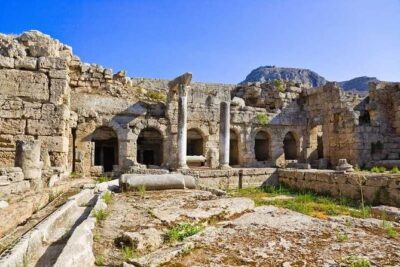
Biblical Tour Letters ToThe Corinthians St Paul’s Footsteps 6Hour
Read our review →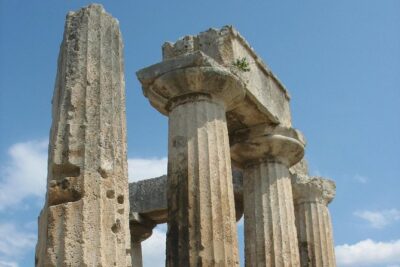
Private Biblical Tour Ancient Corinth & Isthmus Canal from Athens
Read our review →
Corinth Canal, Mycenae & Nafplio Premium Guided Tour
Read our review →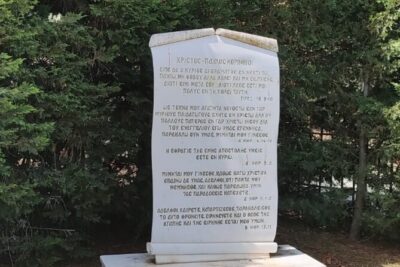
Private Tour of Apostle Paul’s Footsteps in Ancient Corinth
Read our review →
Corinth Half-Day Trip from Athens with Entrance Tickets
Read our review →Browse the lists this tour appears in