
Reviewed · ANCIENT CORINTH TOURS
Biblical Corinth: St. Paul and His Letters to the Corinthians
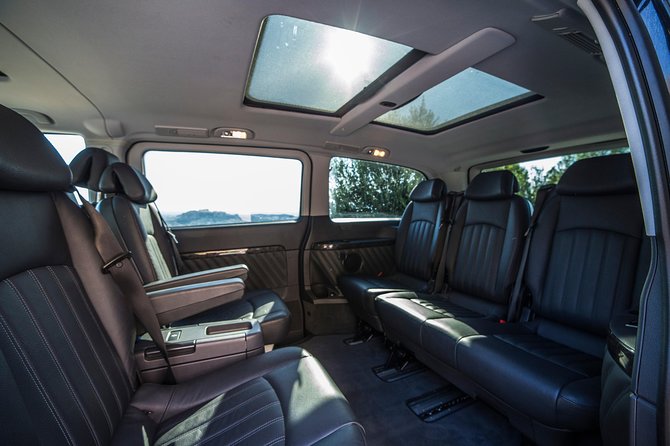
Mars Hill meets Corinth in one day. This private tour follows the geography behind St. Pauls life and letters, starting with his sermon moment at Areopagus Hill and then pushing on to Corinth and the ports where his story spread. You also ride in comfort with an air-conditioned car and onboard Wi-Fi, so the day stays easy even when you are moving fast.
What I really like is the private pace. You are not stuck in a rigid group line. You can spend extra moments where you want them, and the stops are set up so you understand the place, not just see it. One heads-up, though: your driver is not a licensed site guide, so they usually explain from outside the ruins, and a licensed guide inside Ancient Corinth is optional (and the two paid sites may add a small ticket cost).
In This Review
- Key Highlights You’ll Actually Feel During the Day
- A Private Driver Who Turns Stops Into a Story
- Areopagus Hill (Mars Hill), Then the Athens Connection Gets Personal
- Corinth Canal and the Diolkos, Where Water Routes Shaped Everything
- Isthmia: Poseidon Games, Crowds, and Paul’s Tentmaker Life
- Ancient Corinth and the Bema Moment With Gallio
- Kechries (Cenchreae) Port Walk and Apostolic Footprints
- Akrokorinthos: The Fortress View That Makes Corinth Feel Real
- Lunch in Corinth, Plus How to Pace the Day
- Price and Logistics, What You’re Really Paying For
- Who Should Book This St. Paul to Corinth Tour
- Should You Book This Tour?
- FAQ
- FAQ
- Is this a private tour or a group tour?
- What is included in the price?
- Does the tour include a licensed tour guide inside the sites?
- What sites have entrance fees?
- How long is the tour?
- Does the tour offer Wi-Fi and bottled water?
- Is lunch included?
- Where does pickup happen?
- What languages is the tour offered in?
- Can I cancel for a full refund?
Key Highlights You’ll Actually Feel During the Day
- Private transportation with hotel or port pickup, so you do not waste your morning figuring out logistics
- Wi-Fi on board, useful for Bible reading, route checking, and quick map sanity checks
- Areopagus Hill (Mars Hill) in the opening act, where Paul’s message hits the philosophical heart of ancient Athens
- Isthmia and the Isthmian Games setting, tied directly to Paul’s tentmaker life and athletic imagery
- Ancient Corinth with the Bema focus, including the Gallio moment that lets Paul keep preaching
A Private Driver Who Turns Stops Into a Story
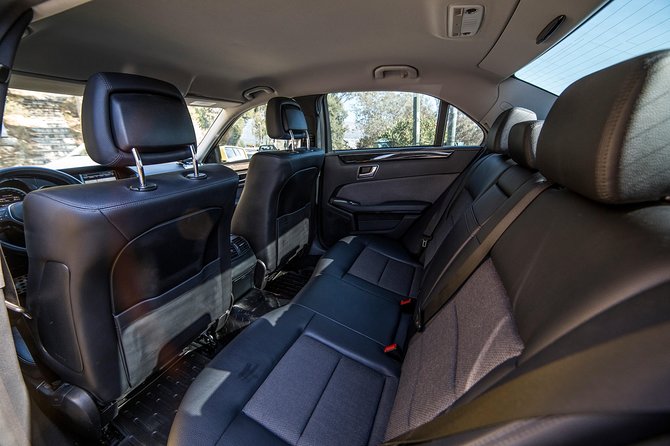
This is the kind of day trip where the car matters as much as the ruins. You get professional drivers with deep background in the places, and they share the context as you travel between Athens and Corinth. In the feedback, names like Alex, George, Spiros, Stephanos, Panos, and Kostas come up a lot, and the consistent theme is clear communication and patience. The vibe is relaxed, not rushed, and you can ask questions as you go.
Just know the format: the driver is not a licensed archaeological guide who walks into the sites with you. They can answer questions and explain what you are seeing, but they typically will not accompany you inside Ancient Corinth or the museum. If you want a licensed guide to walk you through the ruins, that is available on request depending on availability.
For me, that tradeoff is manageable. It still feels like a guided experience, because the explanations happen right when they are most useful, while you can still make sense of what you see.
More trails following Paul through Greece:
- Biblical Tour Letters ToThe Corinthians St Paul’s Footsteps 6Hour
★ 5.0 · 1,065 reviews - Private Biblical Tour Ancient Corinth & Isthmus Canal from Athens
★ 5.0 · 762 reviews - Private Tour of Apostle Paul’s Footsteps in Ancient Corinth
★ 5.0 · 275 reviews - Paul”s Footsteps Ancient Corinth Biblical Tour
★ 5.0 · 184 reviews
Areopagus Hill (Mars Hill), Then the Athens Connection Gets Personal
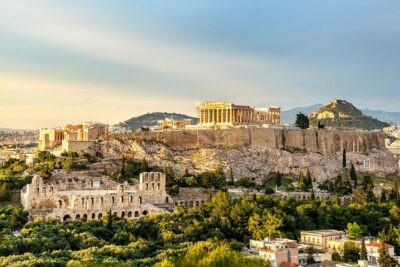
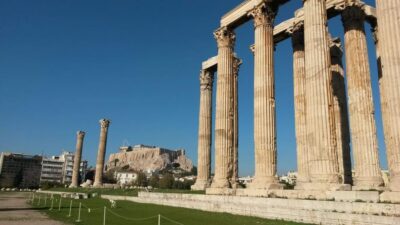
The day starts at Areopagus Hill, also known as Mars Hill, where Apostle Paul delivered one of his most impactful sermons. You will walk through the sacred grounds of the Acropolis area, with a special stop at the hill tied to Pauls speech about the Unknown God. Even if you know the story already, this is a strong opening because it frames Corinth not as a random stop, but as part of a bigger message moving through the ancient world.
This stop is short, around 20 minutes, and admission is free. The value here is tone-setting. You are not yet in ruins and temples of Corinth. You are in the setting where ideas were argued out, and Paul enters that world with a message that challenges what Athens already thought it knew.
Practical tip: wear shoes you trust. Even short walks around ancient viewpoints can get slippery, especially if the weather is warm and dry.
Corinth Canal and the Diolkos, Where Water Routes Shaped Everything
Then you head out of Athens toward the engineering landmarks that help you picture the route Paul would have been moving through.
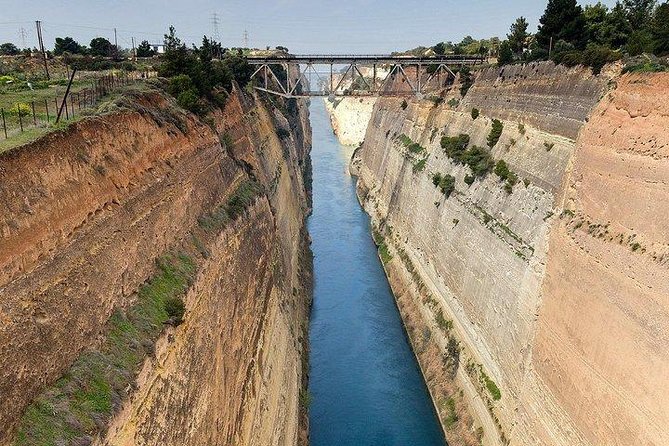
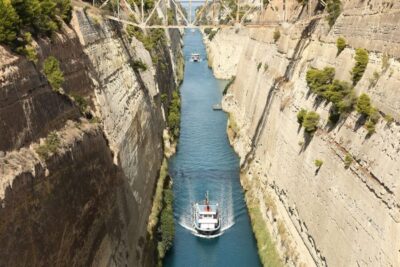
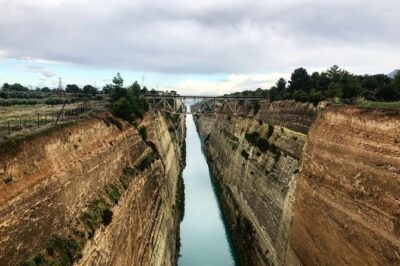
At the Corinth Canal, you get about 30 minutes with some of the best views of the isthmus from above. The canal is a modern cut through the narrow Isthmus of Corinth, connecting the Gulf of Corinth on the Ionian Sea side with the Saronic Gulf on the Aegean side. It is only 6.4 kilometers long, and it is narrow at the base, so many modern ships cannot pass it. Still, the big lesson is how the region funnels sea traffic and why Corinth mattered so much.
A short step later, you visit the Diolkos, an ancient ship-carrying route that predates the canal by a long shot. This overland roadway transported ships across the isthmus, connecting the two seas long before the modern canal. Seeing the remnants is one of the best ways to turn a Bible chapter into real geography. You can almost picture the flow of merchants and sailors, the kind of travelers Paul would have brushed shoulders with.
Both stops are free and quick, so do not expect big museum time. Think of them as the visual intro to why Corinth was such a magnet.
Isthmia: Poseidon Games, Crowds, and Paul’s Tentmaker Life
Now you get into the heart of the day for many Bible-focused travelers: Isthmia. This area was home to the Isthmian Games, second in importance only to the Olympic Games, held in honor of Poseidon. The location was a crossroads, where people came for athletics, religion, and trade. That matters, because Pauls presence here is tied to the same kind of gatherings.
You spend about an hour at Isthmia, with no admission fee listed for this stop. The story connection is the big draw: Paul is believed to have worked as a tentmaker nearby. That means he was not just watching crowds from the sidelines. He would have had contact with visitors, athletes, and travelers, and he could share his message in the middle of everyday life.
After that, you also visit the Archaeological Museum of Isthmia for around 30 minutes. This museum is where you can slow down and see the cultural and religious context through artifacts connected to the Sanctuary of Poseidon and the games. A highlight mentioned includes glass panels from Kenchreai, the nearby port from which Paul set sail for Syria. There are also statues, votive offerings, and burial artifacts that help you picture the variety of people and beliefs in Pauls orbit. Museum entry is not included, and it may require the on-site ticket you will likely purchase with the Ancient Corinth admission.
Then you go back to the Archaeological Site of Isthmia, about 40 minutes. Here you will see the Temple of Poseidon rebuilding work over centuries, the stadium, and the Sanctuary of Palaimon, patron of sailors. This is one of the best places in the day to understand why Paul could use athletic imagery in his letters. You are literally standing in the environment where competition, endurance, and public performance were everyday concepts.
Two bonus stops on the Isthmia theme round things out: there is time at the ancient theater associated with musical contests, and you will also hear how Isthmia’s strategic position brought political and military decision-making over time. That mix of religion, public spectacle, and real-world influence is exactly the kind of setting where a message spreads quickly.
Ancient Corinth and the Bema Moment With Gallio
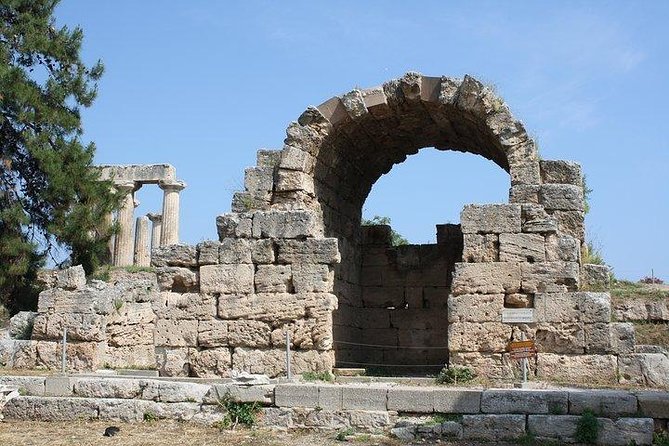
At Ancient Corinth, you spend about an hour. This is where Corinth becomes more than scenery. You connect the place to the letters you have read.
Ancient Corinth sits on the isthmus, and it thrived as a trade and cultural center. Paul spent more than 18 months here, setting up a Christian community. Later, his letters to the Corinthians addressed the moral and spiritual challenges of that early church. So when you are walking the site, you are not just touring. You are placing Pauls words into a physical city that shaped his ministry.
A key feature is the Bema, a judgment seat area connected to the famous Gallio scene. Paul is believed to have stood before Proconsul Gallio, who refused to judge the dispute. That refusal mattered. It meant Pauls work could continue without Rome stepping in to stop it. Standing at the Bema today gives you a direct line to that turning point.
In practical terms, Ancient Corinth entry is not included, so you should plan on buying tickets on site. The tour price also calls out that the Archaeological Museum of Isthmia and Ancient Corinth admission is about €15 per person, purchased on site.
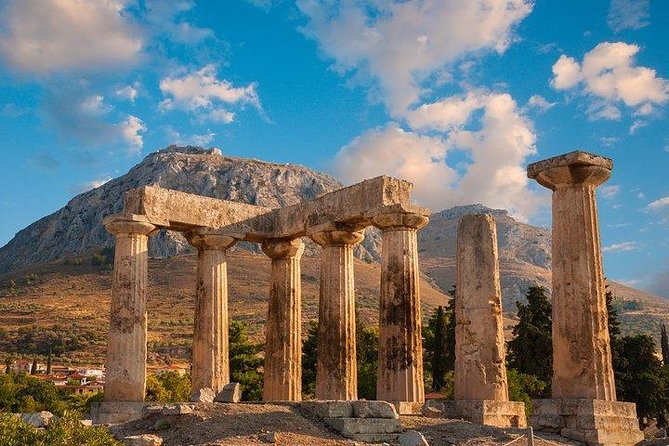
Next you add a stop at the Temple of Apollo in Ancient Corinth. It is one of the oldest important temples in Greece, built around 560 BC, with massive monolithic columns still rising. When Paul arrived, the temple would have dominated the skyline. It helps you visualize the polytheistic world Paul confronted, and why his message of Jesus Christ could feel like a real challenge to the status quo.
Other visits to ancient Corinth:
- From Athens: Ancient Corinth Day Trip with Canal & VR Guide★ 4.6 · 1,073 reviews
- Athens: Ancient Corinth & Nafplio Full Day Trip with Swim★ 4.8 · 531 reviews
- Athens: Corinth Canal, Mycenae & Nafplio Premium Guided Tour★ 4.7 · 322 reviews
- Athens: Corinth Canal, Mycenae and Nafplio Day Tour★ 4.3 · 252 reviews
Kechries (Cenchreae) Port Walk and Apostolic Footprints
After you eat and catch your breath, or depending on timing, you will reach Kechries, the location of ancient Cenchreae, the eastern port of Corinth. You walk where Paul is described as being during his second missionary journey, in Acts 18:18.
One of the most interesting details tied to this port is what happened before Paul sailed for Syria with Priscilla and Aquila. Paul cut his hair to fulfill a vow, which is often understood as connected to a Nazirite commitment. The port setting gives this a grounded feel, because it is not just a personal detail. It is a departure point.
This is also where an early Christian community is linked. In Pauls letter to the Romans, he speaks warmly of Phoebe, a trusted servant in the church at Cenchreae. So this is a “journey turning point” stop, both personal and church-focused.
You then have a shorter church visit at Apostolou Pavlou, a church that honors Paul. It is another place where the past meets daily life, since you are standing in a modern tribute to the first wave of Christian presence connected to Pauls 18 months in Corinth.
Akrokorinthos: The Fortress View That Makes Corinth Feel Real

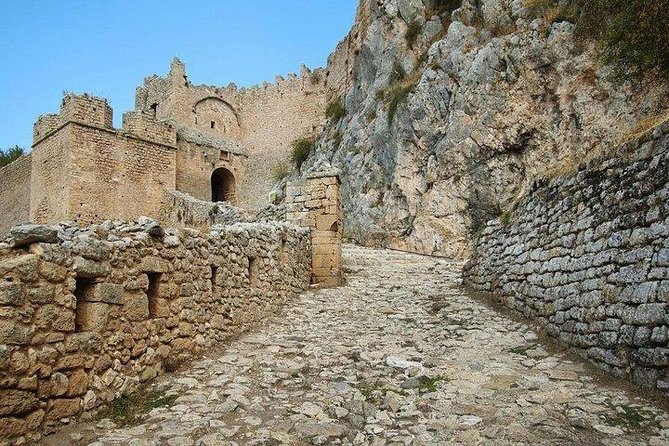
If you like your history with a view, you will appreciate Akrokorinthos, the fortress overlooking Ancient Corinth. You spend about an hour ascending its ancient paths and walls, tracing routes connected with the city’s dramatic position. This is where the topography clicks. You can look down and understand why Corinth was so strategically important, and why people fought and traded over this spot for centuries.
In the context of Paul, the viewpoint is also reflective. You can imagine Paul looking out over the same terrain while thinking about the community he was building and the challenges he was addressing in his letters.
Practical note: this is the one stop where your shoes matter most. It is not described as an “extreme sports” activity and those are not allowed, but you are still dealing with climbs and uneven ground.
Lunch in Corinth, Plus How to Pace the Day
Midday, you take a leisurely lunch at a traditional seaside Greek taverna. The tour gives you an option: if you choose the With Greek traditional food option, the cost is included in the tour price. Either way, you get about an hour.
This lunch break matters more than it sounds. The stops are spread across ancient Greece sites that can feel like back-to-back “wow” moments. Having a real meal prevents the day from turning into a history sprint.
Since bottled water is included, you can keep hydrated without hunting down drinks. Still, bring a little extra water or plan to sip regularly, especially in summer.
Price and Logistics, What You’re Really Paying For
The tour price is $218.43 per person, and it runs about 8 to 9 hours. That cost can look steep at first glance, but you are paying for more than a ride.
You get:
- hotel or port pickup and drop-off
- private transportation in an air-conditioned vehicle
- onboard Wi-Fi
- bottled water
- and lunch if you select the traditional food option
For a day trip that covers multiple high-value stops across a long route, private pickup saves time and stress. It also helps you avoid the “switching transportation all day” problem that can easily chew up your hours.
The main cost consideration is site entry. Ancient Corinth and the Archaeological Museum of Isthmia are not included. The tour indicates you can buy the entrance ticket on site, listed at about €15 per person. Most other stops in the program list free admission.
One more format note: because your driver is not a licensed guide inside the archaeological sites, you should set expectations. You will get strong explanations, but you might not get the full inside-the-ruins commentary you would get from a separate licensed guide. A licensed tour guide inside is available on request depending on availability.
Who Should Book This St. Paul to Corinth Tour
This is a great fit if you:
- want a Bible-connected route that follows the geography of Paul’s letters
- like private days where you can slow down at the places that grab you
- appreciate context, like the way the canal and diolkos explain why Corinth mattered
- enjoy the blend of Christian significance and ancient Greek settings, like Areopagus Hill and Isthmia
It might be less ideal if you:
- need a licensed guide to narrate inside every archaeological stop
- have limited mobility and do not want climbs, especially with Akrokorinthos
- dislike paying on-site for major museum and ruins admissions
Should You Book This Tour?
If you are serious about St. Paul and you want the day to feel organized but not rigid, I would book it. The private pickup, the Wi-Fi, and the fact that the day starts at Mars Hill and keeps tightening the story through Corinth is a smart way to make the letters feel real.
Just go in knowing how the guide role works: the driver provides the storytelling and commentary, but a licensed guide inside certain sites is optional. If you handle that expectation and you are ready for some walking, this is a satisfying, meaningful day in the places where Pauls message traveled.
FAQ
FAQ
Is this a private tour or a group tour?
This is a private tour, meaning only your group participates.
What is included in the price?
The tour includes hotel or port pickup and drop-off, private air-conditioned transportation, onboard Wi-Fi, bottled water, and lunch if you select the Greek traditional food option.
Does the tour include a licensed tour guide inside the sites?
A licensed tour guide is not included. Drivers are knowledgeable and can provide commentary in fluent English, but they are not official tour guides who enter the archaeological sites. A licensed tour guide can be requested depending on availability.
What sites have entrance fees?
Entrance fees are not included for Ancient Corinth and the Archaeological Museum of Isthmia. These can be purchased on-site for €15 per person.
How long is the tour?
The duration is approximately 8 to 9 hours.
Does the tour offer Wi-Fi and bottled water?
Yes, there is Wi-Fi on board and bottled water is included.
Is lunch included?
Lunch is included if you choose the With Greek traditional food option. It takes about 1 hour at a traditional seaside Greek taverna.
Where does pickup happen?
Pickup is available from hotels or ports. For hotels, the driver waits in the lobby. For apartments, they wait at the building entrance. For port pickup, the driver waits at the gate holding a sign with your name.
What languages is the tour offered in?
The tour is offered in English.
Can I cancel for a full refund?
Yes. You can cancel up to 24 hours in advance for a full refund. If you cancel less than 24 hours before the experience start time, the amount you paid is not refunded.
Latest from under the Acropolis




Ancient Corinth Tours, compared.
Ancient Corinth Day Trip with Canal & VR Guide
Read our review →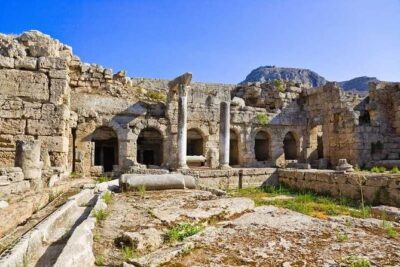
Biblical Tour Letters ToThe Corinthians St Paul’s Footsteps 6Hour
Read our review →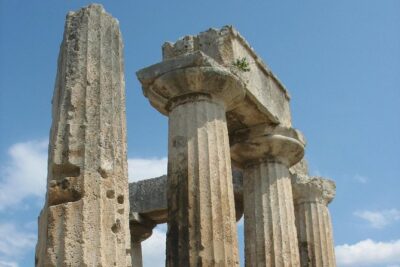
Private Biblical Tour Ancient Corinth & Isthmus Canal from Athens
Read our review →
Corinth Canal, Mycenae & Nafplio Premium Guided Tour
Read our review →
Private Tour of Apostle Paul’s Footsteps in Ancient Corinth
Read our review →
Corinth Half-Day Trip from Athens with Entrance Tickets
Read our review →Browse the lists this tour appears in