
Reviewed · MYTHS & LEGENDS TOURS
Athens Riverside: A Journey in Mythical Athens
Ancient rivers run under modern Athens. I love tracing the Heridanos route, including a river stretch uncovered during metro work, and I love the payoff of major sites plus big hilltop views from Pnyx and Philoppapos. One thing to consider: this is a real 3-hour walking tour with hills, and summer heat can feel brutal.
This tour is built like a story walk, not a checklist. You meet at Monastiraki Square and then follow two ancient waterways, the Heridanos and the mostly underground Ilissos, as your guide connects myths, daily life, and later layers of Athens that include Roman and Christian traces.
If you want Athens beyond the usual postcard stops, you will like this. The guide lineup varies by day, and I’ve seen names like Helena, Dionysus, Eleni, and Arthur tied to thoughtful pacing and lots of myth-to-modern connections, plus small extras like treats for younger visitors.
In This Review
- Key highlights worth planning for
- Monastiraki Square, then straight onto the ancient river story
- Heridanos beneath your feet, plus why one uncovered river matters
- The Ilissos, mostly underground, and the myths you’ll remember
- Sacred sanctuaries, Christian remnants, caves, and Roman baths along the way
- Ancient Agora and Acropolis: why they work better in a river-based route
- Sacred hills with Ares, Nymphs, the Assembly, and the Muses
- Pnyx and Philoppapos Hills for panoramic Athens photos
- Roman Conservatory of Athens and other route oddities
- Price and value: what $83.77 buys you in Athens
- Logistics, timing, and the pace reality check
- Who this tour is for, and who should skip it
- Should you book Athens Riverside in Athens?
- FAQ
- How long is the Athens Riverside tour?
- Where do I meet the guide?
- Where does the tour end?
- What’s included in the price?
- Are food and drinks included?
- What language is the tour offered in?
- Does the tour run in bad weather?
- What is the cancellation policy?
Key highlights worth planning for
- Follow the Heridanos riverbed through central Athens, including the metro-era reveal
- Walk the Ilissos course and hear how a mostly hidden river shaped myth and learning
- See the Ancient Agora and Acropolis as part of a single coherent route
- Climb sacred hills for viewpoints from Pnyx and Philoppapos (often the best photos)
- Hit myth-linked stops tied to Ares, the Nymphs, the Athenian Assembly, and the Muses
- Pass layered Athens with Roman and Christian remnants along the way
Monastiraki Square, then straight onto the ancient river story
You start near Ermou 111 in Athens, with the practical meetup point anchored at Monastiraki Square. That matters because this is not a “ride first, walk later” day. The walk begins right where a chunk of history was literally exposed during construction work, so you get the feeling that Athens sits on top of itself, layer after layer.
From the jump, the tone is myth-plus-meaning. Your guide sets up the two river routes that give the tour its identity: the Heridanos and the Ilissos. This is a clever way to explore because it turns streets you might otherwise ignore into a map of stories. Instead of asking, Where am I?, you start asking, What used to be here?
One practical note: you’ll end near the Acropolis Museum, so plan for a smooth transition if you want to keep exploring after the tour.
Other retellings of the old stories on foot:
- Athens: Mythology of Delphi, Museum and Arachova Guided Tour
★ 4.7 · 5,102 reviews - Athens & Acropolis Highlights: Greek Mythology Small-Group Tour
★ 5.0 · 2,370 reviews - Athens: Acropolis and Mythology Highlights Small Group Tour
★ 4.8 · 2,275 reviews - Athens: Mythology Tour for Families
★ 4.8 · 173 reviews
Heridanos beneath your feet, plus why one uncovered river matters
The Heridanos is the first big hook of the day. At Monastiraki Square, you can see part of the ancient Heridanos (also called Eridanos) that was uncovered during metro construction in the 1990s. The river’s origin is linked to Mount Lycabettos, and its old path once ran toward the Kerameikos archaeological area.
What I like about this stop is the “how is this possible?” moment. Modern Athens can feel flat and straightforward until you realize a major watercourse once ran through and even beneath the city. When you follow the route on foot, the city starts to make a different kind of sense. Streets become corridors. Side alleys become clues.
It also adds a fun contrast: you are walking past modern neighborhoods and then stepping into an older Athens where the river system played a role in movement, settlement, and storytelling. It’s not just scenery. It’s structure.
The Ilissos, mostly underground, and the myths you’ll remember
The second river is the Ilissos. Unlike the Heridanos, the Ilissos runs mostly underground through modern Athens. Still, the banks and nearby areas mattered enough that ancient writers and teachers turned to it often.
Socrates gets a mention here as a favorite teaching locale connected to the Ilissos area. That detail helps you understand why a quiet, hard-to-see river can still be central to culture. The tour treats the Ilissos like a living character in the city’s mythology, even when you cannot see much water at all.
This is one of the reasons the tour can feel more memorable than a standard “ancient sites sprint.” You are learning how ideas travel, even when the physical landmark is faint or hidden. And once you get that mindset, you’ll notice how many parts of Athens feel like they are keeping secrets.
Sacred sanctuaries, Christian remnants, caves, and Roman baths along the way
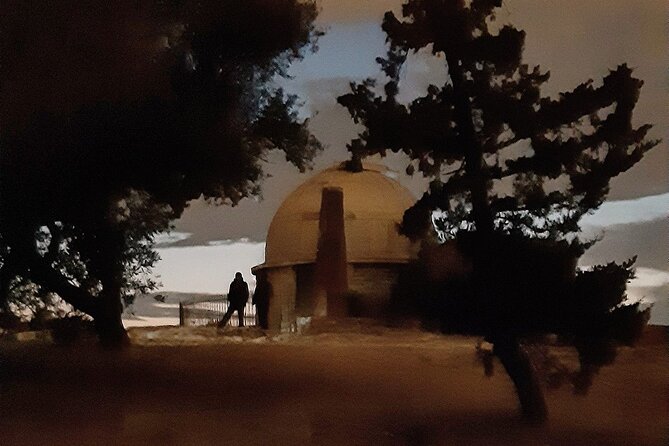
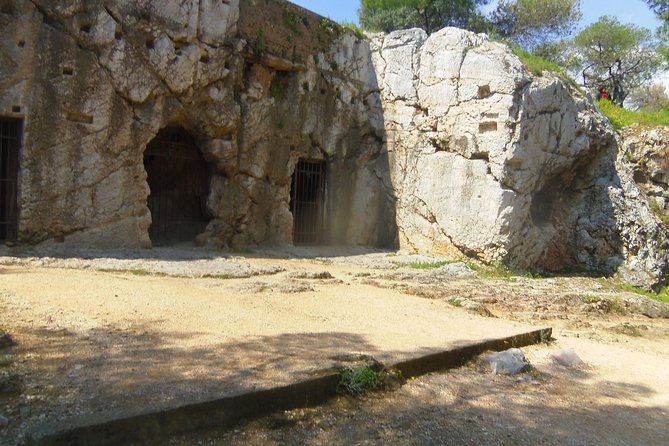
Between the river routes and the big archaeological stops, you pass through a patchwork of Athens through the centuries. The route includes ancient sanctuaries dedicated to Greek gods, remnants of Christian churches, mystical caves, and the ruins of Roman baths.
I like routes like this because Athens is not one time period. It is a stack. You may see Greek material, then hints of later faith, then Roman urban life, all within walking distance. It makes the city feel more human, less like a museum floor.
The drawback is simple: it can be easy to get distracted if you are expecting only marble glory. If you are looking for constant dramatic ruins at every step, you might feel the pacing slows at points. But for most people, those in-between layers are exactly where the magic sits.
Ancient Agora and Acropolis: why they work better in a river-based route
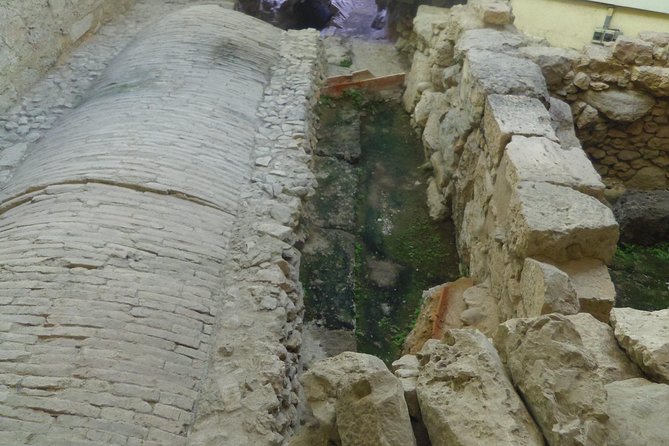
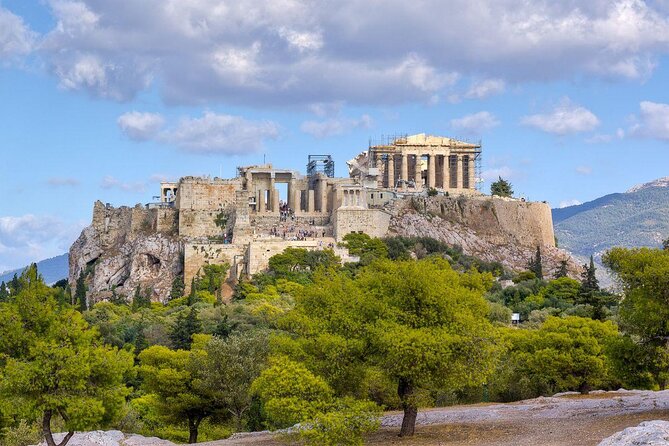
You visit major archaeological sites including the Ancient Agora and the Acropolis. Doing these as part of a river-focused walk helps because you’re not just looking at monuments. You’re connecting them to why people gathered where they did.
The Ancient Agora is a natural anchor for Athens as a civic and cultural center. And the Acropolis viewpoint payoff matters because it gives you the wide-angle understanding of how the city sits around its sacred core.
You also finish in front of the Acropolis Museum. That’s a practical win. You can keep going without having to backtrack, and you have a logical place to turn ideas from the walk into objects and interpretation.
Same hours, spent a different way in Athens:
- Athens: Acropolis & up to 5 Archaeological Sites Combo Pass★ 4.2 · 13,904 reviews
- Athens: Acropolis, Parthenon & Acropolis Museum Guided Tour★ 4.8 · 9,316 reviews
- The Acropolis, Parthenon & Acropolis Museum Guided Tour★ 4.7 · 8,493 reviews
- Athens: Cape Sounion & Poseidon Temple Sunset Half-Day Trip★ 4.8 · 8,241 reviews
Sacred hills with Ares, Nymphs, the Assembly, and the Muses
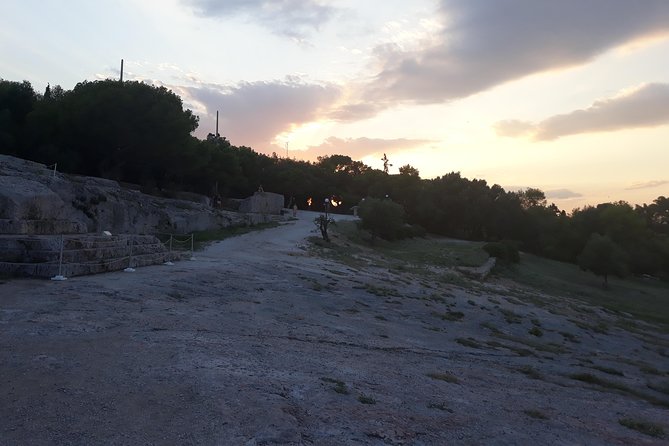
A key part of the tour is walking and pausing on myth-linked hills and stopping points. One stop focuses on the best views of the sacred hill and its slopes while listening to the city’s legends. Then you move on to learn about the small naked rock of Ares.
From there, the route goes through the mythical hill of Nymphs to the Athenian Assembly. Another stop is the hill of Muses. In practice, these pauses do two things. First, they give your legs a break. Second, they let the mythology land while you are standing where the ideas are tied to place.
This is one area where I’ve seen the guides get high marks. People specifically praised guides for being friendly and for connecting past and present at every corner, which is exactly what you want on a tour like this. If your guide is good at linking story to view, the stops stop feeling like random trivia and start feeling like a guided walk through a mental map of ancient Athens.
There is a small reality check, though. Hills mean effort. If you’re visiting on a warm day, bring water and dress for heat even if the forecast looks mild early in the day.
Pnyx and Philoppapos Hills for panoramic Athens photos
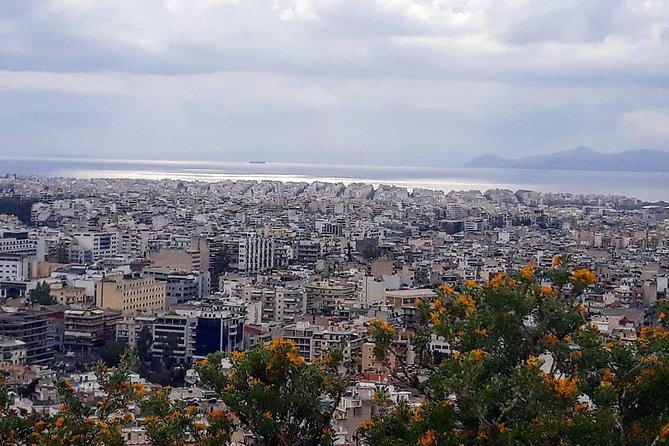
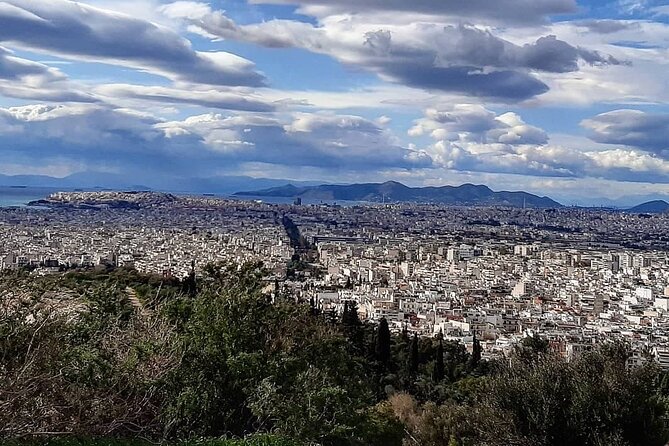
Views are a major reason to book this. The tour includes panoramic city views from Pnyx and Philoppapos Hills. If you pick a later departure, you might get sunset light, depending on timing. Either way, these hills give you that Athens perspective that you cannot easily get from just staring up at the Acropolis from the street.
I love this part because you’re not only photographing monuments. You’re photographing the city’s layout, the way neighborhoods climb and fold into one another around the sacred center. It helps you understand why so many ancient stories focus on elevation, assembly spaces, and the drama of seeing far.
Just know that viewpoint time plus walking time can add up quickly. The tour is about three hours, so you will want to start with comfortable shoes and a mindset that this is not a sit-down experience.
Roman Conservatory of Athens and other route oddities
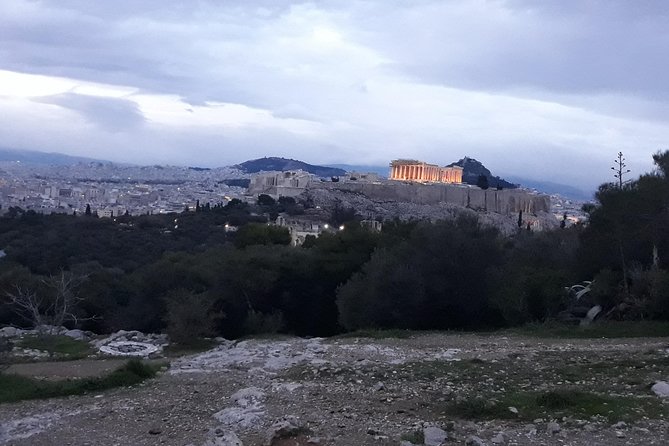
You also pass by the Roman Conservatory of Athens, a stop that adds variety to the day. It’s not the kind of place most visitors plan around, so it helps make the walk feel more original.
That’s the theme of the tour. It covers archaeological parks and areas you might skip when you are only focused on the headline sights. In one review, this was called out as a strong choice if you have already been to Athens multiple times and want a route off the usual track.
If you are a first-time visitor, this can still work well. You get big sites like the Ancient Agora and Acropolis, but you also get context. If you already know the major highlights, this helps you fill in the gaps with a walking route that feels guided and purposeful.
Price and value: what $83.77 buys you in Athens
At $83.77 per person for roughly three hours, this sits in the midrange for guided walking tours in Athens. The value comes from a few concrete things:
- You get a local guide for a full walking circuit, not a short stop-and-snap format.
- You cover a lot of ground thematically, with river mythology as the thread.
- You hit multiple major areas, including Ancient Agora and Acropolis views, while also passing layered city relics.
The tradeoff is also clear. Food and drinks are not included, so you’ll want to plan a snack break either before or after. Also, you are paying for walking time, so you’ll feel the price more if your legs hate hills.
If you like tours where stories guide your route, this price can feel fair. If you prefer minimal walking and maximum sitting, you may decide to swap to something more relaxed.
Logistics, timing, and the pace reality check
You get several daily departure times, so you can pick what fits your day. That is important for a hills-and-views itinerary.
Dress code is casual, and the tour operates in all weather conditions. That means you should bring the basics, especially in shoulder seasons when conditions can change fast. Wear layers you can manage while moving, not clothes you wish you had brought after the fact.
Also keep in mind that one review described a rough start due to a late guide arrival. That’s not a pattern you can count on, but it’s enough that I’d treat this like any city walk: show up a few minutes early, be ready to wait briefly, and don’t schedule a fragile next appointment right on the hour.
Most importantly, the tour is described as private activity, meaning only your group participates. That tends to make questions easier and pacing calmer.
Who this tour is for, and who should skip it
This is ideal if you:
- Want Athens mythology tied to real geography, not just spoken facts
- Like walking tours that connect big monuments to smaller clues
- Enjoy viewpoints and hilltop stops like Pnyx and Philoppapos
- Have already seen some classic Athens sights and want quieter archaeology and neighborhoods
You might skip or rethink it if you:
- Get frustrated by lots of uphill walking in hot weather
- Want a very light, low-effort tour with minimal terrain
- Are hungry for long food breaks, since no food or drinks are included
If you’re bringing teens, this can also work. One guide experience included buying koulouri for younger visitors to keep them engaged, which tells you the day can be made age-friendly when the guide is paying attention.
Should you book Athens Riverside in Athens?
I’d book it if you want a guided way to see Athens as a city built over ancient life, with the river myths as the thread that ties everything together. The best part is the blend of major sites plus off-the-main-route layers, and the hill views that make the walk feel earned.
I would not book it if you are planning to do only the quickest highlights and you really do not like walking. This tour is three hours on your feet, and summer heat can turn that into a workout.
If you decide to go, pick a departure time that fits your energy, wear proper shoes, and treat it like a story walk. You’ll come away with a different mental map of Athens, one where the city’s watercourses and myths still shape what you see.
FAQ
How long is the Athens Riverside tour?
It’s about 3 hours.
Where do I meet the guide?
You meet at Monastiraki Square in central Athens. The start location listed is Ermou 111, Athina 105 55, Greece.
Where does the tour end?
It ends at Str. Makryianni 1, Athina 117 42, Greece, and specifically in front of the Acropolis Museum.
What’s included in the price?
A local guide is included.
Are food and drinks included?
No. Food and drinks are not included.
What language is the tour offered in?
The tour is offered in English.
Does the tour run in bad weather?
Yes, it operates in all weather conditions. Dress appropriately.
What is the cancellation policy?
You can cancel for a full refund up to 24 hours in advance of the experience start time. If you cancel less than 24 hours before, the amount you paid will not be refunded.
Latest from under the Acropolis





Myths & Legends Tours, compared.
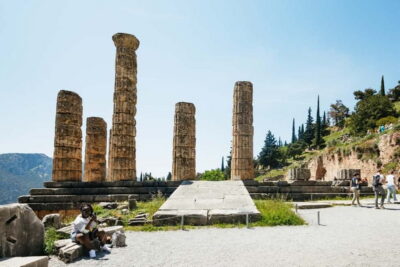
Mythology of Delphi, Museum and Arachova Guided Tour
Read our review →
Athens & Acropolis Highlights: Greek Mythology Small-Group Tour
Read our review →
Acropolis and Mythology Highlights Small Group Tour
Read our review →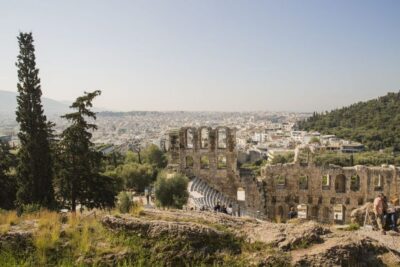
The History of Athens: Greek Mythology Private Tour
Read our review →

Athens Highlights: Myths & Philosophers Walking Tour
Read our review →
Greek Mythology Treasure Hunt for Kids – Athens Private Tour
Read our review →Browse the lists this tour appears in