
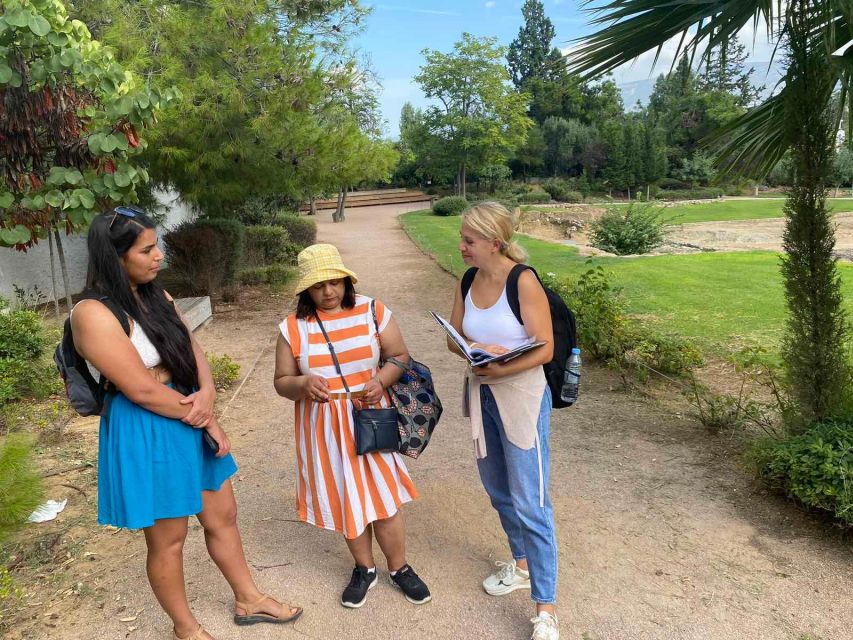
Reviewed · WORKSHOPS
Athens: Philosophy Experiential Workshop at Aristotle Lyceum
A walk that thinks as you walk. This Athens philosophy workshop takes you from a calm start in Rizari Park to the archaeological site of Aristotle’s Lyceum, then finishes with reflection in an open air amphitheater above the excavations. It is built for curious adult and teen travelers who want ideas they can actually use, not just names to memorize.
I especially like the interactive approach: you do a virtue-choice game with real ethical dilemmas, and you practice critical thinking inspired by Socrates’ midwife art. I also like that the whole experience is grounded in place, with you literally walking the footsteps of Aristotle’s students. A possible drawback: the ticket does not include the Lyceum site entrance fee, so you will need to budget a few extra euros on the day.
In This Review
- Key Highlights You Will Feel Immediately
- Why Rizari Park Makes the Workshop Work
- From Socrates to Plato to Aristotle, One Thought at a Time
- Getting Inside the Lyceum Site, Where Ideas Had a Home
- A small practical note
- The Eudaimonia Walk: Self-Excellence as a Daily Skill
- The Virtue-Choice Game, Ethics Without a Spreadsheet
- Socrates’ Midwife Art: Building Critical Thought, Not Cynicism
- The Open-Air Amphitheater Finish, Aristotle in the Air
- Optional Extra Hour: Plato’s Philosophy Debate
- Price and Value: What You Pay for at $53
- Timing, Group Size, and How the Experience Feels
- Practical Tips Before You Go to Rizari and Lyceum
- Who Should Book This Philosophy Workshop
- Should You Book the Athens Aristotle Lyceum Philosophy Workshop?
- FAQ
- How long is the Athens Philosophy Experiential Workshop at Aristotle Lyceum?
- Where does the workshop start?
- Is the entrance fee to the Lyceum archaeological site included?
- What language is the workshop taught in?
- Who is the workshop suitable for?
- Is it fully outdoors?
- What is included in the price?
- What is not allowed during the workshop?
- Is the workshop wheelchair accessible?
- What happens if it rains?
- Is there an option to add more time for Plato’s philosophy?
Key Highlights You Will Feel Immediately
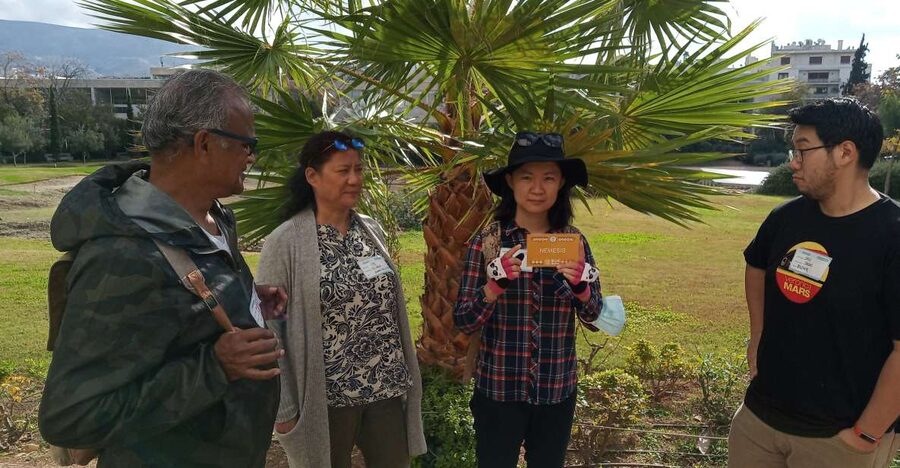
- Rizari Park start, a peaceful warm up before the ruins and big ideas
- Footsteps of the Lyceum, walking where Aristotle’s school once took shape
- Eudaimonia practice, turning self-excellence theory into something you can try
- Virtue-choice game, using playful decisions to explore ethical tradeoffs
- Socratic-style self awareness, guided reflection that nudges you inward
- Optional extra hour on Plato, including an interactive ethical dilemma debate
Why Rizari Park Makes the Workshop Work
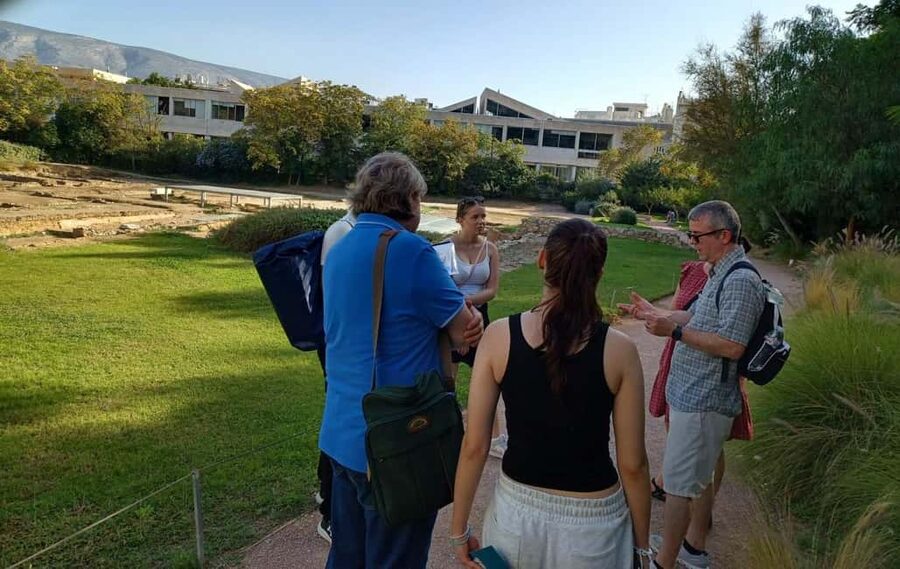
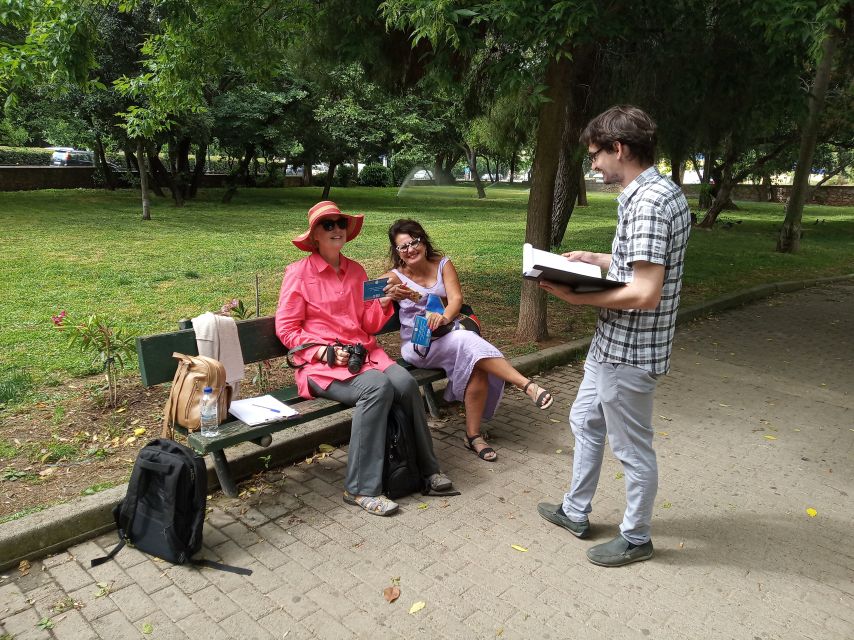
The workshop begins in Rizari Park, just steps from central Athens. That matters more than it sounds. Philosophy tours can start stiff, like a classroom. Here, you start under the trees, with an expert facilitator guiding you into the subject through a short timeline of ancient Greek thought.
This first phase helps you shift modes fast. You go from vacation brain to thinking brain, without feeling forced. You are also outdoors right away, so you begin connecting the content to the setting before you ever reach the archaeological site.
Another nice touch is that the experience is designed for both adults and teens. You do not need a background in philosophy. The facilitator supports newcomers while still keeping the discussion meaningful.
More Athenian benches to work at for a morning:
- Athens: Classic Cooking Class with Market Visit and Wine
★ 5.0 · 1,101 reviews - Athens: Food Market Visit and Cooking Class with Wine
★ 4.9 · 1,087 reviews - Greek Cooking Class in Athens Including Rooftop Dinner with Acropolis View
★ 5.0 · 826 reviews - Greek Small-Group Athens Cooking Class & Dinner
★ 5.0 · 574 reviews
From Socrates to Plato to Aristotle, One Thought at a Time
After that relaxed start, the group moves along a simple historical line that connects major thinkers: Socrates to Plato to Aristotle. Instead of lecturing, the facilitator uses a guided, engaging way to build the story.
Here is what you should expect from this walking timeline. You will get the ideas in human scale. You will hear how each philosopher relates to the next, and you will be prompted to think about what those ideas mean for everyday behavior.
This is also where the workshop’s tone shows up. It is not dry. It’s purposeful. You will be encouraged to make connections between moral thinking and daily life, which is exactly what makes the later Lyceum visit feel more than a site stop.
Getting Inside the Lyceum Site, Where Ideas Had a Home
Then you walk together to the nearby archaeological site of Lyceum. Important: the workshop includes your experience, but the site entrance ticket is not included. You will pay on your side, with the cost listed as 5 EUR full, 3 EUR half.
What is special here is not just that Aristotle founded his famous school there. It is the way you approach the place. You are not wandering alone with a map. You are walking with a facilitator and thinking like a student would, in the same area where conversations and learning once happened.
As you get closer to the ruins, you also start shifting from general history to lived philosophy. You are guided to explore Aristotle’s approach to achieving eudaimonia, which is often translated as a well-lived life. The workshop frames it through moral and personal excellence, not as a vague motivational slogan.
A small practical note
Because this is a heritage site, you should plan for rules around conduct. The workshop explicitly calls for respectful and polite behavior, including sobriety, cleanliness, dress-code, and noise level. The facilitator can end your participation without a refund if behavior is disrespectful.
The Eudaimonia Walk: Self-Excellence as a Daily Skill
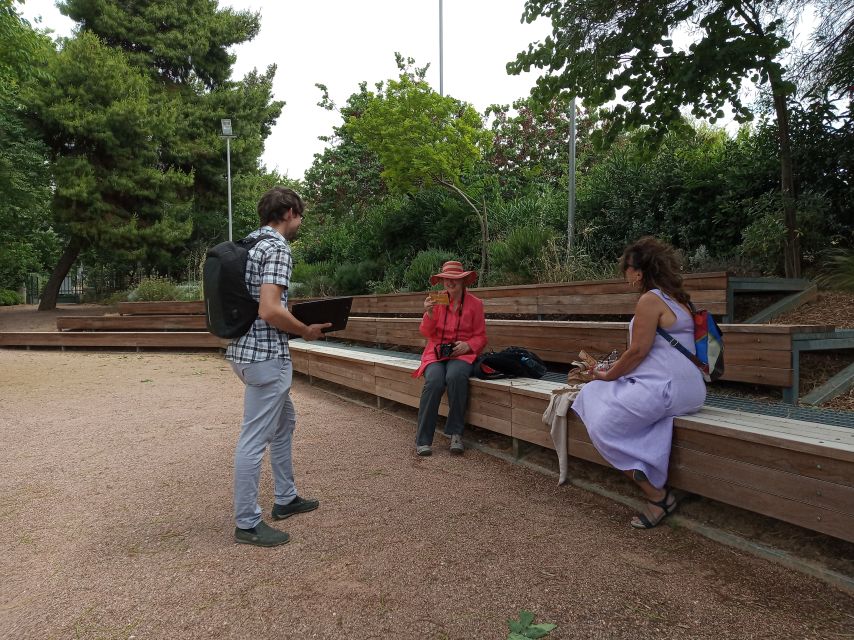
The core promise is that you will explore Aristotle’s moral theory in a “just like the ancient students” way, and you will do it while walking. That structure helps because it turns abstract ethics into something physical.
You will discuss how eudaimonia is tied to character and choices. In practical terms, you are not just asking, What is right? You are asking, Who should I become through practice?
The workshop’s highlights point directly to this: you are exploring Aristotle’s self-excellence theory in a joyful way. That word joyful is not filler. The activity design uses movement and games so the moral questions do not feel heavy.
Also, the group format matters. You are not performing for a silent crowd. You are thinking with others, which makes it easier to admit when you do not know an answer and still contribute.
Same hours, spent a different way in Athens:
- Athens: Acropolis & up to 5 Archaeological Sites Combo Pass★ 4.2 · 13,904 reviews
- Athens: Acropolis, Parthenon & Acropolis Museum Guided Tour★ 4.8 · 9,316 reviews
- The Acropolis, Parthenon & Acropolis Museum Guided Tour★ 4.7 · 8,493 reviews
- Athens: Cape Sounion & Poseidon Temple Sunset Half-Day Trip★ 4.8 · 8,241 reviews
The Virtue-Choice Game, Ethics Without a Spreadsheet
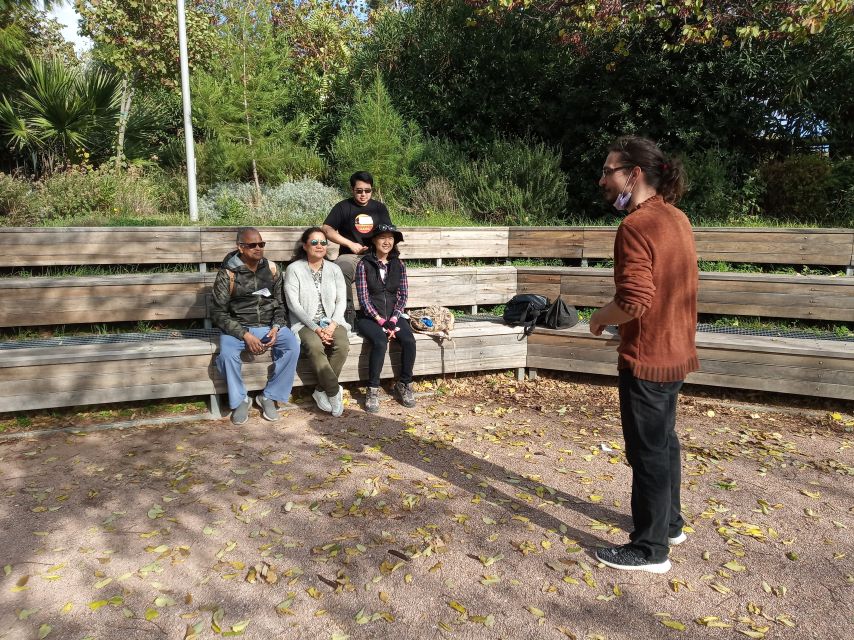
One of the most memorable parts is the virtue-choice game. This is where the workshop shifts from concepts to decisions.
You will be presented with ethical dilemmas and asked to make choices, then reflect on those choices. The game format is built to get past the usual tourism mode where you nod along and move on. Instead, you do something. You commit to a stance, then you see how Aristotle’s idea of virtue helps interpret the outcome.
This kind of structured discussion is great value for a workshop like this because it gives you mental “muscle.” Later, when you are back in your hotel, you can still recall the feeling of choosing, justifying, and reconsidering.
If you like thinking games, this will hit the sweet spot. If you dislike group participation, you might find you need a few minutes to warm up, but the whole experience is framed as suitable for people without previous knowledge.
Socrates’ Midwife Art: Building Critical Thought, Not Cynicism
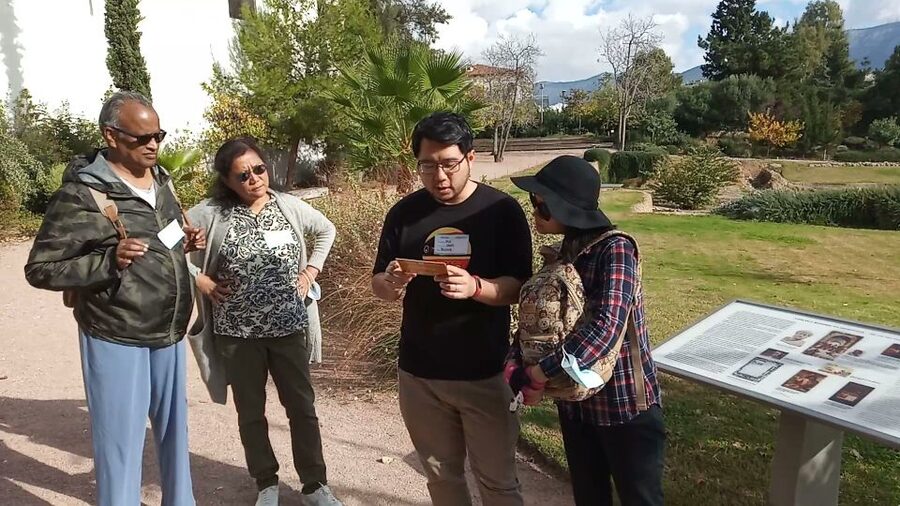
The highlights mention developing critical thought and self awareness through Socrates’ midwife art. What does that look like in practice during a workshop?
You should expect guided reflection that nudges you to question your own reasoning. The goal is not to “win” an argument. It is to notice how you arrive at beliefs and values, and to become more alert to your own thinking patterns.
This is why the workshop ends with readings and reflection. It is not random. It is built to close the loop between outdoor exploration and inner processing.
Even if you never studied philosophy, you will recognize the skill. It is the ability to pause, think clearly, and see yourself more accurately.
The Open-Air Amphitheater Finish, Aristotle in the Air
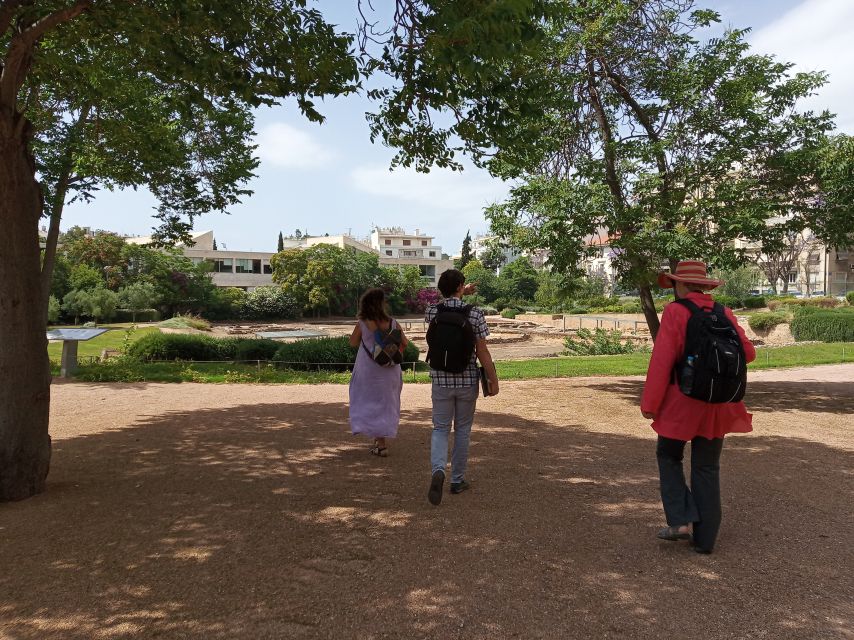
The workshop wraps up at a small open-air amphitheater overlooking the excavated ruins. This location is a big part of the experience, because it gives you a moment to slow down after walking and discussion.
At the finish, you will read selected quotes from Aristotle. The workshop notes that these are even in Ancient Greek. That detail is meaningful even if you do not read Greek. Seeing the original form helps you feel the text’s age without needing to pretend you understand everything.
Then you reflect on how Aristotle’s wisdom applies today, whether you are a teen, a parent, an educator, or just a curious traveler. That last phrase matters. The workshop is explicitly framed so different life roles can connect to the same ideas.
You leave with a clearer sense of what Aristotle was trying to do: not just define virtue, but help you practice it.
Optional Extra Hour: Plato’s Philosophy Debate
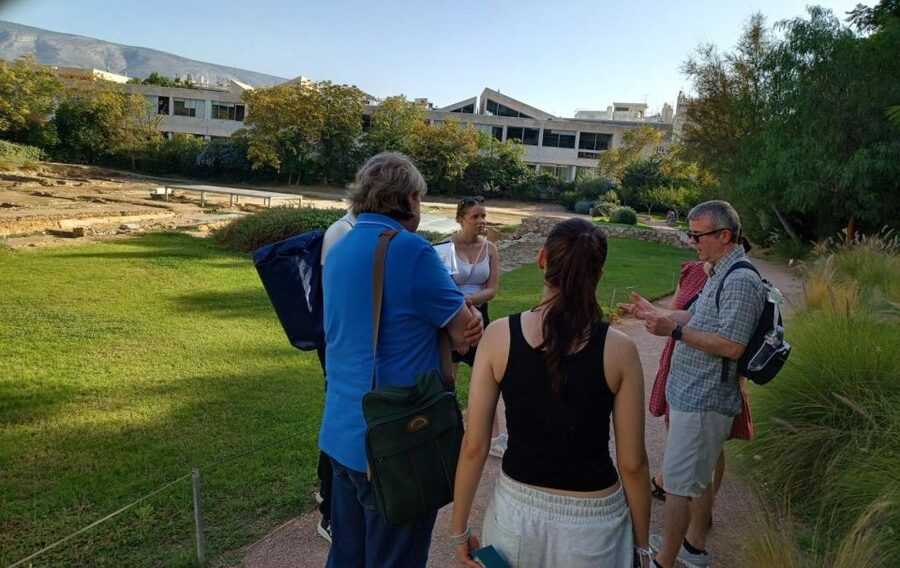
There is an option to add an extra hour focused on Plato’s philosophy. The extra time includes an interactive debate on an ethical dilemma.
If you are doing this as a way to end your trip in Athens with something memorable, this add-on can be a strong choice. It extends the learning arc beyond Aristotle and gives you more chance to test your thinking through discussion.
Also, it turns the workshop into a longer session, which helps if you tend to need time to get comfortable with the group rhythm. You are not just rushing to see a site and leave.
Price and Value: What You Pay for at $53
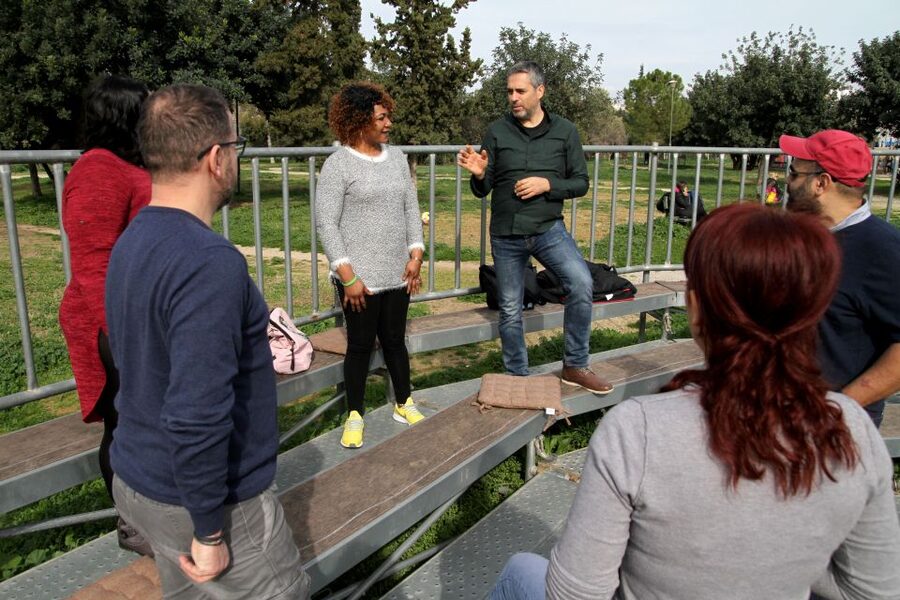
The workshop price is listed as $53 per person for a duration of 100 minutes. Included are an expert facilitator, all materials, and local taxes of 24%.
So what are you truly paying for? Not just entry to a place. You are paying for a structured 1 hour 40 minutes guided experience that blends ideas, movement, reflection, and interactive activities. That is the value, especially if you are visiting Athens and want more than a standard guided walkthrough.
Two costs you should plan for are the Lyceum site entrance ticket and your own time budget. The entrance fee is not included and is listed as 5 EUR full, 3 EUR half. If you are eligible for the half ticket depends on whatever rules apply to that pricing at the site, but at least you know the numbers you might encounter.
If you add the optional Plato hour, expect a longer time investment. The tradeoff is more discussion time and another ethical dilemma debate.
Timing, Group Size, and How the Experience Feels
This is 100 minutes total, and you can check starting times based on availability. The format is private or small groups available, and the workshop is in English.
Small groups are important for workshops like this. Philosophy is easiest when you can speak without shouting over a crowd. It also makes it more likely the facilitator can guide the virtue-choice game and reflections in a way that feels personal.
Because the session takes place entirely outdoors, the pace is also influenced by weather. There is a built-in rain plan: if it rains, you might continue in shelter at the café of the Byzantine Museum, which is literally next door.
Practical Tips Before You Go to Rizari and Lyceum
Plan for outdoors time and heritage-site rules. The workshop bans smoking, food and drinks, and luggage or large bags. So keep your daypack light and avoid bringing snacks.
Dress matters for comfort more than style. You will be outside and walking between places, so wear shoes you can move in.
Also, respect the setting. The experience is clear about respectful conduct etiquette like cleanliness and noise level, and your facilitator can end participation without a refund if conduct is disrespectful. That is not meant to scare you, it is meant to keep a serious place safe and enjoyable.
One more safety detail: facilitators are first aid trained and certified, but by law they cannot provide medicines. That is normal for many tours, but it is worth remembering if you rely on specific medication.
Who Should Book This Philosophy Workshop
This one fits best if you want Athens beyond monuments. It is also a good pick if you like ideas that connect to behavior, not just trivia.
I think it is especially well suited for:
- Adults and teens who enjoy discussion and decision-based games
- Parents or educators looking for a structured way to talk about ethics
- Travelers who want the Lyceum visit to feel active and reflective, not just visual
And it is explicitly not suitable for children under 15. The format is designed for older participants who can engage with the ethical discussions and the reflection portion.
Should You Book the Athens Aristotle Lyceum Philosophy Workshop?
If you want a meaningful Athens moment that pairs an archaeological site with guided thinking and practical ethical reflection, this workshop is a strong yes. The best part is the combination: walk a real place, play an ethics game, then sit in an amphitheater-style setting and connect it back to your own life.
Skip it or think twice if you prefer purely sightseeing with no discussion or if you hate group activities. Also plan your budget so you are not surprised by the separate Lyceum entrance ticket.
If you are in Athens with 100 minutes and a curiosity about how to live well, you are likely to leave with more than photos. You should leave with a way of thinking.
FAQ
How long is the Athens Philosophy Experiential Workshop at Aristotle Lyceum?
It lasts 100 minutes.
Where does the workshop start?
It starts in Rizari Park. The exact meeting point can vary depending on the option booked.
Is the entrance fee to the Lyceum archaeological site included?
No. The entrance fee is not included. It is listed as 5 EUR full and 3 EUR half.
What language is the workshop taught in?
The workshop is in English.
Who is the workshop suitable for?
It is suitable for curious adult and teen travelers. It is not suitable for children under 15.
Is it fully outdoors?
Yes, it takes place entirely outdoors, with a rain plan to continue at the café of the Byzantine Museum next door.
What is included in the price?
Included are an expert facilitator, all materials, and local taxes (24%).
What is not allowed during the workshop?
Smoking is not allowed, and food and drinks and luggage or large bags are not allowed.
Is the workshop wheelchair accessible?
Yes, it is listed as wheelchair accessible.
What happens if it rains?
If it rains, the group may be forced to find shelter and continue at the café of the Byzantine Museum, which is next door.
Is there an option to add more time for Plato’s philosophy?
Yes. You can add an extra hour dedicated to Plato’s philosophy, including an interactive debate on an ethical dilemma.
Latest from under the Acropolis






Workshops, compared.

Classic Cooking Class with Market Visit and Wine
Read our review →
Food Market Visit and Cooking Class with Wine
Read our review →
Greek Cooking Class in Athens Including Rooftop Dinner with Acropolis View
Read our review →
Greek Small-Group Athens Cooking Class & Dinner
Read our review →
Greek Cuisine Cooking Class and 3-Course Dinner
Read our review →
Traditional Greek cooking class and lunch or dinner with an Acropolis view
Read our review →
Athens Airport Private Transfer by Mercedes-Benz E Class Wagon to City Center
Read our review →Browse the lists this tour appears in