
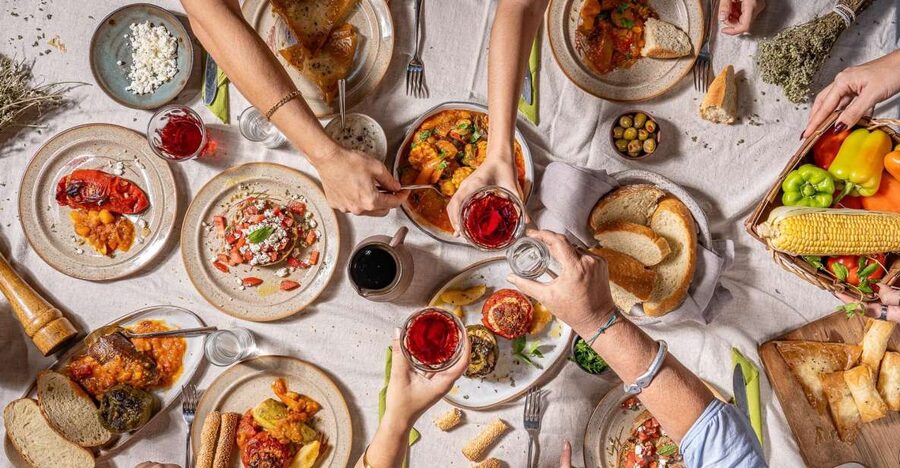
Reviewed · COOKING CLASSES
Athens: Kerameikos Stone House Cooking Class
Stone-house cooking in Kerameikos feels like home. I love the market-style ingredient hunt and the fact that you cook six real dishes that translate to dinners at home. The one thing to keep in mind is the menu can shift with seasonal ingredients, so you might not see every dish listed every day.
This class also has that rare mix of serious technique and warm hospitality. On different runs, hosts like Kostas, Bill, and Elena guide the process, and the pace stays friendly and hands-on for a small group. One evening I’d watch for is how the outdoor meal flows, because it can mean you eat in the courtyard garden while the next steps happen around you.
Bottom line, if you want more than a sit-down meal and you like learning by doing, this is a standout Athens experience. You get wine from local producers, you share the work, and you leave with recipes in digital form so you can keep the flavors going after your flight.
In This Review
- Key takeaways before you go
- Kerameikos stone house courtyard, why the setting matters
- Finding Mama’s Roots and getting oriented at the market
- The heart of the class: how you learn six Greek dishes
- Yemista, oven baked tomatoes and peppers
- Spinach cheese rolls, mini pies with phyllo
- Cretan ntakos salad with barley rusks
- Kagiana, Greek scrambled eggs with tomato and feta
- Tzatziki sauce, garlic, yogurt, cucumber
- Loukoumades, honey cinnamon doughnuts
- What the hosts actually bring to the cooking
- The meal part: wine, courtyard eating, and how the timing works
- Menu, dietary notes, and what you should expect to taste
- Is it worth $106? Value that actually makes sense
- Who should book this class, and who might want to skip
- Should you book Mama’s Roots in Kerameikos?
- FAQ
- How long is the Athens Kerameikos Stone House Cooking Class?
- What is the meeting point?
- How many dishes will I cook?
- What dishes are included in the menu?
- Is wine included?
- Will I receive recipes after the class?
- Is instruction available in English, and is it a small group?
Key takeaways before you go
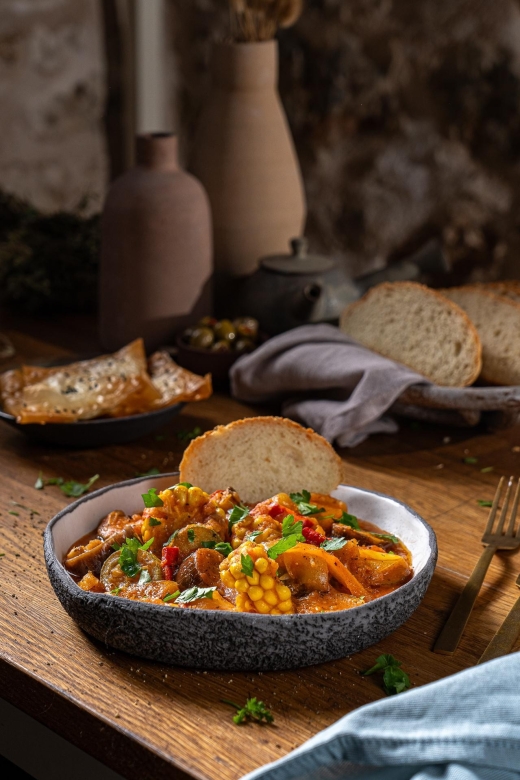
- Kerameikos stone house setting: a restored 1920s stone home gives the class real character, not a classroom vibe.
- Market time built in: especially on Tuesdays, you can grab fresh produce from the Farmers Market right in front.
- Six-dish menu with recognizable names: yemista, spinach cheese rolls, kagiana, tzatziki, ntakos, plus loukoumades.
- Hands-on participation: you’re not just watching, you’re helping make the food.
- Take-home recipes: you’ll get digital recipes (QR code format) so you can cook again later.
- Wine with the meal: local wine accompanies what you made, in a garden setting.
Kerameikos stone house courtyard, why the setting matters
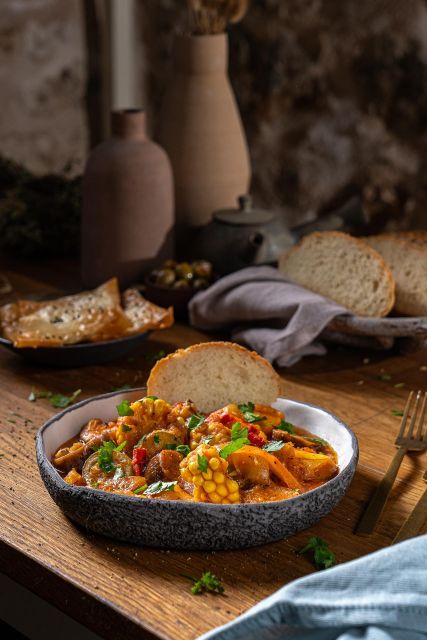
Kerameikos is one of those Athens areas where life spills into the streets, with plenty of bars and restaurants nearby. Yet the cooking class takes place in a quiet 1920s stone house in the heart of the neighborhood, and that contrast is part of the charm. You step in, and suddenly it feels like you’re in someone’s home kitchen, not a scripted tour stop.
The stone walls do two things for your experience. First, they make the cooking feel grounded and practical. Greek food is often about good ingredients and simple technique done right, and the setting supports that. Second, you’re in a restored property where the courtyard garden is the place you actually relax and eat.
Many people talk about the garden and shaded outdoor seating, including details like lemon trees and olive plants. Even if the weather turns warm, the day typically still has places to sit comfortably while your food finishes up. It’s a big difference from classes that happen in a busy commercial kitchen where nobody settles into the meal.
Finally, the name Kerameikos ties you into Athens beyond the usual checklist. You’re not just visiting a landmark, you’re learning what locals cook and buy in a real neighborhood pocket.
More Athenian benches to work at for a morning:
- Athens: Classic Cooking Class with Market Visit and Wine
★ 5.0 · 1,101 reviews - Athens: Food Market Visit and Cooking Class with Wine
★ 4.9 · 1,087 reviews - Greek Cooking Class in Athens Including Rooftop Dinner with Acropolis View
★ 5.0 · 826 reviews - Greek Small-Group Athens Cooking Class & Dinner
★ 5.0 · 574 reviews
Finding Mama’s Roots and getting oriented at the market
You meet at Mama’s Roots in Athens. From there, the experience quickly turns into food mode. If your class falls on Tuesday, the Farmers Market happens right in front of the place, and you usually spend around 15 minutes picking up fresh ingredients.
Even when it is not Tuesday, you still get a chance to ramble through a local market area and shop for ingredients in a way that feels more like daily life than sightseeing. That matters because Greek cooking starts with shopping choices: what’s fragrant, what’s ripe, what looks good enough to eat as part of a salad, or what makes a pastry filling sing.
Here’s how to make the most of this part:
- Walk at a natural pace and pay attention to herbs and produce. That’s what shows up later in your dishes.
- If you’re the note-taking type, jot down ingredient names you’ve never seen before. You’ll spot them again when you cook.
- Wear shoes that handle uneven sidewalk and quick in-and-out stops.
Also, this is where the hosts set the tone. In English instruction, they explain what you’re choosing and why, and that helps you understand the recipes instead of just copying steps.
The heart of the class: how you learn six Greek dishes
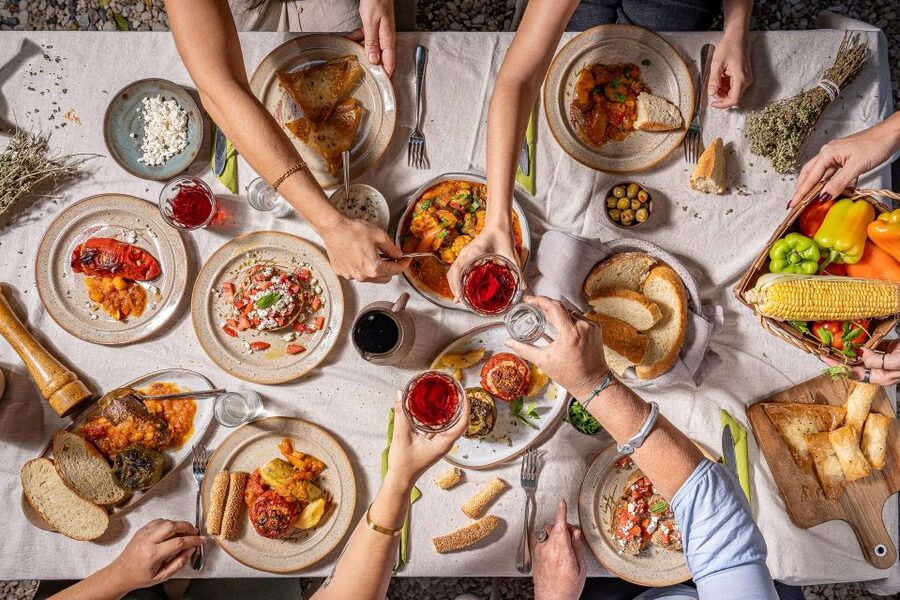
The menu is built around six traditional dishes, and it’s designed so you practice different core skills: baking and stuffing, working with phyllo, building salads with soaked crunch, making sauces, and frying or sweet dough finishing.
Your exact menu can shift based on seasonal availability, but the standard lineup is clearly laid out. These are the dishes you can expect to cook, learn, and eat together:
Yemista, oven baked tomatoes and peppers
Yemista is oven baked tomatoes and peppers stuffed with rice, vegetables, herbs, and extra virgin olive oil. This dish teaches you a very Greek idea: stuffing is not complicated, but it needs attention to flavor and moisture balance. When you cook it, you’ll get a feel for how the vegetables soften and how the filling turns tender in the oven.
Practical takeaway: once you learn the rhythm of stuffing and seasoning, you can adapt it at home with whatever peppers or tomatoes are best that week.
Spinach cheese rolls, mini pies with phyllo
These are Spinach Cheese Rolls, crunchy mini pies with feta, fresh spinach, and herbs wrapped in phyllo dough and baked in the oven. Phyllo is where many home cooks get intimidated, but a good class makes it approachable by showing how to handle layers and build a filling that stays flavorful.
If you’ve ever wondered why some phyllo turns out dry while others stay crisp and satisfying, this is the place to learn the basics by doing.
Other Athenian kitchens with an apron waiting:
- Athens: Greek Cooking Class & Dinner on a Rooftop★ 5.0 · 383 reviews
- Athens: Greek Cuisine Cooking Class and 3-Course Dinner★ 4.8 · 270 reviews
- Traditional Greek cooking class and lunch or dinner with an Acropolis view★ 5.0 · 250 reviews
- Athens Greek Cooking Class Pita Gyros from Scratch with a Local★ 5.0 · 175 reviews
Cretan ntakos salad with barley rusks
Cretan Ntakos is a salad built on crunchy barley rusks soaked in olive oil, topped with diced tomato, capers, oregano, and sour mizithra cheese. This is the dish that makes people suddenly understand Greek salad isn’t one rigid formula. It’s a method: crunch plus soak plus salty tang plus herb perfume.
Practical takeaway: you’ll learn how soaking changes texture. Too little soak and it’s all crunch. Too much and it turns mushy. The class gives you that sweet spot by timing.
Kagiana, Greek scrambled eggs with tomato and feta
Kagiana is Greek scrambled eggs made with grated tomatoes, peppers, and feta. This dish teaches quick heat control and seasoning. You learn that a scrambled egg in Greece often tastes like more than egg. It tastes like vegetables and olive oil style cooking, not just breakfast in a pan.
Practical takeaway: you’ll walk away knowing how to build flavor fast, using what you already have.
Tzatziki sauce, garlic, yogurt, cucumber
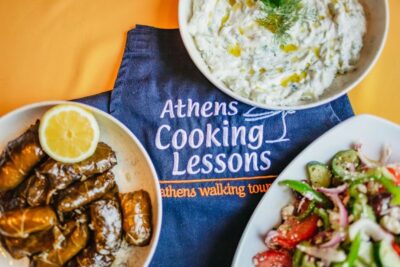
Tzatziki is the garlic, yogurt, and cucumber sauce everyone loves. The class makes it practical, not fancy. You’ll see the steps, learn what gives it tang, and understand why you need cucumber prepared in the right way.
If you want an easy win for dinner parties at home, tzatziki is it. It’s also one of the easiest dishes to adjust once you know the baseline.
Loukoumades, honey cinnamon doughnuts
Loukoumades are small round doughnuts with honey and cinnamon. This is the sweet closer, and it gives the meal a full Greek arc: savory first, then that sticky-sweet finish.
One consideration: depending on class timing, you may not watch every second of dessert-making as closely as you do with the savory dishes. The good news is you’re still eating what you made, and you’ll get the recipe digitally afterward.
What the hosts actually bring to the cooking
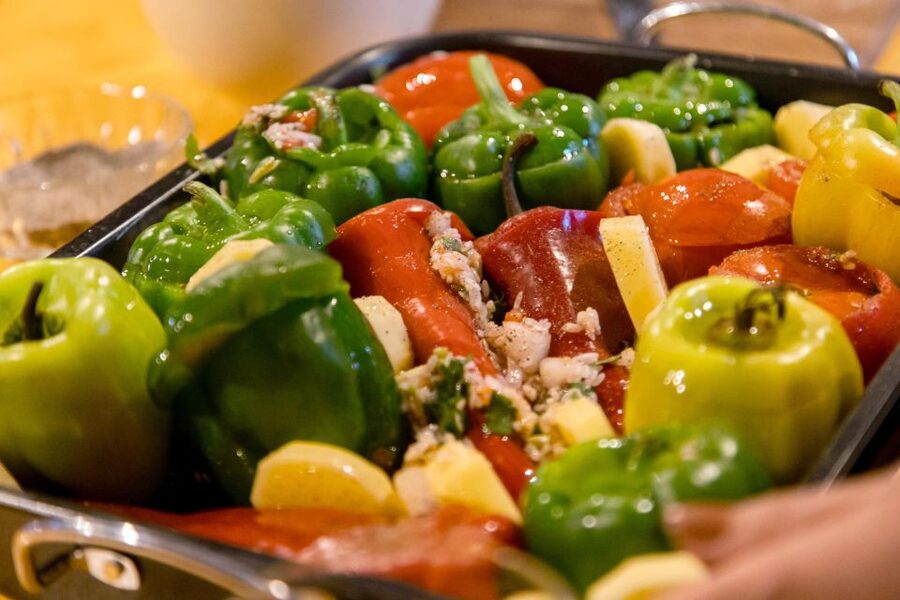
The food is the main event, but the real reason people return to this class in their memories is the way the hosts teach.
Across different sessions, hosts like Kostas, Bill, and Elena are described as patient and step-by-step in English. What stands out is how they keep everyone involved. You’re not left standing around. You’re assigned tasks, you work in the flow of the kitchen, and you learn by making.
You’ll also hear stories tied to the recipes, including family heritage and the influence of regions like Crete and the Peloponnese. That context isn’t trivia for its own sake. It helps you understand why certain ingredients show up together, and why people repeat the same classics year after year.
One small practical plus: you don’t just get the recipe. You get the logic behind it, which means when you change a single ingredient later at home, you can still make the dish come out right.
The meal part: wine, courtyard eating, and how the timing works
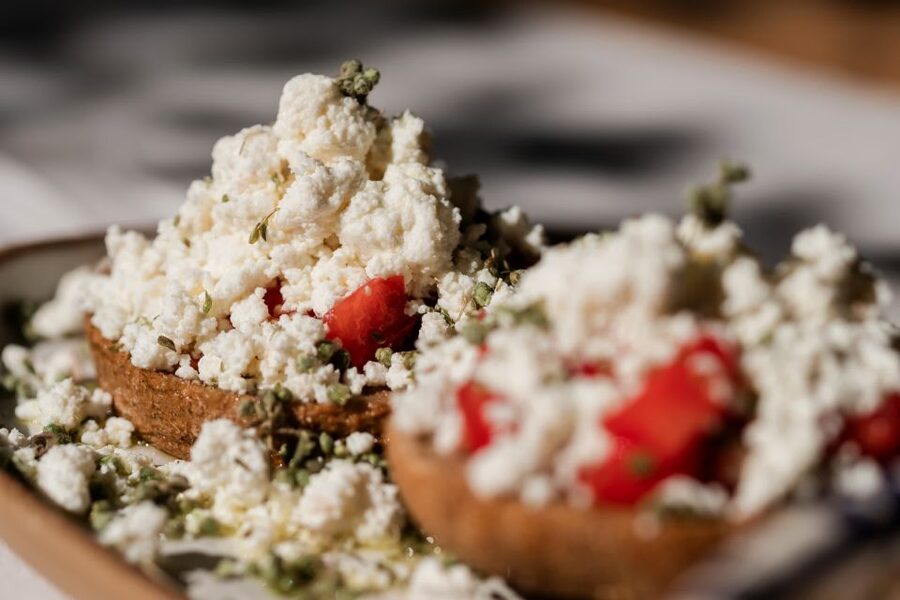
After you cook, you eat what you made, usually in the garden courtyard. This part feels social in the best way. People talk while plates move around, and because everyone helped cook, you end up with that friendly bond that doesn’t feel forced.
Wine is included to accompany the meal, from local producers. The idea is simple: you’re eating a Greek lunch or dinner with Greek food traditions, and wine is part of that table culture.
Timing matters here because you only have about 3 to 3.5 hours total. So the class is paced to fit prep, cooking, and eating without turning into an all-day production. That’s great for people who want a meaningful experience but still plan to sightsee the rest of their Athens afternoon.
Also, if it’s hot, there may be options to eat comfortably. One reason people love the experience is that the garden feels special, but the day still tries to keep you cool enough to enjoy the meal instead of rushing through it.
Menu, dietary notes, and what you should expect to taste
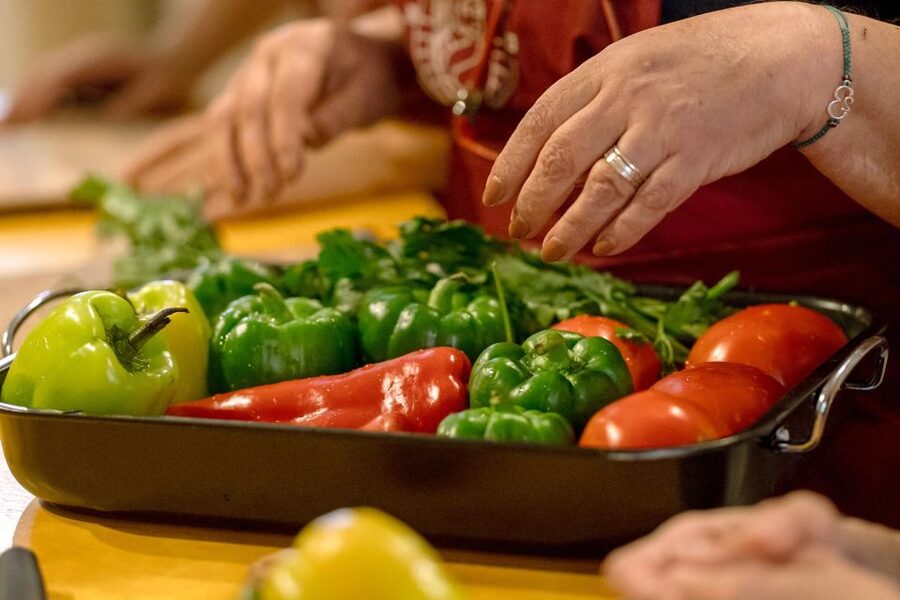
The standard dishes listed are built around ingredients like vegetables, feta, yogurt, olive oil, eggs, barley rusks, and honey. Based on the menu itself, this is a very vegetarian-friendly lineup in the sense that you’re not counting on meat as the flavor engine. There is egg in kagiana, and dairy shows up throughout, including feta and mizithra.
If you have strict dietary needs beyond what’s obvious from these dishes, you should ask before you go. The menu is also subject to seasonal availability, so you might see variations.
Still, the big win is this: the flavors are clear and classic. You’re learning how Greek dishes taste, not just how to follow steps.
Is it worth $106? Value that actually makes sense
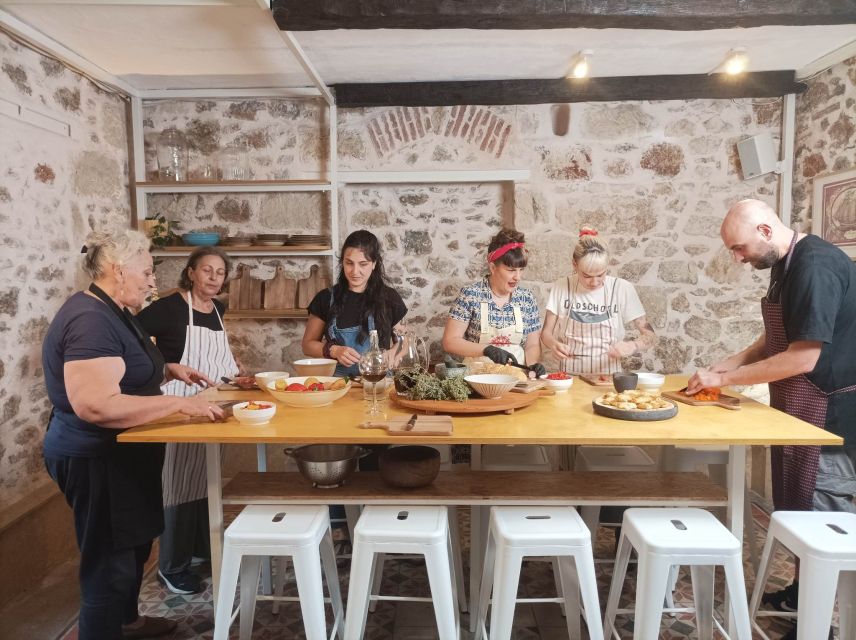
At $106 per person for 3 to 3.5 hours, the question isn’t just price. It’s what you’re paying for.
You’re paying for:
- Hands-on cooking of six dishes, not just a demo
- The ingredients and prep used during the class
- Wine to go with the meal
- Digital recipes so you can repeat the dishes at home
Compare that to what you might spend on a restaurant meal in Athens. Even if you order several courses, you usually pay for eating, not for learning. Here, you get a teachable skill set: salad assembly, stuffing and baking, phyllo basics, quick sauce making, egg technique, and a sweet finish.
It can also save money later. Those take-home recipes mean you can buy a few staples after your trip and recreate a dinner with ingredients you actually recognize.
If you’re the type who enjoys cooking at home, this price starts to feel like a practical purchase, not just an experience fee.
Who should book this class, and who might want to skip
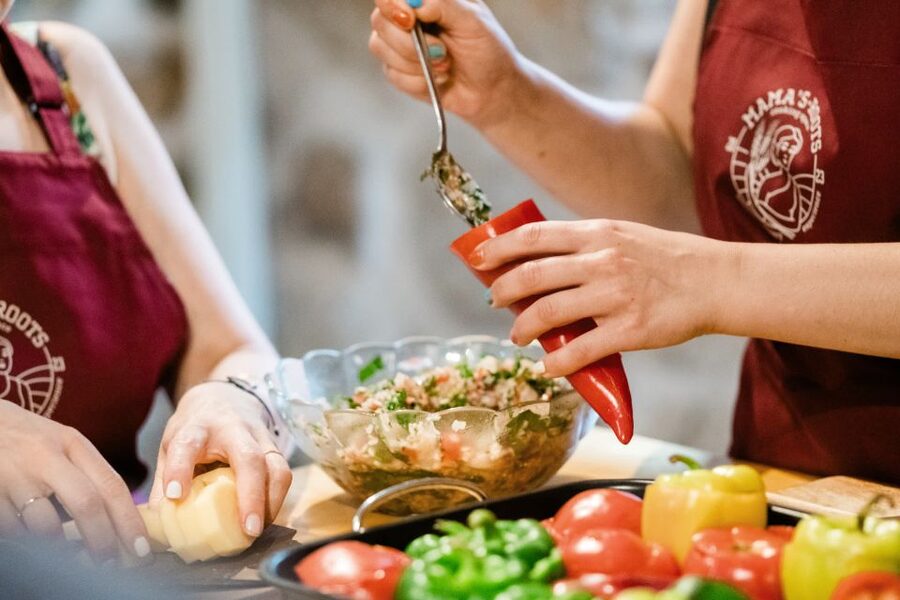
This class is a strong fit if you:
- Want a small group experience with a true hands-on feel
- Like Greek food and want to cook classics like tzatziki and spinach cheese rolls
- Prefer local, neighborhood flavor over big-tour set pieces
- Want recipes you can repeat later via QR-style digital access
It’s also a solid choice for mixed-age groups, since the activities are broken into tasks and the hosts keep things moving.
Consider skipping if:
- You only want the most rigid, exact menu with every dish cooked start to finish with full stage-by-stage observation. Dessert timing can feel different depending on how the meal flows.
- You want a class focused purely on advanced technique. This is built to be welcoming, practical, and repeatable.
Should you book Mama’s Roots in Kerameikos?
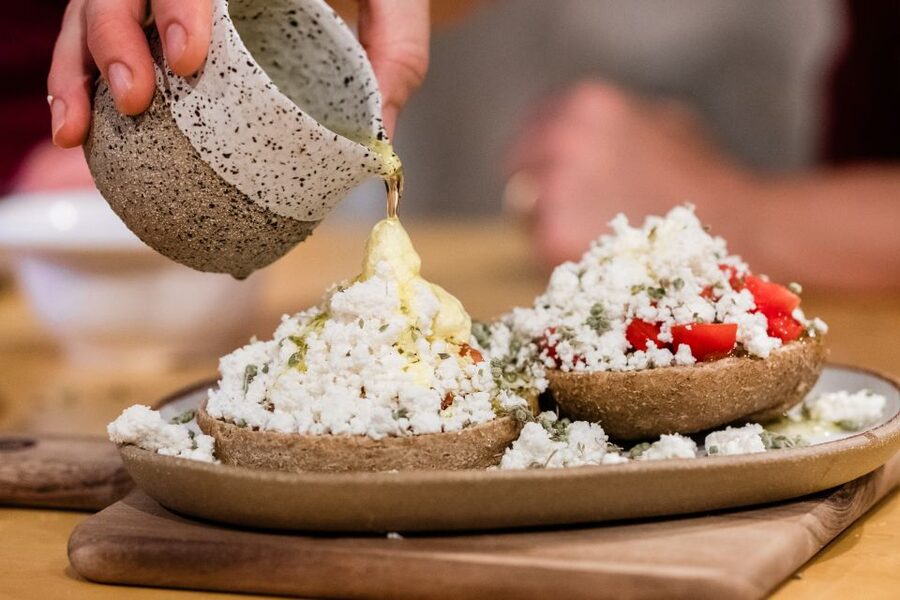
If you want Athens through food you can make again, I’d book it. The combination of a real stone house, a market ingredient stop, and a six-dish hands-on menu gives you both atmosphere and real skills. The fact that wine accompanies the meal and the courtyard setting makes the ending feel like a shared lunch, not a rushed departure, is a big bonus.
My simple checklist:
- If you enjoy cooking, or even just want a better way to order Greek food at home, this is worth it.
- If you love markets, don’t worry about missing the big museum day. This gives you a different kind of cultural connection.
- If you care about strict menu certainty, check what dishes are listed for your date since the menu can change.
FAQ
How long is the Athens Kerameikos Stone House Cooking Class?
The class runs for about 3 to 3.5 hours.
What is the meeting point?
You meet at Mama’s Roots in Athens.
How many dishes will I cook?
You’ll cook 6 traditional Greek dishes.
What dishes are included in the menu?
The menu includes dishes such as yemista, spinach cheese rolls, Cretan Ntakos salad, kagiana, tzatziki sauce, and loukoumades. The exact menu can change with seasonal availability.
Is wine included?
Yes, wine from local producers is included to accompany the meal.
Will I receive recipes after the class?
Yes, recipes are provided in digital form.
Is instruction available in English, and is it a small group?
Yes, the class is taught in English and small group options are available.
Latest from under the Acropolis







Cooking Classes, compared.
Classic Cooking Class with Market Visit and Wine
Read our review →
Food Market Visit and Cooking Class with Wine
Read our review →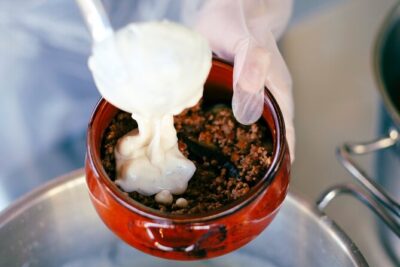
Greek Cooking Class in Athens Including Rooftop Dinner with Acropolis View
Read our review →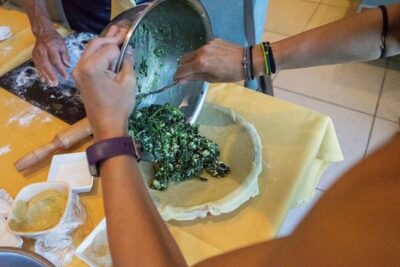
Greek Small-Group Athens Cooking Class & Dinner
Read our review →
Greek Cuisine Cooking Class and 3-Course Dinner
Read our review →
Traditional Greek cooking class and lunch or dinner with an Acropolis view
Read our review →
Athens Greek Cooking Class Pita Gyros from Scratch with a Local
Read our review →Browse the lists this tour appears in