
Reviewed · COOKING CLASSES
Athens: Greek Cooking Class with Meal and Drinks
In Athens, it feels like dinner becomes a skill. This small-group, hands-on Greek vegan cooking class in Koukaki lets you cook classic comfort food step by step, then share a big buffet. The setting, a modern kitchen called Soybird Studio, keeps the mood relaxed and social.
I love how much you actually do, not just watch. You cook in two teams (maximum 12 to 14), taste along the way, and finish with dishes like moussaka with cashew béchamel, spanakopita, fava, and almond-feta. One consideration: with limited time, you will not personally cook every dish in the full menu, even though you get a digital recipe book at the end.
In This Review
- Key Takeaways Before You Cook
- Koukaki Kitchen Setup at Soybird Studio
- The Full Vegan Greek Menu You’ll Cook and Eat
- Two-Team Cooking: How You Avoid the Watch-and-Wait Trap
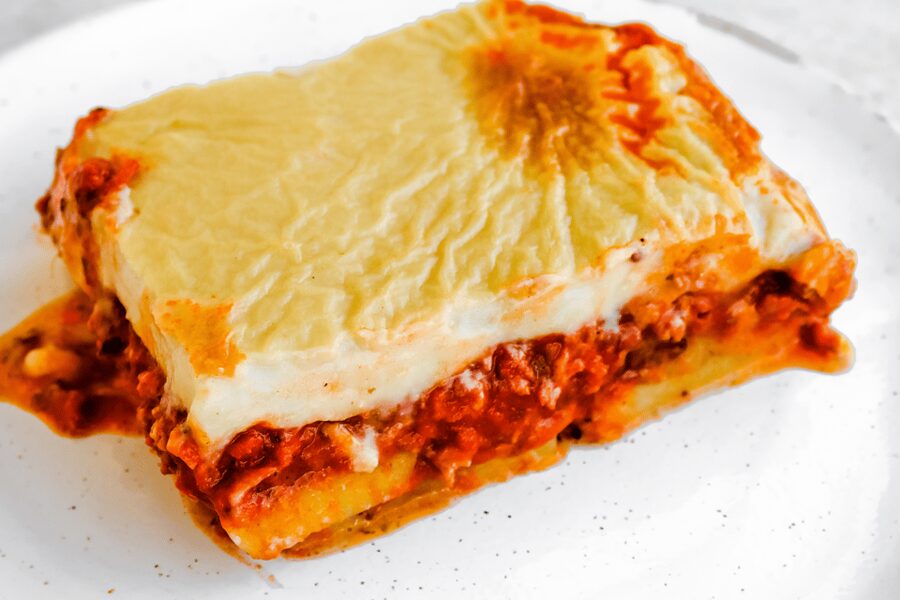
- Moussaka and Cashew Bééchamel: The Comfort-Crunch Lesson
- Spanakopita and Filo Work: Getting Comfortable With Pastry
- Tzatziki and Fava: Small Bowls That Taste Like Real Greece
- Almond-Feta, Dakos, and Koulouri: The Crunchy, Tangy Side
- Ekmek Dessert and the Shared Buffet Moment
- Drinks, Timing, and How the Evening Stays Fun
- Price and Value: Is $93 Worth It?
- Who Should Book This Class in Athens
- Quick Practical Advice Before You Go
- Should You Book This Athens Greek Vegan Cooking Class?
- FAQ
- How long is the Athens Greek cooking class?
- What kinds of dishes will I cook?
- Are drinks included?
- How big is the group?
- Where do I meet for the class?
- What should I bring?
- Can I cancel if my plans change?
- Is it suitable for kids, and is it wheelchair accessible?
Key Takeaways Before You Cook
- Small-group, maximum 14 means you stay busy and don’t get stuck in the back corner.
- A full vegan Greek menu includes showstoppers like almond-feta and moussaka with cashew béchamel.
- Two-team workflow keeps the kitchen moving, with shared results at the table.
- Hands-on technique time often includes pastry work like filo pastry (depending on the day and flow).
- Drinks are part of the rhythm, with wine, beer, and ouzo included.
- You leave with recipes in English so you can recreate the food at home.
Koukaki Kitchen Setup at Soybird Studio
This class runs out of the ground floor of a building in Koukaki, a practical neighborhood if you want to be near the Acropolis without being right in the crush. The hosts ask you to enter SOYBIRD in Google Maps for directions, then head for the ground floor, far right-hand side of the building. It is easy to miss if you wander, so do the simple thing: arrive a few minutes early and follow the signage.
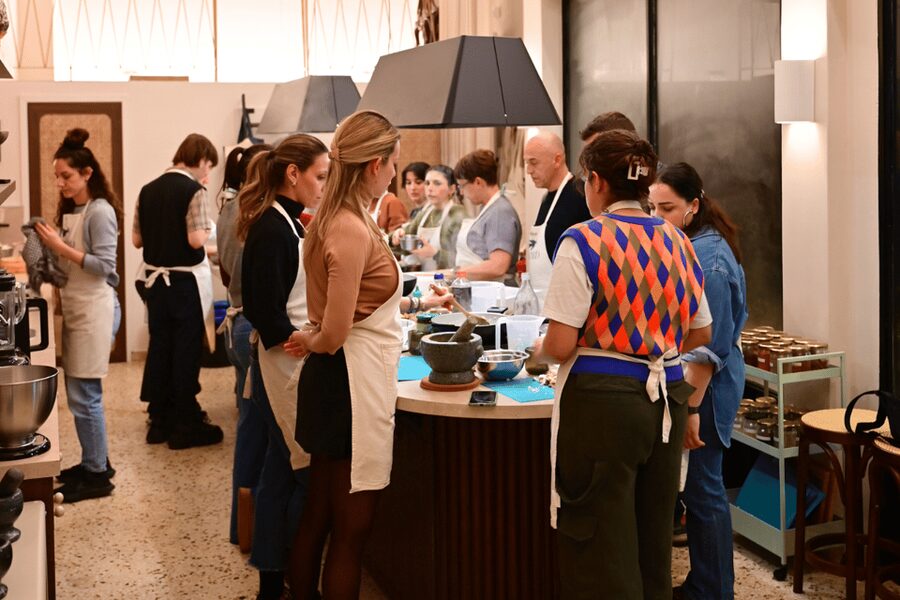
The kitchen is set up for active cooking, not a demo stage. You’ll get an apron, workstations for your team, and all the tools you need, which matters because it keeps the class focused on technique and flavor instead of logistics. Reviews repeatedly point to the same theme: the hosts keep things light, warm, and clear, with names like Alexandra, Konstantinos, Fotini, Dimitra, and Merka showing up in different nights. Whoever you get, expect a teacher style that favors patience and step-by-step guidance.
If you do one thing before you go, do this: wear comfortable clothes. You will be standing, chopping, rolling, and moving around. Bring your appetite too, because the final shared meal is not a token tasting.
More Athenian benches to work at for a morning:
- Athens: Classic Cooking Class with Market Visit and Wine
★ 5.0 · 1,101 reviews - Athens: Food Market Visit and Cooking Class with Wine
★ 4.9 · 1,087 reviews - Greek Cooking Class in Athens Including Rooftop Dinner with Acropolis View
★ 5.0 · 826 reviews - Greek Small-Group Athens Cooking Class & Dinner
★ 5.0 · 574 reviews
The Full Vegan Greek Menu You’ll Cook and Eat
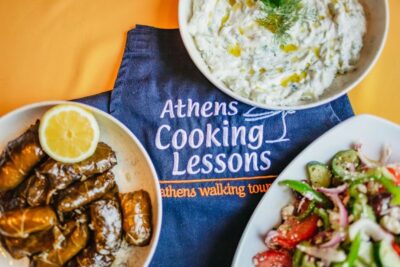
The menu is built to feel like a real Greek spread, not a pared-down “health version.” You’ll cook (and then eat) a mix of mains, dips, pastry, and dessert. Here’s what is on the plan:
- Moussaka with cashew béchamel
- Tzatziki, a yogurt cucumber dip (vegan)
- Spanakopita, a spinach cake (pastry style)
- Fava, yellow Greek hummus
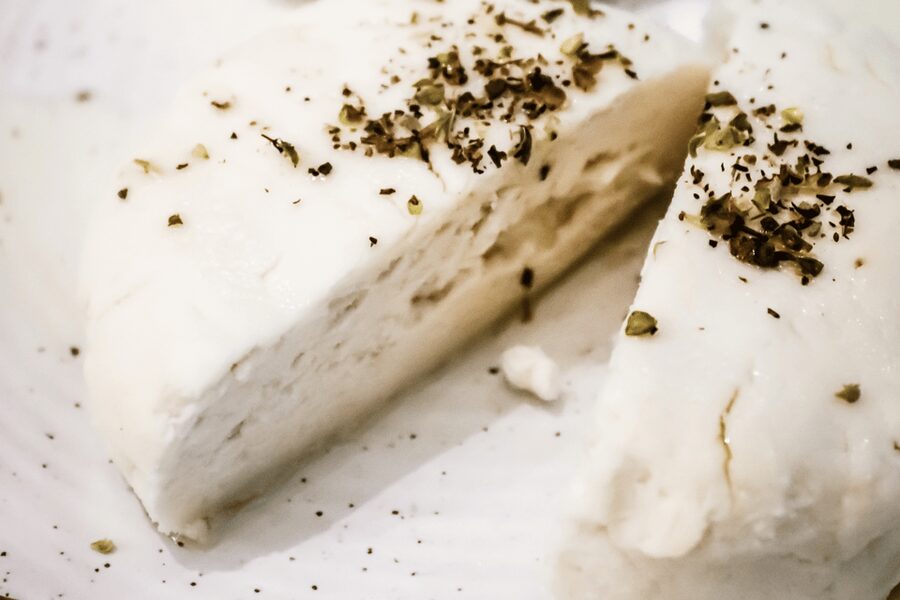
- Almond-feta, a tangy, almond-based cheese-style dish
- Dakos, a Greek bread-based starter
- Koulouri, sesame rings
- Ekmek, a dessert speciality
Even if you are not vegan, this is a smart way to learn Greek flavors. The idea is to understand how Greek cuisine builds satisfaction through herbs, acidity, roasted vegetables, olive-oil richness, and pastry craft. You’ll also notice how the class makes a point of tasting. That helps you connect the dots between what you do in the bowl and how it should taste when it reaches the table.
One more practical note: the class is hands-on in two teams. That means each person helps with two dishes through the process, and the rest of the menu gets covered by other team members. You will still end up eating everything at the shared buffet, and you’ll receive the recipes digitally so you can make the full lineup later.
Two-Team Cooking: How You Avoid the Watch-and-Wait Trap
The class runs for 3.5 hours, and they use a two-group system so you are not stuck waiting for your turn. In real terms, that means more chopping, mixing, rolling, and assembling for you, and less time standing around.
The hosts split the group into two teams and move through the dishes step by step. Your job is to participate while the other team does theirs, then everyone comes together for the shared meal. This workflow is one of the reasons the experience keeps a good pace. You still get collaboration, but it doesn’t slow into endless “everyone wait for everyone.”
You’ll also likely get some choice depending on the day and group, since many people comment that it is easy to choose which dishes they cook and to work with the people they want. Still, do not plan on cooking every single dish yourself. Think of it like this: you learn two real recipes deeply, then take home a full set of instructions for the rest.
For first-timers, this setup is a win. For experienced cooks, it is also useful because you’ll focus on Greek techniques rather than random “chef tricks.” The kitchen rhythm keeps you busy, and the final table makes it feel like a genuine shared meal rather than a “class and go” situation.
Moussaka and Cashew Bééchamel: The Comfort-Crunch Lesson
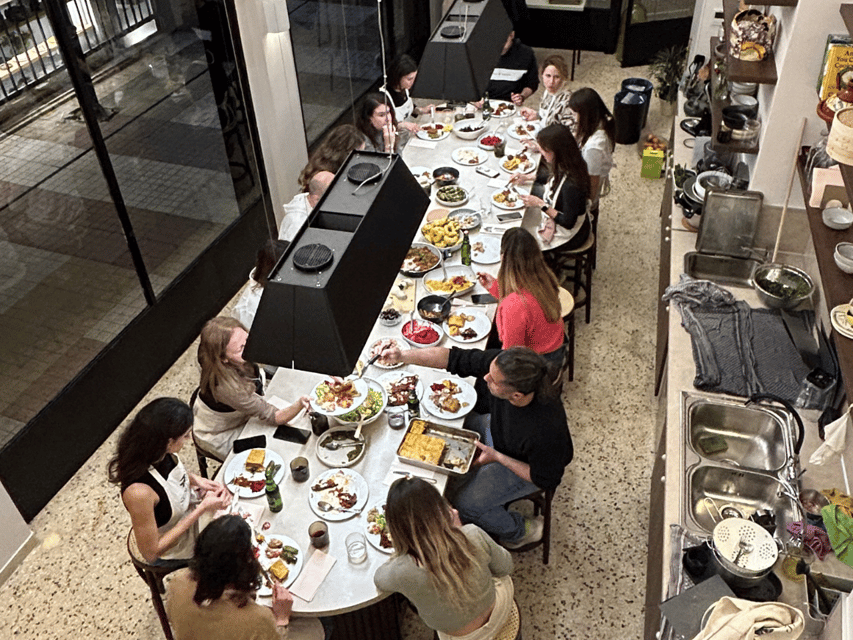
Moussaka is the dish that makes people sit up straighter, because it feels like a whole dinner in one pan. In this class, you’ll make moussaka with cashew béchamel, which is a clever vegan adaptation that still aims for the same creamy, baked satisfaction.
Here’s why this part is worth your time: béchamel is all about control. You mix, heat, adjust texture, and get the sauce to a consistency that will bake without breaking. Even if you’ve never made béchamel before, the step-by-step instruction helps you understand what you are watching for, not just what you are doing.
Expect a lot of hands-on time: mixing components, assembling layers, and learning how to portion so the final result is both thick enough to hold and smooth enough to be pleasant. Reviews specifically call out how hosts walk through each step patiently, with people like Dimitra, Dimi, and Alexandra named as instructors who keep things clear and calming. That style matters because béchamel can go wrong when you rush.
When you taste the finished moussaka at the end, you learn the payoff for good technique. It also gives you a realistic blueprint for making a Greek-style baked dish at home without relying on dairy.
Spanakopita and Filo Work: Getting Comfortable With Pastry
Spanakopita can look intimidating, but this class treats it as a skill you can actually learn. You’ll make spanakopita, a spinach pastry cake, with enough structure to feel achievable in 3.5 hours.
What makes it special is how the class handles pastry texture and assembly. Some nights include hands-on filo pastry work, and you might find yourself rolling and layering when the flow allows it. Either way, you learn the key ideas: how to keep layers from drying out, how to distribute filling so it cooks through, and how to shape so it bakes into clean slices.
As a practical benefit, pastry learning travels well. Once you understand the basic handling, you can adapt it to other Greek-style pastries later. And because this is vegan, you can focus on technique rather than “substitution anxiety.” You are building skills you can reuse.
This is also where the class tends to feel most fun. People describe the pastry moment as surprisingly enjoyable, which makes sense. You are not just measuring ingredients. You are making something you can see, build, and finish.
Other Athenian kitchens with an apron waiting:
- Athens: Greek Cooking Class & Dinner on a Rooftop★ 5.0 · 383 reviews
- Athens: Greek Cuisine Cooking Class and 3-Course Dinner★ 4.8 · 270 reviews
- Traditional Greek cooking class and lunch or dinner with an Acropolis view★ 5.0 · 250 reviews
- Athens Greek Cooking Class Pita Gyros from Scratch with a Local★ 5.0 · 175 reviews
Tzatziki and Fava: Small Bowls That Taste Like Real Greece
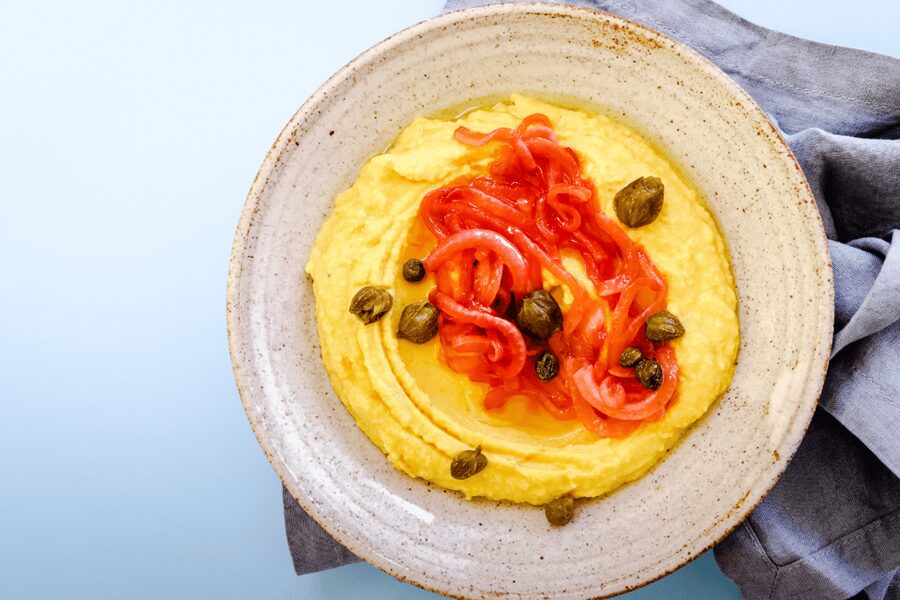
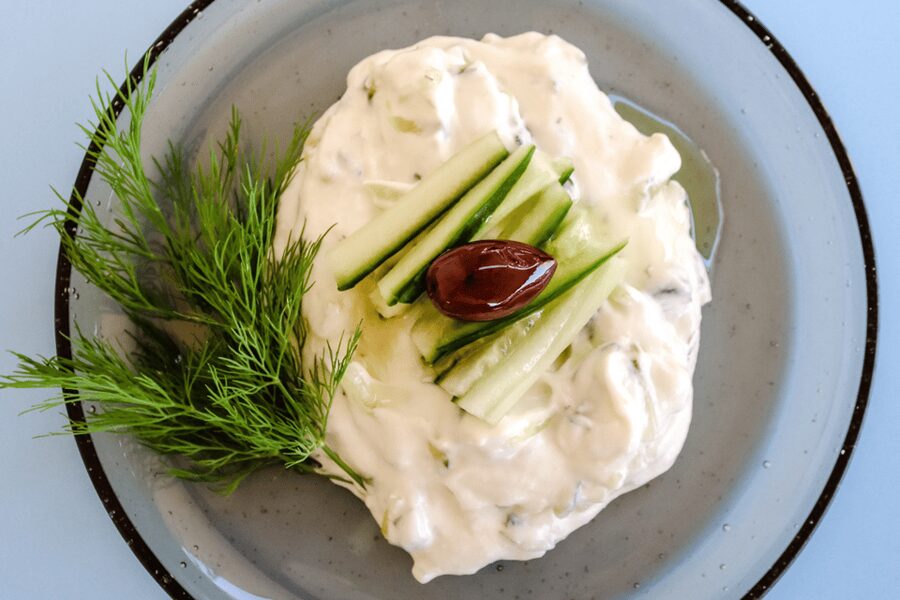
If moussaka is your comfort main, tzatziki and fava are your flavor anchors. You’ll make tzatziki, a cucumber yogurt dip (vegan), and fava, a yellow Greek hummus-style dish.
What you learn here is how Greek dips work. They depend on freshness and balance: cucumber with tang, garlic with restraint, and fava with a smooth, thick texture that still feels light. The class setup encourages you to taste as you go, so you can adjust flavors rather than follow a recipe blindly.
Fava in particular is a great “why did I not make this earlier?” lesson. It is not just hummus with a different color. It is about the specific taste and mouthfeel Greeks associate with the dish. Once you’ve stirred, seasoned, and tasted it in a teaching kitchen, making it at home becomes far less mysterious.
Tzatziki is similarly empowering because it teaches you what happens when you squeeze moisture out of cucumbers and when you season garlic and acidity correctly. These are the exact details that make the difference between a watery dip and one that actually stands up next to bread.
Almond-Feta, Dakos, and Koulouri: The Crunchy, Tangy Side
The most talked-about dish for many people is the almond-feta. This is an almond-based cheese-style element that brings the salty tang you expect from Greek feta, but in a vegan form. If you’ve ever thought, I don’t want to miss cheese, this is your chance to learn why people get excited about this version. The point is not to mimic dairy exactly. It is to deliver the flavor profile that works in Greek salads and spreads.
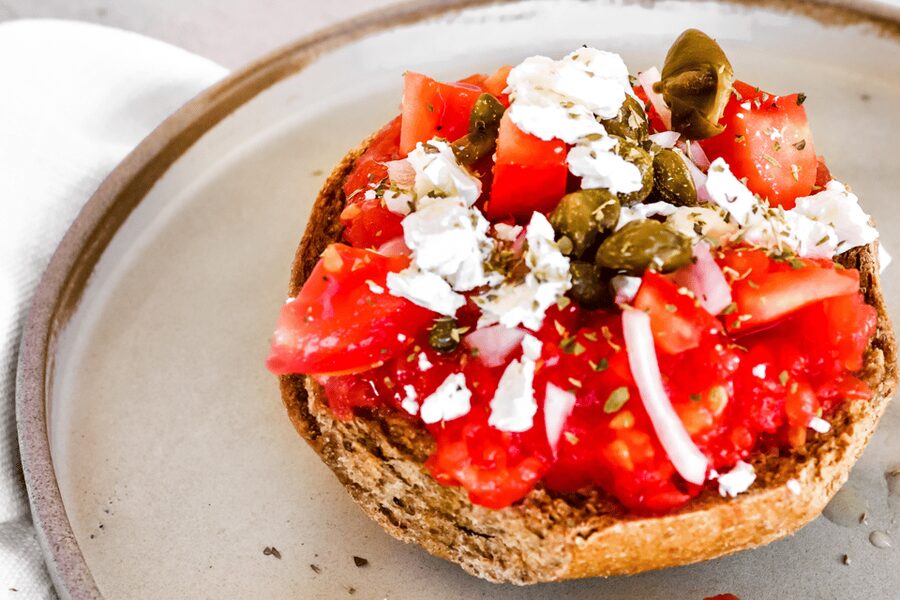
You’ll also make dakos, which is typically a bread-based Greek starter, and koulouri, those sesame ring breads you see around Athens. Dakos and koulouri add texture and context. They help you understand Greek eating patterns beyond plated meals, where bread, toppings, and dips show up all over the table.
These parts of the class are also great for learning how Greek food treats “simple” ingredients seriously. Olive oil, acid, herbs, and crunchy bread are doing a lot of work here. When you assemble your dakos and add your toppings, you’ll quickly see how the meal becomes more than the sum of its components.
Ekmek Dessert and the Shared Buffet Moment
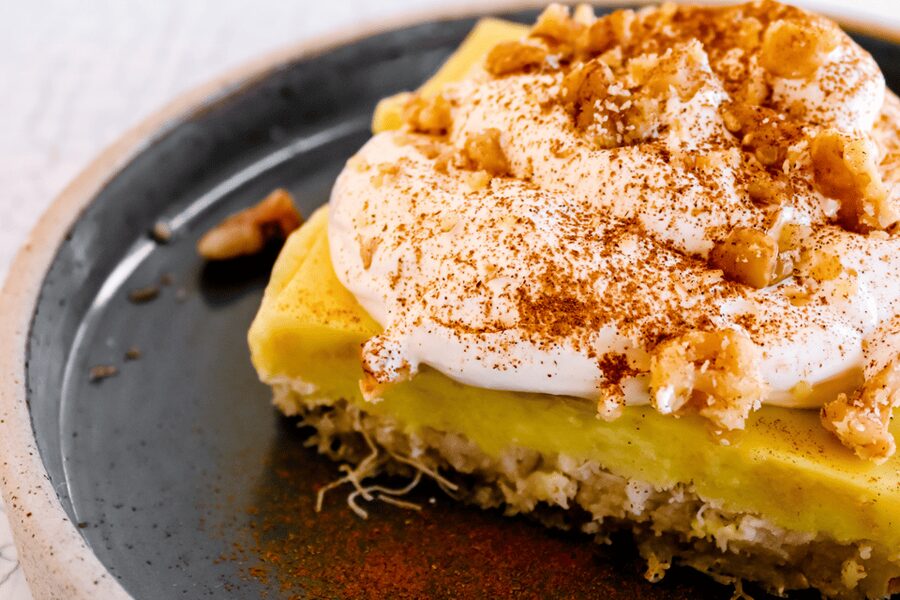
Dessert is ekmek, a dessert speciality that rounds out the lesson with something sweet and Greek. By the time dessert comes, you are usually well into food mode, which is why you should not plan heavy meals right before this class. It’s not just a snack. It is a cooked feast.
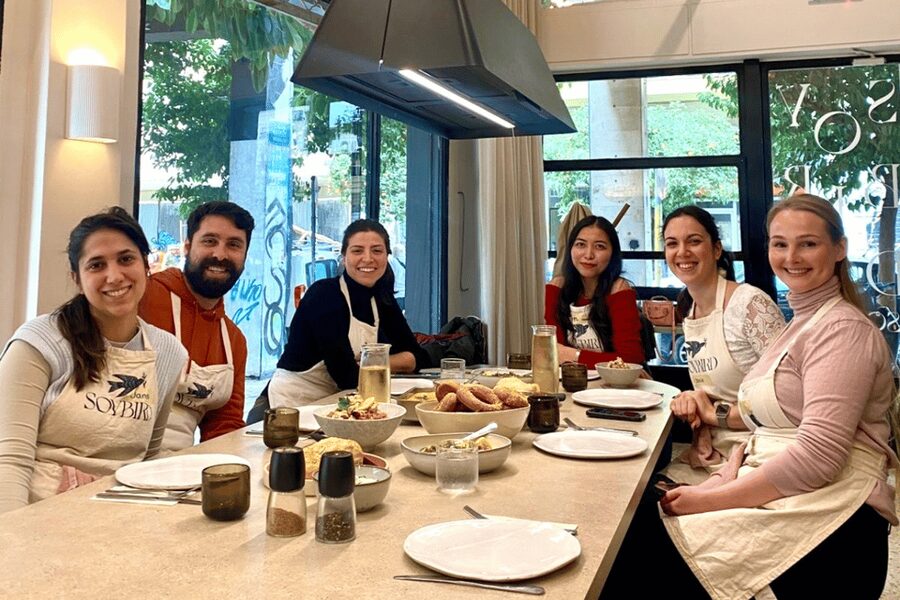
Then comes the best payoff: the shared buffet. After both teams finish their dishes, everything hits the table together. You’re not eating five bites and leaving. You’re digging in. Reviews consistently highlight that the table looks abundant and that people leave full.
This shared-meal format also changes how you perceive the cooking. When you taste your own moussaka or your team’s spanakopita alongside everything else, you get a clearer mental picture of how Greeks build a meal. It turns cooking into an understanding of balance, not just a set of tasks.
And yes, you’ll have time to chat. The group energy is part of the experience. Many people describe the class as more like cooking with friends than attending a formal lesson.
Drinks, Timing, and How the Evening Stays Fun
Wine and beer are included, and you’ll also get ouzo as part of the experience, along with water, coffee, and soft drinks. Drinks are not just tacked on at the end. They fit into the rhythm so the mood stays warm while you work.
This matters because a cooking class can go two ways. You either end up rushed and flustered, or you end up dragging along, hungry and bored. Here, the flow is designed to keep you moving, taste along the way, and enjoy the meal when it’s ready.
Most importantly, the hosts manage pace with clear instructions. People repeatedly call out that instructors were patient, humorous, and attentive, with names like Konstantinos, Fotini, Dimitra, and Alexandra appearing across many accounts. That teaching style is a real value, because it makes you feel confident enough to try the steps yourself rather than copying without understanding.
If you like your evening food-centered, this class nails it. You cook, taste, then sit down, and the drinks help keep the experience social instead of stiff.
Price and Value: Is $93 Worth It?
At $93 per person for a 3.5-hour class, the value is best understood in what you get, not just the number. For that price, you receive:
- hands-on cooking in a small group (max 12 to 14)
- a full set of Greek vegan dishes, served as a shared buffet
- experienced English instruction
- drinks including wine, beer, and ouzo
- fresh ingredients and all tools
- an apron
- a digital recipe book in English
If you compare that to paying for a cooking class plus a separate sit-down meal and drinks, the package becomes more reasonable. You are essentially buying a meal experience where you also learn technique and get written recipes. That digital recipe book is a practical souvenir, not a vague checklist.
One more value point: because the dishes are vegan, you learn Greek flavors in a way you can recreate without needing specialty dairy ingredients. If you cook at home and want flexible options, that matters.
The only cost factor to watch is transportation. Hotel transfer is not included, so you will need to handle getting there on your own. The location in Koukaki is walkable and easy to reach depending on where you’re staying, but plan accordingly.
Who Should Book This Class in Athens
I think this class is a great fit if you want a hands-on Athens activity that is both practical and genuinely fun. It suits:
- Food lovers who want technique, not just eating
- Solo travelers who want a friendly group vibe, not a lone museum moment
- Non-vegans who are curious and want to learn how Greek flavors work without meat or dairy
- Cooks at any level because the hosts guide you step by step
If you are vegan, even better. Many people describe the food as so flavorful that they did not miss meat or dairy at all. If you are not vegan, you’ll still likely enjoy it because the class aims for Greek satisfaction through herbs, pastry, and sauce rather than bland substitutes.
One small caution: the class is not suitable for children under 8. If you are traveling with younger kids, you’ll want a different plan.
Quick Practical Advice Before You Go
A few simple moves will make this class smoother:
- Arrive 10 minutes early so you can get settled and start on time.
- Wear comfortable clothes because you will be active in the kitchen.
- Go in hungry. The final shared meal is filling.
- Expect to cook two dishes yourself, then eat the full menu.
- If you have dietary needs beyond vegan, ask questions when you arrive since you’ll be working in a shared kitchen.
- Bring curiosity about vegan Greek staples, especially almond-feta and cashew béchamel.
Wheelchair access is listed as available, and the class runs on the ground floor. If you have mobility needs, you’ll want to plan your route in advance and confirm the exact door access when you arrive, but the base setup is meant to be accessible.
Should You Book This Athens Greek Vegan Cooking Class?
Yes, I’d book it if your trip has room for something hands-on, social, and useful at home. The class hits a rare balance: real cooking technique, a full Greek-style meal, and a relaxed atmosphere created by hosts such as Alexandra, Konstantinos, Fotini, and Dimitra. At $93 for 3.5 hours, including drinks and a digital recipe book, it is strong value for what you actually do and eat.
If you’re the type who wants a strictly scripted, watch-only class, this may feel too active. And if you are short on time, the 3.5-hour format is significant, though it’s long enough to learn meaningful technique and still enjoy a full meal.
If you want an Athens experience where you leave with both food in your stomach and recipes you can actually use, this is a smart choice.
FAQ
How long is the Athens Greek cooking class?
It lasts 3.5 hours.
What kinds of dishes will I cook?
You cook Greek vegan dishes such as moussaka with cashew béchamel, tzatziki, spanakopita, fava, almond-feta, dakos, koulouri, and ekmek.
Are drinks included?
Yes. The class includes water plus 1 glass of wine or a beer, and ouzo is also included.
How big is the group?
The group size is limited to a maximum of 14 people.
Where do I meet for the class?
Enter SOYBIRD in Google for directions. The cooking school is on the ground floor on the far right-hand side of the building.
What should I bring?
Wear comfortable clothes.
Can I cancel if my plans change?
Yes. You can cancel up to 24 hours in advance for a full refund.
Is it suitable for kids, and is it wheelchair accessible?
It is wheelchair accessible. It is not suitable for children under 8 years.
Latest from under the Acropolis







Cooking Classes, compared.
Classic Cooking Class with Market Visit and Wine
Read our review →
Food Market Visit and Cooking Class with Wine
Read our review →
Greek Cooking Class in Athens Including Rooftop Dinner with Acropolis View
Read our review →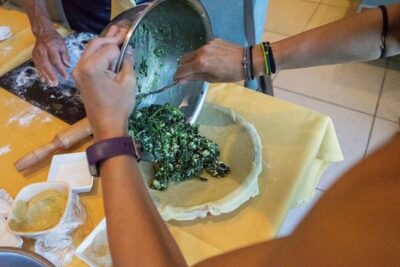
Greek Small-Group Athens Cooking Class & Dinner
Read our review →
Greek Cuisine Cooking Class and 3-Course Dinner
Read our review →
Traditional Greek cooking class and lunch or dinner with an Acropolis view
Read our review →
Athens Greek Cooking Class Pita Gyros from Scratch with a Local
Read our review →Browse the lists this tour appears in