
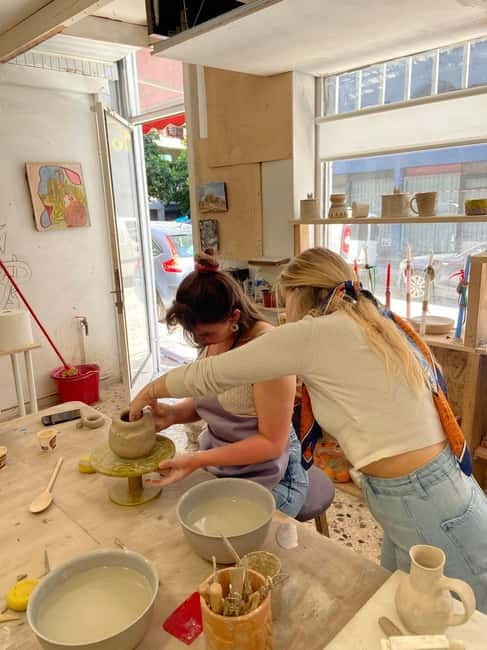
Reviewed · WORKSHOPS
Athens: Create a Ceramic Cup in a Pottery Workshop
Making a mug feels like magic. In Athens, I love learning the slab technique step by step, and I like that you leave with a one-of-a-kind ceramic mug design, but you do need to plan for a 3 to 4 week wait before it is ready (drying, firing, glazing).
This is a small class, limited to 6 participants, so the instructor can keep an eye on your technique without hovering. I also like that the workshop is set up for beginners, while still giving hands-on skill for people who have made ceramics before.
Meet up near Petralona Metro Station, roll up your sleeves, and expect to get messy in a good way. In recent sessions, the instructor has been described as patient and very upbeat, including one named Irene who guided newcomers calmly through each step.
In This Review
- Key things I’d bet on before you go
- Pottery in Athens: what you’ll make in a 2-hour class
- Meeting at Petralona and settling into a small group of 6
- From clay basics to the slab technique for strong mug walls
- Decorating with textures, stamps, and patterns that actually show
- The kiln firing and the 3 to 4 week wait for pickup or shipping
- Price and value: why $41 can be a fair deal for a handmade mug
- Who should book this Athens pottery workshop, and who should skip it
- Practical tips so your mug comes out looking like you
- Should you book this Athens ceramic mug workshop?
- FAQ
- How long is the pottery workshop?
- What will I make during the class?
- What is included in the price?
- How long does it take for the mug to be finished?
- Can I pick up my mug or does it ship?
- What languages are spoken during the workshop?
- Is this workshop suitable for children?
- Where is the meeting point?
Key things I’d bet on before you go
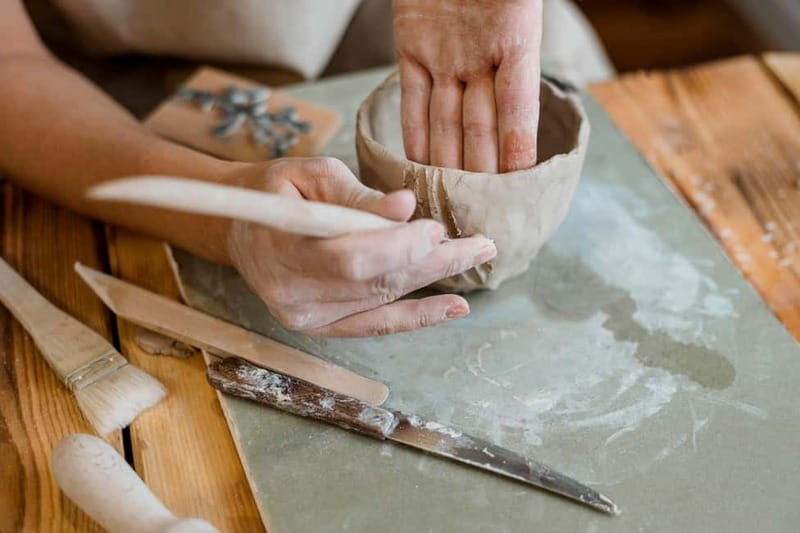
- Small group, max 6 means more personal attention while you shape clay.
- Slab technique gets you from flat clay to a real mug form you can decorate.
- Textures, stamps, and patterns let you make the mug look like you, not like everyone else.
- All materials included so you are not shopping for tools or clay.
- Kiln firing happens later, so you trade instant results for a durable finished piece.
- Optional shipping is available after your mug is ready, for an extra fee.
Pottery in Athens: what you’ll make in a 2-hour class
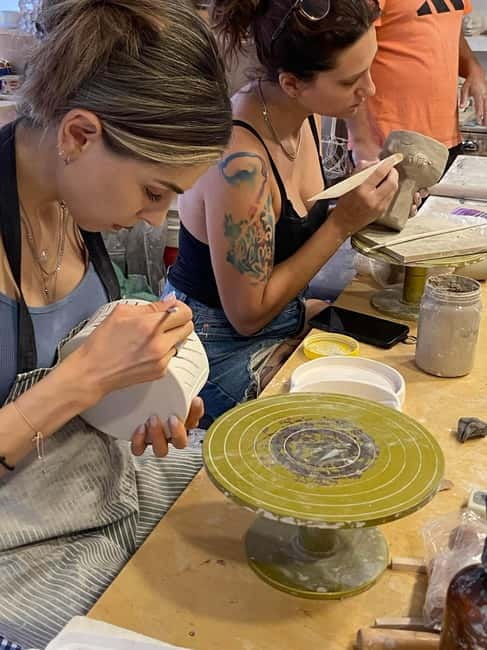
This is a straightforward, hands-on pottery workshop in central Greece that focuses on one main goal: you make your own ceramic mug from scratch.
In the 2 hours, you typically work through the core steps of mug-making. You start with clay basics, then use the slab technique to build a mug shape. After the form is created, you get time to decorate it with things like textures, stamps, or patterns. The end result is your mug, personalized with your design choices, ready to be fired and finished in a kiln later.
You can think of it as two stages. Stage one happens during class: shaping, sculpting, and decorating. Stage two happens after class: drying, firing, and glazing. That second stage is why you do not walk out holding a finished mug that day.
If you like souvenirs that are actually useful, this beats the usual “I bought a magnet” approach. You are making something that can become part of your morning routine, or at least a solid desk or shelf display.
More Athenian benches to work at for a morning:
- Athens: Classic Cooking Class with Market Visit and Wine
★ 5.0 · 1,101 reviews - Athens: Food Market Visit and Cooking Class with Wine
★ 4.9 · 1,087 reviews - Greek Cooking Class in Athens Including Rooftop Dinner with Acropolis View
★ 5.0 · 826 reviews - Greek Small-Group Athens Cooking Class & Dinner
★ 5.0 · 574 reviews
Meeting at Petralona and settling into a small group of 6
The meeting point is about 150 meters from Petralona Metro Station. For me, that matters because it keeps the day simple. You can base yourself in Athens and just plan to get there on foot or with a short metro hop, then return to the city after.
The class is designed for a small group of up to 6, and that is a big deal for pottery. Clay responds to pressure, moisture, and timing. If the group is too large, you wait around while your piece dries too fast or too slow, and you miss chances to fix small shape problems early. With a small class size, you get guidance at the right moments.
You also get instruction in English and Greek, which is helpful if you want clear explanations without language stress. The workshop is described as suitable for both beginners and people with some experience, so nobody is forced into advanced techniques right away.
What to wear, in plain terms: comfortable shoes and comfortable clothes. You will be handling clay, so treat this like an art project, not a museum visit.
From clay basics to the slab technique for strong mug walls
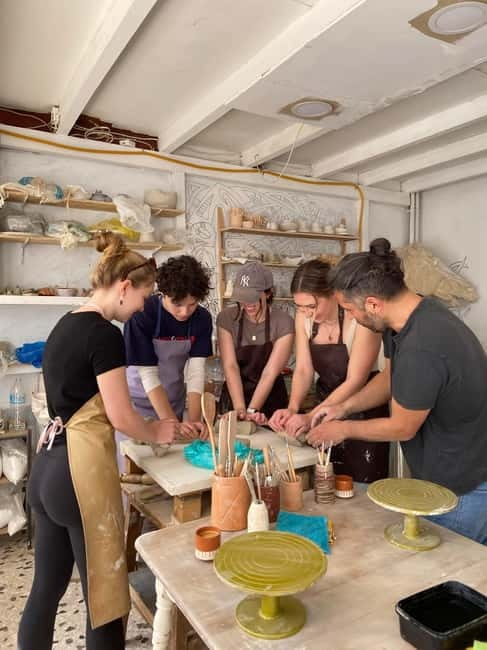
The workshop starts with the fundamentals of working with clay. You learn how to handle it so it is workable when you need it. That might sound simple, but clay is picky. If it is too wet, it slumps. If it is too dry, it cracks or won’t hold its shape.
Then you use the slab technique to shape the mug. In practical terms, this means you build the mug from clay sheets and assemble the form, rather than using a wheel. For many first-timers, that is the key benefit. The goal is not spinning clay into perfect symmetry. The goal is learning the process, building confidence, and making a mug that looks handmade because it truly is.
During this stage, you also get access to pottery tools and an apron, plus step-by-step guidance from the instructor. Recent class descriptions emphasize how patient instructors can be with newcomers, including reminders and checks throughout the process.
One thing to keep in mind: a mug needs structure. When you assemble the slab forms, thickness and attachment points matter. Even if you are not chasing professional-level perfection, pay attention when the instructor checks your piece. Fixing issues early is far easier than trying to fix them after the clay has started to set.
Decorating with textures, stamps, and patterns that actually show
Once your mug form is in place, you move to the fun part, decorating.
You can choose from options like textures, stamps, or patterns. The workshop is set up so you can experiment without needing years of training. If you like the idea of a souvenir that looks personal up close, this is where it happens.
Here’s what I think matters most about the decoration segment. It is not just about making your mug pretty. It is about learning how surface details behave in pottery. Raised textures can create shadows that look great after glazing. Stamps and patterns can become the mug’s visual identity.
If you want easy success, choose designs that are readable even when they are small. Repeating patterns can be forgiving. Single large shapes can also look great, as long as they are placed evenly and not so deeply carved that they weaken the clay.
If you are thinking, I’m not an artist, good news. The workshop structure and tool set are built for real beginners. In at least one session, a white stray cat named Bear wandered into the room and hopped up near the workspace, basically turning the atmosphere into a comedy routine. Not guaranteed, but it fits the overall vibe people describe: relaxed, creative, and focused on you getting it done.
The kiln firing and the 3 to 4 week wait for pickup or shipping
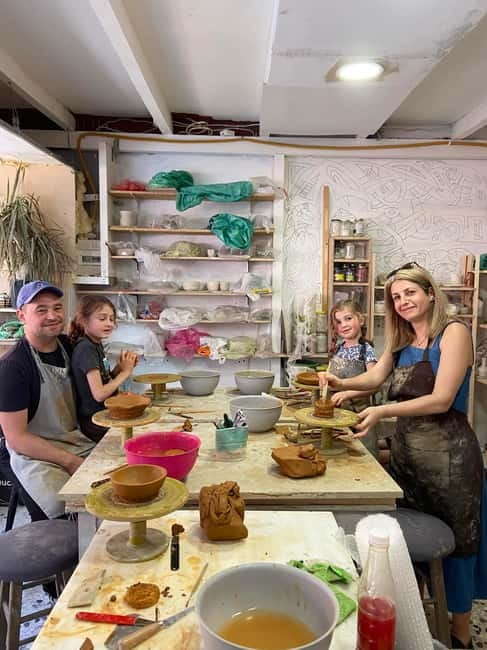
Here’s the tradeoff. You create the mug in 2 hours, but you do not get a finished, glazed piece right away.
Ceramics need about 3 to 4 weeks for drying, firing, and glazing. During that time, your piece is drying properly so it does not warp or crack. It is then fired in a kiln, and finally glazed and fired again, which is what makes the mug usable and durable.
After that finishing window, your mug can be:
- Picked up, or
- Shipped to you for an additional fee (shipping costs vary per country)
This waiting period is the one drawback to plan around. If you need a mug for a specific date, you might feel the lag. But if you are fine with a “souvenir that arrives later” concept, it is a lot more satisfying than buying something instantly packaged and mass-produced.
Also, the shipping option can turn this into a great “bring Athens home without the bulk” idea. One of the most common upsides mentioned by past participants is that paying extra for shipping can make the workshop feel like a complete purchase, not a half-finished craft.
Same hours, spent a different way in Athens:
- Athens: Acropolis & up to 5 Archaeological Sites Combo Pass★ 4.2 · 13,904 reviews
- Athens: Acropolis, Parthenon & Acropolis Museum Guided Tour★ 4.8 · 9,316 reviews
- The Acropolis, Parthenon & Acropolis Museum Guided Tour★ 4.7 · 8,493 reviews
- Athens: Cape Sounion & Poseidon Temple Sunset Half-Day Trip★ 4.8 · 8,241 reviews
Price and value: why $41 can be a fair deal for a handmade mug
At $41 per person for a 2-hour workshop, this is priced like a serious activity, not like a quick demo.
The value comes from what is included:
- Clay
- Pottery tools
- Aprons
- Step-by-step instructions
- Guidance from an experienced potter
That matters because clay and tools add up if you tried to DIY. You also get instruction that helps you avoid common beginner mistakes, like uneven thickness, weak joins, or surface details that do not translate well after glazing.
Compared with buying a finished handmade mug, this also gives you the story. Yes, you wait 3 to 4 weeks for the final product, but you are not just purchasing a mug, you are building one. That feeling is hard to put a price on, and it is exactly the kind of souvenir that tends to get used, not stored.
The only added cost to consider is shipping, if you want it. The workshop itself gives you the tools to make the mug, but shipping is optional and depends on your country and pricing.
Who should book this Athens pottery workshop, and who should skip it
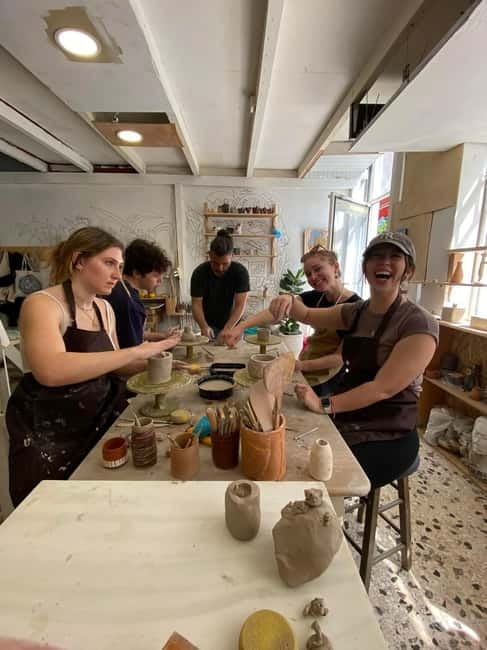
This workshop is a good fit if:
- You want a hands-on Athens activity that is genuinely creative
- You like making practical souvenirs you can use later
- You are a beginner and want step-by-step guidance
- You are traveling with limited time in a single day and still want a memorable experience
It also works for people with some experience, because you still practice real mug-building and surface decoration with guided support.
It is not suitable for children under 8 years, and babies under 1 year are not suitable. That is mostly about the workshop’s handling of clay and the practical nature of the class.
One more fit factor: your schedule. Since you need 3 to 4 weeks for the ceramic to finish, this is best if you are okay planning around pickup or waiting for shipping.
Practical tips so your mug comes out looking like you
If you want the best odds of ending up with a mug you will actually want to use, focus on three things during the class.
First, trust the step-by-step guidance. If the instructor tells you to adjust pressure, thickness, or alignment, take the advice. Mug-making is mostly about small choices that add up.
Second, plan your decoration simply. Choose one or two design ideas for the surface. Textures and stamps can look amazing, but too many competing patterns can make a mug feel visually crowded after glazing.
Third, dress for comfort and movement. Comfortable shoes matter because you will likely stand and move around the workspace while working. Comfortable clothes matter because clay is messy, and aprons help but do not magically erase contact with your hands.
Finally, think ahead about the “after.” If you are planning to travel out of Athens soon, consider how you will handle pickup or shipping. This is not a same-day finished product, so decide early which option fits your trip.
Should you book this Athens ceramic mug workshop?
I think this is worth booking if you want a small-group, hands-on craft experience in Athens where you build a real object, not just watch pottery happen.
Book it if you value:
- Beginner-friendly instruction with clear steps
- Slab technique practice for building a mug form
- Time to decorate with your own textures and patterns
- The chance to take home a handmade souvenir, either by pickup or with optional shipping
Skip it if you:
- Need a completed mug on a tight deadline
- Are not comfortable with a messy, hands-on activity
- Are traveling with very young kids who do not meet the age suitability
If you are the type of traveler who likes making one meaningful thing during a trip, this is a solid choice. Athens has no shortage of great food and sightseeing, but a handmade ceramic mug gives you a different kind of memory, one you can use at home.
FAQ
How long is the pottery workshop?
The workshop lasts 2 hours.
What will I make during the class?
You will create your own ceramic cup or mug from scratch using the slab technique, then decorate it with textures, stamps, or patterns.
What is included in the price?
The price includes all materials, including clay, pottery tools, and aprons, plus step-by-step instructions and guidance from an experienced potter.
How long does it take for the mug to be finished?
Ceramics need about 3 to 4 weeks for drying, firing, and glazing before the finished mug is ready.
Can I pick up my mug or does it ship?
Your finished mug can be picked up, or it can be shipped for an additional fee. Shipping costs vary per country.
What languages are spoken during the workshop?
The instructor provides instruction in English and Greek.
Is this workshop suitable for children?
It is not suitable for children under 8 years, and babies under 1 year are not suitable.
Where is the meeting point?
The meeting point is about 150 meters from Petralona Metro Station.
Latest from under the Acropolis







Workshops, compared.
Classic Cooking Class with Market Visit and Wine
Read our review →
Food Market Visit and Cooking Class with Wine
Read our review →
Greek Cooking Class in Athens Including Rooftop Dinner with Acropolis View
Read our review →
Greek Small-Group Athens Cooking Class & Dinner
Read our review →

Greek Cuisine Cooking Class and 3-Course Dinner
Read our review →
Traditional Greek cooking class and lunch or dinner with an Acropolis view
Read our review →
Athens Airport Private Transfer by Mercedes-Benz E Class Wagon to City Center
Read our review →Browse the lists this tour appears in