
Reviewed · ANCIENT CORINTH TOURS
Athens: Apostle Paul Footsteps Tour with Corinth Visit
Paul’s story feels suddenly physical. This 7-hour private drive threads Athens’ Ancient Agora and Areopagus with Corinth’s major landmarks, ending at Kechreae, the port tied to Paul’s departure. You get the geography first, then the spiritual meaning clicks into place.
I especially like how the route keeps the narrative tight: the Ancient Agora and the Areopagus setting give context for Paul’s speech on the Unknown God. I also love the momentum of the Corinth stops, especially the Canal area and the Diolkos, where you get big views and memorable photo moments without wasting time.
One thing to plan for: this day is about walking and standing under sun, and you’ll have extra costs for Ancient Corinth entrance tickets plus meals are not included. If you want a slower pace, this may feel full.
In This Review
- Key things I’d plan around
- Athens, Corinth, and why the setting matters
- Ancient Agora and Areopagus, Mars Hill made understandable
- Corinth Canal and the Diolkos, short stops with big impact
- Ancient Corinth museum and ruins, the city behind the letters
- Acrocorinth and the Temple of Aphrodite, views with a message
- A short church stop at Apostle Paul’s name
- Kechreae port, where the story leaves by sea
- Price and value: what $210 actually buys you
- Who this tour fits best
- Before you go: the small things that make the day better
- Should you book this Apostle Paul Footsteps day?
- FAQ
- How long is the Athens to Corinth Apostle Paul Footsteps tour?
- Where do I get picked up in Athens?
- Is this a private group tour?
- What are the main places you visit?
- Are entrance tickets included?
- Are meals included?
- What should I wear or bring?
- What is the cancellation policy?
Key things I’d plan around
- Areopagus and the Unknown God context, so the sermon makes sense in place, not just on a page
- Ancient Agora plus Mars Hill setting, with clear connections to Paul’s early listeners
- Corinth Canal and Diolkos photo stops, dramatic scenery in a short amount of time
- Ancient Corinth museum and ruins, where artifacts help you picture the city behind the letters
- Acrocorinth views and the Temple of Aphrodite site, history with a strong visual payoff
- Kechreae port visit, a reflective ending that fits the story of Paul’s challenges and departure
Athens, Corinth, and why the setting matters
This kind of tour works best when it turns locations into understanding. When you connect Athens and Corinth, the New Testament starts to feel less like a sequence of chapters and more like a real map of conversations, travel routes, and conflicts.
I like that this experience gives you the “why here, why then” feeling. Athens is not just scenic, it is the intellectual center where ideas were debated in public. Corinth is not just impressive ruins, it is a wealthy commercial hub where faith had to meet real life, real temptations, and real social pressure.
The tone of the day is practical too. You’re not stuck staring at one wall for hours. You move through key spots, get guided explanations at the most important points, and then you get enough time to look around and make your own connections.
And that is the real value for me: by the end, you can connect the dots between what Paul taught and where he taught it.
More trails following Paul through Greece:
- Biblical Tour Letters ToThe Corinthians St Paul’s Footsteps 6Hour
★ 5.0 · 1,065 reviews - Private Biblical Tour Ancient Corinth & Isthmus Canal from Athens
★ 5.0 · 762 reviews - Private Tour of Apostle Paul’s Footsteps in Ancient Corinth
★ 5.0 · 275 reviews - Paul”s Footsteps Ancient Corinth Biblical Tour
★ 5.0 · 184 reviews
Ancient Agora and Areopagus, Mars Hill made understandable
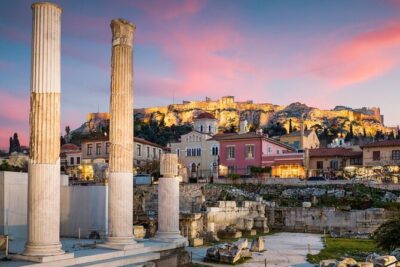
In Athens, you start where public life and philosophy intersected. The Ancient Agora is the kind of place where you can almost picture people milling about, arguing ideas, trading goods, and trying to make sense of the world. It’s also the backdrop for Paul’s presence among the Athenians.
The Areopagus, often associated with Mars Hill, is where the tone shifts. This is the place tied to Paul being brought for judgment and delivering his sermon about the Unknown God. You’ll hear how that message worked for the people listening, not just the religious message itself, but the cultural bridge Paul was trying to build.
One detail I find especially interesting here is the mention of Saint Dionysius the Areopagite. That connection gives you something more personal than just a famous speech. It hints at how early audiences could turn a public moment into real conversion.
Practical note: this stop includes walking and standing time, and you’ll want comfortable shoes. If you’re sensitive to heat, bring sunscreen and plan to reapply.
Corinth Canal and the Diolkos, short stops with big impact
Corinth is famous for its position, and this route shows that quickly. Before you even get to the ruins, you hit the Isthmus of Corinth for a photo stop. The land bridge idea is simple, but standing there helps you feel how important travel and control were between mainland Greece and the Peloponnese.
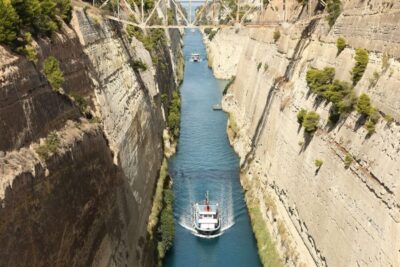
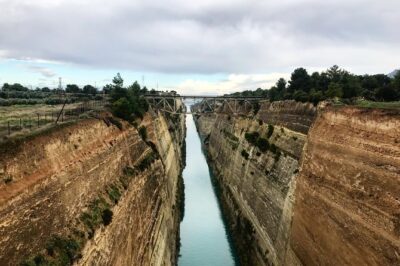
Then you go to the Corinth Canal and the Diolkos area. The Canal gives you dramatic modern scale, but the Diolkos is where the story gets older and more surprising. The Diolkos was an ancient stone-paved route used to transport ships overland. That means Corinth wasn’t just about sailing in and out, it was also about logistics, engineering, and profit.
The best part is that these are photo stops with real context. You’re not just looking at views, you’re learning why those views mattered. And for many people, the photos become a memory hook you can later attach to what you learned about Corinth’s strategic importance.
If you’re the kind of traveler who hates rushing, you’ll likely appreciate the structure here. You get just enough time to see, photograph, and then move on.
Ancient Corinth museum and ruins, the city behind the letters
Ancient Corinth is the main event, and you’ll spend real time here. You’ll have a photo stop, time to walk, and self-guided exploration at the archaeological site and museum area.
The museum piece matters. Ruins can look like scattered stones until you see artifacts and learn what everyday life looked like. When you move from the museum to the site, the city starts to feel like a place where people worked, worshipped, argued, and built their identity.
Corinth is described here as wealthy and influential, and that is key for understanding Paul’s mission. A prosperous city can mean opportunities, but it can also mean intense moral and social pressure. Paul taught in a context where Christianity wasn’t the only worldview people followed, and where temptation and status were part of daily life.
You’ll also get to see the broader rhythm of the place. This is not a “quick look” stop. Self-guided time lets you slow down at the parts you care about most, whether that is the scale of the archaeological site or the artifacts inside the museum.
One consideration: entrance tickets to Ancient Corinth are not included, so factor that into your budget and your timing.
Acrocorinth and the Temple of Aphrodite, views with a message
Acrocorinth is the kind of site that rewards a good pair of legs. You’ll have a photo stop and then time for self-guided exploration at the hilltop fortress area called Acrocorinth.
This stop has two jobs. First, it gives you panoramic views that help you understand how a strategic stronghold could oversee the region. Second, it connects faith and culture through the presence of the Temple of Aphrodite.
That Temple detail is more than trivia. It symbolizes the religious and social contrasts that made Paul’s message challenging and significant. In other words, you’re not only looking at impressive terrain. You’re looking at a physical reminder of the kinds of beliefs and cultural systems Paul was up against.
If you want to get the most from Acrocorinth, give yourself a few minutes to just stand still and take in the view. Then think about what kind of city lived below a place like this. When you do that, the conflict between competing worldviews feels less abstract.
Like the other stops, you should expect standing and walking time. Plan for sun, and keep water handy.
Other visits to ancient Corinth:
- From Athens: Ancient Corinth Day Trip with Canal & VR Guide★ 4.6 · 1,073 reviews
- Athens: Ancient Corinth & Nafplio Full Day Trip with Swim★ 4.8 · 531 reviews
- Athens: Corinth Canal, Mycenae & Nafplio Premium Guided Tour★ 4.7 · 322 reviews
- Athens: Corinth Canal, Mycenae and Nafplio Day Tour★ 4.3 · 252 reviews
A short church stop at Apostle Paul’s name
One of the stops on this day is the Ιερός Ναός Αποστόλου Παύλου Αρχαίας Κορίνθου. It’s a brief photo stop and visit, about 10 minutes.
I think these short stops are useful because they give you a moment to slow down after big archaeological experiences. They can also help you anchor the day’s theme. When you’re bouncing between Agora, Mars Hill, and multiple Corinth locations, a quick “here is Paul’s name in this place” stop can help everything feel tied together.
If you’re the type who doesn’t like rushing, keep this one in mind as a reset moment. It’s not meant to replace the museum or ruins time. It’s meant to remind you what you’re actually walking through.
Kechreae port, where the story leaves by sea
You end at the ancient port of Cenchreae, also known as Kechries. This is a guided visit for about 20 minutes, which is a good use of time for a reflective ending.
This is where the story takes on a travel feel again. Paul departed from here after facing persecution by the Corinthians. That detail gives the port a different weight than a normal sightseeing moment. You’re standing where someone left, not just where ships once existed.
The guided component helps because ports have layers. Even if you’re not memorizing every historical fact, a good guide can point out how the location fits the broader missionary movement across the Mediterranean.
This stop also works as a mental “wrap.” By this point, you’ve learned what shaped Athens and Corinth. Now you’re seeing how Paul’s journey continued outward.
If you like finishing tours with a calm moment rather than more ruins, you’ll likely appreciate the pacing here.
Price and value: what $210 actually buys you
At $210 per person for a 7-hour day, value comes down to three things: how efficiently you cover major sites, whether the explanations feel useful, and what costs are extra.
On the plus side, this experience includes pickup from Athens (hotel or Airbnb), transport with professional drivers who have strong history knowledge, bottled water, and visits at the key locations across both Athens and Corinth. You also get an English live guide.
The not-so-fun part is the extras you should plan for: Ancient Corinth entrance tickets cost 15 euros per person, and meals are not included. There is also mention that airport pickup costs extra per group.
So is it worth it? For me, it usually is when you want a single organized day that connects the spiritual story with the real geography. You are not cobbling together buses, timing tickets, and trying to interpret sites on your own.
If you already know you like independent travel, you could build a DIY route. But if your goal is understanding Paul’s journey across Athens and Corinth, this structure saves you energy and keeps your attention on the right moments.
Who this tour fits best
This is a strong match if you want faith and history in the same package. It is also a good choice if you’re curious about the specific places Paul visited and you want clarity on why those places mattered.
It is especially useful if you’re the kind of person who reads the Bible and still has questions like: why was Paul speaking there, and what did people nearby think? The day is set up to answer those questions through location.
I think it’s also a good fit for a private group. Small group travel generally means you can ask more direct questions and get explanations that match your interests.
On the other hand, if you dislike walking, this may not be your best day. You should expect shoes-on, sun-on, standing time.
Before you go: the small things that make the day better
A few simple prep moves will help you get the best out of the day.
Wear comfortable shoes. You’ll be on foot at multiple sites, including self-guided time at Ancient Corinth and Acrocorinth. Bring a hat and sunscreen since you’ll be exposed for stretches.
Also, think about how you’ll handle food. Meals are not included, so plan either a light snack strategy before the tour or a meal plan after you return to Athens.
Finally, go into the day with at least a basic sense of Paul’s letters and his travel routes. You don’t need to memorize anything. It just makes the explanations land faster when you already recognize the themes.
Should you book this Apostle Paul Footsteps day?
If your main goal is to connect the story of Paul to the physical places in Athens and Corinth, I think this is a smart booking. The route is structured to keep the narrative coherent, and the key locations are chosen for a reason. I also like that the day blends guided moments with self-guided time, so you can actually absorb what you see.
I would skip or reconsider if you want a relaxed sightseeing pace, if you strongly prefer meals included, or if extra ticket costs would throw off your budget.
But if you want a day that makes Paul’s journey feel clear, mapped, and meaningful, this is the kind of tour where the pieces start to fit before you even finish the drive back.
FAQ
How long is the Athens to Corinth Apostle Paul Footsteps tour?
The tour lasts 7 hours.
Where do I get picked up in Athens?
Pickup is included from the location you provide, such as your hotel or Airbnb in Athens. The driver contacts you in advance with the arrival time.
Is this a private group tour?
Yes, it is a private group.
What are the main places you visit?
You visit the Ancient Agora and Areopagus in Athens, the Isthmus of Corinth and Diolkos area, Ancient Corinth including the archaeological site and museum, Acrocorinth (including the Temple of Aphrodite area), and the ancient port of Cenchreae (Kechries).
Are entrance tickets included?
Entrance tickets to Ancient Corinth are not included (15 euros per person).
Are meals included?
No, meals are not included.
What should I wear or bring?
Wear comfortable shoes for walking and standing. Bring a hat and sunscreen for sun protection.
What is the cancellation policy?
Free cancellation is available up to 24 hours in advance for a full refund.
Latest from under the Acropolis




Ancient Corinth Tours, compared.
Ancient Corinth Day Trip with Canal & VR Guide
Read our review →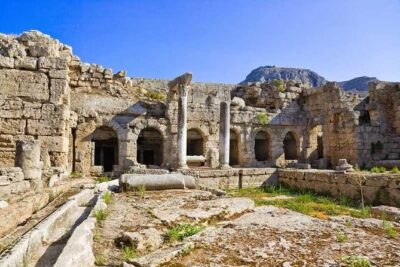
Biblical Tour Letters ToThe Corinthians St Paul’s Footsteps 6Hour
Read our review →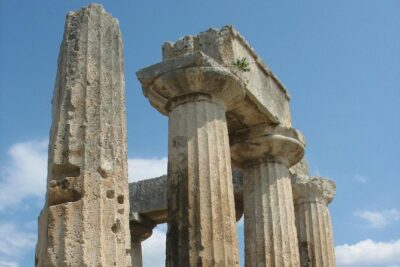
Private Biblical Tour Ancient Corinth & Isthmus Canal from Athens
Read our review →
Corinth Canal, Mycenae & Nafplio Premium Guided Tour
Read our review →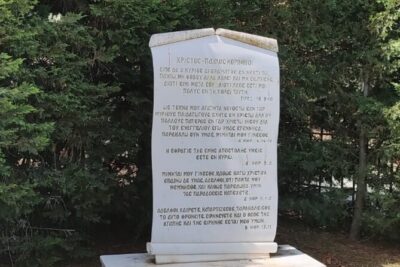
Private Tour of Apostle Paul’s Footsteps in Ancient Corinth
Read our review →
Corinth Half-Day Trip from Athens with Entrance Tickets
Read our review →Browse the lists this tour appears in