
Reviewed · ANCIENT CORINTH TOURS
Ancient Corinth, Temple of Hera, Blue Lake full day private tour from Athens
Corinth changes shape when you see it from different heights. This private day trip links the Corinth Canal, ancient ruins, and a lagoon called Limni Vouliagmeni for big scenery with minimal stress.
I like the pace because it’s realistic. You get a driver-led run of the highlights from a comfortable, air-conditioned vehicle, with narration in English and built-in breaks timed for sightseeing.
One thing to consider is that only part of the day has paid entry. Ancient Corinth and the Archaeological Museum of Corinth cost extra, and the hilltop sites (like Akrokorinthos) call for a bit of uphill walking.
In This Review
- Key things you’ll love about this north Peloponnese loop
- A private Corinth and Blue Lake day starts with an easy Athens exit
- Corinth Canal: a quick stop that explains a whole region
- Ancient Corinth and its museum: the Paul connection plus the city behind the headlines
- Temple of Apollo and the Corinth skyline: a small stop with big context
- Akrokorinthos (Upper Corinth): fortress energy and earned views
- Perachora’s Heraion: a sanctuary in a small cove by the sea
- Limni Vouliagmeni (Blue Lake): sandy beach time in a lagoon setting
- Time management: how the day stays smooth for 8 to 9 hours
- Tickets, entrance fees, and what’s included in the price
- Who this tour suits best
- Should you book this Corinth and Blue Lake day trip?
Key things you’ll love about this north Peloponnese loop
- Private door-to-door pickup so you avoid public transport juggling
- Corinth Canal viewpoints with geography that really explains why the peninsula matters
- Ancient Corinth plus the on-site museum, so you see ruins and objects in the same day
- Akrokorinthos fortress views from the Upper Corinth rock
- Perachora’s Heraion in a small cove, where rural cult life feels close to the sea
- Limni Vouliagmeni (Blue Lake), a lagoon setting with a sandy beach and a narrow water channel
A private Corinth and Blue Lake day starts with an easy Athens exit
This is the kind of day trip that works because it removes the heavy lifting. You’re picked up at your hotel, apartment, the airport arrivals hall (with a name sign), or the port gate, then you’re returned to the same spot or a place you prefer.
The vehicle is private and air-conditioned, and you get bottled water plus WiFi onboard. Your driver handles the driving and gives fluent English commentary on what you’re seeing, while also keeping you on schedule across a full day.
Other visits to ancient Corinth:
- From Athens: Ancient Corinth Day Trip with Canal & VR Guide
★ 4.6 · 1,073 reviews - Biblical Tour Letters ToThe Corinthians St Paul’s Footsteps 6Hour
★ 5.0 · 1,065 reviews - Private Biblical Tour Ancient Corinth & Isthmus Canal from Athens
★ 5.0 · 762 reviews - Athens: Ancient Corinth & Nafplio Full Day Trip with Swim
★ 4.8 · 531 reviews
Corinth Canal: a quick stop that explains a whole region
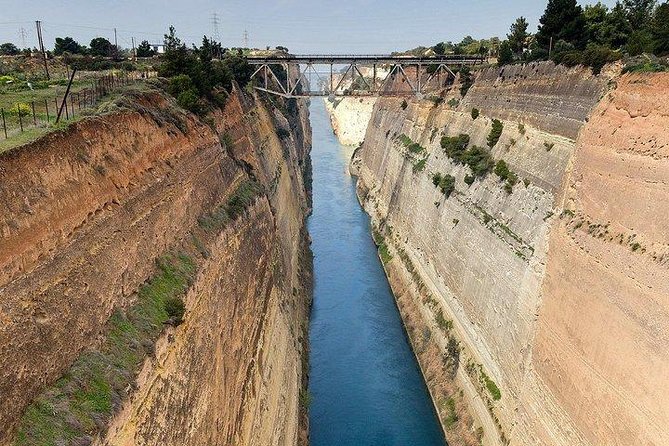
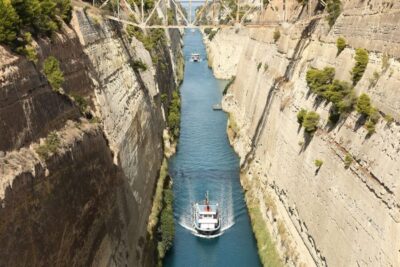
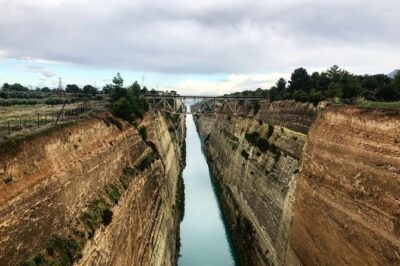
You spend about 30 minutes at the Corinth Canal, and it’s a smart use of time. The canal cuts through the narrow Isthmus of Corinth, separating the Peloponnese from the Greek mainland, so it’s not just a landmark, it’s a geography lesson in motion.
Here’s what makes it fascinating: the canal is 6.4 km long, only 21.4 meters wide at the base, and it has no locks because it was dug at sea level. From higher viewpoints, you can take in the steep limestone walls and watch vessels navigate the channel below, which adds energy even if you’re not spending much time on site.
This stop is free (admission ticket is listed as free). Consider bringing a phone camera with a wide angle lens mode if you like skyline-style photos.
Ancient Corinth and its museum: the Paul connection plus the city behind the headlines
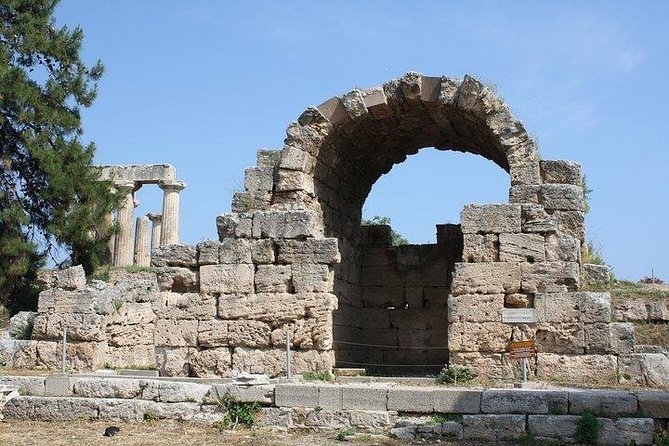
Next comes Ancient Corinth, and you’ll have about 1 hour 30 minutes on the archaeological site. Corinth sat on the Isthmus of Corinth, about halfway between Athens and Sparta, and it grew into one of the most important cities of Greece, with a population listed at 90,000 in 400 BC.
If you connect to the Bible’s travel stories, this place hits extra hard. Corinth is linked to Saint Paul through his First and Second Corinthians letters, and also through the Acts of the Apostles missionary journeys. You also see Corinth repeatedly in historical travel writing, since Pausanias’ Description of Greece includes substantial focus here.
For me, the best value of this part is pairing the site with the museum. The Archaeological Museum of Ancient Corinth is on the same grounds and is intended to display discoveries from recent excavations. You get about 1 hour there, and it helps you understand what you’re looking at when you’re out in the open.
The museum was built around 1931 to 1932, and it includes key areas tied to the site layout and major finds, including Hadgimoustafa spring, the Lechaion Road, the Basilica, the Fountain of Peirene, the Stoa, the Agora, the Odeion, and more temple remains, plus a theatre. If you enjoy the details that make a city feel real, this pairing makes the day click.
Temple of Apollo and the Corinth skyline: a small stop with big context
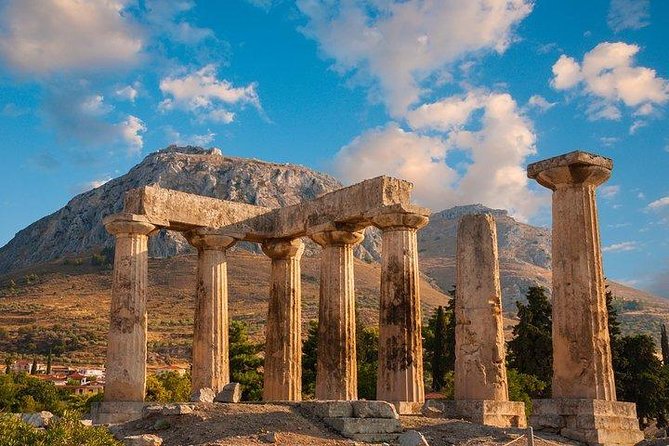
After the main ruins, you briefly visit the Temple of Apollo, about 15 minutes. The temple’s construction dates to around 550 BC, so it gives you a sense of how long these sacred sites and civic centers mattered in the region.
This isn’t an all-day temple experience, so I’d use this moment for orientation. Take in how the sacred structures fit into the broader ancient city idea, then use your energy for what comes next on the rock above Corinth.
The Temple of Apollo is listed as free. Since the time is short, come ready with a quick list of questions for your driver, like what changed when the Romans took over.
Akrokorinthos (Upper Corinth): fortress energy and earned views
Then you go up to Akrokorinthos, also called Acrocorinth, the “Upper Corinth” acropolis. You’ll have about 1 hour, and this is where the landscape explains the strategy.
Acrocorinth is a monolithic rock overlooking ancient Corinth, and its fortress history is tied to control of the Isthmus of Corinth. The site had a secure water supply, and because it dominated the approach routes by land, it repeatedly served as a last line of defense for southern Greece.
Even if you’re not a hardcore military history fan, the feeling is clear when you’re standing above the plains. This is one of those places where you can see why people fought for it.
This stop is also listed as free. Wear shoes with good grip, since hilltop ancient sites can be uneven, and give yourself extra time to look around rather than rushing from viewpoint to viewpoint.
A handful more Athens outings to compare
- Best of Athens Half Day Private Tour★ 5.0 · 3,714 reviews
- Athens Full Day Private Tour★ 5.0 · 2,903 reviews
- Athens Airport Private Arrival Transfer with Meet & Greet★ 4.5 · 1,495 reviews
- Athens Airport to Athens Hotels Private Arrival Transfer★ 5.0 · 947 reviews
Perachora’s Heraion: a sanctuary in a small cove by the sea
After the heights, the day shifts to calm. Limni Vouliagmeni and Perachora’s Heraion are close to each other, and both feel like a break from the busier ancient-city vibe.
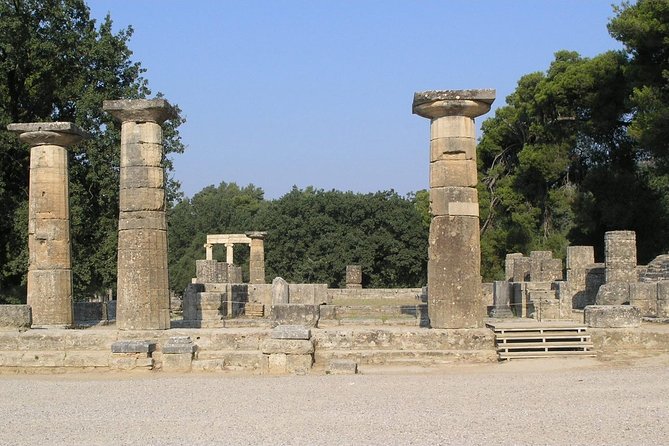
Heraion in Perachora is a sanctuary dedicated to Hera, set in a small cove on the Corinthian Gulf, at the end of the Perachora peninsula. You’ll have about 1 hour here, and it’s easy to see why the setting matters, because the sea is part of the story.
The site includes a temple of Hera of unusual construction and antiquity, plus remains of an L-shaped stoa, a large cistern, dining rooms, and a possible second temple. There’s also debate about whether Argos, Megara, or Corinth held control, but the sanctuary likely related strongly to Corinth because it faced the harbors of that powerful city across the gulf.
One of the best context points is the timeline. Cult activity continued from perhaps the 9th century BCE until 146 BCE, when the Roman general Mummius sacked Corinth during the war with the Achaean League. In Roman times, domestic structures appeared on the site, suggesting the sacred function faded and the area changed use.
The Heraion stop is listed as free. If you like quieter archaeological corners with a strong sense of place, this is the moment in the day you’ll remember.
Limni Vouliagmeni (Blue Lake): sandy beach time in a lagoon setting

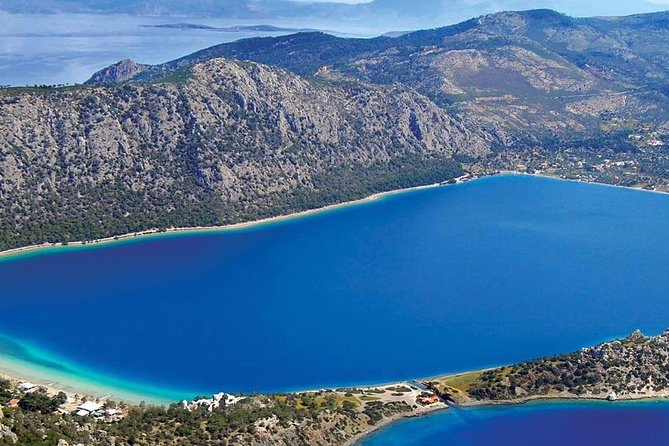
This tour’s “Blue Lake” focus is Limni Vouliagmeni, a lagoon about 16 km northwest of Loutraki. It’s close to the archaeological area of the Heraion and the settlement of Perachora, so it fits naturally between your sacred-site visit and the broader ancient Corinth theme.
You’ll have about 30 minutes here, and that short window is plenty for photos, a look around the shoreline, and a quick feel for the setting. The lagoon is about 2 km long and up to about 1 km wide, and it’s described as having a sandy beach, in contrast to the beach of Loutraki.
Limni Vouliagmeni connects to the Corinthian Gulf through a very narrow channel no wider than about 6 meters. The maximum depth is listed as not exceeding 40 meters, and in ancient times it carried names including Eschatiotis and Gorgopis, tied to a drowning story about Gorgi.
If you’re thinking, this feels like a culture and nature hybrid day, you’re right. The best way to use this stop is to slow down, look at the water channels, and let your driver explain how this kind of coastal geography supports ancient settlement.
This stop is also free (admission ticket listed as free).
Time management: how the day stays smooth for 8 to 9 hours

The tour runs about 8 to 9 hours, and the stop lengths are fairly tight. That’s good if you want variety, but it also means you should plan your expectations like a “great highlights circuit,” not a lingering study session.
Your schedule is built with a mix of short and longer moments: 30 minutes at Corinth Canal, about 1.5 hours for Ancient Corinth, about 1 hour for the Archaeological Museum of Corinth, a quick 15 minutes at the Temple of Apollo, about 1 hour at Akrokorinthos, then about 30 minutes at Limni Vouliagmeni, and about 1 hour at Heraion.
The driver narration helps a lot when time is limited. In fact, some drivers have been singled out for making the day work, including George, Tom, Costa, and Panajotis (often called Notis). If you’re the type who likes to connect dots while you walk, having the explanations on board is a real advantage.
Tickets, entrance fees, and what’s included in the price
Here’s the clear money picture. The tour is priced at $220.73 per person, and you also have an extra entrance cost for two parts of the day. Entrance fees for Ancient Corinth and the Archaeological Museum of Corinth are not included, and they are listed at €15.00 per person (you can purchase on-site).
The other stops listed with admission ticket as free include the Corinth Canal, the Temple of Apollo, Akrokorinthos, Limni Vouliagmeni, and Heraion. That means your main ticket expense is concentrated in the Ancient Corinth block, which is exactly where you’ll spend the most time.
What you’re really paying for is the all-in logistics of getting you out of Athens and back, plus the comfort and storytelling. With a private air-conditioned vehicle, pickup and drop-off, WiFi onboard, and bottled water included, this can work out well if you’d otherwise need multiple taxis or buses plus time lost to transfers.
Also note: the tour includes professional drivers with deep knowledge who provide narration, but they are not licensed tour guides who enter the archaeological sites with you. They can answer questions while you explore, but if you want an officially licensed guide inside the sites, the provider lists that as available upon request depending on availability.
Who this tour suits best
This is a good match if you want a full day that feels efficient but not rushed into “one ruin, one photo, done.” You’ll see coastal geography, ancient city remains, a hilltop fortress, and a sanctuary setting by the sea, all with a private vehicle.
It also makes sense if you’re traveling in a group and want flexibility. Since it’s private, only your group participates, and pickup times can be adjusted upon request. That matters in Athens, where getting out of the city smoothly can make or break a long day.
If mobility is a concern, keep in mind Akrokorinthos sits on a rock acropolis. One driver, Tom, was noted for helping a family member with walking disabilities get around while still seeing everything, which suggests the driver can adapt the pacing to your group needs. Still, you should plan for uneven terrain at hilltop ancient sites.
Should you book this Corinth and Blue Lake day trip?
Book it if you want the easiest way to see north Peloponnese highlights in one day without wrangling transit. The combination of Ancient Corinth, the museum, Akrokorinthos, Perachora’s Heraion, and Limni Vouliagmeni gives you variety that most half-day trips simply can’t manage.
Skip it if you prefer slow museum-style wandering and you hate structured time. This day is built for seeing a lot, and while the stops are generous where it counts, it will still feel like a highlights circuit.
If you like clear driving logistics, a history-focused English narration, and a day that blends ruins with sea-level calm, this is a very solid way to spend your time outside Athens.
Latest from under the Acropolis





Ancient Corinth Tours, compared.
Ancient Corinth Day Trip with Canal & VR Guide
Read our review →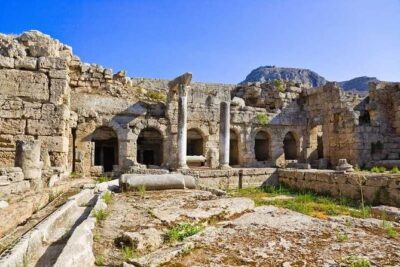
Biblical Tour Letters ToThe Corinthians St Paul’s Footsteps 6Hour
Read our review →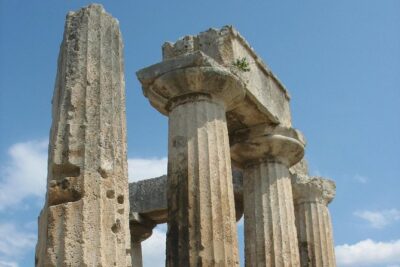
Private Biblical Tour Ancient Corinth & Isthmus Canal from Athens
Read our review →
Corinth Canal, Mycenae & Nafplio Premium Guided Tour
Read our review →
Private Tour of Apostle Paul’s Footsteps in Ancient Corinth
Read our review →
Corinth Half-Day Trip from Athens with Entrance Tickets
Read our review →Browse the lists this tour appears in