
Reviewed · ANCIENT CORINTH TOURS
Ancient Corinth Mycenae & Nafplio Private Tour from Athens
Five legends, one long day. This private tour from Athens strings together Ancient Corinth, Mycenae, Nafplio, and Epidaurus, with a private guide who ties ruins to myth. I also love the focus on big, unforgettable moments like the Lion Gate at Mycenae and the Temple of Apollo at Corinth, so the drive time turns into actual context, not just transportation.
Main consideration: entrance fees are not included, so your final spend depends on what you pay for at each site. Also, this is a 9 to 10 hour full day, so wear comfy shoes, expect walking on uneven ground, and plan for a later dinner than your usual.
In This Review
- Key highlights
- A Full-Day Private Route from Athens, Built for Fewer Headaches
- Corinth Canal: A 15-Minute Real-World Geography Lesson
- Ancient Corinth and the Temple of Apollo: City Power in Plain Stone
- Mycenae Museum, Then the Site: How to Read the Lion Gate
- Citadel and Treasury of Atreus: The Tomb of Agamemnon, Up Close
- Nafplio: The Break Where the Day Turns Enjoyable
- Epidaurus Theatre and the Sanctuary of Asclepius
- Guide Style and the Stories You Remember, Especially When It’s Glykeria
- Price and Value: What $261.01 Means for a Private Day
- Who This Tour Fits Best
- Should You Book This Tour? A Simple Decision Checklist
- FAQ
- How long is the Ancient Corinth, Mycenae, Nafplio, and Epidaurus private tour from Athens?
- What sites does the tour include?
- Are entrance fees included in the price?
- Is hotel pickup and drop-off included?
- Is the transportation private?
- Does the tour provide WiFi and bottled water?
- Is the guide or driver English speaking?
- Do I need to worry about tickets since it offers mobile tickets?
- Is this tour suitable for children?
- What is the cancellation policy?
Key highlights
- A custom pace with hotel pickup in an air-conditioned vehicle, plus bottled water and onboard WiFi
- Corinth Canal quick stop for a real-world view of how geography shapes history
- Mycenae in the UNESCO core with stops for the museum area, the archaeological site, and the Treasury of Atreus
- Nafplio break with sea views in Greece’s first modern capital, where Venetian fortresses frame the harbor
- Epidaurus for both theatre and healing at the sanctuary connected to Asclepius
A Full-Day Private Route from Athens, Built for Fewer Headaches
This tour is set up as a private day, meaning you’re not squeezed into random meeting points with strangers. You get hotel pickup and drop-off, plus an air-conditioned vehicle, WiFi onboard, and bottled water. That matters on a Peloponnese day trip, because the “where do we park” stress can steal your energy.
It runs about 9 to 10 hours, and the structure is smart: you start with quick stops to get oriented, then you spend real time at the sites where you’ll want to take in scale and details. If you prefer a comfortable pace over rushing photo stops, this kind of route fits well.
One nuance to know up front: the included driver is described as fluent English speaking and deep in history, but they are not licensed to accompany you to sites. Practically, this usually means you’ll do site entry on your side while the driver keeps the big story going from the outside or from the vehicle area. It’s still a big help, just don’t expect every single moment inside every monument to be narrated like a full-on guide inside each doorway.
More visits to the citadel at Mycenae:
- From Athens: Small-Group Mycenae, Epidaurus & Nafplio Trip
★ 4.8 · 2,805 reviews - From Athens: Mycenae, Epidaurus & Nafplio Full-Day Tour
★ 4.5 · 2,530 reviews - Mycenae, Epidaurus and Nafplio Tour from Athens
★ 4.6 · 2,201 reviews - 4-Day Classical Greece Tour: Epidaurus, Mycenae, Olympia, Delphi, Meteora
★ 4.5 · 732 reviews
Corinth Canal: A 15-Minute Real-World Geography Lesson
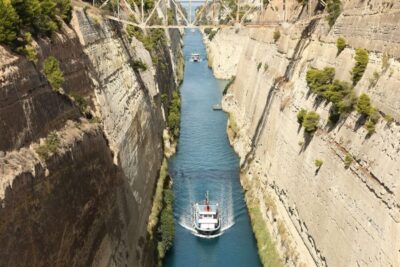
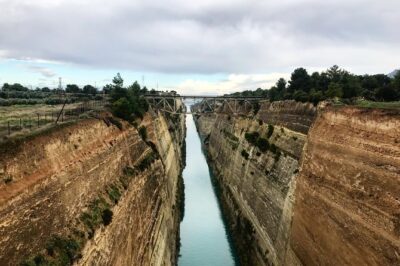
The day begins with the Corinth Canal, a man-made waterway cutting through the narrow Isthmus of Corinth. It connects the Gulf of Corinth with the Saronic Gulf, and the canal was completed in 1893 after the long effort to make that passage possible.
The best part of a quick canal stop is how it puts the rest of your day into perspective. Greece’s mainland and Peloponnese are close on the map, but the terrain and sea connections have shaped trade, travel, and power for centuries. Even with only about 15 minutes, it’s a useful gear shift from modern roads into ancient strategy.
If you’re the type who likes photos but hates wasting time, this one is a good trade. Just remember you’re moving on soon after, so try to get your shots early and then enjoy it as a “breather” before the big archaeology.
Ancient Corinth and the Temple of Apollo: City Power in Plain Stone
At Ancient Corinth (Archaia Korinthos), you’re stepping into one of antiquity’s major city-states, known for its wealth and its strategic location on the narrow land bridge between mainland Greece and the Peloponnese.
A common mistake at places like this is to treat the ruins like a list. This stop works better when you look at the site as a system: a city that benefited from being where ships and land routes meet. Your time here is about 1 hour, and that’s enough to get oriented, spot the most important remains, and understand why Corinth mattered.
The big “wow” marker is the Temple of Apollo. It’s one of the elements that tends to stick in your mind because it connects what you see in stone to what people believed and practiced. Even if you’re not an expert in Greek religion, the feeling of a civic cult site is clear: this wasn’t just a random temple. It was a statement about identity and authority.
A practical note: since the admission ticket is not included, you’ll want to check what you’re paying for in advance and keep an eye on timing so you don’t end up waiting while others finish buying.
Mycenae Museum, Then the Site: How to Read the Lion Gate
Mycenae is one of those names that show up in stories, but it lands differently once you’re actually there. The tour builds in two stages that help you understand what you’re seeing.
First comes the Archaeological Museum of Ancient Mycenae, located near the citadel. The museum holds Mycenaean artifacts like pottery, tools, jewelry, and Linear B tablets. That last one is especially important because Linear B is the writing system tied to Mycenaean administration. In plain terms: it turns “legend” into “a society that kept records.”
You get about 20 minutes in the museum. It’s not enough to study every case, but it’s enough to create a mental map so that when you step outside, the stones mean more than scenery. If you’re the sort of person who likes to understand what artifacts tell you, this museum stop is a real value add.
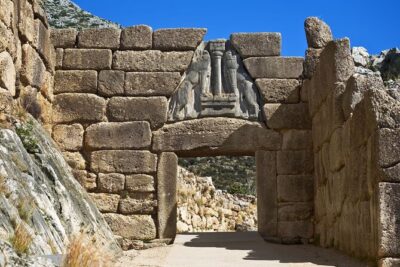
Then you move to the archaeological site of Mycenae, a UNESCO World Heritage Site. Here you’ll see the iconic Lion Gate, the royal grave circles, and Cyclopean walls. Those walls are called “Cyclopean” because the stones are massive and fit together in a way that feels almost impossible, even when you know it’s human work.
This portion lasts about 30 minutes, and that timing is good. You’re not stuck for hours, but you are given time to look closely at the gate and the defensive feel of the walls.
One consideration: Mycenae can involve uneven surfaces and sun, so bring a hat if you travel in warm months. And if you’re sensitive to walking, wear shoes with grip. This is not the tour for flip-flops.
Citadel and Treasury of Atreus: The Tomb of Agamemnon, Up Close
Right after the core Mycenae views, the tour includes the Citadel and Treasury of Atreus, also known as the Tomb of Agamemnon. The Treasury of Atreus is described as a grand tholos tomb built around 1250 BC.
This is the kind of stop where scale does the storytelling for you. The entrance is marked by a monumental doorway, and the design includes a long dromos, lined with massive blocks. Even if you don’t know the technical terms, your eyes get the message: this is architecture built to impress, not just to store remains.
Your time here is about 20 minutes. That can feel short for such a dramatic site, but for most people it works because the site is focused. You spend time in the most important visual moments, then you move on before your attention fades.
Entrance fees are not included, so factor that into the final math. If you’re deciding whether this tour is worth it for you, the Treasury of Atreus is one of the places that can justify the cost, because it delivers a clear sense of Mycenaean power in a concentrated way.
More days out to Nafplio and its fort:
- Athens: Ancient Corinth & Nafplio Full Day Trip with Swim★ 4.8 · 531 reviews
- Mycenae and Nafplion Day Trip from Athens with Official guide★ 4.5 · 501 reviews
- Argolis: Full-Day Tour in Mycenae & Nafplio★ 4.2 · 350 reviews
- 3-Day Classical Greece Tour: Epidaurus, Mycenae, Nafplion, Olympia, Delphi★ 4.5 · 342 reviews
Nafplio: The Break Where the Day Turns Enjoyable
By the time you reach Nafplio, you’ll likely welcome a proper pause. Nafplio is a coastal town in the northeastern Peloponnese and served as the first capital of modern Greece from 1823 to 1834. That modern-capital detail matters because it explains why the town feels more lived-in than many pure ruin sites.
You’ll get about 1 hour 30 minutes here, and admission is listed as free. Translation: you can spend that time walking without worrying about another ticket purchase.
The town is known for Venetian fortresses and for the seafront views. Even without diving into museum time, a waterfront break gives your brain a reset. It’s also a good time to refuel, grab a snack, and stretch your legs, since earlier stops are more about monuments and walking between points.
A practical tip: if you’re prone to motion sickness or fatigue on long days, use Nafplio to slow down. Sit for a few minutes and watch the harbor. This tour is heavy on ancient sites, so having a town moment like this is not just nice, it’s functional.
Epidaurus Theatre and the Sanctuary of Asclepius
Epidaurus is where the day can shift from stone-and-dates into something more human. The Ancient Theatre of Epidaurus is tied to the sanctuary dedicated to Asclepius, the god of medicine, and it’s known for its acoustics.
Your time at Epidaurus is about 1 hour. That isn’t a full archaeological research session, but it’s long enough to take in the theatre space and understand why it became such a famous healing center. The site is described as a renowned sanctuary during the classical and Hellenistic periods, which helps you see it as a place people visited for care, not just a monument for sightseeing.
What I like about including Epidaurus at the end is contrast. Mycenae is about power and tombs. Epidaurus is about healing and ritual space. Even if you’re not sure what to “look for” at first, the theatre’s purpose is obvious once you stand in that environment.
Entrance fees are not included, so again, check what you will pay at the site. Also, because you’re ending the day, plan your energy for walking and seating. If your feet tend to get cranky late in the day, bring a light layer. Theatre stops often mean you spend time standing or shifting positions.
Guide Style and the Stories You Remember, Especially When It’s Glykeria
The biggest praised aspect tied to this tour is the guide energy. One name that comes through strongly is Glykeria, described as wonderful, knowledgeable, and happy to share connections between history and mythology, plus Greek customs and even local vegetation. People also highlight that she laughs often and makes guests feel comfortable.
That kind of approach matters on a day packed with ruins. You’re not just collecting facts. You’re building a thread so the places start to feel connected. When you understand why people built, worshiped, ruled, and buried their dead the way they did, the stones stop being random.
Also, local customs and vegetation talk can sound small, but it adds a real sense of place. You notice the setting more, and you remember the tour for the feeling, not only the photo lineup.
Just keep in mind the earlier licensing note: the driver may not be able to accompany you inside every site. Still, the storytelling can carry through the drive sections and help you frame what you see while you’re there.
Price and Value: What $261.01 Means for a Private Day
At $261.01 per person, this is not a “cheap bus tour” price. It’s priced as a private day with hotel pickup and a dedicated vehicle. That matters because the itinerary covers multiple major sites across the Peloponnese, and you really do benefit from having transport handled end-to-end.
Where the value gets clearer is in the full sequence:
- Corinth Canal for context
- Ancient Corinth and Apollo
- Mycenae museum plus citadel highlights
- Treasury of Atreus
- Nafplio for a town break
- Epidaurus theatre and the Asclepius sanctuary
You’re getting more than one famous stop. You’re getting a chain that makes the myths and the archaeology feel less disconnected.
What’s not included is the entrance fees for attractions. That means your total cost will be higher, and the difference depends on which sites you choose to enter and what your ticket set adds up to. If you’re budgeting tightly, build in that extra line item before you commit.
Also, the tour duration of 9 to 10 hours means you’re paying for a day’s worth of driver time and vehicle use, not just a couple of quick sights. If you value comfort, a set route, and someone to help connect the dots, this price starts to look more reasonable. If you prefer to self-drive and pick your own pace, then you may compare against rental costs and your own stamina for a full-day route.
Who This Tour Fits Best
This tour is a strong match if you:
- want a private day trip without juggling buses or multiple timetables
- care about understanding the connection between sites and myth, including Mycenaean legend and the Apollo and Asclepius themes
- prefer a plan that includes both monumental ruins and a real town break in Nafplio
It can also work for families since child seats and booster options are mentioned. Keep expectations realistic: it’s still a long day with walking around archaeological areas, so the youngest travelers will need frequent breaks and good shoes.
If you’re an ultra-light walker or you need frequent accessible rest stops, you should consider whether the open-air sections and uneven surfaces will be comfortable for you. The tour is well planned, but the sites themselves are still archaeological sites.
Should You Book This Tour? A Simple Decision Checklist
I’d book it if your top priorities are major classical and Mycenaean sites, a smooth private route from Athens, and a guide who brings stories and context to what you see. The tour’s balance of Corinth, Mycenae, Nafplio, and Epidaurus is a smart way to cover a lot without turning it into chaos.
I would hesitate if you’re cost-sensitive and don’t want to add entrance fees on top. I’d also hesitate if a 9 to 10 hour day with several stops feels too long for your comfort level.
If you want one day that feels like it has a point, not just a pile of ruins, this route is a strong choice.
FAQ
How long is the Ancient Corinth, Mycenae, Nafplio, and Epidaurus private tour from Athens?
The tour runs about 9 to 10 hours.
What sites does the tour include?
It includes the Corinth Canal, Ancient Corinth, the Archaeological Museum of Ancient Mycenae, the archaeological site of Mycenae, the Citadel and Treasury of Atreus, Nafplio, and the Ancient Theatre of Epidaurus.
Are entrance fees included in the price?
No. Entrance fees are not included for the attractions.
Is hotel pickup and drop-off included?
Yes. Hotel pickup and drop-off are included.
Is the transportation private?
Yes. This is a private tour, with private transportation arranged for your group only.
Does the tour provide WiFi and bottled water?
Yes. Bottled water and WiFi on board are included.
Is the guide or driver English speaking?
The driver is listed as fluent English speaking.
Do I need to worry about tickets since it offers mobile tickets?
The tour includes mobile ticketing, and confirmation is provided at booking. Entrance fees are still not included.
Is this tour suitable for children?
Child seats and booster seats are available.
What is the cancellation policy?
Free cancellation is offered up to 24 hours in advance for a full refund. If you cancel less than 24 hours before the start time, the amount paid is not refunded.
Visiting Ancient Corinth
- From Athens: Ancient Corinth Day Trip with Canal & VR Guide
★ 4.6 · 1,073 reviews - Biblical Tour Letters ToThe Corinthians St Paul’s Footsteps 6Hour
★ 5.0 · 1,065 reviews - Private Biblical Tour Ancient Corinth & Isthmus Canal from Athens
★ 5.0 · 762 reviews - Athens: Corinth Canal, Mycenae & Nafplio Premium Guided Tour
★ 4.7 · 322 reviews
Latest from under the Acropolis




Ancient Corinth Tours, compared.
Ancient Corinth Day Trip with Canal & VR Guide
Read our review →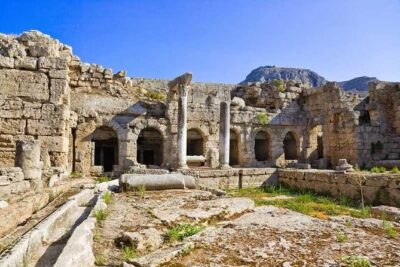
Biblical Tour Letters ToThe Corinthians St Paul’s Footsteps 6Hour
Read our review →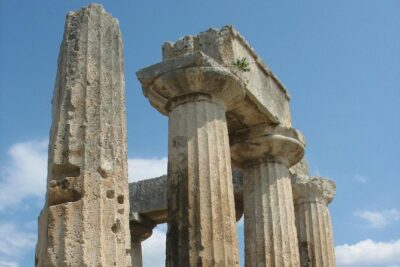
Private Biblical Tour Ancient Corinth & Isthmus Canal from Athens
Read our review →

Corinth Canal, Mycenae & Nafplio Premium Guided Tour
Read our review →
Private Tour of Apostle Paul’s Footsteps in Ancient Corinth
Read our review →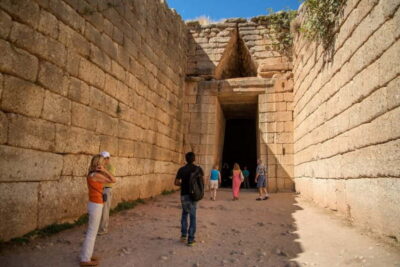
Corinth Half-Day Trip from Athens with Entrance Tickets
Read our review →Browse the lists this tour appears in