
Reviewed · ANCIENT CORINTH TOURS
Ancient Corinth and canal Day trip from Athens: Private Tour
One road, two seas, and a famous hilltop view. This private day trip turns Athens into an easy Peloponnese shortcut, starting at the Corinth Canal and ending with time in Ancient Corinth and Acrocorinth.
What I like most is the pacing gives you real moments at each stop, not a rush through everything. I also like that you get a driver who knows the story, plus pickup from your Athens hotel or the Piraeus cruise terminal for a smooth start. The only drawback to plan around is that site tickets are not included, and some walking is involved as you move through archaeological areas.
In This Review
- Key things that make this tour worth your time
- From Athens to the Corinth Canal: a fast taste of the Peloponnese
- Corinth Canal and the “two seas” lesson
- Diolkos: the overland boat idea that changed the game
- Ancient Corinth: Apollo, St. Paul, and the layout you can feel
- Acrocorinth: the “Upper Corinth” fortress stop
- Temple of Apollo: one stop that rewards a careful look
- Archaeological Museum of Corinth: the payoff after the walking
- Private tour pace: how you control your time at each stop
- Price, value, and what you are paying for
- When this day trip makes the most sense
- Weather and timing: the one factor you cannot schedule away
- Should you book this Ancient Corinth and canal day trip?
- FAQ
- How long is the Ancient Corinth and canal day trip from Athens?
- What does it cost, and how many people are in a group?
- Is pickup offered, and where does it pick up from?
- What is included in the tour price?
- Are the archaeological site tickets included?
- Does the tour include a licensed tour guide?
- Is this a private tour?
- What happens if the weather is bad?
Key things that make this tour worth your time
- Corinth Canal in 30 minutes: the quickest way to grasp how the Ionian Sea and Aegean Sea connect.
- Diolkos stop on the Isthmus: a short peek at the ancient overland boat route concept.
- Ancient Corinth highlights: Temple of Apollo, the theater and Roman odeon, plus St. Paul’s preaching connection at the Vima.
- Acrocorinth viewpoints: a focused stop at the “Upper Corinth” fortress area.
- Archaeological Museum of Corinth time: a built-in chance to match ruins with artifacts.
- Private group flexibility: Andrew’s style lets you control how long you linger at each stop.
From Athens to the Corinth Canal: a fast taste of the Peloponnese
This trip is designed for people who want more than a bus-and-queue day, but still want an efficient route. You leave Athens and head along the coastal highway, with the day structured around a clear sequence of stops that build on each other: geography first, then the ancient city, then the fortress viewpoint.
Pickup is a big deal here. You can be collected from your accommodation in Athens, or if you are arriving by cruise you can be picked up at the Piraeus cruise ship terminal. For a private group of up to three, that reduces the annoying part of day trips, the “how do we get there” problem.
You also get the practical basics handled: bottled water and tolls are included. That means you can spend your energy on the sites, not logistics.
Other visits to ancient Corinth:
- From Athens: Ancient Corinth Day Trip with Canal & VR Guide
★ 4.6 · 1,073 reviews - Biblical Tour Letters ToThe Corinthians St Paul’s Footsteps 6Hour
★ 5.0 · 1,065 reviews - Private Biblical Tour Ancient Corinth & Isthmus Canal from Athens
★ 5.0 · 762 reviews - Athens: Ancient Corinth & Nafplio Full Day Trip with Swim
★ 4.8 · 531 reviews
Corinth Canal and the “two seas” lesson
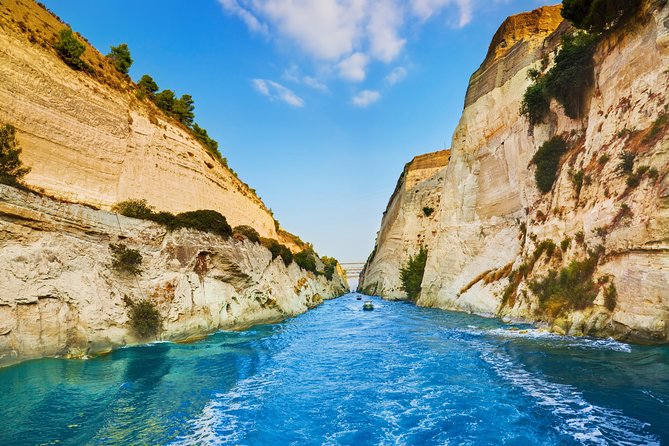
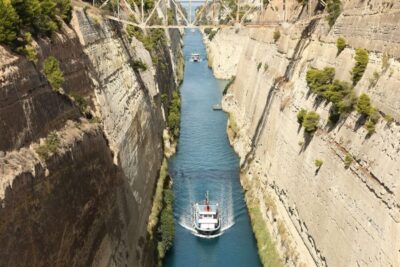
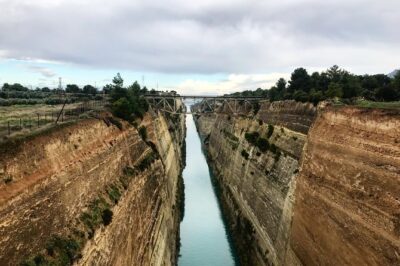
The first stop is the Corinth Canal, with about 30 minutes on site. It is the physical reminder of why ancient and modern travelers cared about this stretch of coastline. The canal cuts across the Isthmus of Corinth, linking the Ionian Sea with the Aegean Sea, and turning what used to be a long, risky detour into a shortcut.
In a short time, you can get a strong “big picture” understanding: this is where geography drives history. You see the canal as a narrow, engineered passage, then you can feel how the surrounding area became such a strategic corridor. The admission ticket is free for this stop, so you do not start your day hunting for extra fees.
Tip for your time here: use the half hour for photos, then take a moment to look at the canal’s shape and walls. Even without technical explanations, it helps you understand why later stops about ancient routing make sense.
Diolkos: the overland boat idea that changed the game
Next comes a brief stop at the Diolkos, a paved trackway near Corinth used in ancient times to move boats over land across the Isthmus. This is one of those stops that is small on time but big on concept.
You are not touring a massive facility. Instead, you get the key idea: ancient ships could avoid the long, dangerous circumnavigation of the Peloponnese peninsula by using an overland transfer system. The stop is short, about 15 minutes, and admission is listed as free.
Why this matters for your understanding: once you have seen the modern canal, the Diolkos stop adds a “then and now” layer. The same problem, different solutions. That makes your Ancient Corinth visits feel more connected, not like separate random ruins.
Ancient Corinth: Apollo, St. Paul, and the layout you can feel
The main chunk of the day is Ancient Corinth (Archaia Korinthos), with around two hours allocated. Admission tickets are not included here, so you will want to plan for that cost separately.
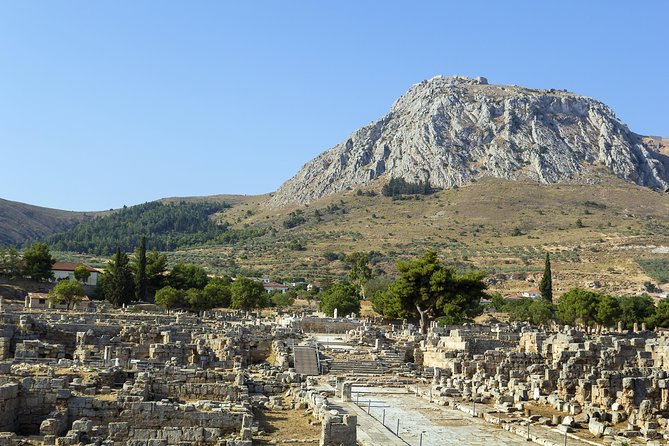
This is where the ruins start telling a fuller story. You are guided by the major landmarks listed on the route, including the Temple of Apollo and the Theater. You will also see the Roman Odeon, the Glauke fountain, and the Vima location associated with St. Paul’s preaching to the Corinthians around 52 A.D.
That St. Paul connection is one of the emotional anchors of the day. It is not just “old stones.” It’s a place tied to letters and early Christian history. The Vima detail matters because it gives you a specific platform associated with preaching, which can make the site feel more tangible as you walk through it.
You also get time for the Lechaion Street and the museum area inside the archaeological zone. Even if you do not spend every minute in one corner, the route is set up so you can match what you see outdoors with what you might later see indoors.
Drawback to note: two hours is a solid window, but it is still limited. If you are the type who wants to read every interpretive panel, you may want to focus on a short list of must-see spots, and use the rest as wandering time.
Acrocorinth: the “Upper Corinth” fortress stop
After Ancient Corinth, you head up to Acrocorinth (Acrocorinthos), sometimes called the “Upper Corinth.” The scheduled stop is about 15 minutes, and tickets are not included.
This is not meant to be your full acropolis day. It is a viewpoint hit. The value is perspective. Acrocorinth sits high above the ancient city area, so even a brief stop can help you understand how the ancient settlement was meant to be seen, defended, and controlled.
Practical note: since it is a fortress area and an upper zone, expect some physical effort from walking and getting yourself into position for viewpoints. The tour description also notes that most travelers can participate, which suggests the route is generally manageable, but you should still be prepared for uneven terrain and steps around archaeological sites.
A handful more Athens outings to compare
- Best of Athens Half Day Private Tour★ 5.0 · 3,714 reviews
- Athens Full Day Private Tour★ 5.0 · 2,903 reviews
- Athens Airport Private Arrival Transfer with Meet & Greet★ 4.5 · 1,495 reviews
- Athens Airport to Athens Hotels Private Arrival Transfer★ 5.0 · 947 reviews
Temple of Apollo: one stop that rewards a careful look
You then get a short revisit stop at the Temple of Apollo area, with about 10 minutes scheduled. Tickets are not included for this part as well.
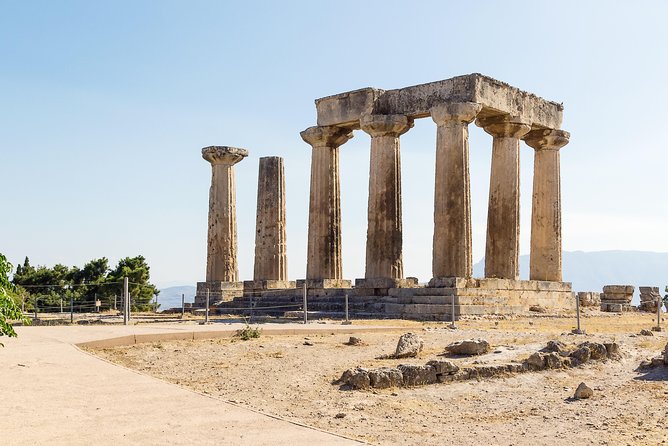
The reason this brief stop is still worth it: the temple is described as one of the earliest Doric temples in the Peloponnese and the Greek mainland, with construction around 560 B.C.E. and built using local oolithic limestone. That combination of age and material gives the structure a clear sense of place.
Even if you are not a hardcore architecture person, a short focused visit works. Look for the basic Doric form, then connect it back to the bigger Ancient Corinth context you saw earlier. When you can connect a ruin to a city layout, it becomes easier to remember and understand what you are seeing.
Archaeological Museum of Corinth: the payoff after the walking
Time continues with the Archaeological Museum of Corinth, about 30 minutes on schedule. Tickets are not included.
Museums can feel optional on some ruins days, but this one is helpful because it sits right within the archaeological site area. The museum was constructed between 1931 and 1932 with the goal of displaying results from recent excavations. It also sits within the jurisdiction of the Greek Archaeological Service.
Why 30 minutes works here: you can use it as a “match” time. When you step back from the outdoors, artifacts and exhibits can make the ruins feel less abstract. If you are the kind of person who likes to see what people actually made and used, this stop will feel like the missing half of the story.
If you are short on time energy, you do not need to see everything. Focus on a few sections that relate to what you saw outdoors, then let the museum do its job: reinforce, not replace, the ruins.
Private tour pace: how you control your time at each stop
This experience is explicitly private, so only your group will participate. That matters because private does not just mean exclusivity. It usually means you are not trapped inside a strict group schedule.
The provided feedback highlights that this format lets you spend as much time as you want at each stop. In particular, Andrew is described as polite and friendly, and that flexible feel is a strong reason to choose this style over a rigid group tour. If you want to take extra photos at the canal, linger longer at Ancient Corinth’s key points, or ask a driver question as you walk, the private structure supports it.
Also, pickup and drop-off are included, which reduces wasted time. The tour uses an SUV Skoda Kodiaq or Mercedes E Class taxi cab, so you should be comfortable for the drive and transfers.
One more clarity point: the tour includes a professional driver with knowledge of history, but it notes they are not licensed to accompany you in any site. So think of this as history-rich driving and orientation, plus your time in the sites on your own. If you need a full licensed guide inside every area, you would need to look for that separately.
Price, value, and what you are paying for
At $570.15 per group (up to 3) for about 6 hours (approx.), you are not paying per person in a traditional sense. You are paying for private transport, the included water, tolls, and the pickup and drop-off convenience.
So where is the value? It’s in three places:
- Door-to-door pickup and drop-off from Athens, or from the cruise terminal at Piraeus.
- Time efficiency: the route is designed around specific stops with scheduled durations, including the canal, Diolkos, Ancient Corinth, Acrocorinth, Temple of Apollo area time, and the museum.
- Private group control: you can adjust within the flow of the day, rather than being herded.
What is not included matters for budgeting. Site tickets are not included, and coffee, lunch, and snacks are also not included. If you are comparing prices, make sure you factor those costs in. Also, tickets are free for the canal and the Diolkos stop, but not for Ancient Corinth, Acrocorinth, the Temple of Apollo, or the museum based on the details provided.
My practical take: if you are traveling as a pair or three people who want less friction than public transport, private transport plus a smart route can work out well. If you are traveling solo and the price feels steep, you might want to compare against group tours where you pay less per person.
When this day trip makes the most sense
This is best for you if:
- You want a half-day style escape from Athens without losing most of your day to transit.
- You care about ancient context, not only seeing ruins but understanding how the canal and Isthmus routing connect to the ancient world.
- You prefer a private pace and value getting picked up from your exact location.
It may not be the best match if:
- You want a fully guided experience inside every site by a licensed guide.
- You plan to spend long hours reading every panel and exploring every corner. The time is designed to cover key highlights in a finite window.
If you are on a cruise day in Piraeus, this kind of route is especially appealing because it gives structure to the limited port window, with pickup at the terminal and a return to the port area.
Weather and timing: the one factor you cannot schedule away
The tour notes that it requires good weather. If conditions are poor, you will be offered a different date or a full refund.
So before you book or commit day-of, check the forecast for the Corinth area. Bad weather can affect visibility from Acrocorinth and make archaeological walking less pleasant. If you have flexibility, choose a time slot that gives you the best chance of good conditions, since the tour also offers several time slots.
Should you book this Ancient Corinth and canal day trip?
Book it if you want a well-structured, private, history-forward route that connects geography and ancient life in a single day. The combination of Corinth Canal, Diolkos concept, the core Ancient Corinth ruins tied to major landmarks and the St. Paul Vima detail, plus the quick fortress viewpoint at Acrocorinth, is a strong “one trip, many layers” setup.
Skip it or reconsider if you need included museum and site guiding by a licensed professional, or if you want a more relaxed, slower itinerary with long stop times at each location. Also, if you hate dealing with extra ticket costs, you’ll want to budget for what is not included.
If your priority is getting out of Athens efficiently, learning the story while you travel, and having the freedom of a private format, this one fits the bill.
FAQ
How long is the Ancient Corinth and canal day trip from Athens?
It lasts about 6 hours (approx.).
What does it cost, and how many people are in a group?
It is $570.15 per group, up to 3 people.
Is pickup offered, and where does it pick up from?
Yes. Pickup is offered from your accommodation in Athens, and also from the Piraeus cruise ship terminal.
What is included in the tour price?
Bottled water, tolls, professional drivers with knowledge of history, and pickup and drop-off from Athens or the Piraeus cruise ship terminal.
Are the archaeological site tickets included?
No. Tickets to the archaeological sites are not included, except the Corinth Canal and Diolkos stops are listed as admission ticket free.
Does the tour include a licensed tour guide?
No. A professional driver is included with knowledge of history, but they are not licensed to accompany you in any site, and a licensed tour guide is not included.
Is this a private tour?
Yes. It is a private tour/activity, and only your group participates.
What happens if the weather is bad?
The tour requires good weather. If it is canceled due to poor weather, you will be offered a different date or a full refund.
Latest from under the Acropolis





Ancient Corinth Tours, compared.
Ancient Corinth Day Trip with Canal & VR Guide
Read our review →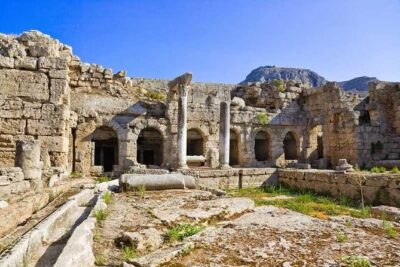
Biblical Tour Letters ToThe Corinthians St Paul’s Footsteps 6Hour
Read our review →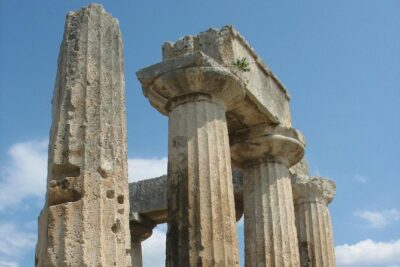
Private Biblical Tour Ancient Corinth & Isthmus Canal from Athens
Read our review →

Corinth Canal, Mycenae & Nafplio Premium Guided Tour
Read our review →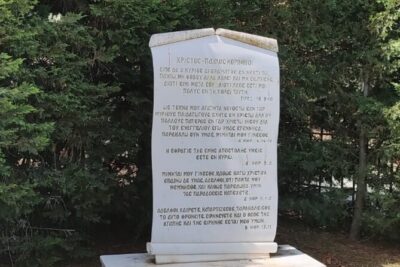
Private Tour of Apostle Paul’s Footsteps in Ancient Corinth
Read our review →
Corinth Half-Day Trip from Athens with Entrance Tickets
Read our review →Browse the lists this tour appears in