Reviewed · DELPHI ORACLE DAY TRIPS
6 Day Religious & Classical Tour of Thermopylae, Meteora, Delphi, Olympia, Mycenae, Nafplio, Epidaurus, ancient Corinth From Athens
Thermopylae to Corinth, this route hits the big Greek stories in a smart order. What I like most is the private pickup and luxury car setup, so you spend less time herding with a crowd and more time seeing what matters. The second thing I really like is the mix of religious sites plus classical archaeology, so the trip feels more layered than a simple museum-and-pictures loop.
One possible drawback to keep in mind: you do pay extra for most site entrances and for the kind of inside-site licensed guide that some people want.
The biggest “make it easy” win here is personalization. In the company’s own history of trips, the driver experience often gets singled out by name, including Tas, for clear context during drives. And if you end up at La Belle Helene in Olympia, you may run into Konstantina and her home-cooked meals, which is exactly the kind of simple, local touch that turns a highlight into a memory. Still, because the schedule packs many major stops into a few days, you’ll want to be okay with long driving segments and firm mornings.
In This Review
- Key things to know before you go
- A route built for comfort, not chaos
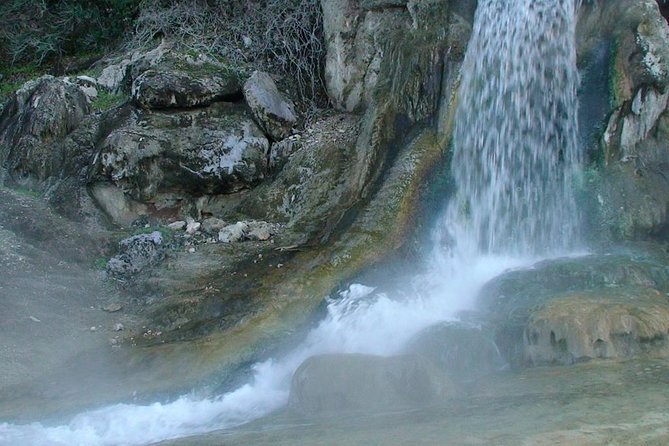
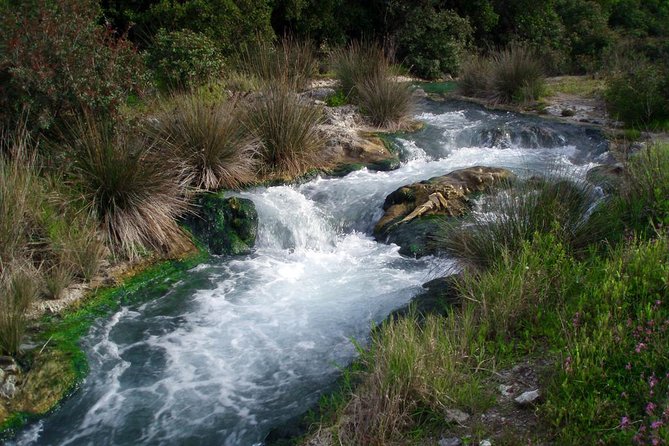
- Thermopylae and the Gates of Fire, plus hot springs as a reset
- Meteora Hanging Monasteries, Kalambaka feel, and a sunset you can plan around
- Delphi’s Apollo sanctuary, Pythia’s world, and a museum with real standouts
- Olympia: the original Games, plus museums that explain the meaning
- Nafplio after the ruins: fortress views, Ottoman-era traces, and easy food wins
- Epidaurus for theater acoustics and Asclepius for medical religion
- Mycenae and the gold-heavy Bronze Age reality check
- Acrocorinth, Ancient Corinth, and the Canal ride back toward Athens
- Price and logistics: what $2,358.13 covers, and what you must budget
- Practical tips for a smooth religious and classical trip
- Who this tour fits best
- Should you book this Athens-based private circuit?
- FAQ
- What is the start time and how does pickup work in Athens?
- Is this a private tour or shared with other groups?
- What is included in the price?
- Are entrance fees to the sites included?
- Is accommodation included?
- Are meals included?
- Do I need a licensed tour guide to enter museums and sites?
- What about the dress code for religious sites and museums?
- Are there any restrictions on pets or service animals?
- Is the tour offered only in English?
Key things to know before you go
- Fully private, hotel-to-hotel transport across multiple regions, not a bus shuffle
- Skip-the-line tickets on request, which can save time at crowded sites
- Meteora monastery variety across two days, so you are not rushing one cliff stop
- Delphi with both the sanctuary ruins and the museum, including major sculpture highlights
- Olympia with multiple museums, not just the main ruins
- Religious and classical threads together, from Apollo and Pythia to Asclepius and Corinth
A route built for comfort, not chaos
This is a 6-day private circuit that starts in Athens and connects some of Greece’s most influential ancient and religious places. The practical advantage is the private vehicle with a driver who can explain what you are seeing while you travel. You’re also picked up and returned to your Athens hotel, which matters because day trips from Athens can waste time before you even start.
You’ll also want to understand what “private” means here. The tour is described as fully private for your group only, and the driver is the one doing the commentary and handling transfers. That can be great if you want a calm pace. But it also means that if you want a licensed guide to walk you inside every site and museum, you’ll need to request that add-on since it is not included.
The other big setup detail is that the tour includes 5 nights of accommodation options are not included by default, so you will either book your own lodging or request help reserving hotels. Entrance fees and meals are also not included, so it is not a “pay once, done” situation. If you budget for those extras, the value becomes clearer.
More long days out to Olympia:
- 4-Day Classical Greece Tour: Epidaurus, Mycenae, Olympia, Delphi, Meteora
★ 4.5 · 732 reviews - 3-Day Classical Greece Tour: Epidaurus, Mycenae, Nafplion, Olympia, Delphi
★ 4.5 · 342 reviews - 4-Day Tour of Mycenae, Epidaurus, Olympia, Delphi & Meteora
★ 4.8 · 168 reviews - Ancient Olympia full day private tour from Athens
★ 5.0 · 83 reviews
Thermopylae and the Gates of Fire, plus hot springs as a reset
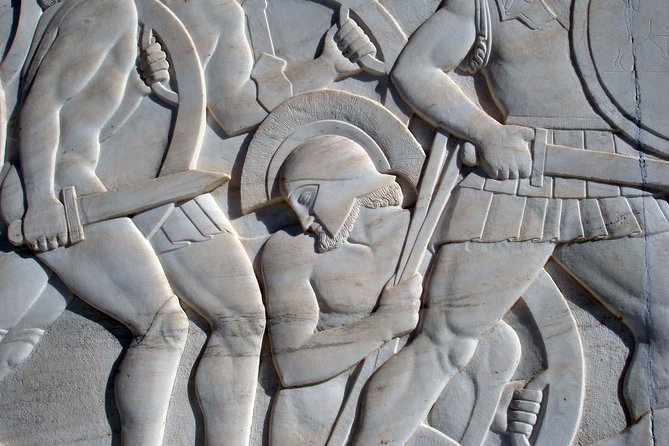
Thermopylae is the kind of stop that works on two levels: story and place. You start with the narrow passage that mattered in antiquity and the famous battle between the Greek alliance led by Leonidas of Sparta and the Persian Empire of Xerxes. Then you connect it to the mythic layer via the Gates of Fire idea, tied to hot sulphur springs and the Cavernous entrances to Hades in Greek mythology.
What I like about this day is the way the stop is not just a monument photo. You get:
- The Monument of King Leonidas, erected in 1955 and created by sculptor Vasos Falireas, with a striking brass figure of the Spartan king with spear and shield
- The Thermopylae Museum, described as innovative and focused on the 480 BC battle and its impact on Greek history and Western civilization
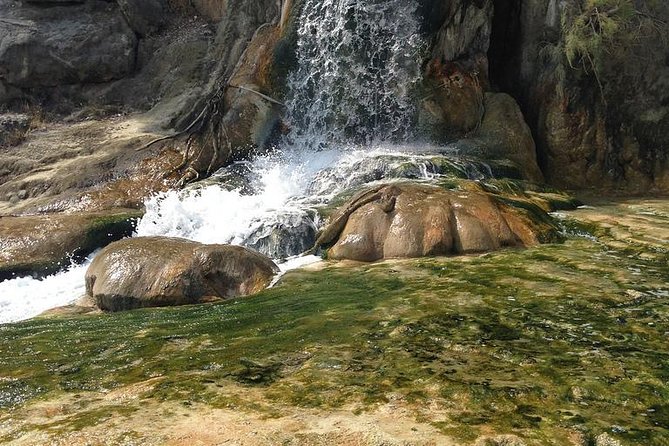
- Time at the hot sulphur springs, framed as hydrotherapy and balneotherapy for both specific ailments and general well-being
This is also a good moment to manage energy. After a long first day, the hot springs can function like a practical “reset” before the next big scenery jump to Meteora.
After Thermopylae, you drive to Meteora, check in at your chosen hotel in the Meteora area (often Kalambaka or Kastraki), and then you still have an evening to plan. That matters because Meteora is best when the light turns dramatic.
Meteora Hanging Monasteries, Kalambaka feel, and a sunset you can plan around
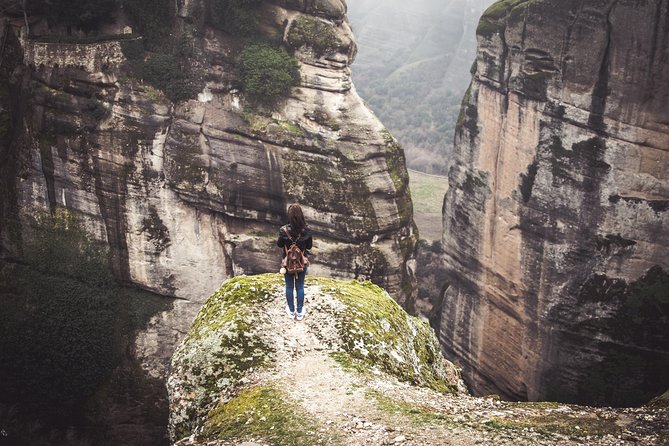
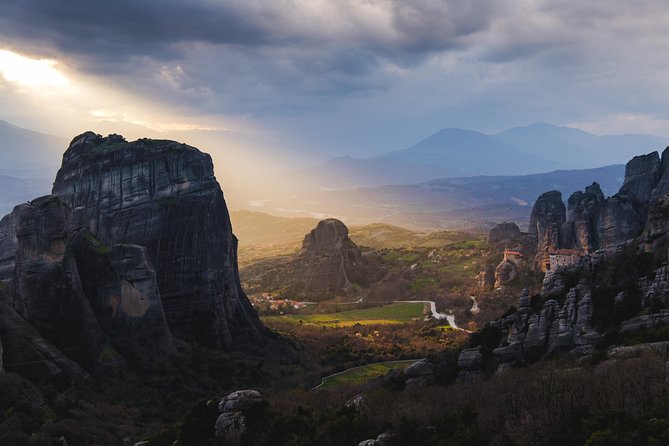
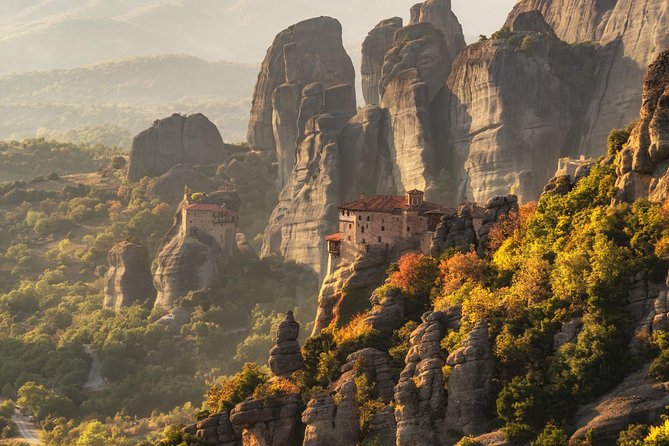
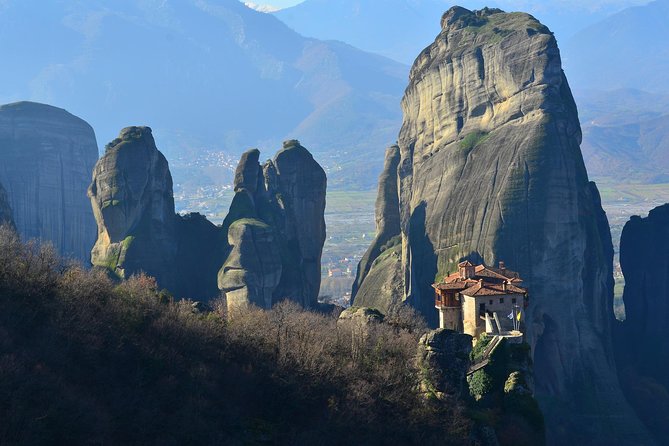
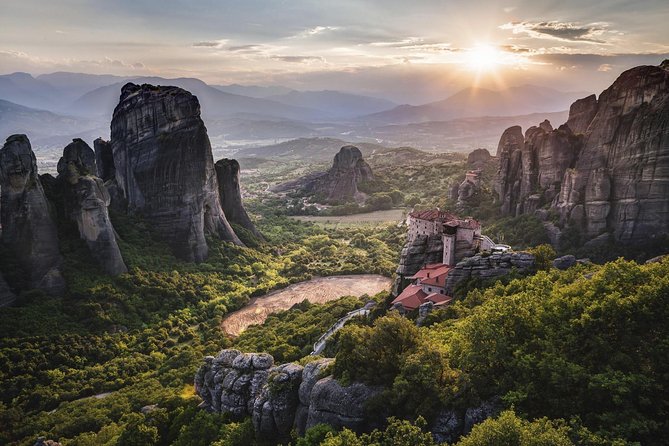
Meteora is the trip’s visual payoff. The monasteries sit on towering rock formations, and the experience works best when you are not rushing. On the first Meteora day, you visit 1 to 2 Hanging Monasteries, plus you spend time in Kalambaka, stroll Kastraki, and end with the chance to experience Meteora sunset. You also have a late lunch or early dinner at a traditional taverna, which is a nice way to avoid the “hungry and delayed” trap.
Day 2 keeps the momentum but gives you breadth. You do breakfast, then visit the remaining Hanging Monasteries. The listed monasteries include:
- St Nicolaos
- Rousanou
- Varlaam
- Metamorphosis Sotiros (Grand Monastery)
- St Trinity
- St Stefanos
You also get lunch at a traditional Greek taverna in Kalambaka or Kastraki, plus coffee time. That structure is smart because Meteora days can be physically tiring, even if the tour does not frame it that way. Having proper meal stops helps you actually enjoy the views, instead of just enduring the day.
A practical note: Meteora and many of these sites include religious spaces, and this tour has a dress code requirement for places of worship and selected museums, with knees and shoulders covered. If you show up in shorts or sleeveless tops, you may be refused entry. So I’d pack lightweight layers that can handle warm weather without breaking the rules.
Delphi’s Apollo sanctuary, Pythia’s world, and a museum with real standouts
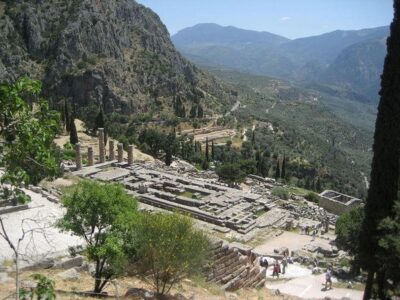
Delphi is where the “religious and classical” mix becomes truly coherent. The setting is the ancient sanctuary where the seat of Pythia shaped decisions across the Greek world. You also get the idea of Delphi as the center of the world through the Omphalos stone monument.
The tour includes the Delphi archaeological site and the Delphi Archaeological Museum, which is key. If you do only one, you miss how the artifacts connect to the sanctuary story. At the sanctuary, you will see major named highlights such as:
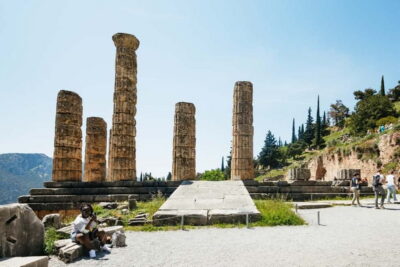
- The Temple of Apollo
- The Ancient Theater
- The Stadium
- The Athenian Treasury
- The Gymnasium
- The Sanctuary of Athena Pronaia
Then the museum section is packed with sculptural details and named pieces. You’ll have access to highlights like:
- The Frieze of the Treasury of Sifnias
- The Naxian Sphinx (dating to 560 BC)
- Metopes of the Athenian Treasury (including scenes like Theseus and the Minotaur, Theseus and the Minotaur, Heracles and various mythic creatures)
- The Omphalos
- Kleobis and Biton
- A Statue of Antinoos
- The famous Charioteer
The museum is also a good place to slow down. Delphi can feel like a blur if you rush through the sanctuary. Here, you can spend more time with what you missed. If you like myth and art history, you’ll probably find yourself reading labels longer than planned.
You also get lunch time on the caldera at Delphi with views over Itea and Amfissa, plus shopping and coffee breaks. That’s not just “free time.” It gives you the chance to decompress after absorbing a dense set of ancient places.
Olympia: the original Games, plus museums that explain the meaning
Olympia is not only about ruins. It’s also about interpretation, because the tour includes:
- The Temple of Zeus
- The Temple of Hera (Heraion)
- The Philippeion, a circular building dedicated to Zeus after Philip II’s victory at Chaironeia
- The Hippodrome and Stadium
- The Palaestra
- The Workshop of Pheidias
- And then the Archaeological Museum of Olympia
It’s a strong list because you see the religious sites and the athletic infrastructure together. That combination is important. The Olympic Games started as a religious and civic event tied to Zeus, not just a sports festival. Seeing the stadium, training areas, and temple spaces in one day helps the “why” click.
Then the tour adds two more museum experiences:
- The Museum of the History of the Olympic Games in Antiquity
- The museum of Archimedes, described as featuring replicas of his inventions and interactive elements
If you are the type who likes context, Olympia becomes more satisfying here than in a straight ruins-only stop.
You also get time for Olympia village strolls and shop browsing. And there is an optional dinner at La Belle Helene, a chance to enjoy home cooked Greek meals. If you end up with the sort of warm, personal meal experience mentioned with Konstantina, it is a reminder that ancient places feel better when you can also slow down and eat well.
Other visits to the pass at Thermopylae:
- Delphi, Thermopylae, Corycian Cave 300 Spartans Tour★ 5.0 · 492 reviews
- Delphi & Thermopylae Full Day Private Tour from Athens★ 5.0 · 259 reviews
- Thermopylae, Meteora and Delphi Private Full Day Tour★ 5.0 · 216 reviews
- Thermopylae and Delphi Private Full-Day Tour from Athens★ 5.0 · 114 reviews
Nafplio after the ruins: fortress views, Ottoman-era traces, and easy food wins
After Olympia, you drive to Nafplio and check in. Nafplio is a strong choice because it gives your body a break from archaeology. Yes, you still visit more historic highlights, but the town itself invites walking: waterfront, small cobblestone streets, and historic buildings.
Key stops and vibes include:
- Palamidi Castle on a 216 m hill, with the famous note of 999 steps. If you want the view, you’ll earn it.
- Bourtzi, the water fortress located in the harbor
- Freedom Square, including the obelisk linked to French support during independence
- Constitution Square, named for the 1843 constitution
- The First Hellenic Parliament location, tied to Otto and a dome-covered mosque built in 1730
- Churches like Anastasios of Nafplia and St Spyridon, including the assassination of Ioannis Kapodistrias in 1831
I like this day because it shows a different Greece, the modern one layered onto the ancient world you just visited. Nafplio also makes food stops easy. Lunch is at traditional tavernas, and the tour includes suggestions like Antica Gelateria di Roma for gelato and Pergamonto for loukoumades.
Epidaurus for theater acoustics and Asclepius for medical religion
Epidaurus is one of those places where you feel the ancient world trying to engineer emotion and function. The amphitheater is famous for classic construction and astonishing acoustics, and the tour frames it around performances by authors like Euripides, Sophocles, Aristophanes, and Aeschylus. Even if you are not catching a live event, the structure makes the point.
After that, you go to the Epidaurus Archaeological Museum, noted for reconstructions of temples and columns with inscriptions. That helps you connect what you see in the sanctuary to what those spaces meant.
Then you visit the Asclepius sanctuary, dedicated to the ancient Greek demi-god of medicine. This is religious space with a purpose, a kind of ancient medical retreat. If you are curious about how the Greeks mixed faith, ritual, and care, this is a meaningful stop, not just another “stand here and look” one.
From Epidaurus, you drive to Mycenae.
Mycenae and the gold-heavy Bronze Age reality check
Mycenae is where you trade classical marble for Bronze Age power. The tour leans into the “rich in gold” angle, tied to the mythical King Agamemnon from Homeric epics, and then backs it up with the sites you can actually see.
Highlights include:
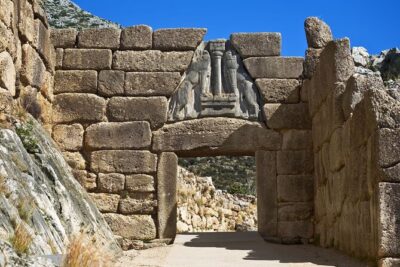
- Lions Gate, the main entrance of the Bronze Age citadel
- Grave Circles A and B, royal cemeteries south of the Lion Gate
- Cyclopean Walls, built of huge limestone boulders, attributed to mythical Cyclopes
- The Royal Palace, including domestic apartments, a Throne Room Suite, and the Grand Staircase
- The Treasury of Atreus, a tholos beehive tomb around 1250 BC
- The Tomb of Clytemnestra, another tholos type tomb around 1250 BC
- The Mycenean Archaeological Museum, with gold grave goods, burial masks, jewelry, weapons, worship idols, and frescoes
The palace and tombs make Mycenae feel like a working civilization, not a legend frozen in time. And the museum is where the “gold” theme becomes concrete. If you like artifacts and craftsmanship, you’ll probably linger.
Then you head to Ancient Corinth for check-in.
Acrocorinth, Ancient Corinth, and the Canal ride back toward Athens
Your final full day is heavy on “places you can see from far away” and “places where faith and politics intersect.” You start with Acrocorinth, the acropolis of ancient Corinth on a monolithic rock above the city. The tour describes it as one of the most dominant acropoleis of the Peloponnese, with multiple walls reinforced by towers.
You also visit:
- The Peirene Spring, located within the encircling walls
- Traces of the Temple of Aphrodite
- The Frankish Tower, including remains of churches, mosques, houses, fountains, and cisterns
- Views of Geraneia Mountain and the Corinthian gulf and the southwest coast
Then you move down to Ancient Corinth, where you see a mix of religious, civic, and early Christian references:
- Hadgimoustafa Spring, an Ottoman-era fountain
- The Ancient Corinth Archaeological Museum
- The Temple of Apollo, built around 560 BC
- The Agora, with shops, small temples, altars, and the Bema podium where Apostle Paul addressed Corinthians in 52 AD
- Roman buildings and the Theatre and Odeon/Asklepieion
- Lechaion road toward the port of Lechaion
- St Paul’s church, including a mosaic mural depicting Saul’s vision
After the city tour, you also get a practical “infrastructure in ancient times” stop: you drive to Ancient Diolkos, described as an ancient passageway from the time of Periander, and then you go to the Isthmus Canal, framed as an important 19th-century engineering project with a major role in Mediterranean trade.
The day adds a spiritual thread by tracing St Paul’s footsteps at Kechries Port. Then lunch happens by the Saronic sea at the village of the Baths of Helen of Troy, and finally you return to Athens.
Price and logistics: what $2,358.13 covers, and what you must budget
At $2,358.13 per person, this is not a bargain-bin tour. It is priced for a fully private multi-day experience with professional drivers, private luxury transport, and hotel pickup and drop-off in Athens. You also get WiFi on board, bottled water, refreshing wipes, and fresh handmade Greek biscuits. Skip-the-line tickets are offered on request, which can be a real value add on busy days.
Here’s the reality check on what is not included:
- 5 nights accommodation (hotel reservation is optional on request)
- Entrance fees to sites
- Food and drinks
- Airport pick-up and drop-off (extra cost)
- A licensed tour guide to accompany you inside sites and museums (available on request)
So the true value depends on your style. If you prefer a quiet vehicle, direct access, and flexible timing within the route, the price can make sense. If you want every entrance and meal baked in, you will need to plan extra spending anyway.
If you book, I’d also ask ahead about skip-the-line ticket requests and how entrance fees are handled for your group. The tour notes skip-the-line tickets are possible, but entrances themselves are still not included, so you’ll want clarity before you arrive.
Practical tips for a smooth religious and classical trip
A few things matter here because the schedule is dense.
1) Pack for the dress code. Knees and shoulders must be covered for places of worship and selected museums. This is not optional.
2) Expect long days of stops and drives. Each day has major anchor points, plus smaller wander time in towns like Kalambaka, Delphi, Olympia village, and Nafplio.
3) Choose your pace. This is a private tour, which means your driver can likely adjust how you experience things, especially when you need time for coffee or shopping. The trade-off is that you will not get a spare “backup day” if you want extra detours.
4) Think about the inside-guide option. If you want someone licensed to go with you into museums and sites, that is an added cost. If you are fine with the driver commentary, you may not need it.
5) Bring patience, and plan for comfort. The tour includes water, wipes, and WiFi, but you still need good walking shoes and a willingness to shift between ancient ruins, monastery viewpoints, and town streets.
Who this tour fits best
I’d point this tour toward people who:
- Want a single private circuit that covers Thermopylae, Meteora, Delphi, Olympia, Mycenae, Nafplio, Epidaurus, and Corinth without changing travel style constantly
- Love the intersection of religion, mythology, and classical archaeology
- Appreciate comfort and explanation during driving time
- Like the idea of a calmer pace compared to crowded group buses
It might not be ideal if you:
- Only want fast hit-and-go sightseeing, because there are two monastery days and multiple museum moments
- Expect entrance fees and meals to be included
- Want a licensed guide for every site without paying extra
Should you book this Athens-based private circuit?
If you want a high-touch private experience that connects Greece’s most important classical and religious sites in one clean route, this tour is a strong candidate. The value is in the logistics, the comfort, the mix of ruins and museums, and the fact that the drive time includes context rather than dead time.
My main caution is budget math. Entrance fees, meals, and optional licensed guide time are not included, and accommodation is separate. If you plan for those, the total experience cost becomes much more predictable.
If that sounds like your kind of trip, book it. If you prefer fully bundled pricing or you want fewer major stops per day, consider a shorter route.
FAQ
What is the start time and how does pickup work in Athens?
The tour starts at 10:00 am. Your personal driver/guide meets you at the lobby of your Athens hotel. If you are staying in an Airbnb, the driver contacts you so you can meet at the building entrance.
Is this a private tour or shared with other groups?
It is a private tour/activity, meaning only your group participates.
What is included in the price?
Included items are private multi-day tour service, professional drivers with in-depth knowledge, English speaking service, hotel pickup and drop-off in Athens, transportation by private luxury vehicle, WiFi on board, bottled water and refreshing wipes, and fresh handmade Greek biscuits. Skip-the-line tickets are offered on request.
Are entrance fees to the sites included?
No. Entrance fees to the sites are not included.
Is accommodation included?
Accommodation for 5 nights is not included, but the tour says there is an option for hotel reservation upon request.
Are meals included?
Food and drinks are not included.
Do I need a licensed tour guide to enter museums and sites?
A licensed tour guide to accompany guests into sites and museums is not included. It is available as an additional cost on request.
What about the dress code for religious sites and museums?
A dress code is required for places of worship and selected museums. No shorts or sleeveless tops are allowed, and knees and shoulders must be covered for both men and women.
Are there any restrictions on pets or service animals?
Animals or pets are allowed, and service animals are allowed.
Is the tour offered only in English?
The tour is offered in English, and drivers are also described as multi-lingual.
The Citadel at Mycenae
- Mycenae and Nafplion Day Trip from Athens with Official guide
★ 4.5 · 501 reviews - Argolis: Full-Day Tour in Mycenae & Nafplio
★ 4.2 · 350 reviews - Athens: Corinth Canal, Mycenae & Nafplio Premium Guided Tour
★ 4.7 · 322 reviews - Athens: Corinth Canal, Mycenae and Nafplio Day Tour
★ 4.3 · 252 reviews
The Theatre at Epidaurus
- From Athens: Small-Group Mycenae, Epidaurus & Nafplio Trip
★ 4.8 · 2,805 reviews - From Athens: Mycenae, Epidaurus & Nafplio Full-Day Tour
★ 4.5 · 2,530 reviews - Mycenae, Epidaurus and Nafplio Tour from Athens
★ 4.6 · 2,201 reviews - Mycenae, Epidaurus, Nafplio Full Day Private Tour from Athens
★ 5.0 · 270 reviews
Latest from under the Acropolis


Delphi Oracle Day Trips, compared.
Mythology of Delphi, Museum and Arachova Guided Tour
Read our review →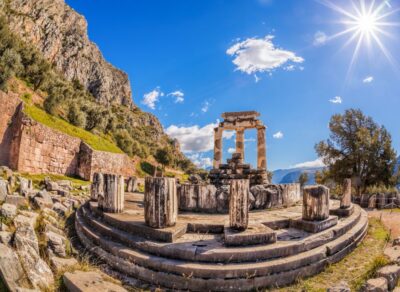
Small-Group Delphi, Museum & Arachova Day Trip
Read our review →
Delphi English Day Trip from Athens with Official Guide
Read our review →
Delphi Oracle & Museum Tour with a Licensed Guide
Read our review →
Historical Delphi One Day Tour with Arachova Stop & Expert Guide
Read our review →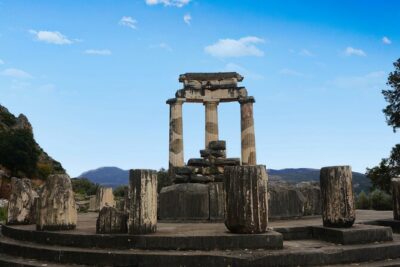
Premium Delphi Day Trip with an Expert Guide, Museum & Lunch
Read our review →