
Reviewed · ANCIENT CORINTH TOURS
3 Days PrivateTour:Sparta – Mystra – Monemvasia – Mycenae – Epidaurus & Corinth
Three days, five legends, one road trip. This private tour turns the Athens area into a Peloponnese highlights loop, with sea views, castle towns, and myth-laced ruins all in tight, comfortable driving distance. I especially like the private vehicle setup for moving on your schedule, and the mix of famous big names with places like Mystras and Monemvasia that feel older than their photos.
I also like the practical way the days are stitched together: you get morning starts from an 8:00 am departure, plus overnight time in Sparta and Nafplio rather than only day-tripping and rushing. One thing to consider is that this is still a packed 3 days, with several stops that involve walking on uneven ground and climbing up to viewpoints and theaters.
In This Review
- Key highlights at a glance
- What makes this 3-day private tour work (and feel worth it)
- Price and logistics: what your $865.05 per person covers
- Day 1: Corinth Canal, Akrokorinthos, Apollo, then Mystras and Sparta
- Corinth Canal: quick views with sea and island context
- Akrokorinthos: the photo stop with the fortress skyline
- Temple of Apollo and Ancient Corinth: where the sacred layers stack up
- Mystras: medieval ruins that you actually walk through
- Sparta: quick time, real symbols, and the olive oil museum stop
- Day 1 wrap: sleeping in Sparta
- Day 2: Monemvasia Castle town, Agia Sofia Church, and scenic Nafplio
- Monemvasia Castle: a living old city on a connected island
- Agia Sofia Church: cliffside bay views
- Nafplio: a scenic city with capital-era history
- Day 3: Asklepios healing myth, Epidaurus theatre, Mycenae palace power, then back to Athens
- Sanctuary of Asklepios: peaceful healing setting
- Epidaurus Ancient Theatre: acoustics you can experience
- Mycenae: Homer-era palace stories with real stone
- Lion Gate, Treasury of Atreus, and the museum
- Back to Athens
- The private driver setup: flexibility, comfort, and a key limitation
- What you should expect on your feet (and how to prepare)
- Hotels in Sparta and Nafplio: included comfort, with options on request
- Entrance fees: plan a small budget buffer
- Who should book this 3-day Peloponnese private tour?
- Should you book? My decision checklist
- FAQ
- FAQ
- What time does the tour start?
- How long is the tour?
- Is hotel pickup and drop-off included?
- What is included in the price?
- Are entrance fees included?
- Can the driver take you inside museums or sites?
- Can I add a licensed tour guide?
- Is this a private tour?
- Is confirmation provided after booking?
- Can I participate if I am not an experienced traveler?
- What is the cancellation window?
Key highlights at a glance
- Corinth Canal and Akrokorinthos early, with photo time over the ancient fortress views
- Mystras as a real walking site, including the citadel views and downhill palace courtyards
- Sparta time with key monuments plus the quick olive oil museum stop
- Monemvasia Castle town atmosphere, including Agia Sofia Church with a cliffside bay view
- Epidaurus Theatre and Mycenae paired for healing-myth and palace-myth energy in one day
- Private driver flexibility, with bottled water and hotel, breakfast, and pickup/drop-off included
What makes this 3-day private tour work (and feel worth it)
This is the kind of trip you take when you want Ancient Greece beyond Athens, but you do not want to spend your days “figuring it out.” With a private driver and pickup options, you can focus on sights, not schedules, lines, and transit confusion. The route also makes smart use of geography, stringing together Corinth, the Peloponnese interior, the southern side, then the Mycenaean and healing sites on the way back.
I like that it is not just temples and theaters. You also get lived-in places: Mystras reads like a history layer cake you walk through, and Monemvasia is a castle town feel on a fortified rock connected by causeway. If you want a trip that mixes myth with real streets, this one fits.
The other big piece is comfort for a short stay. Overnight stays in Sparta and Nafplio (rather than one base all three nights) help you break up driving and let evenings feel like part of the trip, not just downtime between more car time.
More trips to the theatre at Epidaurus:
- From Athens: Small-Group Mycenae, Epidaurus & Nafplio Trip
★ 4.8 · 2,805 reviews - From Athens: Mycenae, Epidaurus & Nafplio Full-Day Tour
★ 4.5 · 2,530 reviews - Mycenae, Epidaurus and Nafplio Tour from Athens
★ 4.6 · 2,201 reviews - 4-Day Classical Greece Tour: Epidaurus, Mycenae, Olympia, Delphi, Meteora
★ 4.5 · 732 reviews
Price and logistics: what your $865.05 per person covers
At $865.05 per person for about 3 days, the value depends on one word: private. You are buying a private vehicle, not just a list of sites. Included basics also help: accommodation with breakfast, bottled water, and hotel or port pickup and drop-off.
That matters because this route has a lot of moving parts. You are hopping between major archaeological areas and scenic towns, and that kind of travel burns time fast when you are doing it yourself. A private driver keeps the itinerary flowing, with fewer “how do we get there” moments.
One cost consideration that can surprise people: entrance fees are not included. Some stops are listed as admission free, but others are explicitly not included, including places like the Temple of Apollo and most of the big-ticket archaeological sites. You will want to budget for tickets at the sites you care about most.
Day 1: Corinth Canal, Akrokorinthos, Apollo, then Mystras and Sparta
Your day starts early at 8:00 am, which is good news if you dislike racing the clock. The first hits are classic Corinth region scenery, then ancient stops, then a long push to the medieval ruins around Mystras and into Sparta.
Corinth Canal: quick views with sea and island context
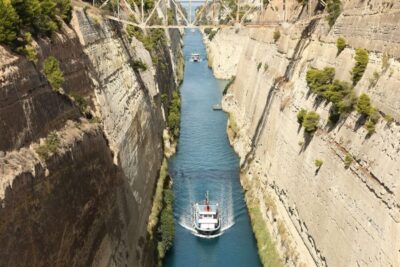
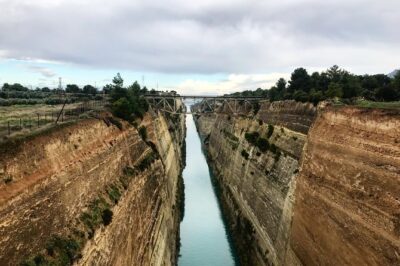
You start with a drive along the coast and a stop at the Corinth Canal. Even with only about 15 minutes listed, you get a chance to orient yourself to the geography of Greece: water, coast towns, and the nearby island of Salamis mentioned for the naval battle context. The canal itself is a dramatic reminder that this region is not just ancient on paper, it is strategically minded in real life too.
Akrokorinthos: the photo stop with the fortress skyline
Next is Akrokorinthos, an ancient fortress stop designed mainly for photos. It is described as the oldest and largest castle in southern Greece, and you have about 20 minutes. This is not a long museum-style visit, it is a viewpoint moment, and it sets up why Corinth mattered for so many eras.
More visits to the citadel at Mycenae:
- Mycenae and Nafplion Day Trip from Athens with Official guide★ 4.5 · 501 reviews
- Argolis: Full-Day Tour in Mycenae & Nafplio★ 4.2 · 350 reviews
- 3-Day Classical Greece Tour: Epidaurus, Mycenae, Nafplion, Olympia, Delphi★ 4.5 · 342 reviews
- Athens: Corinth Canal, Mycenae & Nafplio Premium Guided Tour★ 4.7 · 322 reviews
Temple of Apollo and Ancient Corinth: where the sacred layers stack up
Then comes the Temple of Apollo, followed by time at Ancient Corinth (Archaia Korinthos). Temple of Apollo is listed as not included for admission, while Ancient Corinth also carries not-included admission. What I like about this pairing is how it connects the ancient Greek religious world to early Christianity, since Ancient Corinth is tied to Apostle Paul in the description.
Time estimate here is around an hour for Ancient Corinth. If you like walking ruins slowly, you may want to spend a bit longer on the spots that interest you most, but this tour keeps momentum to reach Mystras and Sparta the same day.
Mystras: medieval ruins that you actually walk through
After Corinth, you drive through mountainous countryside to Mystras, with a longer stop that includes a walking portion at the Archaeological Site of Mystra. This is one of the days where the time on foot matters. The site visit is described as moving through citadel areas, then down toward palaces and royal courtyards, with views over the surrounding areas from higher points.
Some of the Mystras-related stops are marked admission free, but the Archaeological Site of Mystra is listed as not included. Either way, Mystras is where the tour turns from “seeing famous names” to “feeling like you stepped into a layered city.”
Sparta: quick time, real symbols, and the olive oil museum stop
In Sparta, you also get several short, high-signal stops: the Acropolis and Ancient Theater area (about 20 minutes), then the Leonidas Monument pass-by near the Spartathlon ending point. These are not long guided wandering sessions, but they connect you to Sparta’s symbolic image fast.
One extra that I like for sanity is the Museum of the Olive and Greek Olive Oil, about 15 minutes. It is not ancient ruins, but it adds texture to modern Peloponnese life by explaining a product that Greece is famous for. This is the kind of stop that can make a short road trip feel more “place-based,” not only “artifact-based.”
Day 1 wrap: sleeping in Sparta
Overnight in Sparta is included with breakfast. That choice is underrated value. You are not only traveling through Spartan myth, you are also staying in the region, which helps you appreciate how the modern town fits around the ancient story.
Day 2: Monemvasia Castle town, Agia Sofia Church, and scenic Nafplio
Day 2 shifts from the interior ruins energy to fortified-town drama and coastal scenery. You start with Monemvasia, then move to Nafplio for your overnight rhythm.
Monemvasia Castle: a living old city on a connected island
Monemvasia is described as a living old city, built on an island connected to the mainland. The castle and Byzantine prosperity story is part of the attraction, and the stop is around 30 minutes with admission free listed. Even at this time scale, the key win is atmosphere: stone, fortification logic, and a town plan built for defense.
Agia Sofia Church: cliffside bay views
You then visit Agia Sofia Church, about 15 minutes. This is not just a church stop, it is framed as a large Byzantine sanctuary built on the edge of a cliff with vertiginous views over the bay below. Admission here is listed as not included, so if you are trying to prioritize, this is the kind of stop people remember for the setting as much as the architecture.
Nafplio: a scenic city with capital-era history
After Monemvasia, you head to Nafplio for about two hours, admission free. Nafplio is described as the most scenic city, and it also had real political power as a capital until 1834. I like this part because it gives you a different Greece, one with more 19th-century feel and a gentler pace than archaeological sites.
This is also a smart evening destination. You will end the day with more space to walk, eat, and decompress before the Mycenae and Epidaurus finale.
Day 3: Asklepios healing myth, Epidaurus theatre, Mycenae palace power, then back to Athens
Day 3 is where the tour hits three heavyweights close together: Asklepios, Epidaurus, and Mycenae. The route is structured so you can enjoy each site without losing the thread.
Sanctuary of Asklepios: peaceful healing setting
The Sanctuary of Asklepios is about 30 minutes and listed as not included for admission. It is described as one of the most important ancient sanctuaries for Asclepius, the god of healing and medicine, in a peaceful hilly environment. Even without extra explanation, the setting is part of the meaning, because this is a site built around the idea of recovery and ritual.
Epidaurus Ancient Theatre: acoustics you can experience
Next is the Ancient Theatre of Epidaurus, also about 30 minutes with not-included admission. The description highlights the best preserved ancient Greek theatre, dated to the 4th century BCE, and mentions that you can test the acoustics by reaching the highest point. This is a great stop to do with a small group because you can coordinate where you sit and where you stand without losing time.
If you like when myth meets engineering, this is your moment. The theater is not just pretty, it is functional, and you will feel that in the way sound travels.
Mycenae: Homer-era palace stories with real stone
Then you go to the Archaeological Site of Mycenae, about one hour, not included admission. It is described as dated to the 2nd millennium BCE and tied to Homer’s stories and figures like Achilles, Agamemnon, and Helen of Troy. The palace of Mycenae gives its name to a whole era, so even if you do not go deep, you get a big-picture payoff.
Lion Gate, Treasury of Atreus, and the museum
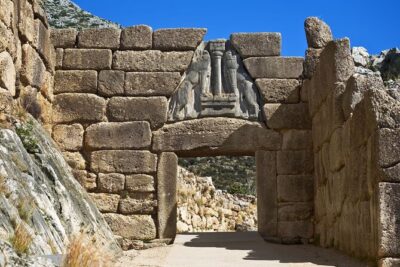
You also get a fast set of add-ons inside the Mycenae area: Lion Gate (about 10 minutes), the Cyclopean walls and burial circle A, then a stop at the Archaeological Museum of Ancient Mycenae (about 30 minutes). The museum stop gives context and helps you translate what you see outside into objects and finds, especially since it is described as exhibiting things from the City of Gold.
Before leaving the site, you make a small stop at the Citadel and Treasury of Atreus, with the Tholos tomb described as among the finest examples of Mycenaean architecture. Admission is listed as not included for these segments as well.
Back to Athens
After Mycenae, you drive back to Athens. This is not a “one more museum” ending, it is a reset for your last night, and it keeps the day focused.
The private driver setup: flexibility, comfort, and a key limitation
The biggest practical win is the private vehicle. Your driver has deep history knowledge, and you also get bottled water. That sounds simple, but on a 3-day route full of stops, the difference between being in a car with someone who knows timing and being stuck coordinating transit can be massive.
There is also a key limitation to plan around. The drivers are not licensed to accompany you inside any site or museum. If you want a fully licensed guide walking through and explaining inside ticketed spaces, the tour lists that you can hire one on request for an additional cost.
My advice: if you care about interpretation at sites like Epidaurus or Mycenae, consider adding a licensed guide, even if it is only for one or two key stops. A private driver can get you there and set the context, but a licensed guide is the one who can stay with you inside and do the full storytelling.
What you should expect on your feet (and how to prepare)
This tour uses mostly short time blocks at each stop, but the stops that matter are not just look-and-go. Mystras includes a walking route from higher citadel areas down toward palaces and courtyards. Epidaurus is specifically framed as going to the highest point to experience the acoustics.
So, plan for shoes that can handle uneven paths and steps. Bring sun protection too. Greece is bright, and even “short” stops like Akrokorinthos photo time can feel longer than you expect once you factor in walking and sun.
Hotels in Sparta and Nafplio: included comfort, with options on request
Accommodation with breakfast is included, and the tour notes that hand-picked hotels can be arranged upon request. The exact properties are not listed in the details you provided, so you should treat this as a “included base, confirm specifics when booking” situation.
I like that Sparta and Nafplio are chosen as overnights. Sparta keeps the focus on the Peloponnese interior and Mystras day, while Nafplio gives you an evening break in a more scenic, walkable city setting, especially after the heavier archaeological day.
Entrance fees: plan a small budget buffer
Entrance fees are not included overall, but some stops are explicitly listed as free. You will likely see a mix across days, with places like Corinth Canal and Akrokorinthos marked free, while major archaeological attractions like Temple of Apollo, Ancient Corinth, and the main Mycenae and Epidaurus elements are listed as not included.
Because the exact amounts are not provided here, the best approach is simple: ask what the likely ticket list is for your preferred stops, and bring a bit extra. This keeps the trip fun instead of turning into a last-minute money math exercise.
Who should book this 3-day Peloponnese private tour?
This works well for you if:
- You want one organized route covering Corinth, Mystras, Sparta, Monemvasia, Nafplio, Epidaurus, and Mycenae in a short time
- You value comfort and want pickup/drop-off plus private transport
- You like a mix of ruins and real towns, not only archaeology halls
It might not be the best fit if:
- You prefer slower pacing with fewer stops and longer on-site time
- You want a fully guided experience inside every museum and ticketed area, since licensed guides are available on request at extra cost
Should you book? My decision checklist
If you want a high-impact Peloponnese sampler with a private driver and included hotel nights, I think this is a strong booking candidate. The price is easier to justify when you remember what you are avoiding: logistics stress, extra transit, and the cost of arranging this many stops efficiently on your own.
Before you say yes, do two quick checks:
- Confirm what you want most, then decide whether to add a licensed guide for one or two “inside” sites.
- Expect walking at Mystras and at Epidaurus, so pack comfortable shoes and plan your energy for day three.
FAQ
FAQ
What time does the tour start?
The tour start time is 8:00 am.
How long is the tour?
The duration is approximately 3 days, and the exact timing depends on the time of day and traffic conditions.
Is hotel pickup and drop-off included?
Yes. Hotel/AirBnb/port pick up and drop-off are included.
What is included in the price?
Included items are accommodation and breakfast (according to your booking), transport by private vehicle, bottled water, and pickup and drop-off. A professional driver with history knowledge is also included.
Are entrance fees included?
No. Entrance fees are not included, even though some stops are listed as free.
Can the driver take you inside museums or sites?
No. The drivers are not licensed to accompany you inside any site or museum.
Can I add a licensed tour guide?
Yes, a licensed tour guide is available on request for an additional cost.
Is this a private tour?
Yes. It is a private tour/activity, and only your group participates.
Is confirmation provided after booking?
Yes. Confirmation is received at time of booking.
Can I participate if I am not an experienced traveler?
The information provided says most travelers can participate.
What is the cancellation window?
You can cancel up to 3 days in advance for a full refund, based on local time.
Visiting Ancient Corinth
- From Athens: Ancient Corinth Day Trip with Canal & VR Guide
★ 4.6 · 1,073 reviews - Biblical Tour Letters ToThe Corinthians St Paul’s Footsteps 6Hour
★ 5.0 · 1,065 reviews - Private Biblical Tour Ancient Corinth & Isthmus Canal from Athens
★ 5.0 · 762 reviews - Athens: Ancient Corinth & Nafplio Full Day Trip with Swim
★ 4.8 · 531 reviews
Latest from under the Acropolis




Ancient Corinth Tours, compared.
Ancient Corinth Day Trip with Canal & VR Guide
Read our review →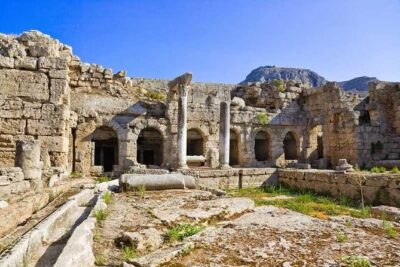
Biblical Tour Letters ToThe Corinthians St Paul’s Footsteps 6Hour
Read our review →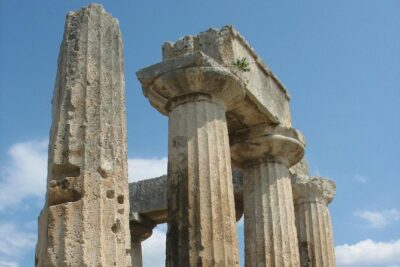
Private Biblical Tour Ancient Corinth & Isthmus Canal from Athens
Read our review →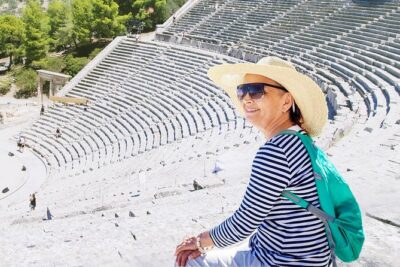

Corinth Canal, Mycenae & Nafplio Premium Guided Tour
Read our review →
Private Tour of Apostle Paul’s Footsteps in Ancient Corinth
Read our review →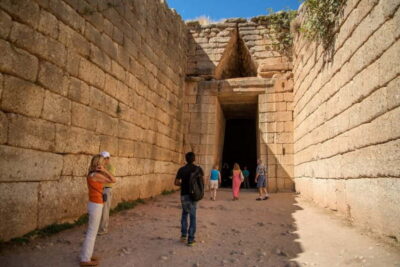
Corinth Half-Day Trip from Athens with Entrance Tickets
Read our review →Browse the lists this tour appears in