
Reviewed · ANCIENT OLYMPIA DAY TRIPS
3 Day Peloponnese Tour: Sparta, Monemvasia & Ancient Olympia
Three days, three worlds of Greece. I like the Athens pickup and the smooth air-conditioned vehicle that makes long drives feel manageable while still packing in major stops.
I also love the era-hopping route. You get real ancient weight at Sparta and Olympia, then you shift to Monemvasia’s medieval fortress streets, and it all stays on a practical 3-day schedule.
One consideration before you book: the driver is there for history and logistics, but you do not get a licensed site guide, and entrance fees plus food are not included.
In This Review
- Key things to know before you go
- Value and pace, what you really get for $725.90
- Day 1 from Corinth Canal views to Mystra’s Byzantine ghost-city feel
- Corinth Canal viewpoint: the engineering moment before the ruins
- Mystra: upper citadel views, active monasteries, and a last-emperor detail
- Sparta’s archaeology: museum first, then the hilltop complex
- Olive oil museum stop: a calmer ending
- Day 2 Monemvasia’s fortress maze, then Mani’s stone towns
- Monemvasia Castle: Gibraltar of the East and the split into lower and upper town
- Gythion: myth behind the name and a scenic coastal break
- Areopoli on the Mani Peninsula: stone architecture plus real village atmosphere
- Day 3 Olympia museum first, then the sanctuary where the Games began
- Olympia Archaeological Museum: world-famous objects in a focused setting
- Olympia site: over 70 buildings, plus the Pelopion story
- Olympia: sacred truce and the “ideas exchange” phase
- What to expect from the driver and the guide setup
- Getting the most out of the 3 days: comfort, tickets, and timing
- Who this Peloponnese route fits best
- Should you book this Sparta, Monemvasia and Olympia tour?
- FAQ
- What is the duration of the tour?
- What is the meeting point in Athens?
- Is pickup offered?
- Is the tour offered in English?
- What does the price include?
- Are entrance fees included?
- Are meals included?
- Is accommodation included?
- What happens if the weather is poor?
- Is this a private tour?
Key things to know before you go
- Door-to-door pickup from central Athens meeting point, hotel lobby, or Airbnb entrance
- English-speaking service with a mobile ticket
- Major ancient stops with smart timing, like the Corinth Canal viewpoints and Olympia’s museum-first approach
- Medieval Monemvasia with upper and lower town wandering inside the fortress walls
- Comfort on the road, since an air-conditioned minivan or SUV handles intercity travel
- Bring cash or card for sites, since archaeology entrance tickets are not included
Value and pace, what you really get for $725.90
For $725.90 per person, you are paying for a private-style experience with transport and pickup built in. That matters on a 3-day Peloponnese run, because the “hidden cost” is time and stress. The itinerary is spread across different regions, and the vehicle plus hotel or Airbnb drop-off removes the usual chore of figuring out how to get back at day’s end.
You also get a driver with deep historical knowledge, and that helps a lot when you are staring at ruins and trying to understand what you are looking at. The important caveat is right in the fine print: the driver is not a licensed tour guide inside museums and sites. So think of this as guided conversation and expert driving, plus self-paced visiting where you will rely on site information, museum displays, and your own reading.
Finally, don’t ignore what is not included. Entrance fees at archaeological sites and food and drinks are on you. If you know you want to linger and add a few extra museum hours, your budget should include that extra spend.
More long days out to Olympia:
- 4-Day Classical Greece Tour: Epidaurus, Mycenae, Olympia, Delphi, Meteora
★ 4.5 · 732 reviews - 3-Day Classical Greece Tour: Epidaurus, Mycenae, Nafplion, Olympia, Delphi
★ 4.5 · 342 reviews - 4-Day Tour of Mycenae, Epidaurus, Olympia, Delphi & Meteora
★ 4.8 · 168 reviews - Ancient Olympia full day private tour from Athens
★ 5.0 · 83 reviews
Day 1 from Corinth Canal views to Mystra’s Byzantine ghost-city feel
This day has a classic Peloponnese pattern: start with a dramatic “how is this even possible?” stop, then climb into Byzantium-era layers, and finish with Sparta.
Corinth Canal viewpoint: the engineering moment before the ruins
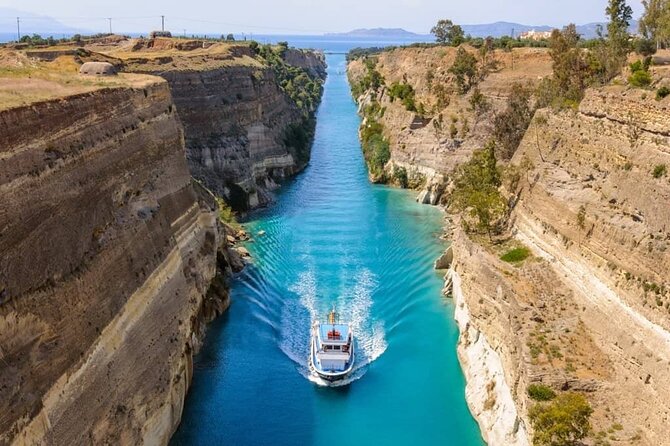
You pause at the Corinth Canal for about 15 minutes, with admission free. The big draw is perspective. The canal connects the Gulf of Corinth to the Saronic Gulf, cutting through the narrow Isthmus of Corinth. It was dug at sea level with no locks, is about 6.4 kilometers long, and about 21.4 meters wide at the base, which limits modern ship traffic.
You get a high view, with steep limestone walls and vessels threading their way below. It is a great reset before the day turns into stone, history, and walking.
Mystra: upper citadel views, active monasteries, and a last-emperor detail
Next comes Mystra, typically around 2 hours on site, with tickets not included. This is where the pace becomes more rewarding, because you are walking a real hillside complex.
You start near the upper point, reach the citadel, and get big panoramic views over the surrounding areas. As you head downhill, you find the palaces and royal courtyards. Mystra is often called a ghost city, but not in a dead sense. Many monasteries are still in use, and monks can show you around their small society.
One striking detail you can catch at the chapel of St. Demetrios. On the floor survives a plaque with a two-headed eagle, the Byzantium symbol. The plaque is tied to a real moment in late Byzantine history: it is said to be where Konstantine Palaiologos kneeled before he was crowned as the last emperor of Byzantium.
Practical tip: this is not just sightseeing, it is walking on uneven terrain and steep paths. Wear shoes that grip.
Sparta’s archaeology: museum first, then the hilltop complex
After Mystra, you visit the Archaeological Museum of Sparta for about 30 minutes (tickets not included). The museum holds thousands of finds from the ancient Acropolis of Sparta, called Lakedaemonia, plus items from across Laconia. It spans from the Neolithic Age to the late Roman period, and the displays cover only a portion of the collection, spread across seven rooms totaling about 500 square meters.
Even with a short visit window, a museum stop helps you make sense of what comes next on the hill.
You then have a series of quick hits around Sparta:
- Leonidas Monument by the stadium area, about 10 minutes, free
- Acropolis of Sparta archaeological site, about 20 minutes, free
- Ancient Theater of Sparta, about 15 minutes, free
The Leonidas stop marks the ending point of Spartathlon, the Athens to Sparta race of 245.3 km. Then the acropolis area connects religion and government, serving as Sparta’s center from the 8th century BC until Roman conquest, and later acting as a public social hub during Roman times.
The ancient theater is the big visual payoff. It is on the southwest side of the acropolis hill, under the Sanctuary of Athena. Construction began in the late Hellenistic period in the 5th century BC and was reconstructed in Roman times, preserving the form linked to Emperor Augustus in the 1st century AD. The orientation is north-facing, designed to keep sun off spectators. The theater is massive by any modern yardstick: about 140 meters external diameter, 114 meters width, 48 rows with an estimated 16,000 capacity.
If you like to understand how Greeks built for crowds and rituals, this stop gives you that.
A handful more Athens outings to compare
- From Athens: 3 Days in Meteora & Delphi with Tours & Hotel★ 4.6 · 97 reviews
- Meteora & Delphi 3 Days Semi Private Tour★ 4.5 · 80 reviews
- Athens: 3 days 2 nights Meteora with small size tours & hotel★ 5.0 · 63 reviews
- 3-Day Trip to Delphi and Meteora from Athens★ 4.0 · 53 reviews
Olive oil museum stop: a calmer ending
To round out Day 1, you stop at the Museum of the Olive and Greek Olive Oil for about 30 minutes (tickets not included). This is a gentler theme shift from military and athletic history. The focus is the olive tree and oil production, a connection Greece has since antiquity. You get a break from ruins walking, and it gives context for a daily-life ingredient that shaped the region’s economy and health.
Day 2 Monemvasia’s fortress maze, then Mani’s stone towns
Day 2 is built around drama in two forms: fortified medieval views and Mani’s rugged, stone-heavy culture.
Monemvasia Castle: Gibraltar of the East and the split into lower and upper town
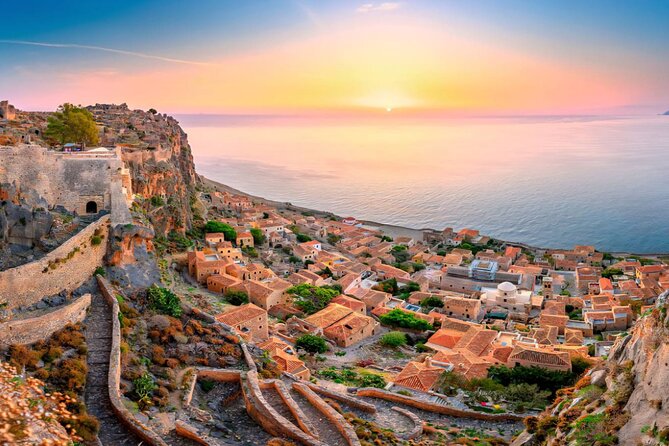
You spend about 3 hours at Monemvasia Castle, with admission free. This place is called the Gibraltar of the East, and it earned that reputation through the long list of powers that held it: Byzantines, Crusaders, Venetians, and Turks.
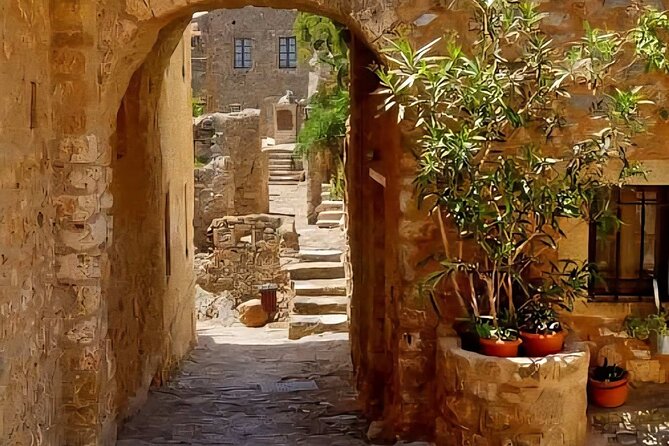
Inside the fortress, you wander narrow cobbled streets and see beautifully restored stone buildings. The castle is divided into two parts, the lower and upper town. That layout helps you pace the walk. It is not just a wall, it is a whole lived-in structure.
There are also food and stay vibes built into the castle descriptions. You can find a restaurant on a tower house roof, and there is mention of spending a romantic night in a stone-built tower. Even if you are not planning to do overnight lodging here, it gives you a sense of why people fall for the place.
Practical tip: Monemvasia is a walking day. Bring water, and plan to slow down on steep or uneven stone.
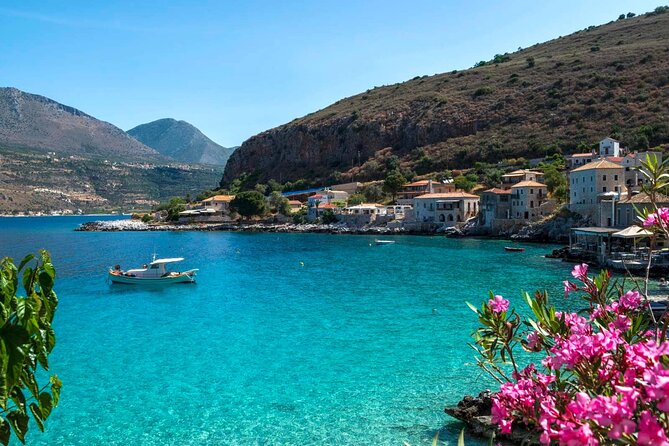
Gythion: myth behind the name and a scenic coastal break
Next is Gythion for about 2 hours, free. The name explanation is half myth, half language. It comes from gyia meaning land and theos meaning god. There is a myth that Hercules and Apollo fought over the Delphic Tripod. Since neither won, the city was not named after either, but became known as the Land of the Gods.
This is a good day segment for a breather, because you shift from castles and ruins into town time.
Areopoli on the Mani Peninsula: stone architecture plus real village atmosphere
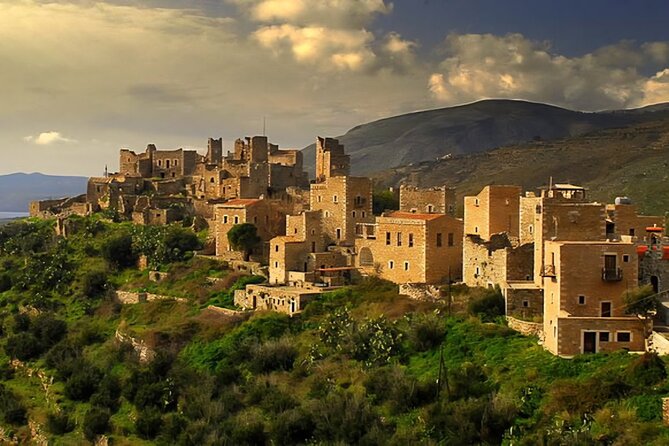
You finish with Areopoli for about 2 hours, free. Areopoli sits in the foothills of the Saggias mountains on the Mani Peninsula. It is often called Mani’s heart of stone, mostly due to traditional stonemasonry buildings, not because locals are unfriendly.
The area is also described as a short distance from wild coves, quiet beaches, and caves, plus historical and built heritage sites. That means you are not locked into one museum or ruin. You can move through the town and choose what fits your mood.
If you enjoy “regional feel” travel more than checklist travel, Day 2 is where you get it.
Day 3 Olympia museum first, then the sanctuary where the Games began
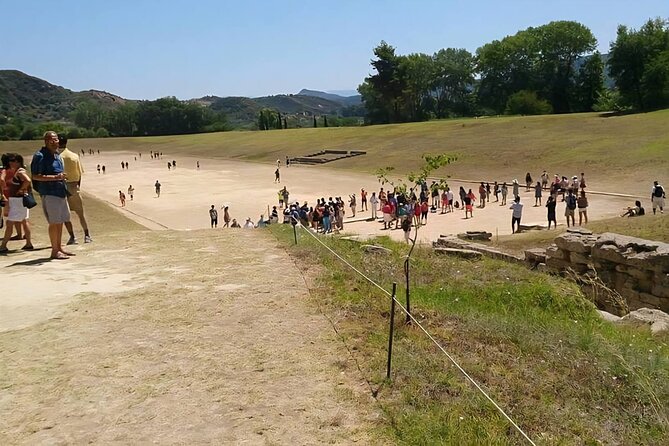
Day 3 focuses on Olympia, one of Greece’s most myth-and-ritual tied places. The structure you get, museum then site, works well because it helps you recognize what you are seeing outside.
Olympia Archaeological Museum: world-famous objects in a focused setting
You spend about 1 hour at the Archaeological Museum of Olympia, free. It is supervised by the Ministry of Culture and Sports, and as of 2009, directed by Georgia Chatzi.
This museum matters because it was an early achievement on Greek cultural preservation. When the original building opened in 1882, it was the first museum in Greece outside of Athens. The collection covers discoveries from prehistory through Roman rule.
The main highlights you can look for include:
- Hermes and the Infant Dionysus, attributed to Praxiteles
- objects from the Temple of Zeus
- the Nike of Paionios
- an oenochoe that belonged to Phidias
It is also noted for its bronze collection, which makes it one of the most important in the world.
With only an hour, I suggest you focus on the pieces above first, then let the rest fill in the context.
Olympia site: over 70 buildings, plus the Pelopion story
After the museum, you go to the Archaeological Site of Olympia for about 1 hour. Admission is not included here.
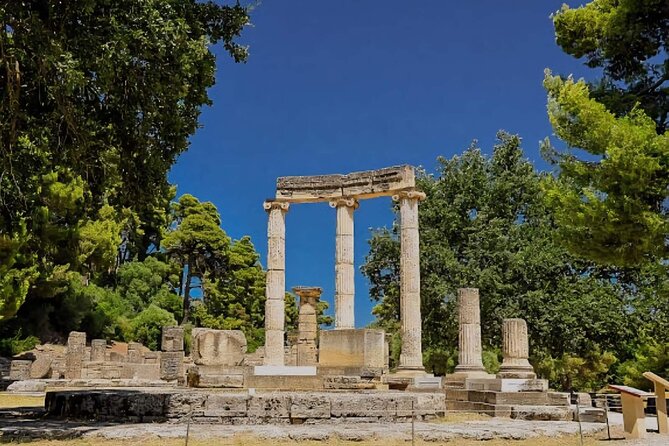
The site once held over 70 significant buildings, and many ruins remain. A special focus is the Pelopion, described as the tomb of Pelops, a quasi-mythical king linked to the Atreids, the family that led to war against Troy. The Pelopion helps explain why Olympia became both sacred and story-driven. The description also hints that the tomb suggests Pelops might not have been entirely mythical, which is a good reminder that ancient Greeks mixed legend with real place-making.
Olympia: sacred truce and the “ideas exchange” phase
You also stop at Olympia itself for about 1 hour, free. Olympia started as a sacred site that pulled worshipers from across the ancient world. From the 8th century BC, the celebrations became connected to the Sacred Olympic Truce, honored throughout the Greek world after an agreement between Spartan lawgiver Lykourgos and King of Elis Iphitos.
By the 5th century BC, Olympia was also tied to the spread of ideas. The site is described as a place where thinkers and influential individuals came to exchange and pass on knowledge. So yes, it is athletic history, but it is also intellectual traffic.
What to expect from the driver and the guide setup
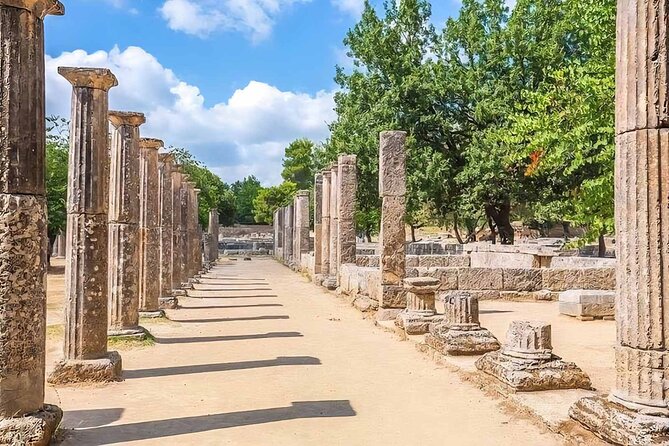
The tour includes a professional driver who brings deep history knowledge, but does not provide a licensed guide inside museums or archaeological sites. For you, that means two things.
First, you still get a human explanation while traveling and at key orientation moments, and that helps you not just walk around randomly. Second, at ticketed sites and museums, you should plan to read signage and museum labels yourself.
This approach is common for transport-based private tours, and it can work really well if you like to move at your own pace once you are oriented.
Getting the most out of the 3 days: comfort, tickets, and timing
Since entrance tickets for archaeological sites are not included, you should plan ahead for the extra costs that can pop up fast. Your best move is simple: set aside time and money for tickets, and do not assume everything is covered.
Food and drinks are also not included. That matters because the route covers multiple stops per day. You will want to plan on lunch and small breaks, especially on Day 1 when you move from canal viewpoints to Mystra hills to Sparta walking.
The tour uses a mobile ticket, and you get confirmation at booking. In the field, that means you should keep your phone battery topped up and accessible so you can present the ticket smoothly.
Finally, this experience requires good weather. If conditions are poor, you may be offered a different date or a full refund. That is a big deal on Greece tours where outdoor walking does most of the work.
Who this Peloponnese route fits best
This trip suits you if:
- You want a private-style, pickup-based way to see Sparta, Monemvasia, and Olympia without building transport logistics yourself
- You enjoy a mix of ancient sites and later fortress or town history
- You are comfortable paying site entrance fees separately and handling meals on your own schedule
It might feel less ideal if:
- You specifically need a fully licensed guide inside museums and archaeology sites for interpretation
- You want food and tickets bundled into one fixed price
Should you book this Sparta, Monemvasia and Olympia tour?
I would book it if you value convenience and organization. The door-to-door pickup from Athens, the air-conditioned ride, and the way the route is structured around major highlights make it a strong choice for a short Peloponnese window.
It is also a good fit if you like “learning as you go,” because the driver brings history into the drive, then you get to wander on your own at each site.
Just go in with two expectations: entrance fees and meals are your responsibility, and the driver is not a licensed museum guide. If that matches your style, you will likely feel like you got your money’s worth in time saved and big sights covered.
FAQ
What is the duration of the tour?
The tour runs for about 3 days.
What is the meeting point in Athens?
The meeting point is McDonald’s Σύνταγμα Ermou 2, Athina 105 63, Greece.
Is pickup offered?
Yes. Pickup is offered from hotels, and for Airbnb stays the driver contacts you upon arrival so you can meet at the entrance. For airport and port pickup, the driver meets you in the arrivals area holding a signboard with your name.
Is the tour offered in English?
Yes, the tour is offered in English.
What does the price include?
It includes an air-conditioned vehicle, private transportation, pickup and drop-off, and transportation by minibus, mini van, SUV, or sedan depending on group size. It also includes professional drivers with deep knowledge of history and a mobile ticket.
Are entrance fees included?
No. Entrance fees at archaeological sites are not included.
Are meals included?
No. Food and drinks are not included.
Is accommodation included?
Accommodation is not included. The operator can suggest hotels and arrange everything on your behalf.
What happens if the weather is poor?
The experience requires good weather. If it is canceled due to poor weather, you will be offered a different date or a full refund.
Is this a private tour?
Yes. It is a private tour or activity, and only your group participates. It also has a minimum number of travelers, and if that minimum is not met you will be offered a different experience or a full refund.
Latest from under the Acropolis

Ancient Olympia Day Trips, compared.
4-Day Classical Greece Tour: Epidaurus, Mycenae, Olympia, Delphi, Meteora
Read our review →
3-Day Classical Greece Tour: Epidaurus, Mycenae, Nafplion, Olympia, Delphi
Read our review →
4-Day Tour of Mycenae, Epidaurus, Olympia, Delphi & Meteora
Read our review →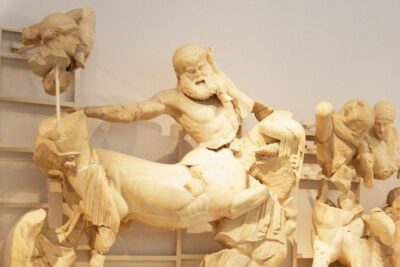
Ancient Olympia full day private tour from Athens
Read our review →
4-Day Greece Highlights Tour: Epidaurus, Mycenae, Olympia, Delphi and Meteora
Read our review →
Day tour to Ancient Olympia,Ancient Sparta Mycenae Including Meal
Read our review →Ancient Olympia full day private tour from Athens
Read our review →
Olympia – Private Half Day Tour with Mini Bus
Read our review →Browse the lists this tour appears in