Reviewed · FULL-DAY
Sparta Full Day Tour
Sparta in one day is a tall order. This private Athens trip strings together big name stops like the Corinth Canal and Mystras, plus key museums in Sparta, all with round-trip pickup and an English speaking driver.
I especially love the private setup, just your group up to 2 people, which makes the long day feel less like a factory tour. I also love the storytelling from the driver, like Jimmy, who brings the sites to life with clear explanations and practical context as you ride.
One drawback to plan for: the day is packed, and lunch plus most site admissions are not included. If you hate rushing, you will want to manage expectations, bring snacks, and accept that you will cover a lot of ground.
In This Review
- Key things I’d prioritize on this Sparta full-day trip
- Private pickup from Athens, then straight into Peloponnese history
- Corinth Canal stop: 20 minutes, big engineering ideas, and a smooth first break
- Sparta archaeological site and museum: Roman theater, sanctuaries, and real excavation history
- Archaeological Museum of Sparta area
- The Sparta museum itself
- Olive oil museum: why a half hour in Sparta feels like a palate cleanser
- Mystras: Byzantine churches on a hilltop tied to power moves
- Price and value: what $845.90 per group gets you in real time
- Time management tips for a packed 12 to 13 hour day
- Should you book the Sparta Full Day Tour with H.P. Tours?
- FAQ
- How long is the Sparta Full Day Tour?
- Is this tour private or shared?
- Where do you get picked up in Athens or at Piraeus?
- Does the tour include round-trip transportation?
- Is lunch included in the price?
- Is there a tour guide included?
- Are entrance fees included?
- What museum stops are included besides Sparta?
- Is the tour offered in English?
- Is airport pickup available?
- What is the cancellation policy?
Key things I’d prioritize on this Sparta full-day trip
- Private group of up to 2 with round-trip hotel or port pickup from Athens or Piraeus
- Corinth Canal timing built in at about 20 minutes, with admission listed as free
- Sparta archaeology in two parts, first the archaeological site and then the Sparta museum
- Olive oil history stop focused on how olive oil shaped daily life, not just ancient myths
- Mystras ruins on a hill tied to Byzantine power, monasteries, and major churches
- Driver-led explanations outside sites, with an option to add a licensed guide for inside-the-site depth
Private pickup from Athens, then straight into Peloponnese history
This is a true private day trip, not a shared shuttle. You get round-trip pickup and drop-off from an Athens hotel or the Piraeus Port, and the vehicle is air-conditioned, with bottled water and WiFi on board. The whole idea is simple: you spend less time coordinating and more time seeing.
The driver speaks English and gives explanations about the monuments and the bigger story of Greece. There is one important limit: drivers are not allowed by law to accompany you into the sites. So you get guided narration during transit and at general meeting points, but for inside-the-site commentary you may want to upgrade with a licensed local tour guide (extra cost, payable in cash, subject to availability).
You should also note the total time: expect about 12 to 13 hours. That means you are not just “popping by” Sparta, you are committing to a full day that moves from coastal infrastructure to inland ruins and back.
A handful more Athens outings to compare
- All Day Cruise -3 Islands to Agistri,Moni, Aegina with lunch and drinks included
★ 5.0 · 4,958 reviews - From Athens: Delphi Full Day V.R. Audio Guided Tour
★ 4.6 · 3,028 reviews - Athens Full Day Private Tour
★ 5.0 · 2,903 reviews - From Athens: Mycenae, Epidaurus & Nafplio Full-Day Tour
★ 4.5 · 2,530 reviews
Corinth Canal stop: 20 minutes, big engineering ideas, and a smooth first break
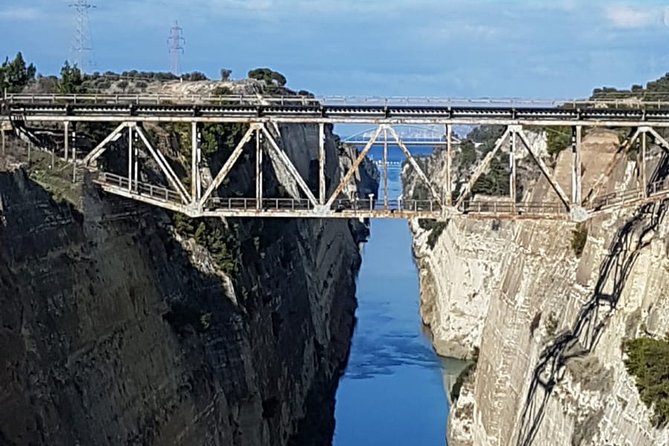
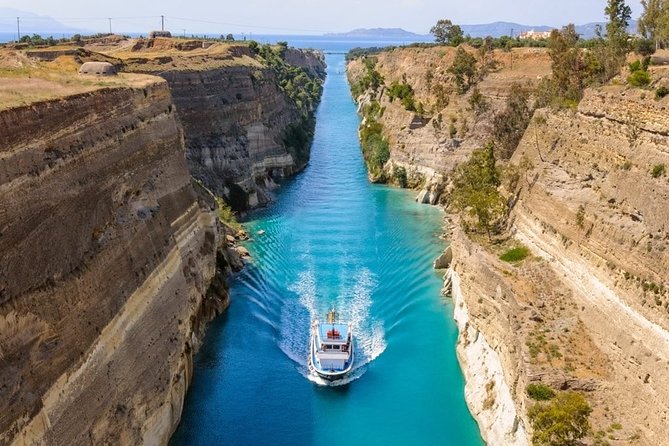
Your day starts with a drive along the National highway toward the Corinth Canal area. The route is described as about 45 miles, and you reach the well-known Corinthian canal, also referred to as the Isthmus canal, which connects the Saronic Sea and the Corinthian Sea.
This stop is short on the clock, about 20 minutes. But it is worth it if you like seeing how geography and technology change travel. The canal project was completed in the late 19th century, yet the dream goes back much further. The notes explain how, before the canal, ships wanting to move between the Aegean and the Adriatic had to sail around the Peloponnese, adding about 185 nautical miles.
There are also two story layers that make the canal more than a photo stop. First, Periander, the tyrant of Corinth around 602 BC, is described as conceiving the idea, and building the diolkós, a stone road that let ships be transferred on wheeled platforms. Second, Emperor Nero is mentioned for an attempted construction in 67 AD with a large slave workforce, but the effort was cut short by his murder.
Practical tip: because the time is brief and the day will be long, use this moment to get oriented, take a few photos, and then reset for the mountain drive toward Sparta.
Sparta archaeological site and museum: Roman theater, sanctuaries, and real excavation history
After the canal, you ride into the central Peloponnese by way of the mountains, heading to Sparta. The stop at the archaeological site and the connected museum time makes the day feel anchored, not just like a scenic drive.
Archaeological Museum of Sparta area
The archaeological site visit is described as arriving at Sparta, an ancient city-state on the banks of the Eurotas River in Laconia. The excavation story here is part of the attraction. The British School of Archaeology began pioneer excavations in 1910, and work resumed in the early 1990s, especially around the ancient theater and merchant stalls.
The highlights you are meant to look for include the Temple of Athena Chalkioikos, with its location defined by few surviving relics found toward the northwest end of the Acropolis. You will also have the ancient theater of Sparta on the south side of the Acropolis. That theater is described as an early Imperial Period product, and what survives includes the orchestra, the retaining wall with engraved inscriptions of Spartan rulers in Roman times, and the concave portion of the theater.
Another structure mentioned is the Circular Building of Unknown Destination, a circular structure built from hewn blocks and smaller stones. It is linked in the notes to an important role in ancient Spartan life, sometimes associated with the Skias. Nearby, the remains of merchant stalls are described as Roman Imperial period results.
This part of the experience matters because it shows how Sparta was not frozen in time. You are seeing layers, earlier religious and civic structures, plus later Roman and Byzantine connections. It is a much more believable way to understand ancient places than a single timeline with no overlap.
The Sparta museum itself
After the site, the program continues with the Archaeological Museum of Sparta for about 2 hours. This is where the day gives you context. The museum displays thousands of findings from the province of Lacedaemon, plus pieces from other parts of Laconia that are not included in collections from Gytheion and Neapolis Vion.
The museum’s time span runs from the Neolithic period up to later Roman eras. The notes say that discoveries from Sparta’s major sanctuaries hold prominent positions. Expect a mix: sculpture from the Archaic through Roman eras, artifacts tied to rescue excavations, and especially Roman mosaic floors found in Sparta. There are also a few valuable epigraphs, the kind of inscriptions that can provide rare, direct information about local history.
One more detail that makes the museum useful for non-specialists: it helps you connect the physical ruins you saw outside with objects that survived, plus inscriptions and mosaics that translate the past into something tangible.
Practical note: museum admission is not included. Entrance fees are listed separately as €35 per adult for sites including the Archaeological Museum of Sparta, the olive oil museum, and Mystras fortress and museum. At the same time, the stop list shows Mystras with admission listed as free. Because those two details appear together, I would treat it as a confirm-at-booking situation so you do not get surprised at the ticket window.
Same hours, spent a different way in Athens:
- Athens: Acropolis & up to 5 Archaeological Sites Combo Pass★ 4.2 · 13,904 reviews
- Athens: Acropolis, Parthenon & Acropolis Museum Guided Tour★ 4.8 · 9,316 reviews
- The Acropolis, Parthenon & Acropolis Museum Guided Tour★ 4.7 · 8,493 reviews
- Athens: Cape Sounion & Poseidon Temple Sunset Half-Day Trip★ 4.8 · 8,241 reviews
Olive oil museum: why a half hour in Sparta feels like a palate cleanser
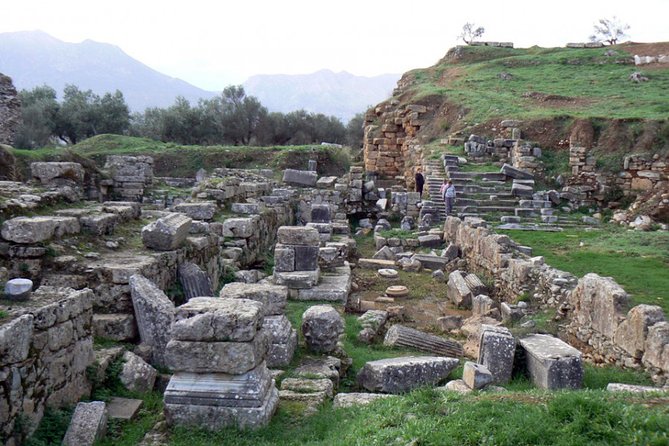
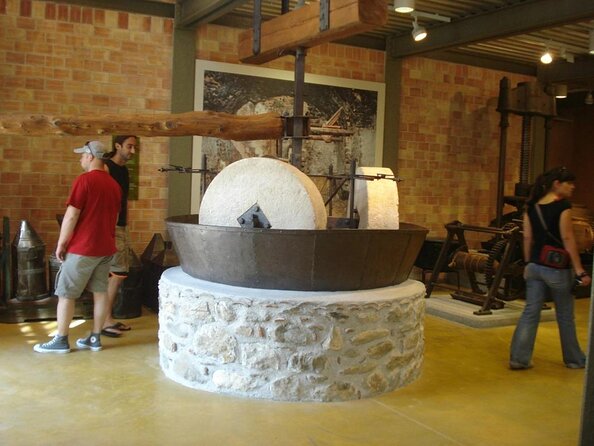
Between long drives and big ruins, you get a focused stop: the Museum of the Olive and Greek Olive Oil. It runs about 30 minutes, and admission is not included.
If you expected a small, salesy shop, this stop often surprises people because it is built around how olive oil mattered for centuries in Greek life. The museum is described as covering the culture, history, and technology of olive and olive oil production, from prehistoric times to the early 20th century.
What I like about this stop is the range of uses. It is not just about food. The notes explain that you learn the olive’s contribution to nutrition and body care, and also uses that are now outdated, like lighting. That gives you a more grounded sense of daily life in the region, especially after you have just been looking at political and military history in Sparta and Mystras.
This is a good “reset” moment in the schedule. Even if you are not a museum person, a short stop with a clear theme can make the rest of the day feel more coherent.
Mystras: Byzantine churches on a hilltop tied to power moves
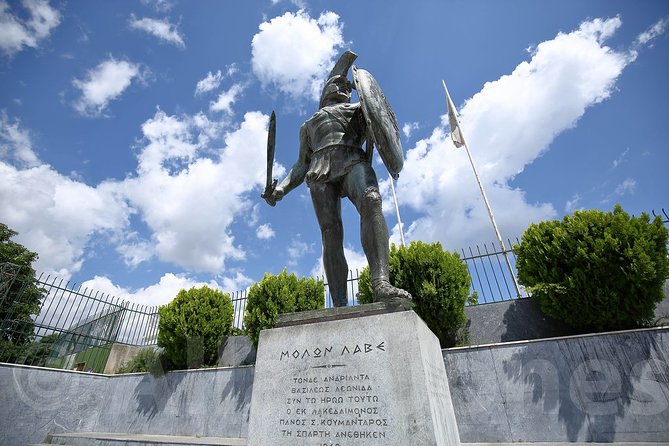
Next comes Mystras, described as the wonder of the Morea. You are going to a hillside settlement developed from a fortress built in 1249 by William II of Villehardouin, prince of Achaia, on a hill about 620 meters high overlooking Sparta. The history reads like a political chessboard, and you can still see the results in the fortifications, palaces, churches, convents, houses, streets, and public squares.
The story starts with Frankish control and quickly shifts. The Franks surrendered the castle to the Byzantines in 1262. From there, Mystras becomes the center of Byzantine power in southern Greece. It first serves as the base of the military governor, then from 1348 as the seat of the Despotate of Morea. In 1460 the Turks capture it, and it is then occupied by the Turks and later the Venetians.
After 1834, inhabitants gradually move to the modern town of Sparta, leaving behind the medieval ruins. That is why you visit Mystras now: you are walking among strong remnants of late Byzantine life, framed by the sense that power once clustered here.
The notes also call out the monasteries, including the Brontochion and the monastery of Christos Zoodotes (Christ the Giver of Life). Under the Despots, Mystras reaches its high point through construction of churches, described as outstanding examples of Late Byzantine church architecture.
Several churches are specifically named, and you will want to keep an eye out for these if your driver points them out:
- Hagioi Theodoroi (1290 to 1295)
- Hodegetria (around 1310)
- Hagia Sophia (1350 to 1365)
- Peribleptos (3rd quarter of the 14th century)
- Evangelistria (late 14th to early 15th century)
- Pantanassa (around 1430)
Your Mystras time is listed as about 1 hour 30 minutes. That is enough to see the major church cluster and key viewpoints, but not enough to wander forever. If you want slow photography and long stops inside every church, you might prefer adding a licensed guide, or just planning another day in the region.
Admission note: the stop list says Mystras admission ticket free, but the general tour notes list €35 per adult for entrance fees including Mystras fortress and museum. In practice, tickets can vary by specific areas and opening rules. Budget the €35 per adult figure and confirm details when you book.
Price and value: what $845.90 per group gets you in real time
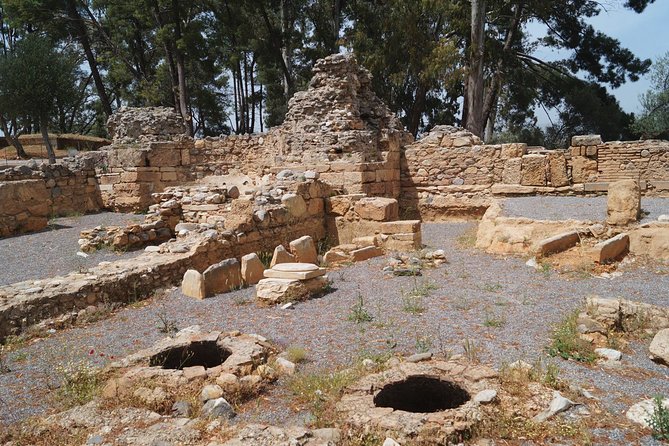
The price is listed as $845.90 per group (up to 2 people). That is a lot of money on paper, so the best way to judge value is what you avoid and what you get.
First, you get private transportation with round-trip pickup from Athens hotels or Piraeus port. For a 12 to 13 hour day, private logistics can save time and reduce stress. You also get bottled water, WiFi, and an air-conditioned vehicle, which matters on a long day.
Second, you get a driver doing English commentary during the ride. With drivers unable to enter sites, you do not get a full inside-guide package by default, but you still get context, routes, and monument stories that help your brain connect what you are seeing.
Third, you cover multiple destinations that are not next door to each other: Corinth Canal, the Sparta archaeological complex, the Sparta museum, the olive oil museum, and Mystras. This is not just a “Sparta ruins” day. It is a structured sweep that tries to show three different angles of the region, engineering, archaeology, and Byzantine culture.
What might reduce value for some people: you still have to plan extra spending for lunch and entrance fees, and you have a limited time at each stop. If you are traveling with someone who likes to move quickly and wants a guided day without thinking about transport, it often feels worth it.
If you prefer independent pacing, you might find you can cobble together a cheaper route on public transport. But you will lose the private pickup comfort and the ride-time storytelling, which is a big part of why this itinerary works.
Time management tips for a packed 12 to 13 hour day
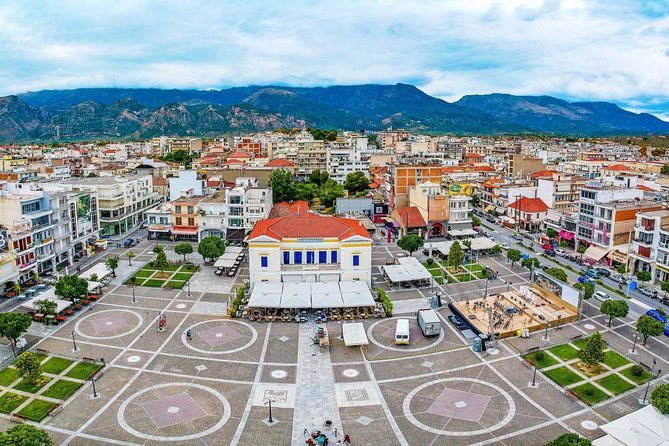
Because this is a long day with multiple stops, you will enjoy it more if you handle the small friction points early.
- Treat it like a day trip with breaks, not a museum marathon. Corinth Canal is short, Mystras is shorter than you might wish, and the museum stops are timed. Build your mindset around quick, focused viewing.
- Plan lunch. Lunch is not included, and the day will not magically slow down for you. If you want something reliable, bring a few snacks just in case.
- Wear real walking shoes. Mystras is about ruins and uneven ground. Even with a limited time, you will walk.
- Use the driver for the road story. Since the driver cannot enter sites, ask for the context before you arrive, when the big picture clicks.
One plus: you start with a smooth drive segment to the canal, then you transition into the mountain route. That makes the day feel like a sequence, not a hard back-to-back sprint.
Should you book the Sparta Full Day Tour with H.P. Tours?
I would book this if you want a private, low-stress day that hits Corinth Canal and Mystras in the same trip, with museum stops that explain what you are seeing. It is a strong match for couples or close groups up to 2 who like guidance during transit and want to return to Athens or the port without wrestling with logistics.
I would think twice if you hate tight timelines, because about 20 minutes here and 1.5 hours there adds up quickly. I would also check the admission situation at booking, since the stop list mentions free admission for Mystras while the tour notes list €35 per adult for entrance fees that include Mystras fortress and museum.
If you are a serious history lover and you want deeper explanations inside every site, consider the optional licensed tour guide. The default driver format is great for orientation, but the law restriction means you may not get the level of inside detail you would expect from a full guided tour.
If you do book, you have the advantage of free cancellation up to 24 hours in advance for a full refund, which gives you flexibility if your Athens plans shift.
FAQ
How long is the Sparta Full Day Tour?
The tour duration is listed as about 12 to 13 hours.
Is this tour private or shared?
It is totally private. Only your group participates, and it is just your group up to 2 people.
Where do you get picked up in Athens or at Piraeus?
Pickup is offered from Athens Hotel locations or from the Piraeus Port cruise ship terminal, with the driver holding an H.P. Tours sign with your name.
Does the tour include round-trip transportation?
Yes. Round-trip hotel or port pickup and drop-off are included, plus air-conditioned transport.
Is lunch included in the price?
No. Lunch is not included.
Is there a tour guide included?
You get an English speaking driver who explains history and facts, but drivers are not licensed to accompany you into the sites. An optional licensed tour guide can be arranged for an extra cost.
Are entrance fees included?
Entrance fees are not included. The tour notes list €35 per adult for entrance fees for the Sparta archaeological museum, the olive oil museum, and Mystras fortress and museum.
What museum stops are included besides Sparta?
You also visit the Museum of the Olive and Greek Olive Oil, and you spend time at Mystras.
Is the tour offered in English?
Yes, the tour is offered in English.
Is airport pickup available?
Airport pickup is available on request, with an additional fee that varies by vehicle type.
What is the cancellation policy?
You can cancel for a full refund up to 24 hours before the experience starts. If you cancel less than 24 hours before, the amount paid is not refunded.
Latest from under the Acropolis




Full-Day, compared.
All Day Cruise -3 Islands to Agistri,Moni, Aegina with lunch and drinks included
Read our review →


Full-Day Meteora Tour with Local Guide & Greek Lunch
Read our review →