
Reviewed · HISTORICAL TOURS
Running Through The History Of Athens with personal trainer
Athens hits different when you run it. This 1-hour city-center workout mixes real landmarks with a trainer who sets the effort level, so you get movement plus major sightlines. I especially like how the route threads classic stops like Temple of Olympian Zeus and Hadrian’s Arch into one continuous run, not a chopped-up checklist. I also like that you finish in the Panathenaic Stadium and get a true runner moment, even if you are not a hardcore athlete. One thing to consider, though: this is still a run, so it is best if you are comfortable jogging in a busy city environment for an hour.
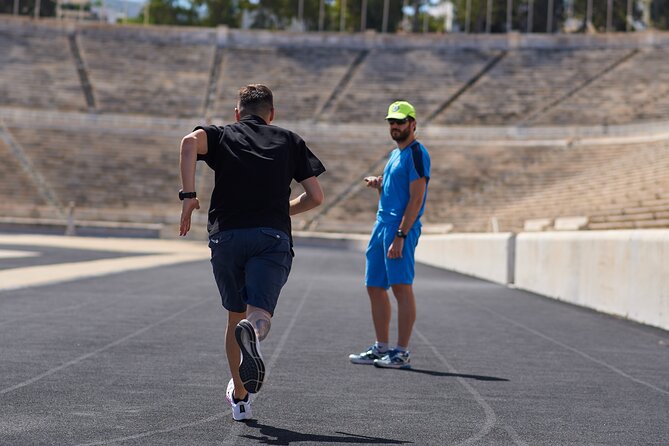
Your pace is adjusted to your group, which helps make this feel like training, not just sightseeing on foot. In one standout session, the trainer Jon was praised as a top guide, and another guide, Giannas, is described as a 2:45 marathon runner who did laps in the stadium and even filmed it for the group. The main drawback is simple: you are moving the whole time, so you will not get long, slow museum-style hangs at each site.
In This Review
- Key Points Before You Lace Up
- Why Running Athens Feels More Like Training
- Syntagma Square to Ermou Street, Then Monastiraki Square
- Thiseio, Ancient Agora, and the Odeon of Herodes Atticus
- Acropolis Views, Acropolis Museum, and Getting Oriented Fast
- Temple of Olympian Zeus, Hadrian’s Arch, and the Garden Stretch
- Photo Stop at Panathenaic Stadium, Then Finish Strong
- Price and Value for an 82-Dollar, 1-Hour Run
- What You Actually Get From the Trainer (Including Jon and Giannas)
- Practical Tips for a Smooth Athens Run
- Who This Tour Fits Best
- Should You Book This Athens Running Tour?
- FAQ
- Where is the meeting point?
- How long is the running tour?
- Is the tour led in English?
- Is stadium entry included?
- What is included in the price?
- What should I bring?
- Do I get a refund if I cancel?
Key Points Before You Lace Up
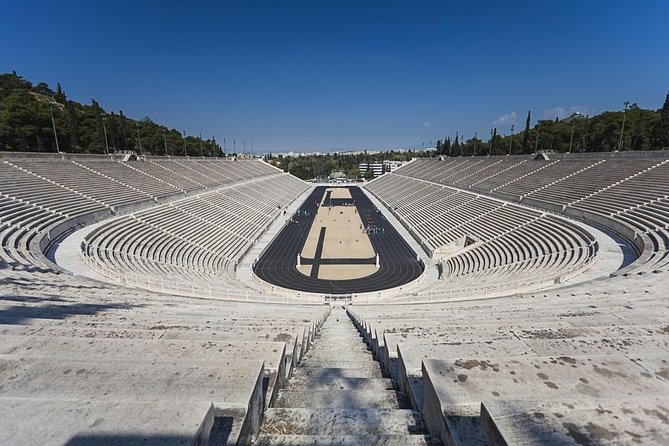
- Finish in Panathenaic Stadium for that big, runner-style end payoff
- Trainer adjusts pace for mixed abilities, from casual joggers to serious runners
- City-center route takes you from Syntagma through historic neighborhoods and major monuments
- Stadium entry included plus bottled water to keep things practical
- You pass iconic landmarks like Hadrian’s Arch and the Temple of Olympian Zeus without needing to plan transit
Why Running Athens Feels More Like Training
Athens is a city of stone, slopes, and stops that can turn a walk into a long endurance test. Doing it as a run flips the script. Instead of pausing every time you want a view, you keep rhythm, and your eyes catch the monuments as you go.
This tour is built around one core idea: you stay active while still seeing the big names. You start at Syntagma Square, then the route flows through central streets and open areas where it is easier to keep moving. The trainer is there for form, pacing, and group management, so you do not end up sprinting while others fall behind or vice versa.
And yes, the payoff matters. Ending at the Panathenaic Stadium is not just a photo moment. It is a setup for that satisfying feeling of finishing strong in a place tied to the modern Olympic story from 1896.
A handful more Athens outings to compare
- Historical Delphi One Day Tour with Arachova Stop & Expert Guide
★ 4.5 · 1,247 reviews - Historic Athens: Small Group Electric Bike Tour
★ 4.9 · 966 reviews - Acropolis, Parthenon & Athens Old City Heritage Walking Tour
★ 4.5 · 876 reviews - Athens: Small Group E-Bike Tour of Historic Highlights
★ 4.9 · 154 reviews
Syntagma Square to Ermou Street, Then Monastiraki Square
You begin at Public Syntagma, near the metro station, so you can get there easily without a complicated plan. Once you are moving, Syntagma Square gives you a clean start point: big open space, lots of energy, and a natural place to settle into your pace.
From there, you head along Ermou Street, a central commercial artery that helps you warm up without needing a “training ground” outside the city. It is the kind of street where your surroundings change by the block, and you get that quick Athens texture, shops and pedestrians and constant motion.
Then comes Monastiraki Square, another anchor point where the atmosphere shifts again. This is where the run starts to feel like Athens, not just an itinerary with gaps. You are jogging through real neighborhoods and open plazas, not behind a bus window.
The practical benefit here is timing. Early on, you are close to transport and you can calibrate yourself fast. If you are nervous about running with others, this stretch helps you find your rhythm quickly.
Thiseio, Ancient Agora, and the Odeon of Herodes Atticus
After the busy center, the route moves toward Thiseio and the Ancient Agora of Athens area. This part is special because it is not only famous. It is also visually layered. You go from modern street life into a historic zone that feels like a doorway into the city’s older core.
The run through the Ancient Agora zone is described as having smooth running paths with scenic backdrops. Translation: you are still jogging, but the surface and spacing should make the effort more manageable than narrow alley-style streets. For you, that means less time worrying about footing and more time just watching where you are.
You also pass by the Odeon of Herodes Atticus. Even if you only see it from the route, it is the kind of landmark that gives context fast. You get the sense you are moving through a living museum rather than outside a museum fence.
One consideration: since you are running, you will not linger at every viewpoint. If you like to stop for long reading or slow photos, you may want to do that later on your own. Think of this run as the “set the scene” part of your Athens day.
Acropolis Views, Acropolis Museum, and Getting Oriented Fast
The route includes passing by the Acropolis of Athens and the Acropolis Museum area. You are not trying to do a full climb, guided by stairs and slow sightseeing stops. Instead, you are getting orientation as you run, catching sightlines that help you understand where things sit in relation to each other.
This is one of my favorite ways to connect with Athens early. You get to see where the monuments sit above the city, and afterward you can look at the same view with different understanding. It makes later exploration easier, because you know what direction you are facing and what landmark you are actually seeing.
Also, passing the Acropolis Museum area can be useful even if you do not go inside on this run. The building and its location help you visualize the modern side of the story, not just the ancient ruins.
The drawback, again, is time. This is a 1-hour experience, so the Acropolis interaction is primarily about movement and views from the route. If you want long museum time, plan that as a separate block.
Temple of Olympian Zeus, Hadrian’s Arch, and the Garden Stretch
As you continue, you come to the big monument trio in this route: the Temple of Zeus, Hadrian’s Arch, and the nearby landmarks that frame the approach.
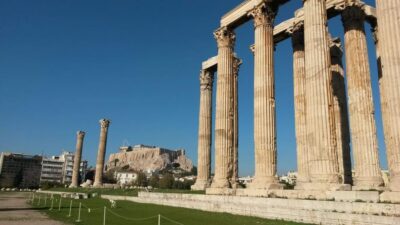
Passing Temple of Olympian Zeus, Athens is a reminder of scale. Even from the road, it is hard not to react to how massive everything is. You also get Hadrian’s Arch along the way, which helps connect the ancient city to the later Roman-era layers. It is a quick, visual “history on the move” moment.
One of the smartest parts of the route is the change of pace with the National Garden and the Zappeion area. You get a refreshing stretch here, which matters because it prevents the run from feeling like one continuous grind. For your body, that break helps you keep form. For your mind, it gives you a visual reset away from pure street scenes.
Then you loop back toward the stadium finish. The way the route is set up means you are not just hitting monuments randomly. You are traveling through a sequence that alternates effort and scenery, which is what makes it enjoyable for mixed groups.
If you are prone to getting overwhelmed by crowds, this is also a good pattern. You are moving past key icons in a time window designed for momentum, not waiting around.
Same hours, spent a different way in Athens:
- Athens: Acropolis & up to 5 Archaeological Sites Combo Pass★ 4.2 · 13,904 reviews
- Athens: Acropolis, Parthenon & Acropolis Museum Guided Tour★ 4.8 · 9,316 reviews
- The Acropolis, Parthenon & Acropolis Museum Guided Tour★ 4.7 · 8,493 reviews
- Athens: Cape Sounion & Poseidon Temple Sunset Half-Day Trip★ 4.8 · 8,241 reviews
Photo Stop at Panathenaic Stadium, Then Finish Strong
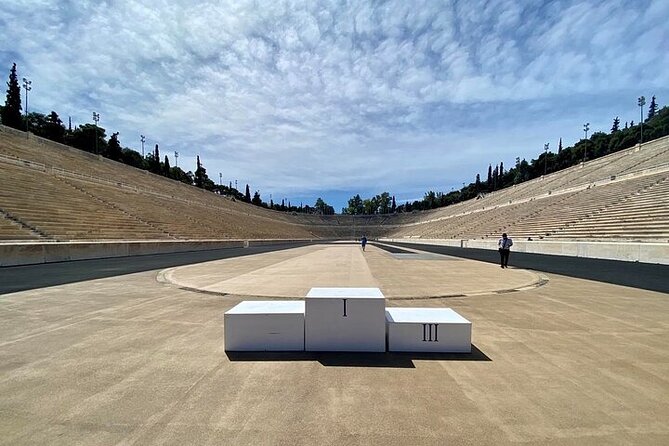
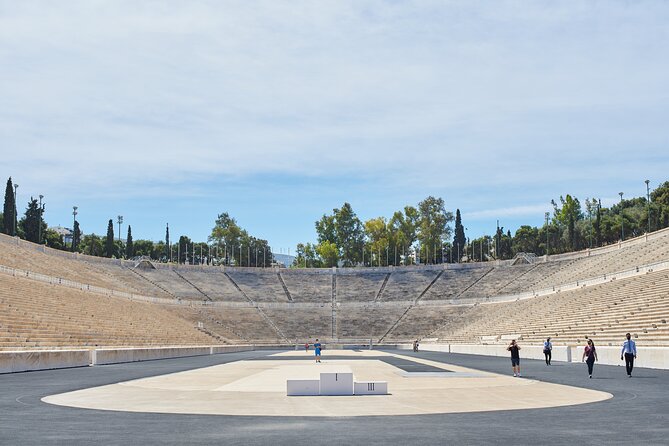
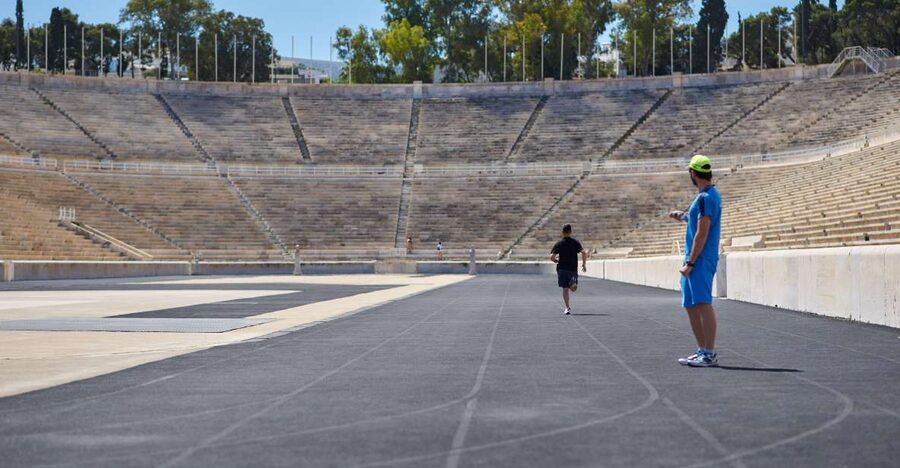
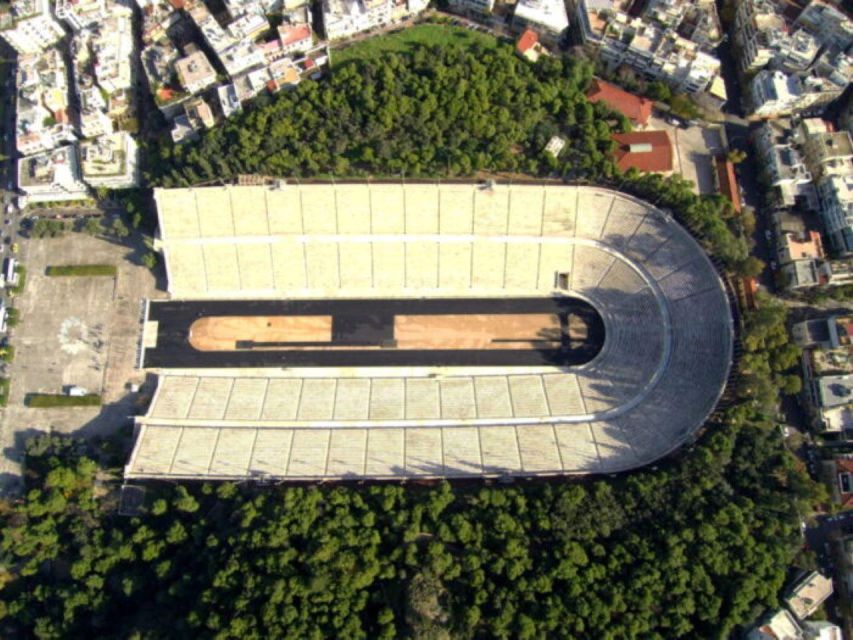
This is the part everyone remembers. The run ends at the Old Olympic Stadium, more commonly known as the Panathenaic Stadium, tied to the first modern Olympic Games in 1896. Being able to enter and then finish there changes how the stone feels. It stops being a distant landmark and becomes your final training destination.
The experience includes entry to the Panathenaic Stadium, plus a photo stop. That means you are not just staring over a gate. You get inside the stadium setting, which is exactly what you want if you came to Athens partly for athletic reasons.
In one especially fun account, the trainer Giannas had the group running four laps and filmed it during the workout. That detail is telling: the guide did not treat the stadium as a symbolic ending only. He used it like a training space, which is exactly what makes this tour feel different from a standard walking tour.
How should you prepare mentally? Think of it as a finish-line moment, not a relaxed stroll. Even if your pace is easy, your brain recognizes where the finish is, and that tends to lift effort.
Price and Value for an 82-Dollar, 1-Hour Run

At $82 per person for a 1-hour guided run, the value comes down to what you get, not just the time. You are paying for a professional trainer, guaranteed English instruction, stadium entry, and bottled water. You are also paying for a route that takes you through major sights without you needing to map out the safest or most efficient way to run across central Athens.
If you were to do this yourself, you would spend your mental energy on route planning, pacing, and figuring out how close you are getting to the iconic points. Here, the trainer handles the “keep it doable for everyone” piece, and the route is set.
The other value is confidence. When you are moving through a city, it is easy to lose time at crossings, crowd pockets, or unclear turns. A structured run reduces the guesswork, and that matters when you have only one hour.
Is it expensive for a simple stroll? Yes. Is it priced like a premium fitness experience with access to a major stadium? Also yes. For the right traveler, it is a smart use of time.
What You Actually Get From the Trainer (Including Jon and Giannas)
The tour’s success is tied to the trainer’s role. The description makes it clear that pace is flexible and adjusted to the group, whether you are a seasoned runner or someone who just wants a casual jog.
The reviews back up that idea with real examples. Jon is praised as an amazing guide in one session, and Giannas stands out as a runner with serious experience, described as a 2:45 marathon runner. Even if you are not aiming for that kind of time, it helps to know your trainer understands form and rhythm, not just directions.
That also shows up in how the stadium finish is handled. In one account, the guide organized multiple laps and recorded the moment. That is not just performance. It is motivation. It turns the stadium entry into an event instead of a stop.
For you, the practical takeaway is to show up ready to run, communicate your comfort level at the start, and let the trainer do the pacing math. If you are worried about being too slow or too fast, this is exactly the kind of tour where adjustments are built in.
Practical Tips for a Smooth Athens Run
Here is how to make your one-hour session feel good instead of messy.
Bring comfortable clothes you can jog in. That sounds obvious, but in Athens you can also get sudden sun and warmth, so avoid anything that restricts movement or breathability. Running shoes matter more than people think, especially in a city route that mixes sidewalks, plazas, and stadium surfaces.
Start with an honest effort level. If you go out too hard at Syntagma, you will feel it later near the monuments and the finish. Since the tour is one hour, you do not have a lot of time to “recover later.”
Hydration helps, and bottled water is included. Still, if you are arriving from a hot day of walking, you might want a sip before you start so you are not trying to catch up mid-run.
Finally, plan your day around the finish. Once you are done at Panathenaic Stadium, you may want to cool down nearby and then keep exploring at a slower pace. This run pairs well with a bigger sightseeing day, not as the only activity.
Who This Tour Fits Best
This tour is a strong match if you want three things at once: fitness, structure, and iconic sights. It is great for people who are comfortable jogging but want a guide to keep it organized and meaningful.
It also works well for travelers who do not want to spend their whole day inside a checklist of entrances. Instead, you get stadium access and landmark passing, with a trainer shaping the experience.
If you hate running, this is not your best bet. If you love sightseeing but also like getting your heart rate up, this is a good compromise. If you are training for an event or just want a “real” runner finish, the stadium end is the big reason to pick it.
Should You Book This Athens Running Tour?
Book it if you want a fast, guided way to see central Athens with a trainer-led pace and an unforgettable finish in the Panathenaic Stadium. The inclusion of stadium entry and bottled water is practical, and the feedback about trainers like Jon and Giannas suggests this is where the quality is concentrated.
Skip it if you want long stops, slow photos at every site, or a stress-free walking pace. This is movement first, sightseeing second, even though you pass major landmarks like Temple of Zeus and Hadrian’s Arch.
If you are somewhere in the middle, this is one of the more memorable ways to spend an hour in Athens. You get a workout, you see the icons, and you end in a stadium that makes you feel like part of the story.
FAQ
Where is the meeting point?
You meet at the Public store in Syntagma, near the Metro Station of Syntagma Square.
How long is the running tour?
The tour lasts 1 hour.
Is the tour led in English?
Yes, the instructor is English-speaking.
Is stadium entry included?
Yes. Entry to the Panathenaic Stadium is included, and you end your run there.
What is included in the price?
Included items are a professional trainer, entry to the Panathenaic Stadium, and bottled water.
What should I bring?
Wear comfortable clothes, and plan on running shoes that you can jog in comfortably.
Do I get a refund if I cancel?
Free cancellation is available up to 24 hours in advance for a full refund.
Latest from under the Acropolis





Historical Tours, compared.
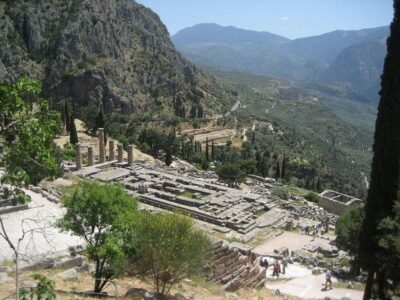
Historical Delphi One Day Tour with Arachova Stop & Expert Guide
Read our review →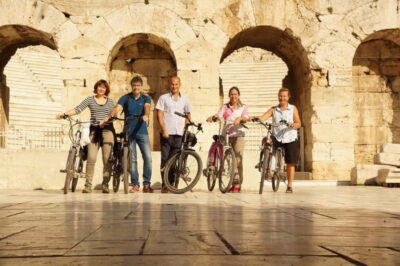
Historic Athens: Small Group Electric Bike Tour
Read our review →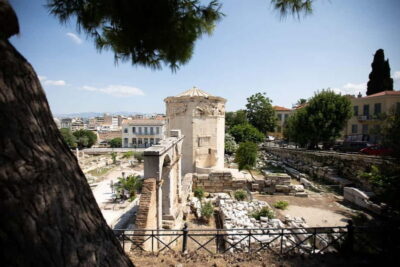
Acropolis, Parthenon & Athens Old City Heritage Walking Tour
Read our review →
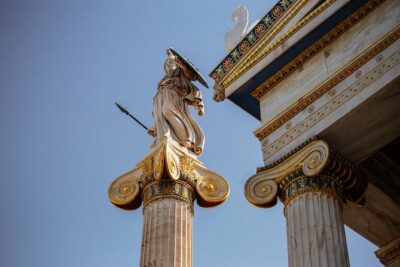
The History of Athens: Greek Mythology Private Tour
Read our review →
Athens Highlights by E-Bike: Small-Group Historic Tour
Read our review →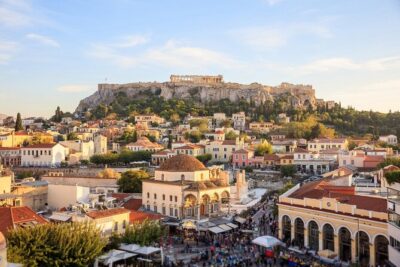
Half day tour to Acropolis and the must-see historical sites and downtown
Read our review →
Browse the lists this tour appears in