
Reviewed · PRIVATE
Private Complete Athens Through the Eyes of an Ancient Traveler
Walk Athens like a street-level ancient traveler. This private day takes you from Kerameikos to the Acropolis Museum, lining up major sites the way a pilgrim, merchant, or traveler would have moved across the city. I like that it is not just stop-and-snap, it is a connected story you can physically follow.
What I really like is the pacing and the human touch. You get a licensed history and archaeology guide, plus headphones so you can hear the explanation clearly without crowding around the guide. Because it is private for your group (up to 15), the day can feel tailored rather than rushed.
One thing to plan for: you will need to budget for entrance fees, and there is no lunch included. Add in some uphill walking to the Acropolis, and you will want moderate fitness and comfortable shoes.
In This Review
- Key points to know before you go
- Why the Kerameikos to Acropolis Museum route feels different
- Stop 1: Kerameikos Archaeological Site, city walls, and the monumental gate
- Stop 2: Ancient Agora of Athens and the street toward the Acropolis
- Stop 3: The Acropolis, Propylaea to Parthenon
- Stop 4: Acropolis Museum, Feidias sculptures and why it helps
- Guides, audio, and the difference a private day makes
- Price and value: what $832.91 per group really buys you
- What to expect on the ground: walking, timing, and comfort
- Who should book this Athens traveler tour
- Should you book this private Athens traveler tour?
Key points to know before you go
- Kerameikos first: start at the city’s monumental gate area and burial landscape, not the Acropolis.
- Agora route matters: you follow the Panathenaic Avenue approach toward the Acropolis.
- Acropolis with context: Propylaea, Erechtheion, Parthenon, and Herod’s Odeon get explained as a single complex.
- Museum closes the loop: the Acropolis Museum helps you match sculptures to the monuments you just saw.
- Headphones included: clearer audio means less stress and more time watching.
Why the Kerameikos to Acropolis Museum route feels different
Most Athens tours toss you into the Acropolis first and then hope you can connect the dots later. This one does the opposite. You begin at Kerameikos, then move through the ancient city’s public heart, and finally climb to the monument zone and finish at the modern museum built to display those artworks in a way that makes sense.
That order is a big deal for how the day lands in your head. Starting at Kerameikos helps you understand that Athens was not just stone on a hill. It was a living city with walls, gates, civic spaces, and sacred routines. From there, you walk toward the Acropolis along the kind of grand street that would have carried processions and daily life.
I also like the “ancient traveler” framing. Even if you are not role-playing, it encourages you to look at the city like movement through space: gates lead to streets, streets lead to civic buildings, and civic life leads up to the big sacred statements on the hill.
A handful more Athens outings to compare
- Best of Athens Half Day Private Tour
★ 5.0 · 3,714 reviews - Athens Full Day Private Tour
★ 5.0 · 2,903 reviews - Athens Airport Private Arrival Transfer with Meet & Greet
★ 4.5 · 1,495 reviews - Athens Airport to Athens Hotels Private Arrival Transfer
★ 5.0 · 947 reviews
Stop 1: Kerameikos Archaeological Site, city walls, and the monumental gate
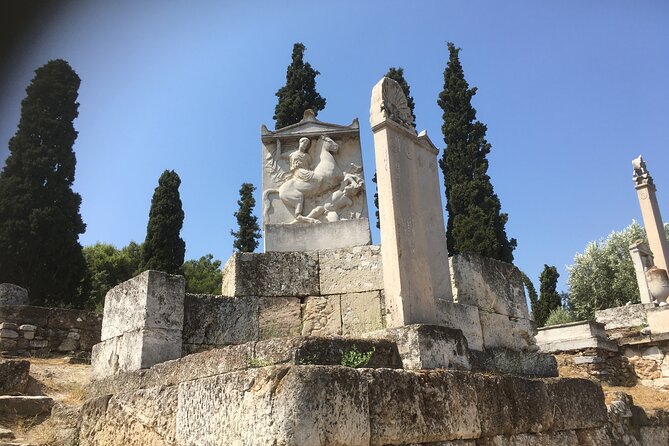
Kerameikos is where the day gets grounded. You spend about 1 hour 30 minutes here, and you do not just skim ruins. The focus is on the edges of the city and the spaces that show how Athenians organized life around the city boundary.
Key things you will see and what they mean:
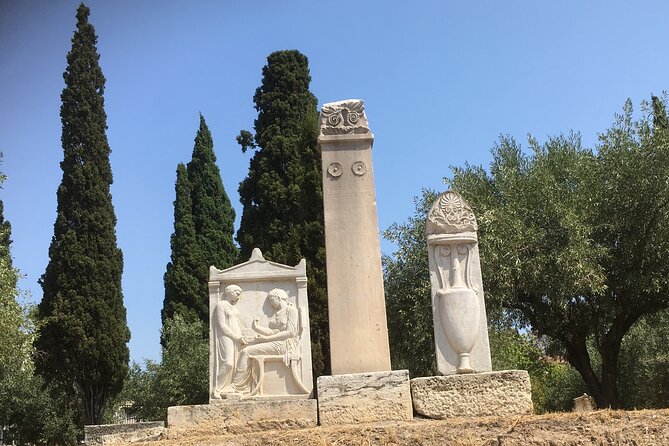
- The monumental cemetery and the Demosion Sema (Public Grave) before the city walls. This gives you an immediate sense that the city had memory built into its geography.
- The city wall attributed to Themistocles after the Persian invasion. It is a reminder that Athens responded to real threats, and walls were part of protecting identity, not just territory.
- The Dipylon, the monumental gate. Gates are important because they define entry, exit, and the first impression of a city. They are also where movement and politics meet.
You also visit the Kerameikos Museum during this stop. Museums here help you connect fragments to their original world, and it is a useful breather before the walking and climbing ramps up later.
Possible drawback to keep in mind: Kerameikos is an archaeological site, so some areas can feel uneven. Wear shoes with good grip, and plan to take your time. This is the kind of place where “quick photos” can make you miss the logic of the site.
Stop 2: Ancient Agora of Athens and the street toward the Acropolis
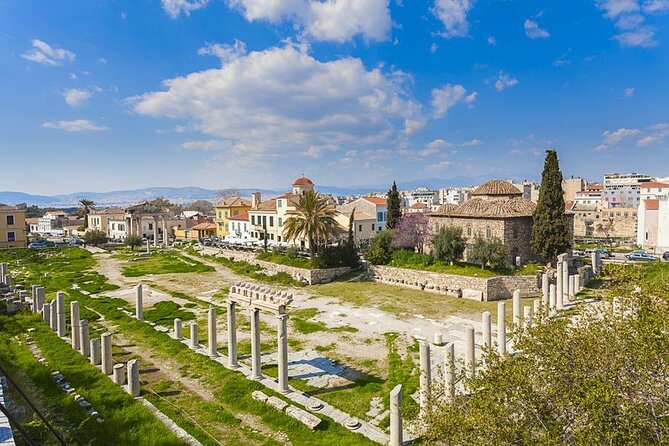
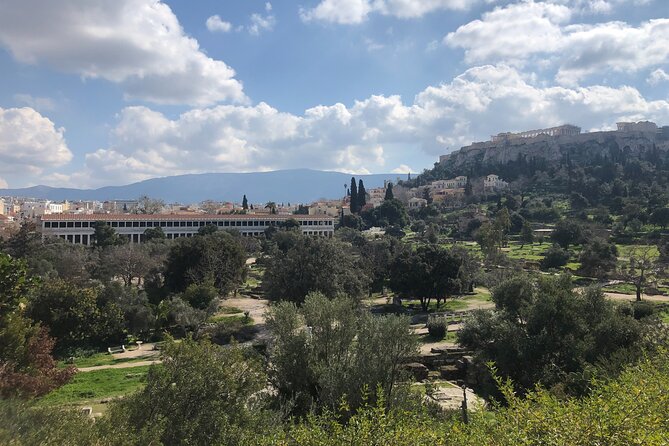
Next comes the Ancient Agora, and this is where the tour starts to feel like Athens actually worked. The Agora was the main public area, and you spend about 1 hour 30 minutes walking through it while connecting the buildings to the day-to-day life they supported.
You will visit:
- The Stoai (public galleries), which are essentially long public spaces designed for crowd life, commerce, and conversation.
- The Panathenaic Avenue, the grand route that led to the Acropolis. This is one of the tour’s best ideas because it physically points you toward what is coming next.
- The Temple of Hephaestus, one of the best-preserved temples in Greece. When a temple survives so well, it becomes easier to read the architecture without guessing.
- Main administrative buildings of the ancient city. These bring in the practical side of Athens, not just the myth and drama.
- The prison of Socrates. Even if you do not love philosophy, it adds a human, tense note to a place that otherwise feels ceremonial.
- The Agora Museum, in the restored Stoa of Attalus. This matters because you get a “pause and process” moment. You can match objects and themes to what you just saw outside.
The Agora is also a smart place to slow down your eyes. You are surrounded by spaces built for public interaction, so you start noticing how sightlines and building layouts support gathering. With the headphones, you can listen at a comfortable volume while still keeping your eyes on the ruins and details.
If you are short on time in Athens, you might feel tempted to focus only on the Acropolis. Don’t. The Agora helps you understand why the Acropolis mattered, and it changes how the Parthenon area hits you later.
Stop 3: The Acropolis, Propylaea to Parthenon
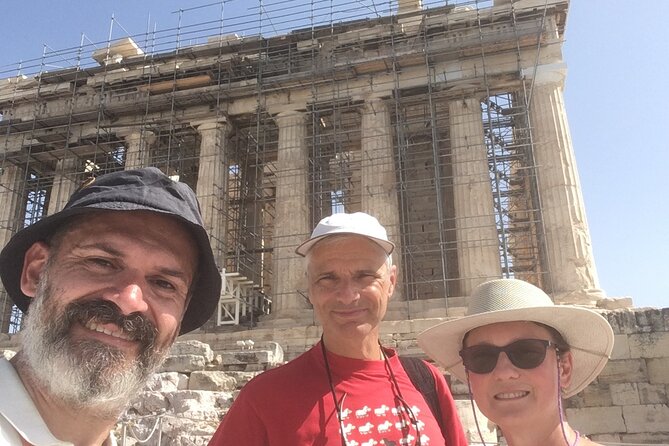
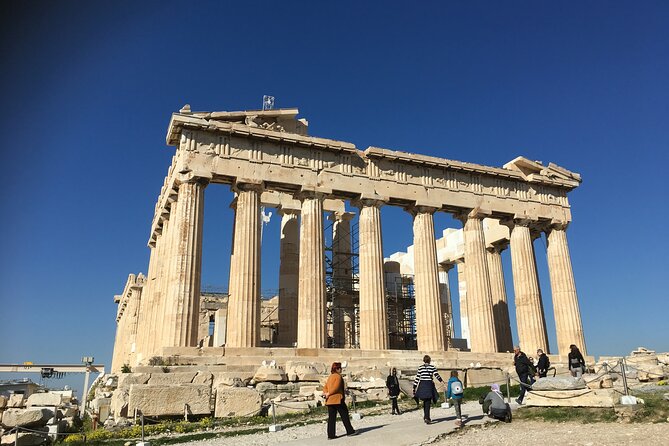
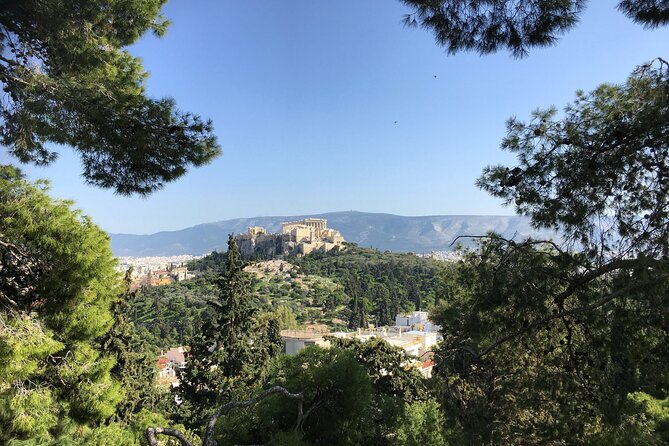
Then the climb happens. You spend about 2 hours on the Acropolis itself, and the tour covers the signature monuments you came for, but in a way that makes them feel like one system rather than separate attractions.
You will see:
- The Propylaea, the monumental gateway. This is where the sacred zone starts to announce itself.
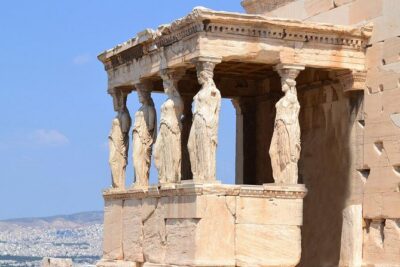
- The Erechteion, including the porch of the Caryatids. The Caryatids are famous for a reason, and here they land as part of a bigger ensemble, not just an Instagram backdrop.
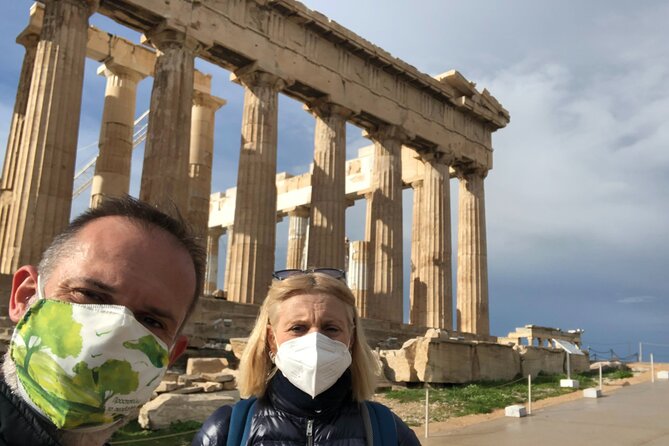
- The Parthenon, the headline building of the hill. The guide’s job is to help you read what you are looking at, and this tour is built around that.
- The Odeon of Herod Atticus, which adds a performance and civic layer to the sacred imagery.
Two practical things help you enjoy this stop. First, plan on sun and steps. Second, keep your pace steady. On the Acropolis, if you try to move too fast, you will lose the meaning of what you see.
Also note the tour does not include entrance fees, so make sure you budget ahead. It is the kind of day where “pay later” can become a scramble if you wait too long.
Stop 4: Acropolis Museum, Feidias sculptures and why it helps
The day ends at the Acropolis Museum, about 1 hour 30 minutes inside. You will like this part if you enjoy matching what you saw outside to what you see in a curated indoor space designed for it.
This museum is designed by Bernard Tschumi and inaugurated in 2009. It is built to host masterpieces from the Acropolis monuments, including:
- Pediments of archaic monuments
- Votive sculptures
- The Caryatids
- Parthenon sculptures by Feidias
Finishing here is not just a nice add-on. It helps you clean up the visual puzzle. Outside on the Acropolis, you see fragments in place or in a broad setting. Inside the museum, you get a more direct look at the sculptures and their details, which makes the monuments you visited feel more complete.
I also like the location for wrap-up. The museum ends your day opposite the Plaka quarter, in downtown Athens. That means you can transition easily into dinner nearby without needing another long transfer.
Same hours, spent a different way in Athens:
- Athens: Acropolis & up to 5 Archaeological Sites Combo Pass★ 4.2 · 13,904 reviews
- Athens: Acropolis, Parthenon & Acropolis Museum Guided Tour★ 4.8 · 9,316 reviews
- The Acropolis, Parthenon & Acropolis Museum Guided Tour★ 4.7 · 8,493 reviews
- Athens: Cape Sounion & Poseidon Temple Sunset Half-Day Trip★ 4.8 · 8,241 reviews
Guides, audio, and the difference a private day makes
You get a licensed guide with a university degree in history or archaeology, and you also get headphones for listening directly to the guide. That combination is what makes a long structured day work. You can keep your eyes on the sites and still follow the story.
The reviews you have here point to guides with strong communication and real passion. If you are assigned a guide like Evangelos, the experience can feel vivid because the explanations connect places to human moments. Another name that shows up in the feedback is Dr. Anastasios Thanopoulos, praised for professional, helpful, and courteous guiding, including speaking Italian for groups that want it. Even if your guide is someone else, this is a good sign for the level of care your day should have.
Since the tour is private, your group can ask questions and set the rhythm. That matters on sites like the Agora, where the details are the whole point. With a larger public group, you often lose the chance to ask one more question that turns a landmark into a story.
Price and value: what $832.91 per group really buys you
This tour is priced at $832.91 per group up to 15 people, and it runs about 8 hours. On paper, it sounds expensive compared with a standard group bus tour. In practice, private Athens days often get more expensive quickly, so the value comes down to how you divide the cost.
Think of it this way:
- If you have a small group, you pay for privacy, a dedicated guide, and headphones.
- If you have a larger group up to 15, the per-person cost can become much more reasonable, while you still keep the same walk-and-learn structure.
Also, the day is built around major outdoor sites plus a key museum. Entrance fees are not included, but the guide time is. That means you are paying for interpretation and timing across Kerameikos, the Agora, the Acropolis, and the museum that ties it together.
If you like Athens but you do not want to spend your time guessing what matters, this format usually delivers value fast. You get the route, the context, and the effort reduced.
What to expect on the ground: walking, timing, and comfort
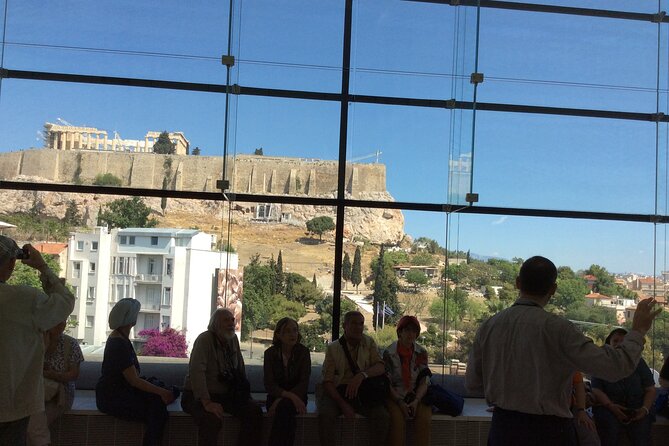
You are looking at around 8 hours total, with multiple outdoor stops and a climb to the Acropolis. The tour asks for moderate physical fitness. That does not mean you must be an athlete. It means you should be comfortable with uneven surfaces and a steady uphill push.
Here is what helps most people:
- Bring comfortable shoes with grip.
- Dress for sun and breeze, especially if you travel in warmer months.
- Plan for a day without lunch. Since lunch is not included, you will either bring your own or plan to eat after the tour. If you forget this, you can end up cutting your museum time short just because you are hungry.
Also, the tour uses a mobile ticket, and it is near public transportation. That is convenient if you want to arrive early, use a transit stop nearby, and keep the rest of your day flexible.
Finally, it requires good weather. If weather turns, the operator will reschedule or refund. Athens outdoor sites are sensitive to rain and wind, so keep that in mind when planning your dates.
Who should book this Athens traveler tour
This works best if you want:
- A clear route across Athens that connects Kerameikos, the Agora, and the Acropolis.
- A guide who can explain why places matter, not just what they are called.
- A calmer experience than large group tours, with headphones and a private setting.
It is especially good for couples, friends, and small groups who want to move at a comfortable pace and ask questions. If your group includes history lovers, the mix of civic spaces (Agora), sacred space (Acropolis), and museum displays (Acropolis Museum) is a strong combo.
If your group struggles with stairs or long uphill sections, you might feel the Acropolis time most. The itinerary is not designed to be minimal walking, even though it is structured and paced.
Should you book this private Athens traveler tour?
I think you should book if you want Athens to feel like a story you can walk through. The route makes sense, and the museum finish gives your brain a clean way to process what you saw outside. The licensed guide plus headphones are also a practical win on a long day.
I would hesitate only if entrance fees and no-lunch timing would be a deal-breaker for your budget or your schedule. If that is your situation, you could still visit the sites, but you would lose the benefits of this connected, guided route.
If you have even a mild interest in how ancient Athenians moved through gates, streets, civic spaces, and sacred monuments, this private day is one of the more satisfying ways to see the Acropolis area because it gives you the context before and after the big names.
Latest from under the Acropolis




Private, compared.


Athens Airport Private Arrival Transfer with Meet & Greet
Read our review →
Athens Airport to Athens Hotels Private Arrival Transfer
Read our review →
Private Biblical Tour Ancient Corinth & Isthmus Canal from Athens
Read our review →
4 Hours – Athens & Acropolis Highlights Private Tour
Read our review →