Reviewed · ATHENS
Panorama of Athens in 6 hours
Six hours can feel like a whirlwind, if you let it. This private Athens panorama is built to compress the big hits into one smooth half-day, with a comfortable car, hotel pickup, and just enough walking that you still get real views instead of bus-stops and mayhem.
I especially like the door-to-door convenience and how the day stays organized, so you are not spending your limited time figuring out parking and routes. I also like the history-forward narration from the hosts behind the experience, including guides such as Andreas, Evagelos, and Alex, who are praised for patient explanations and tailoring the pace when plans need adjusting.
One thing to plan for: you will handle major site tickets yourself, and the Acropolis is the biggest add-on. Add in stairs and uneven ground, and you’ll want decent walking shoes and a realistic expectation for a moderate fitness pace.
In This Review
- Key points that make this tour worth your time
- The half-day format: what you actually get in 5 to 6 hours
- Pickup, comfort, and how a driver-led tour keeps you moving
- Acropolis first: Parthenon, Erechtheion, and the view over Athens and Piraeus
- The Acropolis add-on you must budget for
- Beyond the temples: Theatre of Dionysus, Herodes Atticus, and Mars Hill
- Olympian Zeus, Lycabettus, and the Panathenaic Stadium photos you came for
- Temple of Olympian Zeus
- Mount Lycabettus for the big view
- Panathenaic Stadium
- Change of the Guards and Parliament area: a quick cultural moment done right
- Monastiraki and the neighborhoods around the ancient core
- Academy of Athens, University of Athens, and National Library
- Monastiraki Flea Market browsing
- Ancient Agora, Stoa of Attalos, Hephaestus, and Plaka on foot
- Ancient Agora of Athens
- Stoa of Attalos
- Temple of Hephaestus
- Plaka for the neighborhood vibe
- Price and value: when $459.74 per group makes sense
- Who this tour fits best, and who might want a different plan
- Should you book Panorama of Athens in 6 hours?
Key points that make this tour worth your time
- Private, up to 3 people means the day can flex to your timing and photo stops.
- Hotel pickup and drop-off keeps you out of transport hassles, especially around the Acropolis area.
- Acropolis focus plus quick classics like Lycabettus and the Panathenaic Stadium in a single run.
- Short, purposeful stops for big moments like the hourly Change of Guards.
- Driver-led storytelling with a history background, while you self-explore where sites require entry.
- Tickets not included, so you should budget for Acropolis entry and buy ahead if you can.
The half-day format: what you actually get in 5 to 6 hours
This is a private panorama built around concentration. You are not trying to “do Athens” in the way that turns into a checklist and a blur. Instead, you are getting a tight arc: the Acropolis complex first, then a string of major landmarks and neighborhoods that help you understand how ancient Athens and modern Athens sit on top of each other.
The practical win is pacing. The stops are designed to give you a quick sense of scale and story, without forcing you to linger for hours at each site. That matters in a place where lines, heat, and crowds can swallow your time. If you have limited hours in Athens, this layout is a smart way to build confidence fast.
The other benefit is the private setup. With a group of up to three, you can move at a pace that works for your group, whether that means slower photo time or asking for tighter routing when the day gets busy.
Before you book, here is what else runs from Athens:
- Athens: Acropolis & up to 5 Archaeological Sites Combo Pass
★ 4.2 · 13,904 reviews - Athens: Acropolis, Parthenon & Acropolis Museum Guided Tour
★ 4.8 · 9,316 reviews - The Acropolis, Parthenon & Acropolis Museum Guided Tour
★ 4.7 · 8,493 reviews - Athens: Cape Sounion & Poseidon Temple Sunset Half-Day Trip
★ 4.8 · 8,241 reviews
Pickup, comfort, and how a driver-led tour keeps you moving
The experience includes hotel pickup and drop-off, plus transport in an air-conditioned vehicle, often an SUV like a Kodiaq or a luxury car or class taxi option. You also get bottled water, which sounds small until you are walking under Athens sun and realizing you forgot yours.
Here’s the key detail about the “guide” style: you get professional drivers with history knowledge, but it is not set up as a licensed tour guide accompanying you inside every site. In practice, that means you will receive explanations and context while you are driving and at key points, then you do your own entry and exploring where tickets are required.
This can be a great match if you like freedom. You are not stuck with the whole group waiting for everyone to finish a read-through in the museum. The best part, based on how guides like Andreas and Evagelos are described, is that the narration tends to be tailored, patient, and genuinely practical, including helping people adjust when mobility is limited. One guest even noted access help at the Acropolis elevator, so if you have special needs, it is worth mentioning early so your host can advise on the best on-site approach.
Acropolis first: Parthenon, Erechtheion, and the view over Athens and Piraeus
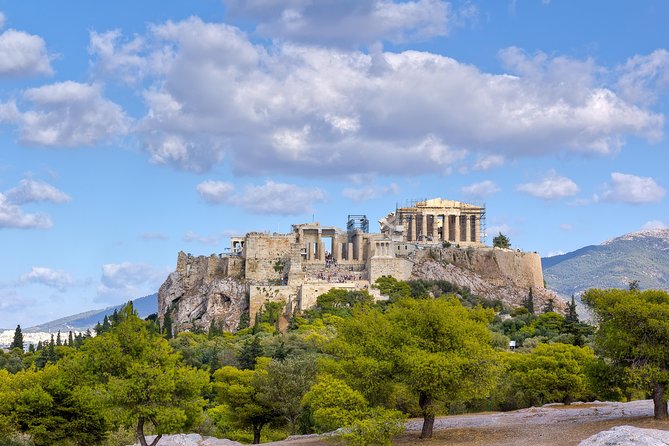
The day starts where Athens gets dramatic, at the Acropolis. You will walk through the “from far to up close” sequence that makes the site click. A naturally fortified hill becomes a sanctuary, then a political statement, then a museum of ideas. Even if you only know a few names, you’ll start to feel why Athenians built these places.
The circuit begins near the monumental gate area at Propylaea. From there, the highlights tend to unfold quickly and clearly:
- Propylaea sets the stage with the layered story of gates and rebuilding across centuries.
- Temple of Athena Nike is the elegant Ionic note on the Acropolis, dedicated to Athena and Nike, built around 420 BC.
- Erechtheion is where you notice that ancient builders were not only grand, they were complex. It sits on top of the myth-and-shrine logic of the site, with different chambers tied to Athena and also Poseidon-Erechtheus and Hephaistos.
- Parthenon is the centerpiece, built between 447 and 438 BC, and dedicated to Athena Parthenos. It’s often described as the great creation of Athenian democracy at its peak, and that framing helps you see why it was made so deliberately.
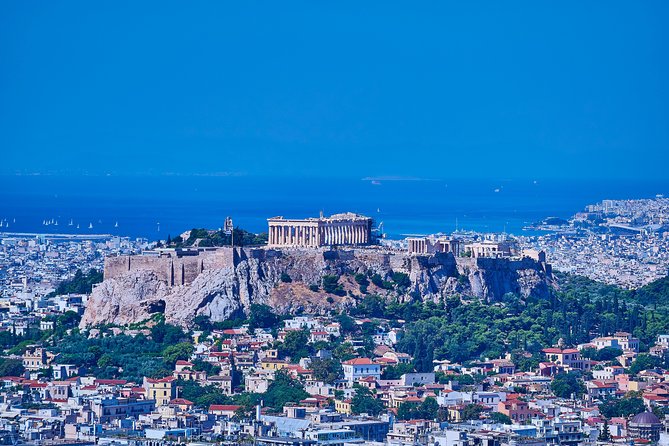
You also get the sweep of views. The panoramic outlook is a big deal here, including sightlines toward Athens and the direction of Piraeus port. In a half-day plan, this view is not optional, because once you see the city layout from above, the rest of the stops make more sense.
Practical tip: Acropolis walking adds up fast. You are moving between key points like Propylaea, temples, and viewpoints. Wear grippy shoes and plan for some steep sections. The stop timing you get is designed to be efficient (about an hour on the Acropolis area), but you still need stamina for steps.
The Acropolis add-on you must budget for
Acropolis access is not included. The listed Acropolis entry fee is €30 per person, and there is also an Acropolis and slopes option mentioned at the same rate per person (with minors under 18 free). You will be sent a link for details, and you should plan to buy on your own. If you can get combo tickets in advance, it helps reduce standing around, which matters when you only have six hours.
Beyond the temples: Theatre of Dionysus, Herodes Atticus, and Mars Hill
While the temples grab your attention, the Acropolis slopes are also about performance, law, and power. At the base and nearby slopes, the tour includes places that help you understand how Athens used public space.
You will see:
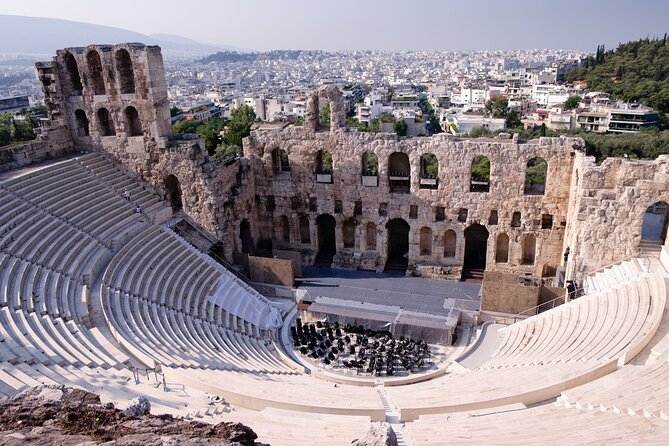
- The Theatre of Dionysus Eleuthereus, described as the oldest open-air theatre in the world. This is where major playwrights such as Aeschylus, Sophocles, Euripides, and Aristophanes had their works staged. The value is not just the building. It’s the idea that the city’s big ideas moved through theatre.
- Odeon of Herodes Atticus, a Roman-era stone theatre structure on the southwest slope of the Acropolis.
- Areopagus, also called Mars Hill, which links to the ancient judicial and civic role of the area.
These are shorter stops, but they add texture. Instead of only seeing “religion and art,” you start to see a functioning city where theatre and justice lived in the same geographic neighborhood as temples.
Same hours, spent a different way in Athens:
- Acropolis: Premium Acropolis and Parthenon Guided Tour★ 4.8 · 5,208 reviews
- Athens: Mythology of Delphi, Museum and Arachova Guided Tour★ 4.7 · 5,102 reviews
- All Day Cruise -3 Islands to Agistri,Moni, Aegina with lunch and drinks included★ 5.0 · 4,958 reviews
- Athens, Piraeus, and Coastline: Blue Hop-On Hop-Off Bus★ 3.9 · 4,849 reviews
Olympian Zeus, Lycabettus, and the Panathenaic Stadium photos you came for
After the Acropolis, the route shifts from hilltop monuments to big-city landmarks where you can still sense the ancient scale.
Temple of Olympian Zeus
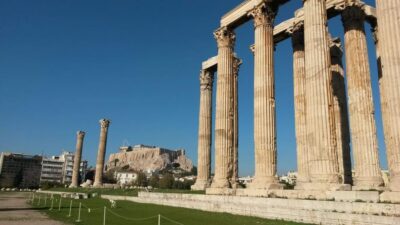
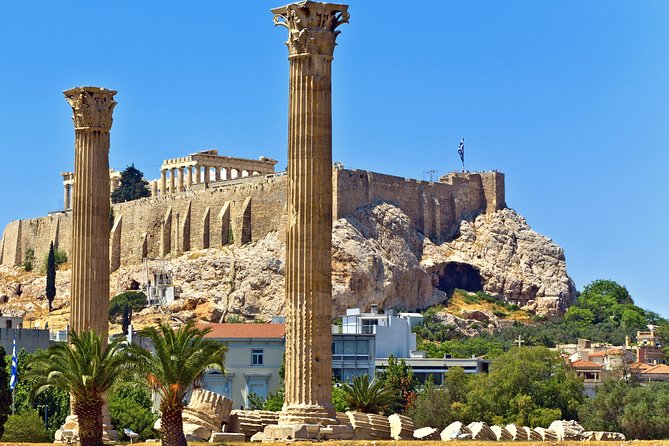
You’ll visit the Temple of Olympian Zeus area, also known as the Olympieion. It’s a former colossal temple dedicated to Zeus, with construction starting in the 6th century BC and not completed until the reign of Emperor Hadrian in the 2nd century AD. Even without the full structure standing, the remaining scale is the point. It communicates how ambitious ancient Athens could be, even across centuries of delays and rebuilding.
Mount Lycabettus for the big view
Then there’s Mount Lycabettus, the highest point in central Athens at 277 meters. You get a short window to climb and look out. This is a classic “worth it” stop because the skyline view helps connect the dots between all the neighborhoods you’re seeing.
Tip: 15 minutes is not the time to stroll slowly and then regret it. If you want photos up top, treat the climb like a mission.
Panathenaic Stadium
Next is the Panathenaic Stadium, which stands out because it doesn’t look like a typical ruined archaeological site. It is tied to the ancient stadium of the 4th century BC, and later, in 1896, it was renovated with marble coverage for the first modern Olympic Games. Georgios Averof financed those works, and the present layout matches the ancient stadium shape.
If you like sports history, this stop hits extra hard. Even if you do not, it gives you a concrete “Athens reinventing itself” story, from ancient ceremony to modern Olympics.
Change of the Guards and Parliament area: a quick cultural moment done right
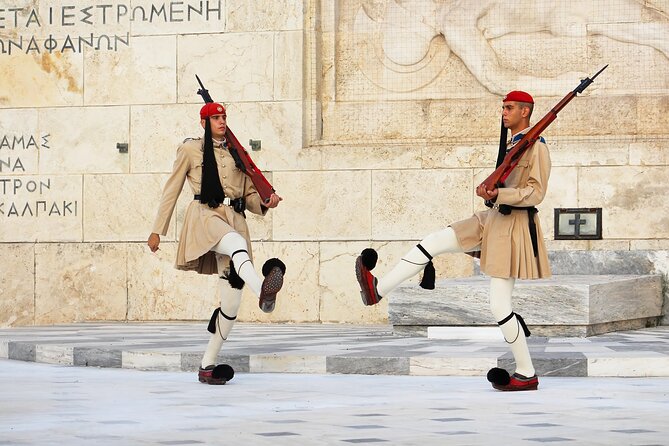
One of the most unique, easy-to-love Athens moments on this route is the Change of Guards at the presidential mansion. It happens daily and every hour, and it is built around the Evzones tradition.
You get about 15 minutes, which sounds short, but it is long enough to see what makes it memorable: the uniforms, the ritual, and the fact that it feels theatrical in the best way. Since the time is short, go for visibility over comfort, and plan to stand, not lounge.
This stop works well inside a half-day plan because it is a single moment you can fully experience without turning it into a long detour.
Monastiraki and the neighborhoods around the ancient core
After the classic landmarks, the route moves through Athens in a way that helps you shift from “ruins and temples” into everyday city life.
Academy of Athens, University of Athens, and National Library
You’ll pass major institutions like the Academy of Athens, founded in 1926, which is described as a copy of the Propylaea of the Acropolis. You’ll also encounter the University of Athens, founded in 1837 by King Otto of Greece, and the National Library of Greece, founded in 1832 by Ioannis Kapodistrias.
These are mostly quick viewing moments rather than long stays, but they are valuable because they show how Athens uses architecture to keep telling its own story.
Monastiraki Flea Market browsing
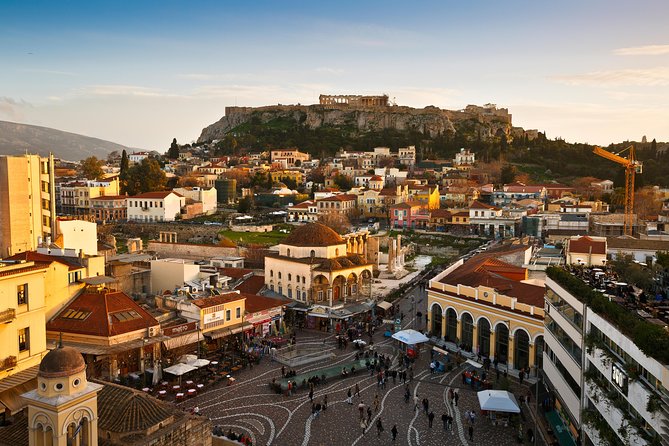
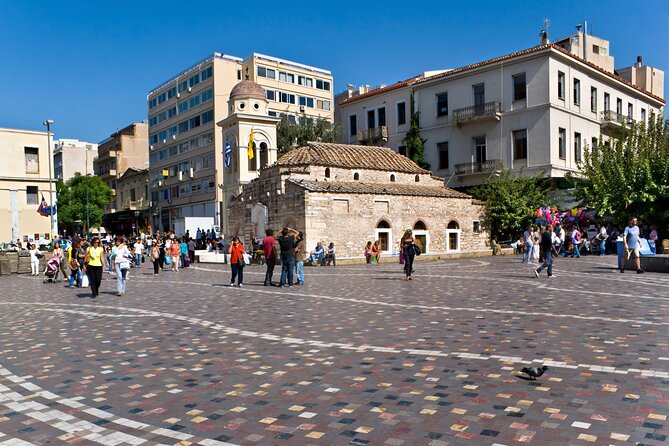
You then get time at Monastiraki Flea Market, about 30 minutes in the heart of Monastiraki Square. This is a shopper’s zone, so it’s not a “sit and think” stop. It’s for browsing, looking for small souvenirs, and getting your bearings in the city’s pulse.
Even if you do not plan to buy anything, it’s useful. Market streets give you a sense of what modern Athens feels like when you are not standing in a formal archaeological frame.
Ancient Agora, Stoa of Attalos, Hephaestus, and Plaka on foot

The final stretch leans into Athens as a lived-in city. The route includes several stops that connect the ancient civic center to the charming streets below the Acropolis.
Ancient Agora of Athens
You’ll see the Ancient Agora, often described as the heart of ancient Athens, where political, commercial, administrative, and social life took place. It was also the religious and cultural center and the seat of justice. Even with short time, it helps you understand the Acropolis was not the only engine of the city.
Stoa of Attalos
The route also includes the Stoa of Attalos, which dominates the north side of the slope of the Acropolis and is described as the main monument and museum at the Ancient Agora after the Temple of Hephaestus. This is a good “pause” structure because a stoa is made for people movement and gathering. It’s easier to imagine what daily life looked like when you see the design in physical space.
Temple of Hephaestus
Then there’s the Temple of Hephaestus, also known as Thissio. It’s described as one of the best-preserved ancient temples in Greece, dedicated to Hephaestus. In a short day plan, seeing a well-preserved temple gives you a clearer sense of what the original city aesthetic would have felt like.
Plaka for the neighborhood vibe
Finally, the tour reaches Plaka, the old historical neighborhood beneath the Acropolis, between Syntagma and Monastiraki metro stations. You get a brief window, about 10 minutes, but it’s enough for a first feel: neoclassical buildings, small cafes, souvenir shops, and narrow streets.
This part is less about monuments and more about atmosphere. If you want a place to continue exploring after your tour ends, Plaka is a practical landing spot.
Price and value: when $459.74 per group makes sense
The price is $459.74 per group, up to 3 people, for about 5 to 6 hours. That pricing can feel steep if you compare it to public tickets. But value here is in what you avoid: ticket-line friction, transit confusion, parking headaches, and the “how do we get from place to place quickly” stress that can ruin a short Athens visit.
This is the classic private-tour tradeoff. You are paying for orchestration, comfort, and a driver who can talk you through what you are seeing. You also get bottled water and hotel pickup and drop-off, which are real time-savers in Athens.
What to budget for on top:
- Acropolis entrance is listed at €30 per person (plus there is mention of an Acropolis and slopes option at the same rate).
- The tour includes the walking and viewing time, but it does not include the entry ticket cost for each site.
In other words, the tour price covers the car, the private time, and the driver-led context. Your main “extra” cost is the Acropolis ticket.
If you have just one person, you may want to compare this with a semi-private or small-group guided option that includes a licensed guide. If you have two or three people, this can be a strong deal because you spread the private vehicle cost across the group.
Who this tour fits best, and who might want a different plan
This works best if you:
- Have only one half-day in Athens and want a fast, coherent overview.
- Want private logistics with hotel pickup.
- Appreciate someone guiding the story, not just shuttling you around.
- Like a mix of big classics plus city neighborhoods like Monastiraki and Plaka.
It might be less ideal if you:
- Want lots of free time inside museums or for slow study. The structure is efficient, not leisurely.
- Have very limited mobility. The Acropolis involves walking and uneven ground. The route is described for people with moderate physical fitness, so you should plan conservatively.
Should you book Panorama of Athens in 6 hours?
If your goal is to see the top Athens hits in one day without turning your trip into a transportation puzzle, I think this booking is a solid choice. The best part is the combination of private comfort plus an Acropolis-first plan that gives you the city’s main story in the right order.
Book it if you are traveling with up to three people, you are ready to handle the Acropolis ticket yourself, and you want practical help with routing and timing. If you are a solo traveler who wants a licensed guide inside sites for every stop, you might compare options that include that added layer of guiding.