Reviewed · ATHENS
Make your Own Ancient Antikythera Mechanism A … laptop from the antiquity
Greek tech turns into a hands-on project. In Athens, this family-friendly 4-hour experience starts at the Kotsanas Museum of Ancient Greek Technology and includes a guided visit plus a workshop where you assemble an Antikythera-style calculating mechanism, gear by gear. I love how the museum time is guided, not museum-static, so you stay focused on the why behind the inventions. One thing to consider, the experience needs good weather, and you will be walking in the National Garden portion.
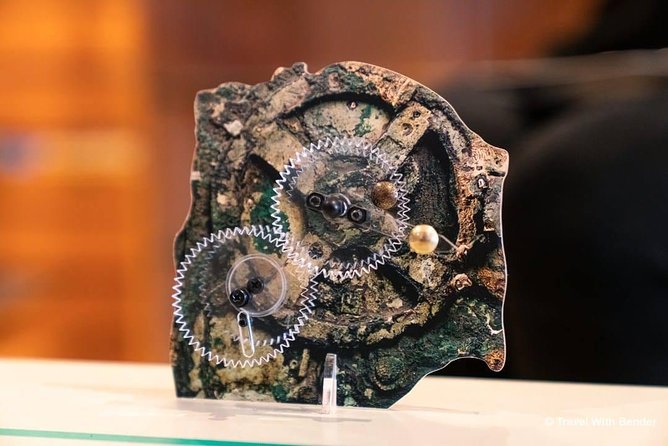
I also like the take-home payoff. You create a functional part of the Antikythera mechanism using metal and plexi glass, and it is meant to be used as a decoration after your workshop. If your guide is the kind of enthusiastic explainer I heard about, like Eva, you get clear, kid-friendly connections too, including how ideas about air, water, and related principles can be understood and operated through physics.
In This Review
- Key highlights you should care about
- Kotsanas Museum, where Greek mechanics become real
- The one-hour workshop: assembling your own Antikythera mechanism part
- Greek calculating tools, abacus handling, and the Antikythera mystery
- Plateia Syntagmatos and the Evzones, a theatrical pause in your route
- National Garden with maze-like paths and hidden archaeological touches
- Price and value: what $160.80 buys you in Athens
- Who this tour suits best, from science fans to first-timers
- Should you book the Make Your Own Antikythera workshop?
- FAQ
- How long is the Antikythera workshop tour?
- What time does the tour start?
- Where do we meet?
- What is included in the workshop?
- Is there an English-speaking guide?
- Can I cancel for free?
- Does the tour run in any weather?
Key highlights you should care about

- Hands-on Antikythera build with a functional piece made from metal and plexi glass
- Museum visit with guided explanations focused on how ancient mechanisms worked
- Working Greek abacus time, not just looking at old tools
- Plateia Syntagmatos and the Evzones changing of the guard as a memorable break
- National Garden walk with an easygoing maze of paths and shade
Kotsanas Museum, where Greek mechanics become real
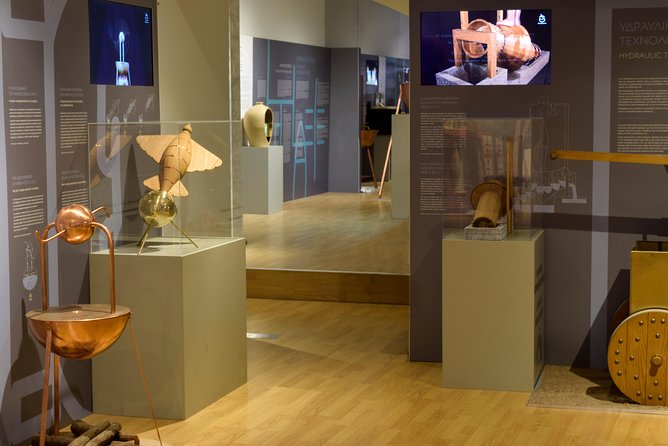
This tour is built around one big idea: ancient Greek technology is not only for display cases. It is meant to be understood through structure, movement, and the logic of how parts work together. You start at the Museum of Ancient Greek Technology Kotsanas, located at Pindarou 6, near the city center. The start time is 3:00 pm, which is nice if you want a later activity after the morning rush.
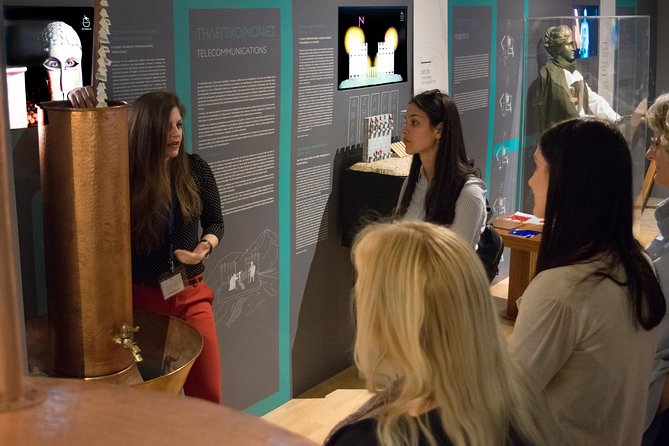
The guided museum portion matters because it sets up the workshop. Instead of jumping straight into assembling parts, you first see how ancient calculating mechanisms fit into daily life and big questions like astronomy and time. You are also introduced to other Greek innovations, including the calculator of Salamina, and the tour touches on a telecommunications mystery in Ancient Greece. The goal is to make the Antikythera feel less like a legend and more like a solvable engineering puzzle.
I like that the explanations are designed to be family-friendly. One reason this works well is that the museum tour is not only about dates and names. It is about principles, how mechanisms convert motion into information, and how people in antiquity devised ways to calculate and predict.
Practical tip: arrive a little early if you can, even though the tour is only about 4 hours. The museum part is where you benefit most from paying attention, since the workshop depends on understanding what each piece does.
Before you book, here is what else runs from Athens:
- Athens: Acropolis & up to 5 Archaeological Sites Combo Pass
★ 4.2 · 13,904 reviews - Athens: Acropolis, Parthenon & Acropolis Museum Guided Tour
★ 4.8 · 9,316 reviews - The Acropolis, Parthenon & Acropolis Museum Guided Tour
★ 4.7 · 8,493 reviews - Athens: Cape Sounion & Poseidon Temple Sunset Half-Day Trip
★ 4.8 · 8,241 reviews
The one-hour workshop: assembling your own Antikythera mechanism part
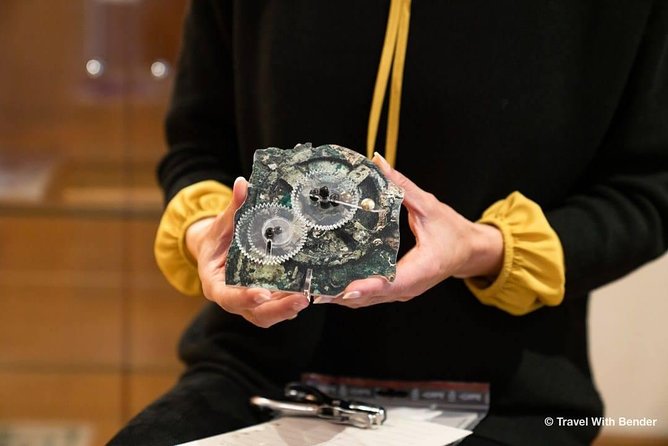
The heart of this experience is the workshop, about one hour, where you build an actual functional piece. Everyone builds a part from metal and plexi glass, then uses it as a decoration for your favorite place. That is a rare thing in a city tour. Most Athens hands-on activities give you a souvenir. This one gives you something that connects your hands to the concept of ancient mechanical computing.
You should expect a guided build process rather than pure free-form crafting. The museum’s staff walk you through the mechanism so you can assemble a component correctly and understand how it fits into the broader idea of the Antikythera computer. The tour also frames the activity as learning how the Greeks devised calculating mechanisms, which helps the time feel purposeful.
If you are traveling with kids, this is one of the easiest ways to keep them engaged. There is something to do the whole time, and the build is tangible. In the feedback I received through the experience notes, there was strong positive energy from families with kids around age 11, mainly because questions were answered in a simple, clear way.
Potential drawback: the workshop is technical-adjacent, even if it is family-friendly. If you hate anything hands-on, or you get frustrated with small pieces, this might feel like a lot. But the structure is there for a reason, you are not expected to be an engineer. You are expected to follow directions and learn why the mechanism works.
What to wear: comfortable shoes and clothes you do not mind getting slightly busy. Even with careful guidance, you will be focusing closely on parts.
Greek calculating tools, abacus handling, and the Antikythera mystery
A lot of Antikythera mentions online turn into hype. This experience brings you back to mechanics. You learn the Greek approach to calculating mechanisms, and you get the chance to interact with a functioning Greek abacus. That combination, abacus plus Antikythera, is smart because it shows two different ways of turning ideas into results.
The tour also frames the Antikythera as part of a wider story of Greek invention. You are guided through concepts around how mechanisms solve problems of counting, timing, and measurement. The tour includes the idea of telecommunications mystery in Ancient Greece, which helps you see that the Greeks were thinking about information flow, not only astronomy and math.
From the experience notes, one guide like Eva stood out for connecting scientific thinking to the physical world. The explanation style tied elements like air and water to principles you can understand and manipulate through physics. Even if you do not remember every concept later, you walk away with a better mental model for how people in antiquity approached problems.
This is also where you gain value if you like history of science. The tour does not treat the Antikythera as magic. It treats it as engineering reasoning with gears and logic. That framing makes it easier to appreciate why the device has stayed famous for so long.
If you want a souvenir that feels more meaningful than a photo, you will probably feel it during the build. You literally assemble a working functional part, so the Antikythera story becomes yours, not just something you heard about.
Plateia Syntagmatos and the Evzones, a theatrical pause in your route
After the workshop, the tour moves toward the Parliament area, often called the Old Palace, for the changing of the Greek Presidential Guard, the Evzones. This part is scheduled as a visual reward after the workshop’s concentration. The changing of the guard is theatrical, and even if you have seen similar ceremonies elsewhere, it is still a great way to break up a science-focused afternoon.
The stop is in Plateia Syntagmatos, so you get a strong sense of central Athens around you. It also helps that the tour does not rush you directly from museum benches to a long lecture. You get movement, people-watching, and a short reset for your brain.
What to expect in practice: the ceremony creates crowds and lines, so plan to be patient and keep your attention on your guide for the best viewing position. Since your tour runs about 4 hours total, you should treat this as part of the pacing, not as a separate timed event you control.
This is also a great moment for families. Kids often remember this more easily than the gears, simply because it is dramatic and easy to observe.
National Garden with maze-like paths and hidden archaeological touches
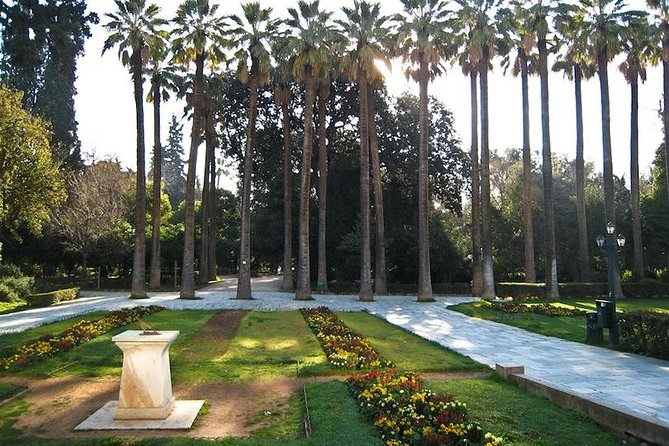
Once the guard ceremony moment passes, the tour heads to the National Garden next to Parliament. This is a pleasant contrast to the mechanical intensity of the museum workshop. You walk through the garden’s maze-like paths with your guide, learning stories as you go.
What I like about this portion is that it is not just a casual stroll. The guide shares stories about archaeological treasures hidden among the plants. That matters because it turns a beautiful green space into something you can connect to Athens beyond postcards.
The pacing also helps. You share stories under the shade, which is a welcome break during a mid-to-late afternoon start time. The tour stays guided, so you have context while you walk, instead of wandering and hoping you guessed right.
A consideration: because the experience requires good weather, the garden portion is more important on the days when conditions cooperate. If it is hot, bring water and take breaks. If it is breezy or cool, you will still appreciate a layer.
Same hours, spent a different way in Athens:
- Acropolis: Premium Acropolis and Parthenon Guided Tour★ 4.8 · 5,208 reviews
- Athens: Mythology of Delphi, Museum and Arachova Guided Tour★ 4.7 · 5,102 reviews
- All Day Cruise -3 Islands to Agistri,Moni, Aegina with lunch and drinks included★ 5.0 · 4,958 reviews
- Athens, Piraeus, and Coastline: Blue Hop-On Hop-Off Bus★ 3.9 · 4,849 reviews
Price and value: what $160.80 buys you in Athens
At $160.80 per person, this is not a cheap “just a walk” tour. But it is also not priced like a high-end museum ticket plus nothing else. You are paying for three real components: a guided museum visit, a one-hour workshop with guided assembly, and a take-home functional gift part made from metal and plexi glass.
That gift changes the value equation. You are not leaving with a generic souvenir. You are leaving with an object tied directly to the Antikythera concept, and it is built with your own hands during the workshop. You also get a guided walking segment through the National Garden and a guided route to the Evzones ceremony.
Another value point: private tour format. The experience is described as private, meaning only your group participates. That can make a difference for families, since questions can flow naturally without feeling like you are competing with other groups.
Who should book this:
- Families with kids who like making things and asking questions
- Adults who enjoy history of science and mechanical devices
- Anyone who wants more than sightseeing photos, and prefers active learning
Who might skip it:
- If you want purely outdoor sightseeing and you do not care about hands-on workshops
- If you dislike small-part crafts or want minimal physical participation
Also, it tends to be booked about 73 days in advance on average. If you are traveling during peak season or want a specific afternoon slot, you will have an easier time by booking earlier.
Who this tour suits best, from science fans to first-timers
This is one of those Athens experiences that works across ages because it balances three things: explanation, making, and then walking. The museum and workshop satisfy curiosity. Plateia Syntagmatos gives you a memorable classic Athens scene. The National Garden gives you calm after the focused workshop.
If you are traveling with an 11-year-old or a kid who loves building and puzzles, this tour has a track record of landing well because it stays interactive the entire time. If you are an adult who thinks Antikythera is just a fascinating artifact, this gives you a chance to understand it as a system.
Even if you are not a science person, the tour’s structure helps you keep up. Your guide uses clear, understandable explanations and answers questions in a way designed for mixed ages. And the take-home piece means you have a physical reminder later, not just a memory.
Should you book the Make Your Own Antikythera workshop?
If you want an Athens tour that is more than walking and photos, I think this is a strong pick. The main reason is the workshop plus the take-home functional part. You come away with real understanding and a real object, not just a story.
I would book it if you like hands-on learning, you are okay with guided walking, and you enjoy the idea of Greek technology as practical engineering. I would hesitate only if you know you dislike workshops or you are going at a time when weather is questionable for walking.
If you can line up the timing and bring comfortable shoes, you are likely to feel the day click into place: museum first, build next, then guard ceremony and a shaded garden finish.
FAQ
How long is the Antikythera workshop tour?
The tour lasts about 4 hours.
What time does the tour start?
It starts at 3:00 pm.
Where do we meet?
You meet at the Museum of Ancient Greek Technology Kotsanas, Pindarou 6, Athina 106 71, Greece.
What is included in the workshop?
You get a guided museum visit plus a one-hour workshop focused on assembling the Antikythera calculating mechanism, with a functional part gift made from metal and plexi glass.
Is there an English-speaking guide?
Yes, the tour includes an English speaking tour guide.
Can I cancel for free?
Yes. You can cancel for a full refund if you cancel at least 24 hours before the experience’s start time.
Does the tour run in any weather?
The experience requires good weather. If it is canceled due to poor weather, you are offered a different date or a full refund.