Reviewed · ATHENS
Kifissia Stargazing & Astrophotography
Saturn’s rings and Greek myths are the headline. This 1.5-hour night experience in Kifissia mixes guided astronomy, storytelling, and practical astrophotography so you understand the sky, then try to capture it.
I really like how the evening is structured, first to help you find your bearings in the dark, then to shift into sky mysteries and photo technique. You’ll also get telescope time with the Aegean Astronomy Club, plus a calm, dark spot at Alsos Ktimatos Siggrou that makes the whole session feel focused and intimate.
One consideration: the tour requires good weather, so if skies don’t cooperate, you’ll need to be flexible with dates.
In This Review
- Key highlights at a glance
- Kifissia at Night, Telescopes, and the Calm That Makes It Work
- Your 1.5-Hour Plan: What Happens Before the First Star Pops
- Alsos Ktimatos Siggrou: Greek Myths as a Practical Constellation Guide
- Philosophical Astronomy: Mind-Bending Facts That Stay Understandable
- Telescope Time: Seeing the Moon and Saturn Rings Up Close
- Astrophotography Tips: Turning a Starry Night into a Personal Souvenir
- Meeting Panos and Getting Answers Instead of Quick Notes
- Price and Value: What $102.13 Buys in Real World Terms
- Who Should Book This Stargazing Session, and Who Might Skip It
- Should You Book Kifissia Stargazing and Astrophotography?
- FAQ
- Where is the meeting point for this stargazing experience?
- How long does the tour last?
- Is this a private tour or shared activity?
- What language is the tour offered in?
- Do I need to print a ticket?
- When will I receive confirmation after booking?
- What happens if the weather is poor?
- Does the experience use telescopes?
- Is there an admission ticket cost?
- Are service animals allowed, and can most people participate?
Key highlights at a glance
- Greek mythology as your star map: you learn how official constellations connect to Greek stories
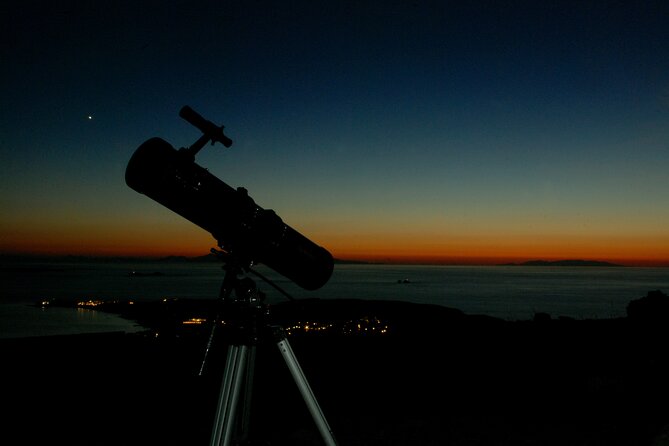
- Telescope viewing with the Aegean Astronomy Club: you see targets up close instead of just looking with your eyes
- Astronomy that asks bigger questions: mind-bending facts and cosmic mysteries, explained clearly
- Astrophotography tips during the session: you get techniques and go home with a personal night-sky souvenir
- A peaceful, dark location near water: conditions help, especially when the sky is clear
- A private group experience: only your group participates, so questions are actually welcome
Kifissia at Night, Telescopes, and the Calm That Makes It Work
Kifissia is one of those Athens neighborhoods where the night can feel surprisingly quiet, especially when you’re heading toward a dark viewing spot. The payoff is simple: when the sky is clear and the light pollution is lower, your brain can finally do what it does best, notice patterns.
This experience is built for real learning, not just pointing up and hoping you recognize a planet. You start with orientation, move into myth and astronomy context, then end with hands-on photography guidance so you can translate what you see into an image.
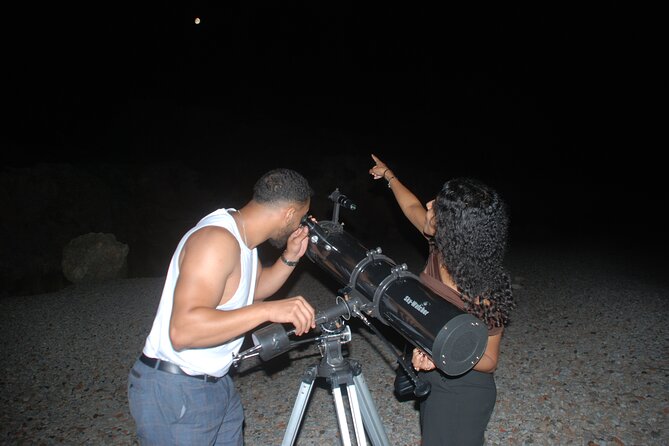
The guides use a telescope, from the Aegean Astronomy Club, and that matters. With a scope, you are not guessing. You’re watching something specific, in a way that makes the next explanation click fast.
Before you book, here is what else runs from Athens:
- Athens: Acropolis & up to 5 Archaeological Sites Combo Pass
★ 4.2 · 13,904 reviews - Athens: Acropolis, Parthenon & Acropolis Museum Guided Tour
★ 4.8 · 9,316 reviews - The Acropolis, Parthenon & Acropolis Museum Guided Tour
★ 4.7 · 8,493 reviews - Athens: Cape Sounion & Poseidon Temple Sunset Half-Day Trip
★ 4.8 · 8,241 reviews
Your 1.5-Hour Plan: What Happens Before the First Star Pops
The session runs about 1 hour 30 minutes, which is a sweet spot for an evening activity. Long enough to learn a few key ideas and actually use the telescope, short enough that you can stay comfortable without losing the magic to fatigue.
You’ll begin at the meeting point at Leof. Kifisias 182, Marousi 145 62, Greece. From there, the activity ends back at the same location. That matters for sanity on a night like this. You do not have to plan a whole second transfer, or worry about getting stuck far from transit after dark.
The tour also uses a mobile ticket, so you can keep it simple. If you’re arriving by taxi, just give yourself extra time. One of the strongest themes in the experience is the guide’s flexibility when timing gets messy, which is exactly what you want on a night tour.
Finally, keep an eye on weather. This experience requires good weather, and if it’s canceled due to poor conditions, you’ll be offered a different date or a full refund. That one line can change everything, so check the forecast and dress like you’ll be outside for a while.
Alsos Ktimatos Siggrou: Greek Myths as a Practical Constellation Guide
The first stop is Alsos Ktimatos Siggrou, and it’s an ideal kind of setting for stargazing: peaceful, darker than the city core, and suited for looking up instead of scanning crowds.
Here’s the smart part. The evening begins with observational astronomy, but it’s not a dry lecture. You get a quick history of astronomy and how ancient civilizations studied the sky, then you connect that to the constellations that are officially recognized today.
Then come the Greek myths. The guide ties constellations to stories from Greek mythology, so when you’re looking at a particular group of stars, you’re not staring at dots. You’re seeing characters in a familiar narrative framework.
You also learn how to orient yourself according to the stars and examine your cosmic neighborhood. That phrasing might sound poetic, but the practical goal is what matters: you leave with a method for finding things again, even if you can only get out to a dark spot once.
A helpful way to think about this section: it’s the mental warm-up. If you get it, the later “bigger questions” portion lands harder because you can follow what the sky is doing.
Philosophical Astronomy: Mind-Bending Facts That Stay Understandable
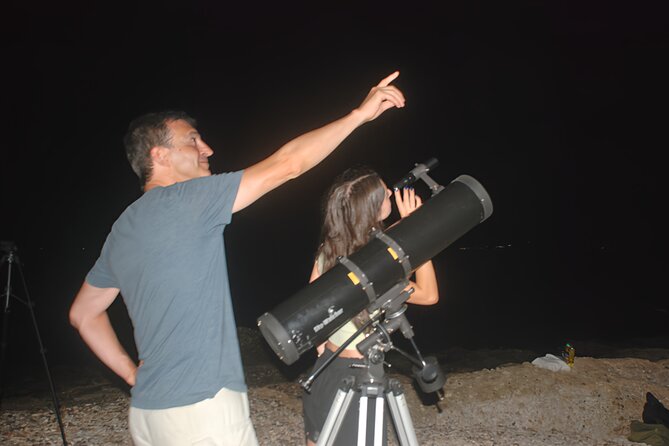
After you get oriented, the tour shifts into philosophical astronomy. This is where the experience feels like a conversation rather than a slideshow.
You’ll talk about some of the most mind-bending astronomy facts and questions, focusing on cosmic mysteries that spark curiosity. The best moments in this kind of session are when the guide answers your instincts. You wonder why the universe looks the way it does, and suddenly you get a logical explanation you can actually use.
The guide also helps you link ideas together: how stars behave, how we name and map what we see, and why looking through a telescope changes what you think you’re observing. When done well, that is the difference between watching a spectacle and understanding a system.
One subtle benefit is confidence. When you’re given a clear way to map the sky and a story to attach to it, you ask questions faster. The experience is described as patient with questions, which is important because most people have at least one, even if it’s something simple like where to look next or why something appears where it does.
If you like astronomy but want the human side, this section is the bridge. It gives you big ideas with a tone that doesn’t make you feel behind.
Telescope Time: Seeing the Moon and Saturn Rings Up Close
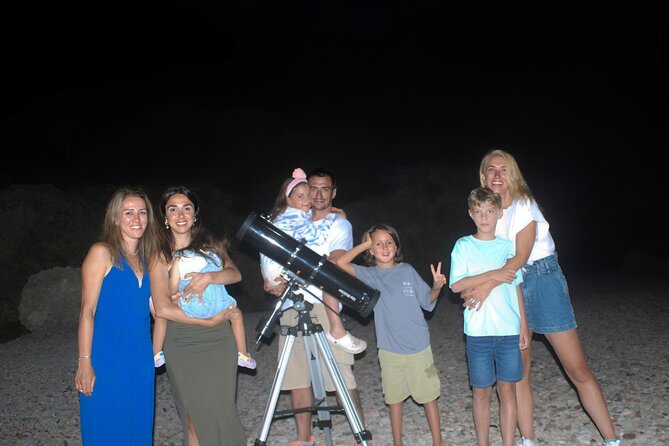
The astronomy part becomes real during telescope viewing. Using the AAC telescope brings you closer into space and time, which is not just a poetic line. It changes what you can observe in a short session.
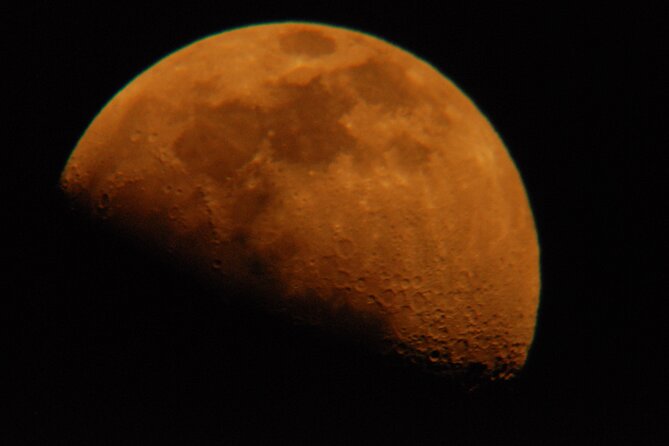
A highlight that comes up often is seeing the Moon through the telescope. That’s a great target for first-timers because it’s bright enough to make the difference between casual viewing and telescope viewing obvious. You can notice details you simply cannot see with your naked eyes in the same way.
Another standout is Saturn, including its rings. When conditions line up and the planet is observable, this is the kind of sight that resets your understanding of what a “planet” really looks like. It also makes the earlier myth-and-orientation section feel worth it, because now you can point to something specific and connect it to the explanation.
The vibe stays relaxed. This is not a “look for five seconds and move on” situation. The guide’s patience shows up when people need time to adjust their eyes, re-find a target, or ask a follow-up.
If you’re bringing someone who thinks stargazing is boring, Saturn rings are the argument. If you’re bringing someone who already loves astronomy, the telescope time is what makes it feel like more than a tourist activity.
Same hours, spent a different way in Athens:
- Acropolis: Premium Acropolis and Parthenon Guided Tour★ 4.8 · 5,208 reviews
- Athens: Mythology of Delphi, Museum and Arachova Guided Tour★ 4.7 · 5,102 reviews
- All Day Cruise -3 Islands to Agistri,Moni, Aegina with lunch and drinks included★ 5.0 · 4,958 reviews
- Athens, Piraeus, and Coastline: Blue Hop-On Hop-Off Bus★ 3.9 · 4,849 reviews
Astrophotography Tips: Turning a Starry Night into a Personal Souvenir
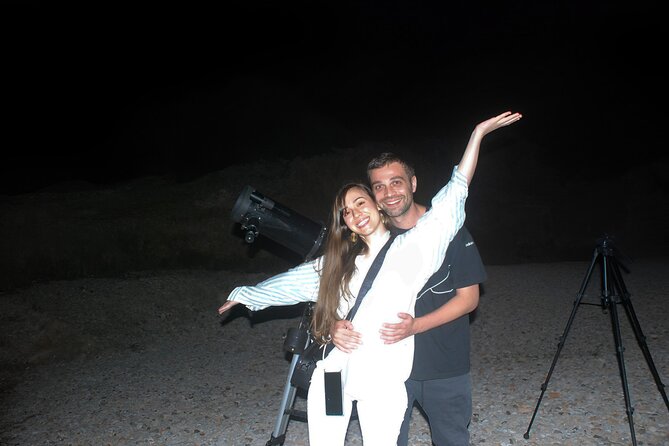
The last section focuses on photography and astrophotography. This is where you shift from watching to making something.
You’ll get tips and techniques for capturing images, and you’ll have a chance to apply what you learn during the session. The goal is not to make you a professional astrophotographer in 90 minutes. It’s to help you avoid the most common mistakes, like assuming your phone will magically do long-exposure magic without any guidance.
Think of this section as a practical starter kit:
- You learn what to try for night-sky images.
- You get direction on how to approach capturing the view you just saw.
- You come away with something personal, not just a blurry photo you regret.
The phrase “your unique personal souvenir” is exactly how this part feels. Even if your result is imperfect, you’ll understand why it worked or didn’t. That turns the experience into a real takeaway, which is what you want from a paid activity.
A nice bonus is that the telescope visuals do double duty. They’re stunning to watch, and they give you something clear to aim at when you’re trying to photograph. That reduces the guesswork that usually kills night photography.
Meeting Panos and Getting Answers Instead of Quick Notes
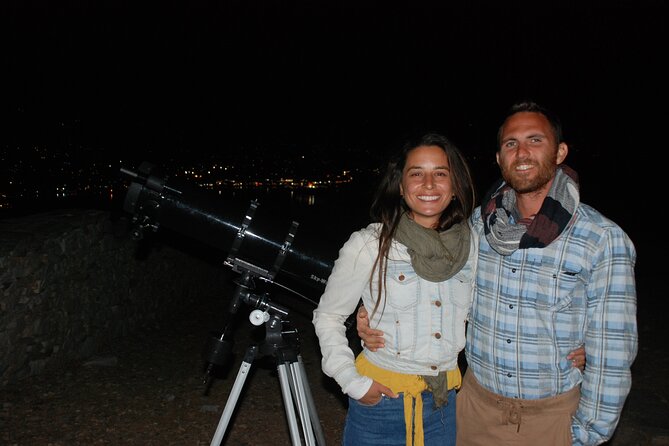
The guide credited in the experience is Panos, and his style is a big part of why people love this. The strongest repeated theme is enthusiasm, plus storytelling that makes astronomy feel human and local, not like it belongs to someone else’s classroom.
You get detailed explanations that combine Greek mythology, the origins of constellations, and mapping techniques for the sky. That combination is what makes the learning stick. A story gives you a hook, and a practical method gives you a way to repeat the experience later.
People also highlight his flexibility and patience, including when practical issues pop up like taxi timing. That matters more than you’d think. On a night activity, stress kills attention. A guide who stays calm helps you stay calm, and you end up enjoying the stars instead of managing logistics in the dark.
If you tend to ask questions, you’re in good shape here. The experience is paced in a way that allows questions to land and be answered, not brushed aside because the schedule must move on.
Price and Value: What $102.13 Buys in Real World Terms
At $102.13 per person, this is not the cheapest thing you can do in Athens. But it’s also not priced like a faceless “watch the sky” event.
What you’re paying for is the bundle:
- Guided orientation and astronomy storytelling
- Telescope viewing with the Aegean Astronomy Club
- Astrophotography tips during the session
- A private format, meaning only your group participates
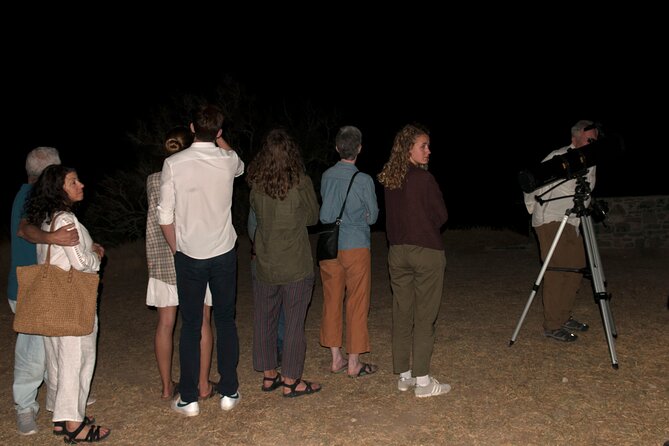
Private groups are a value upgrade for night activities. You get more room for questions and you’re less likely to feel rushed. For many people, that’s worth more than saving a few euros on a crowded public session.
Duration helps too. For 1.5 hours, the experience covers multiple modes: you learn, you look through a telescope, then you try photography. That’s a lot of value per hour, especially with telescope access included.
The admission ticket is listed as free, which is a small detail but a meaningful one if you were worried about adding on entrance costs.
Bottom line on value: if you want real guidance, a telescope highlight like Saturn, and practical photo tips, the price starts to make sense fast. If you just want to look at the sky with no instruction, you could probably do that on your own, but you would miss the learning and the “I saw it through a scope” moment that anchors the night.
Who Should Book This Stargazing Session, and Who Might Skip It
This experience fits best if you want your astronomy to come with context. You enjoy being able to explain what you’re seeing, not just point and guess.
It’s also a good match if you’re celebrating something. One of the described moments was turning the session into a birthday surprise, with Saturn found through the scope and rings visible for the recipient. Even if your celebration is simpler, a guided telescope night can feel special because it’s structured and memorable.
You’ll likely enjoy it if you:
- Want Greek mythology tied to constellations
- Like clear, story-based explanations
- Want photo tips so your images improve
- Prefer a private group format
A possible mismatch is if you’re strongly weather-dependent and hate waiting on conditions. Since the tour requires good weather, you’ll need to be comfortable with the idea of adjusting dates if skies aren’t right.
Also, it’s listed as “most travelers can participate,” and service animals are allowed. That said, it’s still an outdoor night activity, so dress for cool air and plan for low light.
Should You Book Kifissia Stargazing and Astrophotography?
I’d book it if your idea of a great Athens night is part learning, part wonder, and part taking something home that feels personal. The telescope targets like the Moon and Saturn rings give you real “wow” payoff, while the mythology and orientation give you a reason it all feels coherent instead of random.
Book it if you want a guide who does more than talk at you. Panos’ approach is described as enthusiastic, flexible, and patient with questions, which is exactly how a night session should feel.
Skip it only if you’re not willing to work with weather. This is a good-weather activity, not an indoor backup. If you have a tight schedule and zero flexibility, you might want a Plan B.
If you can be flexible and you’re curious about the sky, this is a strong value for Athens. It’s one of those rare evening activities where you leave knowing more than you started, and not just with photos, with understanding.
FAQ
Where is the meeting point for this stargazing experience?
You meet at Leof. Kifisias 182, Marousi 145 62, Greece. The activity ends back at the meeting point.
How long does the tour last?
The experience lasts about 1 hour 30 minutes.
Is this a private tour or shared activity?
This is a private tour or activity, meaning only your group participates.
What language is the tour offered in?
The experience is offered in English.
Do I need to print a ticket?
No. A mobile ticket is provided.
When will I receive confirmation after booking?
Confirmation is received within 48 hours of booking, subject to availability.
What happens if the weather is poor?
This experience requires good weather. If it is canceled due to poor weather, you will be offered a different date or a full refund.
Does the experience use telescopes?
Yes. The Aegean Astronomy Club uses a telescope during the session.
Is there an admission ticket cost?
The admission ticket is listed as free.
Are service animals allowed, and can most people participate?
Service animals are allowed. Most travelers can participate.