
Reviewed · PRIVATE
Glorious Sparta & Mystras Private Sightseeing
Sparta and Mystras feel worlds apart. This private door-to-door day puts you at the Corinth Canal, then into ancient Sparta’s archaeological remains, and finally up to UNESCO-listed Mystras for palace and monastery viewpoints. I like the simple setup, you skip self-driving, you get an air-conditioned car, and you do real sightseeing without wasting time on logistics. I also like the way Mystras still looks like a living fortress town, not just empty rocks. The one catch to plan for, the driver is not a licensed site guide, so you’ll pay entrance fees and possibly an extra licensed guide cost if you want deeper walking explanations.
This is the kind of day that works best when you want to cover major highlights without juggling rental cars, parking, or ticket windows. It runs about 11 hours, so you’ll want to dress for a long sit in the car followed by walking time at archaeological sites. If you’re hoping Sparta has a lot of standing monuments, keep expectations realistic, because what survives is more about ruins and layout than full reconstructions.
In This Review
- Quick hits before you go
- Why Sparta and Mystras in one private day makes sense
- Getting out of Athens: door-to-door logistics and real timing
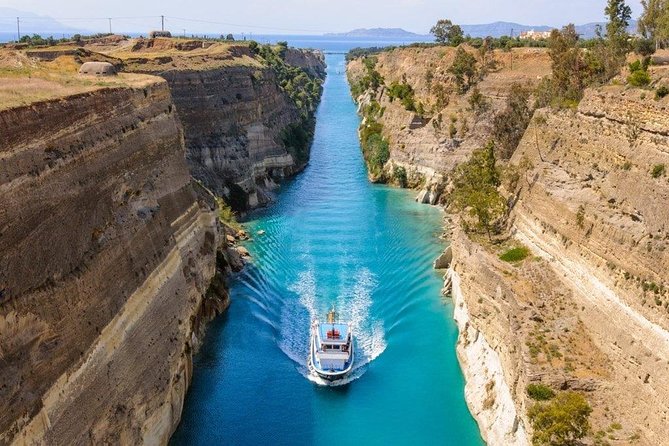
- Stop 1: Corinth Canal photo break with time to breathe
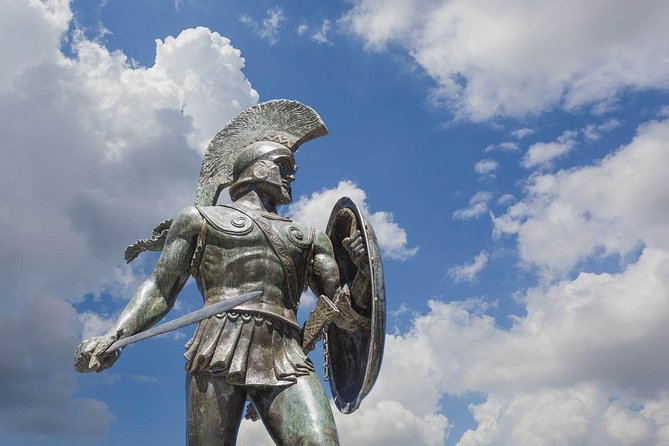
- Stop 2: The Archaeological Museum of Sparta and the Leonidas moment
- The “Sparta feels bigger in your head” reality check
- How Sparta’s agoge mindset shows up in your visit
- Stop 3: Mystras, from fortress gates to palace and monasteries
- A quick note on what to expect physically
- Lunch in the Mystras village: where to refuel during a long day
- Your driver, not a licensed guide: how the experience actually works
- Cost and value: $636.25 per group, up to 3 people
- What I’d do to make the day feel effortless
- Should you book Glorious Sparta and Mystras Private Sightseeing?
- FAQ
- How long is this tour?
- What stops are included?
- Is pickup from Athens included?
- Are entrance fees included?
- Will I have a licensed guide at the sites?
- Is lunch included?
- How many people are in the group?
Quick hits before you go
- Private, up to 3 people, door-to-door pickup from central Athens hotels, ports, or the airport
- Corinth Canal photo stop with about 15 minutes on site, and it’s listed as free
- Sparta stop focused on the museum and the acropolis area with time around the Leonidas statue
- Mystras UNESCO town walk from the Fortress Gate to the Main Gate including palace and monasteries
- Driver handles transport and guidance, but not licensed site narration
- Entrance fees and lunch are on you, which matters for total budget
Why Sparta and Mystras in one private day makes sense
If Athens is your base, this is one of the most efficient ways to hit two big Greek cultural chapters in a single stretch. You start with the canal that links seas, then shift to Sparta’s warrior myth and archaeology, and end in Mystras, a Byzantine stronghold perched on Mount Taygetos.
What I like about this pairing is how different they feel. Sparta gives you the hard-edged identity of a society built around military training, while Mystras shows how power evolved later, through fortified churches, palaces, and imperial memory tied to the last Byzantine emperor.
The pacing is also realistic for a day trip. You’re not trying to do everything at lightning speed. You get a focused museum and site window in Sparta, then a solid block of time in Mystras, plus a lunch break in the village.
A handful more Athens outings to compare
- Best of Athens Half Day Private Tour
★ 5.0 · 3,714 reviews - Athens Full Day Private Tour
★ 5.0 · 2,903 reviews - Athens Airport Private Arrival Transfer with Meet & Greet
★ 4.5 · 1,495 reviews - Athens Airport to Athens Hotels Private Arrival Transfer
★ 5.0 · 947 reviews
Getting out of Athens: door-to-door logistics and real timing
This tour is set up for you to be picked up and returned from central Athens, including hotels, ports, or the airport. That matters because travel time to the Peloponnese can be long, and parking, directions, and ticket timing are the stuff that can turn a good plan into a headache.
You’re on an air-conditioned vehicle with bottled water, which is a simple but practical win in Greece, especially if it’s warm when you leave Athens. The tour duration is listed at about 11 hours, so you’ll want to treat it as a full-day commitment, not a quick excursion.
Also note a key limit: the English-speaking driver is not a licensed tour guide, so they can help with history context and navigation, but they can’t lead official site tours inside attractions. That’s not a deal-breaker, but it does shape how you experience each site.
Stop 1: Corinth Canal photo break with time to breathe
First up is the Corinth Canal. You drive through the Peloponnese peninsula, then stop at the canal for about 15 minutes, with admission listed as free. This is the quick reset point in the day, the moment you get out, stretch, and take photos from above.
It’s also a nice change of scenery before the archaeological focus. The canal connects the Saronic Gulf with the Corinthian Gulf, and the tour frames it as a long-held dream that became real in 1893. Even if you only look for a few minutes, it helps you start the day with a sense of Greek geography, not just Greek dates.
Practical tip: since your time here is short, keep your phone charged and ready. Wear shoes you can stand in comfortably, because you’ll likely be moving around viewpoints to get your angle.
Stop 2: The Archaeological Museum of Sparta and the Leonidas moment

Next you head toward Sparta, the home of the Spartans and the legend of the 300. You get time at the Archaeological Museum of Sparta, listed as about 1 hour 30 minutes, and museum entrance is not included.
This stop matters because it gives you context, not just scenery. The tour description points out that there are cultural structures mainly built from the Romans in the 1st century AD, when they captured the city. That’s useful because it reminds you that Sparta wasn’t frozen in time, people kept building and reshaping even after the classic era.
What you’re aiming to see around this stop includes the archaeological area associated with Sparta’s acropolis. You’ll also be near the King Leonidas statue, the Spartan king linked with the fight against the Persian army at Thermopylae. There are olive trees and columns mentioned as evidence of the city’s past greatness, which is the kind of detail that helps you picture how the space once worked.
Then there’s the oil museum aspect. If you’re the type who likes everyday technology and local production, it’s a good contrast to pure battlefield myth.
The “Sparta feels bigger in your head” reality check
Here’s the possible drawback you should consider early: Sparta’s material remains can feel limited compared to how huge the story is. One of the strongest pieces of guidance I’d give you from past experiences is that Sparta often delivers more mood than monuments. You’ll see spirit, symbols, and layout, but not everything stands like a full preserved ancient city.
So go in expecting archaeology and atmosphere, not a complete Roman-and-Greek theme park version of Sparta.
Same hours, spent a different way in Athens:
- Athens: Acropolis & up to 5 Archaeological Sites Combo Pass★ 4.2 · 13,904 reviews
- Athens: Acropolis, Parthenon & Acropolis Museum Guided Tour★ 4.8 · 9,316 reviews
- The Acropolis, Parthenon & Acropolis Museum Guided Tour★ 4.7 · 8,493 reviews
- Athens: Cape Sounion & Poseidon Temple Sunset Half-Day Trip★ 4.8 · 8,241 reviews
How Sparta’s agoge mindset shows up in your visit
The tour doesn’t treat Sparta as just a name. It lays out the idea of the agoge system, the training route said to start from age seven and run into the early thirties, shaping people as soldiers. You can think of it as identity training, the society pushing one goal hard enough that it becomes culture.
On a practical level, that framing changes what you notice at the site. Instead of only thinking about Leonidas and Thermopylae, you start looking at Sparta as an entire system. The museum time and the acropolis area connection help you connect myth to physical places, even when the physical remains are incomplete.
There’s also value in the tour’s realism about Roman additions. If you’re used to the idea that ancient sites are purely from one era, this is a helpful reminder that conquest layers history.
If you enjoy structured storytelling in one day, this is where the tour earns its keep.
Stop 3: Mystras, from fortress gates to palace and monasteries
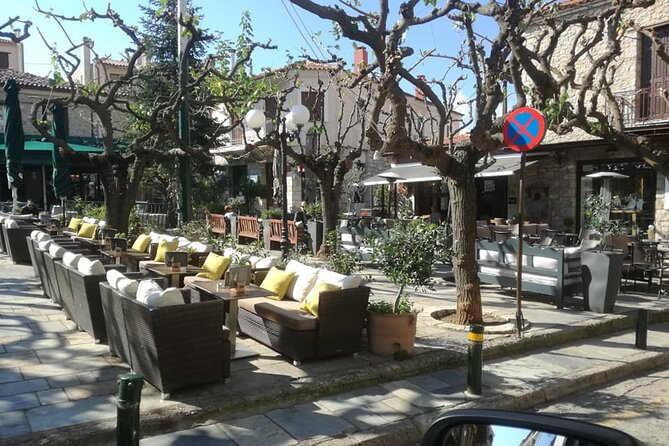
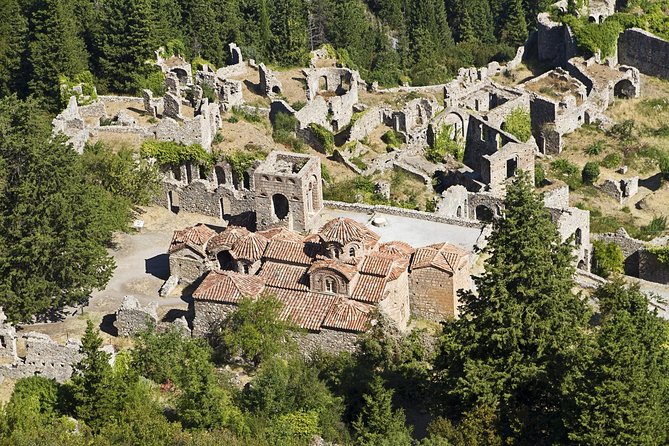
Now you shift to Mystras, the UNESCO-listed Byzantine town. This is where the day often turns from “nice sites” into “wow, this place still has presence.”
You’re told Mystras sits on Mount Taygetos near ancient Sparta, and that it served as the capital of the Byzantine Despotate of Morea during the 14th and 15th centuries. You also get an important personal tie to history: it’s the place where Constantinos Palaiologos, the last Byzantine emperor, lived.
The tour plans roughly 3 hours here, including visits that start at the Fortress Gate and move toward the Main Gate, with stops around the palace and monasteries. That flow matters because it mirrors how a fortress town is experienced. You’re not just hopping from one viewpoint to another. You’re moving through the idea of the town itself.
One of the most praised parts of Mystras is how well the ruins preserve details. Past visitors highlighted that wall paintings can still show color in ways that feel surprisingly fresh. That’s the kind of thing that makes you slow down, because you start seeing the town as art and architecture, not only as collapsed stone.
A quick note on what to expect physically
Mystras is described as a fortified town on a mountain. That strongly suggests uneven walking and some uphill sections, even if the tour doesn’t spell out step counts. Wear shoes that handle stone and slopes, and plan your pace. In a long day, Mystras is the segment where you’ll feel it most.
Lunch in the Mystras village: where to refuel during a long day
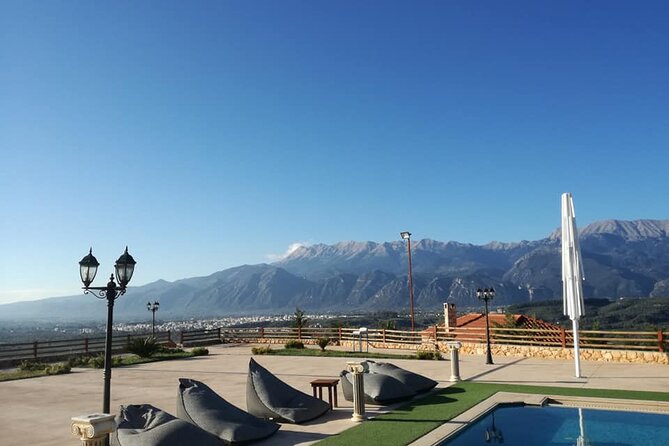
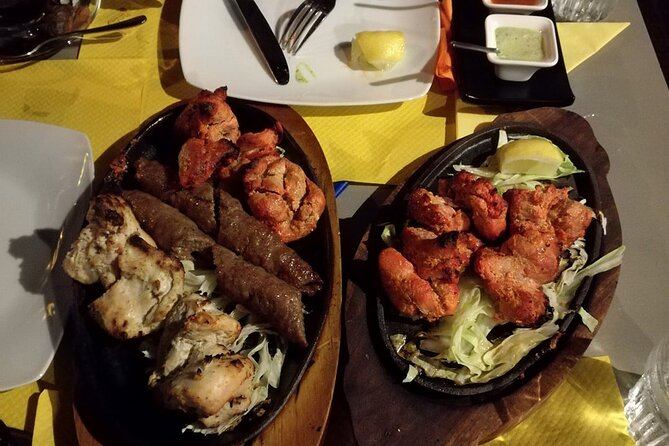
You’ll have lunch when you feel hungry, at a traditional tavern in the small village of Mystras. The tour can guide you there, but the meal cost is not included.
This lunch stop is strategically placed. You need real food and a reset before the final return drive. It’s also one of the small ways the day stays human, not only history-and-transport.
If you’re choosing what to order, keep it simple. Greece does best when you pick what you’re in the mood for, then move on. You’ll have plenty of time later to think about the buildings, so use lunch to recover energy.
Your driver, not a licensed guide: how the experience actually works

This is worth spelling out because it affects value and expectations.
You have an English speaking tour driver who is well versed in Greek history and culture and who can talk during driving and transfers. But they are not licensed to lead site tours. That means inside museums and archaeological areas, you won’t get the same fully licensed guiding that comes with official guides.
If you want more in-depth narration at a specific stop, the option is included only upon request, and it comes with an extra charge for a licensed tour guide. This is a smart option if you care a lot about what you’re seeing and want expert commentary while you walk.
If you’re the type who’s happy reading a few signs, taking photos, and using your driver’s context to connect the dots, you can still get a strong day. If you want a heavily guided walking experience at every stop, budget for possible extra guidance.
Cost and value: $636.25 per group, up to 3 people
The price is listed as $636.25 per group for up to 3 people. That structure is often the point of a private day trip like this. It can work out better than you’d think if you’re traveling as a small party and you’d otherwise pay for multiple one-way transports, plus the hassle of self-driving.
The cost is not the only factor, though. Entrance fees are not included, and lunch is not included. Also, if you request a licensed guide for site tours, that’s extra. Those add-ons can move the total significantly, depending on what you choose.
So here’s how I think about value:
- You’re paying for private, door-to-door transport, air-conditioning, and smooth timing across three major stops.
- You’re paying for your day to feel organized, not improvised.
- You’re paying to avoid the stress of driving in Greece for a long-distance circuit.
If you’re traveling solo or as a pair, this private price might feel steep compared with group tours. If you’re a trio, it often feels like a fair trade for comfort and time.
What I’d do to make the day feel effortless
You can’t control drive time, but you can control your comfort and your expectations.
First, treat this as a long day. Start with a calm morning. Eat early in Athens if you tend to get hungry before pickup time. You’ll have a long car ride before Sparta and then a big block at Mystras.
Second, plan your footwear for Mystras. Expect uneven ground and steep areas because it’s a fortified mountaintop town. If your shoes are borderline in your everyday life, this is not the day to test them.
Third, bring patience for sites where little remains. Sparta can feel like it’s about symbols and archaeological layout more than grand standing ruins. That doesn’t make it less meaningful. It just changes how you experience it.
Finally, if you’re a history nerd or a photo person, don’t be afraid to ask the driver questions in the car. The driver can help you connect what you’re seeing, and past experiences show that guides can tailor the route to add value if there’s time and the plan can accommodate it.
Should you book Glorious Sparta and Mystras Private Sightseeing?
Book it if you want a single, well-managed day that covers Sparta and Mystras with private transportation from Athens. This tour is a good fit when you hate self-driving stress, you want a driver who can explain the big picture, and you’re happy to add entrance fees and lunch to your budget.
I’d think twice if you’re the kind of traveler who wants fully licensed, deep walking tours at every site without extra costs. Since the driver is not allowed to lead site tours, you’ll either rely on signs and general context or pay for an optional licensed guide.
One more deciding factor: Mystras tends to be the star. If you love Byzantine architecture and churches, and you like the idea of walking through a fortified town from gate to gate, this is the right day trip for you.
FAQ
How long is this tour?
It runs for about 11 hours.
What stops are included?
The itinerary includes the Corinth Canal, the Archaeological Museum of Sparta, an archaeological site area connected with Sparta’s acropolis and the Leonidas statue, and Mystras, including palace and monasteries.
Is pickup from Athens included?
Yes. Private 2-way transfers are offered from central Athens hotels, ports, or the airport.
Are entrance fees included?
No. Entrance fees are not included for the museum and sites. The Corinth Canal stop is listed as free.
Will I have a licensed guide at the sites?
The driver is not a licensed guide and cannot lead site tours. A licensed tour guide is available only upon request and for an extra charge.
Is lunch included?
Lunch is not included, but the tour guides you to a traditional tavern in the small village of Mystras.
How many people are in the group?
It’s a private tour, only your group will participate, with a maximum of up to 3 people.
Latest from under the Acropolis






Private, compared.


Athens Airport Private Arrival Transfer with Meet & Greet
Read our review →
Athens Airport to Athens Hotels Private Arrival Transfer
Read our review →
Private Biblical Tour Ancient Corinth & Isthmus Canal from Athens
Read our review →
4 Hours – Athens & Acropolis Highlights Private Tour
Read our review →