
Reviewed · METEORA MONASTERY DAY TRIPS
Full Day Tour from Athens to Meteora by Train & Bus
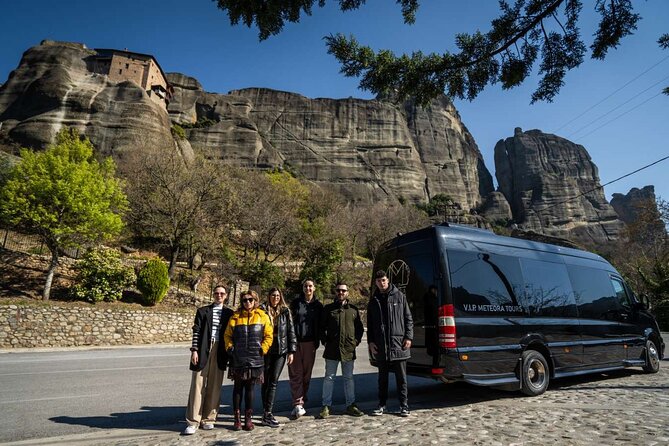
Meteora looks impossible from a train seat. I like the small group of 10, and I like that you see all six monasteries, with time to explore three of them up close. The day is long, but it is packed with viewpoints, a real local guide, and a route that feels like you are moving with the rhythm of northern Greece, not racing ahead of it.
The one thing to plan for is the logistics change: a train-to-bus transfer may happen at Paleofarsalos if the local rail system is damaged. Also, monastery entrance fees are not included, so you’ll want a little extra cash or card ready, especially for the three sites you spend time inside.
In This Review
- Key takeaways
- From Athens to Kalambaka by Train and Bus
- Kalabaka and Kastraki: The Towns at the Foot of Meteora
- Great Meteoron Monastery: Where the Story Starts
- Varlaam Monastery and the Pulley System Behind the Cliffs
- Iera Moni Agiou Stefanou: WWII Aftermath and a Rebuilt Convent
- Getting the Value for $161: What’s Included and What Costs Extra
- Timing, Weather, and What to Do With the Long Day
- Should You Book This Athens to Meteora Train and Bus Day Trip?
- FAQ
- What is the duration and start time of the tour?
- How do the train and bus parts work, especially with rail damage?
- How many monasteries will I see and how many can I explore inside?
- Are monastery entrance fees included?
- What is included in the price?
- Are meals and snacks provided?
Key takeaways
- Small group of up to 10 means you get more attention and less waiting around.
- See all six monasteries, with time to explore three inside.
- Train plus a possible bus segment (at Paleofarsalos) uses the same tickets.
- Photo stops at panoramic spots help you time the best views.
- Bottled water and onboard WiFi keep the long day from feeling miserable.
- Monastery entrance fees are separate, so budget for them.
From Athens to Kalambaka by Train and Bus
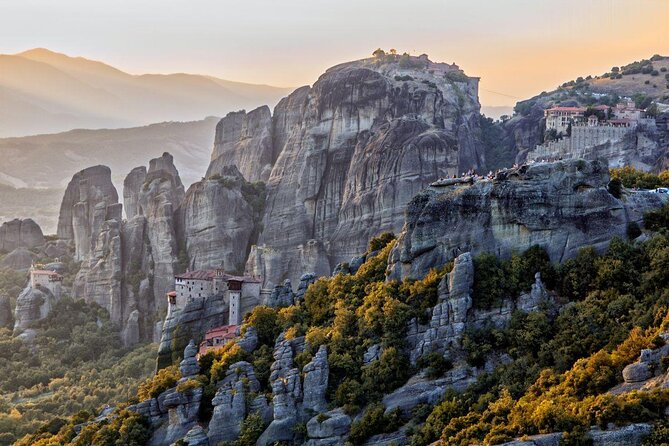
This tour starts in Athens at St. Larissis, with an early departure at 8:00 am. If you like simple plans, you will appreciate the structure: you board the train for Kalambaka, then do the monastery visits as a group, then return by train the same way. It is basically one day, two big transport blocks, and a lot of rocks and churches in the middle.
The train ride is about almost 5 hours through green valleys. Even if you’ve seen Meteora photos before, the first real sight hits differently when you are still in motion and your brain is trying to understand scale. You also get a feel for how the region changes as you get closer, and when the giant rock formations finally show up, you’ll know why people make a pilgrimage out of this place.
Here’s the practical wrinkle. Due to damage to the local railway system, you may have to get off about halfway at Paleofarsalos Train Station. From there, you continue by bus to Meteora, using the same tickets you started with. On the return trip, the process reverses. The silver lining is that you do not need extra tickets or a new booking to deal with it, but you should expect some schedule disruption and accept that your day is a little more flexible than usual.
More journeys up to the Meteora rocks:
- Athens: Meteora Monasteries Day Trip with Caves and Lunch
★ 4.7 · 4,670 reviews - Athens to Meteora: Monasteries, Caves & Seaside Stopovers
★ 4.7 · 2,958 reviews - Athens: Full-Day Meteora Tour with Local Guide & Greek Lunch
★ 4.8 · 2,101 reviews - Athens: Meteora Monasteries, Caves & Coastal Stopovers with Lunch
★ 4.5 · 1,432 reviews
Kalabaka and Kastraki: The Towns at the Foot of Meteora
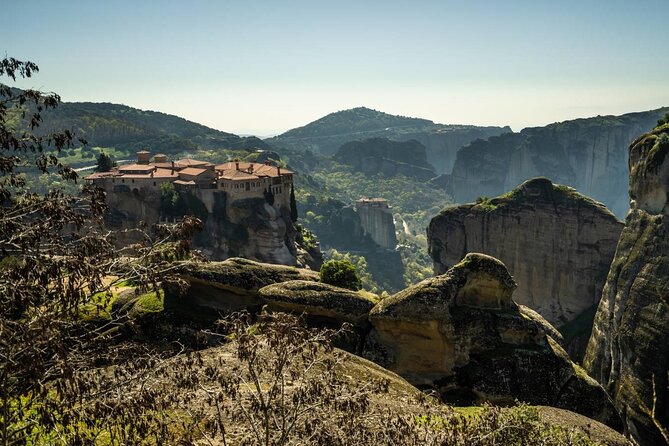
Once you reach Kalambaka, you get that classic Meteora moment, the rocks rising above the town like they were placed there on purpose. Before heading fully into monasteries, you get a quick look at Kalabaka city. It’s not meant to turn this into a city tour, but it helps you orient yourself. You’ll understand where you are, where the viewpoints sit, and how the monasteries relate to the villages below.
Then you visit Kastraki, a village built at the roots of the giant rocks. The idea here is smart: instead of only seeing monasteries from the top, you also see what life looked like underneath them. You’ll get a story about village traditions tied to the area, and you’ll notice how the village layout supports day-to-day movement around the rock formations. Even with just a short stop, Kastraki gives context for why monks would choose this place, and why the area became a magnet for faith and survival skills.
If you’re the type who likes to understand what you are looking at, these two quick town moments help. If you prefer pure sightseeing and minimal stops, just know you’ll trade a bit of time for better understanding later at the monasteries.
Great Meteoron Monastery: Where the Story Starts
Great Meteoron is the first monastery stop with real time inside, about 1 hour. This is the spot people talk about for a reason. The monastic complex has an almost 700-year history, and it is tied to the earliest organized community in the Meteora area.
What I find especially helpful during this visit is how the guide frames the timeline. Before Blessed Athanasios of Mt. Athos started the monastic community associated with that tradition, monks at Meteora lived more as hermits or ascetics. In other words, this was not always a full-on monastery scene. It began as individual spiritual experiments in a place that was hard to reach and easy to feel alone in.
You’ll want to wear comfortable shoes here. Even if the route is planned, you are still walking on uneven outdoor surfaces, and the view is part of the payoff. Plan to take your time, because the best moments come when you stop trying to rush through and instead let yourself look at how the buildings sit against the rock.
Entrance for Great Meteoron is not included, so keep that in mind. You’ll still get the overall experience and the guide’s explanations without needing to pay for a separate guided add-on, but you will need to cover the entrance fee if you want to go inside.
Varlaam Monastery and the Pulley System Behind the Cliffs
After Great Meteoron, you head to Varlaam for about 50 minutes. This is a great stop if you like the engineering side of history, because Varlaam is closely linked to the pulley system used to bring materials up to the monastery. It is described as the first monastery to use this kind of approach, which made the climb and supply work safer and more practical for monks stationed on top of the rock.
This is also where you’ll likely appreciate the museum and the chance to admire the original pulley system. Seeing the mechanism helps your brain accept the scale of the place. Meteora can feel like a fantasy photo until you understand the logistics of living there. Varlaam turns that into something tangible.
You’ll also hear about frescoes by Frago Catellano. Even if you are not a hardcore art person, the fresco mention matters because it shows that life up here was not just about hiding from the world. It was also about culture, craftsmanship, and religious expression.
Varlaam has an entrance fee not included, so this is another place where you’ll want to be ready to pay onsite. Also, because the stop is timed, you’ll need to make choices quickly. If you love museums, focus your time there. If you prefer views and photography, spend a little less time reading and a little more time looking out from the building edges.
Iera Moni Agiou Stefanou: WWII Aftermath and a Rebuilt Convent
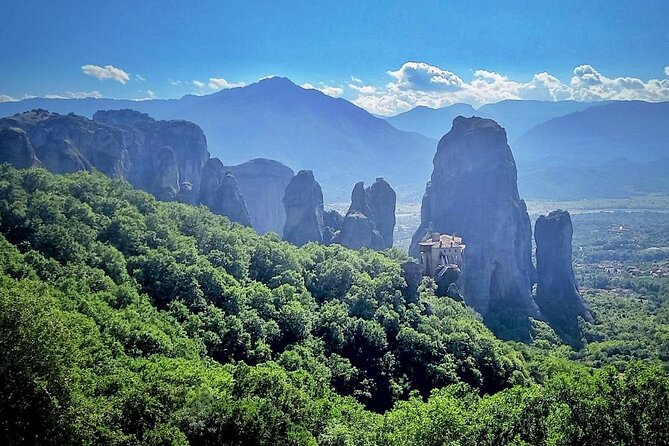
The final monastery stop on your main route is Iera Moni Agiou Stefanou, with about 20 minutes. This shorter window can feel quick, but it works because the story is sharp and the emotional weight is heavy.
Here’s the timeline you should keep in mind. The monastery was founded in the 14th century by monk Antonios. During World War II, it was bombed, and it was depopulated. From 1941 onward, the monastery sat empty. Then in 1961, nuns asked for permission to reconstruct the broken section and organize the first convent of the area.
That sequence changes how you interpret Meteora. You start to see it not just as a spectacular spiritual site, but also as a place people keep trying to heal and rebuild after violence and disruption. With only 20 minutes, the best approach is to focus on what you can read or learn fast, then spend the rest just absorbing the setting.
Entrance is not included here either, so this is another fee to budget for. If you are trying to control costs, it may help to know you still get the guided experience and the overall tour structure even if you decide to prioritize time at the three main inside visits.
A handful more Athens outings to compare
- From Athens: Meteora Caves & Monasteries Day Trip by Train★ 4.8 · 468 reviews
- Corinth, Cave of Lakes, Odontotos Railway Private Tour with Greek Lunch Included★ 5.0 · 141 reviews
- Mount Olympus And Dion Full-Day Tour From Athens By Train★ 4.5 · 59 reviews
- From Athens: Meteora Train Trip with Overnight Stay★ 4.8 · 40 reviews
Getting the Value for $161: What’s Included and What Costs Extra
At about $161.05 per person, this tour is priced like a full-day guided rail-and-road day trip. The value comes from bundling the parts that are annoying to DIY: round-trip train tickets between Athens and Kalambaka, a local English-speaking tour leader, air-conditioned vehicle support on the route, and practical add-ons like bottled water and onboard WiFi. You also get planned photo stops at panoramic spots, which matters because timing is everything around Meteora.
The extra costs you should plan for are straightforward. Meals and snacks are not included. Also, monastery entrance fees for Great Meteoron, Varlaam, and Iera Moni Agiou Stefanou are not included, and there is no included guided tour inside the monasteries. Translation: you will still have a guide for the overall experience, but you are paying entrance fees separately to go inside the sites.
To make this day feel worth the money, treat it like a guided sampler with depth. You see all six monasteries, which gives you the full Meteora picture. Then you explore three of them up close, which is enough to understand why the place is famous without turning your day into a rushed checklist.
One more value point: small group size. Up to 10 people means your guide can manage pacing and keep people together at viewpoints. For a day that’s roughly 14 hours, that reduces stress more than you might expect.
Timing, Weather, and What to Do With the Long Day
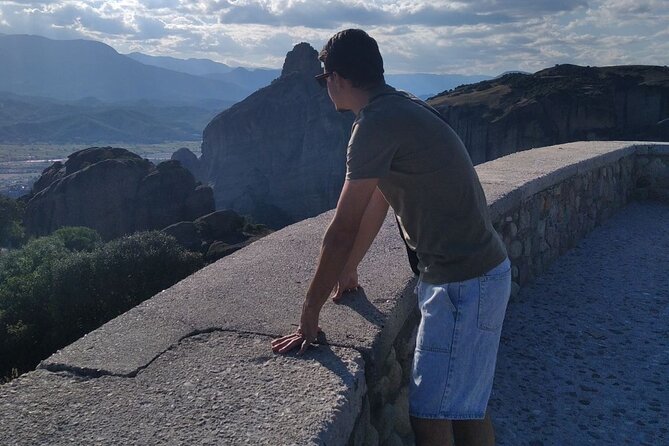
This is a long day, about 14 hours total. You leave at 8:00 am, and you return to the starting meeting point in Athens at the end of the day. That long duration is why the inclusion list matters. Bottled water and WiFi help, and the air-conditioned vehicle support keeps the transitions less painful.
Also, this tour requires good weather. If conditions are poor, the operator will offer a different date or a full refund. You do not have to stress about getting stuck paying for a ruined plan, but you should still choose days when Athens is not also gloomy. Meteora sits high, so low visibility or stormy conditions can limit what you can see well.
One practical detail for your return: after you are back in Kalambaka, you should be at the railway station about 15 minutes early to board. Build in buffer time for stairs, lines, and last-minute bathroom stops.
Dress like you will be outside for parts of the day. Even with planned routes and vehicle time, you’ll want layers. Rock sites can be cooler than you expect, and wind shows up fast.
Should You Book This Athens to Meteora Train and Bus Day Trip?
I’d book this if you want Meteora in one day without wrestling with transfers and timing yourself. The small group size, the local English-speaking tour leader, and the combination of seeing all six monasteries plus exploring three inside makes it a smart value. You get photo stops that help you actually capture the views, not just pass by them.
I would skip or reconsider if you are sensitive to schedule changes. The Paleofarsalos train-to-bus transfer, plus the general good-weather requirement, means the day can be less rigid than a perfectly smooth rail journey. And if you hate paying extra fees onsite, the monastery entrance fees are an added line item you should factor into your budget.
If you want a day that feels guided, well paced, and focused on the core Meteora experience, this is a solid choice.
FAQ
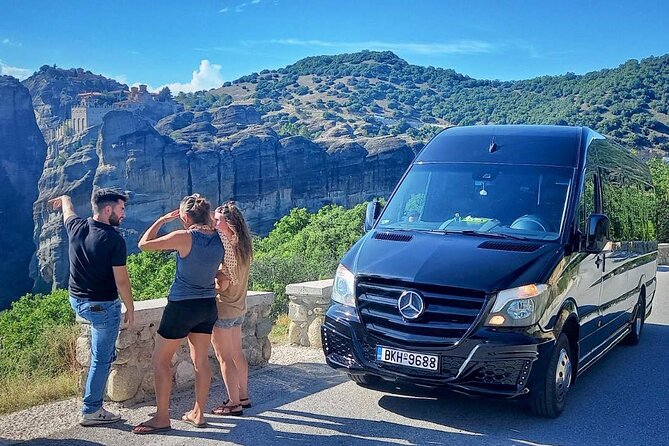
What is the duration and start time of the tour?
The tour is approximately 14 hours and starts at 8:00 am, beginning at St. Larissis in Athens. It ends back at the same meeting point.
How do the train and bus parts work, especially with rail damage?
You take the train from Athens to Kalambaka, but if the local railway system is damaged, you may need to disembark at Paleofarsalos Train Station and continue by bus to Meteora. The same tickets are used, and the process applies in reverse on the way back.
How many monasteries will I see and how many can I explore inside?
You will have time to see all 6 monasteries and explore 3 of them. The time spent inside the monasteries includes Great Meteoron, Varlaam, and Iera Moni Agiou Stefanou.
Are monastery entrance fees included?
No. Entrance fees are not included for Great Meteoron, Varlaam, and Iera Moni Agiou Stefanou.
What is included in the price?
The tour includes bottled water, round-trip train tickets (Athens to Kalambaka and back), a local English-speaking tour leader, air-conditioned vehicle transport, WiFi on board, and photo stops at panoramic spots. The group size is limited to a maximum of 10 people.
Are meals and snacks provided?
No. Meals, snacks, and soft drinks are not included.
Latest from under the Acropolis




Meteora Monastery Day Trips, compared.
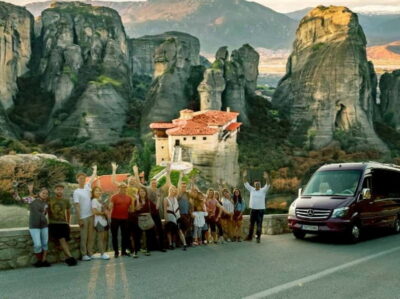
Meteora Monasteries Day Trip with Caves and Lunch
Read our review →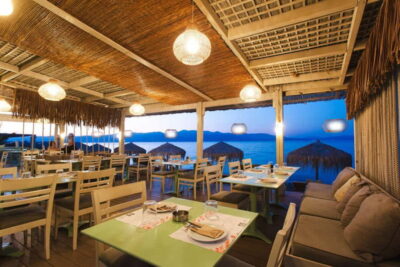
Athens to Meteora: Monasteries, Caves & Seaside Stopovers
Read our review →
Full-Day Meteora Tour with Local Guide & Greek Lunch
Read our review →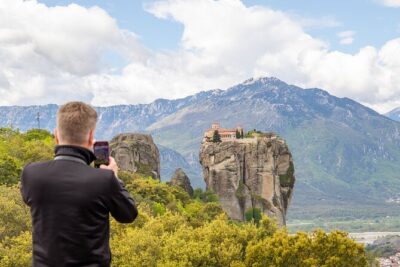
Meteora Monasteries, Caves & Coastal Stopovers with Lunch
Read our review →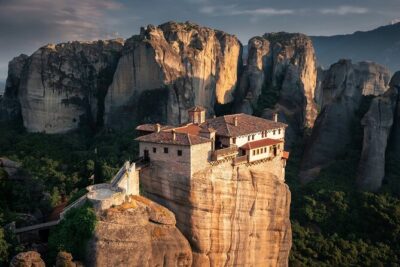
Meteora Monasteries & Caves DayTrip from Athens with Greek Lunch
Read our review →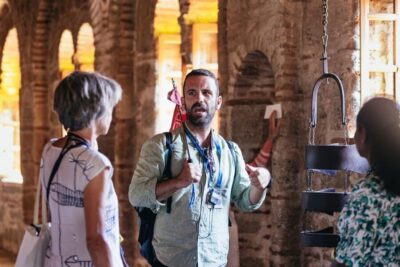
4-Day Classical Greece Tour: Epidaurus, Mycenae, Olympia, Delphi, Meteora
Read our review →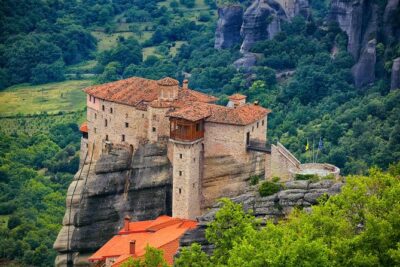
Meteora Monasteries, Hermit Caves Tour with Pickup
Read our review →Browse the lists this tour appears in