
Reviewed · METEORA MONASTERY DAY TRIPS
Full day private tour to Meteora Monasteries
Meteora and Thermopylae in one long day. This private trip mixes monasteries perched 600 meters above the plains with a stop at the legendary pass of Thermopylae. I like the way it’s set up for just your group, so you can move at a realistic pace, and I also like the Kalambaka break for food before the second half of the day. The main thing to consider is that entrance fees are not included, and the schedule assumes you are comfortable walking and climbing stairs on the monastery sites.
You’ll start with an early pick up from your Athens hotel and spend the day on the road through central Greece. The driver handles the big logistics, while the stops are built around the most famous Meteora monasteries and a couple of quick but meaningful history moments. One more consideration: the tour details indicate a strong physical fitness level and a formal dress code, so plan clothing that works for sacred interiors and uneven steps.
In This Review
- Key Highlights You Should Know Before You Go
- Why This Private Meteora and Thermopylae Day Makes Sense
- Pickup at 7:00 am and the Long, Scenic Road North
- Thessaly First, Then Kastraki: The Real Meteora Base Town Feel
- Meteora Monasteries: The 600-Meter World of Eastern Orthodox Spiritual Life
- The realistic monastery plan: expect two, maybe three
- Great Meteoron: the oldest start point
- St. Stephen: layered centuries, strong monastery storytelling
- Varlaam: famous for its churches and later renovations
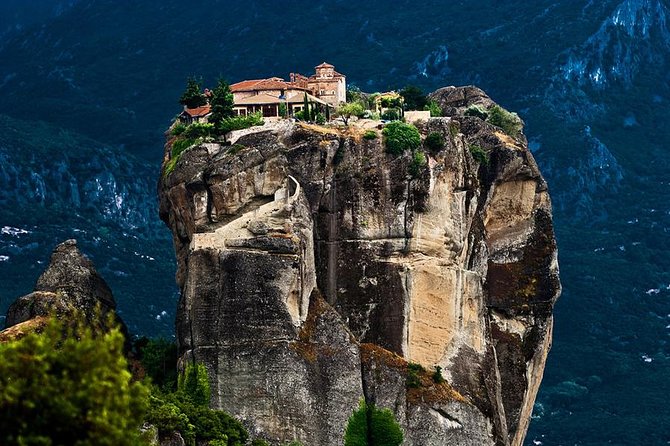
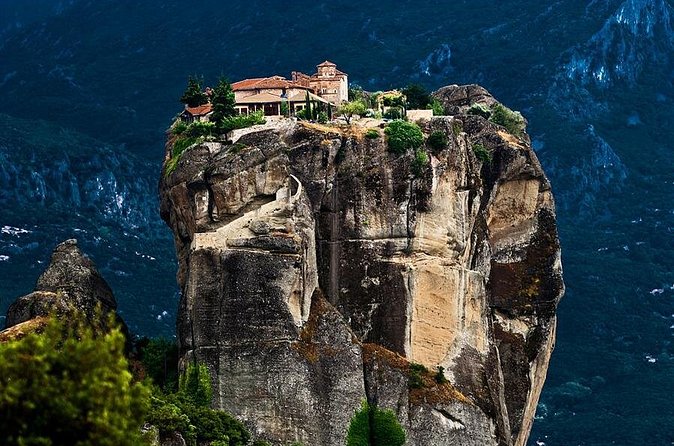
- Holy Trinity: a smaller cruciform church and painted traditions
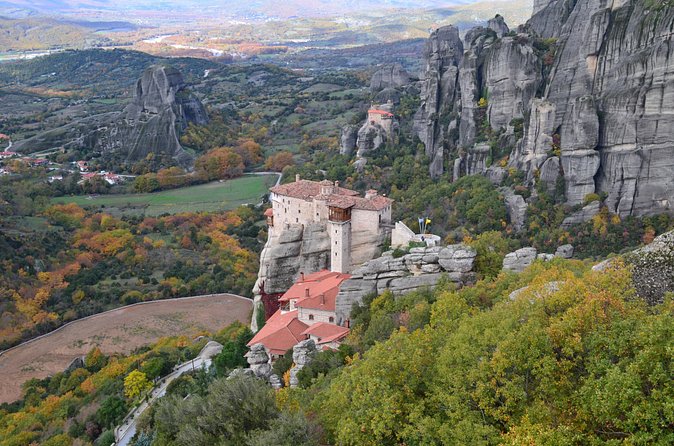
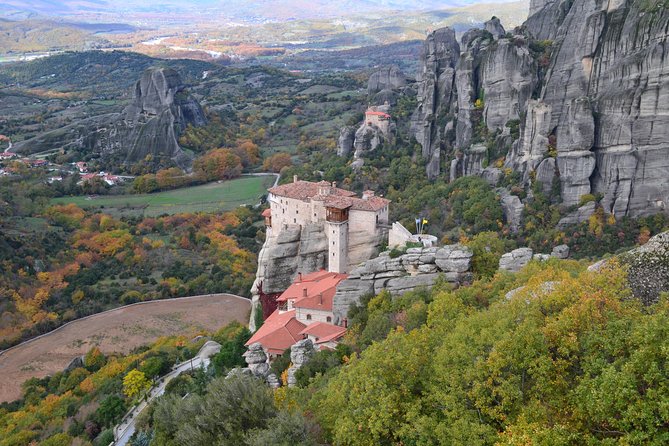
- Rousanou: the four-story feel and the church of the Transfiguration
- St. Nicholaos Anapafsas: close to Kastraki
- Kalambaka Break and Lunch Timing: Plan Your Energy
- Thermopylae and Leonidas: Short Stop, Big Meaning
- How the Central Greece Portion Adds Context Without Overloading You
- Price and Value: What You’re Really Paying For
- Practical Tips That Keep Meteora Comfortable
- Should You Book This Private Tour?
- FAQ
- What time does the tour start?
- Is hotel pickup in Athens included?
- How big is the private group?
- What language is the tour offered in?
- Are entrance fees included?
- Is lunch included in Kalambaka?
- How many Meteora monasteries will we visit?
- Is bottled water included?
- Can I cancel for free?
Key Highlights You Should Know Before You Go
- Private group up to 3 keeps the day flexible and less rushed
- Meteora monasteries with a realistic plan to see two, and possibly three, depending on closures
- Kalambaka time for lunch gives you a breather in the Meteora base town
- Thermopylae plus Leonidas monument adds famous ancient context without turning this into a history lecture
- Pickup and drop-off from your hotel in Athens saves you the hassle of getting to the highway on your own
- English-speaking driver with strong cultural context, plus bottled water in the vehicle
Why This Private Meteora and Thermopylae Day Makes Sense
Meteora is a full-day magnet. Thermopylae is another. Put them together and you get a single, memorable itinerary that spans myth, religion, and real ancient warfare, all without you having to coordinate transport between regions.
What makes this tour work is the pacing model. Meteora is the star, but it’s not treated like a quick photo stop. You get time around Kastraki and the rocks before you head into monasteries. Then, you pivot to Thermopylae for a short, focused hit of ancient Greece.
For the price, think group-value instead of per-ticket value. At $822.69 per group up to 3 people, your cost per person can land much lower than a solo booking. You’re paying for convenience, direct hotel pickup, a private vehicle, and a day that covers a lot of ground in one go.
More journeys up to the Meteora rocks:
- Athens: Meteora Monasteries Day Trip with Caves and Lunch
★ 4.7 · 4,670 reviews - Athens to Meteora: Monasteries, Caves & Seaside Stopovers
★ 4.7 · 2,958 reviews - Athens: Full-Day Meteora Tour with Local Guide & Greek Lunch
★ 4.8 · 2,101 reviews - Athens: Meteora Monasteries, Caves & Coastal Stopovers with Lunch
★ 4.5 · 1,432 reviews
Pickup at 7:00 am and the Long, Scenic Road North
Start time is 7:00 am, with driver pickup at the main entrance of your hotel. It’s the right kind of early for a 12-hour day, because it gives you a head start on traffic and daylight around Meteora.
You’ll travel through central Greece and into Thessaly. The tour uses this drive time for context, not just transit. Thessaly is described as a region tied to Homeric references like Aeolia and the story world around Achilles. You don’t need to be a mythology expert to enjoy this, but you will probably appreciate the way the driver frames what you see later, especially when you reach the monastery region.
One practical note: the day is long. This is not the tour for a late breakfast and a leisurely morning. If you’re even slightly prone to getting stiff on long rides, pack a small travel pillow or just stretch at quick stops when your driver offers them.
Thessaly First, Then Kastraki: The Real Meteora Base Town Feel
Your first major stop is in Thessaly, with plenty of time allocated to the region before the Meteora focus. Thessaly is shown as a mix of mountains, rivers, and the kind of varied scenery that makes this part of Greece feel bigger than it looks on a map. It also ties into ancient Greece, including references to Odysseus and Aeolus, which helps Meteora feel less random once you arrive.
Then you move into the Meteora area through Kastraki. This village is built amphitheatrically among towering cliffs, which means the buildings and paths seem to “hug” the rock formations rather than sit separately from them. Kastraki also has a strong climber presence, because the rock faces attract visitors from around the world. That matters because it changes the vibe from purely religious to outdoor-meets-spiritual.
I like this sequence because it softens Meteora’s intensity. You see the rock “character” first, then you go into monasteries. It makes the views feel earned.
Meteora Monasteries: The 600-Meter World of Eastern Orthodox Spiritual Life
Meteora is explained in the simplest, strongest way: monasteries built on enormous natural pillars and rounded boulders, forming one of the most important Eastern Orthodox monastic complexes in Greece, second in importance only to Mount Athos. The cliffs rise more than 600 meters from the plains, so even if you know the photos, the scale hits differently in person.
It’s also UNESCO World Heritage, and the tour notes the Meteora-Antichassia area is part of the Natura 2000 network. That detail is useful because it signals this is not just a human-made story. There are rare birds and flowers connected to the region’s protected environment.
The realistic monastery plan: expect two, maybe three
Here’s the key scheduling reality. There are six monasteries on Meteora. Every day, one or two can be closed. On this tour, you should expect to visit two monasteries, and if you are fast and fit, possibly a third.
The itinerary lists several big-name monasteries, so you’ll recognize the names as you plan, but closures and day-of logistics determine the final mix. The most consistently central stop is Great Meteoron, and then you typically add one other monastery from the listed options.
A handful more Athens outings to compare
- Best of Athens Half Day Private Tour★ 5.0 · 3,714 reviews
- Athens Full Day Private Tour★ 5.0 · 2,903 reviews
- Athens Airport Private Arrival Transfer with Meet & Greet★ 4.5 · 1,495 reviews
- Athens Airport to Athens Hotels Private Arrival Transfer★ 5.0 · 947 reviews
Great Meteoron: the oldest start point
Great Meteoron, also called the Holy Monastery of the Transfiguration of Christ, is the oldest and largest of the Meteora monasteries. It’s also described as the starting point of organized life at Meteora. Founded shortly before the middle of the 14th century by Saint Athanasios the Meteorite, it sits in an imposing commanding position.
This is the one I’d treat as your “anchor stop,” even if you end up visiting another monastery that feels more personal. Great Meteoron’s scale and role in the monastic timeline makes it a strong foundation for understanding the whole complex.
St. Stephen: layered centuries, strong monastery storytelling
St. Stephen was first inhabited by monks in the late 12th century, and its building assembly is described as completing in the 15th and 16th centuries. You get founder stories tied to Antonios Kantakouzenos and other monastic figures, including Philotheos and later developments like a new church dedicated to Saint Charalambos.
If you like monasteries for more than their views, this is where the tour’s context helps. You can look at the structures and feel why people kept returning, rebuilding, and expanding over time.
Varlaam: famous for its churches and later renovations
Varlaam takes its name from the hermit-anchorite Varlaam who lived there in the 14th century. The itinerary mentions major work in the early 16th century, including renovations to the chapel of the Three Hierarchs and later building phases connected with All Saints.
This monastery is a good option if you want a mix of religious art and architectural detail, not only the big sweeping rock views.
Holy Trinity: a smaller cruciform church and painted traditions
The Holy Trinity monastery is described as associated with tradition dating to 1438, with documents suggesting the monastery had already been organized earlier in 1362. The present nave was built around 1476 as a small cruciform church with a two-columned central dome.
Temple wall paintings (1741) are also mentioned as continuing post-Byzantine painting tradition. If you are the type who pauses to study fresco colors and composition, this is a stop worth giving extra minutes.
Rousanou: the four-story feel and the church of the Transfiguration
Rousanou was founded in 1529 over older ruins. The complex is described as an impressive four-story layout, reaching its main form in the third decade of the 16th century. The church of the Transfiguration is built in its present form from an earlier Catholic monastery site.
This is a monastery that tends to feel “structured,” like a complete compound rather than just a single viewpoint.
St. Nicholaos Anapafsas: close to Kastraki
St. Nicholaos Anapafsas is close to Kastraki and described as imposing, elegant, and cramped. It was renovated in the early 16th century, and the second floor houses the church painted by the Cretan painter Theophanes Strelitzas, tied to the Byzantine Cretan School of hagiography.
The tour gives you enough detail to connect the paintings to the wider art tradition, which makes the stop more than just standing in front of a view.
Kalambaka Break and Lunch Timing: Plan Your Energy
Kalambaka is the base town at the feet of Meteora. It’s described as the starting place for visitors headed toward monuments around Aspropotamos of Hasia, Koziakas, and Meteora. In practical terms, it’s where you reset before heading back toward Athens or toward Thermopylae.
You get free time for lunch in Kalambaka, and the tour notes this lunch time slot as not included. At the same time, the overall tour highlights mention a traditional Greek lunch in Kalambaka. Because those details conflict inside the provided information, don’t assume. Before you go, ask the operator whether lunch is included for your departure date, and if it is, what style and timing.
Either way, use the break to do three things:
- Eat something that won’t require a long digestion later
- Refill water if you like
- Take a quick walk to adjust your legs before more stairs
Thermopylae and Leonidas: Short Stop, Big Meaning
After Meteora, the itinerary shifts to Thermopylae, a narrow coastal passage in antiquity associated with hot sulfur springs. In Greek mythology, the Hot Gates is linked to one of the entrances to Hades. That myth layer matters because it explains why Thermopylae has stayed emotionally famous.
Then comes the battle story. In 480 BC, the Greeks and Persians fought here at the same time as Artemision. Xerxes commanded, and Leonidas led the Greek resistance. The third day includes betrayal by Ephialtes, which changes the battle outcome. Leonidas remains on site with Spartans, Thespians, and Thivaians loyal to their laws.
The stop itself is brief, 15 minutes. That can feel short, but it matches the goal of this tour. You’re not spending a whole day at one archaeological site. You’re getting a direct, human-scale moment in the place the story happened.
Near the national road connecting Athens to Thessaloniki, there is also a memorial statue of King Leonidas and his soldiers. The inscription is shared with a translation meaning, Stranger, tell Spartans that we lay here, staying faithful to Sparta’s laws. It’s a strong final emotional punctuation for the day.
How the Central Greece Portion Adds Context Without Overloading You
The tour also includes a Central Greece segment with a broad description of the region and some famous names that you might recognize, like Delphi and the Oracle of Apollo. It also points toward seaside towns like Galaxidi and Itea, and the lagoon of Messolonghi.
In a day this packed, you should treat this final part as context and viewpoint time, not as deep study. It helps the drive feel like a journey through meaningful places rather than just a route between stops.
If you enjoy knowing why your bus is turning where it turns, this kind of “overview stop” keeps the day from feeling random.
Price and Value: What You’re Really Paying For
Let’s break down the money in a way that helps you decide.
The price is $822.69 per group up to 3 people. If you fill all three spots, that’s about $275 per person for a private day. You’re also getting hotel pickup and drop-off in Athens, transport by air-conditioned vehicle, a professional English-speaking driver, bottled water, and a mobile ticket.
What’s not included:
- Entrance fees to sites and museums
- Food and drinks
- A licensed state tour guide inside archaeological sites and museums (the driver is not licensed to accompany you inside)
For many people, the value comes from reducing planning friction. Meteora is hard to line up well on your own, especially if you want the convenience of direct hotel pickup and a day plan that accounts for closures. Thermopylae is also far enough from Athens that adding it on your own can mean extra transfers or a very long drive.
You do need to budget for site entry fees and your meals, and you should be prepared for a long day even with private transport. If you are traveling as a couple or trio, this is usually a strong way to get a lot of Greece in one go without renting a car.
Practical Tips That Keep Meteora Comfortable
Meteora is famous for stairs. This tour explicitly calls for a strong physical fitness level, so take that seriously. Wear shoes with good grip, especially if the rocks are dusty or uneven. Bring a light layer, since it can feel cooler in the shade near the monasteries even when Athens is warm.
Also, plan for the dress code. The tour indicates formal dress. For monastery interiors, you’ll want modest clothing that covers appropriately and won’t make you adjust constantly while climbing.
Finally, keep your expectations aligned with the monastery limit. Two monasteries is the reliable target. A third can happen only if you are fast and fit and if closures allow it.
Should You Book This Private Tour?
Book it if you want:
- A private Meteora day from Athens without car logistics
- A plan that includes both monasteries and Thermopylae
- Hotel pickup and a driver who provides context, not just driving
Consider a different option if:
- You hate long full-day schedules. This is a 12-hour day.
- You’re on a tight budget and prefer to pay only for entrances and skip the private premium
- You need a very flexible pace, because monastery steps and timed routing shape the flow
If your group is up to three people and you want one day that hits the headline sights with real organization, this is an easy yes. The monasteries are the reason you’re coming, and the added Thermopylae stop gives the day a satisfying second act.
FAQ
What time does the tour start?
The start time is 7:00 am, with departure at 07:00 am.
Is hotel pickup in Athens included?
Yes. Pickup and drop-off from your Athens hotel are included for convenience.
How big is the private group?
It is a private tour for just your group, up to 3 people.
What language is the tour offered in?
The tour driver provides service in English.
Are entrance fees included?
No. Entrance fees to the archaeological sites and museum are not included, and monastery admissions are also listed as not included.
Is lunch included in Kalambaka?
The details conflict slightly: the tour highlights mention a traditional Greek lunch is provided, but the Kalambaka stop also lists free time for lunch with lunch not included. Ask your operator to confirm what applies to your exact departure.
How many Meteora monasteries will we visit?
There are six monasteries on Meteora, but every day one or two can be closed. On this tour, you have the chance to visit two monasteries, and if you are fast and fit, you may be able to visit a third.
Is bottled water included?
Yes. Bottled water is included.
Can I cancel for free?
Yes. You can cancel up to 24 hours in advance for a full refund.
Latest from under the Acropolis


Meteora Monastery Day Trips, compared.
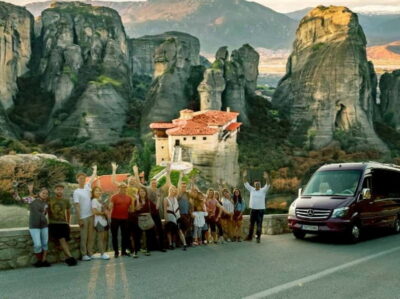
Meteora Monasteries Day Trip with Caves and Lunch
Read our review →
Athens to Meteora: Monasteries, Caves & Seaside Stopovers
Read our review →
Full-Day Meteora Tour with Local Guide & Greek Lunch
Read our review →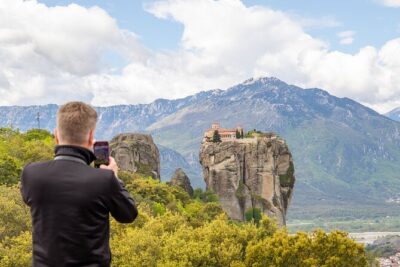
Meteora Monasteries, Caves & Coastal Stopovers with Lunch
Read our review →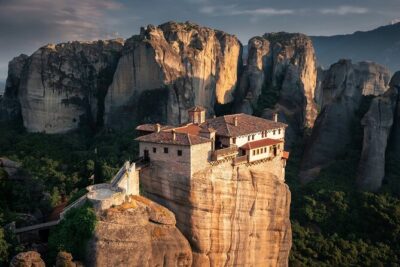
Meteora Monasteries & Caves DayTrip from Athens with Greek Lunch
Read our review →
4-Day Classical Greece Tour: Epidaurus, Mycenae, Olympia, Delphi, Meteora
Read our review →
Meteora Monasteries, Hermit Caves Tour with Pickup
Read our review →Browse the lists this tour appears in