Reviewed · ATHENS
Athens: Women in Ancient Greece
Women’s voices change how Athens makes sense. This 2-hour walking tour uses myth and daily life stories to show you what public monuments looked like from the margins. I love how you see major landmarks with new questions in your head, not just facts on repeat.
My favorite part is the way the guide, Maelle, tells stories that feel conversational, like you can ask anything. I also like the focus on women across roles and social classes, not only famous names, while still hitting key places like the Ancient Agora and viewpoints over the Acropolis.
One drawback to plan around: it is a step-heavy walk, and it is not a good fit if you have mobility issues or heart concerns, so check your stamina before you book.
In This Review
- Key things you will remember
- Finding your start point at Monastiraki Square
- From Pantanassa to Hadrian’s Library: setting the women’s lens
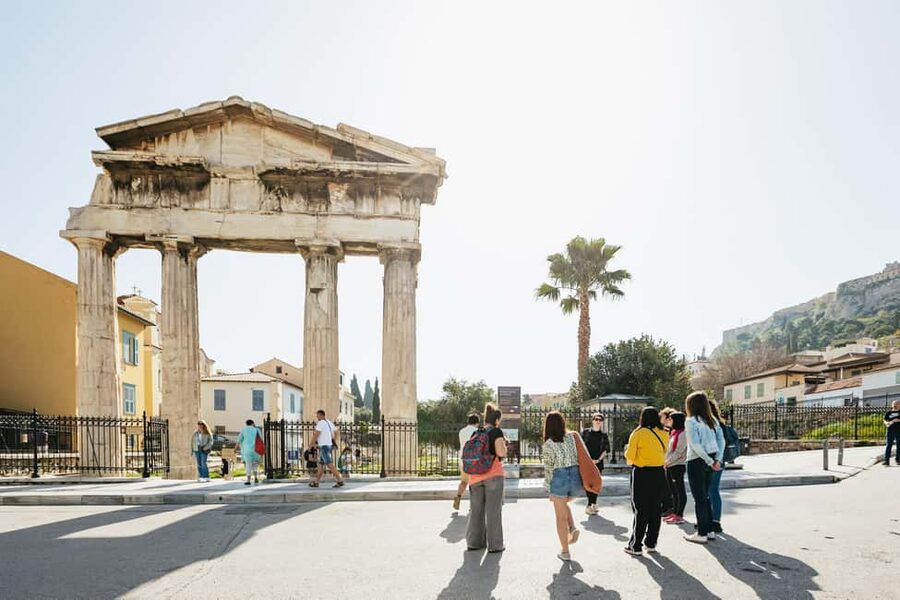
- Gate of Athena Archegetis: the city as a myth map
- A secret stop you will wish was longer
- Ancient Agora through women’s daily constraints and choices
- Pnyx and the first democratic votes: what democracy forgot
- The viewpoint and Filopappou Hill: processing the stories with real air
- Price and value: what $88 buys you in real terms
- Who should book this Athens women’s walking tour
- Tips to get the most out of the route
- Should you book Athens: Women in Ancient Greece?
- FAQ
- Where is the meeting point?
- How long is the tour?
- What is the walking like?
- Are tickets to archaeological sites included?
- Is food or drink included?
- What languages is the guide available in?
- What should I bring?
- Can I cancel for a refund?
Key things you will remember
- Maelle’s story-led pacing keeps the tour lively, not like a lecture
- Myth meets daily life through figures like Athena, Penelope, Demeter, and Pandora
- Major Athens landmarks through women’s eyes, including the Agora and Acropolis viewpoints
- Surprising names and roles like Sappho, Aspasia, and Agnodice
- A short route with real variety, from Monastiraki to Pnyx and Filopappou Hill
- You get practical Athens context, including smart recommendations for the rest of your trip
Finding your start point at Monastiraki Square
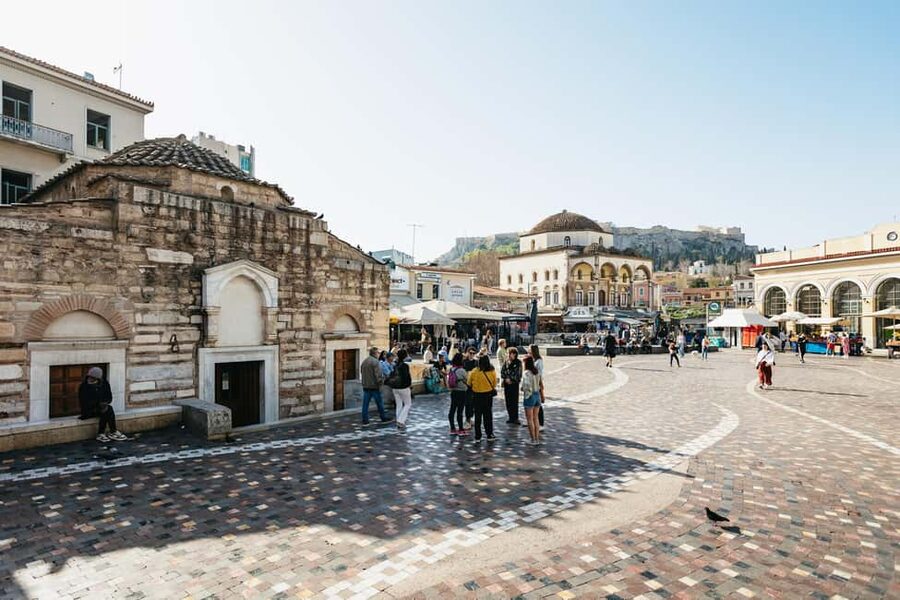
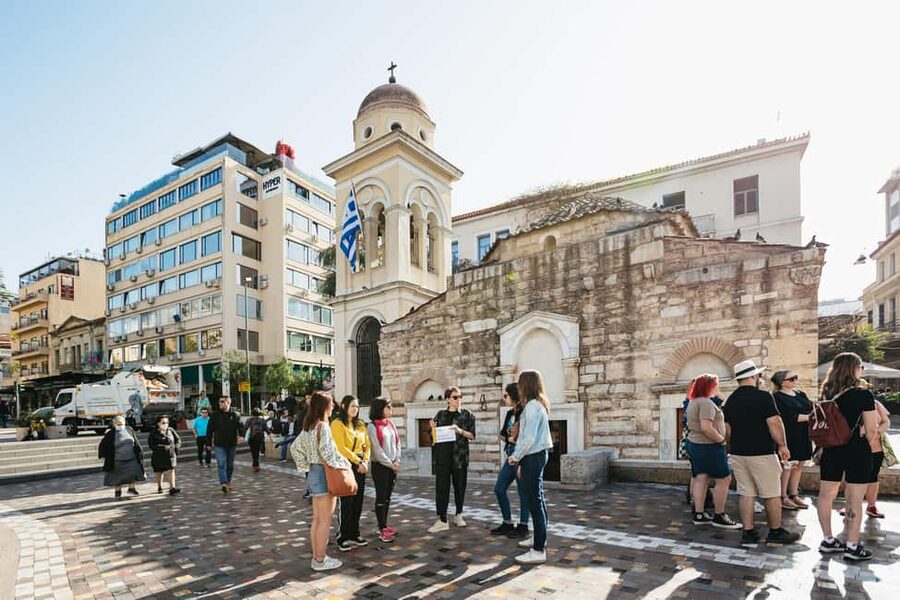
You’ll meet your guide at Monastiraki Square, in front of the Church Pantanassa, and she will be holding a sign that says Women in Ancient Greece. It is an easy place to orient yourself because Monastiraki is busy and central, so you can arrive, grab water, and settle in without stress.
From the first minutes, you are not just walking to ruins. You are walking with prompts about what women could and could not do in ancient society, and that changes how you notice what is around you. You start in a working neighborhood, then slowly shift into the older layers of Athens.
Bring a sun hat, sunscreen, and water. The tour stays outdoors, and summer heat in Athens can get serious fast.
Before you book, here is what else runs from Athens:
- Athens: Acropolis & up to 5 Archaeological Sites Combo Pass
★ 4.2 · 13,904 reviews - Athens: Acropolis, Parthenon & Acropolis Museum Guided Tour
★ 4.8 · 9,316 reviews - The Acropolis, Parthenon & Acropolis Museum Guided Tour
★ 4.7 · 8,493 reviews - Athens: Cape Sounion & Poseidon Temple Sunset Half-Day Trip
★ 4.8 · 8,241 reviews
From Pantanassa to Hadrian’s Library: setting the women’s lens
After the meet up, the route begins with quick “get your bearings” stops around Monastiraki. Expect short segments where you’re shown how the city’s geography connects to what you are about to see, not just a list of names.
Next comes Hadrian’s Library. Even when you only view buildings from the outside, you can learn a lot from how a guide frames them. Here, the story focus is the bigger question: who had access to education, public life, and cultural influence, and who did not. That is where the tour’s angle feels different from standard Athens walks.
Then you move into Plaka for time in the old streets. This is the part where the tour becomes more than ruins. You get a sense of everyday movement through the neighborhood, while the guide connects that sense of place to ancient patterns of life, including gendered roles. You end up with better context for reading Athens as a lived-in city, not only a museum of stone.
Gate of Athena Archegetis: the city as a myth map

At the Gate of Athena Archegetis, you start seeing Athens as a myth map. Athena is not just a story character in this tour. She becomes a tool for explaining how mythology helped define expectations for women and how people used divine imagery to talk about order, wisdom, and authority.
The guide’s approach is practical. Instead of treating myth as fantasy, you hear how myths shaped social imagination. If you’ve only encountered Greek mythology through statues and school stories, this is the moment where it turns into social context.
You also get an important theme early: women’s roles were not one simple story. They varied by class, family situation, and the specific civic space you were in. That sets you up for what happens later at places like the Agora and Pnyx.
A secret stop you will wish was longer
There is a secret stop built into the route, around ten minutes of guided time at a lesser-known point. The tour description does not spell out the exact site, so treat it as a short detour with extra story value rather than a must-match landmark.
This is often where a smart guide can do the most work. Standard Athens tours tend to keep you on the obvious track. Here, that interruption helps the women-focused theme feel real, because it shows you the city is full of overlooked corners where stories could live.
If you enjoy walking tours that feel thoughtfully paced, this middle moment is a good sign. The tour is not rushing toward the big hits. It is shaping your attention step by step.
Ancient Agora through women’s daily constraints and choices

When you reach the Ancient Agora of Athens, you’re looking at the heart of public life. That makes it a powerful location for this tour, because it forces the contrast between what was public and what was restricted.
The guide ties the Agora to women’s lives in a more grounded way than many history tours do. You hear how cultural rules and legal norms shaped everyday activities, from the social meaning of being seen in public to the idea of who was allowed to speak, vote, teach, and lead.
This is also where some of the tour’s broader figures start clicking. Athena, Penelope, Demeter, and Pandora are not just names in a mythology list. They become examples the guide uses to explain how stories reflected what society expected, and what it feared.
One of the strongest takeaways here is that women’s history is not only about famous exceptions. Even when the story centers on famous names like Sappho and Aspasia, the tour keeps pulling you back to daily life and social reality.
Same hours, spent a different way in Athens:
- Acropolis: Premium Acropolis and Parthenon Guided Tour★ 4.8 · 5,208 reviews
- Athens: Mythology of Delphi, Museum and Arachova Guided Tour★ 4.7 · 5,102 reviews
- All Day Cruise -3 Islands to Agistri,Moni, Aegina with lunch and drinks included★ 5.0 · 4,958 reviews
- Athens, Piraeus, and Coastline: Blue Hop-On Hop-Off Bus★ 3.9 · 4,849 reviews
Pnyx and the first democratic votes: what democracy forgot
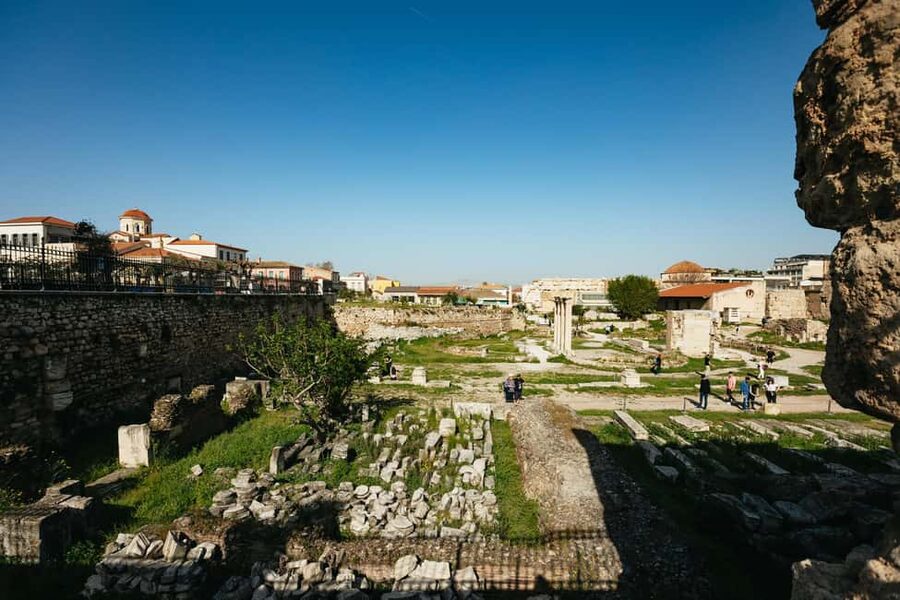
At Pnyx, the tour slows down for about fifteen minutes. This is where the guide gets you to hold two ideas at once: Athens was developing democratic voting, and women were largely excluded from that political power in the way we usually imagine it.
The tour frames Pnyx as more than a viewpoint. It’s a place to ask a hard question, not a simple celebration. Who got to be counted? Who got to decide? Who shaped the city in other ways?
This is a great stop for readers who like “history with consequences.” You walk away seeing democracy as a system with boundaries, and you understand why a women-centered lens matters. It is also a useful reminder that civic progress in one area can coexist with inequality in another.
You’ll likely notice that you’re thinking differently about the Acropolis too, because by this point the tour has taught you to look for the social story behind the stone.
The viewpoint and Filopappou Hill: processing the stories with real air

On the way to the final area, you get a short viewpoint stop, about five minutes, then the tour ends at Filopappou Hill for around ten minutes.
These breaks matter more than they sound. After hearing about roles, restrictions, myths, and the women who defied expectations, you need a visual reset. Standing in a scenic Athens viewpoint lets the stories settle into your understanding of space and power.
At Filopappou Hill, you can connect the dots between what you saw earlier and what you’re still looking at. From here, Athens often feels like one connected stage set. And because this tour is women-centered, you see the city as a place where female stories were always present, even when they were not always recorded.
It is a good ending point because it gives you time to reflect before you head back into the modern streets.
Price and value: what $88 buys you in real terms
At $88 per person for a 2-hour guided walking tour, the big value is not the length. It is the focus. This is a niche theme that you are unlikely to get in a standard “top sights” Athens walk, and the reviews strongly suggest you leave with more than facts.
You are paying for:
- A guide who can connect mythology to social roles, including the women who pushed past expectations
- A route that covers key Athens monuments while still keeping the women-centered narrative intact
- A small-group or private group format depending on your option, which supports real conversation
Tickets are not included, and many site views are exterior only, so your money goes to interpretation and guidance, not admissions. If you already plan to buy archaeological tickets elsewhere, this can pair well. If you want a fully ticketed museum-style experience, you may find it light on formal entries.
For many people, that is exactly the appeal. You get smart storytelling and orientation without spending half the day in queues.
Who should book this Athens women’s walking tour
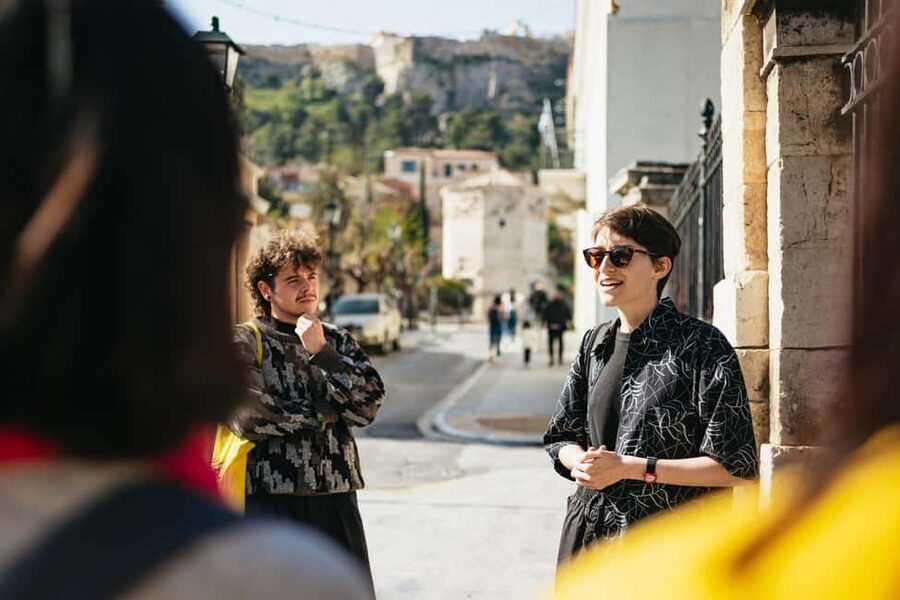
This is ideal if you want Athens to feel personal and human. I especially recommend it if you:
- Enjoy mythology but want it connected to real social roles
- Prefer walking tours where you can ask questions and talk, not just listen
- Like learning about women through both well-known names and lesser-told pathways
- Want a different angle that still covers major sites, including the Ancient Agora and Acropolis viewpoints
It is also a strong choice for pairs and small groups. Reviews mention bringing daughters, partners, and girlfriends, and that makes sense because the theme is broad enough to be meaningful at many ages.
Because it includes steps and is not suitable for wheelchair users or people with mobility impairments, it is not the best pick if you need step-free routes. Also, if you have heart problems, plan carefully.
If you want to pair it with a classic Athens day, this tour works well as a foundation. You’ll be better prepared for the Acropolis and Plaka later, because you will already know what questions to carry.
Tips to get the most out of the route
A few practical choices can make this tour feel smoother and more comfortable:
- Wear shoes you trust. You are moving between multiple historic points on foot.
- Take water breaks when the guide points out shade or natural pause spots. Heat is real.
- If you’re curious about a specific woman from Greek myth or history, ask early. The tour style tends to invite questions.
- Keep an eye on the guide’s framing. The story pattern often goes, myth meaning, social role, and then everyday reality, and that is where the tour’s power comes from.
And if you’re the type who likes to plan ahead, choose your day based on the weather. A hot Athens afternoon can be doable with the right pacing, but you’ll enjoy it more when the heat is manageable.
Should you book Athens: Women in Ancient Greece?
Book it if you want Athens history with a point of view. This tour is built around women’s lives, myth, and the contrast between public monuments and private realities. The route hits major anchors like the Ancient Agora and Pnyx, yet it keeps the theme tight and thought-provoking.
Skip it if you need step-free walking or you want a ticket-heavy, inside-the-sites experience. Also, if you only want the most famous stones and nothing else, this may feel too focused.
If your goal is to see Athens in a way that makes you ask new questions, and you like guided storytelling that feels like conversation, this is a solid yes.
FAQ
Where is the meeting point?
Meet your guide on Monastiraki Square in front of the Church Pantanassa. The guide will be holding a sign that says Women in Ancient Greece.
How long is the tour?
The duration is 2 hours.
What is the walking like?
The tour includes steps and is not suitable for people with health or mobility difficulties. It is not suitable for people with mobility impairments, heart problems, or wheelchair users.
Are tickets to archaeological sites included?
No. Tickets are not included, and site views are described as exterior only.
Is food or drink included?
No. Food and drink are not included.
What languages is the guide available in?
The live guide offers English and French.
What should I bring?
Bring a sun hat, sunscreen, and water.
Can I cancel for a refund?
Yes. You can cancel up to 24 hours in advance for a full refund.