Reviewed · ATHENS
Athens: Philosophy Experience at Plato’s Academy Park
Thinking gets real at Plato’s Academy Park. This 2-hour Athens workshop turns philosophy into a hands-on quest, starting with the Plato’s Academy Digital Museum (when open) and moving to the archaeological grounds where the world’s first Academy lived, then working through the Allegory of the Cave with guided dialogue.
I like two things most. First, you practice thinking with Socrates’ maieutic method, the back-and-forth way that helps you sharpen your questions and notice your own assumptions. Second, you stand in the setting of the old Academy, including the ancient Gymnasium ruins, so the ideas feel grounded, not abstract.
One consideration: the format shifts a bit depending on real-world conditions. If the Digital Museum is closed or excavation is active, you will still get the key ideas, but the museum time and the exact viewing points can change, so come with a flexible mindset.
In This Review
- Key things to know before you go
- Plato’s Academy Park is the real classroom
- The 2-hour flow, in plain English
- Start at the Digital Museum, and gather your Plato homework
- Walk the Academy ruins, then find the Gymnasium area
- Plato to you: from museum facts to a real conversation
- The Allegory of the Cave workshop, with Socrates’ midwife method
- A short debate game that tests Plato in modern life
- Optional Aristotle extension: a virtue-choice hour
- Price and value: what $53 buys you in Athens
- Practical tips so the ruins and dialogue both work
- Who should book this philosophy workshop
- Should you book Plato’s Academy Philosophy Experience?
- FAQ
- How long is the Athens Philosophy Experience at Plato’s Academy Park?
- Where do I meet the instructor?
- Is the Plato’s Academy Digital Museum included?
- What languages are available?
- Do I need any previous philosophy knowledge?
- What should I bring?
- Is it wheelchair accessible?
- Can I cancel for a refund?
Key things to know before you go
- Digital Museum first so you start with facts about Plato and his Academy, not just a general overview
- Ruins on site, including the Gymnasium area, so you connect ideas to place
- Dialogue-based workshop, with structured conversation instead of a lecture
- Socrates-style questioning that aims at clarity, not winning arguments
- A modern debate game that applies Plato’s ideas to a real-life case
- Optional Aristotle add-on with a virtue-choice game for an extra hour
Plato’s Academy Park is the real classroom
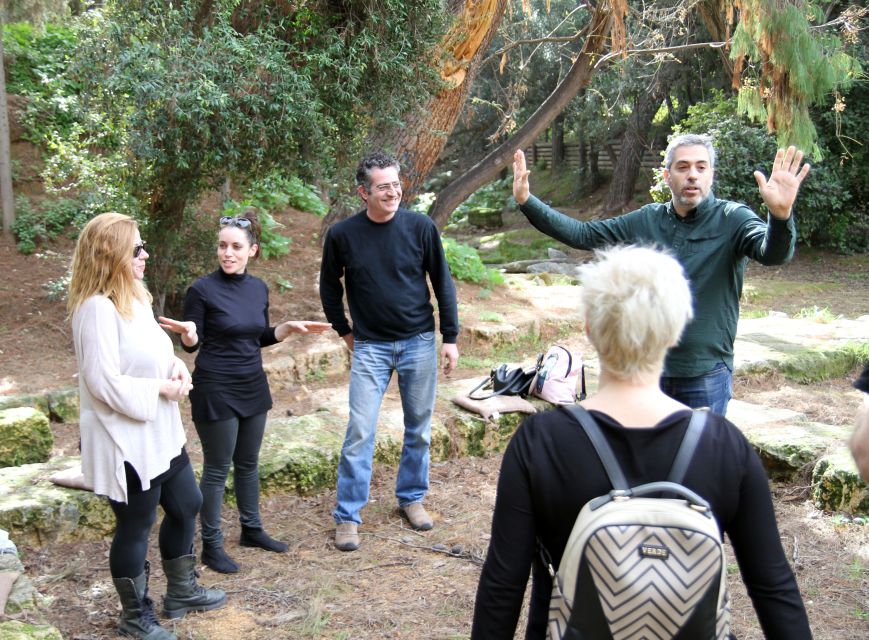
At this point in Athens, philosophy is no longer a museum subject. You’re walking in the neighborhood where Plato built a school idea, then you’re using a technique Socrates is famous for, turning talk into a tool for self-awareness.
I like how this workshop respects the setting. It does not treat Plato’s ideas like trivia. Instead, it treats them like a practice: you compare beliefs, stress-test assumptions, and learn how to ask better questions. That matters because most of us leave Athens with photos and a vague feeling, but not much changed inside our heads. This is designed to change that.
Before you book, here is what else runs from Athens:
- Athens: Acropolis & up to 5 Archaeological Sites Combo Pass
★ 4.2 · 13,904 reviews - Athens: Acropolis, Parthenon & Acropolis Museum Guided Tour
★ 4.8 · 9,316 reviews - The Acropolis, Parthenon & Acropolis Museum Guided Tour
★ 4.7 · 8,493 reviews - Athens: Cape Sounion & Poseidon Temple Sunset Half-Day Trip
★ 4.8 · 8,241 reviews
The 2-hour flow, in plain English
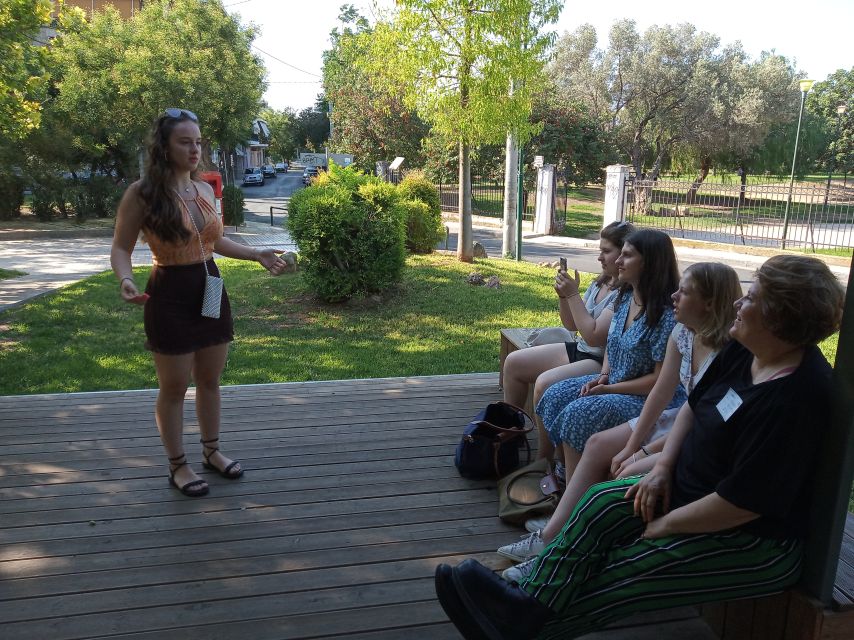
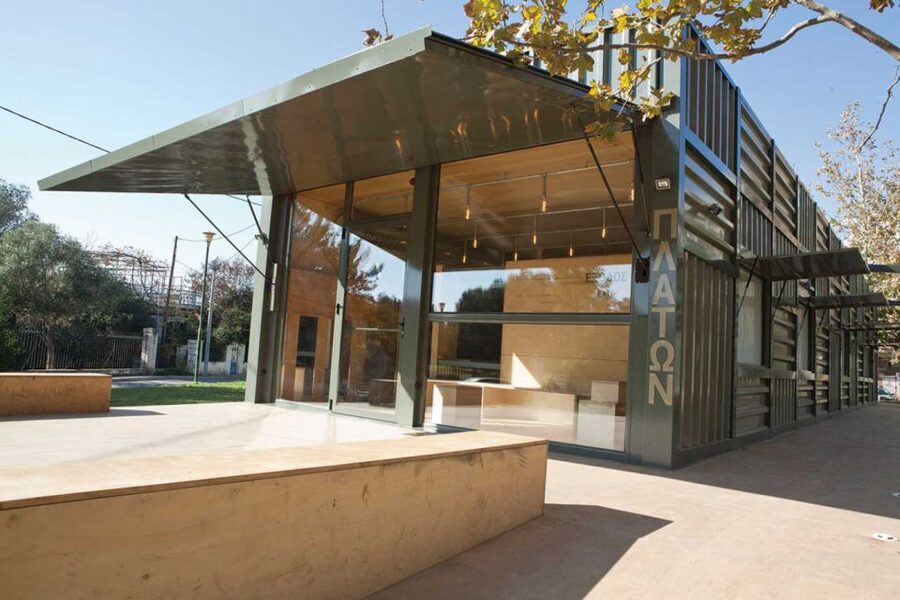
This is a focused, interactive experience. You meet your instructor outside Plato’s Digital Museum, at the entrance, holding a Hellas Revival sign. The facilitator runs the whole session, with all materials provided, and the pacing keeps you moving between short tasks, walking, and dialogue.
You should expect a conversation-led format. Even when there are structured prompts, the goal is exchange, not one-way teaching. You’re not required to have any philosophy background. The instruction is in plain English, and the facilitator also works in French.
Duration is listed as 2 hours, with an optional extra hour if you add the Aristotle extension.
Start at the Digital Museum, and gather your Plato homework
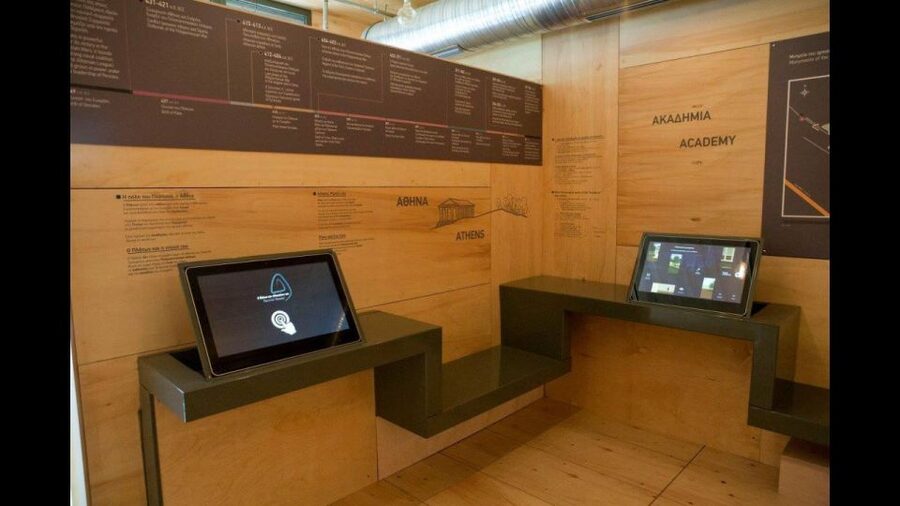
The workshop begins with a short stop at Plato’s Academy Digital Museum. When it is open and operational, entrance is free for you as part of the experience.
Here’s what this part does well: you don’t just watch. You gather specific information about Plato’s life and works, plus key details about his Academy. That becomes your shared reference point for the rest of the workshop. When you later talk about Plato, you’re not guessing. You’re building on something you picked up at the start.
Museum hours are Tuesday to Friday, 10:00 AM to 4:00 PM. If the museum is closed on the day you visit, the workshop swaps the museum time for an engaging discussion that covers the same key insights. So you still get the “Plato facts” you need, just delivered another way.
Walk the Academy ruins, then find the Gymnasium area
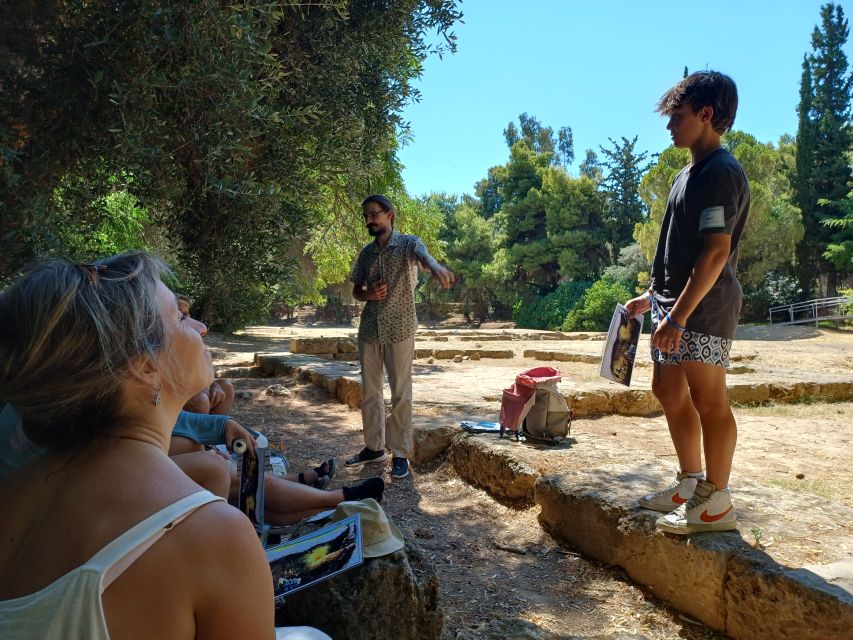
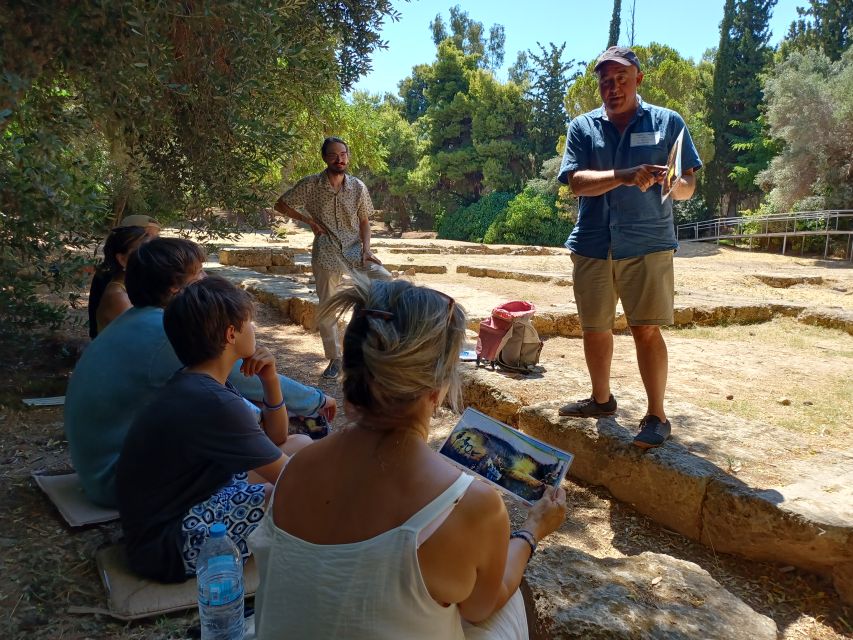
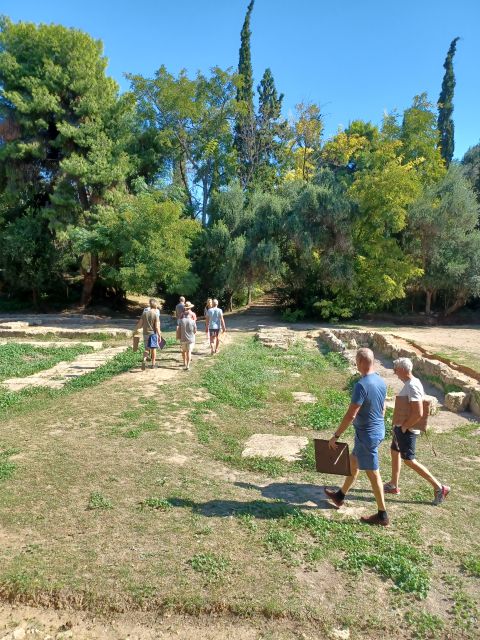
After the museum segment, you walk through the archaeological park. The group moves at a pace that makes it possible to notice what you’re actually seeing, while still keeping the workshop on time.
A highlight here is the way the ruins are treated as part of the lesson. You’re guided to the ruins tied to the Academy, including the Gymnasium area. You might be able to view the ancient Gymnasium more directly on some days, while other days excavation work can limit access. If that happens, you will see the Gymnasium ruins from a short distance and the group will settle in a different spot within the park.
Either way, the effect is similar: you connect the philosophy to a place with real physical context, the kind that makes the ideas feel less like theory and more like lived thought.
Plato to you: from museum facts to a real conversation
Once you’ve gathered your information, you circle back and use it. You share what you learned about Plato and discuss what it might have meant to be a philosopher in ancient Athens.
This is the bridge between “I heard about Plato” and “I can use Plato’s thinking.” The facilitator helps you link biographical context to the bigger question: what does it take to be a philosopher, and how should a person act when they’re trying to think clearly?
I like this part because it avoids the common trap. Many philosophy activities start with abstract definitions and never return to the human side. Here, the workshop tries to keep the focus on a person learning and questioning, not just a set of facts.
Same hours, spent a different way in Athens:
- Acropolis: Premium Acropolis and Parthenon Guided Tour★ 4.8 · 5,208 reviews
- Athens: Mythology of Delphi, Museum and Arachova Guided Tour★ 4.7 · 5,102 reviews
- All Day Cruise -3 Islands to Agistri,Moni, Aegina with lunch and drinks included★ 5.0 · 4,958 reviews
- Athens, Piraeus, and Coastline: Blue Hop-On Hop-Off Bus★ 3.9 · 4,849 reviews
The Allegory of the Cave workshop, with Socrates’ midwife method
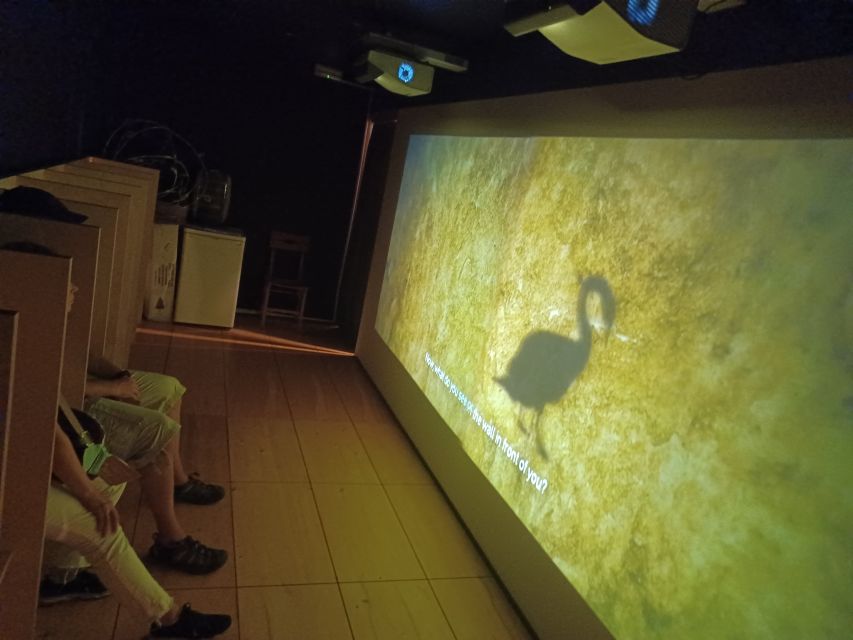
This is the centerpiece. You work through Plato’s Allegory of the Cave through structured dialogue. The facilitator uses Socrates’ maieutic, or midwife, art, which is basically the idea that questions help ideas emerge from inside you.
In practice, that means the session is built around exchanging opinions, beliefs, and experiences. You listen, you respond, and you refine your own view based on the logic of the dialogue. It’s not about memorizing a summary of the Cave. It’s about practicing the kind of thinking that the story points toward, noticing how we accept what we see and how hard it is to turn toward truth.
One of the best clues about quality is what the workshops feel like. The experience is repeatedly described as profound and moving, and the guides are praised for being prepared and for making room for questions while still keeping activities structured. That is exactly what you want for something like the Cave, because it can turn into either a lecture or a free-for-all. This format aims for the middle.
A short debate game that tests Plato in modern life
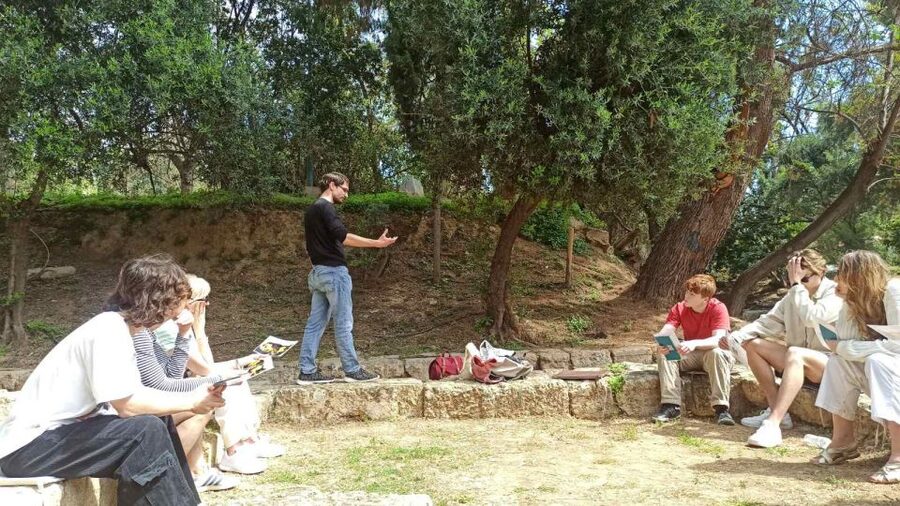
To close, you play a short debate game based on a modern life case study tied to Plato’s opinion of how a philosopher should act.
This part matters more than it might sound. You’re not just discussing ideas in the abstract. You’re applying them to choices: how to speak, how to reason, what to do when you disagree, and how a philosopher should behave when faced with real pressures.
It also gives the workshop an ending that feels like closure, not a stop-and-walk-away. You leave with practice in argument and self-checking, plus new questions you can carry home.
Optional Aristotle extension: a virtue-choice hour
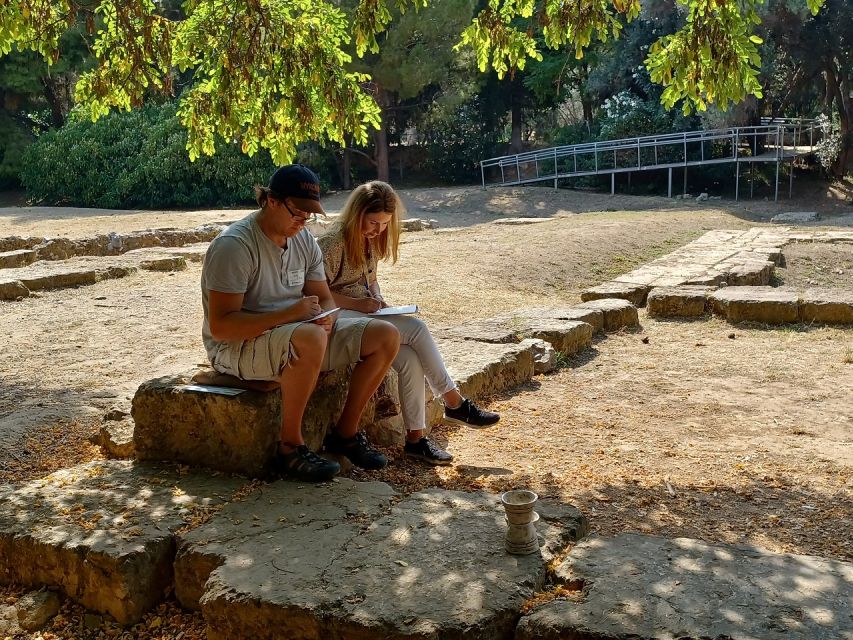
If you choose the extra hour at checkout, you can add an Aristotle philosophy segment. The structure is a thought-provoking virtue-choice game.
This is a good option if you like comparisons. Plato is often about turning the mind toward truth and questioning perception. Aristotle brings a different focus, with a practical angle on how character and virtues shape action. Even without prior background, a choice game is an accessible format because it connects values to decisions you can actually understand quickly.
Price and value: what $53 buys you in Athens
At $53 per person for a 2-hour session, you’re paying for more than access to a site. You’re paying for an expert facilitator, all materials, and local taxes are included. The session is also not a traditional guided tour, it’s an educational interactive workshop.
That matters for value. If you only want facts, you might be able to get those with a self-guided visit and a book. But if you want your thinking to change through questioning and dialogue, this price starts to make sense. You’re essentially buying time with someone who can guide philosophical discussion in a structured way, while you also connect it to real ruins and a digital museum.
Also, if your day includes the Digital Museum opening, part of the value is that free museum entrance time at the start. Even when it’s closed, you still get the same key insights via discussion, so you are not paying for an optional extra that might vanish.
Practical tips so the ruins and dialogue both work
This experience happens at a historical site, and you’ll need to follow etiquette and site rules. That includes respectful conduct, sobriety, cleanliness, dress-code expectations, and keeping noise down. If rules are not followed, the facilitator has the right to terminate your participation without refund. So bring a calm, respectful vibe.
What to bring:
- Comfortable shoes for walking on archaeological ground
- Sun hat
- Water
- Comfortable clothes
A small but important detail: because it’s a public space workshop, you consent to photo and video shooting that may be published later. The info also says you can withdraw consent in writing before the workshop, so if that matters to you, plan ahead.
Finally, be ready for outdoors conditions and short transitions between museum and park. Comfortable clothes and hydration are not optional here.
Who should book this philosophy workshop
This is a strong fit if:
- You want philosophy that feels practical, not just academic
- You like discussion-based learning and don’t mind speaking up
- You enjoy connecting ideas to place, especially in Athens
- You are traveling with curiosity, not just a checklist
It’s also suitable for people without previous knowledge. The workshop is designed in plain English without difficult terminology.
If you hate group dialogue or prefer one-way explanations, you might find the Socrates-style method less comfortable. But if you like the idea of learning through questions and debate, this is built for you.
Should you book Plato’s Academy Philosophy Experience?
If you’re in Athens and you want more than a site visit, I think this is a smart booking. You get real context at Plato’s Academy Park, you practice Socratic questioning in a structured way, and you end with a debate game that connects Plato to modern decision-making. That combination is rare.
Book it if you enjoy active learning, and you can handle a bit of walking outdoors. Consider the day you’re going too, since the Digital Museum opening and excavation activity can affect what you see in detail. Even with those changes, the workshop still aims to deliver the same core experience.
FAQ
How long is the Athens Philosophy Experience at Plato’s Academy Park?
It lasts 2 hours.
Where do I meet the instructor?
You meet the instructor outside Plato’s Digital Museum, at the entrance, holding a Hellas Revival sign.
Is the Plato’s Academy Digital Museum included?
It depends on the day. If the Digital Museum is open and operational, you’ll visit it at the start. Tuesday to Friday it is open 10:00 AM to 4:00 PM. On other days, the workshop replaces the museum visit with a discussion covering the same key insights.
What languages are available?
The instructor can run the experience in English and French.
Do I need any previous philosophy knowledge?
No. It is described as a basic philosophy workshop suitable for people without previous knowledge, using plain English.
What should I bring?
Bring comfortable shoes, a sun hat, water, and comfortable clothes.
Is it wheelchair accessible?
Yes, it is wheelchair accessible.
Can I cancel for a refund?
Yes. Free cancellation is available up to 24 hours in advance for a full refund.